
The complete guide
How to Choose a Building Kit That Children Actually Finish
The toy that gets built once
Walk into most family homes and you will find at least one construction set that had a single good day. It was opened, assembled into the exact thing on the box, admired for an hour, and then placed on a shelf where nobody is allowed to touch it because taking it apart feels like destroying something.
That is the quiet failure of a lot of building toys. They are models dressed up as toys. There is one correct outcome, and once a child reaches it, the play is over.
The other failure runs the opposite way. A big tub of loose bricks with no instructions sounds like freedom, and for some children it is. For plenty of others it is paralysis. They tip the lot onto the floor, push it around for five minutes, cannot think of what to make, and drift off to find a screen.
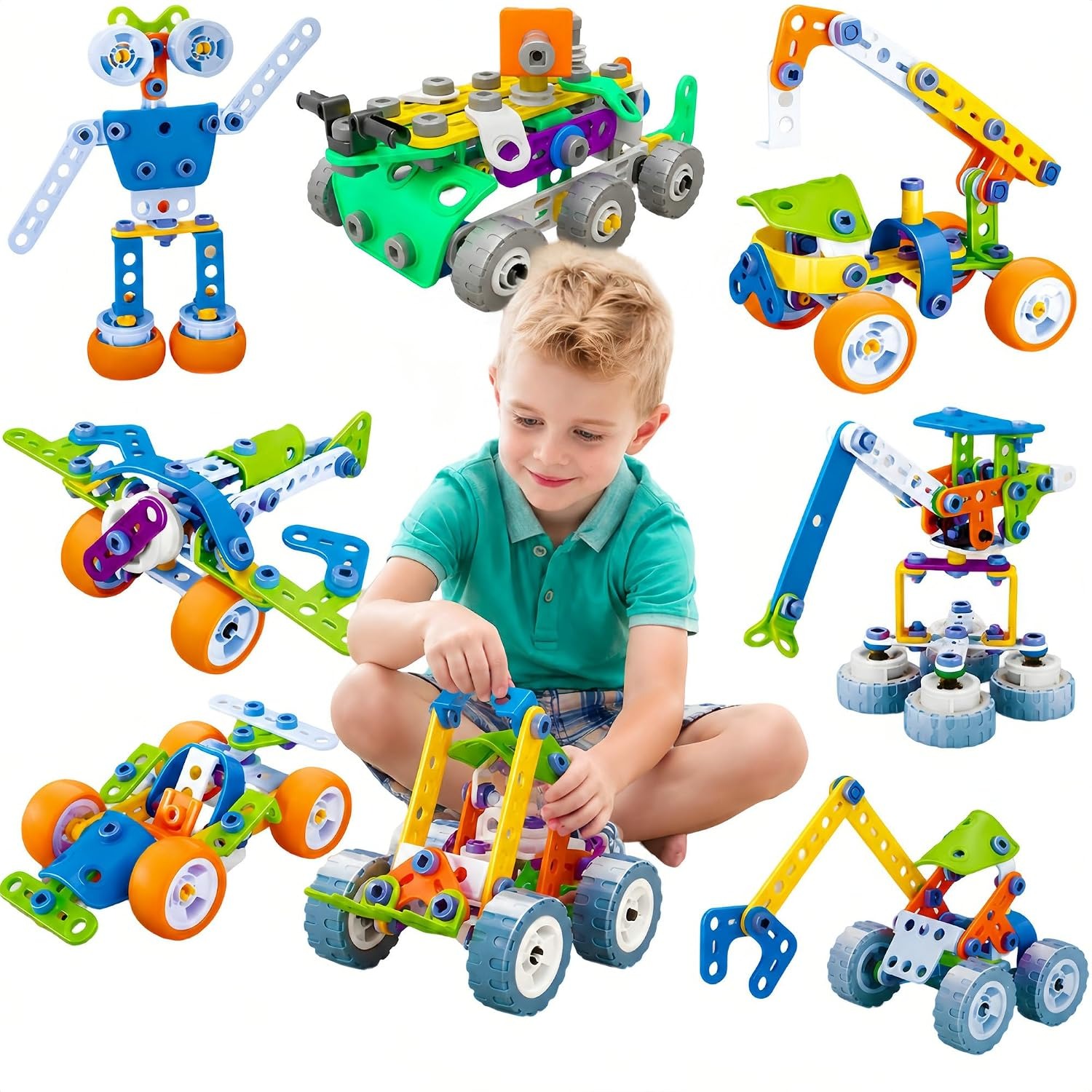
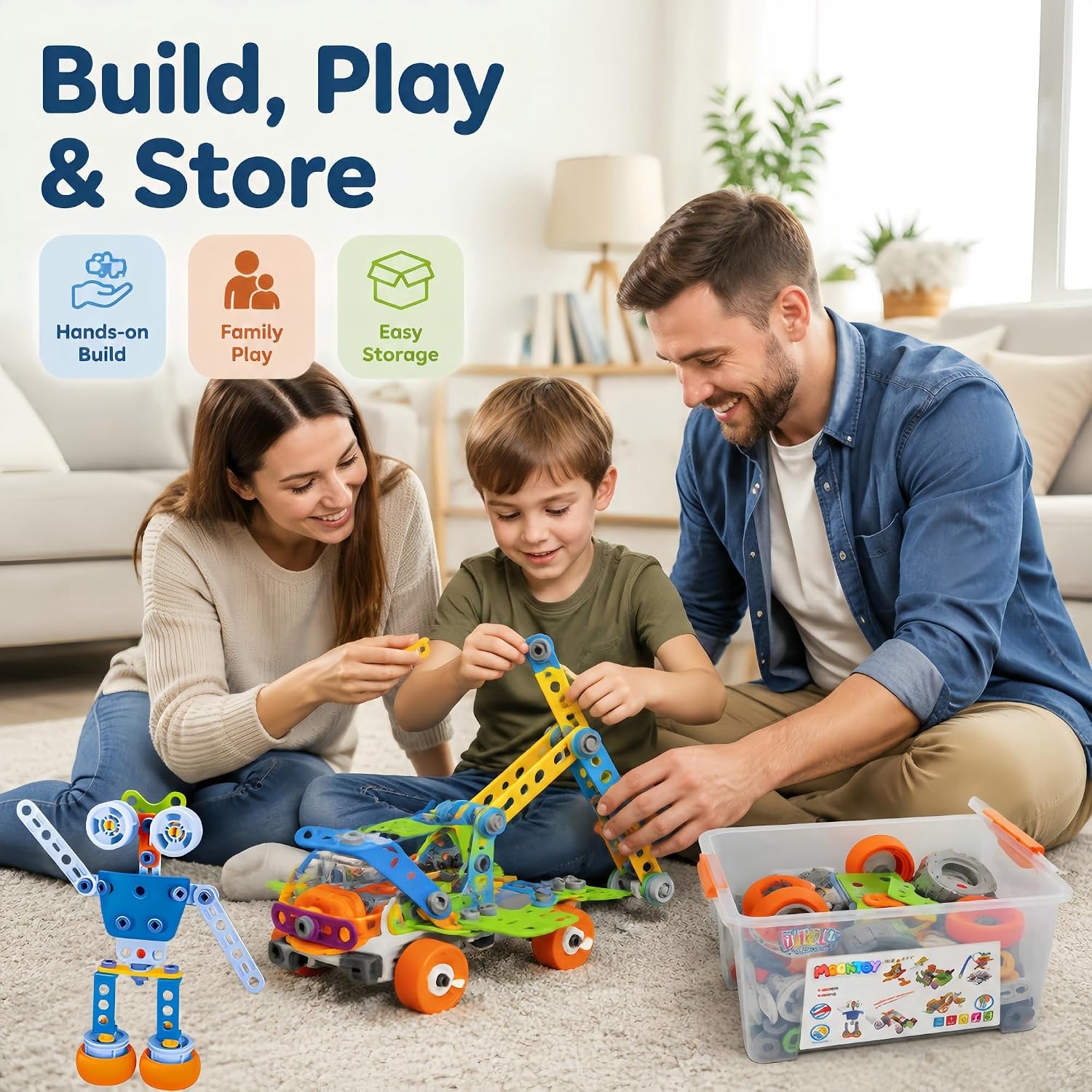
A set like this 175 piece construction engineering set tries to solve both problems at once by giving a child a map and then handing them the pieces to leave the map behind.
How an 11 in 1 kit actually works
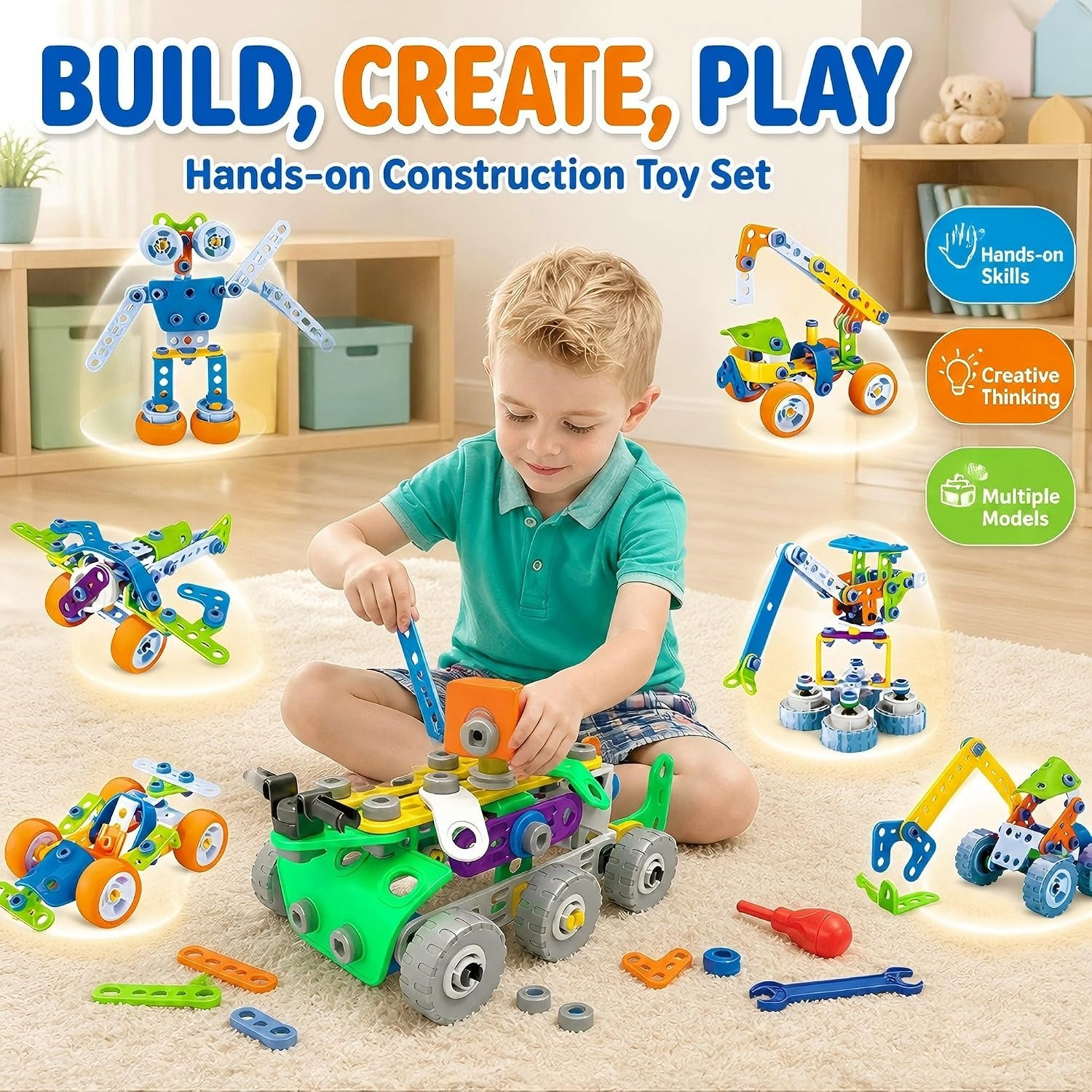
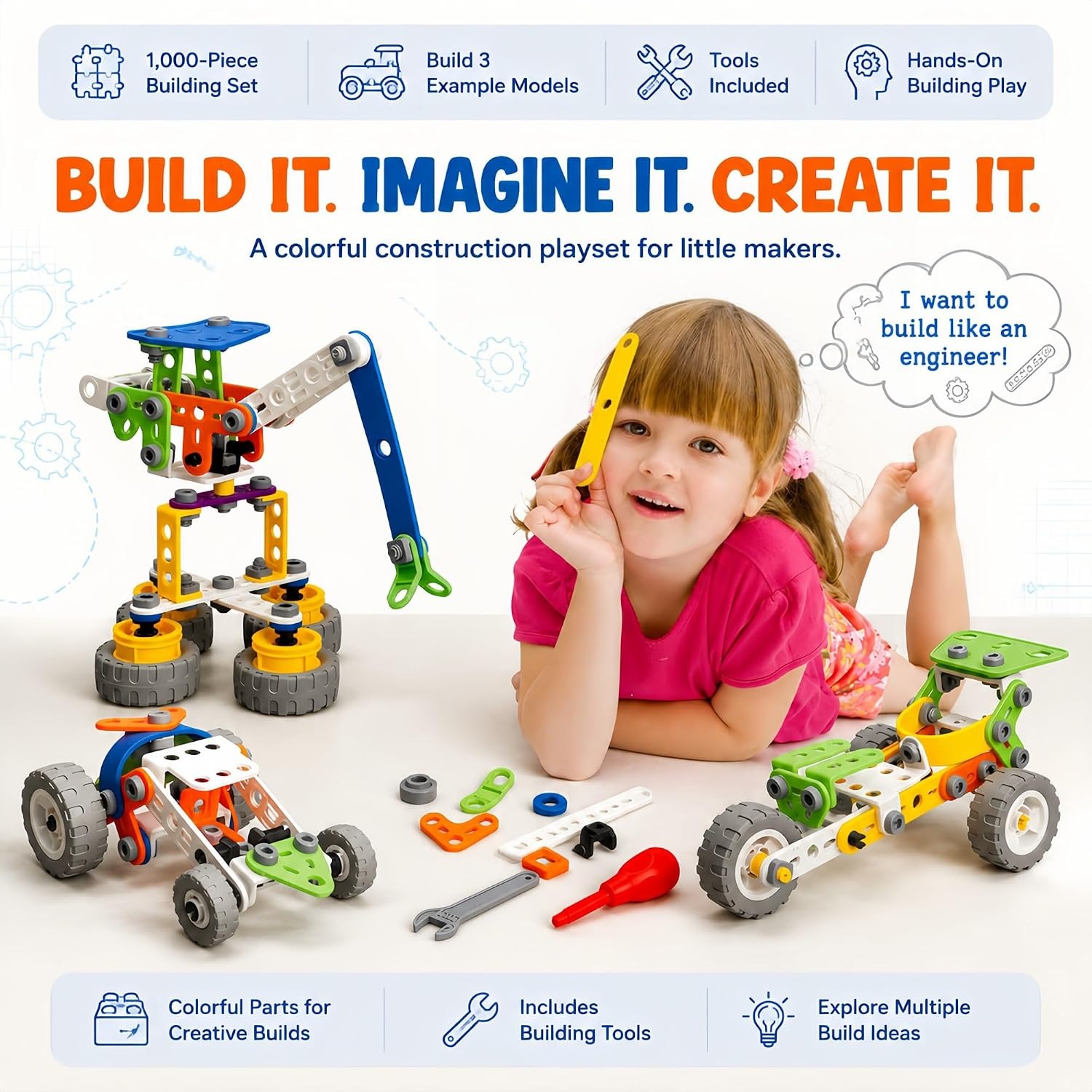
The idea is simple. Instead of one fixed model, the box holds a general-purpose supply of blocks, plates, connectors and small hand tools. A printed guide then shows eleven different machines you can make from that same supply, one at a time.
So a child builds the crane. They play with the crane. A week later, when the crane is boring, they pull it apart and build the helicopter from the same parts. The toy resets itself. This is why these sets stay in rotation far longer than a single-model kit, and why they tend to be a better value per hour of play even when the sticker price looks similar.
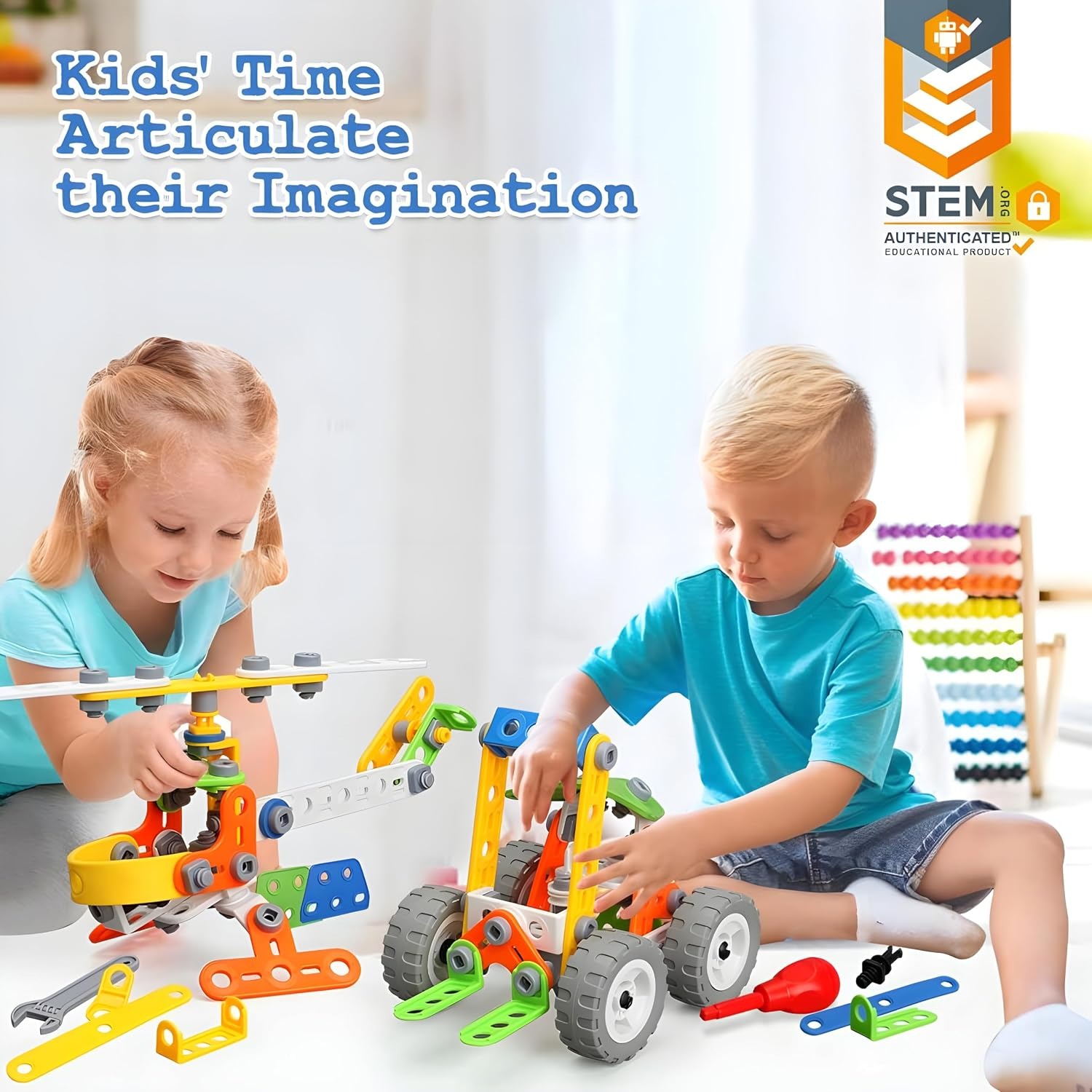
The builds here lean towards machines that do something visible. Vehicles, a forklift, a rocket car, a tank, a robot. Those are popular for a reason. A machine with a moving arm or rolling wheels invites play after the building stops, which is the bit a lot of model kits forget about entirely. Among the best engineering toy for kids options, the ones with working movement always outlast the static display pieces.
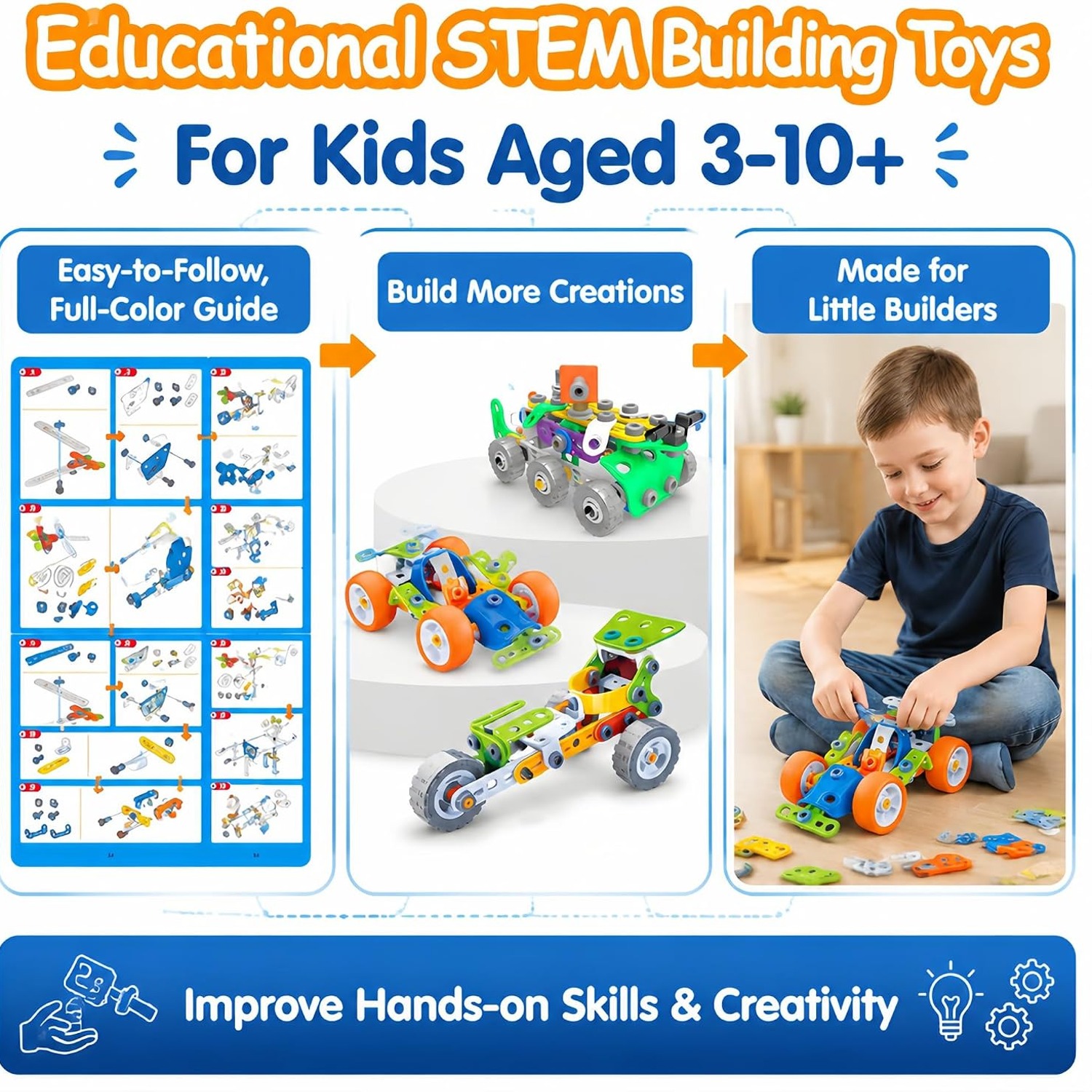
Instructions matter more than people expect. A colour, step-by-step guide lets a child who cannot read well still follow the sequence. That keeps the project theirs. The second a parent has to narrate every step, the child becomes an assistant in their own game, and interest fades fast.
Who it suits
The manufacturer puts the recommended range at 36 months to twelve years, with four to eight as the heartland. That spread is wide, and it is worth being realistic about what each end looks like.
At three or four, expect company. The pieces are small enough that an adult should be nearby anyway, and the first model will be a shared effort. That is fine. Shared building is some of the best time you will spend with a small child, because you are side by side rather than face to face, and conversation flows more easily.
At five to eight, this is the target. Children in that band can usually work the picture steps independently, they have the finger strength to clip pieces firmly, and they have the patience to see a twenty-minute build through. This is where parents hunting for the best construction toys for 5 year olds tend to land.
At nine and up, the guide becomes a warm-up. Older children typically build two or three models from the book and then start inventing. That is the point where having 175 pieces rather than sixty really shows, because invention needs spare parts.
Then there is the group question. The set is rated for up to five players. If you have two or three children in the house, or you host playdates, a larger piece count prevents the fight over who gets the good bits. Each child can take a model and work in parallel.
What to look for when comparing sets
Piece count against model count. A set claiming twelve models with eighty pieces usually means each model is tiny. Look at the ratio. Around 175 pieces across eleven models gives each build real substance.
Instruction format. Colour diagrams beat text for young children, every time. Check whether the guide shows each step separately or jumps three moves ahead.
Reusability. Can the models come apart cleanly and go back together? Glue-free interlocking parts are what you want. Anything requiring permanent assembly is a model kit, not a toy.
Storage. This sounds boring and it is the thing parents care about most by week three. A set that arrives with a box has a fighting chance of staying complete. A set that arrives in a shrink-wrapped tray will be scattered across the house by the end of the month.
Power. Manual operation means no batteries, no charging and nothing to stop working. For younger children this is a feature, not a compromise. The best interlocking building blocks set for a four year old is the one that works at seven in the morning without anyone finding a screwdriver.
Theme breadth. Vehicles plus animals plus robots covers more children than vehicles alone. It also keeps the set useful when a child's interests shift, which they will.
Making it last
A few habits turn a construction set from a two-week toy into a two-year toy.
Keep the guide. Slip it into the storage box rather than letting it live on the coffee table. Children return to it months later and build things they skipped the first time.
Count back in. Not piece by piece, but a quick sweep of the floor and under the sofa before packing away. Most sets do not die from breakage. They die from attrition.
Rotate it. If interest flags, put the box away for six weeks and bring it out again. A toy that disappears and returns gets a second first-day.
Build alongside, occasionally. Not every time, or it becomes your project. But a parent who sits down and makes something ridiculous from the spare pieces gives permission for the child to do the same.
For cleaning, a damp cloth with a little mild soap handles sticky fingerprints. Let everything dry fully before it goes back in the box, and keep plastic parts away from heaters and direct sun, which can warp them over time.
As a gift
Construction sets are one of the easier presents for a child you do not see every day. They do not duplicate easily, they do not need to match anything the family already owns, and they carry their own activity. The child opens the box and has something to do straight away, which is more than can be said for most gifts that end up in a pile by the sofa.
The 36 month minimum age is worth repeating here. Small parts and preschoolers do not mix. If there is a baby or a two year old in the house, factor in where the set will be used and stored.
The short version
An 11 in 1 kit with 175 pieces is built for repeat play rather than a single afternoon. The colour guide gives a young child a way in, the piece count gives an older child room to invent, and the five-player rating means it handles siblings and playdates instead of only solo building.
It is plastic, manual, battery-free and comes with a storage box. It carries a 2 year limited warranty from the manufacturer, and it suits roughly ages four to eight best, with useful life either side of that.
If you want a toy that resets itself every time it gets boring, this is the shape of thing to look for.