
The complete guide
The Buyer's Guide to Kids Shopping Cart Play Sets
Why a toy shopping cart earns its space
Most toys get played with hard for two weeks and then live under a bed. A shopping cart tends to last longer, and the reason is simple. Children already know this game. They have sat in a real cart, watched food go in and come out, and seen someone hand over a card at the till. Give them a cart of their own and they do not need to be taught anything. They just start.
That is the real problem a set like this solves. Parents want a toy that does not need constant adult input, that works for one child or two, and that keeps changing shape as the child gets older. A cart with wheels and a load of play food does all three. It is a push toy at three, a shop at four, a delivery van at five, and a prop in some much stranger story at six.
The other quiet benefit is tidying. A cart is a container on wheels. Children who will not put blocks in a box will happily load the same blocks into a cart and wheel them across the room. It does not solve mess entirely, but it helps.
What you are actually getting
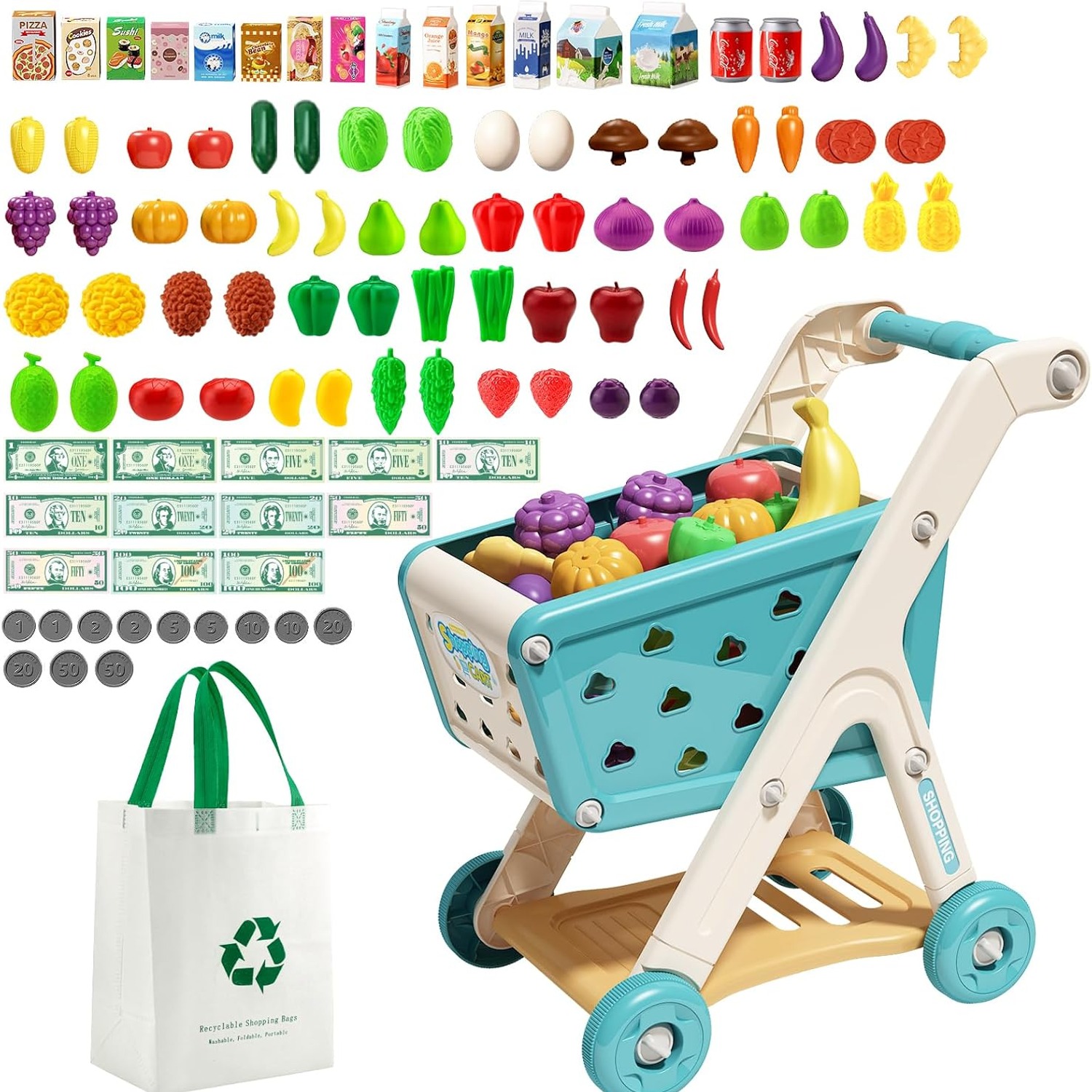
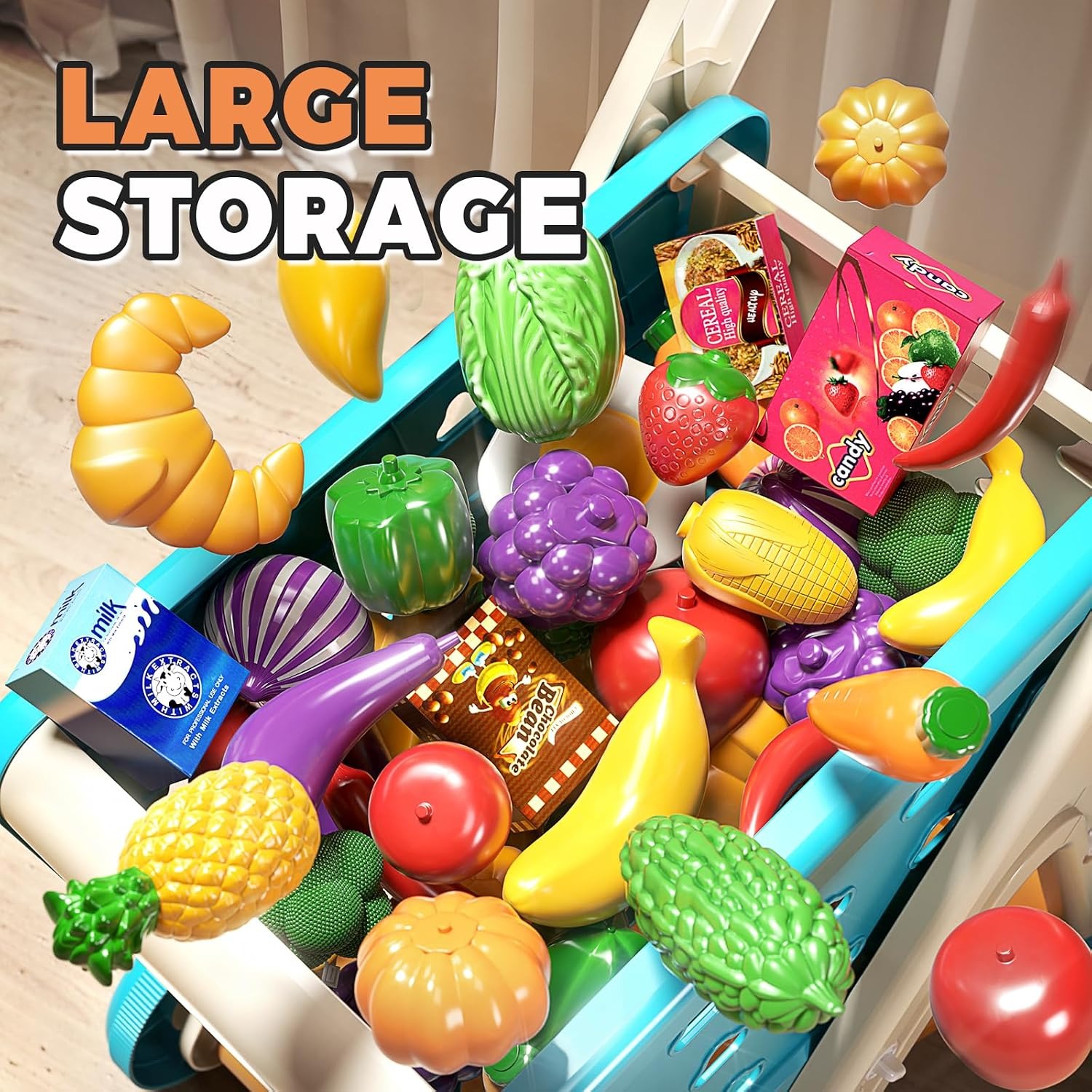
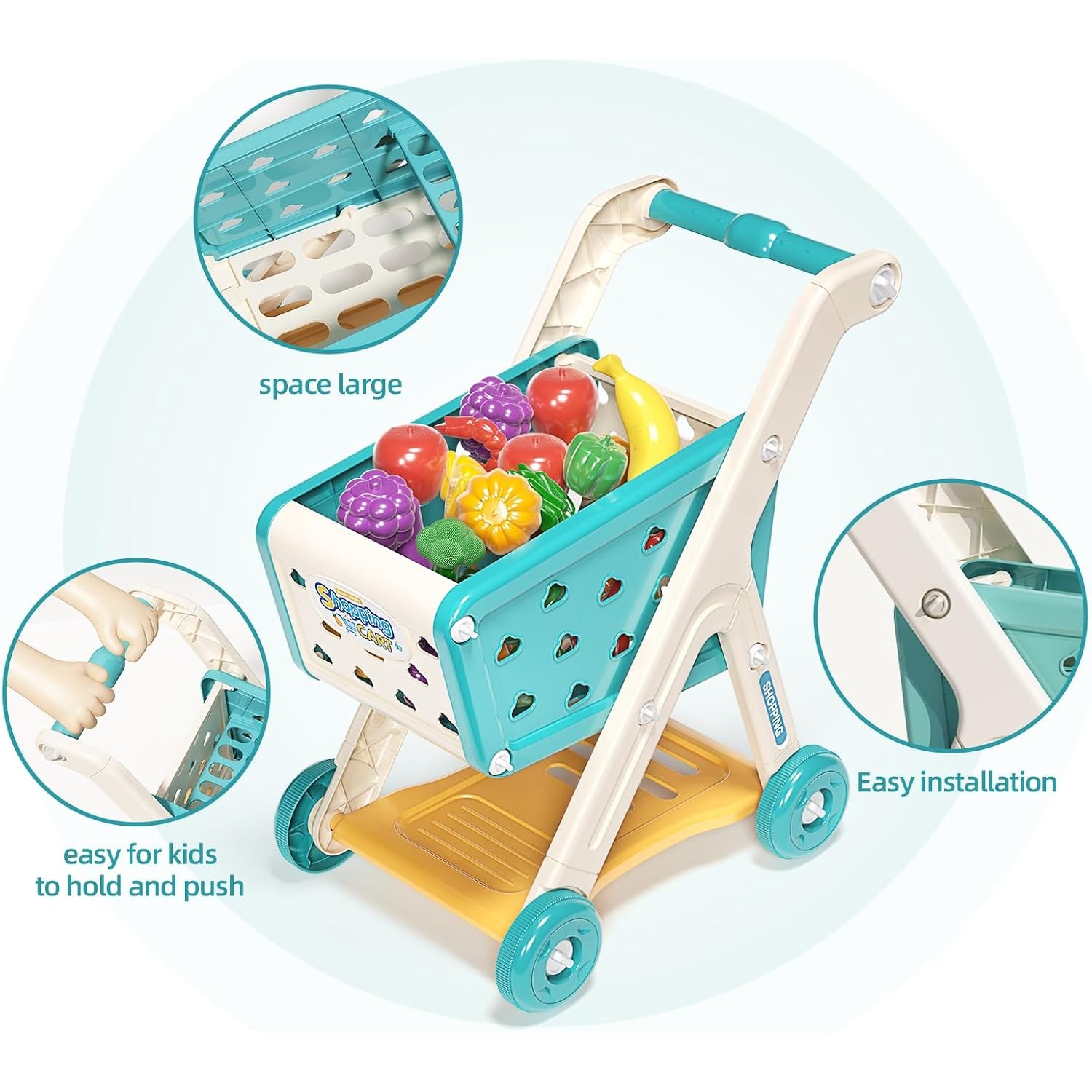
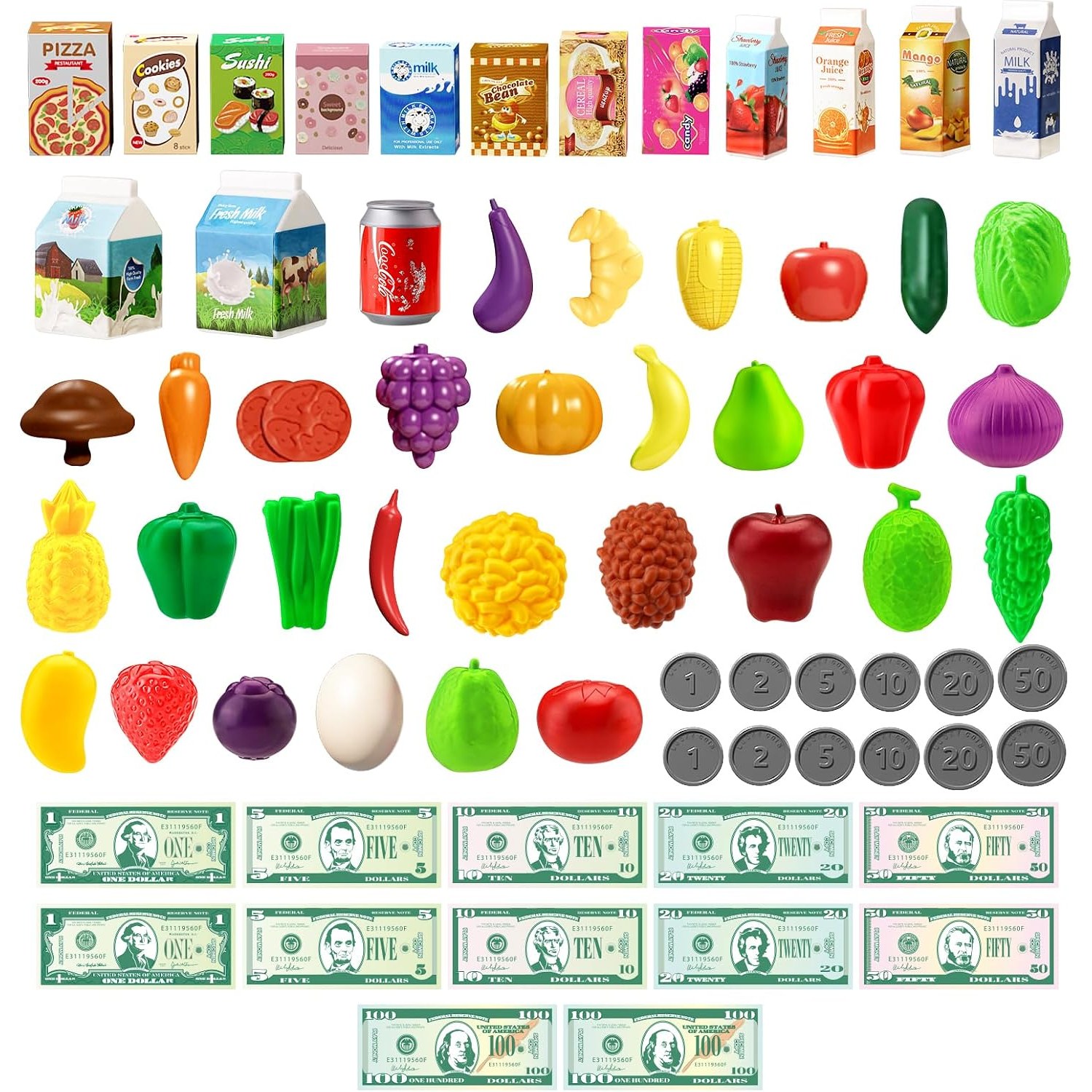
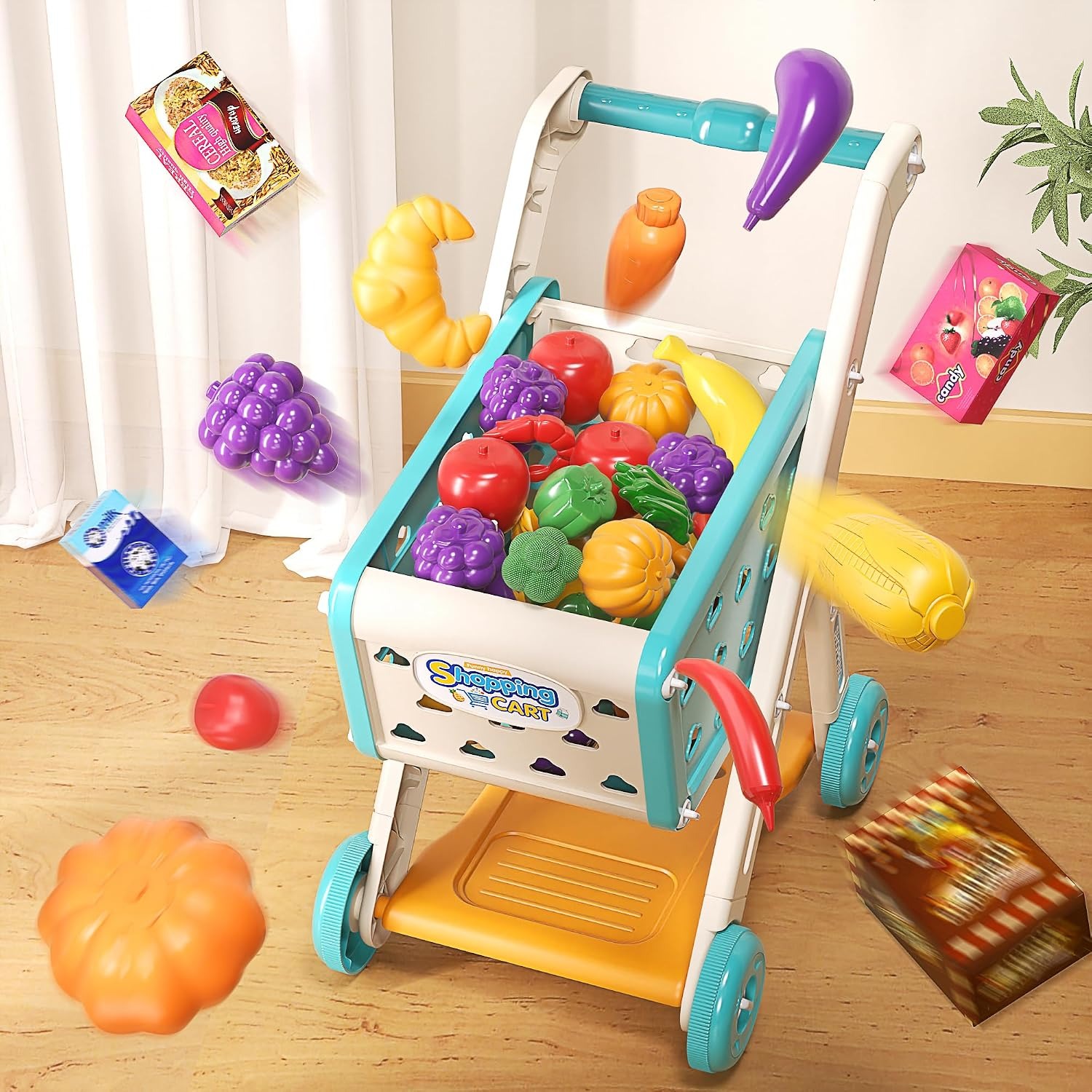
This is the Jovow kids shopping cart play set, model WIN-108. It comes with a child-size cart, a shopping bag and a selection of toy food including fruit, vegetables and fast food pieces. The cart has three levels of storage, which matters more than it sounds. One basket fills up fast and the game stops. Three levels mean a child can sort things, stack them, and keep going for longer.
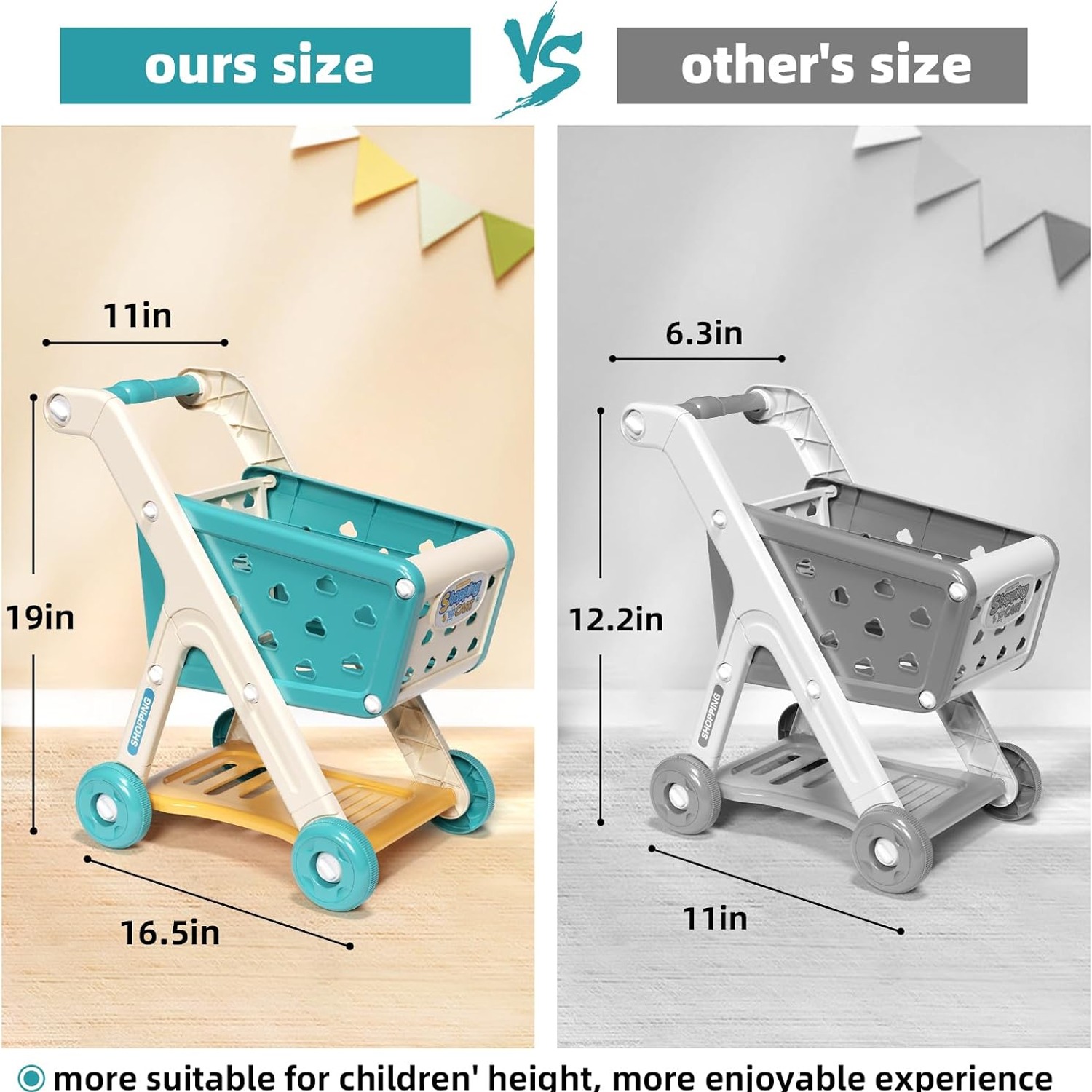
The cart measures 32.26 x 25.4 x 16.76 cm and weighs 1.09 kg. It is green, with a supermarket theme, and made from plastic with rounded edges. The manufacturer sets the age range at 36 months to 14 years and lists the educational focus as creative thinking and imagination development.
Assembly is required but kept simple. Expect a short build rather than an afternoon with an allen key. Some parents do it the night before a birthday. Others let the child help, which turns the box-opening into part of the present.
A note on honesty. The exact number of food pieces, any certification marks and alternative colours are not specified by the maker. If one of those details is a deal-breaker for you, ask before you order and we will check rather than guess.
How children actually use it
Watch a three year old with a cart for ten minutes and the pattern is predictable. First they push it in circles. Then they load everything they can reach. Then they unload it in a heap and start again. That repetition looks aimless but it is how young children rehearse a routine until it feels solid.
By four or five, the game gets structured. There is a shop now, usually a sofa or a low shelf. There are prices, which are never consistent. There is a till, often an upturned box. The cart becomes one piece of a bigger scene, and the child starts narrating. This is the stage where vocabulary grows fastest, because they need words for everything they are handling.
Older children, up toward the top of the stated age range, tend to use it as a prop for running a game with younger siblings. They become the shopkeeper, the parent, the delivery driver. If you have two children a few years apart, that is often where a cart earns its keep, because it gives them a shared activity with different roles.
Pairing it with a toy kitchen or a play till extends the game further. The food pieces are standalone, so they mix with whatever you already have. Many families build up a small collection of the best pretend play food set items over a couple of birthdays and the cart becomes the hub.
Choosing the right cart
Size is the first thing to check. A cart that is too tall makes a preschooler stretch and tip it. One that is too small gets abandoned by a five year old. Child-size at this scale, roughly a third of a metre long, hits the common ground for the three to seven range. Measure your child's hip height if you are unsure. The handle should sit somewhere between waist and chest.
Weight is the second thing. At 1.09 kg this one is light. That is deliberate. A light cart is easier to steer and far less likely to hurt anyone if it tips. It also means a child can carry it upstairs or lift it over a doorstep without calling for help.
Then think about your floors. Round wheels on a hard surface roll beautifully. On thick carpet they drag. If your home is mostly deep pile, a cart will still get used, but it will be lifted and carried more than pushed. That is worth knowing before you buy rather than after.
Finally, think about the food. Some sets ship with a token handful of pieces and the game runs out quickly. A set that includes a decent spread of fruit, vegetables and fast food items gives more to sort and more to name. It is one of the clearest differences between a cart that holds attention and one that does not.
Safety and sensible use
The minimum age of three is there for a reason. Play food pieces are small enough to be a choking risk for babies and younger preschoolers. If you have a crawler in the house, keep the set to a room where the older child plays and pack the food away afterwards.
Rounded edges reduce the sting of the inevitable collision with a shin or a baseboard. Even so, a cart being pushed at speed down a hallway can catch an ankle. A house rule about walking pace is worth setting early.
The cart is not a walking frame. It is not built to take a child's weight, and leaning on it can bend the frame or send a child over the top. If your preschooler needs something to pull up on, use a proper walker designed for that job.
Keep heavy household items out of it. Tins, hardback books and water bottles put strain on the joints. Play food and soft toys are what it is for.
Keeping it in good shape
Cleaning is straightforward. A damp cloth with a little mild soap handles both the frame and the food pieces. Dry everything before it goes back in the bag. Nothing should go in a dishwasher or microwave, because the heat can warp plastic and dull the colour.
Check the wheels every few weeks. Hair and carpet fibres wind around axles on every wheeled toy, and a quick clear-out keeps it rolling smoothly. If any joint from the assembly works loose over months of use, tighten it rather than ignoring it.
Storage is the one habit worth building. The shopping bag that comes with the set is the natural home for the food. Make loading the bag the last move of the game and you will lose far fewer pieces. A low shelf where the child can reach the cart themselves also means it gets used more, which is the whole point.
Keep it indoors. Occasional trips to a patio are fine, but sun fades plastic and rain gets into the wheels. A toy stored inside will outlast one left by the back door by years.
The short version
If you have a child between three and seven who copies what adults do, a kids shopping cart play set is one of the surer bets in the toy aisle. This one is light at 1.09 kg, child-size at roughly 32 cm long, green, plastic, with three storage levels, a shopping bag and a spread of play food. It needs a short assembly and nothing else.
It suits homes with hard floors best, works for one child or two, and gets along well with any toy kitchen or play till you already own. It is not a walker, it is not for under-threes, and it is not built to carry real groceries.
If any detail here does not quite match what you need, ask us. We would rather talk you into the right toy than sell you the wrong one.