
The complete guide
The Honest Buyer's Guide to Steel Tongue Drums
The problem with wanting to play music
Most people who say they are not musical were simply handed the wrong instrument. A guitar takes weeks before your fingers stop hurting and months before a chord change sounds smooth. A piano needs space and a tuner. A recorder, well, we all remember the recorder.
What gets lost in all that is the simple thing underneath. Hitting something and hearing a nice sound. That is where music starts for every child on earth, and it is where a lot of adults would quite like to come back to after a long day.
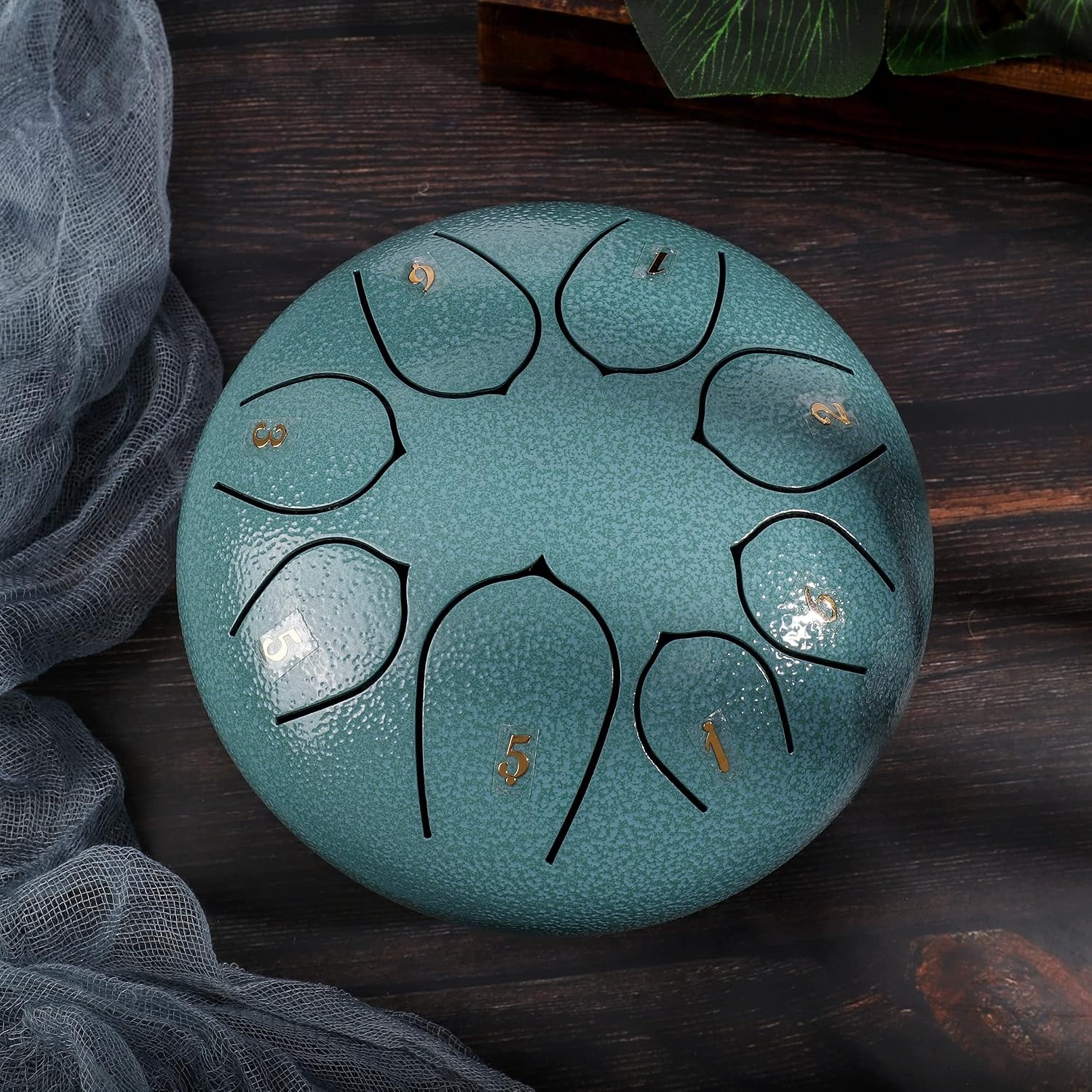
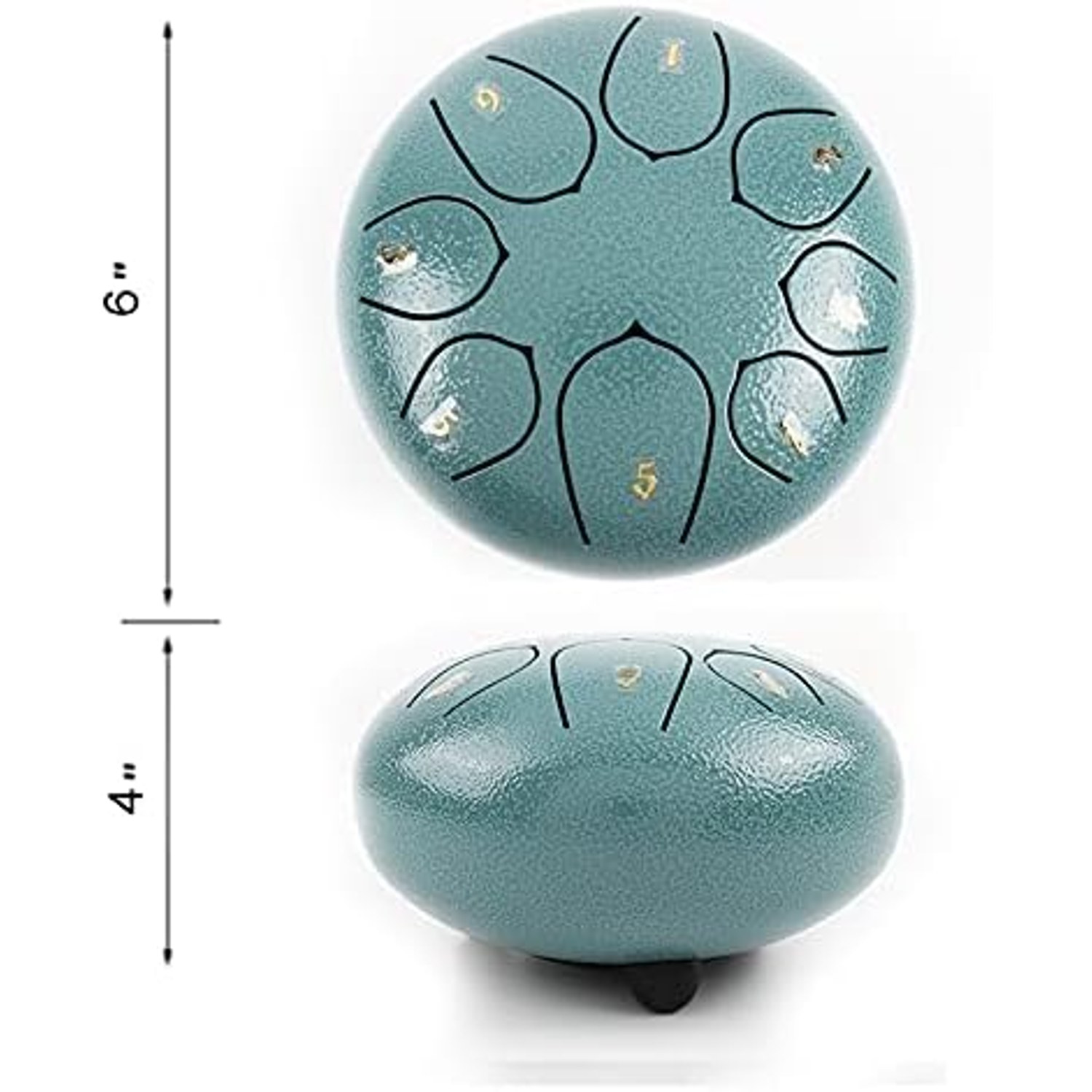
A steel tongue drum 6 inch across solves that gap. There is no technique barrier. You hit a tongue, you get a clear, ringing note, and because of how the drum is tuned it fits with whatever you hit next. Within about ninety seconds of opening the bag, most people are playing something that sounds intentional.
How a tongue drum actually works
Picture a steel shell, hollow inside, with a series of tongues cut into the top. Each tongue is a different length. Longer tongues vibrate slower and give you lower notes. Shorter ones vibrate faster and give higher notes. The air trapped inside the shell acts like the body of a guitar, amplifying and warming what the tongue produces.
This drum has eight tongues, cut with lasers so each one ends up at precisely the right length for its pitch. That precision is the whole ballgame. There is no tuning peg to twist afterwards. If the cut is slightly off, the note is slightly off, permanently. Laser cutting is what keeps a drum like this in tune with itself for its entire life.
The tuning here is C major, arranged as a pentatonic scale. Pentatonic means five notes rather than the usual seven, with the two most clash-prone notes left out. That sounds like a limitation. In practice it is the reason the drum is so forgiving. Pentatonic scales are used in folk music across Asia, Africa, Europe and the Americas because the notes simply do not fight each other. Hit any two tongues at the same time and you get harmony, not a wince.
Mallets or fingers
You get both options, and most owners use both.
The two steel mallets give you a bright, precise attack. Each note starts crisply and rings for longer. If you are following a song sheet, playing to a room, or recording, mallets are what you want. They also make it easier for kids to get a clean note, since you do not need to worry about finger position.
Fingertips produce something softer. The note has less bite at the start and fades faster. For quiet practice at eleven at night, or for meditation where you want the sound to sit in the background rather than announce itself, fingers are better. Some people also find the physical contact with the steel part of the appeal, a bit like why hand drummers never switched to sticks.
Try both in your first week. You will quickly work out which one suits the room you play in.
Who this suits
Complete beginners. If you have never played anything, this is as low as the barrier gets. The tone stickers tell you which tongue is which, and simple number-based song sheets are easy to find online.
Kids. It is a hand drum for kids in the sense that it is sturdy, light enough to carry, and does not require a teacher. Supervise younger children with the mallets and around the cut tongue edges, as you would with any instrument with metal parts.
Teachers and group leaders. Pentatonic tuning is why these turn up in classrooms. Six children playing at once still sounds like music, which cannot be said of six recorders.
Yoga and meditation settings. The sustain is long and the volume is gentle. Practitioners use it to open and close sessions, to signal transitions, and as something clients can play themselves without feeling judged on technique.
Anyone who needs a five-minute break. Plenty of people keep one on a desk. Three minutes of tapping between meetings does something that scrolling does not.
How to choose a tongue drum
A few things actually matter, and a lot of the marketing does not.
Size. Bigger drums go lower and ring longer. Smaller drums are brighter and far easier to carry. A 6 inch drum sits at the portable end. If you mainly want deep resonance for sound baths, you would eventually look larger. If you want something that travels and lives on a shelf, this size is the sweet spot.
Note count. Eight is the common starting point and covers most simple melodies. Eleven and thirteen note drums give more range but cost more and are harder to aim at accurately when you are new. Most people who go bigger do so as a second drum, not a first.
Key. C major is the standard first choice because the majority of beginner song sheets are written for it. D minor is the other popular key and leans more melancholy. For a first drum, C is the easier road.
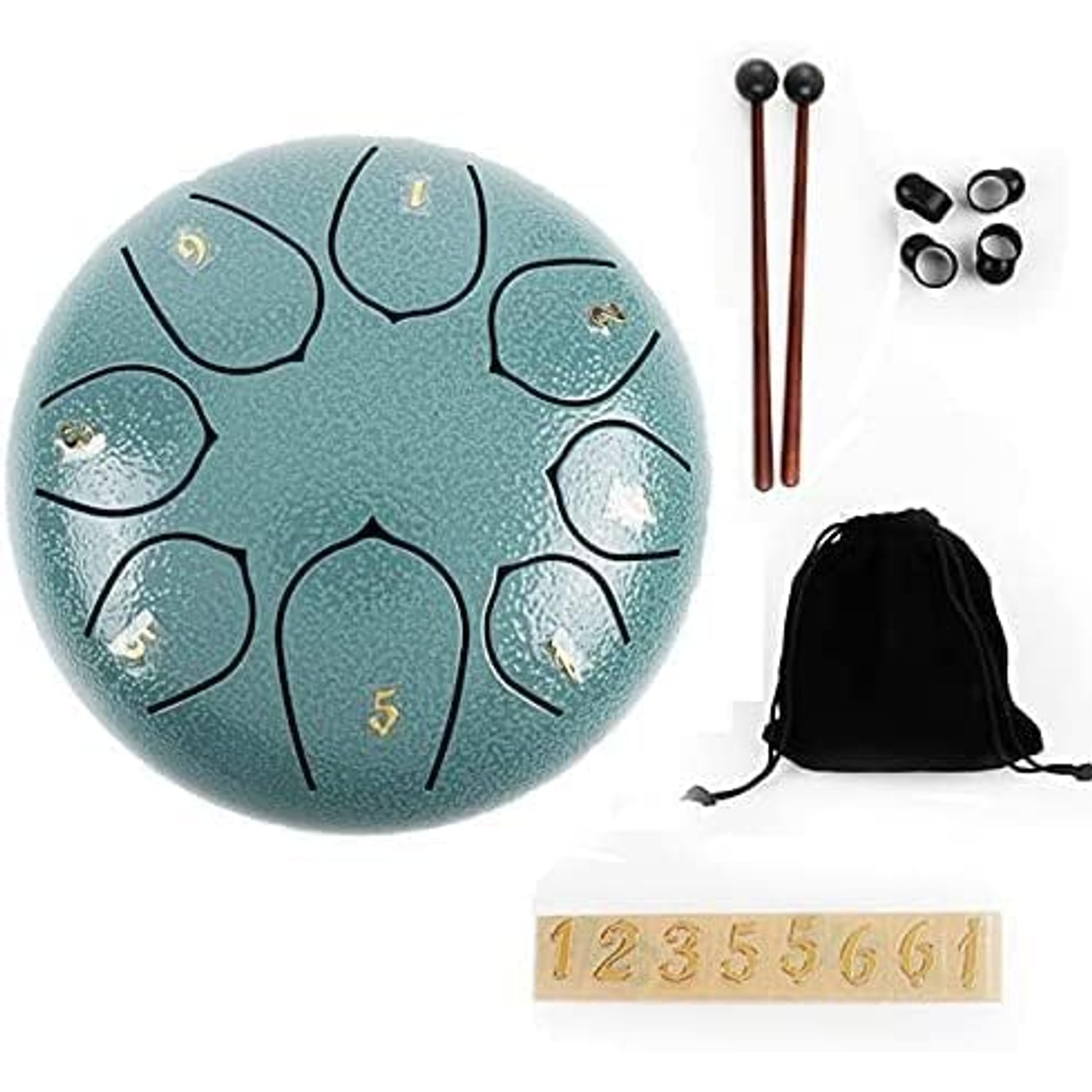
What comes with it. Mallets, a bag and stickers should be included rather than extras. All three are here, which saves you hunting for accessories that end up costing more than they should.
Material and finish. Alloy steel is standard for this type. The important thing is to keep the finish dry and avoid knocking it about, since scratches are cosmetic but permanent.
Looking after it
This is a low maintenance instrument, which is part of its charm.
Wipe it with a soft dry cloth when you finish playing. Skin oils are the main thing that dulls a finish over time, and thirty seconds with a cloth prevents it. Do not use water, solvents or scouring pads.
Keep it dry. Steel and damp are a poor combination over the long term. A bathroom shelf or a garage is a bad home for it. A bedroom, office or living room shelf is fine.
Avoid extremes of heat. Leaving it on a car dashboard in summer is the sort of thing that nobody plans to do and plenty of people accidentally do.
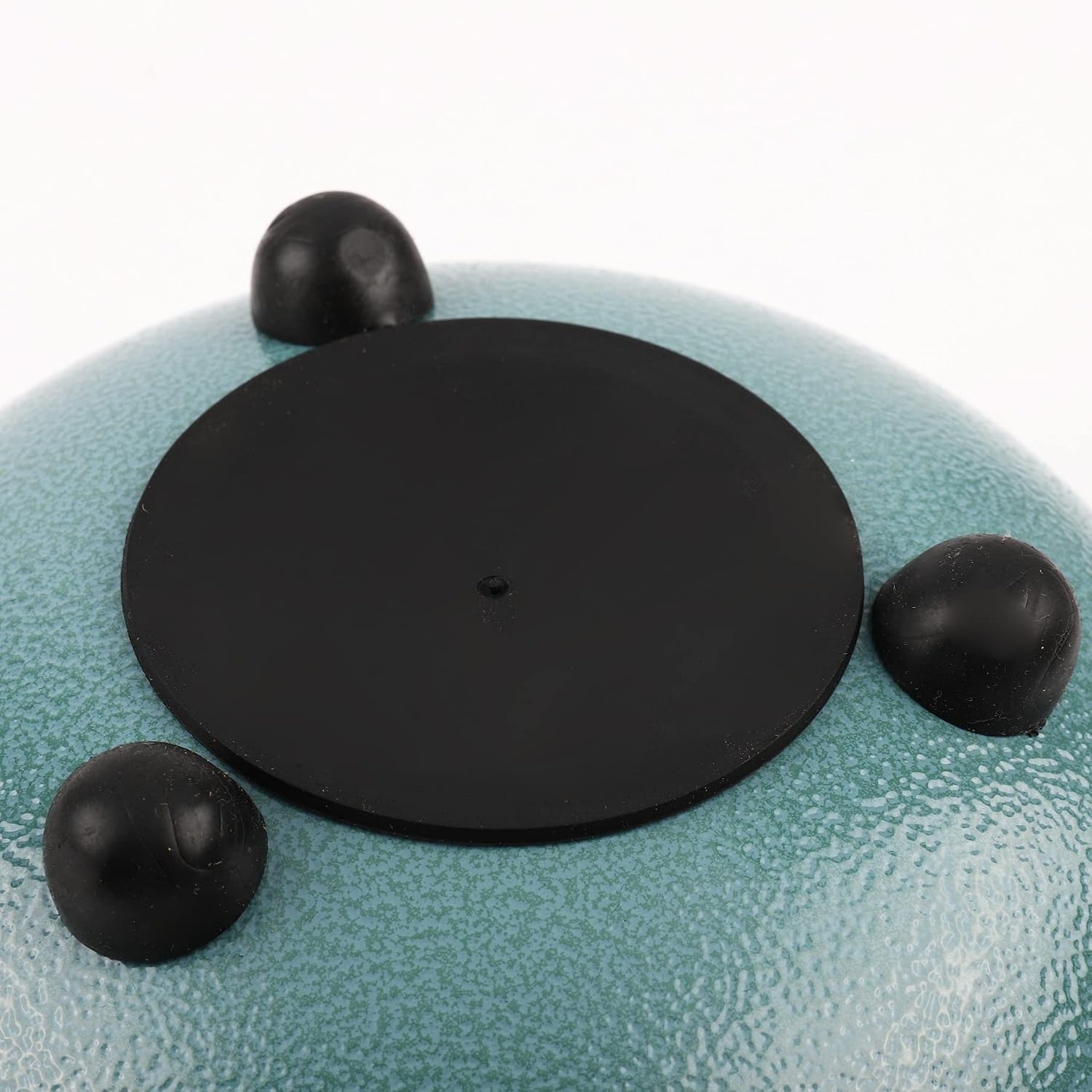
Use the bag. It is there to stop scratches in transit and to keep the mallets together. Mallets that roll loose in a bag get grubby tips, and grubby tips mark the drum.
Strike the middle of each tongue rather than the edges. You get a better sound and you are less likely to mark the finish.
The short version
A steel tongue drum 6 inch wide with eight notes is about as close as instruments get to immediate satisfaction. The pentatonic tuning removes the possibility of a bad note, the laser-cut tongues mean it never needs tuning, and the fact that it weighs 500 g means it actually gets picked up rather than admired from a distance.
It will not replace a piano and it was never meant to. What it does is give you a way to make something that sounds genuinely pleasant within minutes, whether you are a kid, a yoga teacher, or someone who just wants a quieter way to spend ten minutes.
Everything you need comes in the box: the drum, two mallets, the bag and the stickers. There is nothing to buy afterwards and nothing to learn first.