
The complete guide
The Complete Guide to Choosing Jumbo Dinosaur Figures
Why small dinosaur toys stop getting played with
Walk into almost any house with a dinosaur-obsessed child and you will find the same thing. A tub of tiny plastic figures, half of them missing, the rest in a jumble that nobody has touched in weeks. It is not that the child lost interest in dinosaurs. It is that small figures are hard to see, easy to lose and easy to forget.
Scale matters more than parents expect. A figure that fits in a palm reads as a background prop. A figure the size of a child's forearm reads as a character. That shift is why large dinosaur toys hold attention for months rather than days, and why they end up on bedside tables and shelves instead of at the bottom of a toy box.
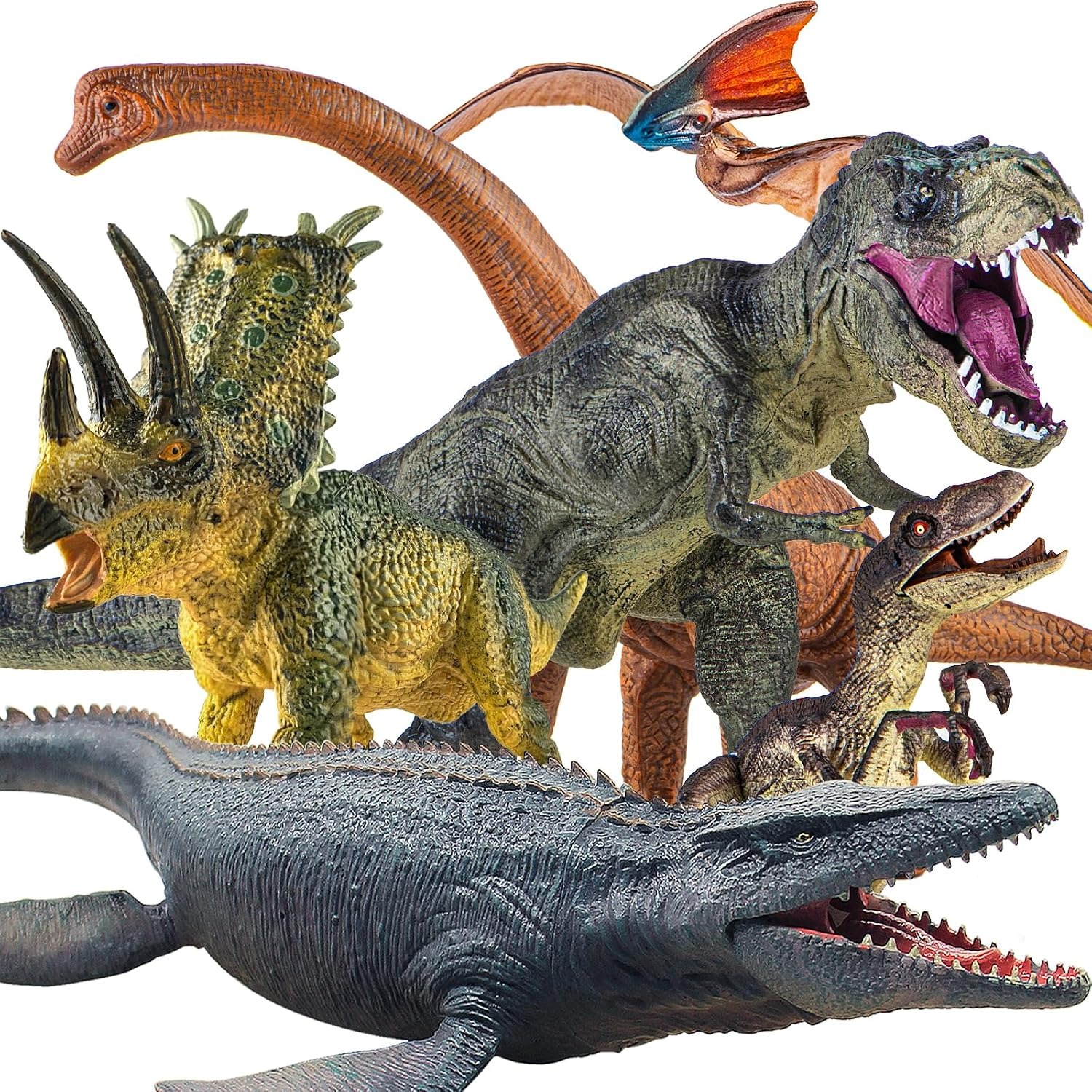
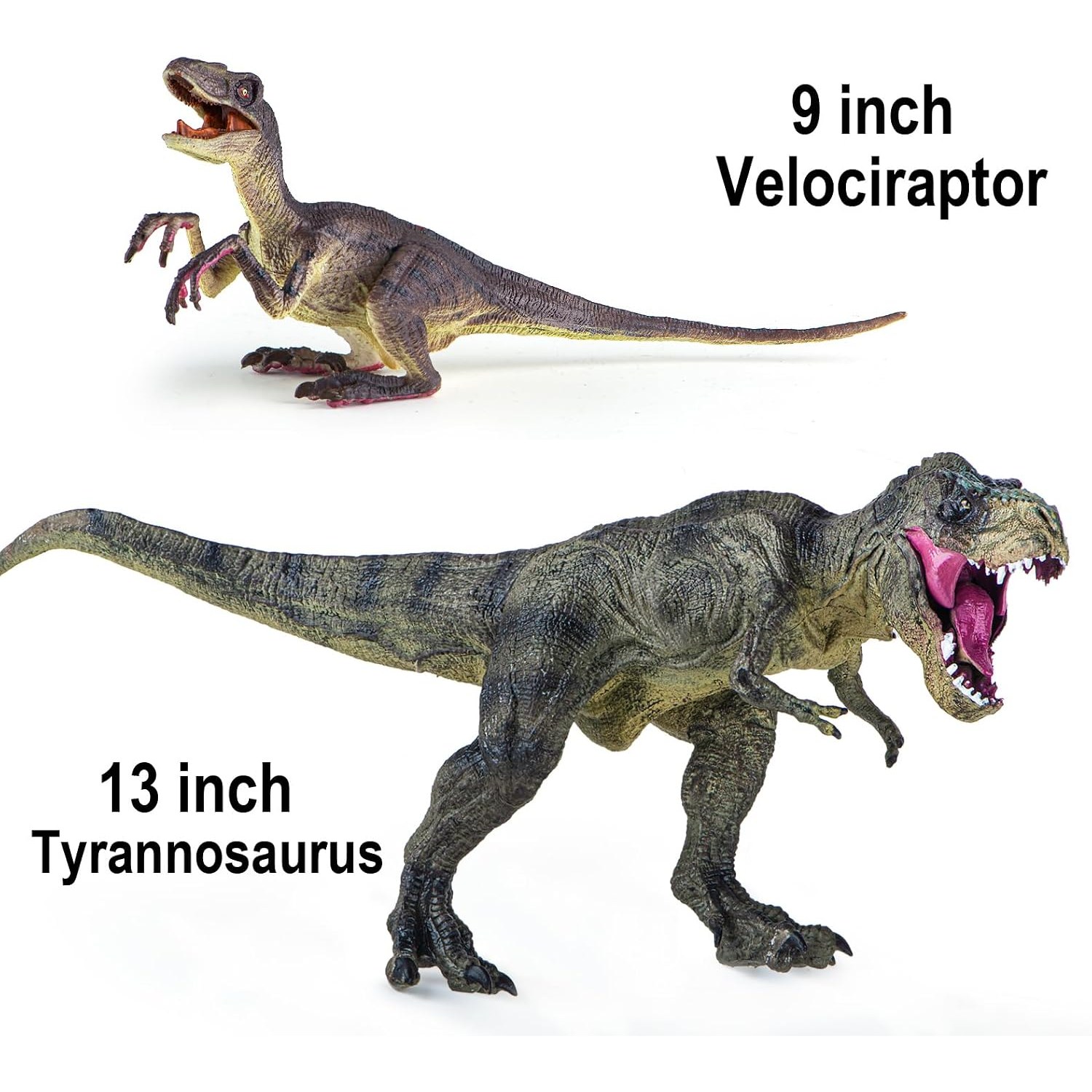
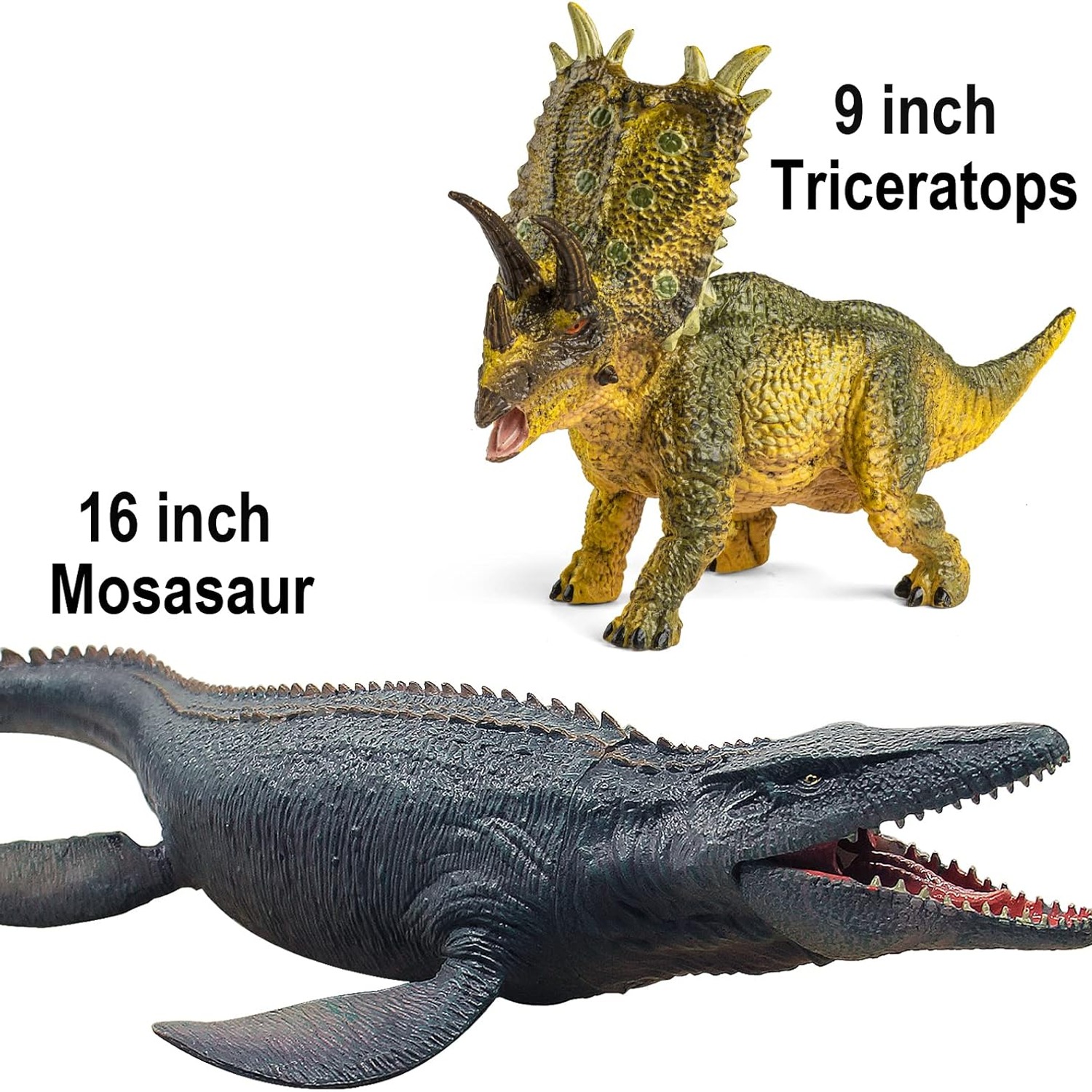
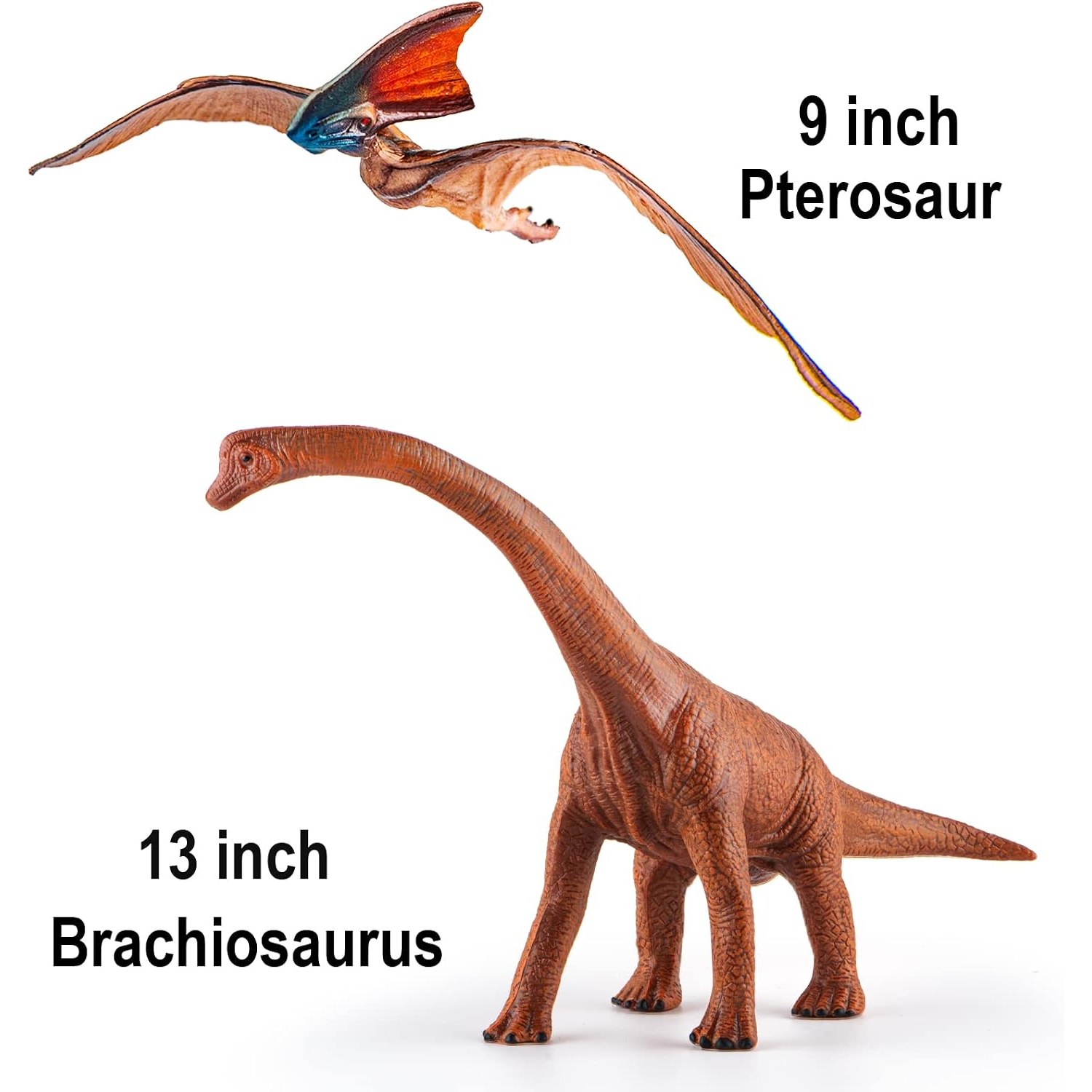
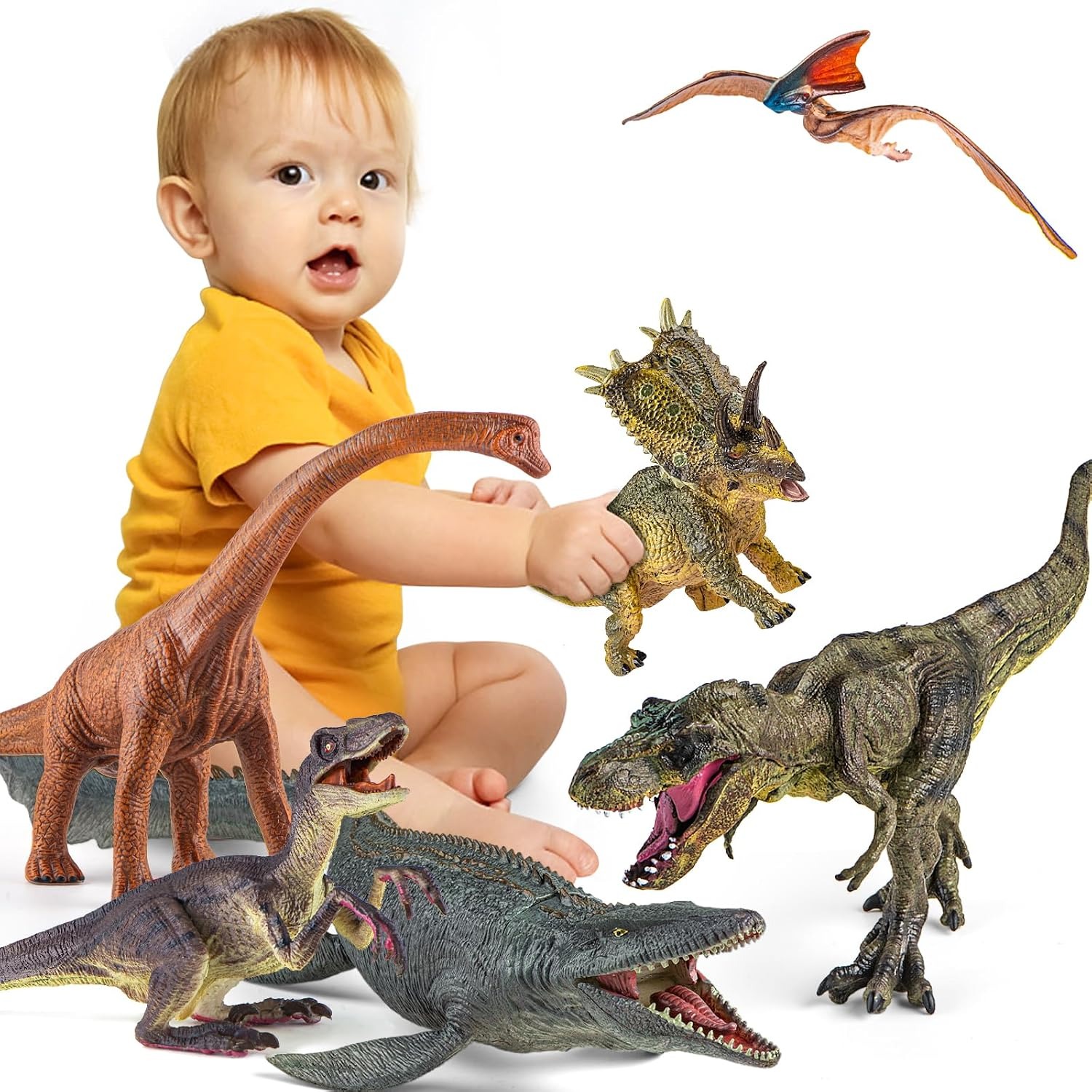
This set takes that idea seriously. The six figures run from 9 to 16 inches, which is a genuinely different category of toy. Children carry them around, name them, build worlds for them and get upset when it is time to put them away. That is the behaviour you are paying for.
What you actually get
Six figures, six species, no repeats. The Tyrannosaurus Rex is the one every kid reaches for first. The Brachiosaurus brings the long neck and the gentle giant role. The Pentaceratops has the horned frill that children love tracing with a finger. The Velociraptor is the fast, lean hunter in the group.
Then the set widens out. The Mosasaurus covers the ocean and the Pterosaur covers the sky. That matters more than it sounds. With a land group, a swimmer and a flyer, children can build scenes with different zones, which pushes storytelling further than six variations on a theme ever would.
The finish is earthy tones with a lustrous surface, so the figures look closer to museum models than cartoon characters. Detail is in the moulding, in the skin texture, teeth and claws, rather than in loud colour. Older children appreciate that. Younger children just like that the dinosaurs look right.
How the play actually works
There are no batteries here, no sounds and no buttons. The operation mode is manual, which is a technical way of saying a child provides the roar. That is a feature, not a shortcoming. Electronic toys dictate the story. A plain figure lets the child invent it.
In practice you will see three stages of play. First comes the simple stuff, stomping, chasing and knocking things over. Then come scenes, where figures get arranged around cushions, blocks and books that have become cliffs and caves. Later comes narrative, where the same dinosaurs appear in ongoing stories across several days.
The listed educational objectives are stimulating imagination, exercising logical thinking and enhancing creativity. Those are broad claims, but the mechanism behind them is simple. When a toy does nothing on its own, the child has to supply the plot, the rules and the reasons. That is the thinking work.
Who this set suits
The recommended age range is 36 months to 12 years. That is unusually wide for a toy, and it holds up because the figures work differently at each end of the range. A three year old treats them as big friendly companions. A nine year old treats them as accurate models and starts caring which species actually overlapped in time.
Teachers and childcare staff are a natural fit. Large figures work in circle time because the back row can still see what is being held. They also support simple sorting lessons, land versus sea versus air, plant eater versus meat eater, big versus small.
Party hosts are the other obvious group. Six jumbo dinosaurs make a striking table centrepiece and then double as gifts at the end. The listed occasions include birthdays, Children's Day, Christmas and Easter, which covers most of the gifting calendar.
How to choose dinosaur figures that last
There are a few things worth checking whenever you buy a dinosaur figure set, and they apply well beyond this particular product.
Start with size, because it is the single biggest driver of how much a figure gets used. Anything under about four inches tends to get absorbed into the general toy pile. Jumbo figures stay visible and keep their status.
Next, look at species variety. A set of six near-identical theropods is less useful than a set that spans land, sea and air. Variety is what keeps the stories moving, and it is also what makes the set worth something educationally.
Then think about how it will handle real life. Durable plastic, no small snap-off accessories and no batteries means fewer failure points. A toy that cannot break in an interesting way tends to survive longer than one that can.
Finally, check the warranty position. This set carries a 6 month warranty against manufacturer defects, which gives you a clear path if something arrives wrong. That is more reassurance than most figure sets come with.
Caring for them so they still look good next year
Plastic figures are forgiving, but a little care goes a long way. Wipe them with a damp cloth and mild soap when they get grubby, then dry them fully. A soft toothbrush is handy for the textured areas around frills, scales and teeth where dust collects.
Skip the dishwasher and skip boiling water. Heat can warp plastic and dull the lustrous finish. Harsh solvents will do the same thing faster.
Storage is the other half of it. Keep the thinner shapes, tails, crests and wings, near the top of the box rather than crushed under heavier toys. Many families solve this by putting the dinosaurs on an open shelf instead, where they double as room decoration and get picked up more often because they are visible.
The listed usage is indoor. That does not mean the dinosaurs will dissolve in the garden, but prolonged sun will fade colour over time, and grit scratches a glossy finish. If they do go outside, give them a wipe before they come back to the shelf.
A few things worth knowing
Two of the six are not technically dinosaurs. The Mosasaurus was a marine reptile and the Pterosaur was a flying reptile. Both lived during the same era, but neither sits inside the dinosaur family tree. This is one of the best educational dinosaur toys talking points you will get, because children love being the one who knows the correct answer.
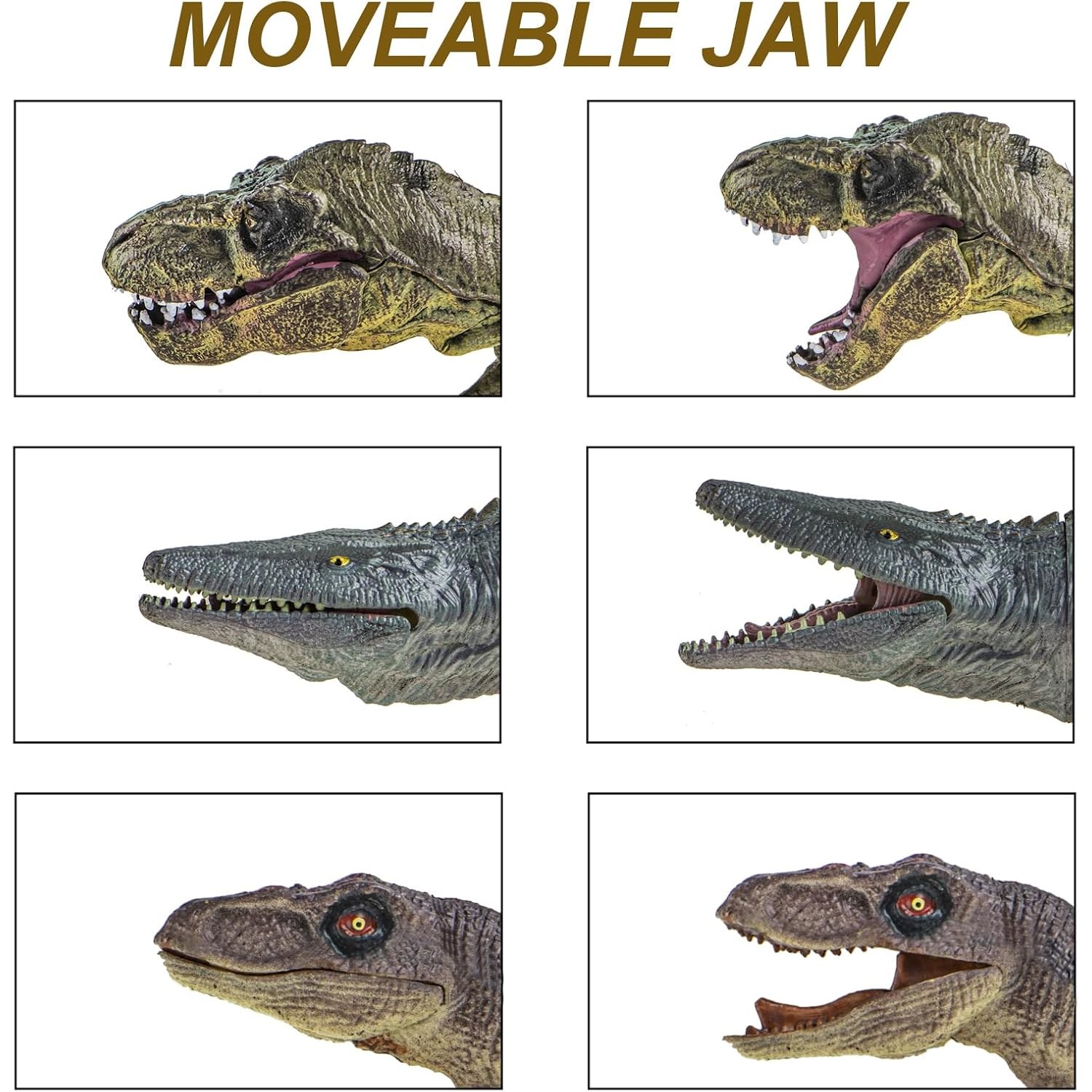
The figures are static play figures rather than articulated action figures, so jaws and limbs do not move. That keeps the build simple and removes the joints that usually fail first.
Packed, the set measures 33.02 x 10.16 x 10.16 cm and weighs 1.29 kg. The box is compact for what it holds, so open it carefully and let the figures out rather than tugging them.
The short version
If you want dinosaur toys that get used instead of stored, go big. Six jumbo figures spanning 9 to 16 inches, covering land, sea and sky, with no batteries to die and no screen to compete with. They suit a three year old and they still suit a ten year old, which is rare.
Use them on the floor, on a party table, in a classroom or on top of a cake. Wipe them down, store them sensibly, and they will carry a child through years of invented worlds. That is a reasonable return on one box.