
The complete guide
Choosing a Kids Garden Wagon and Tools Set, A Practical Buyer's Guide
The problem with giving a preschooler your trowel
Anyone who gardens with a small child nearby knows how this goes. You kneel down to plant something, and within thirty seconds there is a three year old holding your secateurs and asking what they do. You hand over a trowel instead, they lose interest because it is too heavy and the handle is too wide for their fist, and five minutes later they are off digging up the lawn with a stick.
The issue is not enthusiasm. Small children want to help, and gardening is one of the few household jobs they can genuinely join in with. The issue is that adult tools are the wrong size, the wrong weight and often genuinely unsafe in small hands. A child who cannot grip a tool properly will not get anything done, will get frustrated, and will drift off to something easier.
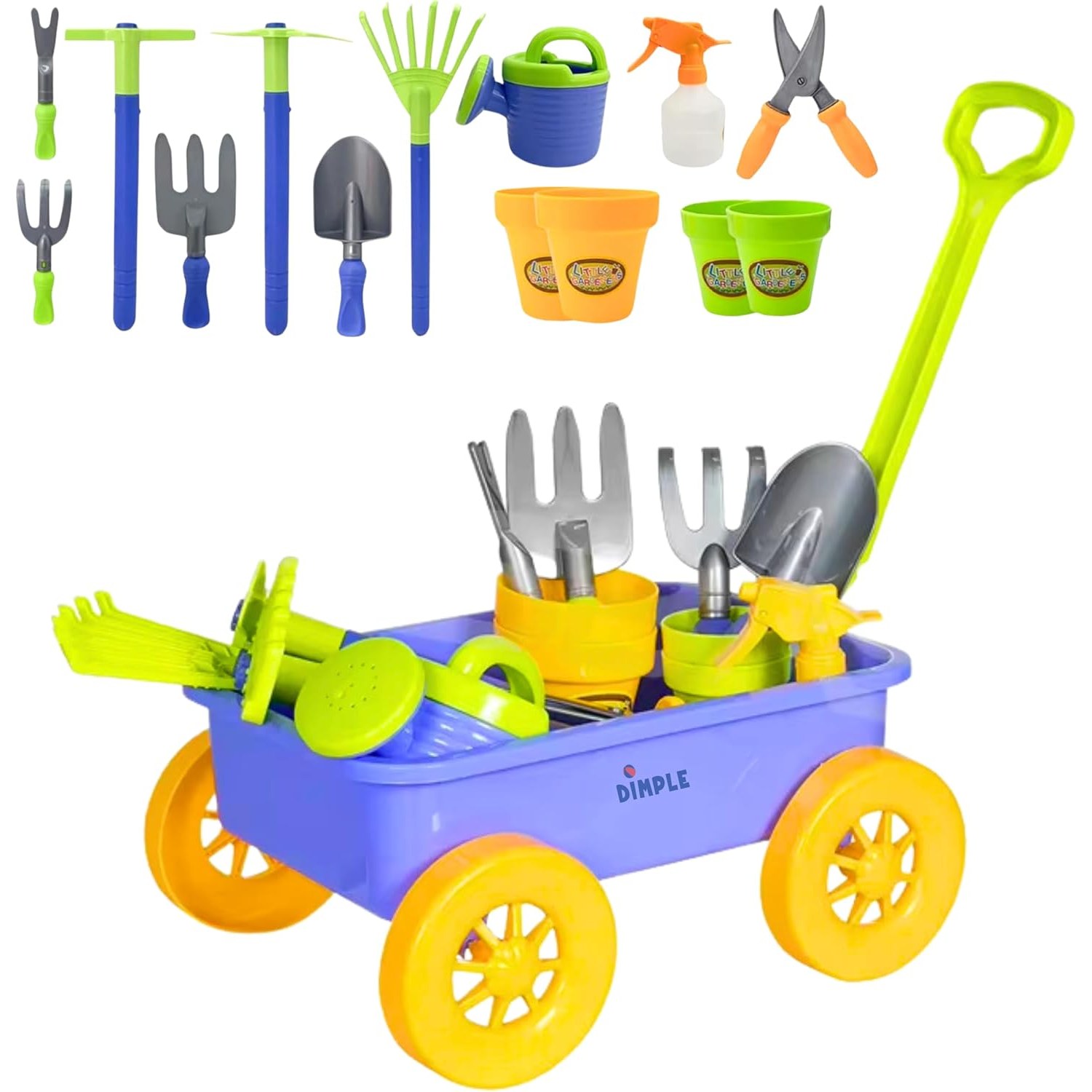
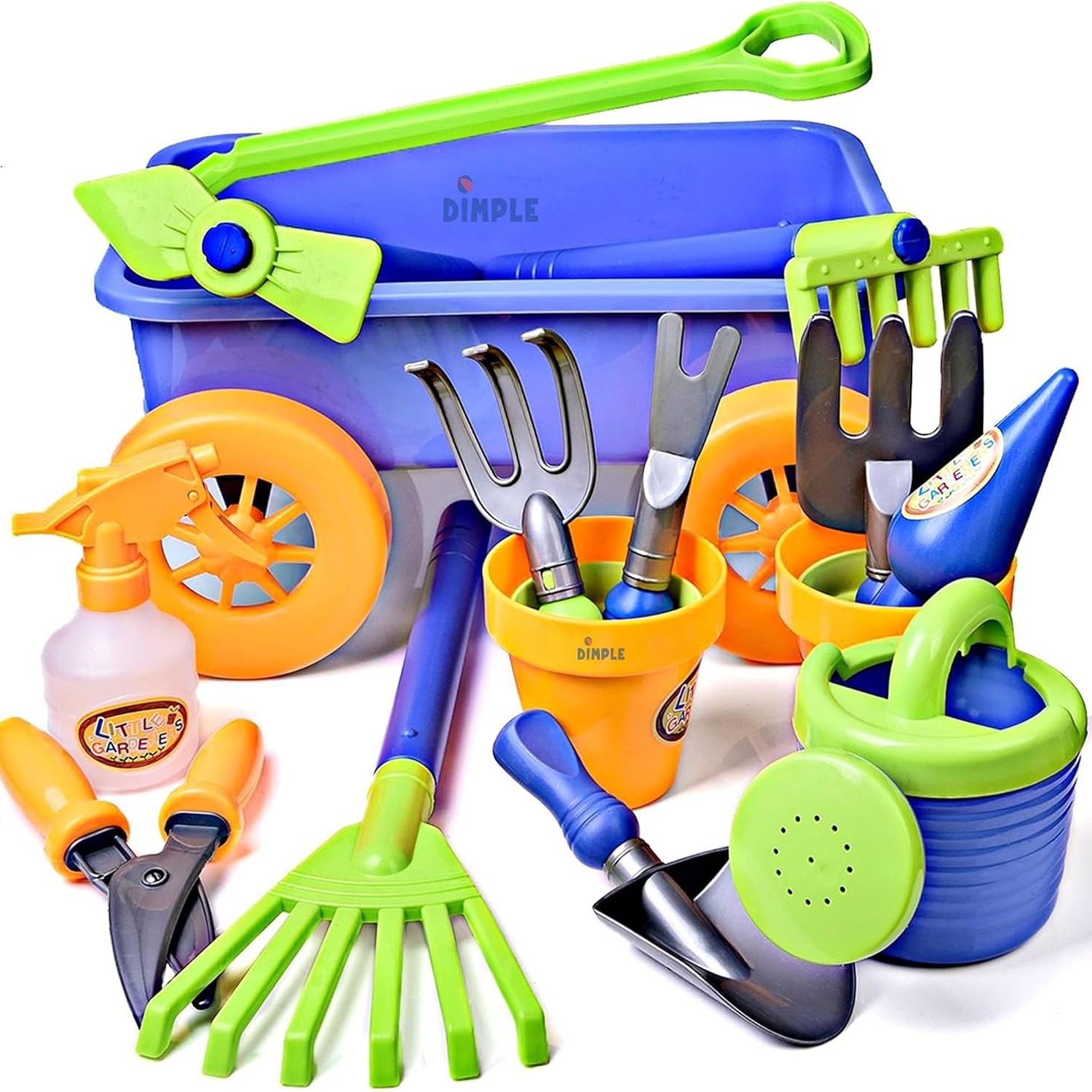
A kids garden wagon and tools set solves that by giving a child a complete kit scaled to them. Handles are narrow enough to hold. Edges are rounded rather than sharp. And because everything lives in a wagon they can pull around themselves, the whole business feels like their project rather than a borrowed corner of yours.
How this set works
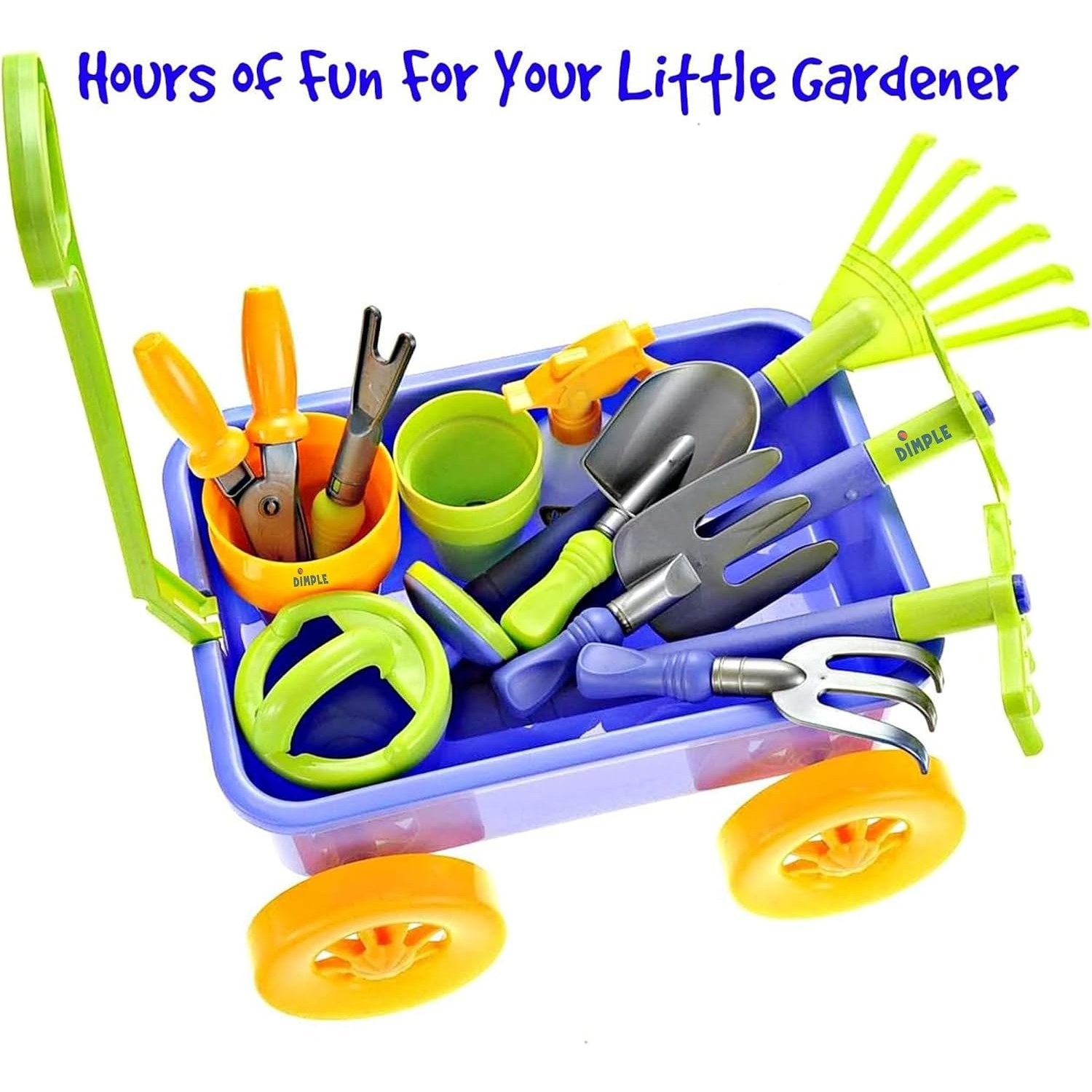
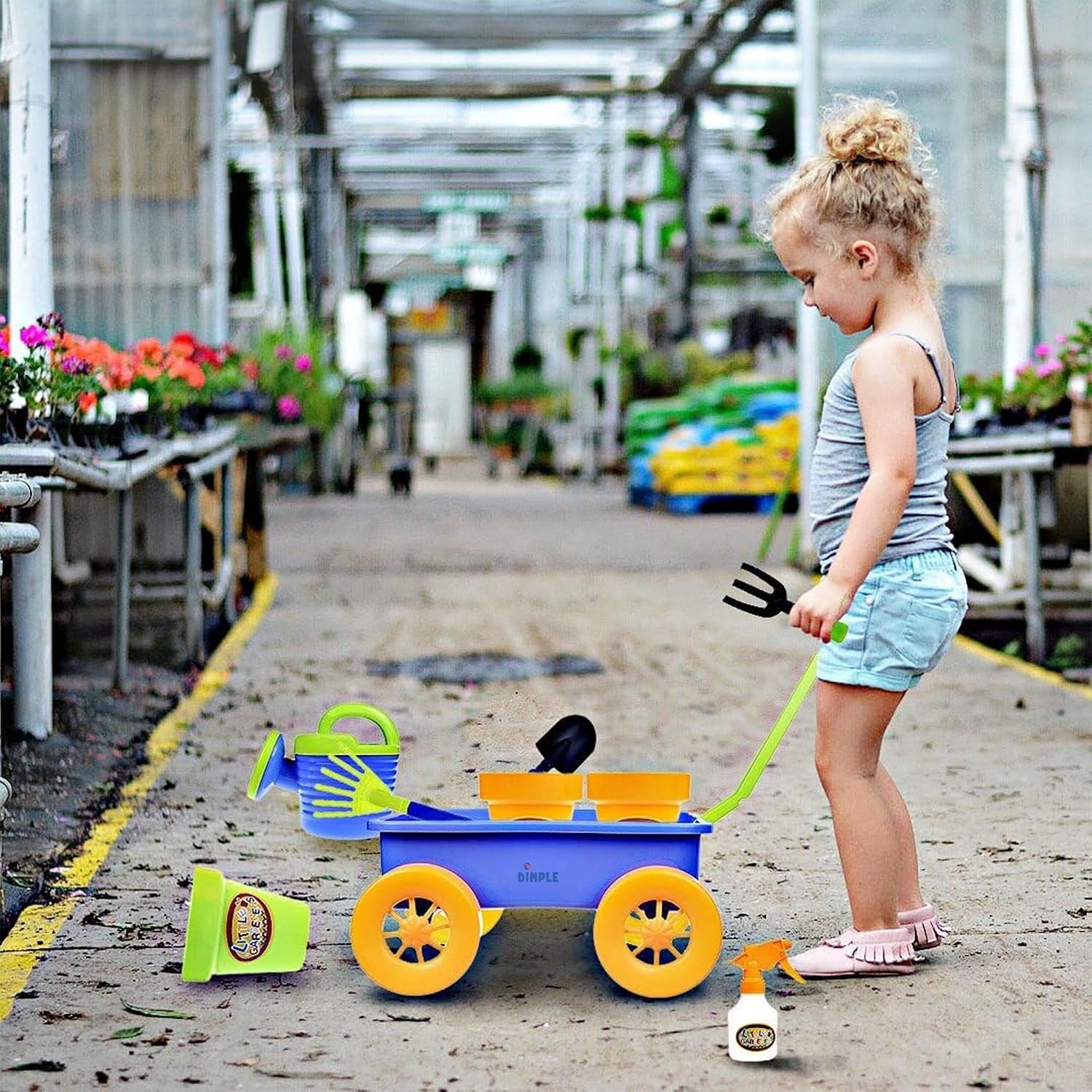
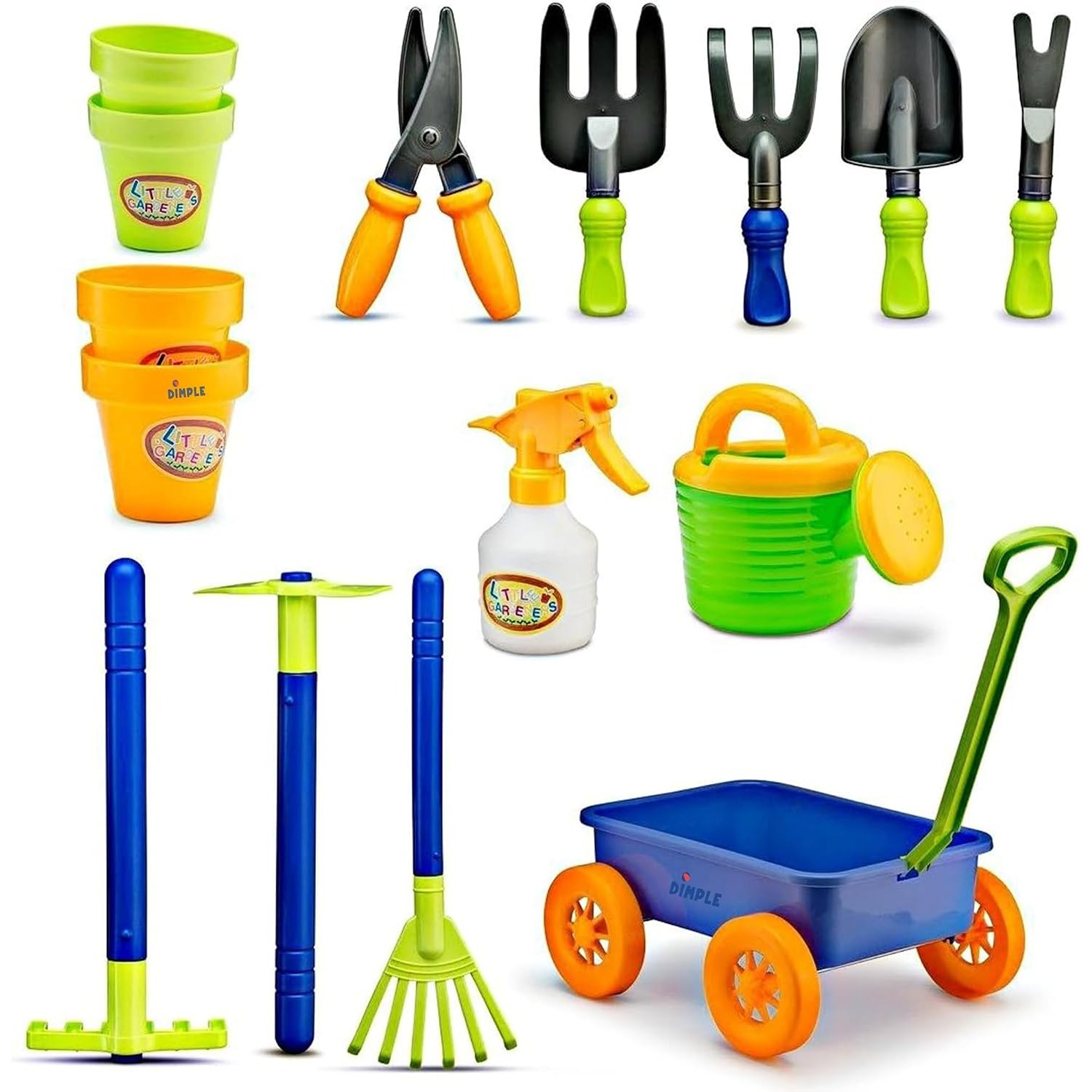
The core of it is a pull-along toy garden wagon in blue plastic. Inside sit child-sized gardening tools plus the extras that make play feel real, things like pots and watering gear. The wagon is both the storage and the transport, which is the clever part. A child loads up, trundles to wherever they have decided the garden needs attention, unloads, works, and then packs everything back in.
That loop matters more than it sounds. Loose buckets and spades end up scattered across a lawn and half of them disappear by August. A set with its own container teaches tidy-up as part of the game rather than a chore bolted on afterwards.
The whole thing measures 36.2 x 29.21 x 16.76 cm and weighs 907 g. That is light enough for a preschooler to manage when loaded and light enough for an adult to carry to the car with one hand. There are no batteries and no electronics. Operation is listed as manual, which in toy terms means it does exactly what the child makes it do and nothing more. For a lot of parents that is the selling point, not a compromise.
Dimple lists the educational focus as hand-eye coordination and patience. Both are fair. Scooping soil into a pot without spilling it everywhere is a genuine fine motor challenge for a three year old. So is waiting for a seed to come up, though that part takes longer to teach.
Who it suits
The recommended age is 36 months and up. Around three is when children start to manage tools with intent rather than just banging things together, so the timing fits well. Younger preschoolers will enjoy the wagon and the pouring, but the finer tool work is beyond them.
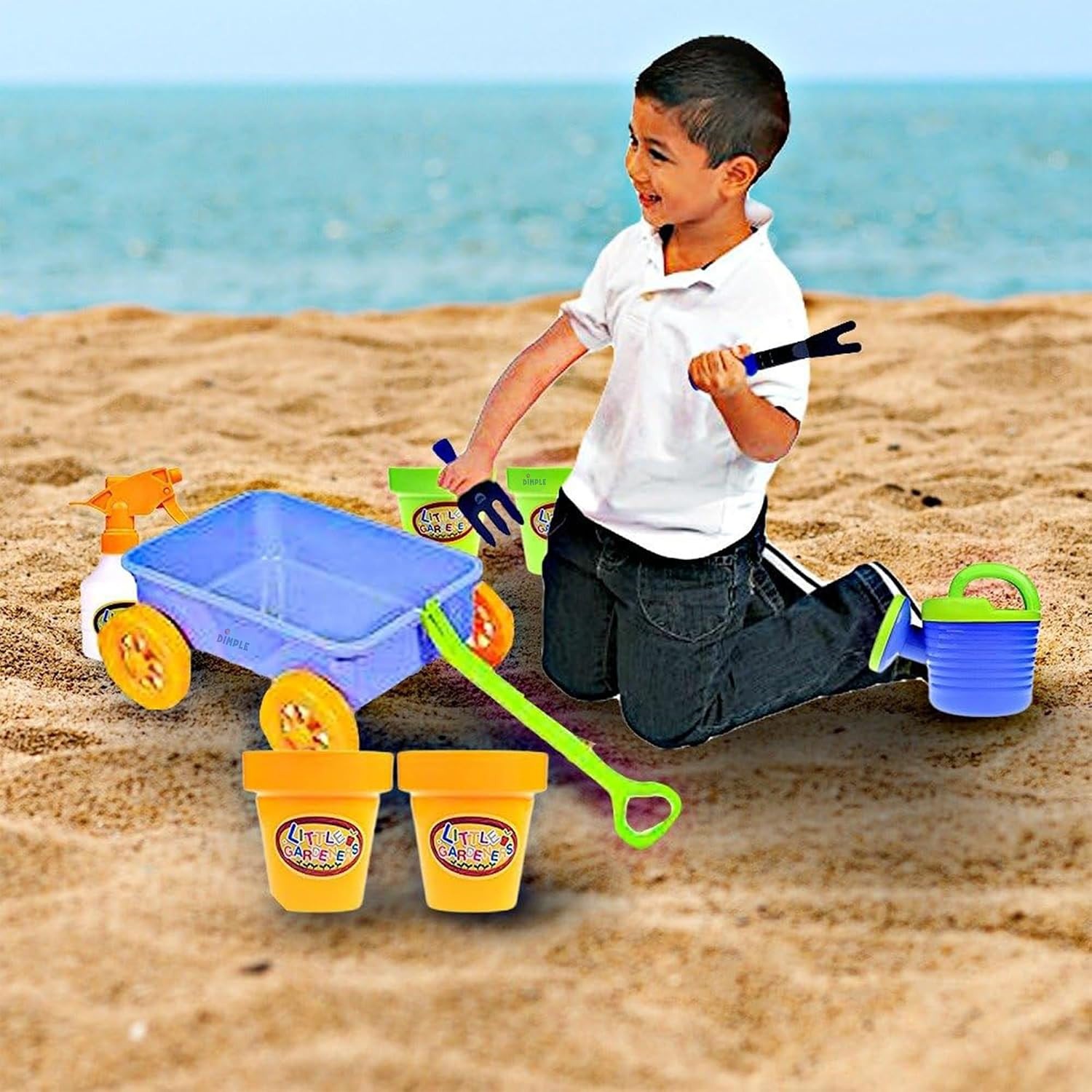
It suits families with any outdoor space at all. You do not need a proper vegetable patch. A couple of pots on a balcony, a strip of border by the back door, or even a tray of compost on a picnic table is enough for a child to dig in. The set also works anywhere there is loose material to move, which is why it travels well to the beach and on camping trips.
It also suits parents who are trying to cut down on screen time without making it a battle. A set like this works because it gives a child something to do with their hands and a reason to be outside. You do not have to sell it to them. You just put it in the garden and step back.
The maker describes it as a single-player set, which is about tool count rather than any restriction. Siblings and friends share it fine. If you have two children of similar age who struggle to take turns, buying two sets in different colours is usually simpler than refereeing.
How to choose between outdoor play sets
A few things actually matter when you are comparing options.
Grip is the first. Tools with narrow, textured handles get used. Tools with fat smooth handles get dropped. Non-slip handles and rounded edges are listed features here and they are not marketing padding, they are the difference between a child using a set and ignoring it.
Storage is the second. Any set that comes with its own container will survive longer than one that does not, simply because fewer pieces go missing. The wagon here doubles as the box.
Material is the third. Plastic gets a bad write-up sometimes, but for outdoor children's tools it has real advantages. It does not rust if left out overnight, it does not splinter like cheap wood, and it washes clean under a tap. The trade-off is that sun exposure will fade and weaken it over years, so storage under cover is worth the habit.
Weight is the fourth. At 907 g this set is light. A child can move it alone, which is the entire point of a wagon they are meant to pull. Heavier wagons look sturdier on a product page and then sit unused because a three year old cannot shift them.
And finally, think about where you will actually use it. If you are mostly in a small backyard, almost anything works. If you want the best outdoor play set for preschoolers that also goes in the car for day trips, compact dimensions and a self-contained design matter a lot more.
Looking after it
Care is simple, which is a fair chunk of the appeal. Rinse the tools and the wagon with clean water after a session in soil or sand. Wipe everything dry with a cloth. Skip bleach, solvents and scouring pads, which scratch the surface and dull the colour.
Let it dry fully before packing it away, especially after beach use where salt and damp sand get into corners. Store it indoors, in a shed, or under a bench rather than leaving it out on the grass season after season. Plastic handles a shower without trouble, but months of direct sun will take the colour out and make it brittle eventually.
Every so often, run your eye over the handles and the wagon body for cracks. Retire anything that has split rather than letting a child keep using it. Doing a quick count of pieces back into the wagon at the end of play is the single best way to keep a set complete.
Making more of it
The set works on its own, but it comes alive when there is something real to do with it. A packet of fast-growing seeds like radishes or sunflowers gives a child a visible result inside a couple of weeks. A small bag of compost and two spare pots turns an afternoon into a proper project.
Give them a job that is genuinely theirs. One pot they water, one patch they weed, one plant they are in charge of. Children take that seriously in a way they do not take seriously being handed a tool and told to play.
If the weather turns, the same kit works in a tray of dry sand or rice on a kitchen floor with a towel underneath. The scooping and pouring is the same skill, and it buys you an hour.
The short version
This is a blue plastic toy garden wagon from Dimple with child-sized gardening tools inside, recommended from 36 months and up. It measures 36.2 x 29.21 x 16.76 cm, weighs 907 g, needs no batteries and is listed for outdoor use.
It suits preschoolers and young preschoolers who want to copy what the adults are doing, and it works just as well in a sandpit or at the beach as it does in a garden. Grip-friendly handles, rounded edges and the fact that everything stores in the wagon are the features that make the difference day to day.
If you want a straightforward, no-screens outdoor toy that gets a small child digging, pouring and carrying things about, this is a sensible pick.