
The complete guide
Take Apart Dinosaur Toys with a Drill, A Practical Buyer's Guide
The problem with most dinosaur toys
Walk into any child's bedroom and you will probably find a plastic T Rex under the bed. Dinosaur figures are everywhere, they are cheap, and children love them. The trouble is that a finished figure does one thing. A child picks it up, roars, walks it across the carpet and puts it down. Twenty minutes later it has joined the pile.
Parents notice this pattern because they buy a lot of toys that follow it. The toy is not bad. It just has a short ceiling. There is nothing left to discover after the first day, so it stops earning space in the room.
A take apart dinosaur set deals with that directly. The dinosaur is not the toy, the building is the toy, and the dinosaur is what you get at the end. Then you unscrew it and do it again. That loop is why these sets tend to stay in rotation long after a static figure has been forgotten.
How a take apart dinosaur set works
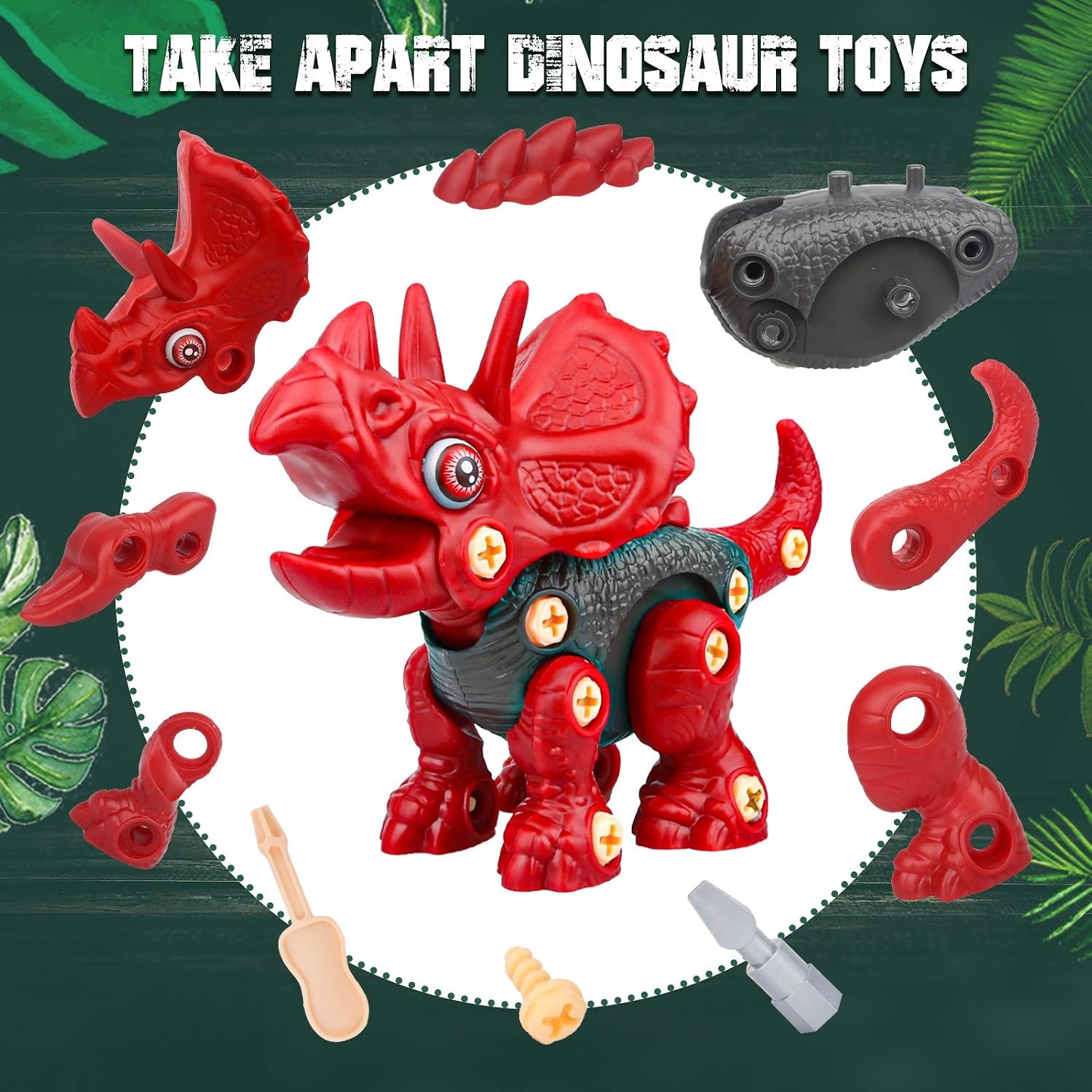
The idea is simple enough that a four year old gets it in about a minute. Each dinosaur arrives as a set of separate parts. The legs, the arms, the head, the tail and the body halves all fit together, and small screws hold them in place.
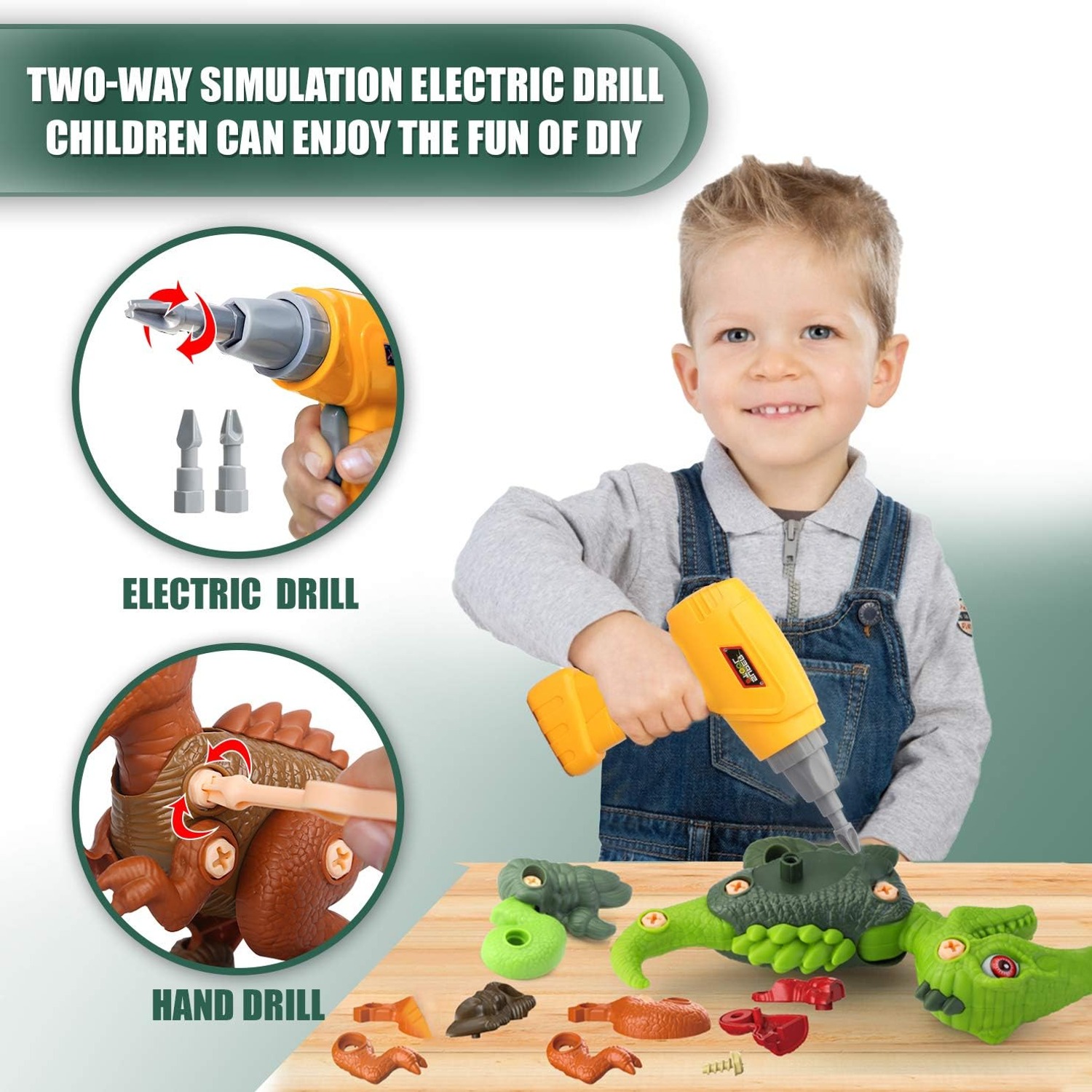
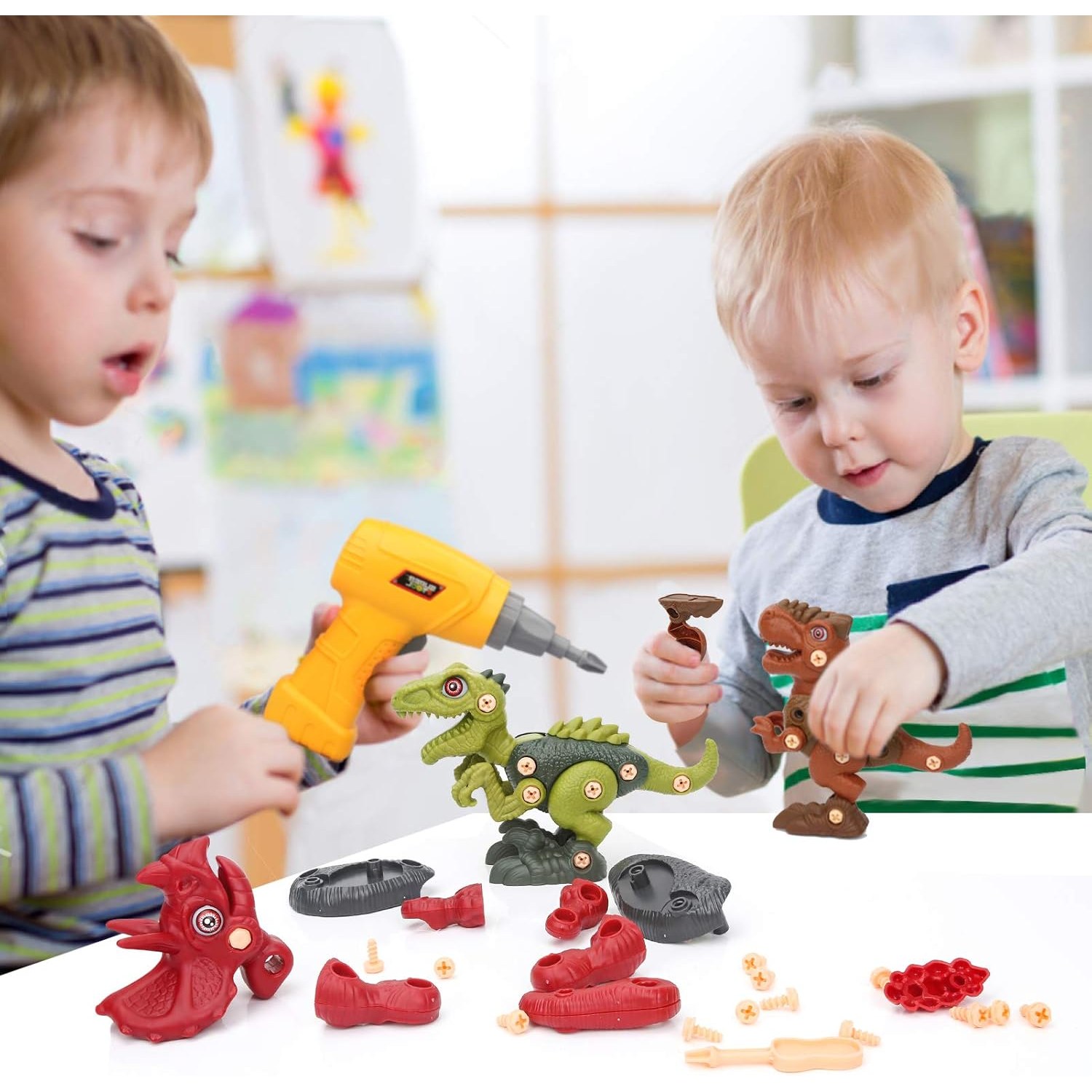
Instead of clicking parts together, your child drives the screws with a toy electric drill. This set includes one drill with two different bits, and it runs on a low-speed motor powered by AAA batteries. The important detail is that it turns in two directions. Forward tightens, reverse loosens. Without reverse, a build-it toy becomes a one-time activity, and the whole appeal collapses.
That two-way action is also where the learning sits. Most young children have seen an adult use a screwdriver without understanding what is happening. Doing it themselves, feeling a screw bite and then watching it back out, teaches a mechanical idea they will use forever.
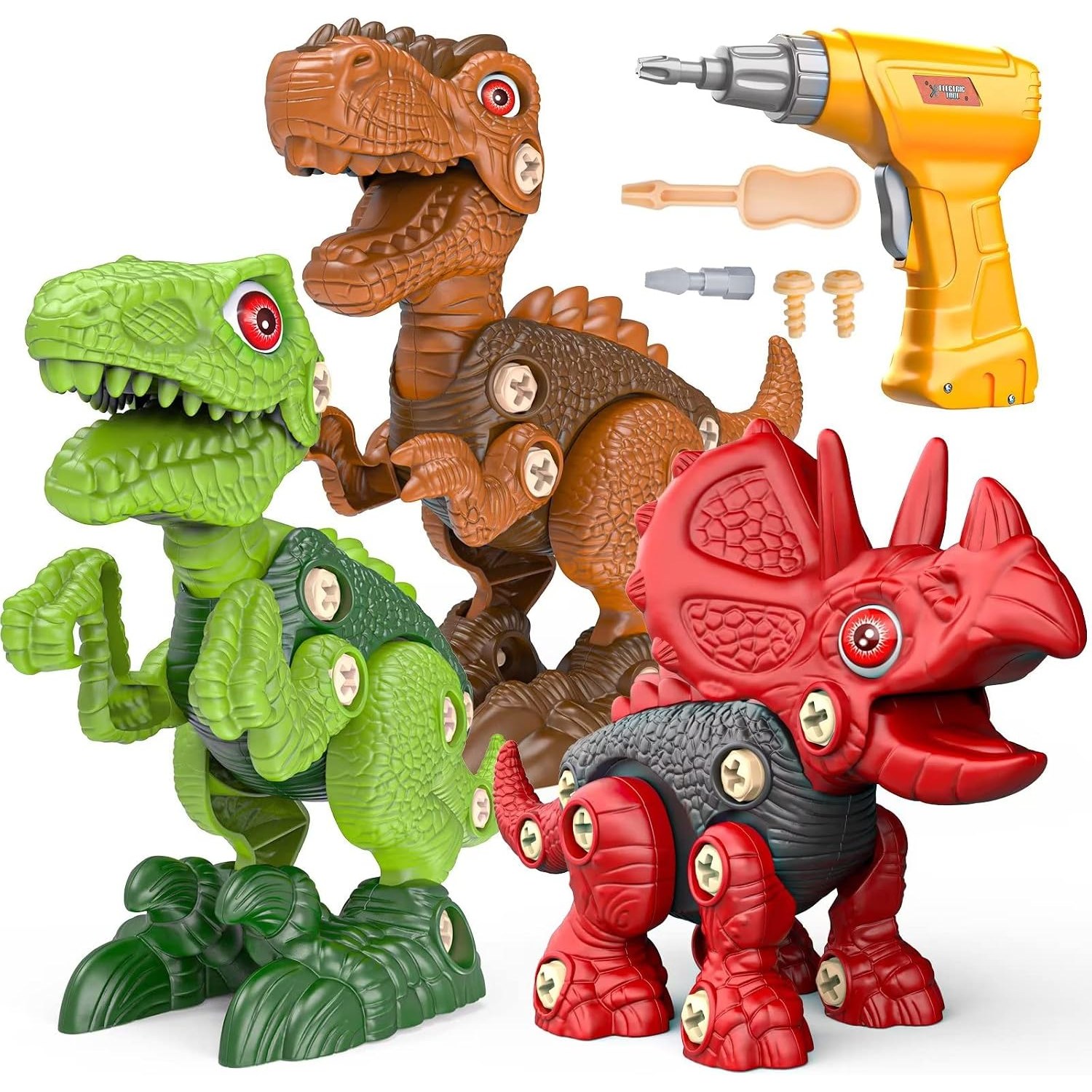
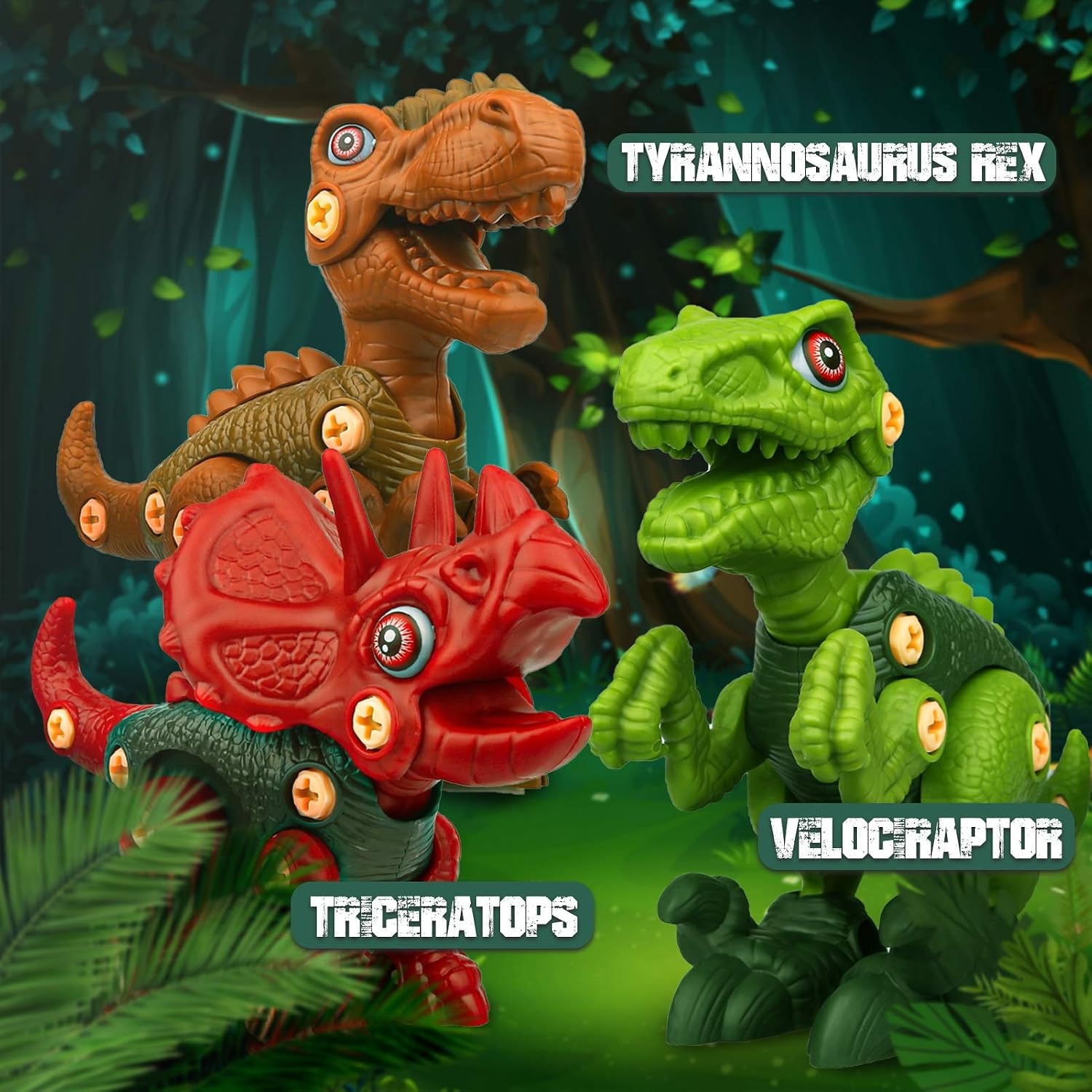
This particular set gives you three dinosaurs rather than one, an orange Tyrannosaurus Rex, a red Triceratops and a green Velociraptor. Three builds means three separate sessions if you want to spread it out, or one long afternoon if your child is on a mission.
Why the joints matter
A build toy that produces a stiff, unmovable figure is only half a toy. Once the screws are tight, the child has nowhere to go except take it apart again.
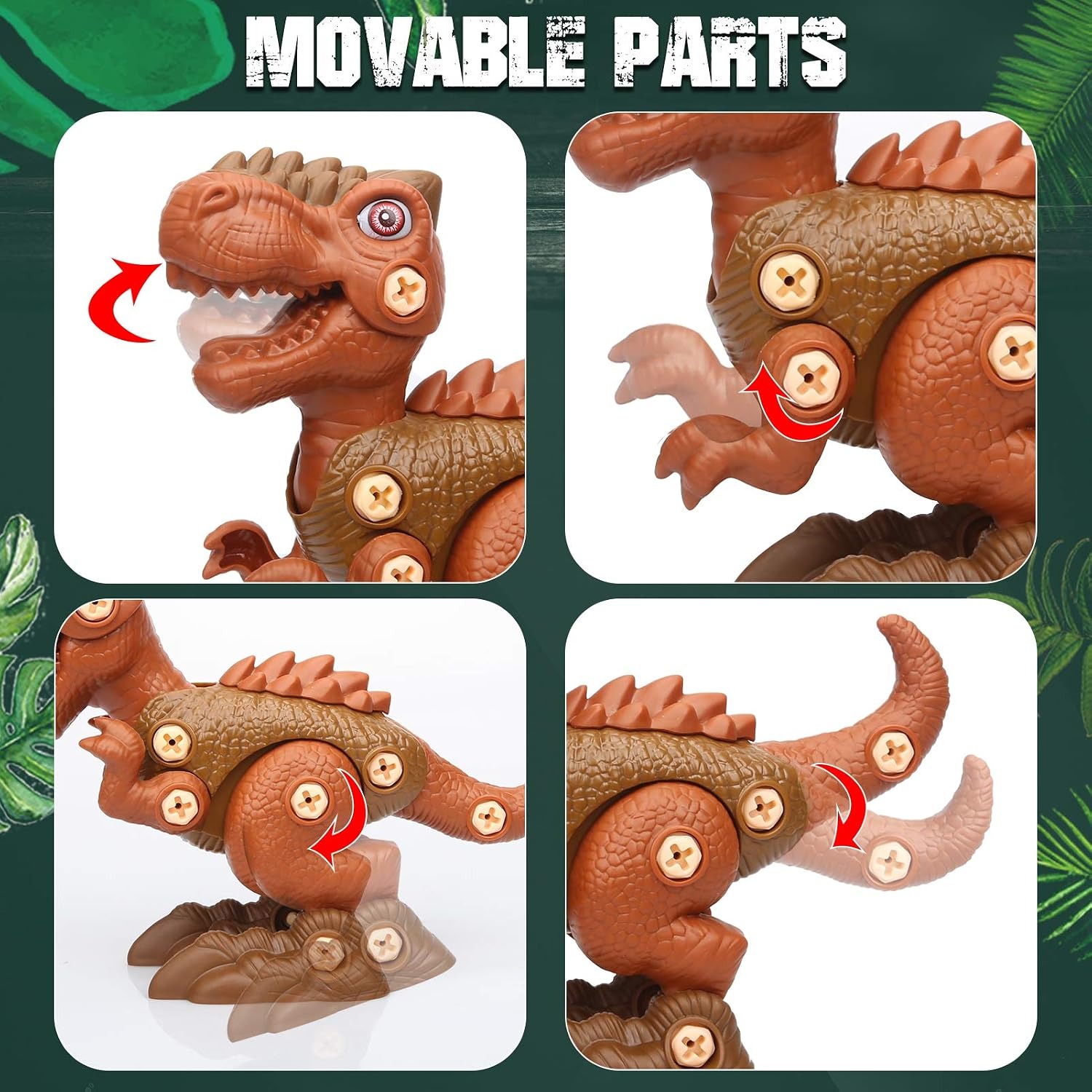
Here, the head, arms and legs move. That means the finished Tyrannosaurus Rex can lunge, the Triceratops can lower its horns and the Velociraptor can crouch. Children set them up facing off, stage chases down the hallway and invent rules on the spot.
This is the difference between a kit and a toy. A kit ends at assembly. A toy keeps going. When you are weighing up the best dinosaur building set options, check whether the finished model actually plays, because that single feature decides how many weeks the thing survives.
Who this suits
The manufacturer recommends ages 36 months to 8 years, and that band is honest about how the set is used across different ages.
At three, this is a supervised activity. An adult sits alongside, sorts the parts into piles and holds a leg steady while the child works the drill. The child is not really building independently yet, and that is fine. They are learning what the tool does.
At five or six, something changes. The child starts matching parts without help, works out which screw goes where and only shouts for an adult when a piece will not line up. This is the sweet spot, and it is why people searching for the best dinosaur toys for 5 year olds often land on sets like this one.
At seven or eight, the build itself is easy, so the interest moves to speed, to customizing poses, and to seeing whether parts from one dinosaur fit another. Some children in this bracket will build all three in one go and then dismantle them for the satisfaction of it.
There is one more group worth mentioning. If you have a child who has already taken the back off a TV remote, this set is for them. It redirects a perfectly good instinct towards something designed to be opened.
How to choose between sets like this
If you are comparing a few take apart dinosaur toys, a handful of practical points separate them.
Look at how many figures you get. One dinosaur is a short activity. Three, as here, gives variety and lets siblings each claim one.
Check the drill. Some sets include a manual screwdriver only, which is slower and harder on small hands. A powered drill with reverse is the better buy, and two bits mean the set can use more than one screw type.
Think about the age fit. A set aimed at ten year olds will have fiddly parts that frustrate a four year old. This one is pitched at 36 months to 8 years, which is a wide and realistic band for the dinosaur-loving years.
Finally, think about where it will be played with. This set is listed for indoor use. Small screws and carpet are already a tricky combination, and small screws and a backyard are worse. A kitchen table with a tray or a shallow box keeps everything findable.
Batteries, parts and other practical details
Two things catch families out with any powered toy, so plan for both.
The first is batteries. The drill needs 2 AAA batteries, and the maker does not confirm that they are supplied. If this is a birthday present, buy a pack. There is no faster way to flatten a child's excitement than a tool that will not turn on while someone hunts through a kitchen drawer.
The second is small parts storage. Screws travel. A sandwich box, an old lunchbox or a zip bag kept with the set will save you a lot of crawling around. Make putting the screws away part of the routine from day one and it becomes automatic.
The set weighs 0.67 kg in total and comes in a box measuring 45.72 x 20.32 x 25.4 cm, so it is easy to wrap and easy to store on a shelf. The material is plastic, country of origin is China, and the maker states no manufacturer warranty, though our own returns process still covers anything that turns up faulty.
Looking after it
Care is straightforward. Wipe the dinosaur parts and the drill casing with a damp cloth and dry them off. Never put the drill near water, since the battery compartment and moisture are a bad pair. Skip the dishwasher entirely, even for the plastic figures, because heat can warp them.
If the set is going into a cupboard for a few months, take the batteries out. Leaking cells ruin more toys than rough play ever does.
Check the screws now and then. They are the part most likely to go walkabout, and a complete set is far more fun than a Triceratops with a wobbly leg. A hardware shop can match a replacement screw if one vanishes for good.
The short version
This is a dinosaur building set that gives a child three figures, a working toy drill and a reason to use both. The Tyrannosaurus Rex, Triceratops and Velociraptor come apart and go back together as many times as your child wants, and the finished dinosaurs pose rather than standing frozen.
It suits ages three to eight, it is an indoor activity, and it needs two AAA batteries you should buy in advance. For a child who loves dinosaurs and likes finding out how things are put together, the combination is hard to beat.