
The complete guide
Choosing a First Xylophone for Kids, Without the Guesswork
The problem with most first instruments
Parents buy a lot of noisy toys. Most of them do the work for the child. You press a button, a tune plays, a light flashes, and the child learns that sound comes from a machine rather than from their own hands. That is fine for a car ride. It is not music.
A xylophone is different because nothing happens until the child does something. Tap a key and you get a note. Tap it harder and you get a louder note. Tap a different key and the pitch changes. The child is the cause of the sound, every single time, and that connection is the thing that makes a kid sit down with an instrument instead of abandoning it on the rug.
The other common problem is complexity. Hand a four year old a toy with twenty keys and they will hit them randomly and get bored. Eight keys is a different experience. It is few enough to learn and enough to play a tune, and that is why eight has been the standard count on kids instruments for decades.
How this one works
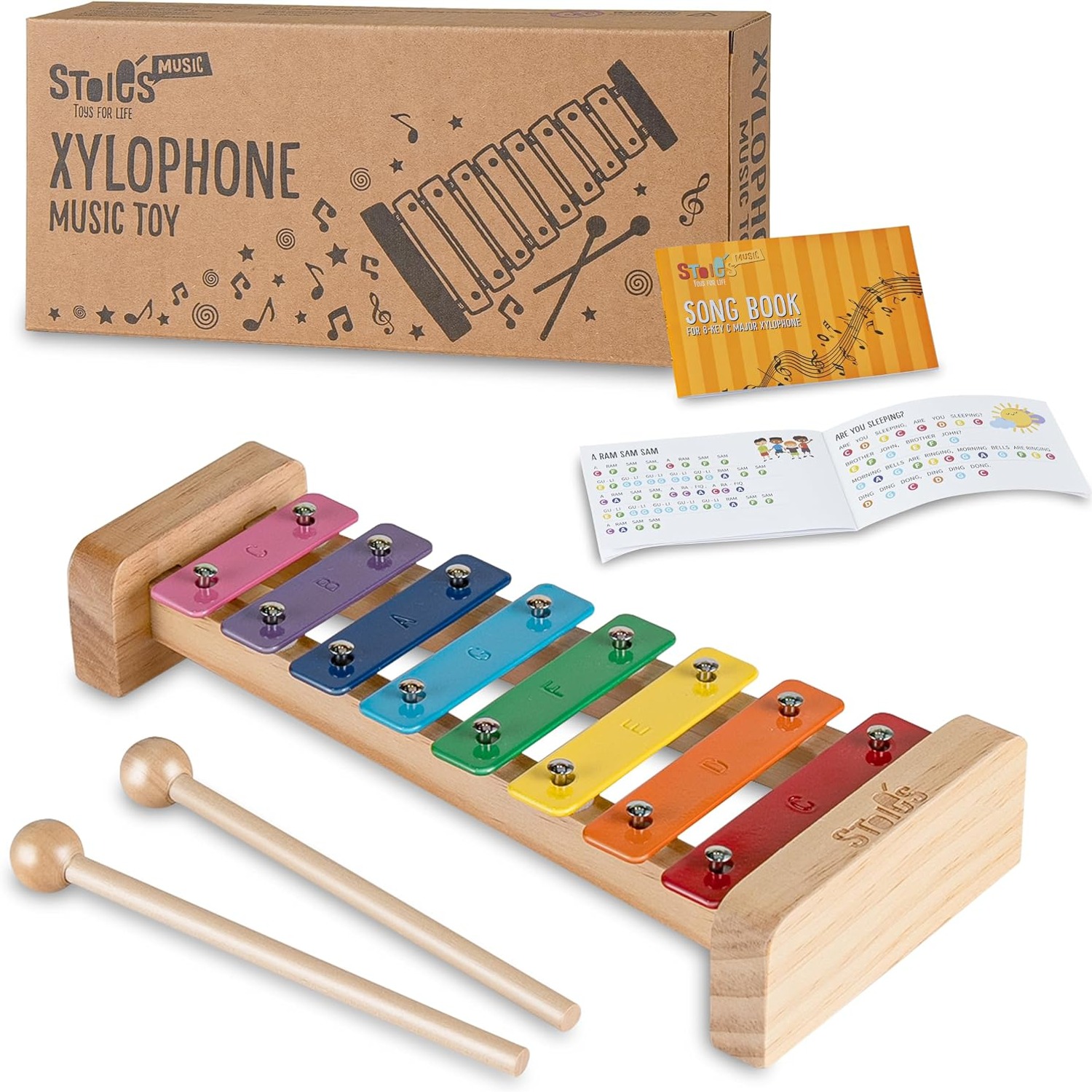
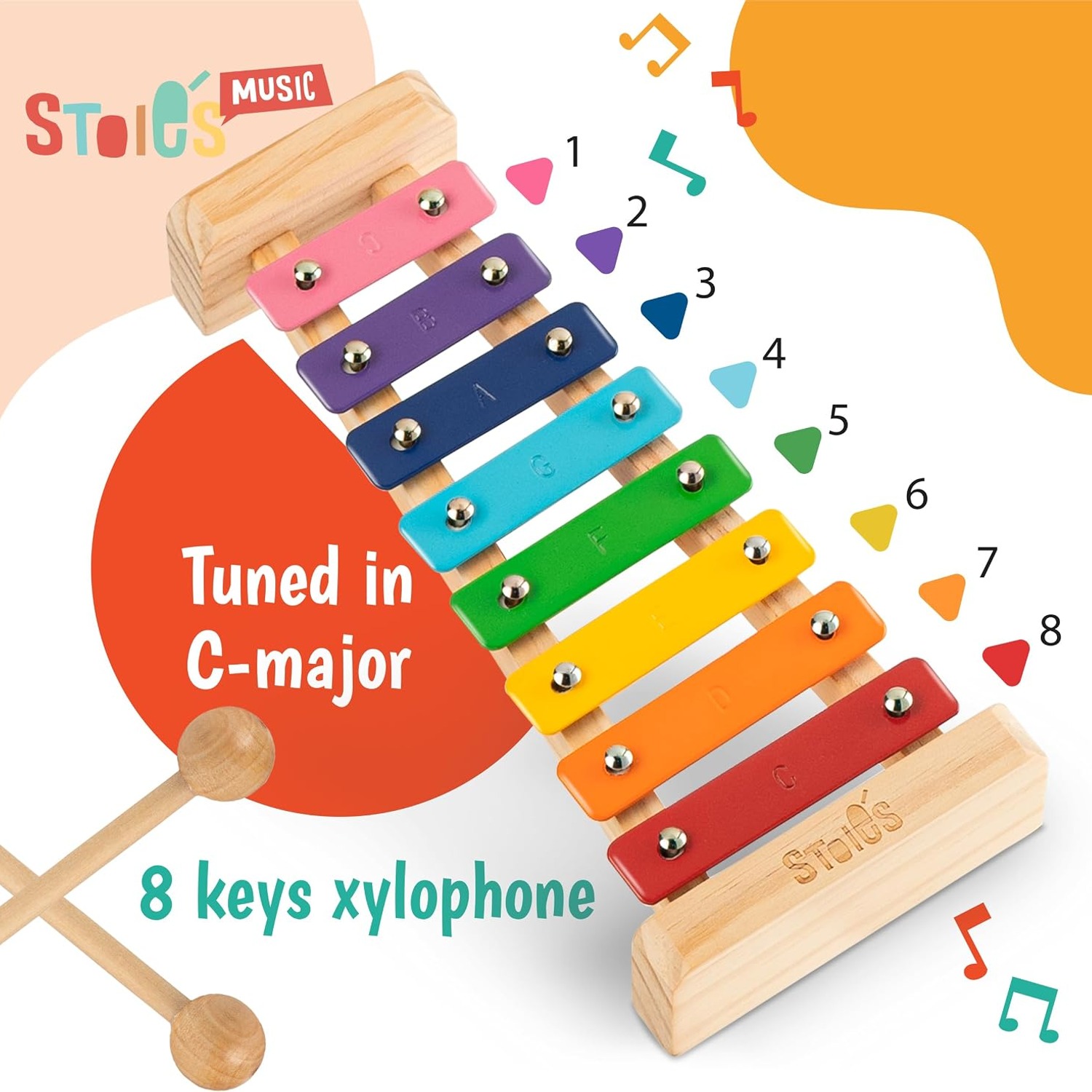
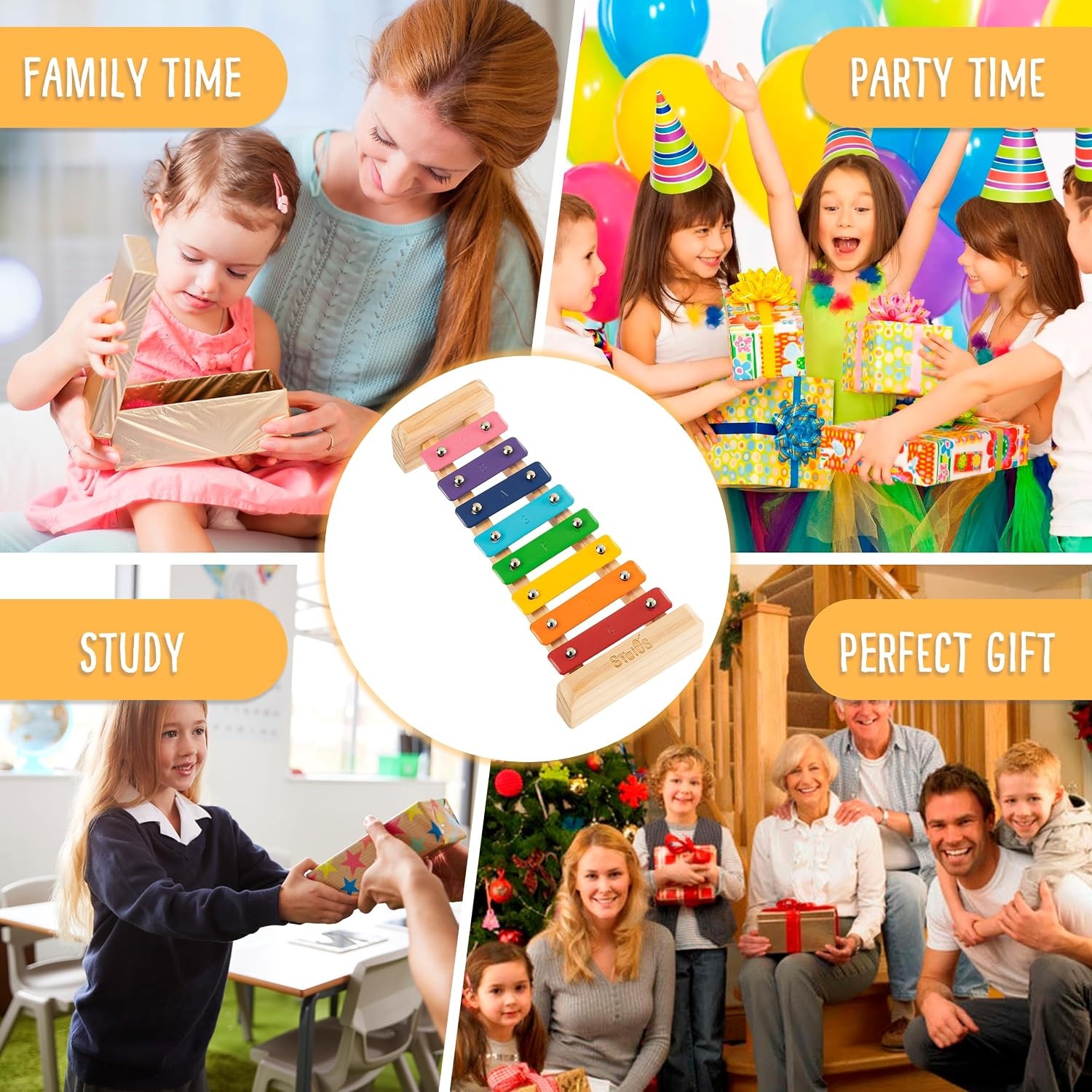
The rainbow xylophone 8 note set is as simple as instruments get. Eight keys sit across a wooden frame. Each key is a different colour. You hit a key with a mallet and it rings. There are no batteries, no speaker, no power source at all, which the maker confirms by listing both power source and operation mode as manual.
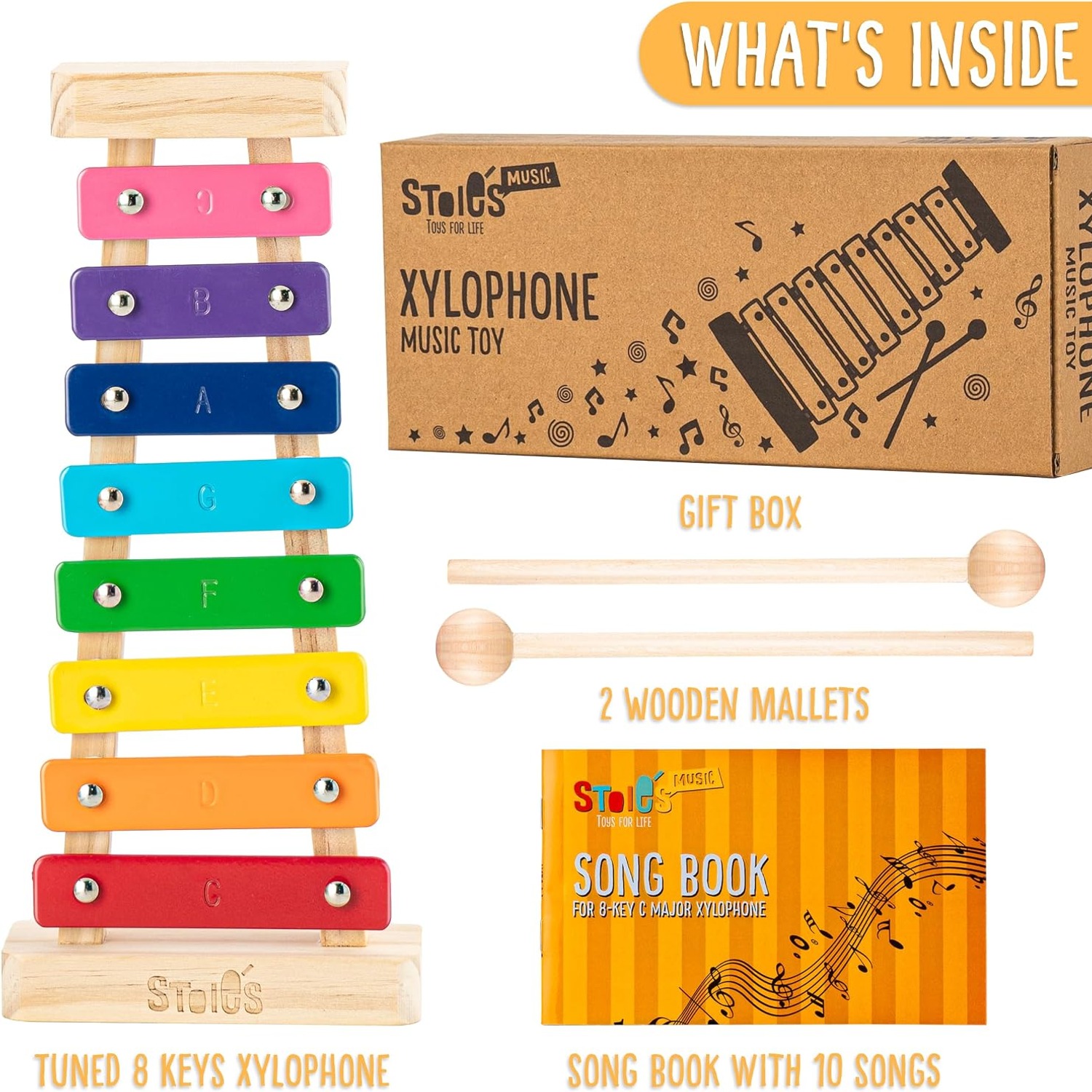
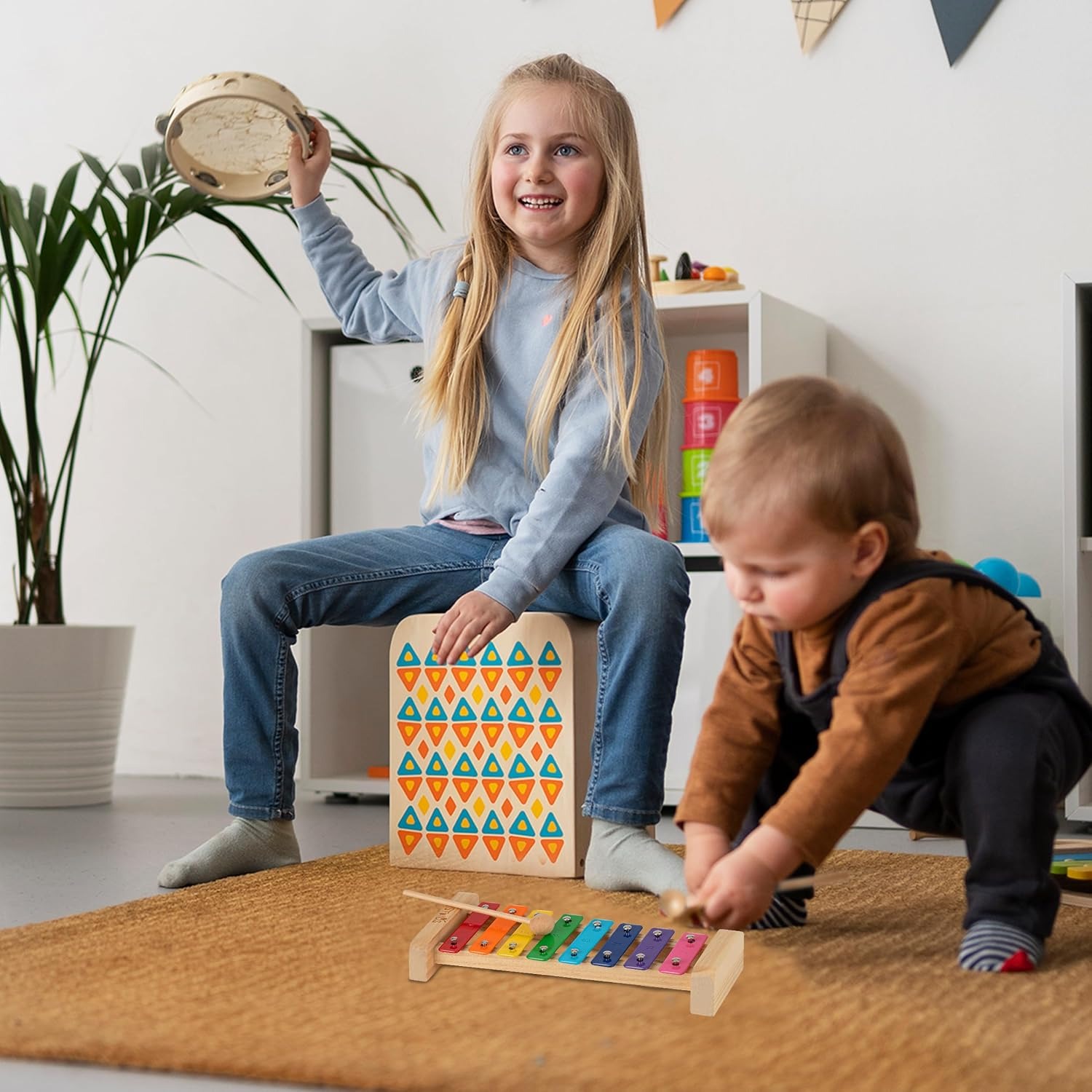
Two mallets come in the box along with a songbook and the storage box itself. The two mallets matter more than they sound like they do. One child can use both and start learning to alternate hands, which is a real coordination skill. Or two children can take one each and play together, which is why the maker lists it as a group play set for two or more players.
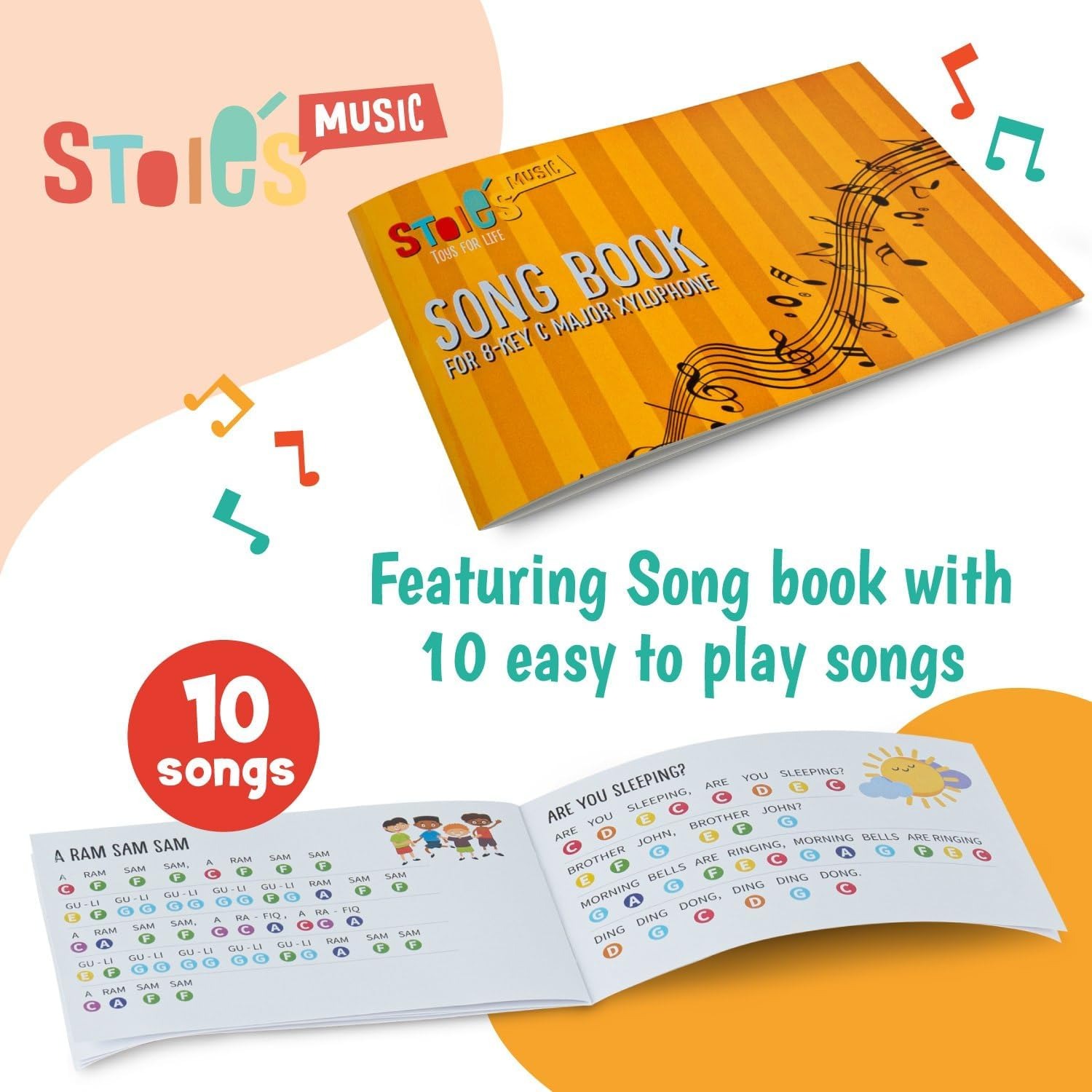
The songbook is the bridge between banging and playing. Left alone, a child will explore the keys for a while and then drift off. Give them something to follow and they get the satisfaction of producing something recognizable, which is a completely different feeling. Colour coding is what makes this possible before a child can read any kind of notation. They match a colour on the page to a colour on the instrument, and suddenly they are playing a song.
Who it suits
The manufacturer recommends 3 years and up, with a listed range running from 36 months to 100 years. That upper figure is a joke, obviously, but it points at something true. A simple tuned instrument does not stop being useful when a child turns six.
Three and four year olds will mostly explore. They will hit keys, work out which ones they like, and start noticing that the sound changes as they move along the row. Five and six year olds start copying patterns and following the songbook. Older kids pick out tunes they already know by ear, which is one of the most useful musical skills there is and one that formal lessons often skip.
It also works well outside the home. The compact size and low weight make it easy for a teacher or childcare worker to keep a few on a shelf and bring them out for group time. If you are shopping for the best kids percussion instrument for a small group, the group play design is the relevant detail.
Grandparents tend to like it too, because it gives them something to do with a visiting child that does not involve a tablet.
Size, weight and why they matter
At 25 x 12 x 5 cm and 200 g, this is a small instrument. The maker calls the size mini. That has practical consequences worth thinking about.
A small child can carry it themselves, which gives them a sense of ownership over it. It fits on a lap, on a highchair tray, or on the floor next to a sibling. It slides into a backpack for a daycare day or a weekend away. If you have ever travelled with a bulky toy that took up half a suitcase, you will appreciate why the best travel music toy is usually the small one.
The flip side is that it is not a stage instrument. The keys are sized for little hands, not adult ones. If you are looking for something a teenager will perform with, this is not it. For a preschooler learning what a note is, the scale is exactly right.
How to choose between options
A few things separate a good kids xylophone from a frustrating one.
First, check what comes with it. Plenty of listings show mallets in the photo but do not include them in the box. This set lists the xylophone, mallets, box and songbook as included components, so there is nothing else to buy.
Second, look at key count. Fewer than eight and a child cannot play most simple tunes. Many more than eight and a young child loses track of where they are. Eight hits the useful middle.
Third, think about materials and build. This one has a wooden frame and rainbow-coloured keys. Wood tends to feel better and look better sitting out in a living room, which means it stays accessible rather than getting shoved in a cupboard. We will not claim anything about finishes or certifications beyond what the maker states, because that information is not in the maker's details.
Fourth, consider portability. If the instrument is awkward to move, it lives in one room and gets used less. Light and compact wins.
Getting the most out of it
Start by playing it yourself for thirty seconds while your child watches. Kids copy. Hit a key, say the colour out loud, hit it again. Then hand over a mallet and let them have a go without correcting anything for the first few minutes.
Once they are comfortable, introduce the songbook. Point at the first colour, let them find the key, and work through slowly. Do not worry about rhythm at first. Getting the right notes in the right order is plenty for a first attempt.
A useful next step is call and response. You play two notes, they copy. Then three. This builds listening skills in a way that feels like a game rather than practice. It also works nicely with two mallets and two players, so a sibling can join in.
Keep sessions short. Ten minutes of focused play beats an hour of background noise.
Looking after it
Wood and water do not mix. Wipe the keys and frame with a slightly damp cloth and dry them straight away. Never soak it, and keep it well clear of the dishwasher.
Store it in its box, somewhere dry and out of direct sunlight. Hot cars and damp cupboards are the two environments most likely to cause problems over time. Putting the mallets back in the box after each session saves you from the inevitable search behind the sofa.
If the mallets do go missing, a child can still play with one, or even with fingers, while you work out a replacement. The instrument itself is the part that needs looking after.
The short version
If you want a child to actually make music rather than listen to a toy make it, a simple tuned instrument is the right place to start. This set gives you eight rainbow keys on a wooden frame, two mallets, a songbook and a box, all in a package that weighs 200 g and measures 25 x 12 x 5 cm. It needs no batteries, suits ages three and up, and is built so two or more children can play together.
It is a straightforward thing. That is the point. Hand a child a mallet, let them find a note, and see what happens next.