
The complete guide
Tube Building Sets Explained, A Parent's Buying Guide
The problem with the toy box
Walk past most children's toy boxes and you will find the same thing. A layer of bricks at the bottom, a few half-finished builds, and a child who has stopped reaching for them. It is not that bricks are bad. It is that after a couple of years of stacking, a lot of kids have worked out everything that style of block can do, and the novelty has gone.
Tube blocks break that pattern because they ask a different question. A brick asks what goes on top. A tube asks which way to go next. That sounds like a small shift, but it changes the shape of what children build and, more to the point, it changes how long they stay interested.
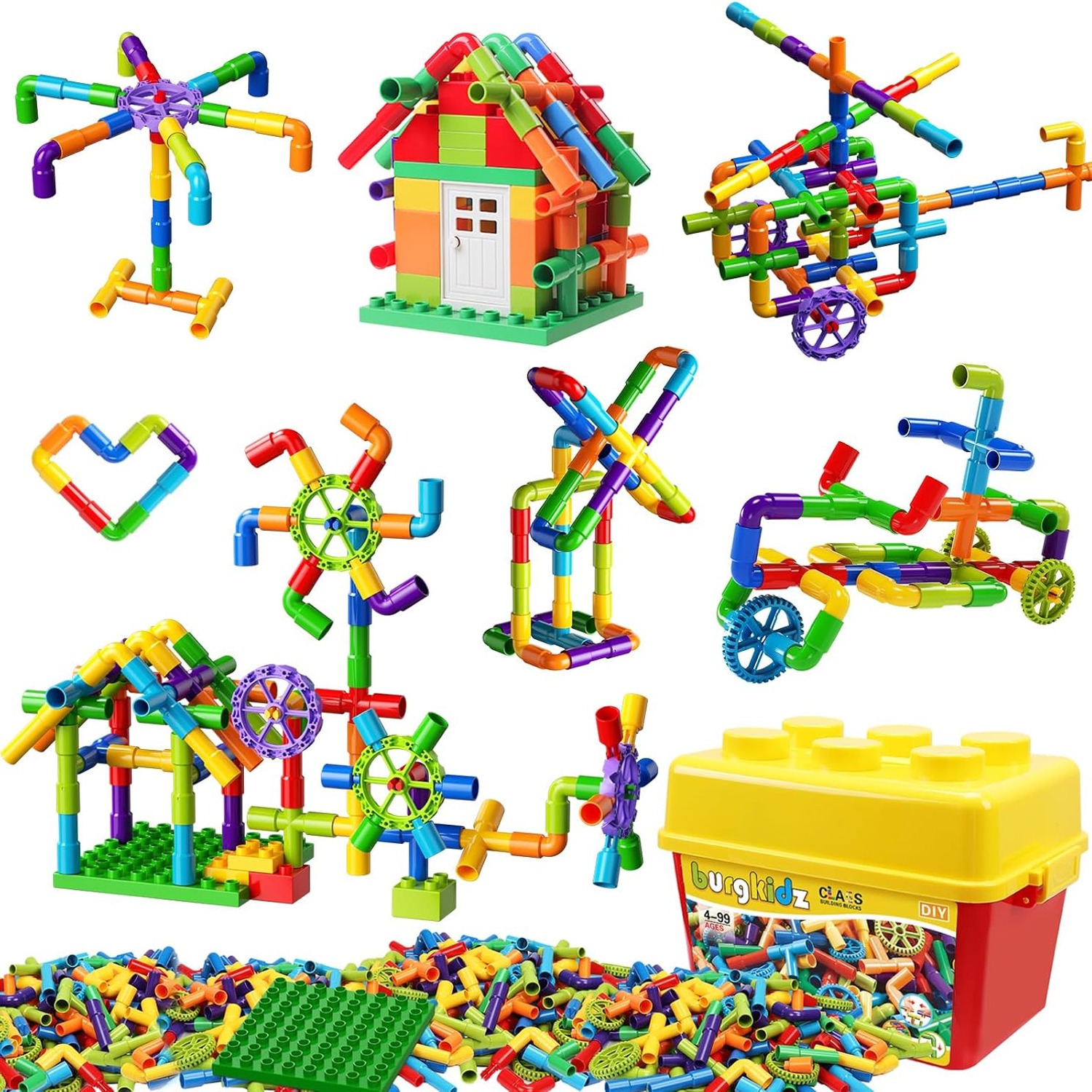
This 188 piece tube building set gives you 162 interlocking tubes, 24 wheels and 2 baseplates, along with a guide and a storage tub. It is aimed at ages 3 and up, and the practical ceiling is a lot higher than that.
How tube building works
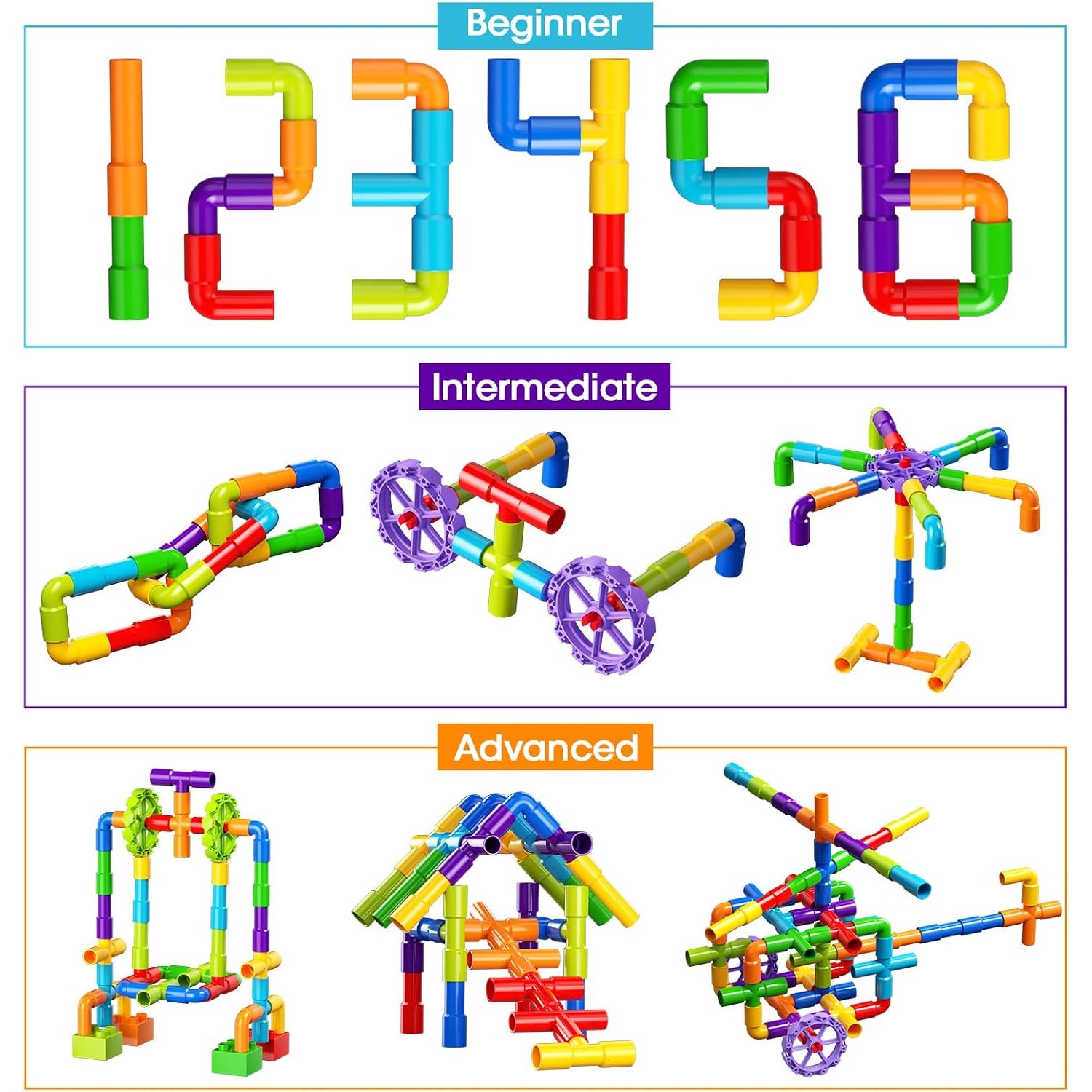
Each tube piece is a short length of plastic pipe with connectors at the ends. Push two together and they lock. Some pieces run straight, some turn corners, some split so a build can branch in two directions at once. That branching is where the fun lives. Within a few minutes a child can go from a straight line to something that looks like the inside of a machine.
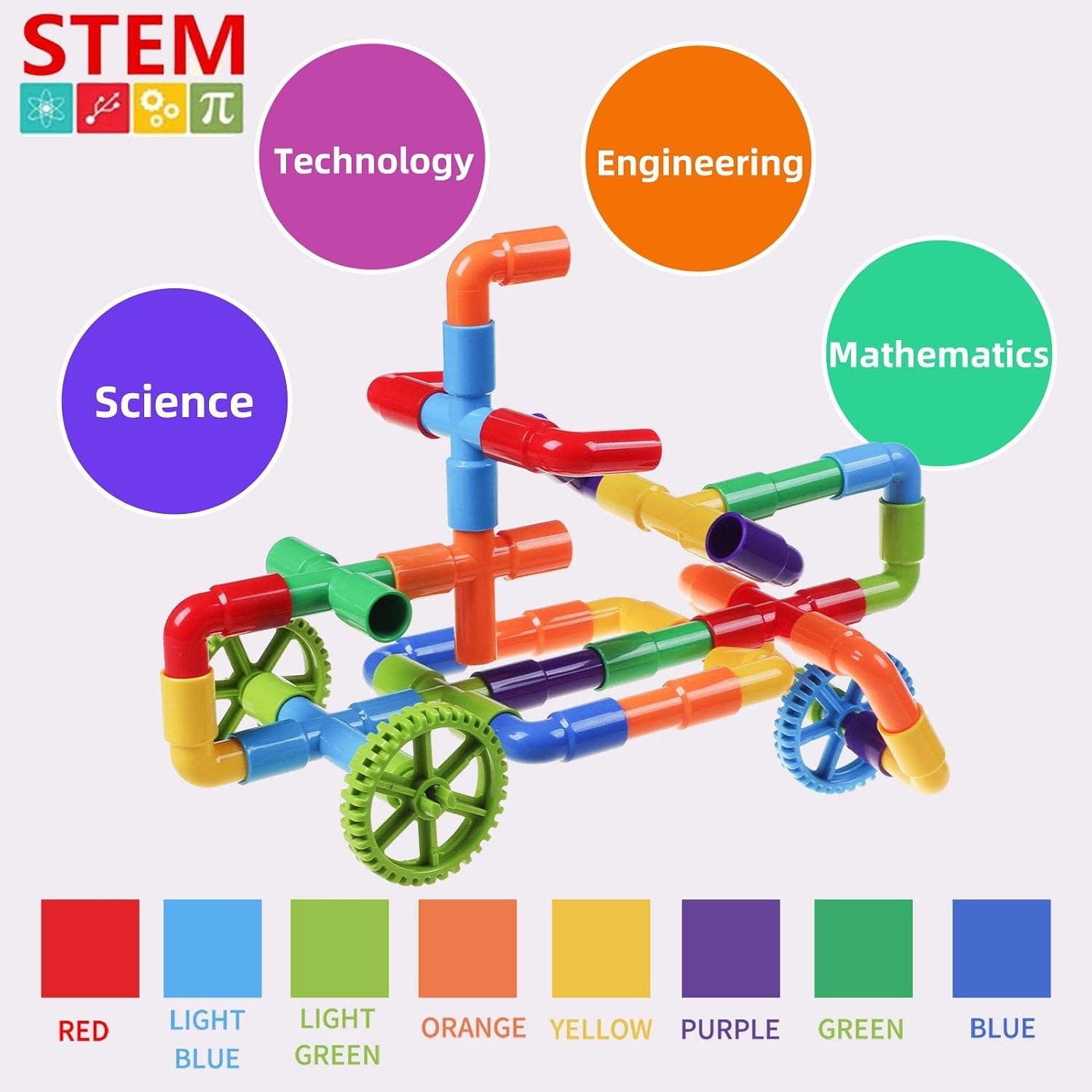
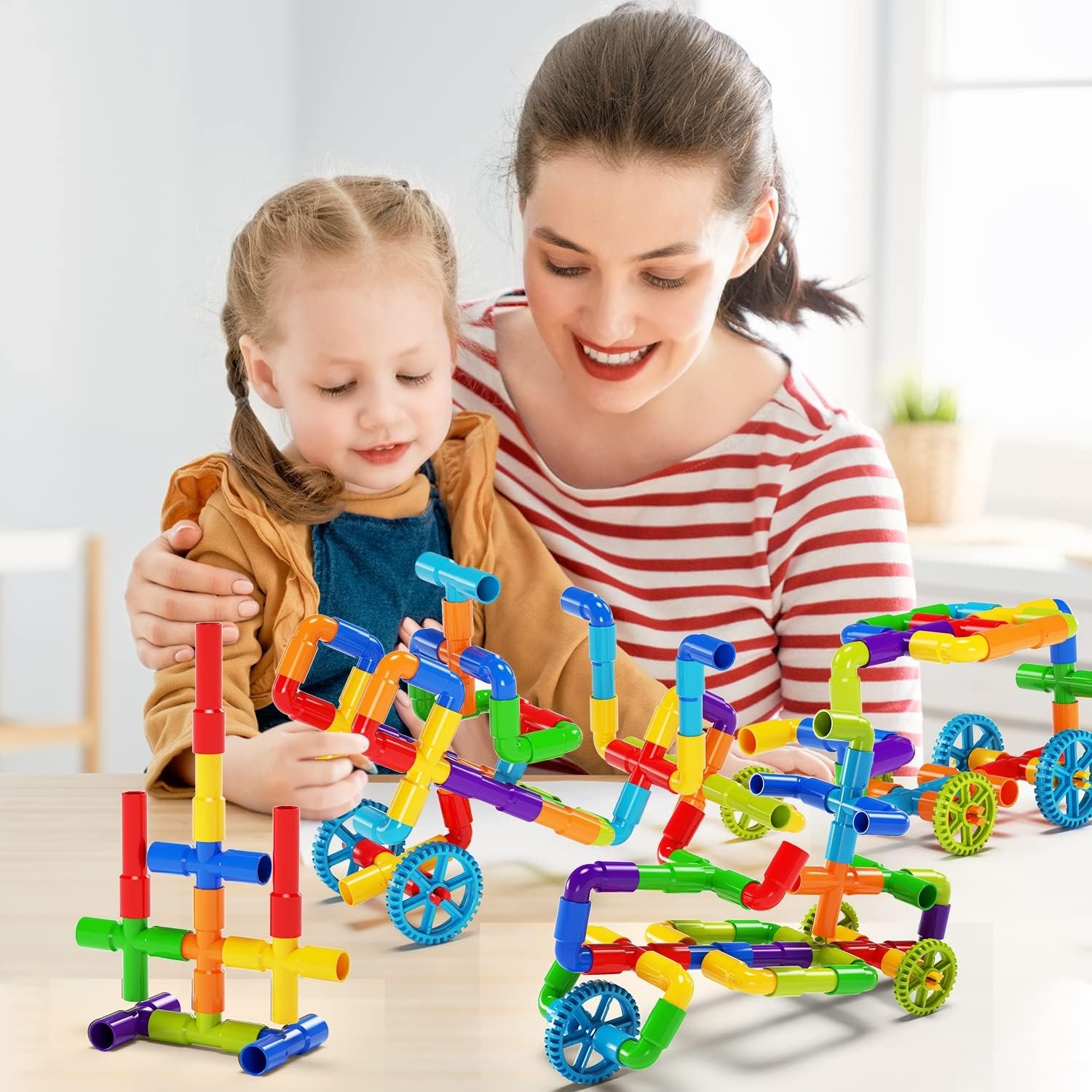
The wheels change the whole thing again. Twenty-four of them come in the box, which is plenty for several vehicles at a time. Once a frame has wheels under it, it stops being a sculpture and starts being a car. Children push it, crash it, rebuild the bit that fell off, then push it again. That loop of build, test, fix is genuine engineering thinking, even if nobody in the room calls it that.
The two baseplates do the unglamorous work. Each has 8x8 dots, and they give tall or wide builds something solid to sit on. Without a plate, a pipe house tends to wander and lean. With one, it stays put while the child keeps adding. If you have ever watched a build collapse right at the end, you will understand why this matters.
Who it suits
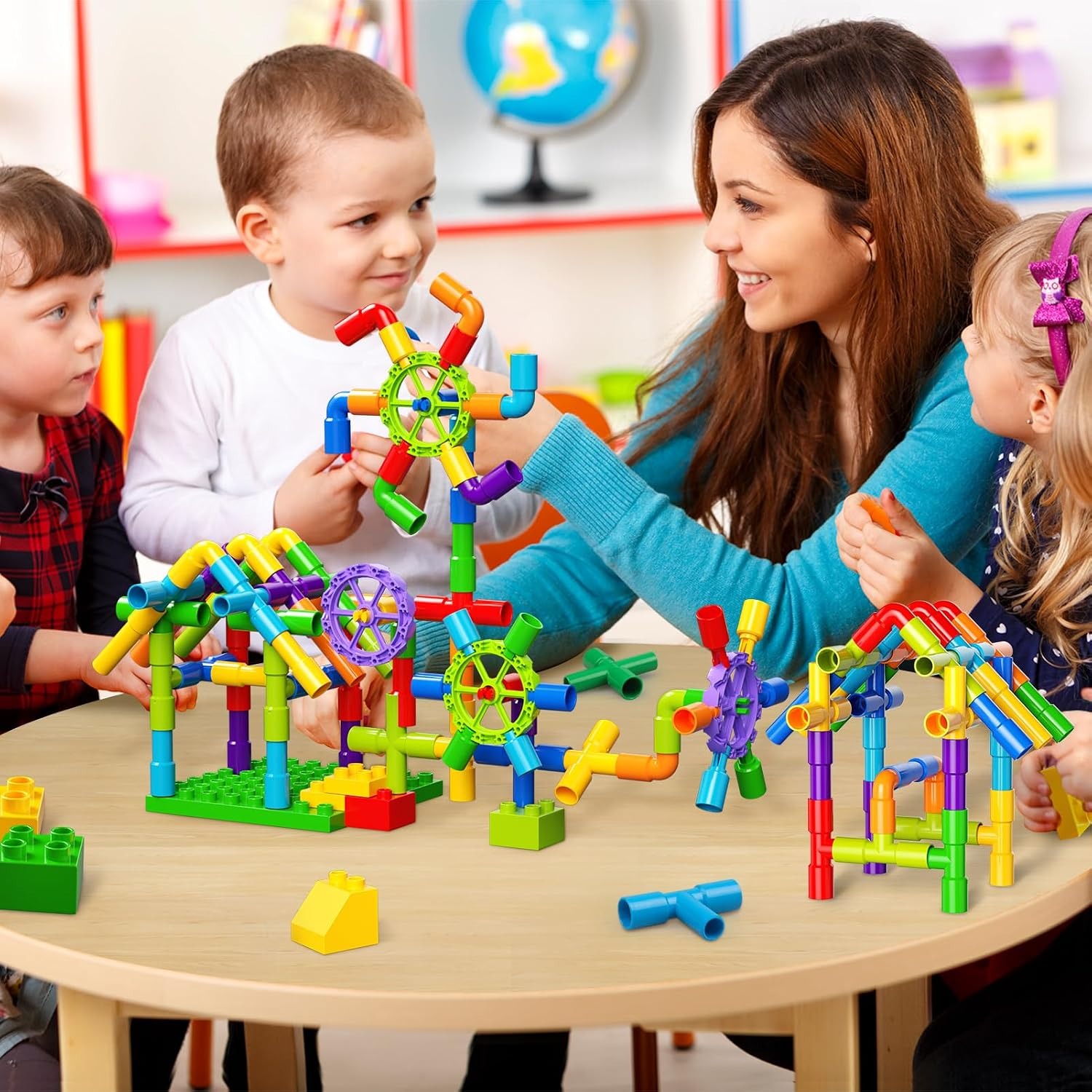
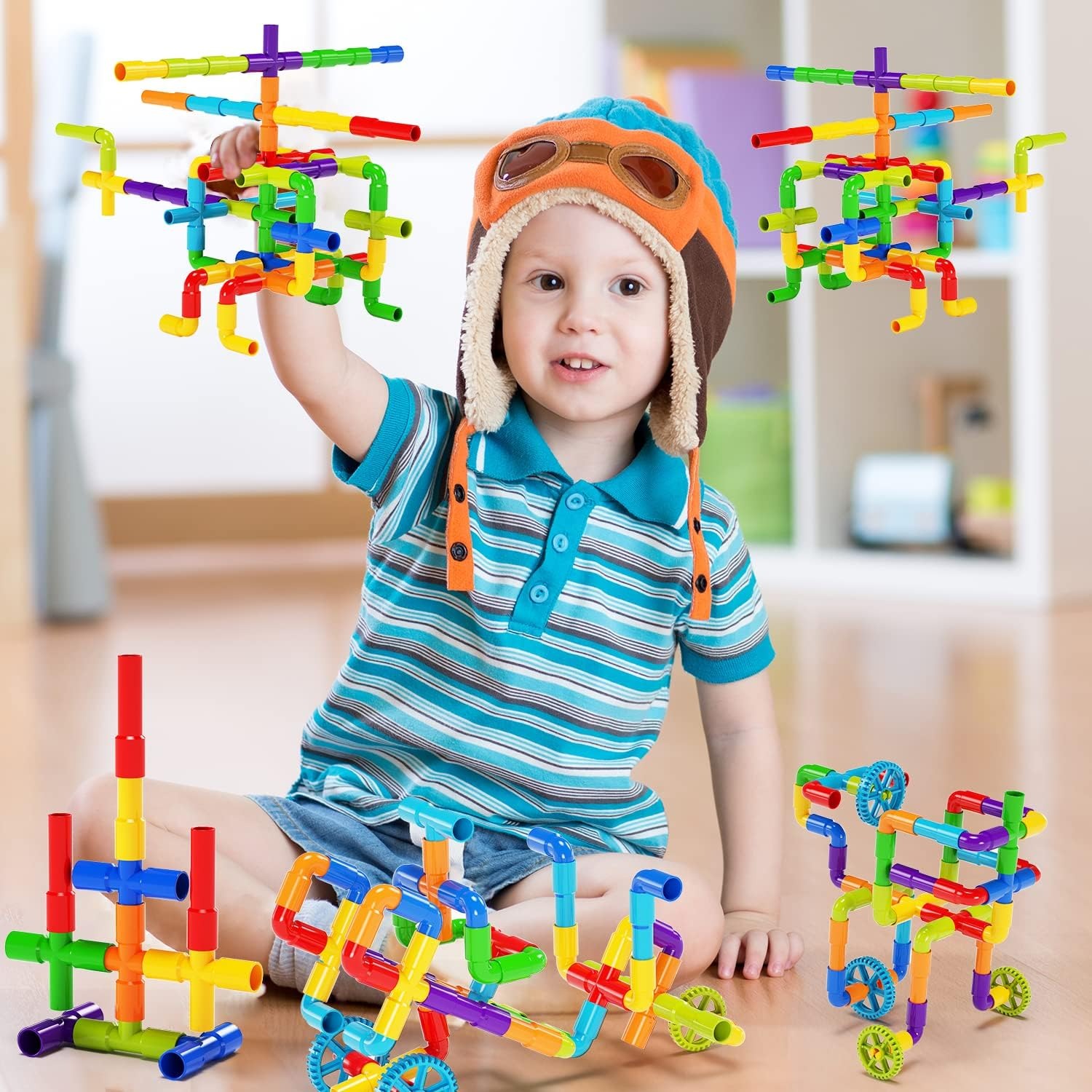
Three year olds can use this set, though expect the first few sessions to involve an adult. Pushing the connectors together takes a bit of grip and a bit of aim. Once the knack lands, most of them manage fine. At this age they will mostly make colourful caterpillars and odd shapes rather than recognizable cars, and that is exactly right.
Four to six is probably the sweet spot. Children here can follow the step-by-step guide, feel proud when the model matches the picture, then push off into their own designs. They also love the wheels, and a lot of play time at this age is just making things that roll.
Seven and up tend to abandon the instructions almost immediately. They build bridges, towers, strange vehicles with six wheels, and contraptions nobody can name. If your child has a box of bricks already, this is where mixing pays off, since the pieces work with similar-sized bricks from the major building block systems.
Adults are welcome too. The geometric structures in the guide are oddly satisfying to work through, and it is a decent way to sit on the floor with your kid without being handed a plastic tea cup.
Choosing the right set for your child
A few things worth thinking about before you buy anything in this category.
Piece count matters more than it looks. A set of fifty pieces runs out halfway through an idea, and a child who runs out mid-build often walks away. 188 pieces is enough to make something substantial and still have spares for a second project on the side. For two children sharing, it divides reasonably.
Wheels are not a given. Plenty of tube sets are static only, which is fine for architecture but misses the thing most young children actually want, which is movement. If your child gravitates toward cars and trucks, a set with wheels will hold them longer. Among sets marketed as the best building toy with wheels, the ratio of wheels to tubes is worth checking.
Compatibility is underrated. A set that plays nicely with the bricks already in the house effectively doubles in size the day it arrives. This one is described as compatible with similar-sized bricks from major brands. Expect most combinations to work well, though fit can vary a little between manufacturers.
Then there is storage, which sounds boring until you have spent an evening picking pieces out of a rug. A tub with a clip-on lid and a handle is the difference between a set that gets used weekly and one that gets shoved in a cupboard because tidying it is a chore. Every piece here fits in the one container.
Getting the most out of it
Start with the guide. Even children who prefer to invent things benefit from building one or two of the set models first, because it teaches them what the pieces can do. After that, let them loose.
Give the set a home on a hard floor or a table rather than deep carpet. Pieces roll less, and the wheels work better on a flat surface. If floor space is tight, a large tray works surprisingly well as a build zone and makes packing up a one-move job.
Try challenges when interest dips. Build something that rolls more than two metres. Build a bridge that holds a book. Build a house with a door that opens. A simple prompt often restarts play that had gone flat, and it costs nothing.
Mix in the bricks you already own. A pipe frame with a brick platform on top is more interesting than either on its own, and children usually work this out faster than adults do.
Looking after the pieces
Plastic blocks are tough but not invincible. Wipe them with a damp cloth and a little mild soapy water when they get grubby, then let them dry fully before they go back in the tub. Skip the dishwasher and anything hot, because heat can warp plastic and loosen the fit of the connectors.
Keep the set out of direct sun for long periods. Prolonged sunlight can fade colours and make plastic brittle over time. A shelf or cupboard is fine.
Every so often, tip the tub out and have a look. Any piece with a crack or a rough edge should come out of circulation. It takes two minutes and saves a scratched hand later.
Count the wheels occasionally too. They are the most likely pieces to end up under furniture, and a set with twenty-four wheels stays far more fun than a set with eleven.
The short version
This is a 188 piece tube building set with 162 tubes, 24 wheels and 2 baseplates, made from plastic, listed as non toxic, and rated for ages 3 and up. It comes with a step-by-step guide covering cars, planes, houses and geometric shapes, works alongside similar-sized bricks from the major brands, and packs into a clip-lid tub with a handle. Packed size is 26.09 x 17.78 x 18.49 cm and the whole thing weighs 998 g.
If your child has gone quiet on their brick collection, or they love anything with wheels, this is a sensible next step. It gives them a new way to build, enough pieces to see an idea through, and a tub that makes cleaning up a thirty second job instead of an argument.