
The complete guide
How To Choose A Flower Garden Building Set For Ages 3 To 6
The problem with most building toys for little kids
There is a gap that catches a lot of parents out. A child turns three, loses interest in chunky preschooler blocks, and the obvious next step looks like a branded construction kit. Then the kit arrives, the pieces are tiny, the instructions run to forty steps, and the whole thing ends up in a drawer after one tearful afternoon.
The other common trap is the opposite. A set that is so simple a child masters it in a week and never returns to it. Both outcomes cost money and neither gives you the thing you actually wanted, which is a child happily occupied at the kitchen table while you get on with something.
A flower garden building set sits in the middle. The pieces are small enough to feel grown up but big enough to grip. There is a manual if a child wants a starting point, and there is no penalty for ignoring it. That combination is why sets like this tend to survive the drawer.
How this set works
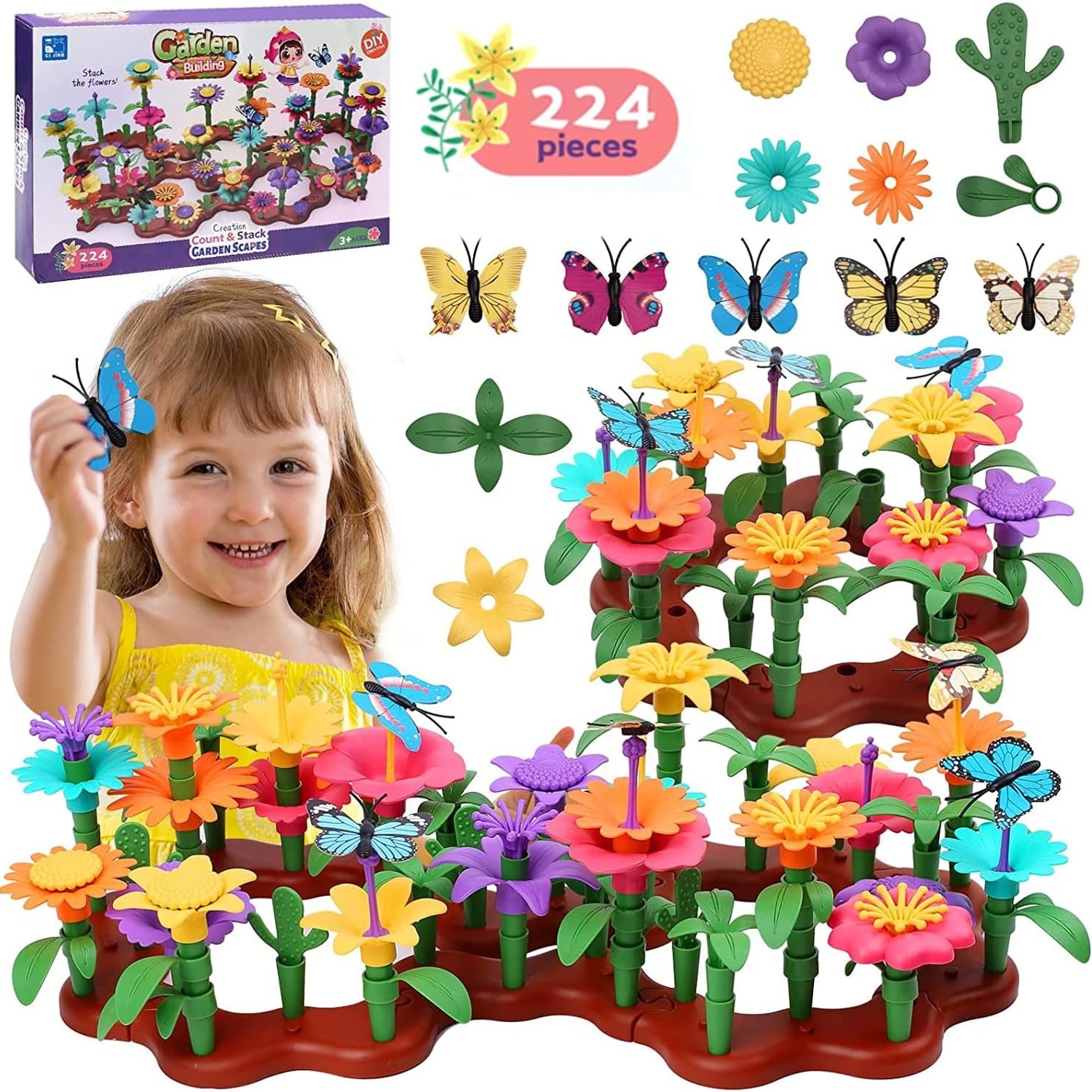
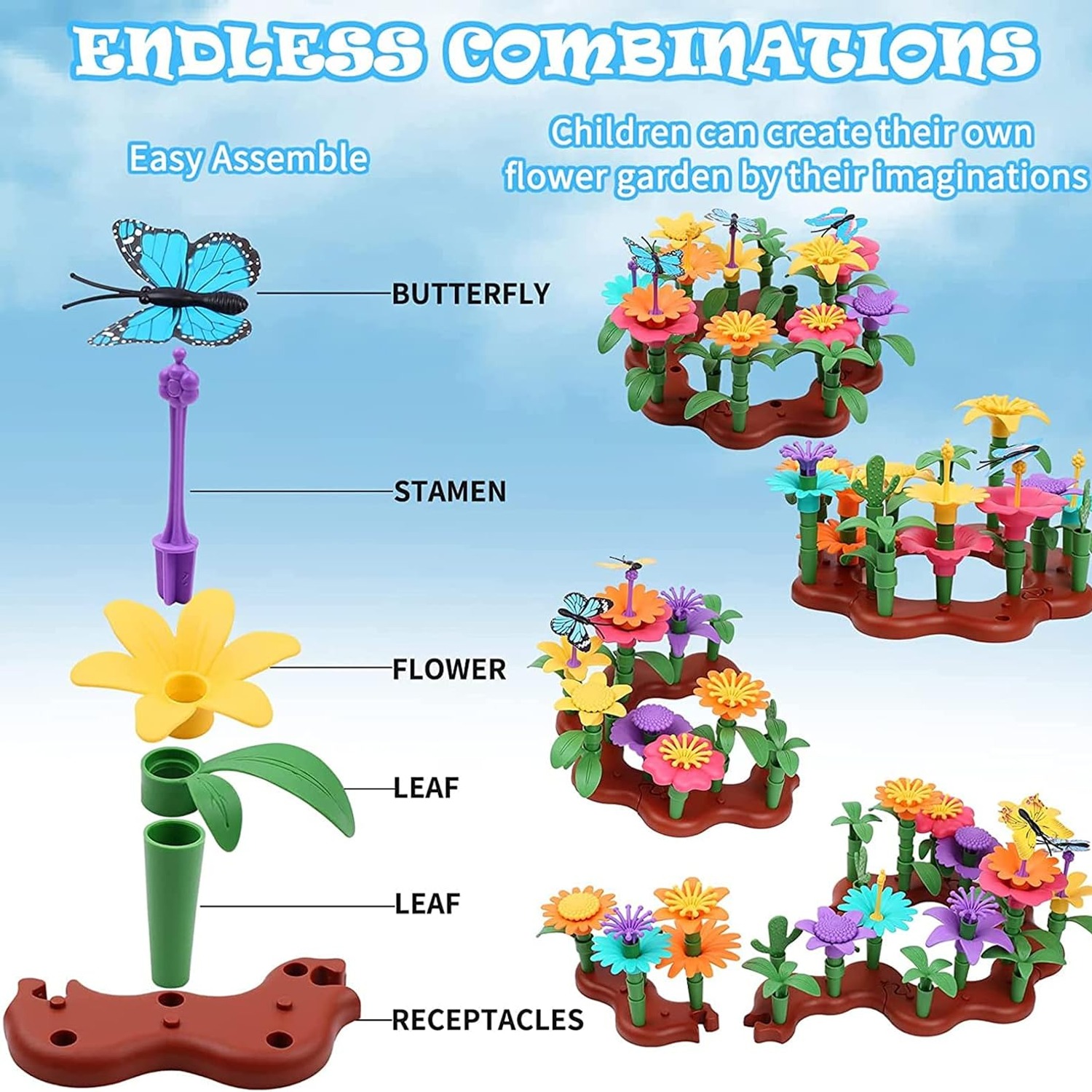
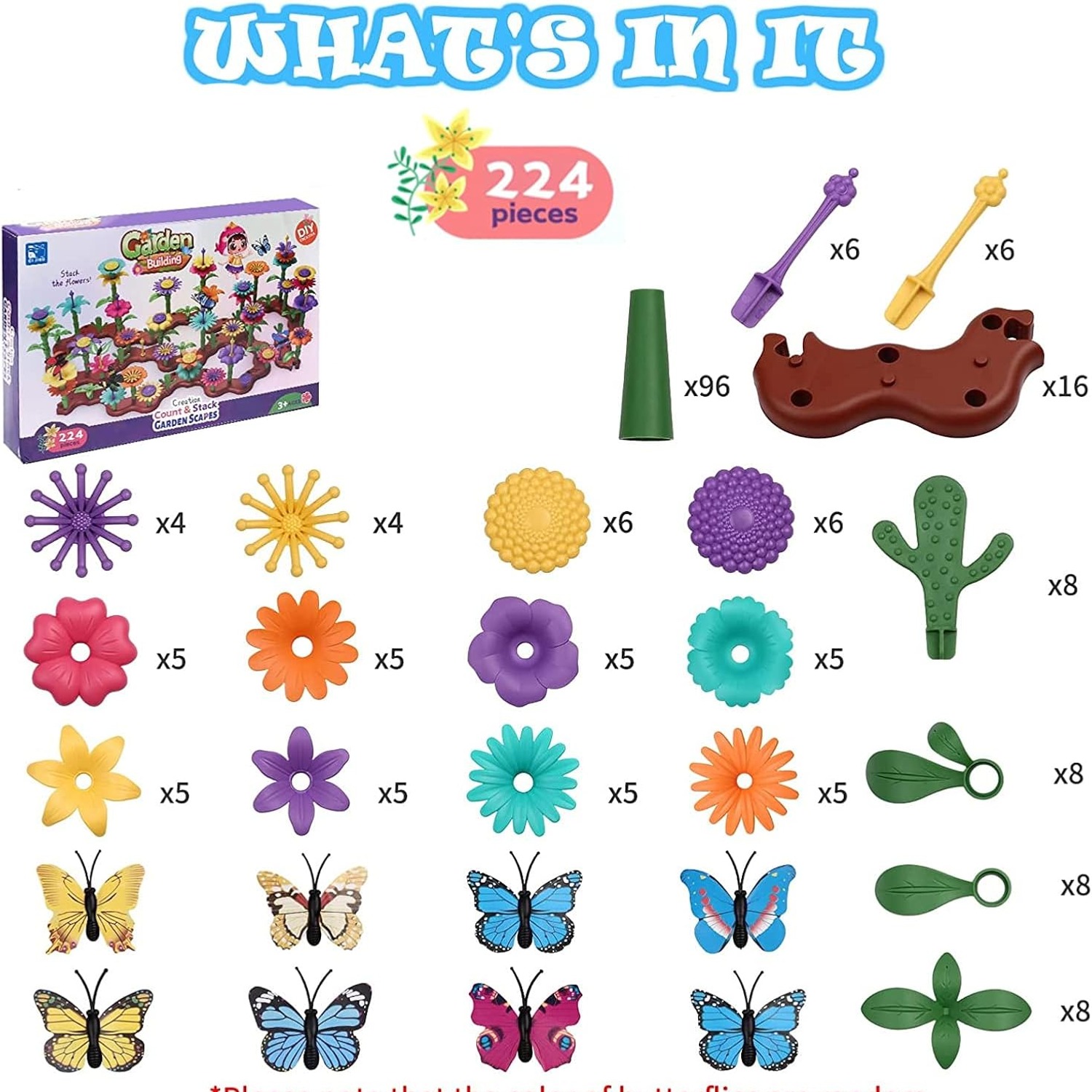
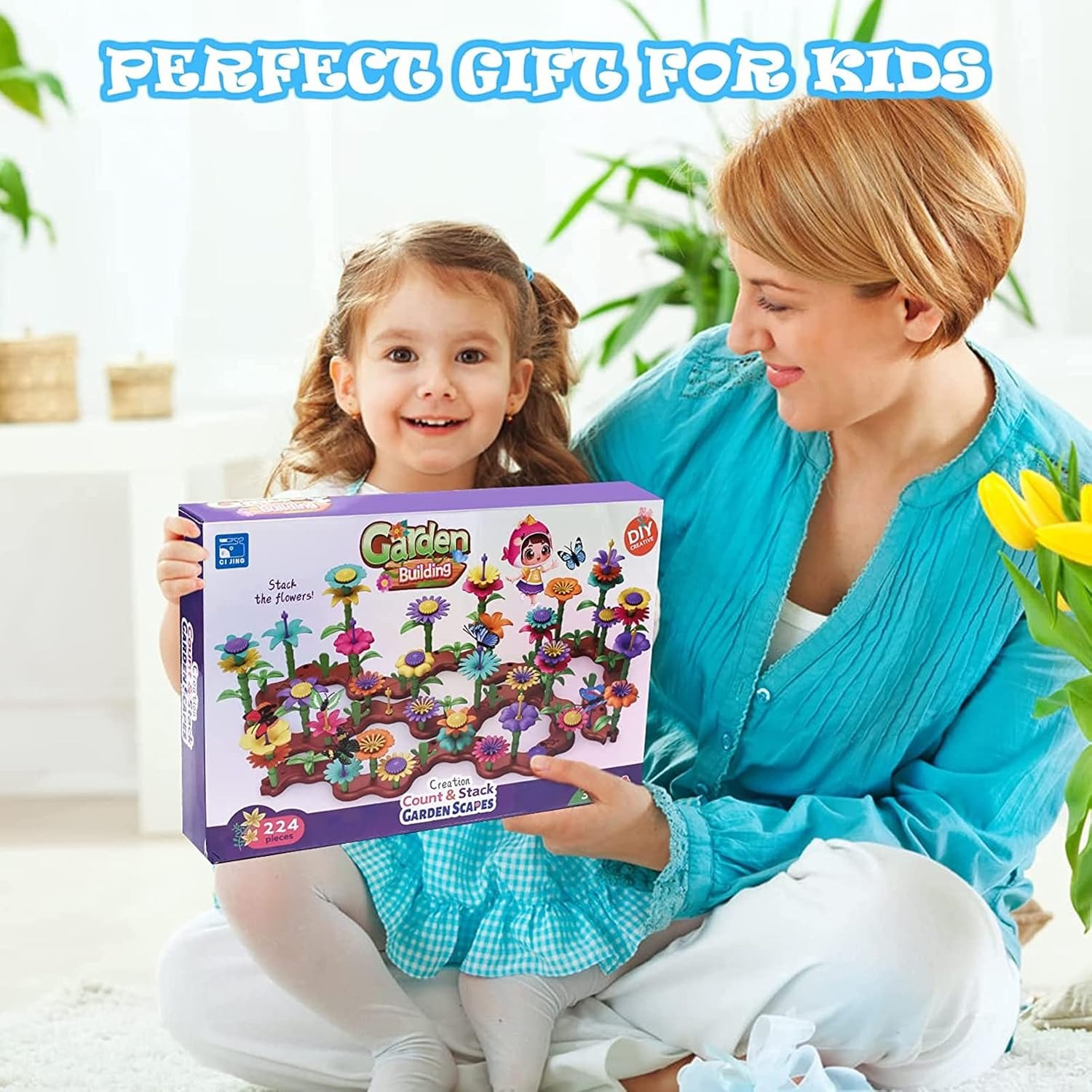
The set holds 224 plastic pieces that stack rather than clip. Petals, stems, butterflies, dragonflies and cactus parts push together, and come apart again with a gentle pull. That matters more than people expect. A lot of early frustration with building toys comes down to grip strength, not imagination. When a three year old can connect two pieces on their own, they stay at it. When they need an adult for every join, they wander off.
Because the pieces are modular, there is no single finished picture to fall short of. A child can build one enormous flower with eight petals on a single stem, or six small ones, or something that looks nothing like a plant at all. The theme is listed as architecture, which is a nice hint that the pieces are as much about structure as decoration.
The manufacturer lists hand-eye coordination as the educational objective, and that is honest. You will see it happening. A child lines up a petal, misses, adjusts, tries again. That tiny loop of aim and correct is exactly what builds fine motor control, and it works better than any worksheet because the child is doing it for their own reasons.
Who it suits
The recommended age is 36 months to 6 years. In practice that splits into two quite different kinds of play.
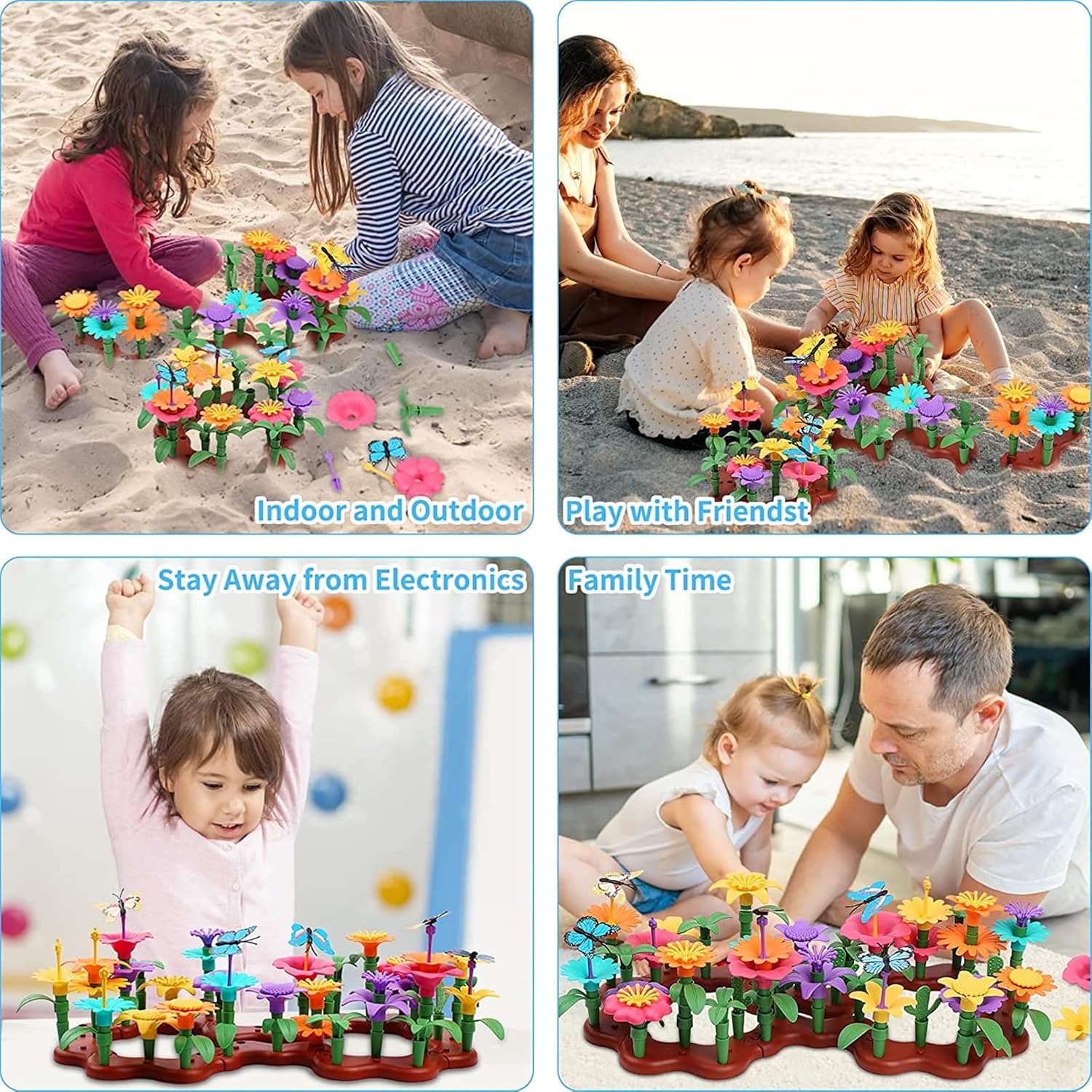
Three and four year olds mostly stack. They sort by colour, make towers, build a flower, knock it down, build it again. Their creations are short-lived and the fun is in the making. At this age you want to sit nearby rather than directing, and expect pieces to end up everywhere.
Five and six year olds start telling stories. The garden becomes a scene, the butterflies get names, and builds survive for days because dismantling them feels like destroying something. This is the stage where the set earns its keep, and it is why the best STEM toy for 3 year olds is often one that still has something to offer at six.
It also works for mixed-age households. An older sibling can build the complicated bits while a younger one stacks petals on a single stem. Nobody is left out, which is harder to achieve than it sounds.
Who it does not suit: a child under three, or an older child who still mouths small objects. The 36 month minimum is there for a reason and it is not worth stretching.
What to look for when comparing sets
Piece count gets all the attention and it is only part of the story. Here is what actually changes the experience.
Connection style. Push-fit stacking beats tight clips for this age group. If you are looking at another set, check whether reviewers mention needing adult help to connect pieces. That single detail predicts whether the toy gets played with.
Piece size. Small enough to allow detail, large enough to grip between thumb and finger. Very small pieces look impressive in a photo and get lost in the carpet by week two.
Open versus closed. A closed set builds one model. An open set builds anything. For a preschooler, open wins almost every time, because their ideas change faster than instructions can keep up. People hunting for the best preschool building blocks are usually, without realizing it, hunting for open-ended ones.
Storage. A set that does not pack down neatly becomes a set that does not come out. This one packs into a box of around 34.8 x 22.9 x 5.8 cm and the whole lot weighs 490 g, which is light enough to carry to a grandparent's house without a second thought.
Noise. Not a joke. Battery toys dominate a room. A quiet toy can run in the background while you cook, take a call, or just sit down for five minutes.
Getting the most out of it
A few things help, none of them complicated.
Start with a tray. A shallow baking tray or a plastic serving tray under the pieces keeps the mess contained and stops things rolling off the table. It also gives a child a clear boundary, which oddly tends to increase how long they play rather than reduce it.
Divide the pieces if more than one child is building. Splitting at the start avoids the inevitable argument over who has the purple ones.
Leave finished builds out when you can. Children return to their own work. A garden left on a windowsill overnight usually gets added to the next morning, and that returning habit is where real engagement comes from.
Build alongside, not for. The temptation to fix a wobbly tower is strong. Resist it where you can. A collapse followed by a rebuild teaches more than a perfect structure handed over by an adult.
Rotate it. If interest dips, put the set away for a month and bring it back. Toys that disappear and return often get a second life that toys left permanently on the shelf never do.
Care and keeping it complete
Cleaning is simple. A damp cloth with a little mild soap handles sticky fingers and dust. Dry the pieces properly before they go back in the box so nothing sits damp in a sealed container. Skip the dishwasher, skip boiling water, and keep the set away from radiators and sunny windowsills, because heat is what warps plastic over time.
Losing pieces is the real risk with any 224-piece set. A tidy-up routine at the end of each session sorts most of it. A count is not necessary, but a sweep under the sofa once a week catches the strays. If a piece ever cracks or develops a sharp edge, take it out of circulation rather than filing it down.
Store everything in one lidded container. The original box is fine to begin with, though cardboard rarely survives a preschooler for long. A clip-lid tub or a fabric bin with a drawstring both work and make the set easy to grab for travel.
The short version
This is a 224-piece stacking set for children aged roughly three to six, built around flowers, butterflies, dragonflies and cacti. It stacks instead of clipping, which suits small hands. It comes with a manual that children are free to ignore. It is quiet, needs no batteries, packs into a small box and weighs 490 g.
If you want a toy that fills the gap between preschooler blocks and complicated kits, and you would rather your child invented something than copied something, it is a sensible buy. If your child is under three or still mouths small parts, wait. And if you are not sure which side of that line they are on, ask us before you order.