

The complete guide
How To Choose An Air Dry Clay Set For Kids
The problem with most clay sets
You buy a clay kit because a child asked for one, or because the holidays are coming and screens are winning. Then one of two things happens. Either the clay is so stiff that a nine year old gives up before the first shape is finished, or the set contains six colours and the child wants orange, which means mixing, which means a lecture about colour theory nobody asked for.
The second problem is quieter but just as common. Half the kit dries out between sessions because there was nowhere sensible to put the leftovers. Two weeks later the pots are solid bricks and the whole thing goes in the bin.
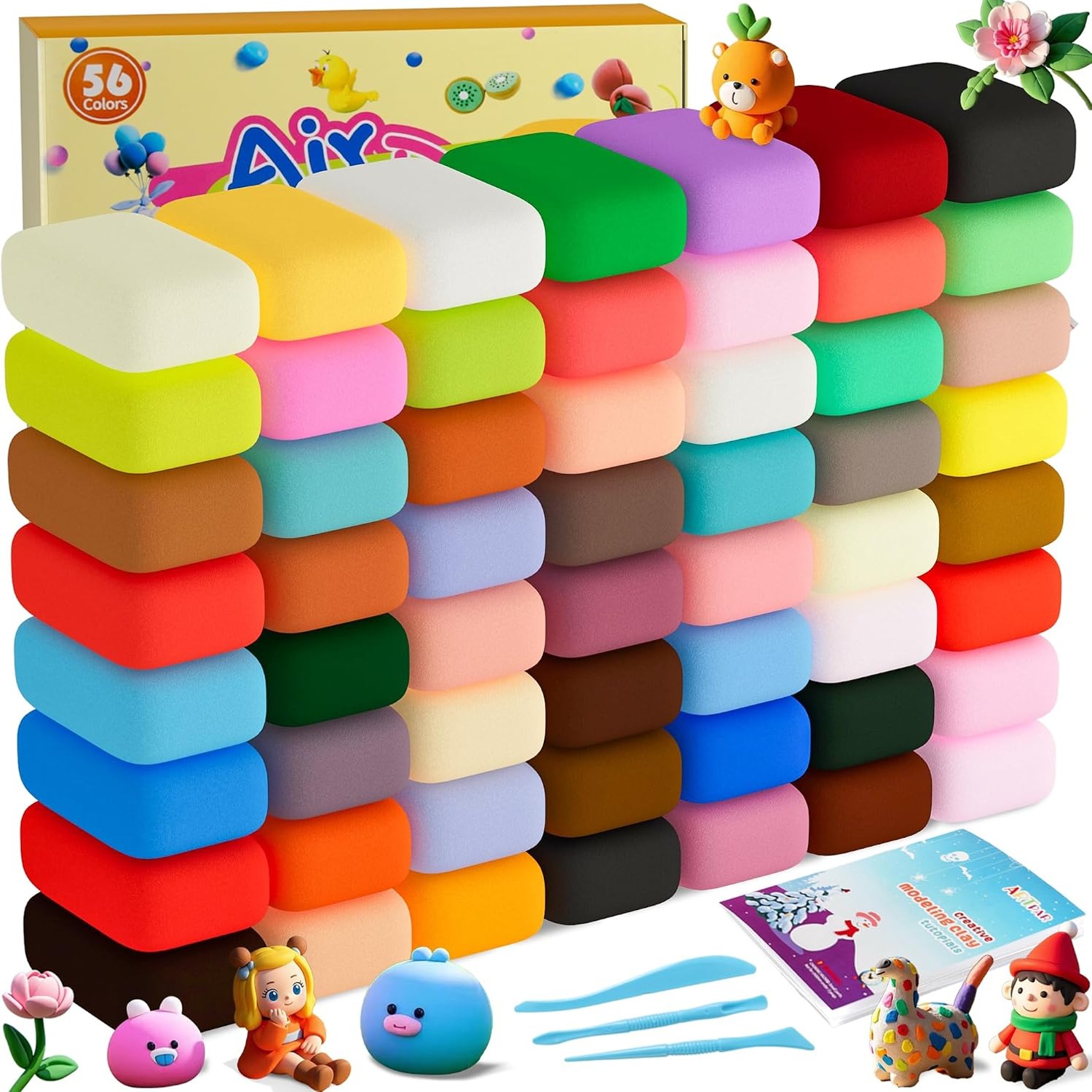
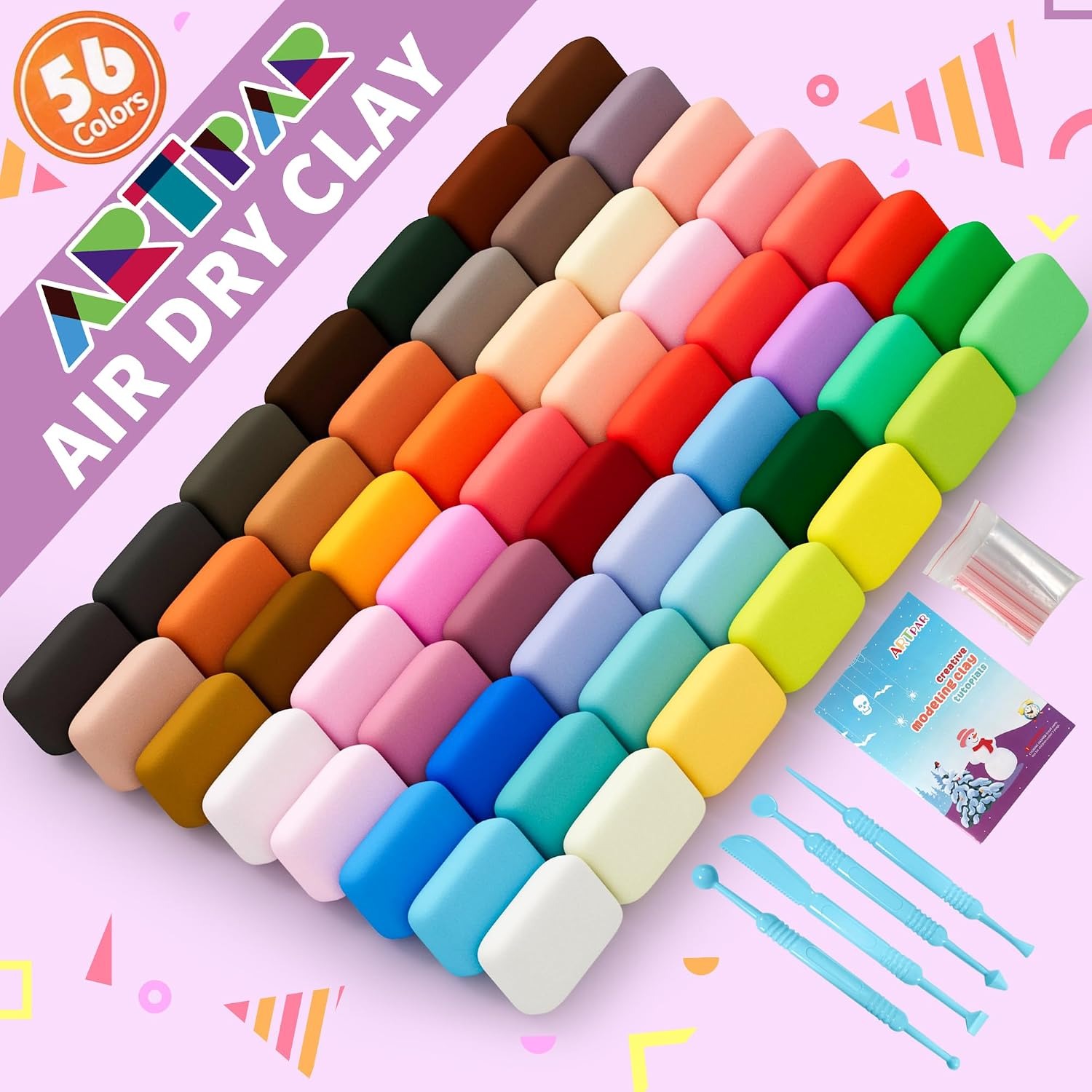
A 56 colour air dry clay set answers both of those. Every shade a kid is likely to ask for is already in the box, soft enough to shape with light pressure, with resealable bags so the leftovers survive until next weekend.
How air dry clay actually works
Air dry clay sets by losing moisture to the surrounding air. There is no chemical reaction to trigger, no oven, no kiln and no timer. You shape a piece, put it somewhere flat and undisturbed, and it hardens on its own.
That simplicity is the main attraction. Polymer clay needs an oven and careful temperature control, and real pottery clay needs firing equipment most households will never own. Air dry clay needs a table.
The trade-off is drying time, and it depends on your piece. A flat leaf shape a few millimetres thick firms up far faster than a solid round body the size of a plum. Warm dry rooms speed things up, humid rooms slow them down. The maker does not list a specific drying time for this set, so plan on checking rather than counting hours. Touch an edge gently instead of lifting the whole model, because picking up a half-dry piece is the fastest way to squash it.
One more thing worth knowing. While it is still soft, the clay is completely forgiving. A child can roll a dinosaur back into a ball and start again as many times as they like. That reworkability is a quiet confidence builder, especially for kids who panic about getting things wrong.
Why the colour count matters more than you think
Fifty-six colours sounds like marketing, and partly it is. But there is a real practical difference between a six colour set and this one.
With six colours, every project involves a mixing step. That step eats time, it uses up clay, and it rarely produces the shade the child pictured in their head. Brown in particular is a nightmare to mix from primaries and ends up looking like mud.
With 56, the child opens the box, points at a colour and starts. The in-between shades are the valuable ones: the greys for stone, the pale pinks and creams for faces, the deep greens for leaves. Those are the colours that make a small model look finished rather than homemade.
There is a learning angle too. Having that many shades side by side is genuinely useful for colour recognition and matching with younger children. Ask a four year old to find the colour closest to a leaf outside and you have a ten minute activity before any clay gets touched.
Who this set suits
The listed age range is 3 and up, which covers a wide span, and in practice it breaks down into a few groups.
Younger children, roughly three to five, mostly squash, roll and stack. They get the sensory benefit and the hand strength, and they are not aiming for a finished model. Supervise them, keep the tools put away until they are older and expect colours to get mixed together.
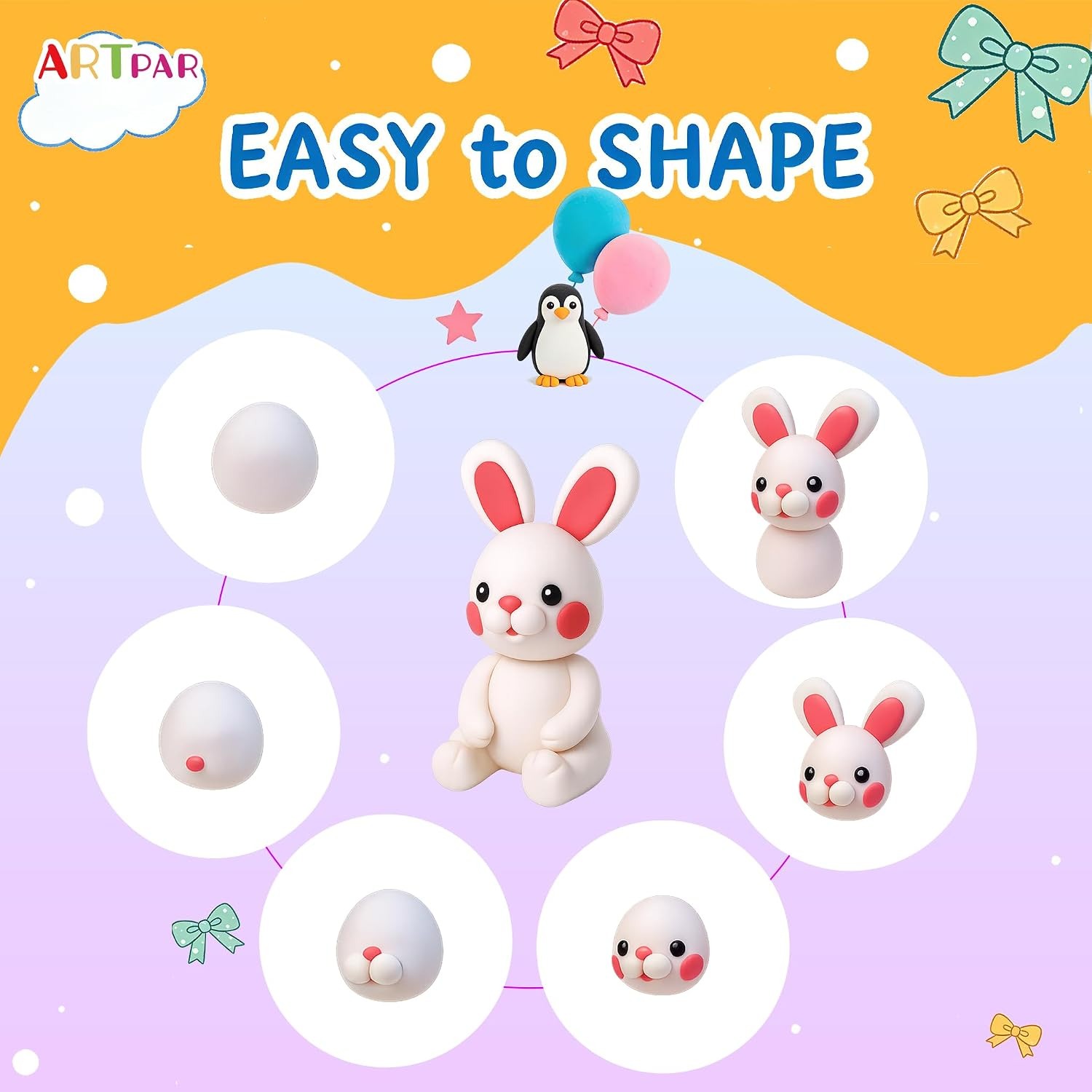
Primary-age children are the sweet spot. They can follow the booklet, build recognizable figures and use the sculpting tools for detail. This is also the age where soft clay for small hands makes the biggest difference, because stiff clay is the thing that ends sessions early.
Older kids, teens and adults use it for miniatures, keepsakes and school work. The best clay for school projects is usually whatever dries without special equipment and holds colour without painting, and this fits that brief.
It also works as a shared resource. A box of 56 pieces splits neatly across a classroom table or a birthday party, which is why sets like this often get bought as party favours rather than as one child's kit.
What to look for when comparing sets
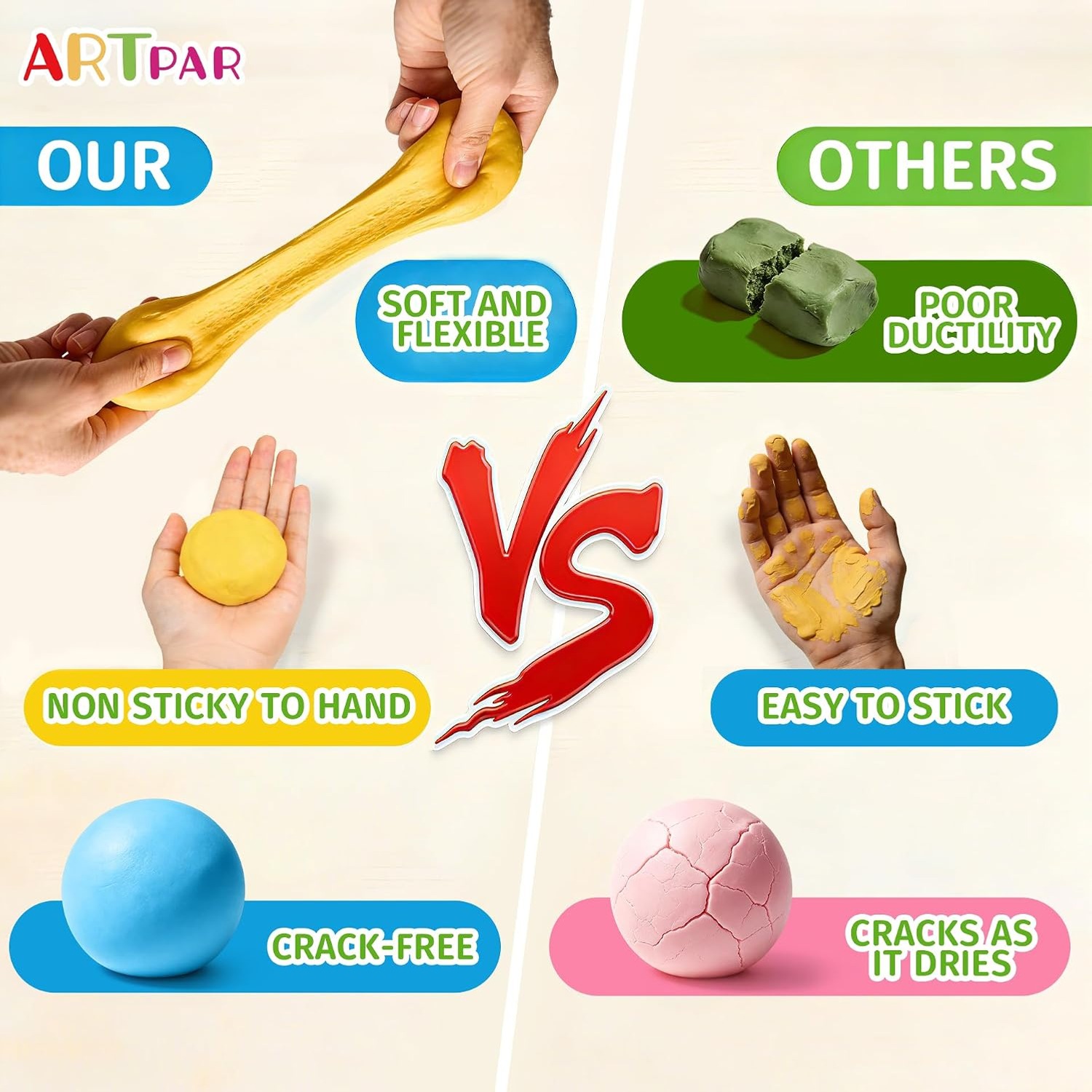
Softness. This is the single biggest factor in whether a clay set gets used twice. Clay described as soft and easy to shape needs no warming up, which matters when attention spans are short.
Stickiness. Non-sticky clay stays off fingers, tables and clothes. It also means two colours pressed side by side do not smear into each other, so a two-tone model stays crisp.
What comes with it. Three clay sculpting tools and an instruction booklet are included here. Tools make the difference between a lump with a face and something with texture. The booklet matters more than experienced crafters realize, because a blank table intimidates beginners.
Storage. Extra ziplock bags are not glamorous, but they are the reason a set lasts a school year instead of a weekend. Any kit without a sealing plan is a kit you will rebuy.
Weight and size. This one ships at 816 g in a box 22.6 x 18.8 x 9.7 cm. That is small enough to live on a shelf and light enough to take to a grandparent's house.
Looking after the clay and the finished pieces
Care falls into two halves: before drying and after.
Before drying, the enemy is air. Seal every open colour as soon as the session ends. Press the air out of the ziplock bag, close it properly and keep the box somewhere cool and dry. Avoid windowsills and radiators, since heat pulls moisture out fast.
Work on a clean flat surface, and have children wash their hands when they switch between light and dark colours. Dark clay on fingers will dull a white piece in seconds.
After drying, treat pieces as fragile rather than sturdy. Thin tails, ears and legs are the first things to snap, so build them a little thicker than looks right if the model will be handled. Store finished work somewhere dry, because damp can soften air dried clay again over time.
If something does break, a small patch of fresh soft clay pressed into the join and left to dry will often hold. It is not invisible, but it saves the model.
Common mistakes worth avoiding
Making pieces too thick is the most common one. A solid ball dries slowly and can crack on the outside while the middle is still soft. Hollow out larger shapes or build them around a crumpled core.
Moving pieces too early is the second. Give them longer than you think, and lift from underneath with a flat tool rather than pinching the sides.
Adding water is the third. This clay comes ready to use, and water generally makes it sticky rather than softer. Only consider a trace of moisture if a piece has begun to stiffen.
The short version
If you want a clay kit that a child can open and use the same afternoon, with no oven and no mixing, this covers it. Fifty-six ready colours, soft non-sticky texture, three tools, a booklet and bags to keep the leftovers alive. ARTPAR lists a one year warranty, and the set is recommended for ages 3 and up.
It will not replace pottery class and it is not meant to. What it does is get clay onto the table quickly and keep it usable for months, which is the whole job.