
The complete guide
How to Choose a Kids Craft Box That Actually Gets Used
The craft kit problem most parents know well
You buy a craft kit. It looks promising on the shelf. Then you open it at home and discover it needs scissors, glue, a cutting mat, and about half an hour of adult setup before a child can touch it. By the time everything is ready, the child has wandered off. Three weeks later the pieces are scattered through a drawer and the kit is effectively gone.
That gap between buying a craft set for kids and actually using it is the thing worth solving. Most kits fail on logistics, not on ideas. The ideas are usually fine. What breaks is the moment between wanting to make something and being able to start.
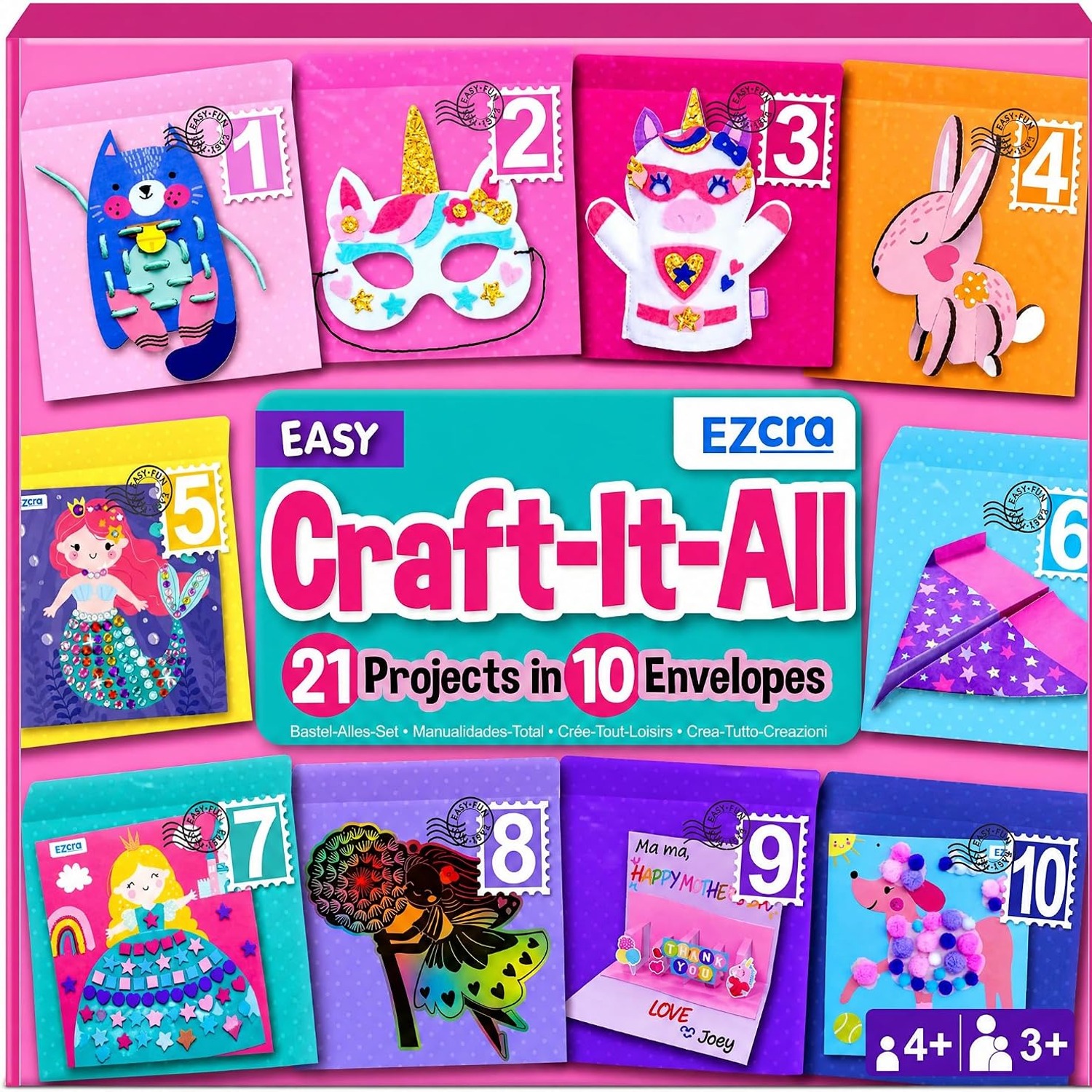
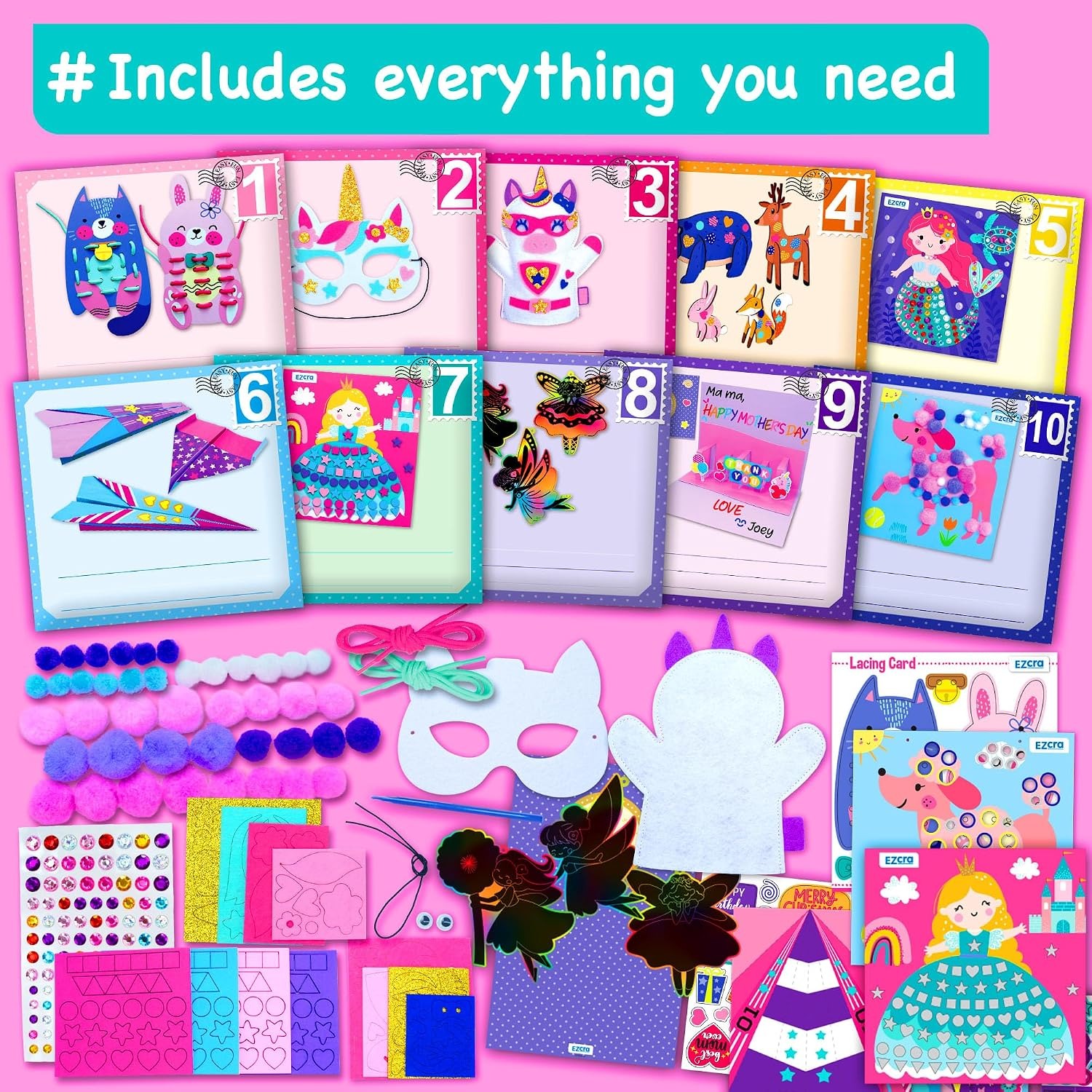
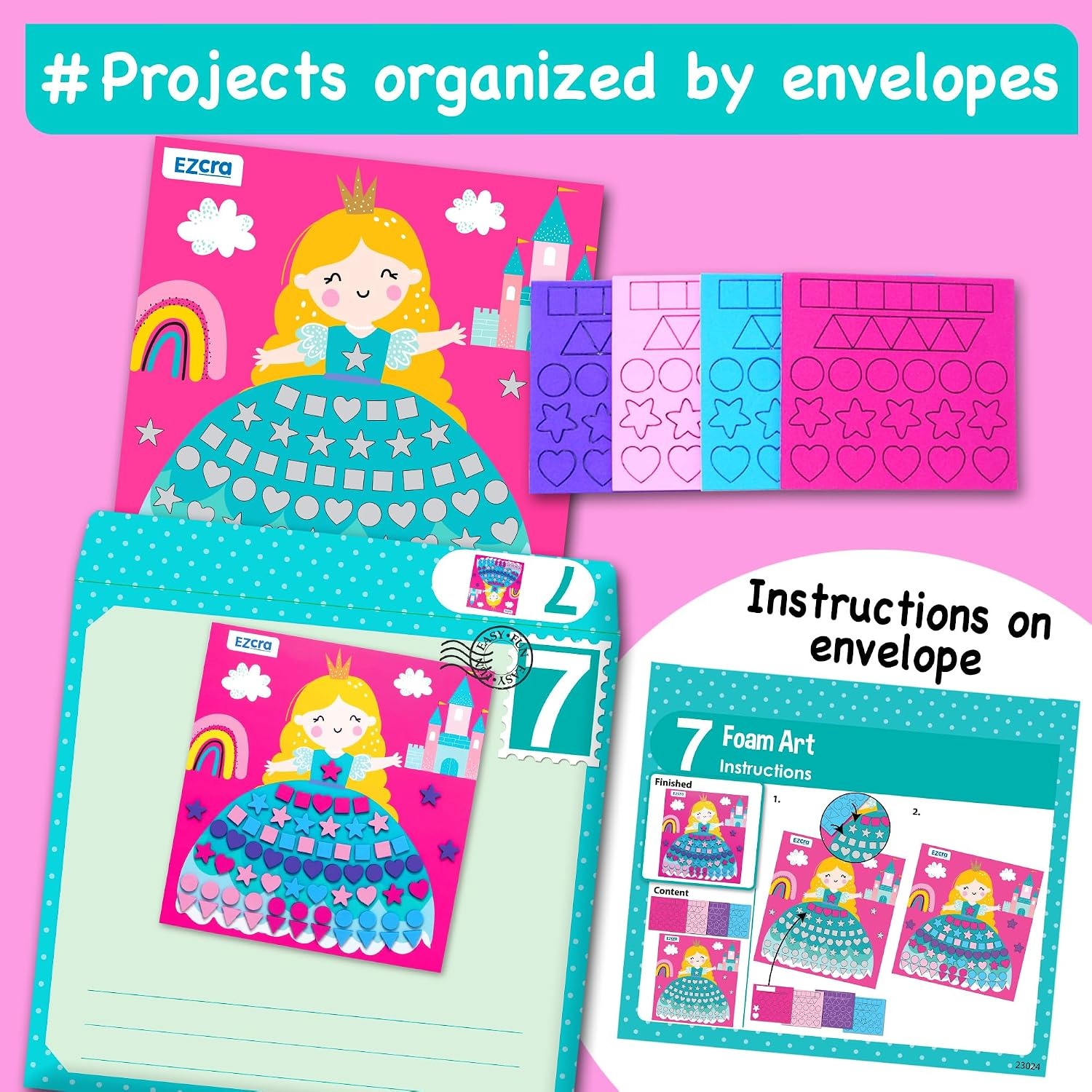
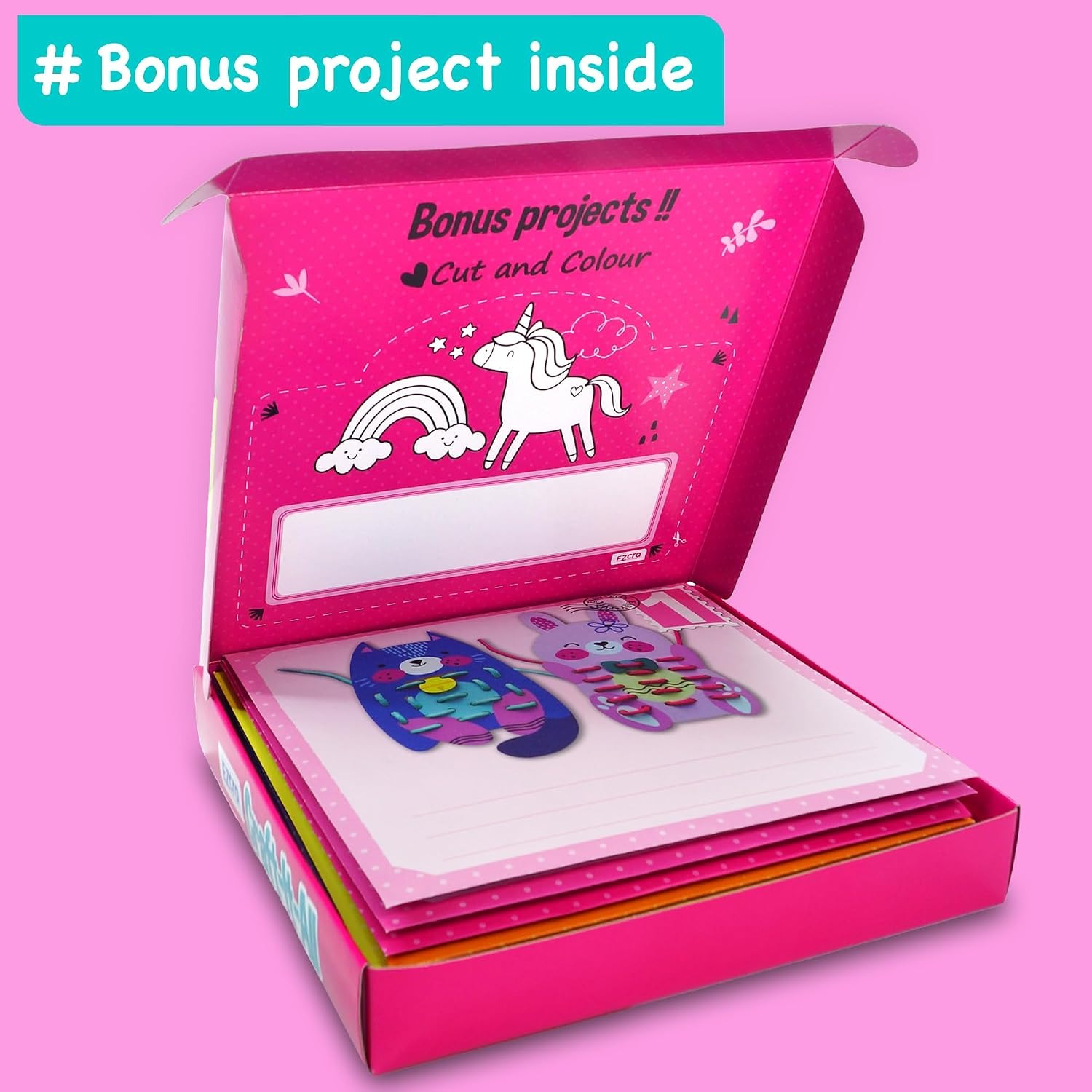
This kids craft box takes a different approach. Materials arrive pre-cut and sorted into ten colour-coded, numbered envelopes. A child picks an envelope, opens it, and everything needed for that one project is in their hands. No hunting. No adult prep. No tipping the whole box out to find one piece of felt.
What is actually inside
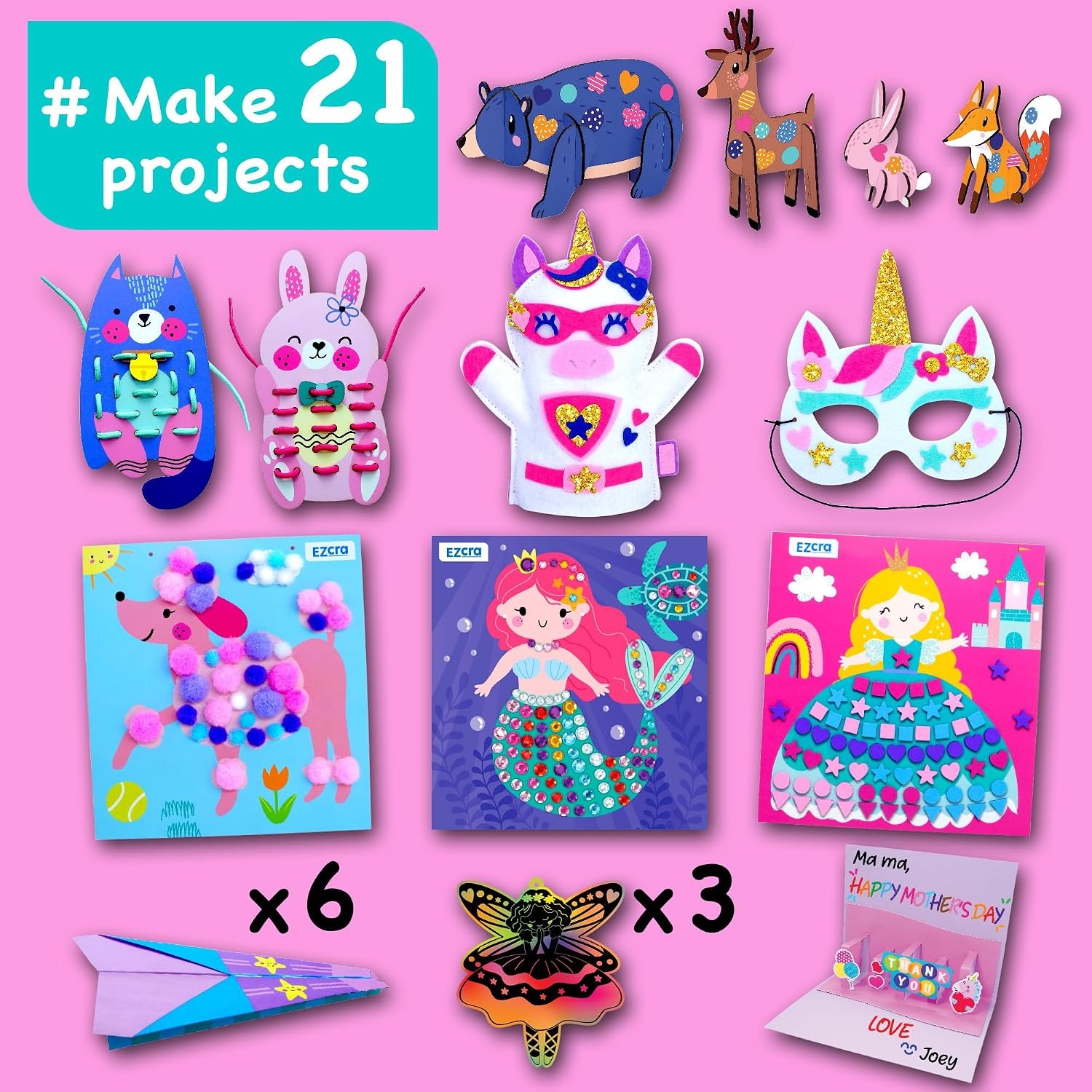
There are 21 projects, built around a unicorn and fantasy theme. The project types cover a decent spread rather than repeating the same activity: lacing cards, a felt mask, a felt hand puppet, a 3D puzzle, gem art, paper airplanes, foam art, scratch art, card making, and pom pom art.
That mix matters more than the headline number. Twenty-one projects that are all variations of colouring-in would be boring by the fifth one. Here, a child who starts with scratch art because it gives an instant result might move on to the felt puppet, which takes patience and gives them something to play with afterwards. Different crafts suit different moods, and different children in the same house.
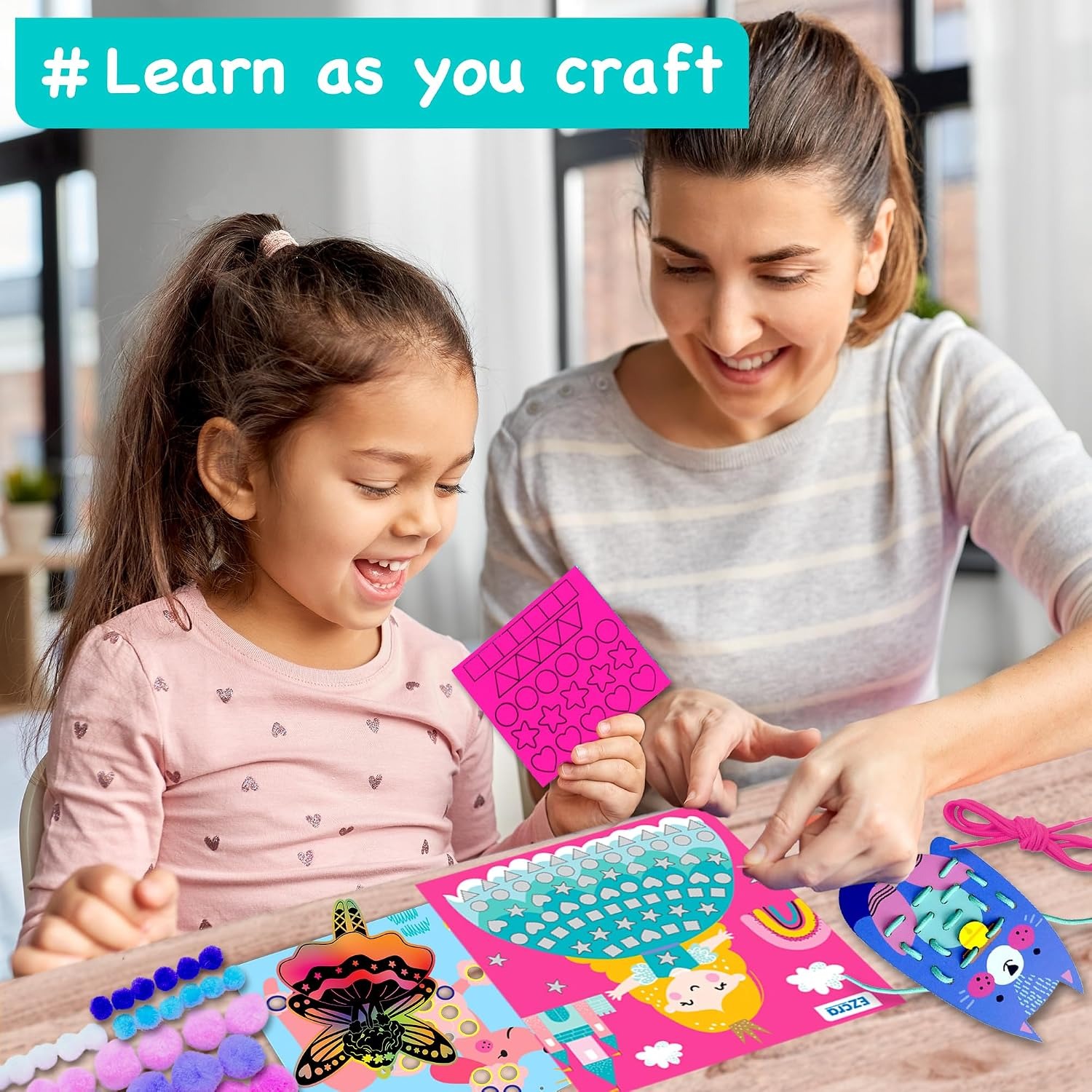
Step-by-step instructions come with the projects. The format is designed so a child who can follow pictures and simple steps can work alone, which is the difference between a craft activity and a parent-led project.
The box itself measures 28 x 26 x 3.5 cm and weighs 671 grams. It is slim. That sounds like a small detail until you try to store six craft kits in a family home.
Who it suits
This is aimed at primary-school-age children, and the listing names girls as the target audience with a theme to match. Children who already love unicorns will take to it immediately. Children who do not care about unicorns one way or the other usually still enjoy the crafts, because scratching, threading, and sticking gems are satisfying regardless of theme.
It works particularly well in a few situations.
Families who travel get good value from it. One or two envelopes slip into a bag easily, and the projects are flat and quiet, which is exactly what you want on a plane or in a waiting room. A travel craft kit that needs a table and a bottle of glue is no use at all.
Homeschool households tend to like the numbered system. One envelope per week slots neatly into a plan, and the box takes almost no shelf space. The same logic applies in classrooms, where a teacher can hand out envelopes quickly and collect them the same way.
Then there is the gift case. This arrives complete. The person receiving it does not need to buy anything else to make it work, which is a surprisingly rare quality in children's gifts.
How to judge any arts and crafts kit before you buy
A few questions sort the good kits from the ones that gather dust.
First, is anything pre-cut? Cutting is where most young crafters lose interest, because it is slow and the result rarely matches the picture. Pre-cut parts mean the child spends their energy on the creative bit.
Second, how is it stored? A kit in a single open tray mixes itself up the first time it gets carried across a room. Separated, labelled packaging keeps the kit alive for months.
Third, how many different craft types are in there? Variety extends the useful life far more than quantity does. Ten different activities beat thirty of the same one.
Fourth, can the child start without you? If the answer is no, the kit will only come out on days when an adult has a free hour, which in most households means rarely.
Fifth, where will it live? A bulky box with an awkward shape ends up in a cupboard and is forgotten. A flat box on a shelf stays visible, and visible kits get used.
This box answers most of those questions well, which is the main argument for it over a cheaper single-craft set.
Getting the most out of it
A few habits make a real difference.
Set a rule that the finished project and the spare pieces both go back in the envelope before the next one is opened. It takes thirty seconds and it is the single biggest factor in whether the kit survives to project twenty-one.
Use a tray or a placemat for the gem art and pom pom projects. The pieces are small and they roll. A raised edge saves a lot of crawling around under the table.
Do not rush through the box. If a child does five projects in one weekend, the novelty is gone by Monday. One project a week keeps the interest alive and gives each one a bit of ceremony.
Let the child choose the envelope. The numbering is for organization, not for order. Part of the appeal is the small decision of picking what to make today.
Finally, display the results. A scratch art picture taped to a bedroom door is worth more to a child than a finished craft in a drawer. It also makes them want to do the next one.
Care and storage
Keep the box flat and dry. Paper and felt both warp in damp air, and direct sunlight will fade printed colour over time. A bookshelf or the top of a wardrobe is fine.
For finished items, wipe foam and plastic pieces with a slightly damp cloth if they get grubby. Leave paper and glued items alone, since water will ruin them. Anything glued needs to dry completely before it gets stored or played with, otherwise pieces separate.
Loose small parts should be kept away from children under three. That is standard for any craft kit with gems, pom poms and threading cord.
A note on what we know and what we do not
We list the facts the maker provides. The box is 28 x 26 x 3.5 cm, weighs 671 g, holds 21 projects, and is made in China by Redshift Industries Limited under the EZCRA brand. The model number is ezcra_craftbox.
Exact material composition and a full tool list are not specified in the information we have. We would rather say that plainly than guess. If one of those details matters for your decision, message us and we will go and find out before you order.
The short version
If you want a craft set for kids that will actually get opened more than once, look for pre-cut materials, separated storage, and variety. This box has all three. Twenty-one unicorn and fantasy projects, ten numbered envelopes, and a slim box that stores anywhere.
It is a sensible gift, a good classroom standby, and a genuinely useful thing to have in the car for long journeys. Most of all, it lets a child start making something within a minute of deciding they want to, which is the whole point.