


The complete guide
How to Choose a Soprano Ukulele Beginner Kit
The problem with starting an instrument
Most instruments put a wall in front of beginners before they play a single note. A guitar needs six strings tuned, fingers pressed hard against steel, and chord shapes that take weeks before they sound like anything. A keyboard needs space and a stand. A violin needs a teacher almost immediately.
The ukulele skips nearly all of that. Four nylon strings, a short neck, and chord shapes simple enough that a lot of people play a real song within an hour of opening the box. That is not marketing, it is just what happens when you reduce the number of strings and lower the tension.
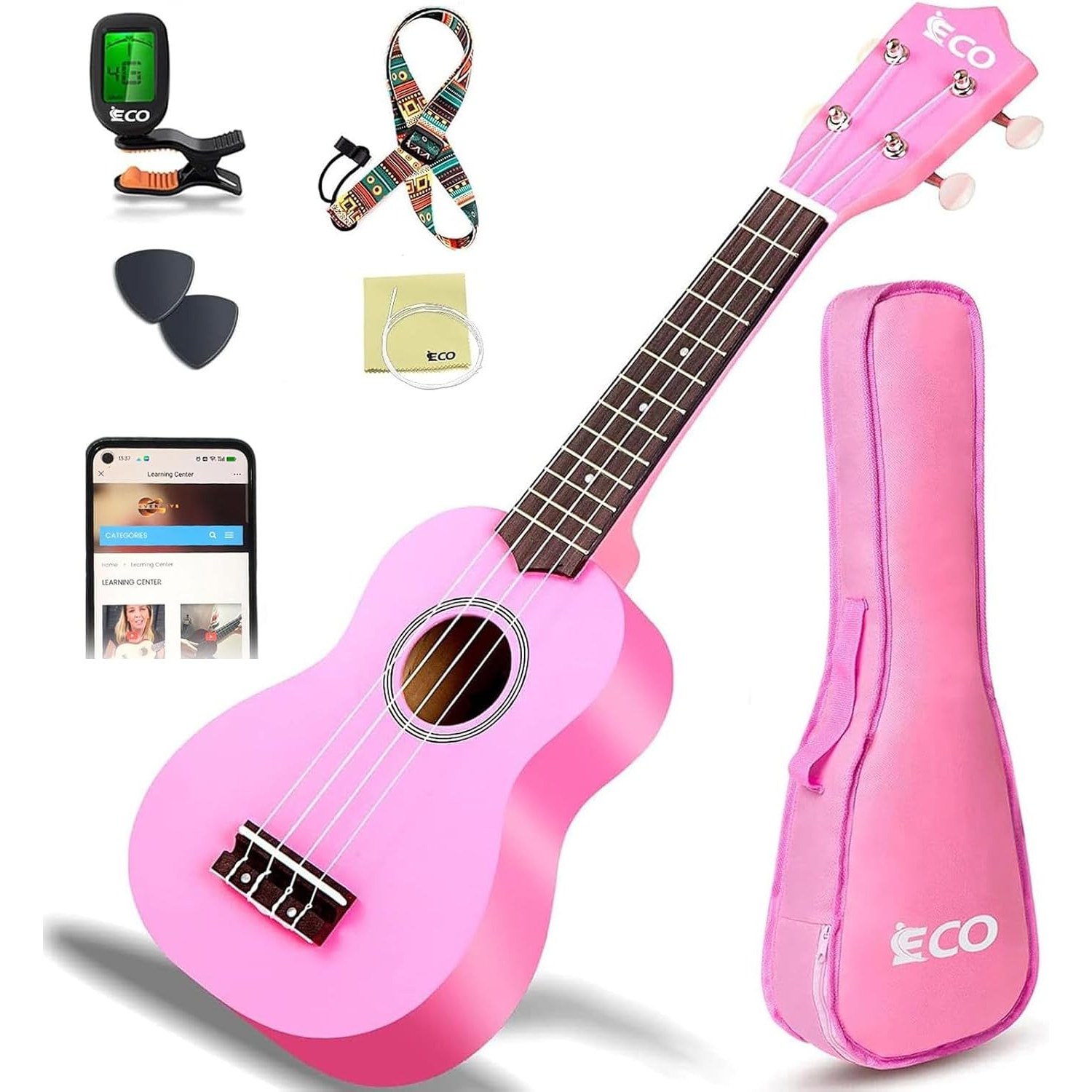
The remaining obstacle is practical. A bare instrument arrives out of tune, with nothing to carry it in, no way to play standing up, and no spare string for the night one snaps. That is the gap a proper starter kit fills, and it is why so many first-time buyers go looking for the best ukulele starter pack rather than just the cheapest instrument.
What a soprano actually is
Ukuleles come in four main sizes. Soprano is the smallest and the original. Concert, tenor and baritone step up from there, each with a longer scale, wider fret spacing and a deeper voice.
This kit is a soprano at 21 inches, with packed dimensions of 56.21 x 21.21 x 7.7 cm. It weighs 544 g. To put that in context, that is less than a full water bottle. A seven year old can stand and hold it against their chest without their shoulder complaining ten minutes later.
The soprano is also where the familiar ukulele sound lives. The listed sound profile here is bright and soft, which is the classic character: cheerful, a bit plinky, and easy to listen to in a small room. A tenor sounds fuller and rounder, but it does not sound like what most people mean when they say ukulele.
How the instrument is built
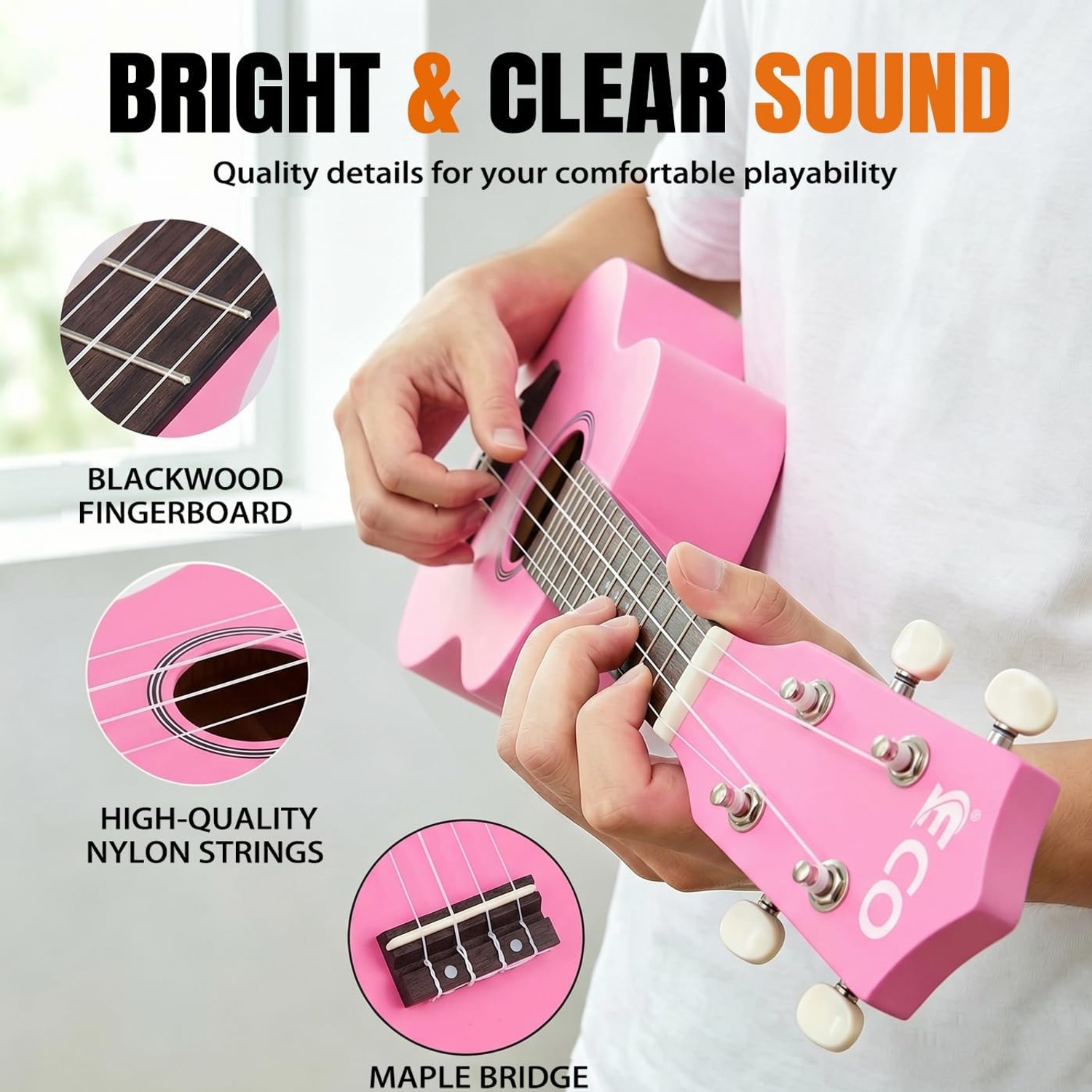
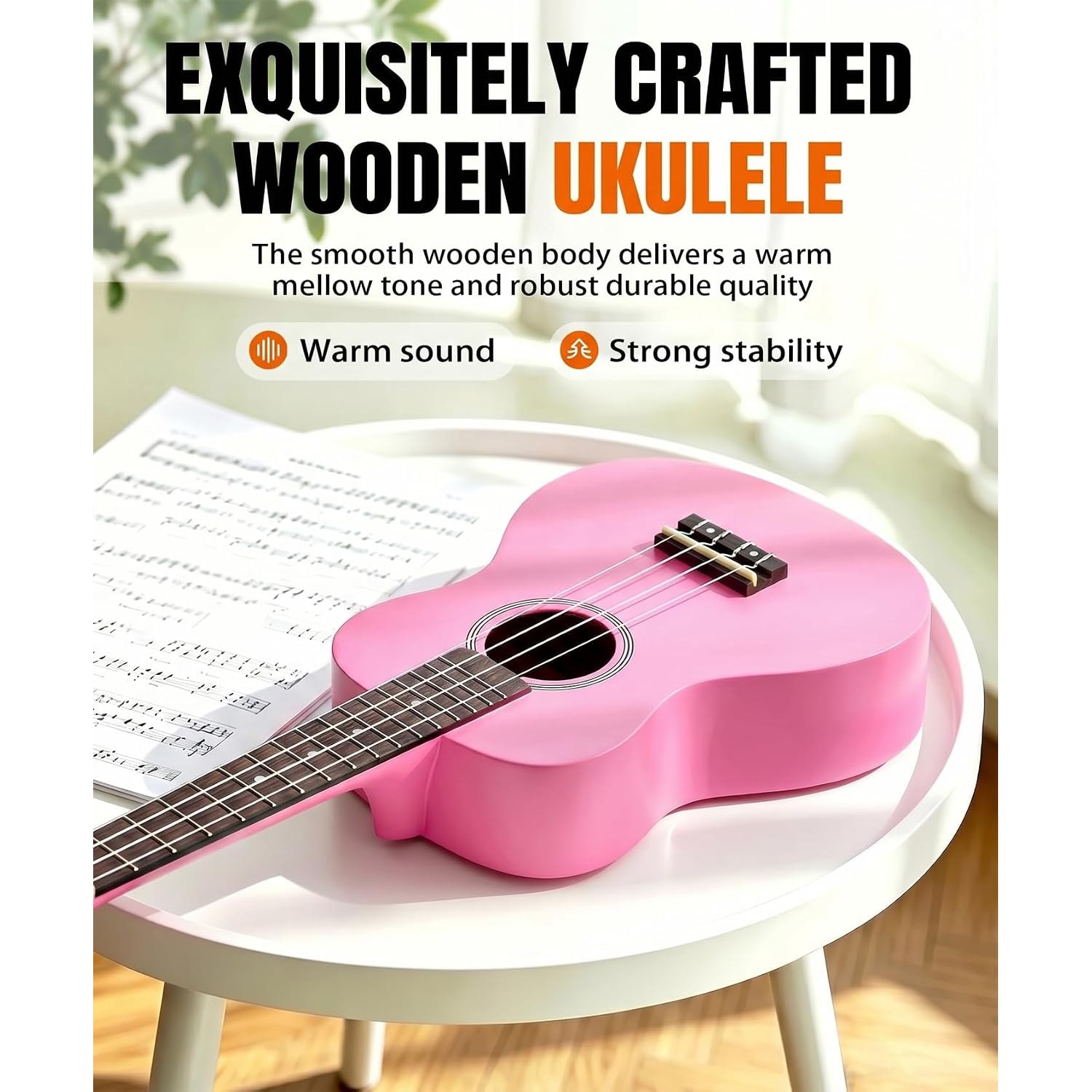
The top, back and body are basswood. Basswood is a light, even-grained timber used widely in student instruments because it is stable, easy to work and keeps the weight down. It does not have the complex overtones of solid mahogany or koa, but on a soprano at this price that is not really the point. What you want from a first instrument is something that stays in one piece, holds its shape and sounds pleasant enough to encourage practice.
The finish is polished, in pink. The strings are nylon, four of them, in standard G, C, E, A tuning.
Nylon is the quiet hero of beginner instruments. It sits under far lower tension than steel, so pressing a string to the fretboard takes less force and leaves less of a dent in a fingertip. A child can practise for twenty minutes instead of three. Over a month that difference decides whether the instrument gets played or ends up under a bed.
Who this suits
The obvious candidate is a child starting music, either at home or alongside school lessons. Soprano ukuleles are the standard classroom instrument in a lot of primary schools, so the size and tuning will line up with whatever the teacher is using.
It also suits adults who want something to pick up on the couch. There is a quiet assumption that soprano is for children, and it is not true. Plenty of adult players stick with soprano because it is the most portable size and because the fret spacing stops being a problem after a couple of weeks of playing.
Where it suits less well is a player with large hands who wants to play fast melodic lines high up the neck. The frets are close together on a soprano, and past the seventh fret things get tight. If that is the goal, a concert or tenor body is a better fit. For strumming chords and singing along, which is what most people actually do, soprano is fine.
One more group worth mentioning: travellers. A soprano in its case is about the easiest instrument there is to take anywhere. It fits in a backpack, weighs next to nothing, and does not need power or a stand.
What to look for when you choose
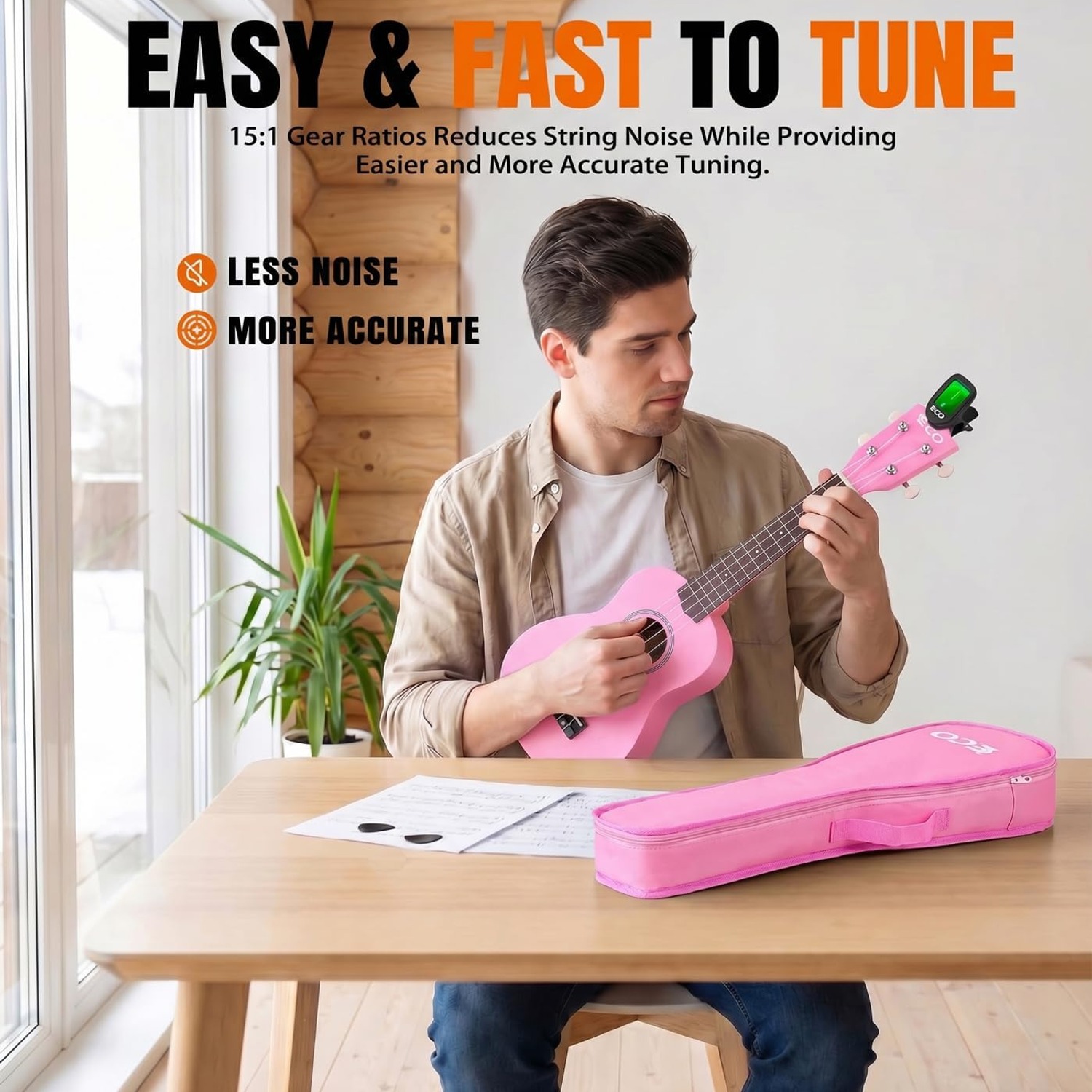
Does it include a tuner? This is the single most important accessory and the one beginners most often skip. A ukulele that is out of tune sounds wrong no matter how well you play, and a beginner cannot tell whether the problem is the instrument or their fingers. A clip-on tuner clamps to the headstock, reads the vibration and shows you the note. It removes the guesswork completely. This kit includes one.
Is there a case? Wood reacts to sun, heat and damp. A case buys you protection from all three plus the ordinary knocks of a house with children in it. It also turns the instrument into something portable, which matters if lessons happen somewhere other than home.
Are there spare strings? Strings break, usually at an inconvenient hour. Having a replacement in the case means a five minute job instead of a week of waiting. Spare strings are part of this kit.
Is there a strap? Younger players in particular find it easier to play standing with a strap taking the weight. It also stops the instrument sliding off a lap.
What does it weigh? Lighter is better for a child. At 544 g this one is at the easy end of the range.
Those five points are the practical checklist. Most arguments about the best beginner ukulele come down to tonewood and finish, which matter far less than whether the thing is tuned and whether it is in the room rather than in a cupboard.
Getting started in the first week
Tune it first, before anything else. New nylon strings stretch, so expect the tuning to drift noticeably for the first week or two. That is normal and not a fault. Tune it every time you pick it up, it takes under a minute with the clip tuner, and after two weeks it will settle and hold much better.
Then learn two chords. C major takes one finger. A minor takes one finger. Those two alone will get you through a surprising number of songs, and the sense of having played something real on day one is what keeps the habit going.
Strum with the pad of your index finger rather than a pick at first. It is softer, quieter and more forgiving while your timing is still finding itself. Picks are in the kit for when you want more attack.
Short and often beats long and rare. Ten minutes a day will take a beginner further in a month than one hour-long session a week.
Looking after it
Ukulele care is simple. Wipe the strings and body with a dry, soft cloth after playing to lift finger oils, which are what dull strings fastest. Keep it in its case when it is not being played, somewhere away from direct sun, radiators and damp rooms. Never leave it in a hot car, that is the quickest way to damage any wooden instrument.
Skip furniture polish and household cleaners on the polished finish. They are not designed for instrument lacquer and can cloud it.
Change the strings when they look frayed, feel grooved under the fingers, or will not hold pitch anymore. For a casual player that might be once a year.
The manufacturer lists a 90 day warranty from the date of purchase, and the country of origin is China.
The short version
A soprano ukulele is the gentlest way into playing music that exists, and this kit removes the practical reasons people stall. You get a 21 inch basswood instrument with four nylon strings, a bright and soft tone, and a bundle that covers tuning, carrying, strapping and picking.
It weighs 544 g, so a child can hold it properly. It comes in a case, so it survives being owned. And it includes a tuner, so nobody has to guess.
If the player has large hands and wants to play lead lines, look at a concert or tenor instead. For everyone else, including most children and most adults who just want to strum and sing, soprano is the right size and this kit is a complete place to start.