
The complete guide
Choosing a Kids Dentist Play Set That Actually Gets Played With
The problem with the first dental visit
A dentist's room is a strange place for a small child. The chair moves on its own. There is a light pointed at their face. Someone they have never met is holding a metal tool and asking them to open their mouth wider than they ever do at home. Most of the fear comes from not knowing what happens next, and no amount of reassurance in the car park fixes that.
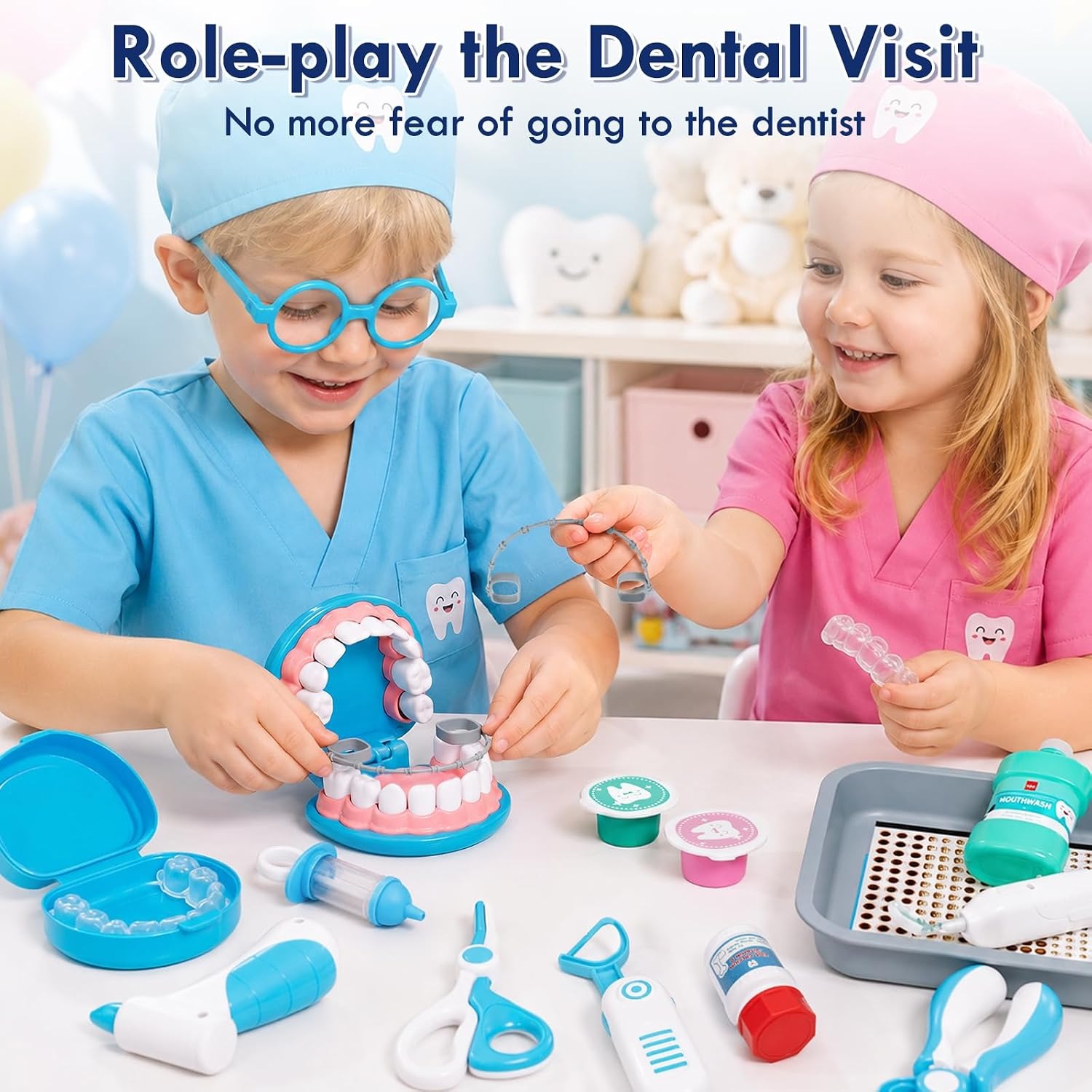
Play fixes it, or at least softens it. When a child acts out an appointment at home, they get to be the one in charge. They hold the mirror. They decide when the drill comes out. They tell the patient to sit still. By the time they are the one in the chair, the sequence of events is already familiar, and familiar is much easier to sit through than unknown.
That is the job this kids dentist play set is built for. It is a toy, and children treat it as one, but the thing it quietly teaches sticks around.
What makes a dental play set different from a general doctor kit
Plenty of toy medical bags exist. Most of them are stethoscope, thermometer, syringe, bandage, done. They are fine, but a child can only take a temperature so many times before the game runs out of road.
A dental set works differently because it has a subject. The teeth model is the thing being worked on, and that changes the play from "pretend to check someone" into "do a job on this object". Children can brush it, polish it, fit braces to it, stick a cavity sticker on it and then treat the cavity. There is a start, a middle and an end to each round.
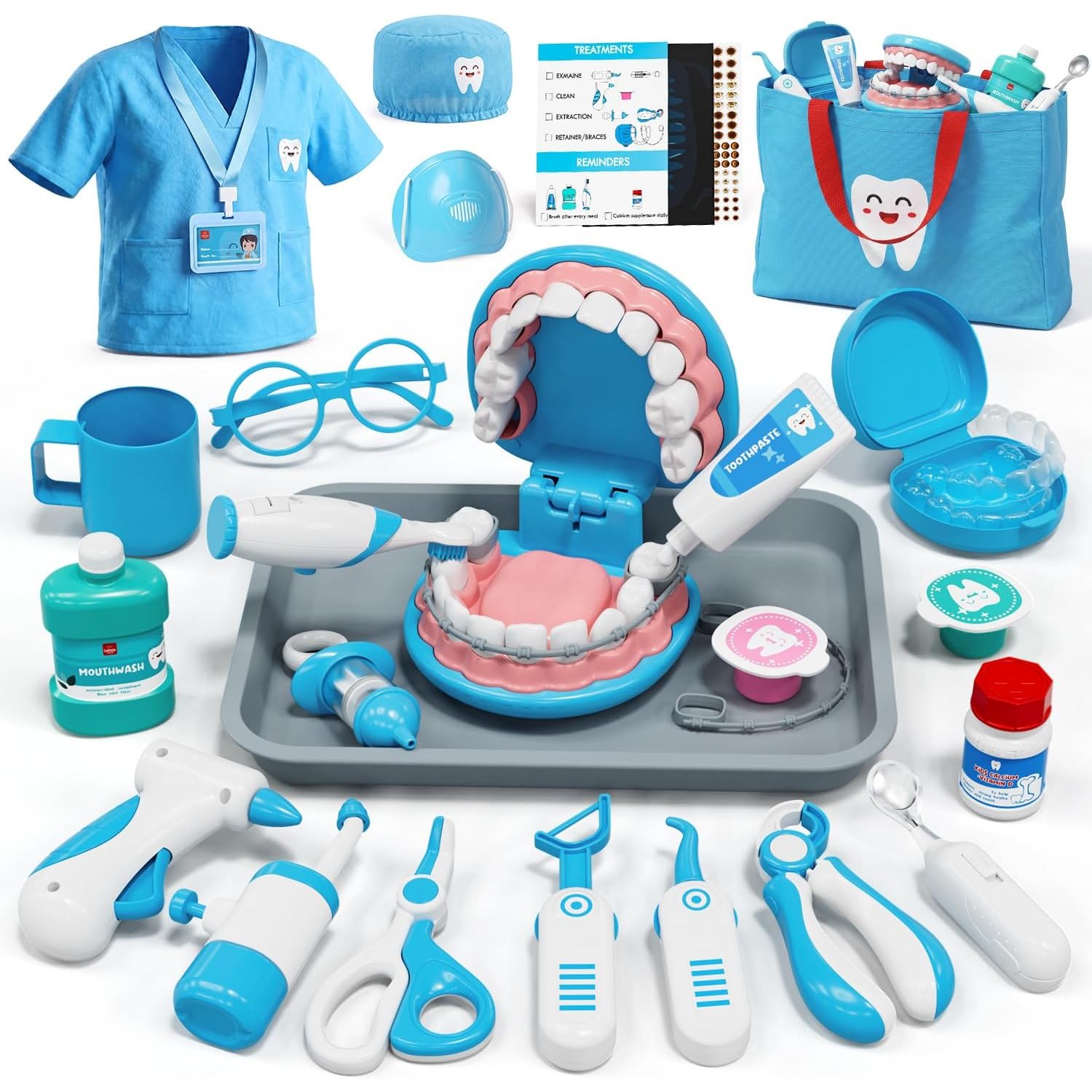
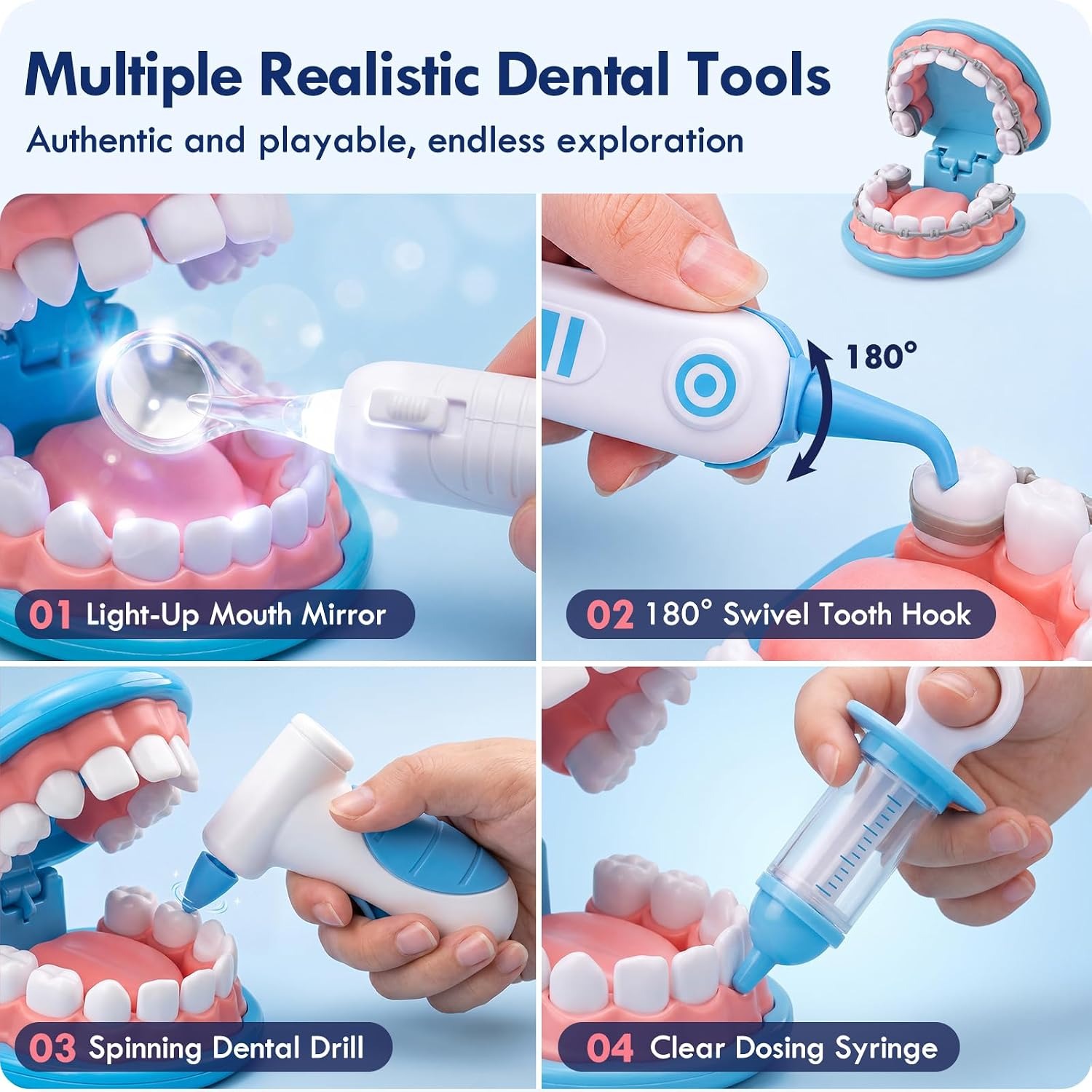
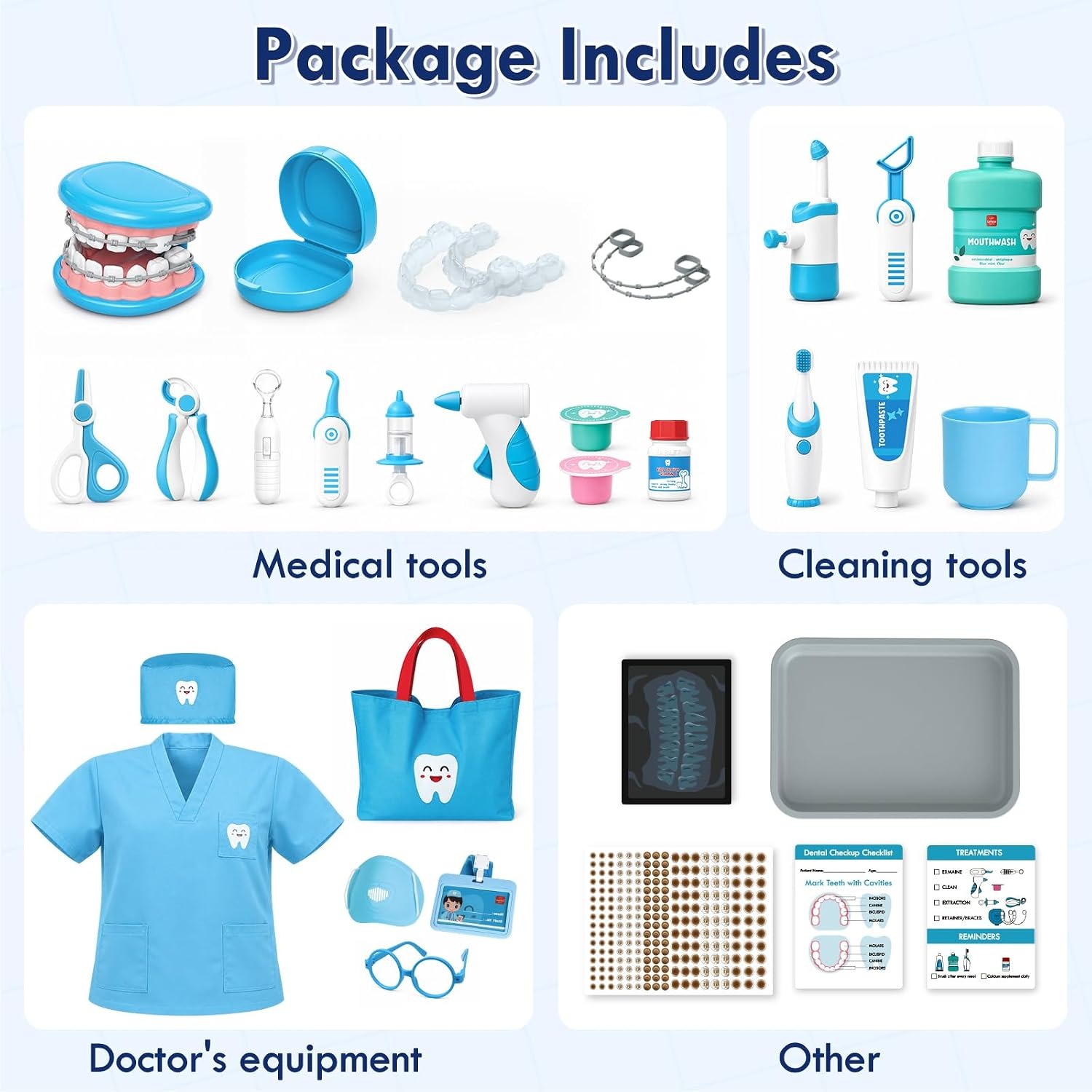
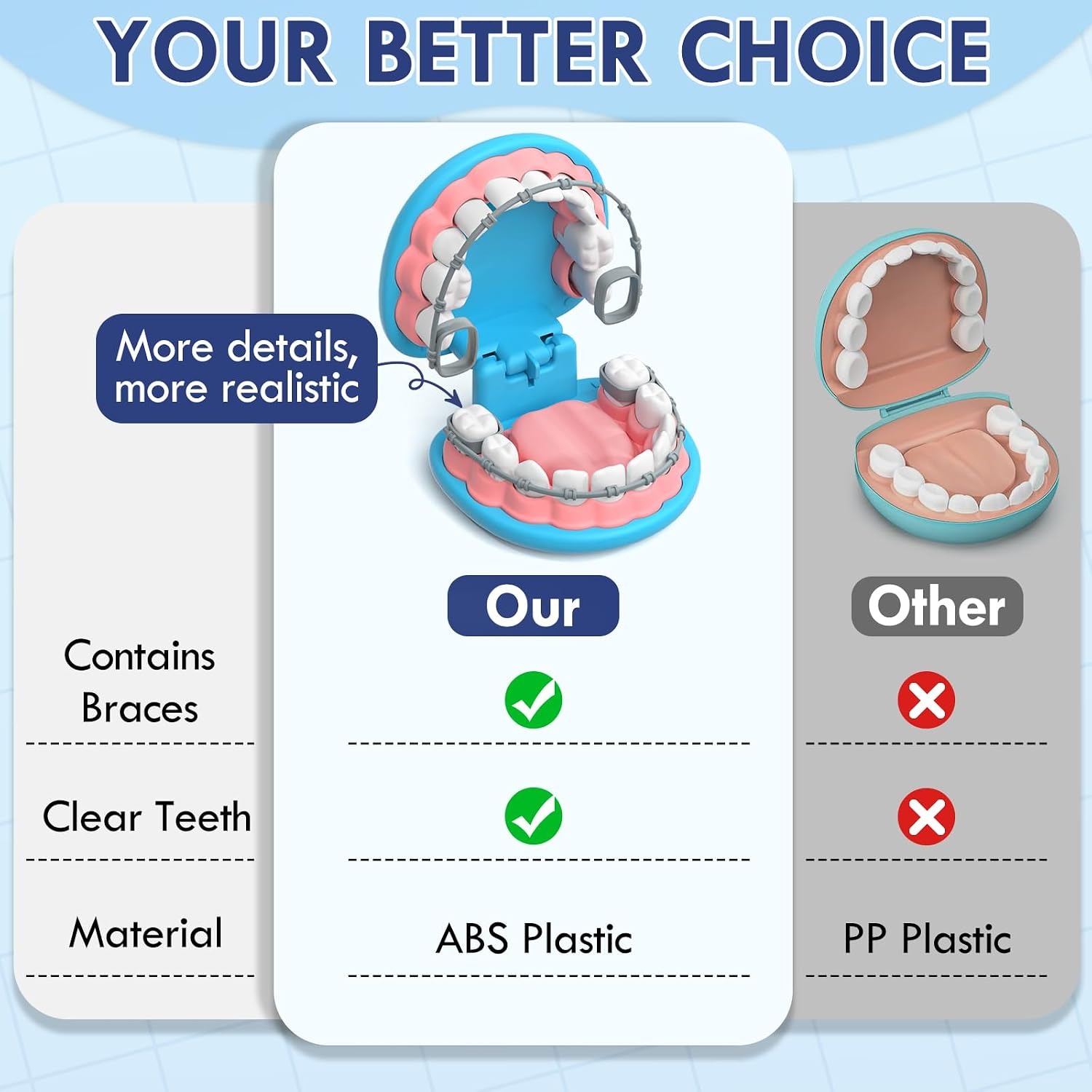
This particular set carries 31 pieces. The teeth model sits at the centre. Around it you get a dental drill with sound and light, a mirror, pliers, a syringe, a toothbrush, a mouthwash cup, a medicine bottle, two polishing agents, cavity stickers, two sets of braces, two clear braces and a braces box to keep them in. There is a tray to lay it all out on, an X-ray film, an inspection and care sheet, and a small dentist business card.
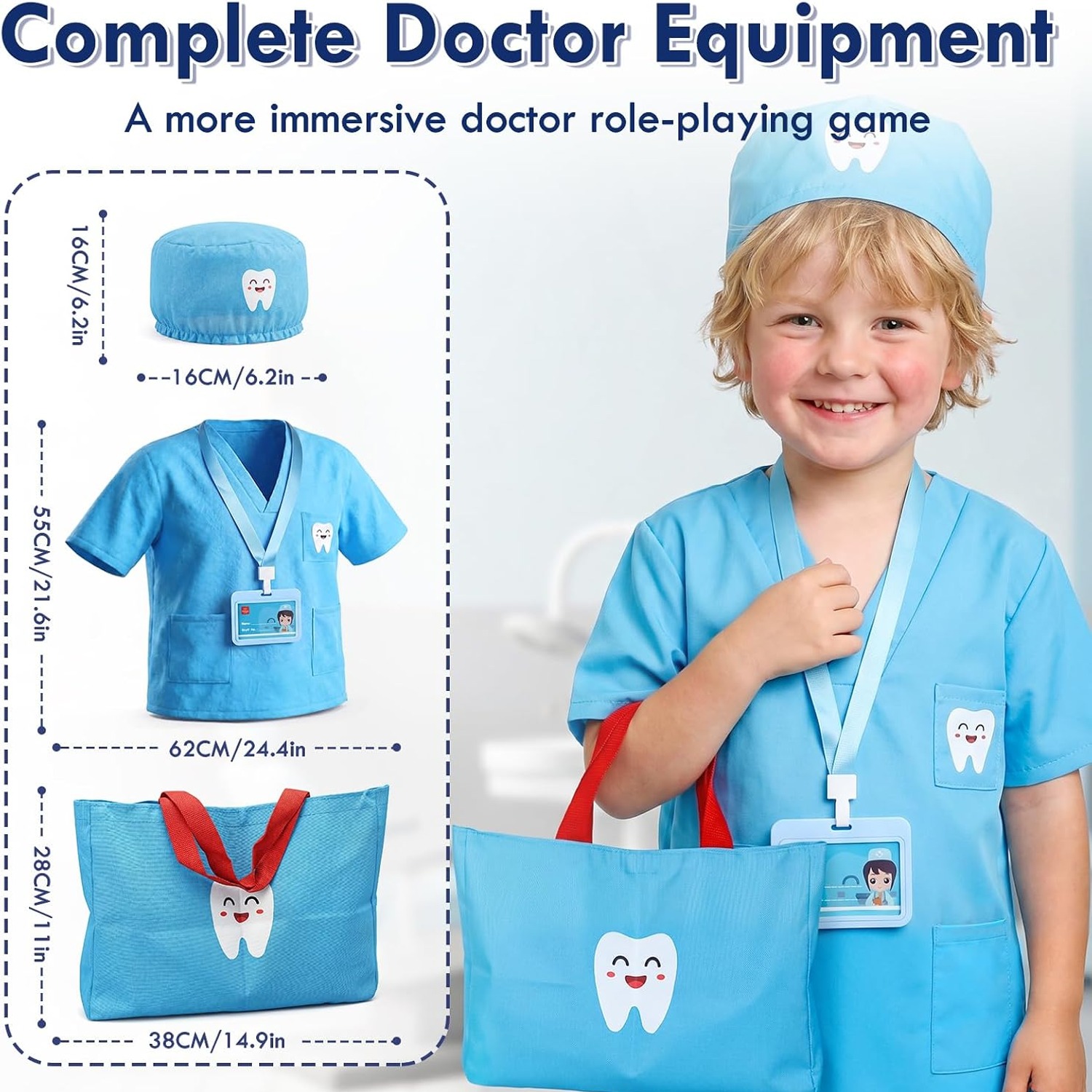
Then there is the dress-up layer. Doctor clothes, a hat, a mask and glasses. Anyone looking for the best pretend play doctor set should check whether costume pieces are included, because they matter more than the tool count. A child wearing the outfit talks differently, moves differently and stays in character far longer.
How the set works in practice
Here is how it usually goes in a living room. The child lays out the tray, puts on the coat and hat, and announces they are open for business. A parent, a sibling or a long-suffering teddy becomes the patient. The mirror comes out first for the inspection. Then the toothbrush. Somewhere in there the drill gets fired up, mostly because it lights up and buzzes.
The cavity stickers give the game a plot. Stick one on the model, and now there is a problem to solve. The polishing agent and the drill become the fix. The inspection and care sheet lets the child record what they found, which is a lovely bit of early writing practice even if the writing is just scribbles.
Braces are the part older children latch on to. Fitting clear aligners onto the model takes a bit of dexterity and a bit of patience. For a six or seven year old who may be heading towards orthodontic work themselves, it demystifies something that can otherwise feel alarming.
Who it suits
The recommended age is 36 months to 8 years, which is a wide span, and children at either end use it in very different ways.
At three, expect copying rather than storytelling. They will brush, they will hold the mirror up to someone's face, they will press the drill button repeatedly. That is still useful play, and it builds the hand control the more complex pieces need later.
At four and five the role play clicks in. This is the sweet spot. The child will give instructions, invent complaints for the patient and insist on the full routine. If you are shopping for the best dentist toy for 3 year olds and the child is on the older side of three, they will grow into the set quickly.
At six, seven and eight the interest shifts to the technical side. The braces, the X-ray film, the business card. Children this age like the administrative details as much as the tools, and they enjoy running a proper clinic with appointments and paperwork.
It also works well with two children. One plays dentist, one plays patient, then they swap. Role play with a partner builds turn-taking and negotiation in a way solo play does not.
What to look at before you buy
Piece count versus usefulness. A high number only helps if the pieces do something. Here the 31 includes a working model, consumable-style props like stickers, and costume items, so the count translates into actual play rather than filler.
Storage. A medical bag is included and everything goes back into it. This is the single biggest factor in whether a set survives six months in a family home. Loose-piece toys disappear.
Noise. The drill has sound and light, which children love and some adults do not. Four C batteries are included. If it gets wearing, take the batteries out and the drill still works as a silent prop.
Size and weight. The box is 25 x 19 x 11 cm and the whole thing comes in at 0.77 kg. Easy to wrap, easy to post, easy to store.
Materials. This set is plastic, finished in blue. We list what the maker states and nothing more.
Looking after it
Care is simple. Wipe the tools and tray with a damp cloth and a little mild soap, then dry them properly before packing away. Avoid soaking anything, and keep all of it out of the dishwasher, since the drill holds batteries.
If the set is going into storage for a season, take the batteries out first. Leaking cells ruin a battery compartment and there is no good way back from that.
Give the small pieces an occasional look over for cracks, and get into the habit of packing everything into the bag at the end of play. A set that lives in its bag stays complete.
Using it around a real appointment
A few things help if you are buying this ahead of a genuine visit.
Start gentle. Mirror and toothbrush before the drill. Let the child examine you first, so they see an adult sitting calmly through it.
Use the right words. Say "check-up", "open wide", "we are counting your teeth". The language the dentist will use should already be in the child's ears.
Let them keep control of the pace. If they want to stop halfway, stop. The point is to build comfort, not to run a drill.
And take the set along if the practice allows it. A child holding their own toy medical bag in a waiting room is a child with something to do.
The short version
This is a 31-piece dental role play kit for children aged roughly three to eight, with an oversized teeth model, braces and clear aligners, a drill with sound and light, a full set of hand tools, doctor clothes, a hat, mask, glasses and a carry bag. It runs on four included C batteries, weighs 0.77 kg and packs into a 25 x 19 x 11 cm box.
It is a solid birthday or Christmas present on its own. It is a genuinely useful one in the weeks before a child's first trip to the dentist. Either way, it arrives complete and ready to play with, which is more than can be said for a lot of toys.