
The complete guide
How to Choose a Building Blocks Set That Kids Keep Coming Back To
The toy that gets played with twice
Most families have a toy graveyard. It is usually a box in the corner holding the things that were exciting for a weekend and then went quiet. Battery toys end up there often, because once a child has seen everything the toy does, there is nothing left to discover.
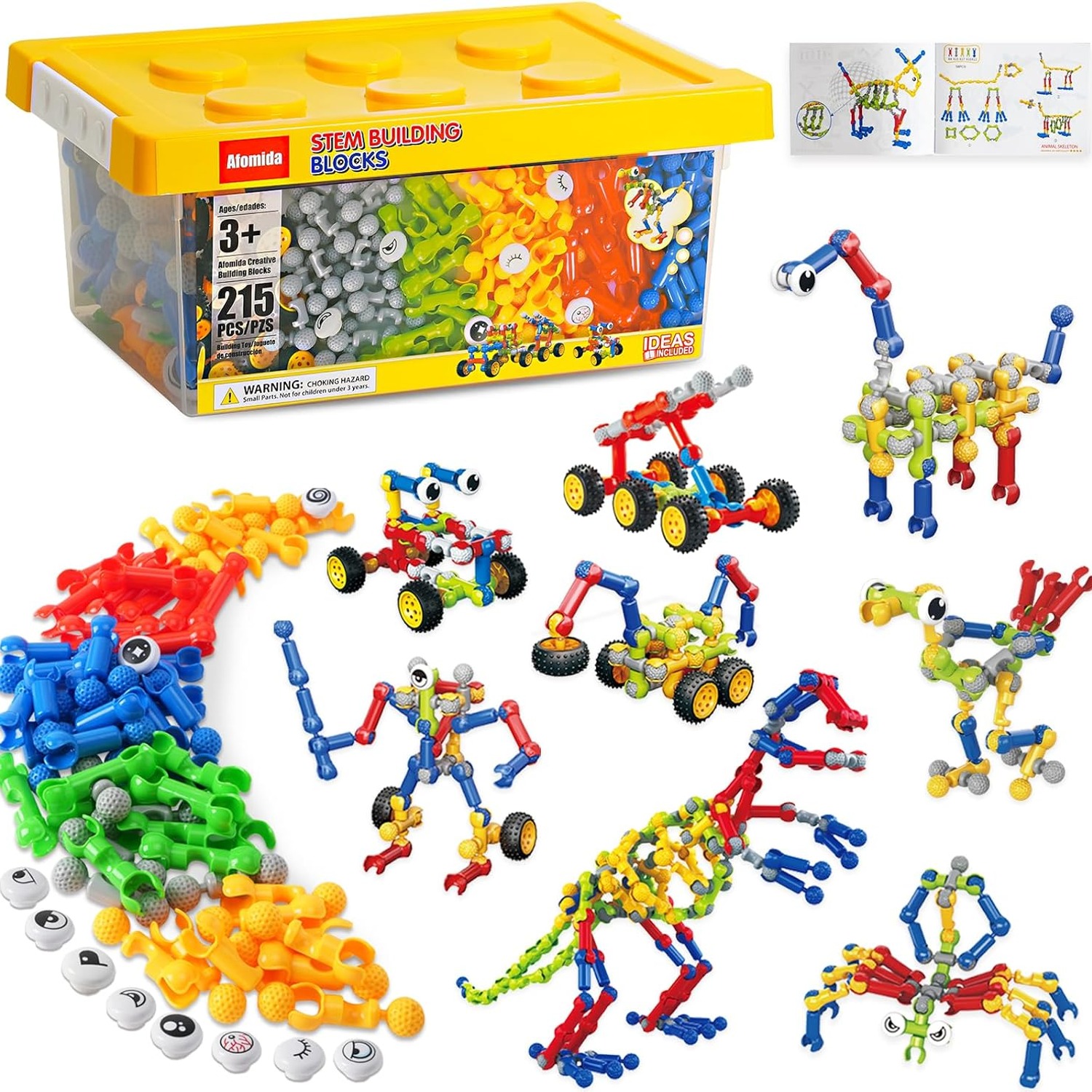
Building blocks dodge that fate because the toy never finishes. A 215 piece building blocks set does not have a single correct outcome. It has a pile of parts and a child with an idea. That is why block sets survive house moves, hand-me-downs and the ruthless editing most parents do when the playroom gets full.
The problem is that not all block sets are equal. Too few pieces and the first ambitious build runs out of parts. No storage and the set is half lost within a month. No guide and some children stare at the pile and walk away. This set is put together to avoid all three of those traps.
What you actually get
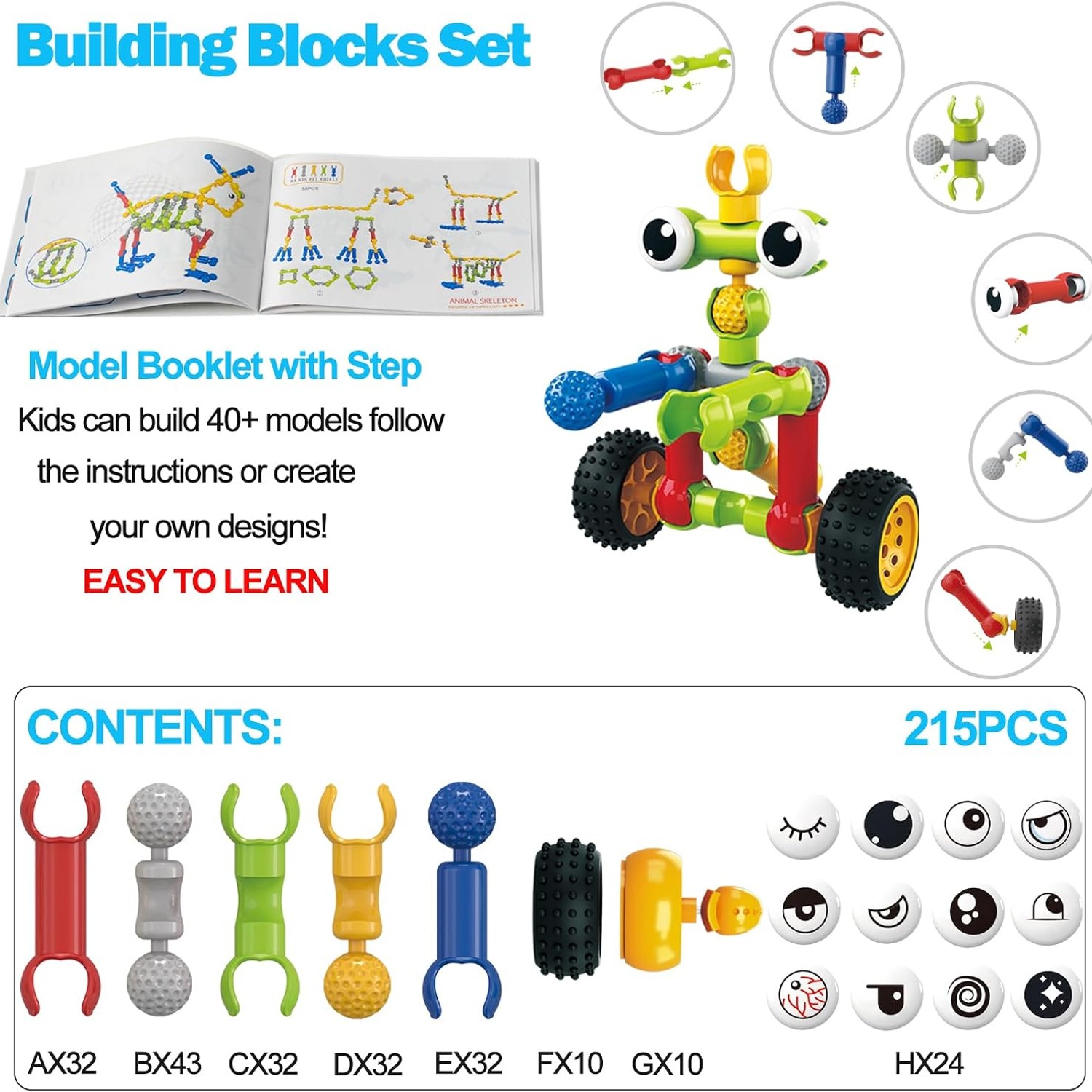
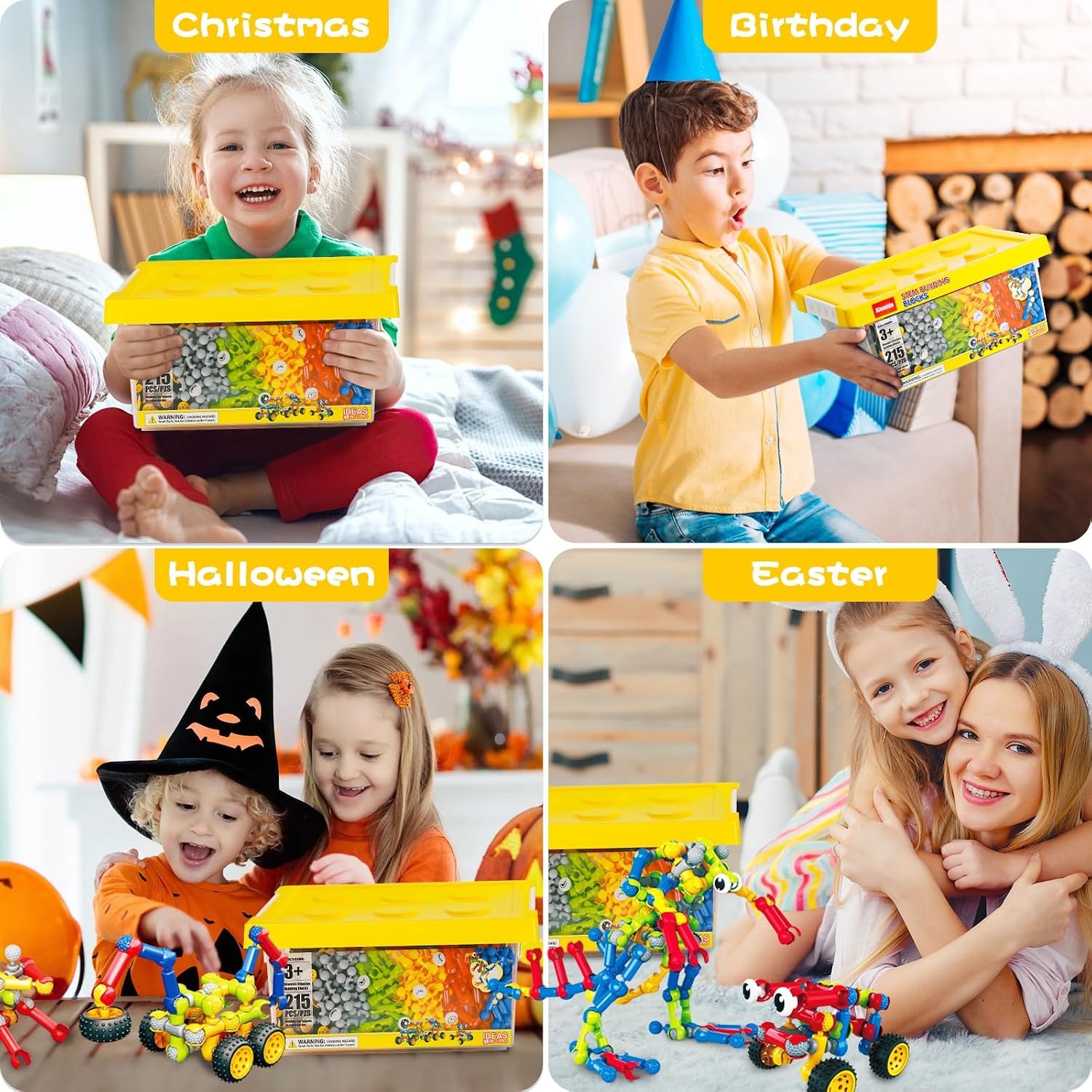
There are 215 interlocking plastic blocks in red, yellow, blue and green. They stack and clip together by hand, with no batteries and no electronics. The set also includes wheels and movable eyes, which matter more than they might sound.
Wheels change the category of play. A tower is a structure, but a vehicle is a story. Once a child can build something that rolls across the floor, the toy moves from construction into pretend play. Eyes do the same thing for creatures. A plain block stack becomes a dinosaur with a face, and suddenly it has a name and a personality.
An illustrated instruction manual comes in the box along with a cardboard insert, and the whole thing lives in a storage box. The theme is listed as animal, and the stated educational objective is STEM. The brand is Afomida and the model number is FYD1941. Item weight is 1 kg.
One note on the specs. The listed item dimensions of 0.98 x 0.99 x 1 cm refer to a single component, not the packed box. If you are judging size, the 1 kg weight is a better guide.
How interlocking blocks build real skills
The phrase STEM gets used loosely, so it is worth being specific about what is actually happening when a child builds.
Fine motor skills come first. Pressing pieces together and pulling them apart takes grip strength and precise finger control. For a four year old, that is genuine practice, and it feeds straight into holding a pencil later.
Then there is spatial reasoning. To build a car from a flat picture in a manual, a child has to work out which side faces up, how the parts sit against each other and what to do when a piece does not line up. That is the same mental skill used later in geometry and in reading maps.
Problem solving shows up when the tower falls. A child who has watched three towers collapse starts widening the base without anyone teaching them to. That is a structural principle learned through hands rather than words, and it sticks.
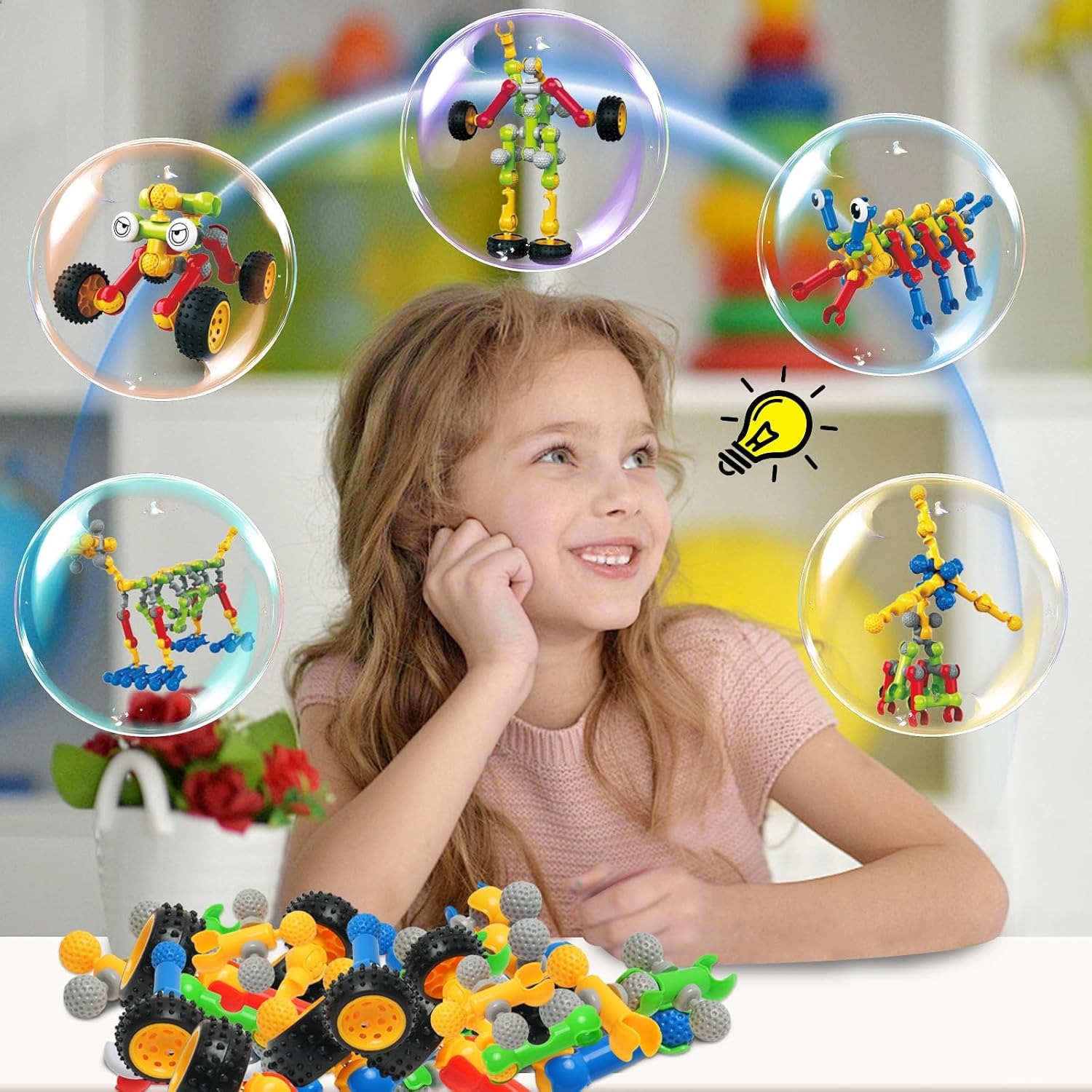
Finally there is planning. Free building asks a child to hold an idea in their head and work towards it. For many children this is the first time they manage a project from start to finish, and finishing something feels good at any age.
Who this set suits
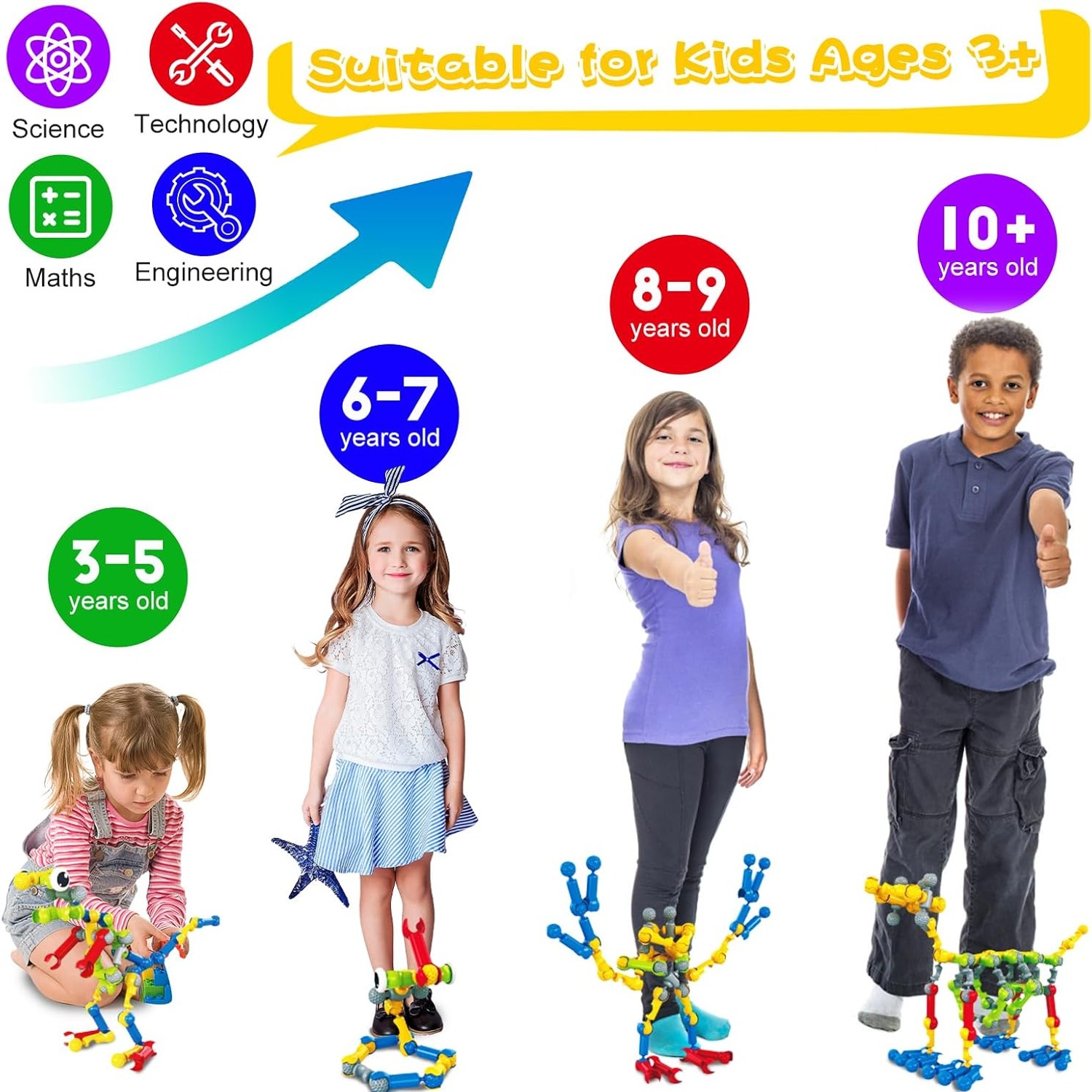
The manufacturer recommends 3 years and up. The listed target audience is kids aged 4 to 8, which is where the set sits most comfortably.
A three or four year old will mostly stack, sort and knock things down. That is fine, and it is still valuable play. A five or six year old starts following the manual and gets a real kick out of matching the picture. By seven or eight, the guide usually gets ignored in favour of original designs, which is the best sign the toy is doing its job.
It is also a strong pick for group settings. The item highlight mentions preschool classroom STEM activities, and 215 pieces is enough that two or three children can build at once without constant negotiation over parts. For playdates, rainy school holidays and family gatherings, that matters.
What it is not is a preschooler toy. Small parts and children under three do not mix, so keep the box out of reach of younger siblings.
How to choose between block sets
If you are comparing options, a few things separate a set that lasts from one that does not.
Piece count is the obvious one. Below about a hundred pieces, children run out of parts mid-build and lose heart. Two hundred and up gives room for big projects and for two builders at once.
Storage is the quiet make-or-break. A set that arrives in a flimsy bag will be scattered across three rooms by the end of the month. A proper box gives the pieces a home and lets a child tidy up independently.
A guide helps more children than you might expect. Some kids free-build from day one. Others need a few successful copied models before they trust themselves to invent. An illustrated manual gives the second group a ramp into the toy.
Extra parts like wheels and eyes expand what is possible. Without them, everything is a static shape. With them, builds move and look back at you.
Finally, think about whether the set is open-ended or locked into one outcome. A licensed kit that makes exactly one model is a lovely afternoon and then a shelf ornament. Generic construction blocks reset every single time.
Keeping the set alive
Care is simple with plastic blocks, but a little routine goes a long way.
Wipe pieces with a damp cloth and mild soap when they get grubby, then air dry them fully before they go back in the box. Skip the dishwasher, the microwave and boiling water, since heat warps plastic and ruins the fit of interlocking parts. Keep the box out of direct sun and away from radiators for the same reason.
The habit that matters most is the pack-up. Make it part of the end of play rather than a separate chore. A quick sweep of the floor and under the sofa catches the strays, and a complete set stays a good set.
One more trick. If interest dips, put the box away for a few weeks and bring it back out. Rotating toys in and out of circulation makes old things feel new again, and it costs nothing.
The short version
This is a 215 piece interlocking plastic building blocks set with wheels, movable eyes, an illustrated manual and a storage box. The brand is Afomida, model FYD1941, made in China, and the whole thing weighs 1 kg. It is manual, needs no batteries and is listed for indoor use with an animal theme and a STEM educational objective.
The manufacturer recommends ages 3 and up, with a target audience of kids aged 4 to 8. It suits home play, playdates and preschool classrooms equally, and it works as a gift that a child grows into rather than out of.
If you want a toy that changes shape every time it comes out of the box, and that packs away into one container when the day is done, this is a sensible pick. Questions about age fit or what to pair it with? Ask us and we will give you a straight answer.