
The complete guide
The Buyer's Guide to Four in a Row Games
The problem this game actually solves
There is a particular moment in most households. Dinner is twenty minutes off, the kids are restless, and everyone has drifted to a separate screen in a separate room. Nobody wants to commit to a long board game with a rulebook and a setup tray. What is needed is something that takes thirty seconds to start and finishes before the pasta is ready.
A four in a row game fits that gap better than almost anything else. The rules fit in one sentence. There is no reading, no dice, no counting money, no turn order to track. You drop a disc, your opponent drops a disc, and someone makes a line of four. That is it.
The reason this format has lasted so long is that it is easy to learn and hard to master. A five-year-old can win a game. So can a forty-five-year-old who has been playing since they were five. The gap between the two is pure thinking, not rules knowledge, which is unusual and rather nice.
How the game works
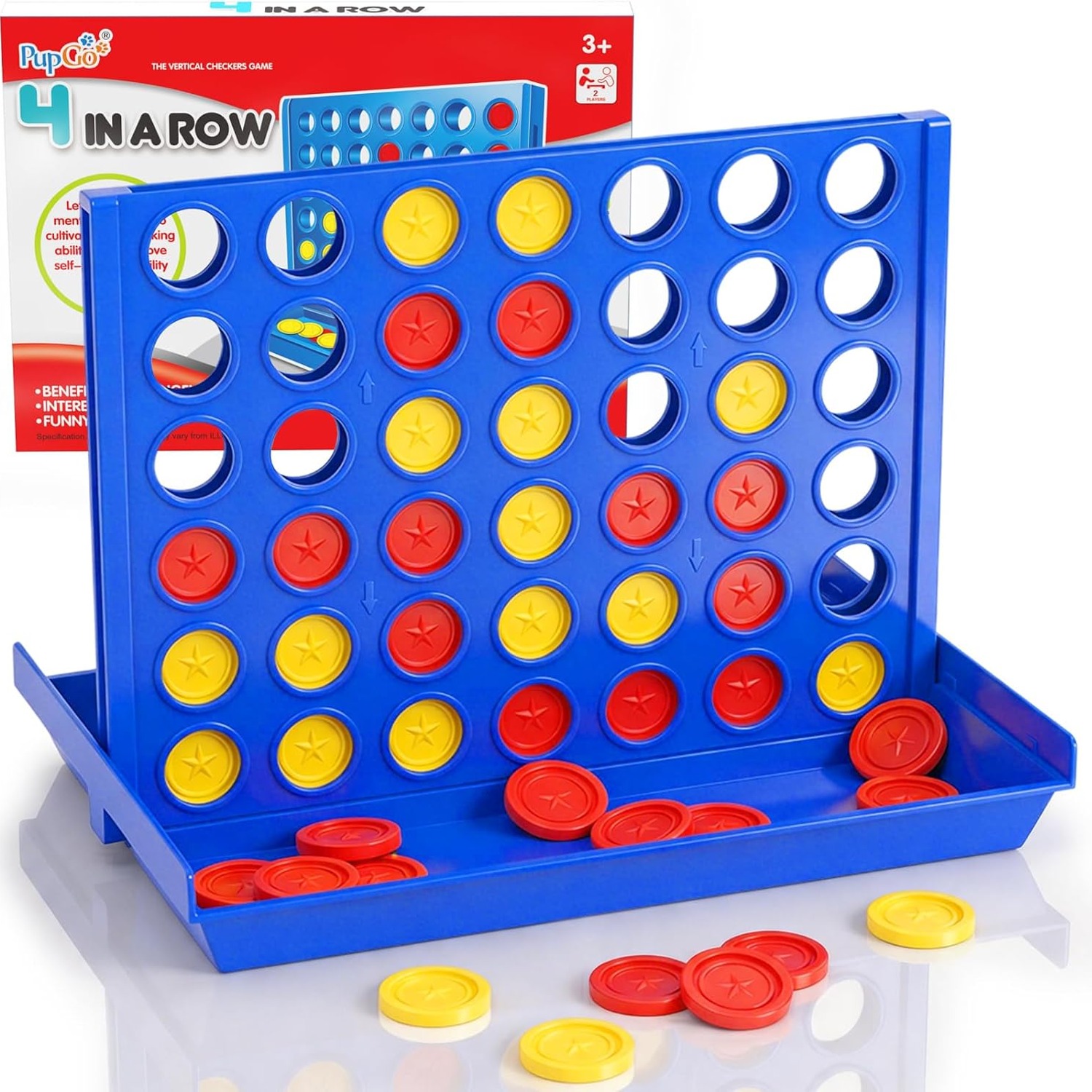
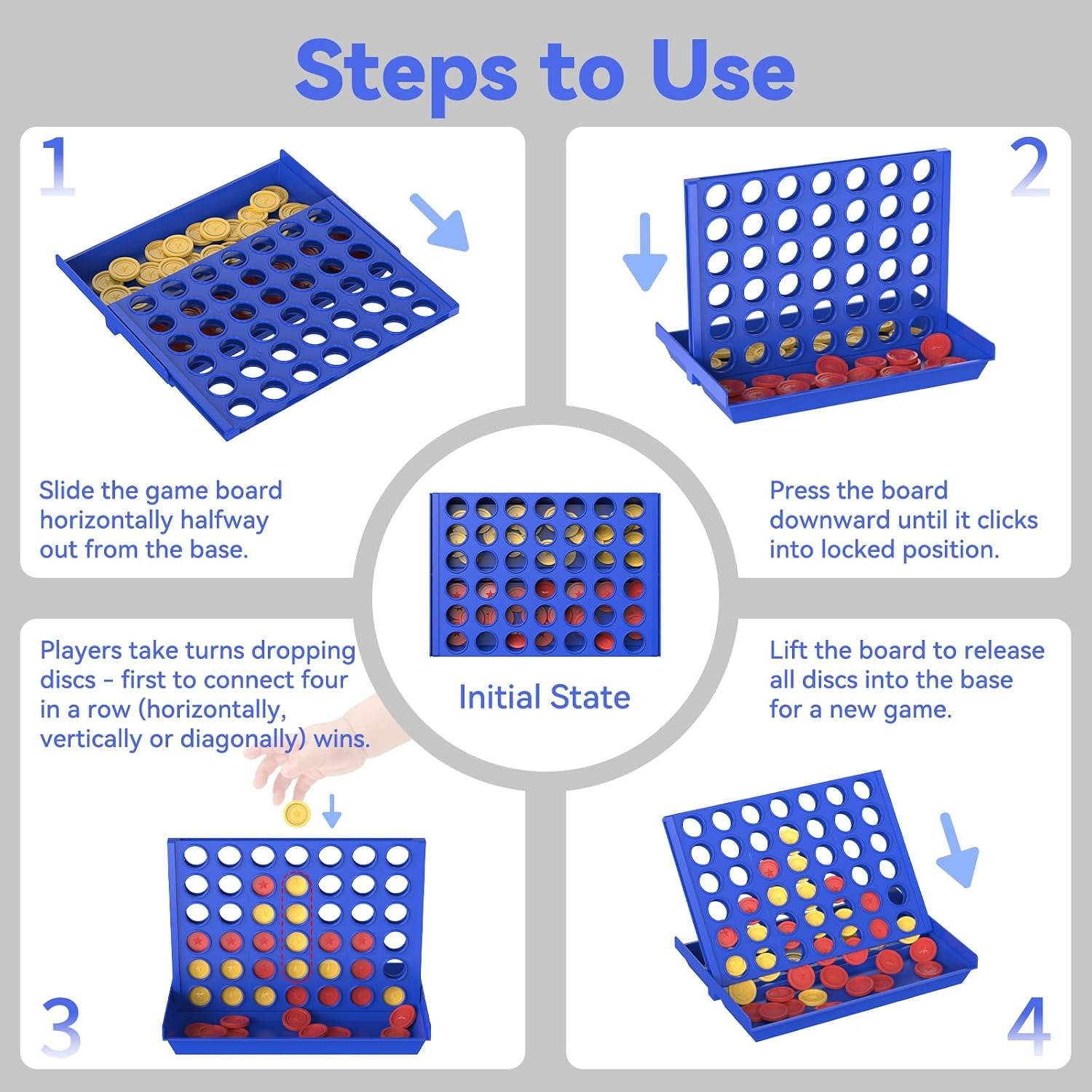
The grid stands upright between the two players. Each person takes a colour and takes turns dropping one disc at a time into the open top of a column. Gravity does the rest, and the disc settles into the lowest free slot in that column.
The goal is four of your colour in a straight line. Horizontal counts. Vertical counts. Diagonal counts, and diagonals are where most beginners get caught out, because they are the hardest lines to see coming.
The skill arrives quickly. Within a few rounds, most players work out that you have to watch your opponent as closely as you watch your own plan. Then comes the next step, which is realizing that one well-placed disc can create two threats at once. Your opponent can only block one. That single idea is what turns a children's game into a contest, and it is why so many adults who sit down to humour a child end up genuinely trying to win.
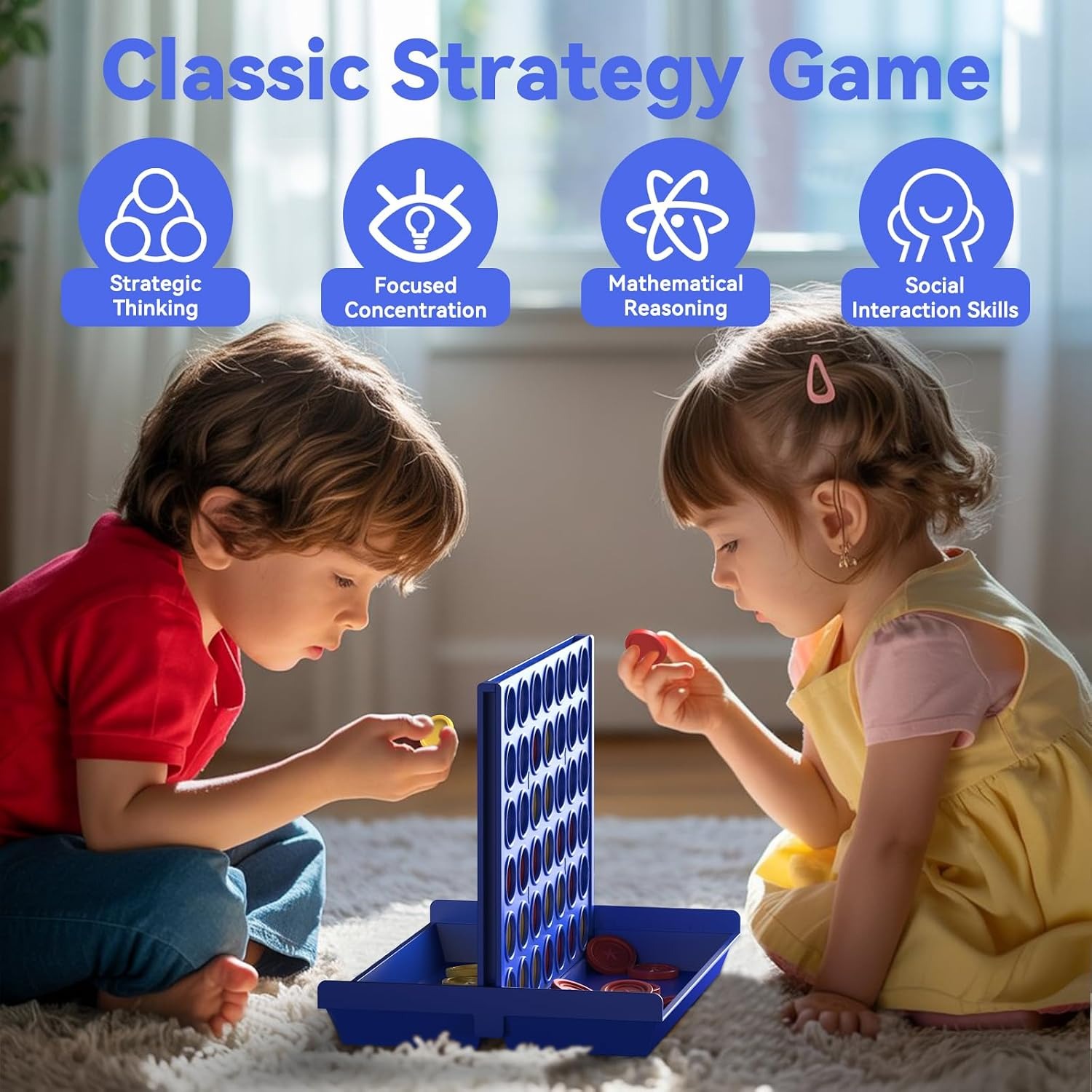
This set lists its educational objectives as cognitive development, critical thinking and strategic planning. That is a formal way of describing what is happening when a child pauses over the grid and you can almost see them counting moves ahead.
Who it suits
The manufacturer recommended age on this set is 3 years and up, and the number of players is listed as two. Those two facts tell you most of what you need to know about who will use it.
Very young children, around three or four, mostly enjoy the physical side. Picking up discs, dropping them, watching them fall, matching colours. That is still worthwhile play, and they will start noticing lines of three before long.
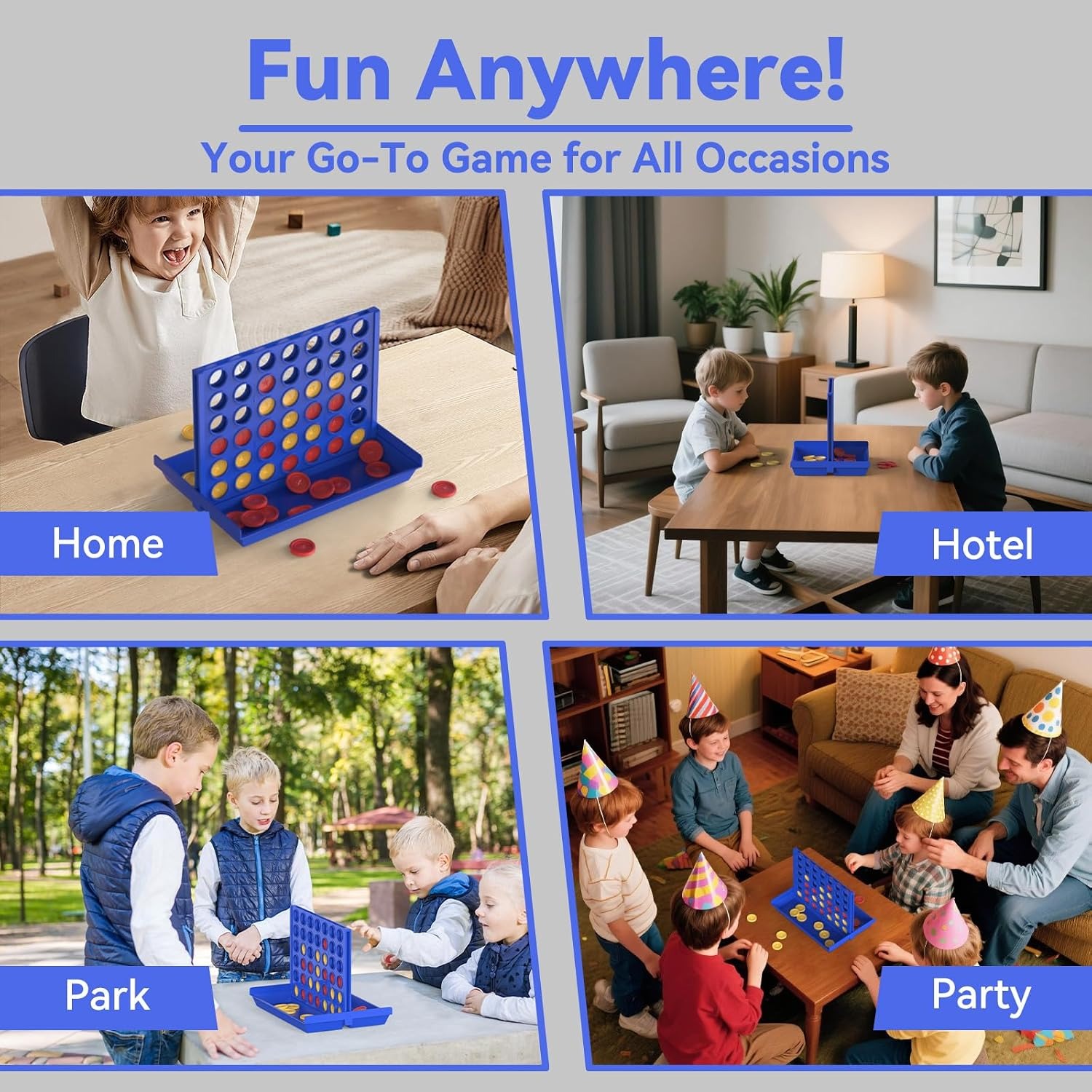
Children from about five to ten are the sweet spot. They understand the goal, they can block, and they get genuinely competitive. If you are looking for the best strategy game for kids in that bracket, something with no reading requirement and a two-minute round length is hard to beat.
Older children and adults play a different game on the same board. They think about parity, column control and forcing moves. Whether they can explain any of that is another matter, but you can see it in how they play.
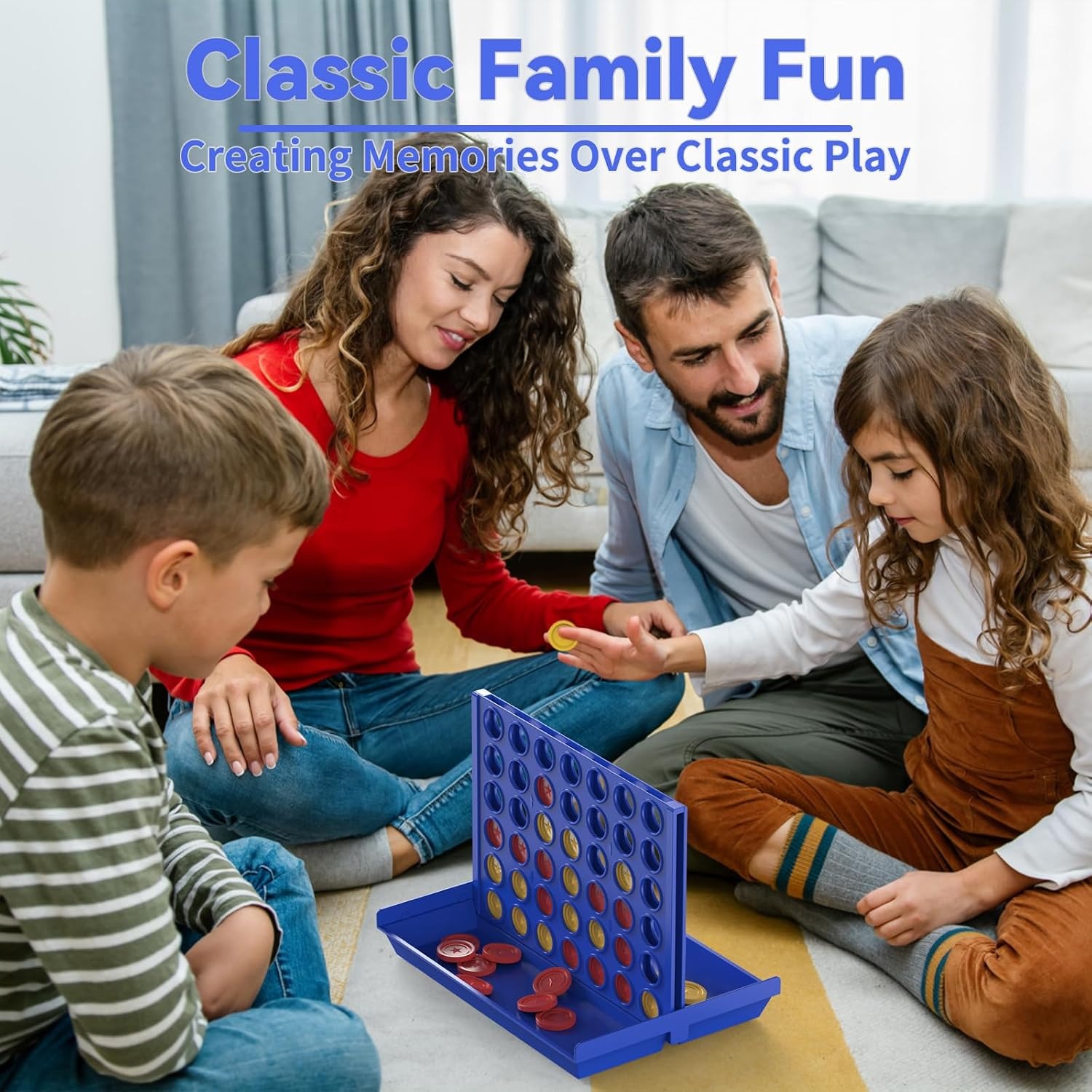
It also works well for mixed-ability pairs. A grandparent with shaky hands can still play, because the only action required is dropping a disc into a slot. Someone who does not speak the household's main language can play, because nothing needs to be read aloud.
What to look for when choosing one
Not all sets of this type are equal, and a few practical points separate the ones that last from the ones that get thrown out.
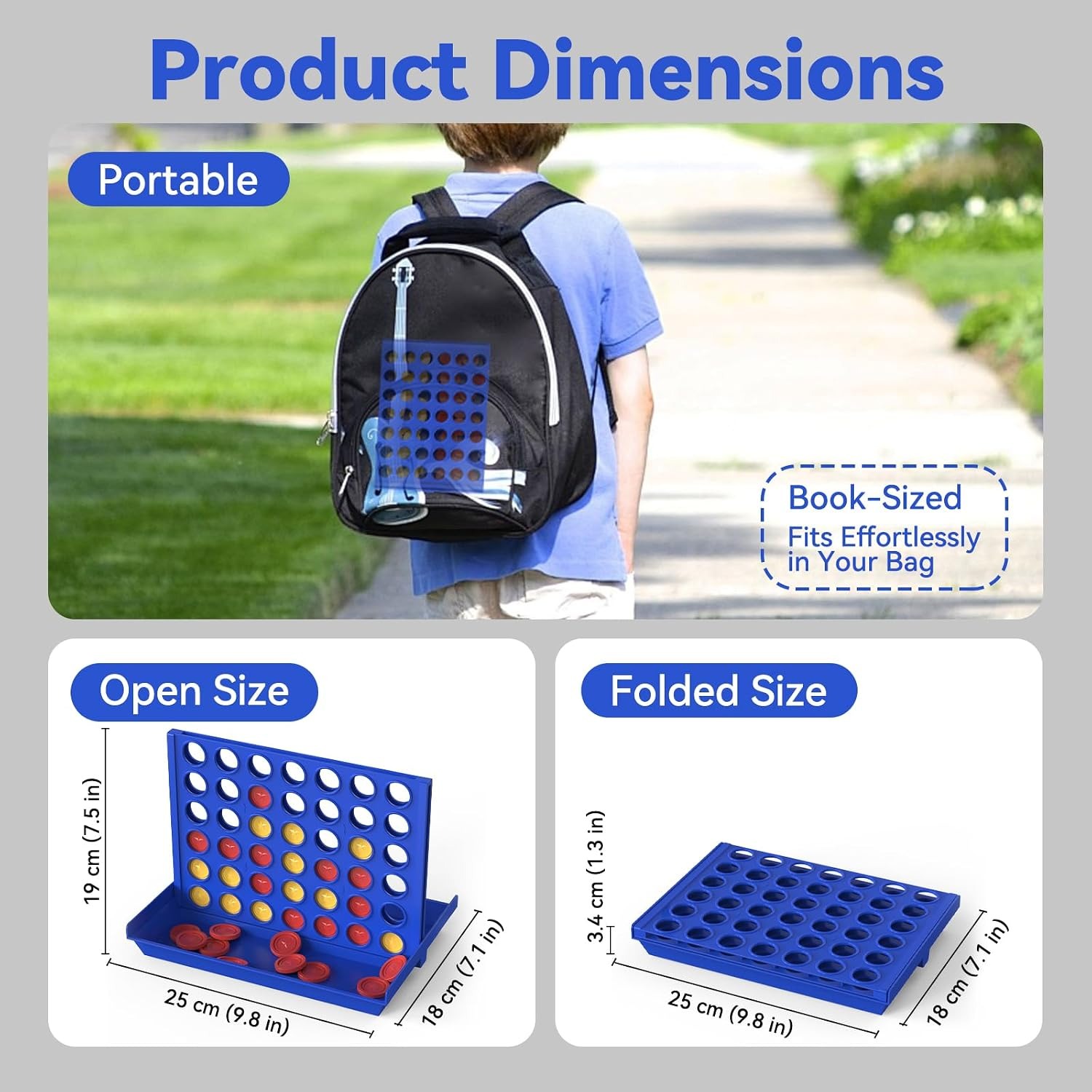
Size is the first. This set has item dimensions of 25 x 19 x 0.1 cm and a listed size of 25 cm x 18 cm x 3.5 cm, which is the standard format rather than a shrunken travel version. Tiny versions sound convenient until you watch a six-year-old try to pick up a disc the size of a coat button. Standard discs are easier to grip, easier to see and far less likely to vanish.
Weight matters if the game is going to move around. At 263 g, this one is light enough to carry without thinking about it. People hunting for the best portable game for camping often end up with something like this, because it packs flat and has nothing that can break in a bag.
Spare pieces are the third thing, and the one most people forget until it is too late. This set contains 48 discs. Counters get lost. They roll under furniture, get carried off by preschoolers and occasionally end up in the garden. A set with spares keeps working long after a bare-minimum set has become unplayable.
Finally, think about materials and finish. This set lists plastic as its material type, which is practical for something that will be handled constantly and wiped down regularly. Smooth edges matter when small hands are involved, so check pieces when the set first arrives.
Getting the most out of it
A few habits make a cheap game last for years.
Count the discs back into the box at the end of every session. It takes fifteen seconds and prevents the slow bleed of pieces that kills most sets. If children are old enough, make it their job.
Keep the game somewhere visible. Games stored at the back of a high cupboard do not get played. On a shelf near the kitchen table, it gets picked up on impulse, which is exactly when it is most useful.
Play short series rather than single games. Best of five takes about ten minutes and gives a losing player the chance to come back, which matters enormously to children. It also encourages them to adjust their approach between rounds, which is where the actual learning happens.
Let children win sometimes, but not always. There is no faster way to kill interest than a child realizing an adult has been letting them through. A real win against a parent who was trying is worth ten hollow ones.
Looking after it
Care is simple. Wipe the frame and discs with a slightly damp cloth, then dry them before they go away. Snacks and board games tend to arrive together, so the occasional clean keeps the plastic from getting tacky.
Keep the set out of direct sunlight and away from radiators or heaters. Plastic can warp with sustained heat, and a warped frame means discs stick instead of falling cleanly.
Store the frame flat in a dry cupboard. Do not stack heavy books or boxes on top. Usage for this set is listed as indoor, so if you do take it out to the patio, bring it back in rather than leaving it to weather.
The short version
This is a two player game with a classic grid, 48 plastic discs and a manufacturer recommended age of 3 years and up. It weighs 263 g and measures 25 x 19 x 0.1 cm, so it packs easily for trips. The brand is Pup Go, the manufacturer is SHUANGDI, and the country of origin is China.
What it really offers is a reliable ten minutes of attention between two people who might otherwise be looking at separate screens. It is cheap, it needs no power, and it works for a wide spread of ages. For most households, that is enough to earn it a permanent spot on the shelf.