
The complete guide
Choosing a Wooden Doll Family Set, A Buyer's Guide
The empty dollhouse problem
Dollhouses get bought with good intentions. The house arrives, it gets built on a Saturday, the little beds and tables go in, and then the play fizzles out after a week. Parents often assume the child lost interest in the house. Usually the house was never the point.
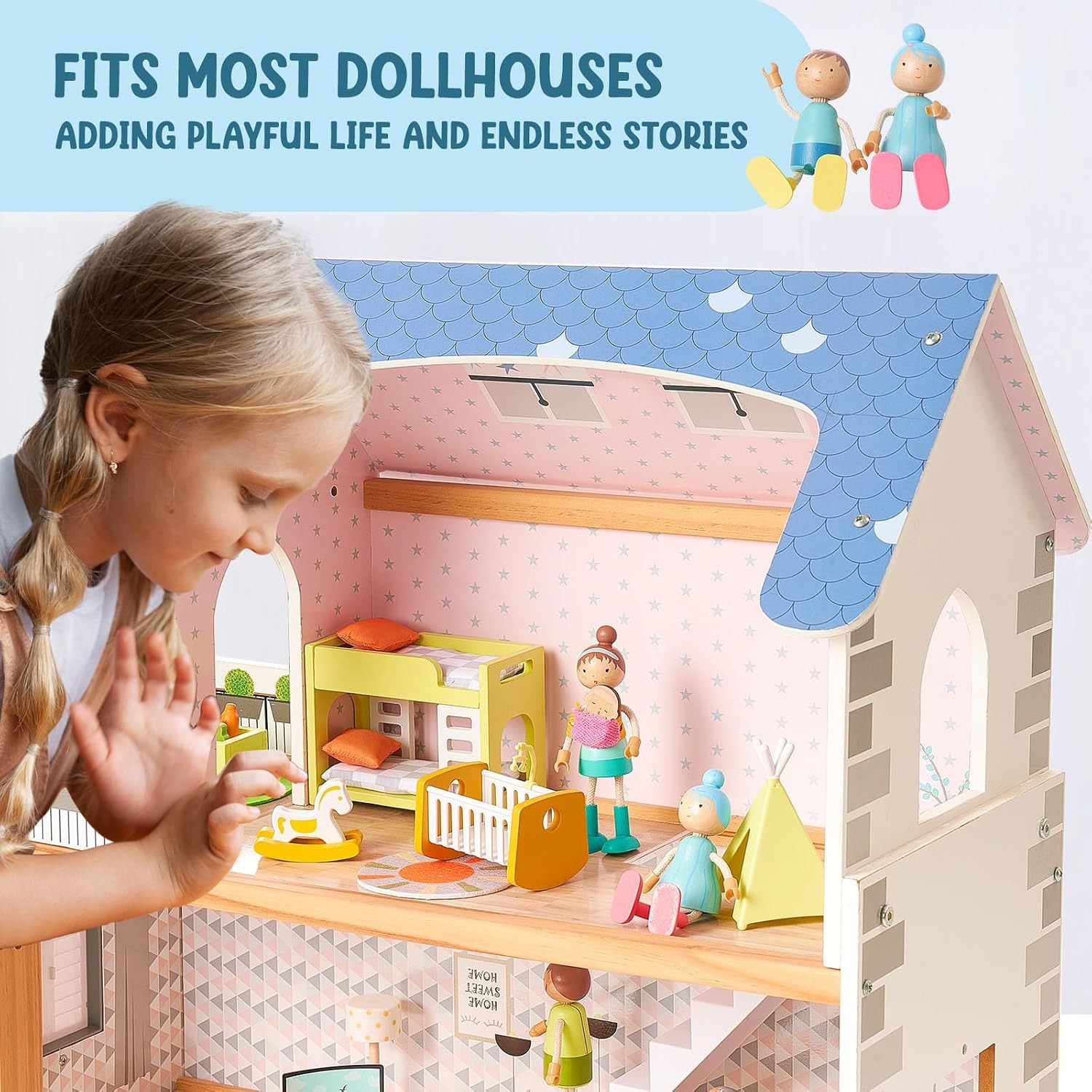
Children play with people. The house is a set, the furniture is props, and none of it does anything until there are characters to move through it. A wooden doll family set is the part that makes the rest work. Put seven figures on the landing and suddenly there is a grandma visiting, a baby who will not sleep, and someone who has to go to work. The furniture that sat untouched becomes useful because the dolls need somewhere to sit.
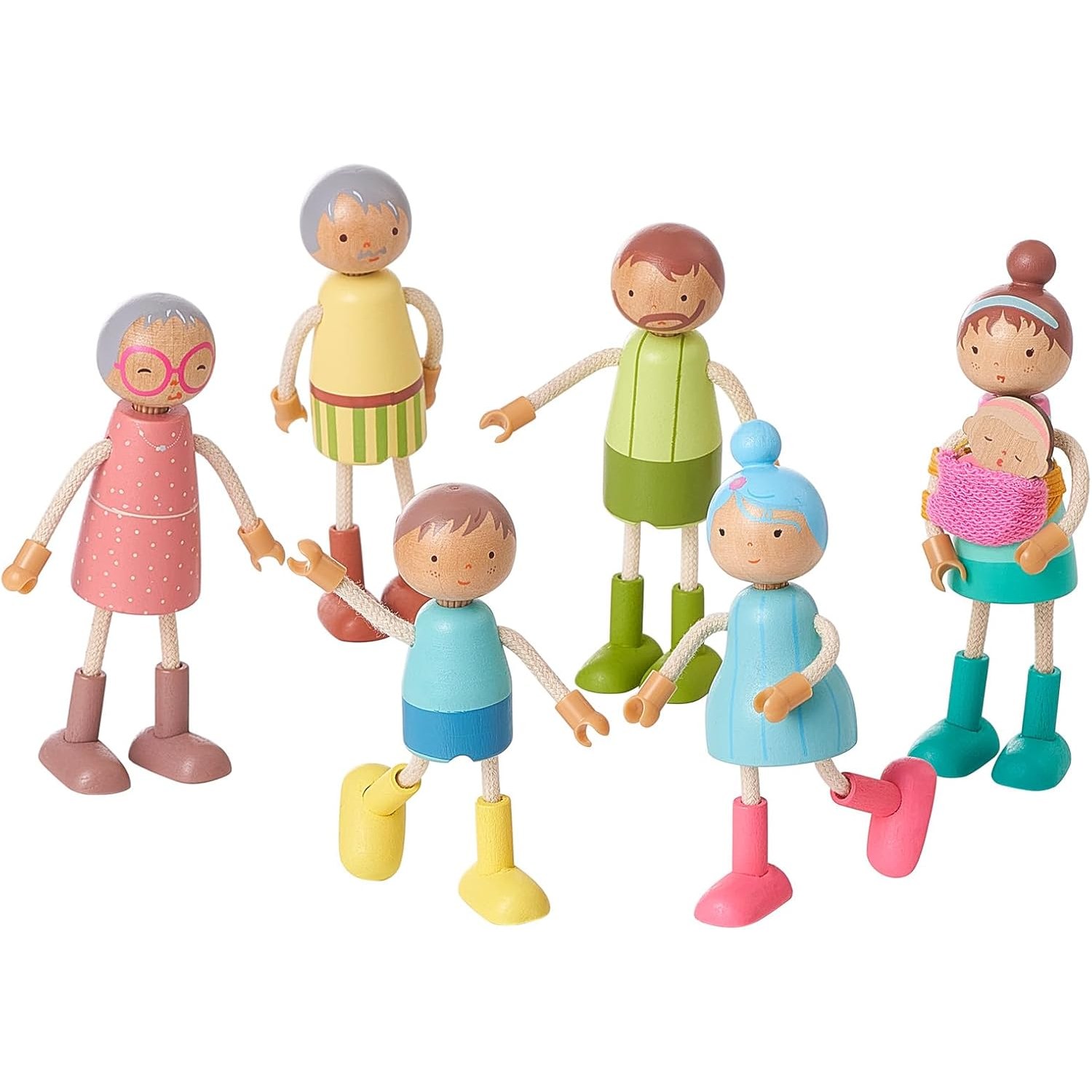
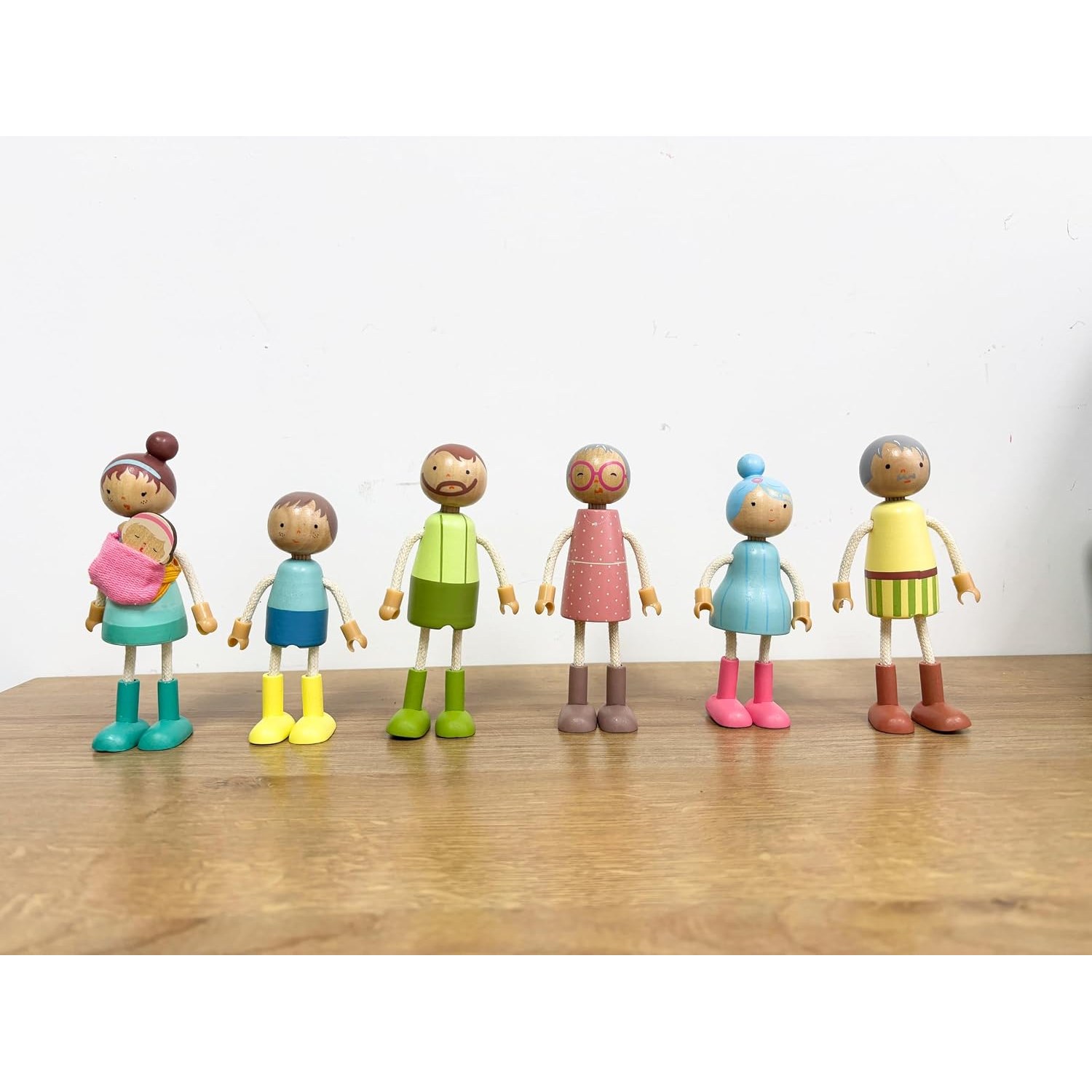
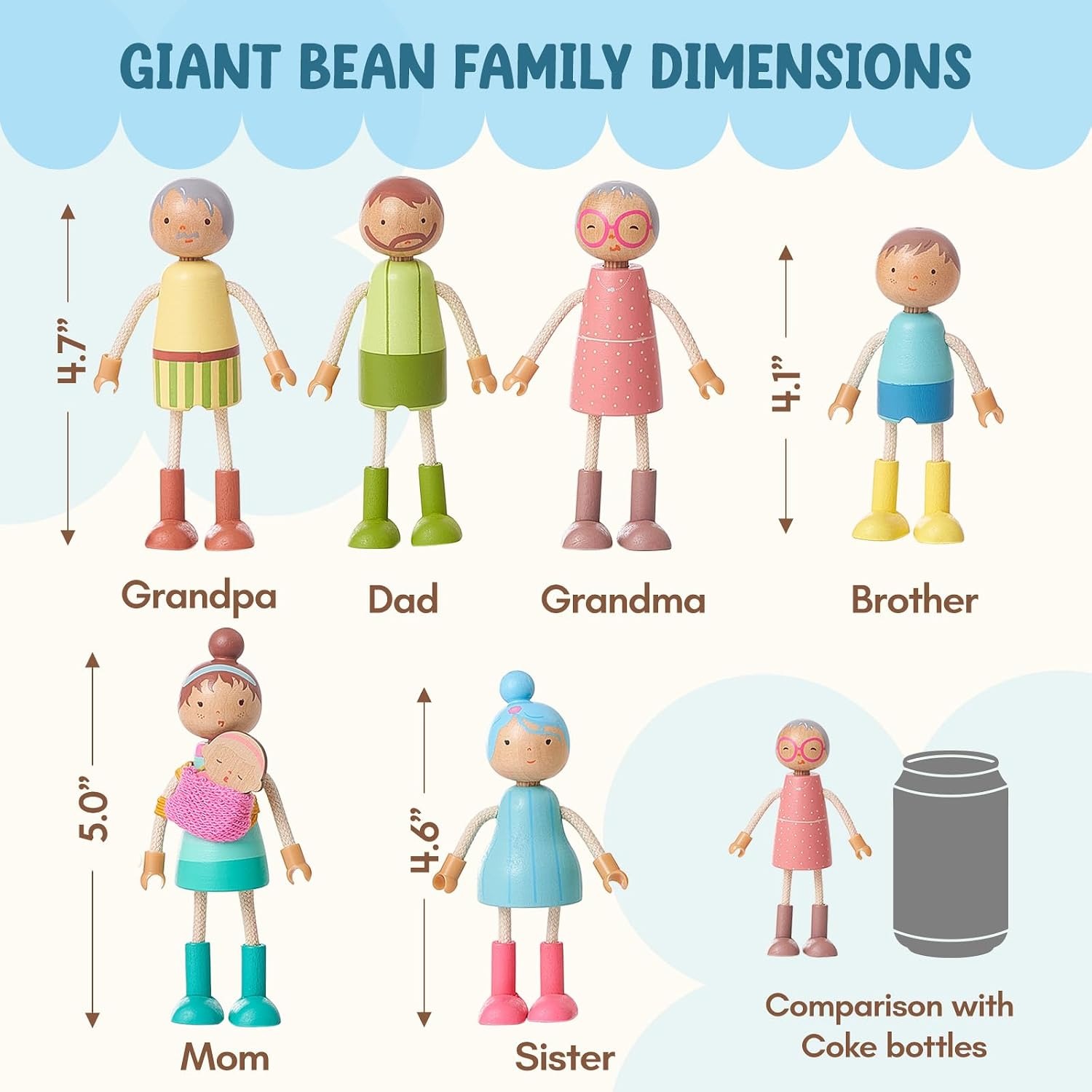
That is the gap this set fills. It is seven wooden figures covering grandparents, parents, children and a baby, made at 1:12 scale with bendable arms and legs.
How posable wooden dolls actually get used
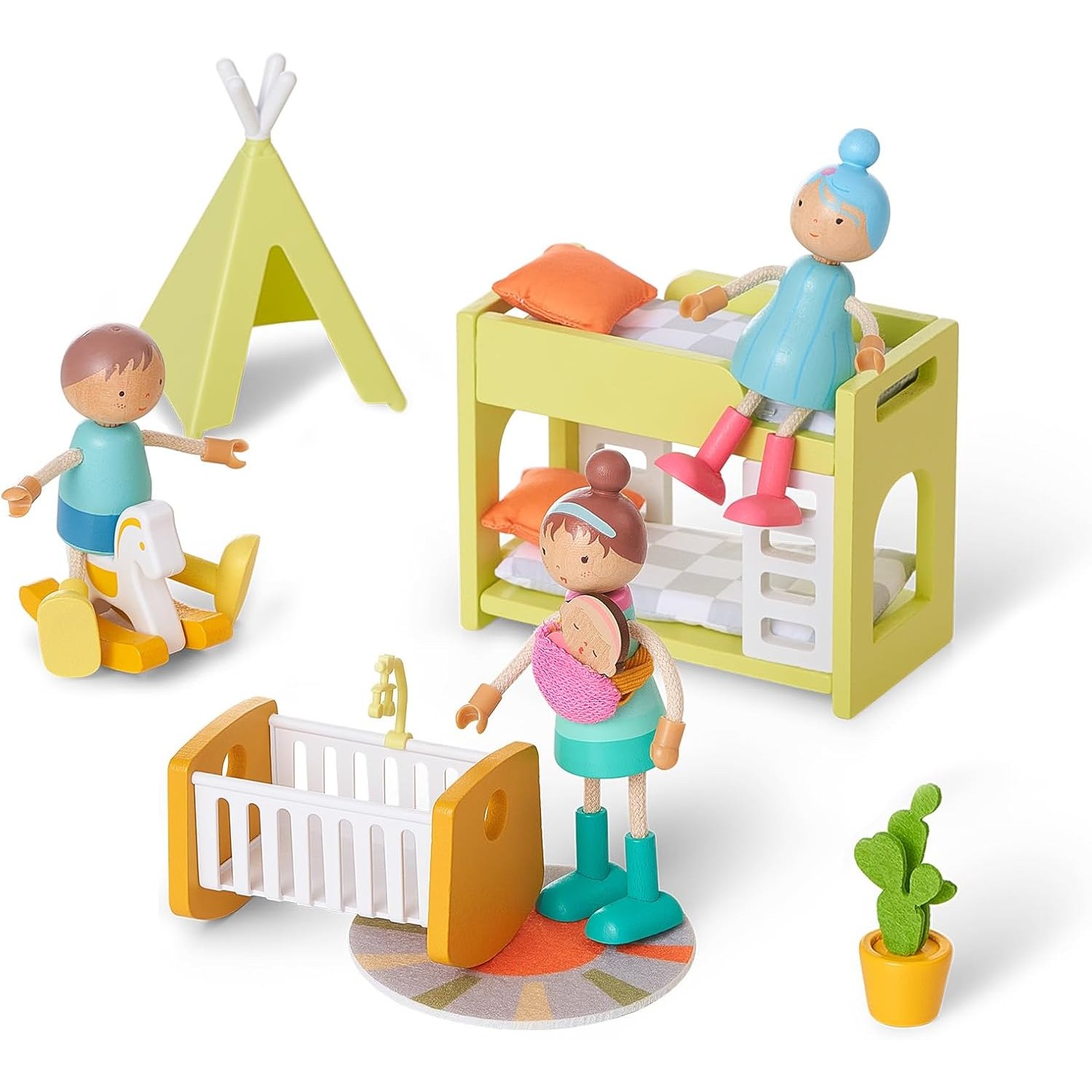
The bendable limbs are not a gimmick. A stiff, one-piece figure can stand and that is it. Children will try to put it in a bed, find it will not lie flat, and move on. Figures that bend at the arms and legs can sit at a table, slump on a sofa, climb a ladder, lie down properly, and reach out to hold something. Every one of those positions is a scene a child can build.
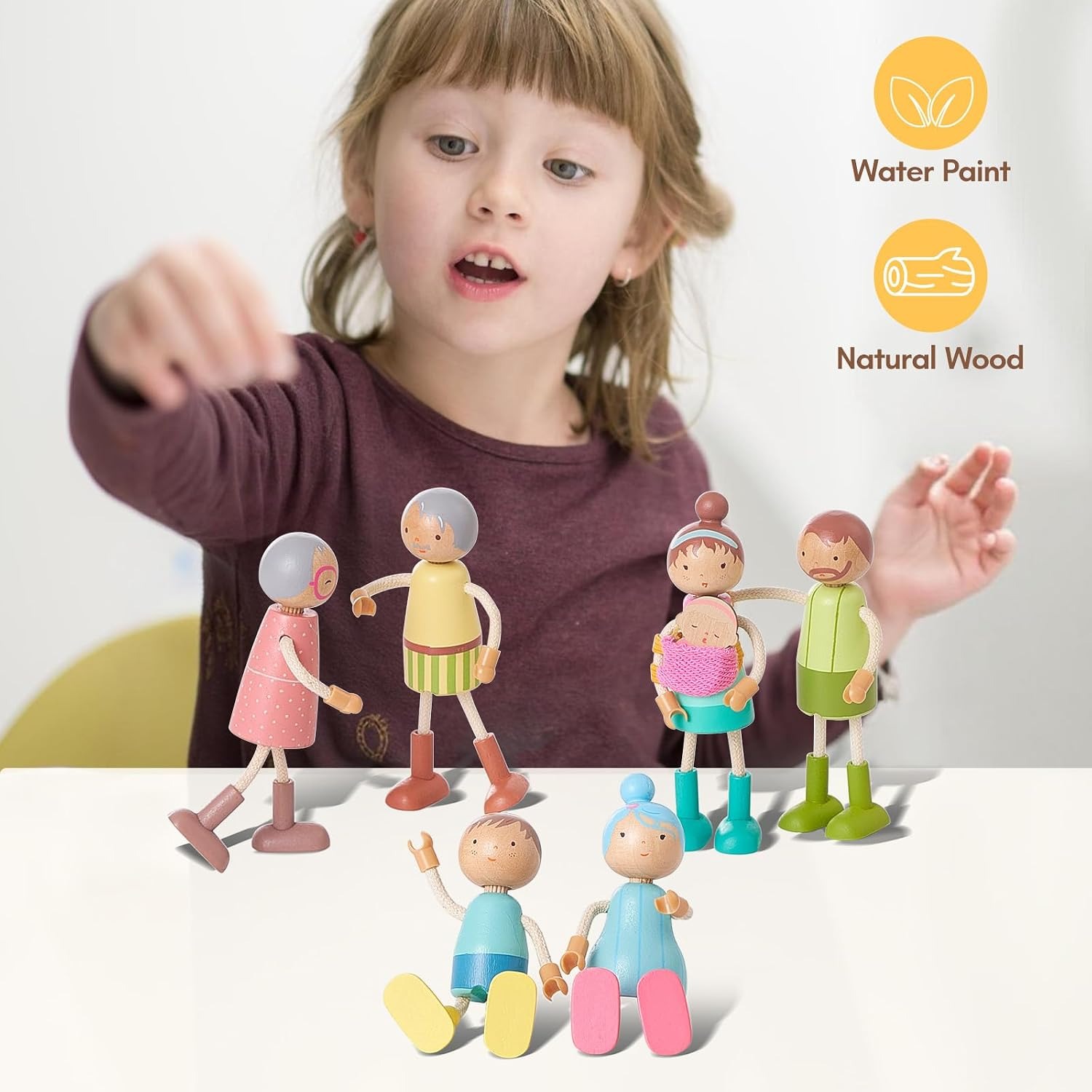
Watch a five year old with a posable family and you will see the same loop over and over. They pose a figure, say a line of dialogue for it, move another figure to respond, then pose again. The posing is part of the storytelling, not separate from it. The toy is holding up its end of the conversation.
That is also why the number seven matters. With two or three figures, the stories stay thin. With seven you get a household, a visitor, someone left behind at home, someone arriving. Children cast their stories from whatever is in front of them, and a bigger cast means longer play.
Why 1:12 scale is the one spec to check
If you only check one thing before buying dollhouse people, check the scale. This set is 1:12, which means one inch on the toy represents twelve inches in real life. It is the standard that most dollhouses, dollhouse furniture and miniature accessories are built to.
The practical benefit is compatibility. A 1:12 figure should fit through 1:12 doorways and sit on 1:12 chairs. More importantly, it means everything you buy later still works. Add a kitchen set next birthday, a bed set the year after, and it all lines up.
Mismatched scale is the most common disappointment with figure sets. A doll that is too tall cannot get through the door. A doll that is too small looks lost in a chair. Children do notice, though they are often more forgiving than adults expect. If you already own a house, measure a doorway or look for a scale marking before you order. If you are buying house and people together, choosing 1:12 for both gives you the widest choice of the best dollhouse accessories for kids down the track.
Who this set suits
The manufacturer recommends 36 months to 10 years. That range is honest for this sort of toy.
At three and four, play is simple and physical. Children name the figures, walk them around, put them to bed, feed them. They will not build complicated plots, and they do not need to. This is the stage where the best pretend play toys for 3 year olds earn their keep, because the child is learning that an object can stand in for a person.
By five and six, the stories get longer and more structured. There are arguments, visits, holidays, birthdays, a trip to the doctor. Children start assigning stable personalities to each figure. The grandma is always the one who makes dinner. The baby is always the troublemaker.
By seven and up, the house often stops being a house. Figures get taken to the block area, the sandbox-free play tray, the floor rug, a cardboard shoebox. This is where a set like this outlasts the dollhouse it was bought for, because figures work anywhere.
Children under three are not the right audience. The pieces are small and the age guidance starts at three for a reason.
What to look at when comparing sets
A few things separate a set that gets played with from one that ends up in the cupboard.
Cast range is first. A set of identical figures is less useful than one with clear generational differences. Grandparents, parents, children and a baby gives a child the full household they recognize from their own life, which is the material most pretend play is built from.
Movement is second. Bendable limbs make a real difference to how many scenes a child can stage, as covered above.
Distinct appearance is third. Hand-painted outfits and faces let a child tell figures apart at a glance and keep a character consistent from one day to the next. If every doll looks the same, children keep reassigning roles and the stories reset.
Size and storage come last but matter in practice. This set packs into 19.05 x 20.32 x 10.92 cm and weighs 259 g packaged. That fits a shelf, a basket, or a bag for a weekend away, which is one reason the best wooden toy people tend to travel well.
Looking after wooden dollhouse dolls
Wood and paint want the same thing, which is to stay dry and out of extremes.
Cleaning is simple. A soft cloth, barely damp, then dry straight away. Never soak the figures, never run them under a tap, and keep them out of the dishwasher. Water gets into wood, the wood swells, and the paint lifts at the edges. Once that starts it does not reverse.
Storage is the other half. Keep the family together in one container so pieces do not vanish under sofas. Avoid long spells in direct sunlight or next to a radiator, since heat and strong light are hard on both wood and painted detail. A box with a lid on a low shelf works best, because children can get the toy out and put it back without help.
Check the figures occasionally. If paint chips badly or a surface goes rough, retire that piece rather than leaving it in daily use. Most sets show a bit of wear at the hands and feet after a few years of real play, which is the sign of a toy that did its job.
Pairing it with what you already have
If the dollhouse is already in the room, this set is the missing piece and nothing else is needed. If you are building up gradually, the sensible order is people first, then beds and seating, then the small stuff like kitchenware. Children need characters and somewhere for them to sit long before they need miniature saucepans.
If there is no dollhouse at all, that is fine too. A cardboard box with holes cut for windows has launched a thousand play sessions. Figures plus blocks works. Figures plus a rug and some imagination works. The house is optional, the people are not.
The short version
This is a seven-piece wooden doll family set from Giant bean, model GA20077, made in China. The cast covers grandparents, parents, children and a baby. The figures are wooden with hand-painted multicolour detail, they have bendable arms and legs for posing, and they are built at 1:12 scale so they suit most standard dollhouses and furniture. The recommended age is three to ten years. Packaged size is 19.05 x 20.32 x 10.92 cm at 259 g.
Buy it if you have a dollhouse with nobody living in it, or if you want a compact, open-ended toy that a child can take anywhere and build stories with for years. Check your dollhouse is 1:12 before ordering, keep the figures dry, and store them together.