
The complete guide
Buying an Amphibious RC Truck, A Practical Guide for Parents
The problem with most remote control trucks
Ask any parent who has bought an RC car and you will hear the same story. The truck arrives, it is brilliant for two weekends, and then it meets water. Sometimes it is a puddle on the driveway. Sometimes it is the shallow end of a paddling pool. Sometimes it is a sprinkler nobody noticed. The electronics get wet, the motor stutters, and a toy that cost real money becomes a shelf ornament.
Water is only half the problem. The other half is crashes. A six-year-old does not ease off before a curb. They drive at it, because driving at it is the fun part. A toy truck with a thin body shell and no impact protection cracks in the first week, usually right at the front where it hits things.
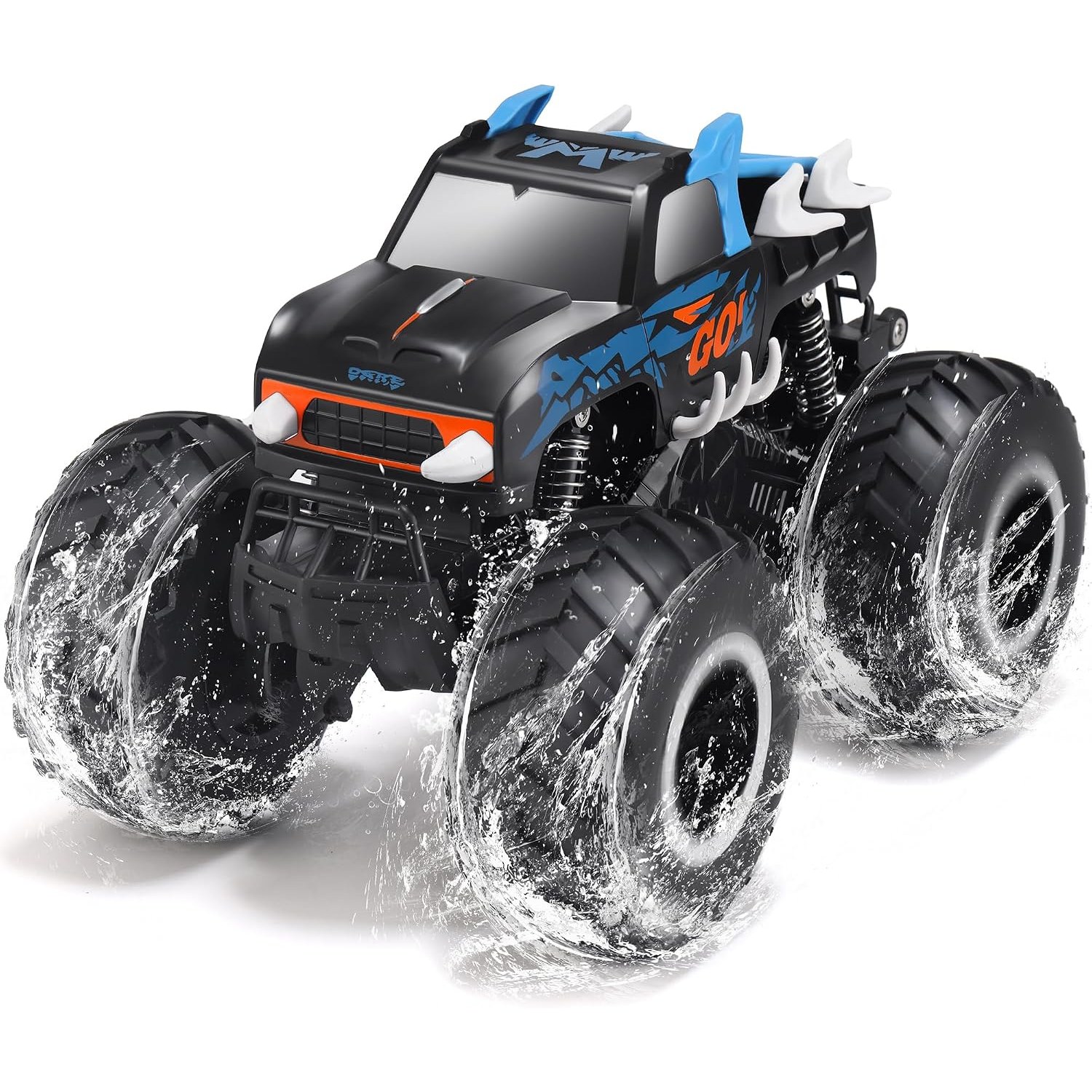
An amphibious RC truck is built around both of those realities. The body is sealed against water and the chassis is braced against impact. Instead of trying to make children drive carefully, it assumes they will not.
How the water resistance actually works
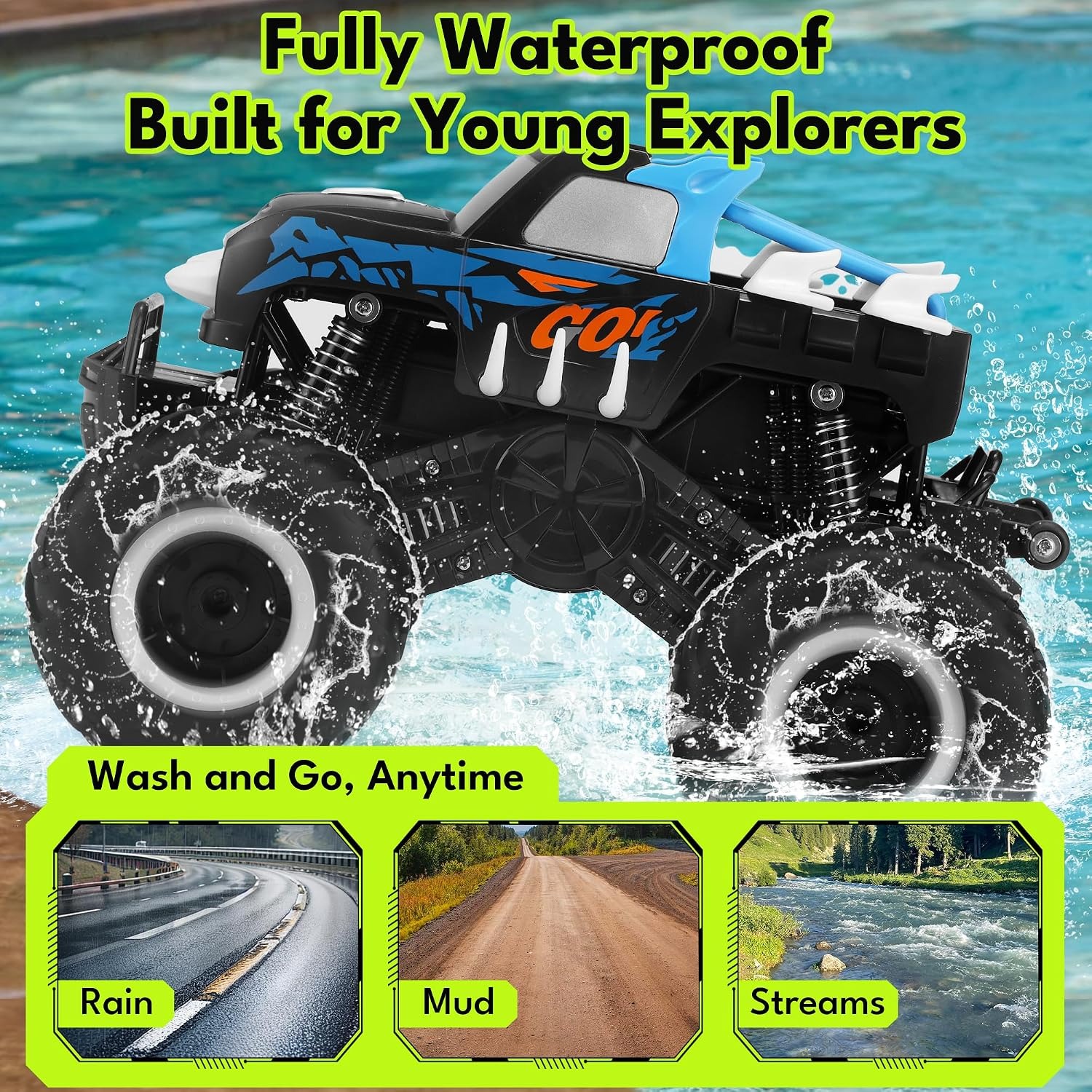
The IPX6 rating on this truck means it is tested against powerful water jets, which in everyday terms covers splashes, spray, rain and shallow water driving. The important part is the sealed battery compartment. Water gets into an RC vehicle through gaps, and the biggest gap is always the battery bay door.
That is why the manual is specific about battery installation. The seal has to sit flat and clean, and the compartment has to close tightly. If sand gets caught in the seal, or the door is only half latched, water finds its way in. Nothing about the rating protects a truck with a badly closed battery bay. Make the battery check an adult job and the waterproofing holds up fine.
Two further rules keep it healthy. First, the remote is not waterproof. Only the truck is. The driver stays on dry ground. Second, saltwater needs rinsing off straight away. Salt attacks metal parts and bearings long after the beach day ends, and a thirty second rinse with fresh water is the difference between a truck that lasts years and one that seizes up by summer's end.
Grip, drive and why 4WD matters outdoors
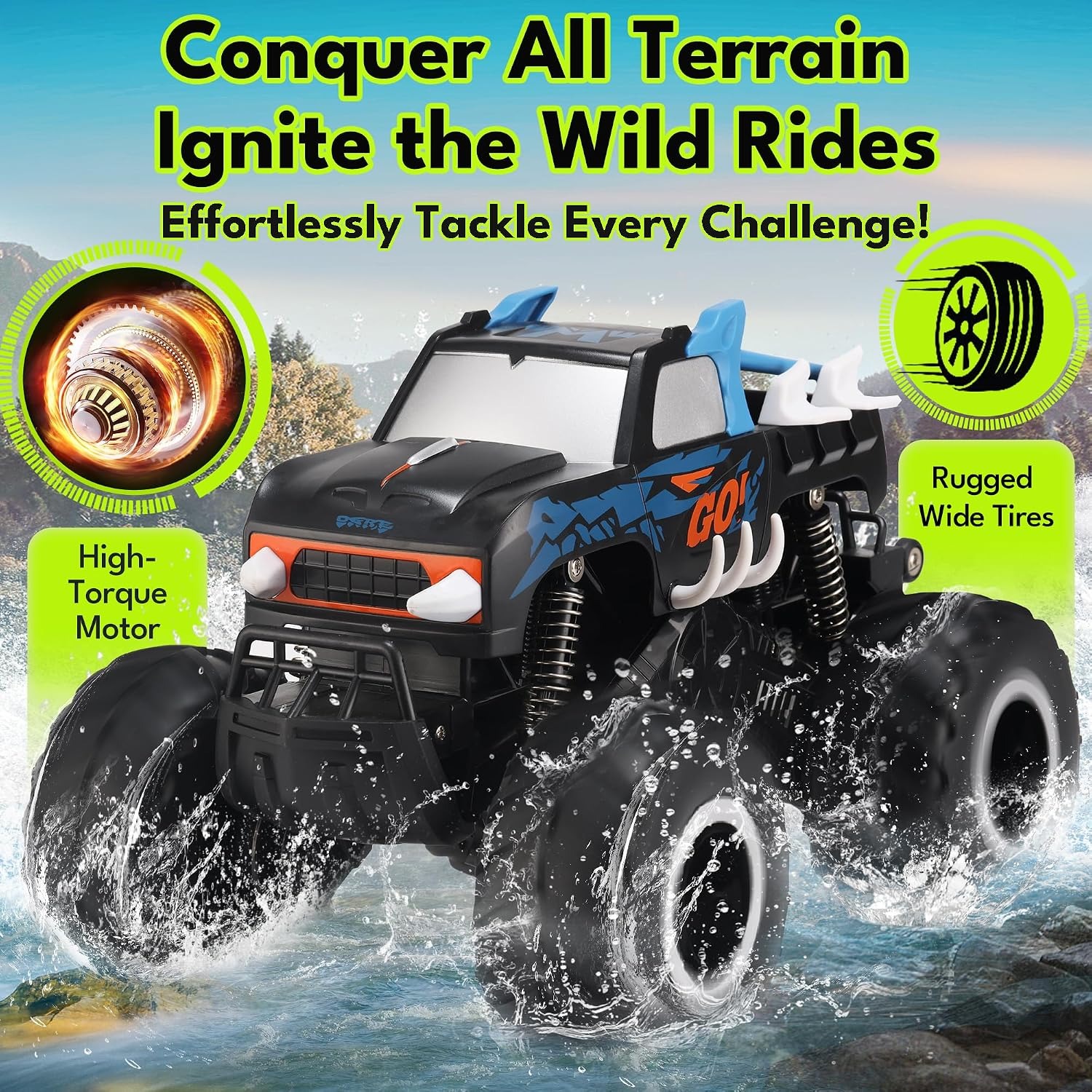
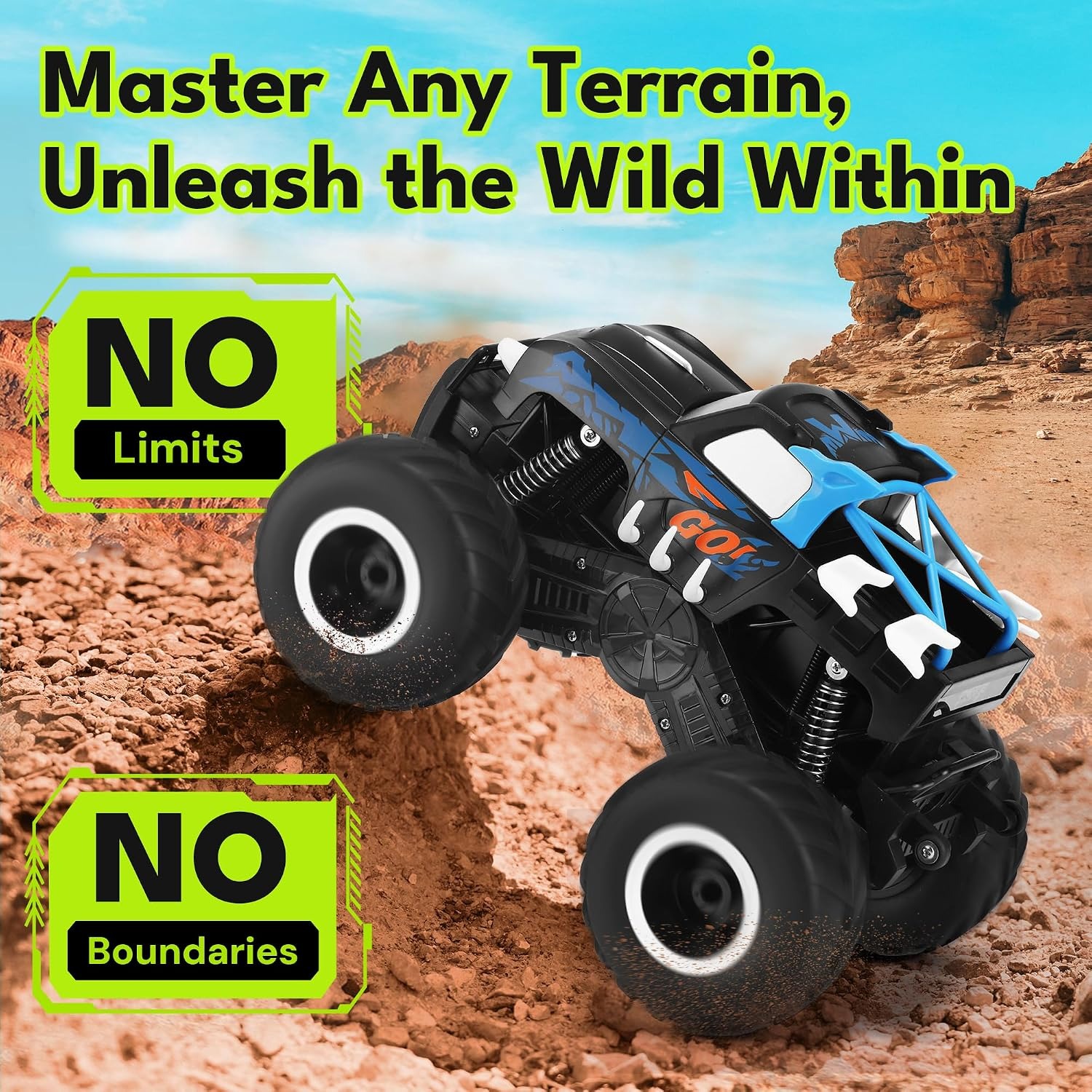
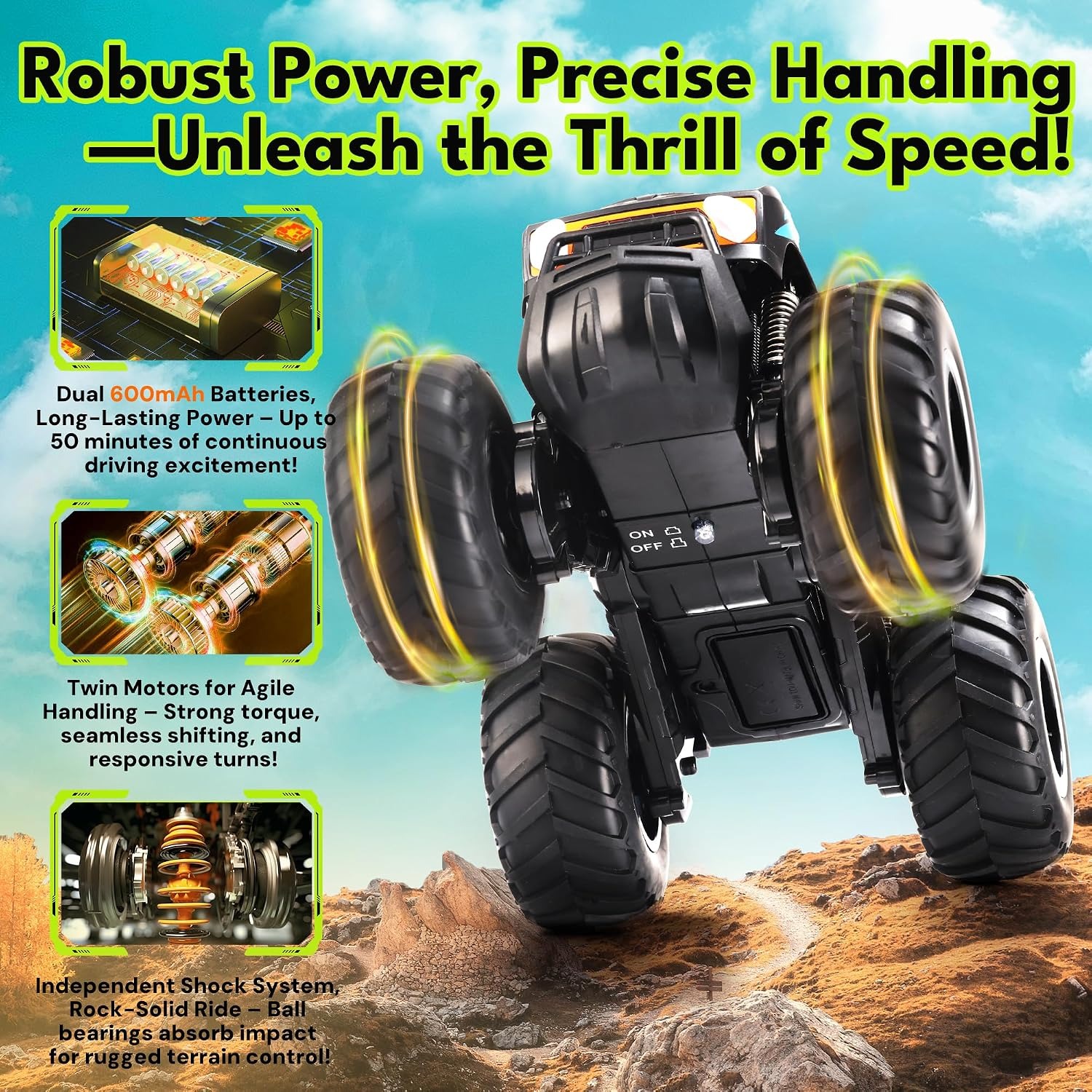
Four-wheel drive is not a marketing line on a vehicle this size. On grass, sand and loose stone, two-wheel drive trucks spin their rear wheels and dig in. Sending power to all four wheels spreads the load, so the truck keeps crawling forward instead of burying itself.
The tires do the rest. The tread is anti-skid, and the setup includes shock absorption, so the wheels stay in contact with uneven ground rather than bouncing off it. That is what lets the same truck run across beach sand in the morning and across tile floors in the afternoon without feeling like two different toys.
Electric motors give it quick power off the line, which is what children actually enjoy. The instant response is more entertaining than a high top speed on a vehicle this size, especially in a backyard where there is rarely more than ten metres of straight run.
Built for crashes, not against them
Anti-collision beams sit across the front and rear of the chassis. When the truck hits a wall, a curb or another truck, those beams spread the force across the frame instead of letting it land on one corner of the plastic shell. It is a simple piece of engineering and it is the reason trucks like this survive the first month.
At 907 g the truck has a bit of weight behind it. That helps outdoors, where a lighter vehicle gets pushed around by rough ground. Indoors it means picking a clear run and keeping it away from table legs and anything fragile, which is sensible advice for any RC toy of this size.
Range, racing and why six trucks matter
The handset reaches about 160ft. In real use that is a full backyard, a school oval, a tennis court or a reasonable stretch of beach, as long as you keep line of sight. Signal strength drops behind walls and thick hedges, which is true of every RC controller.
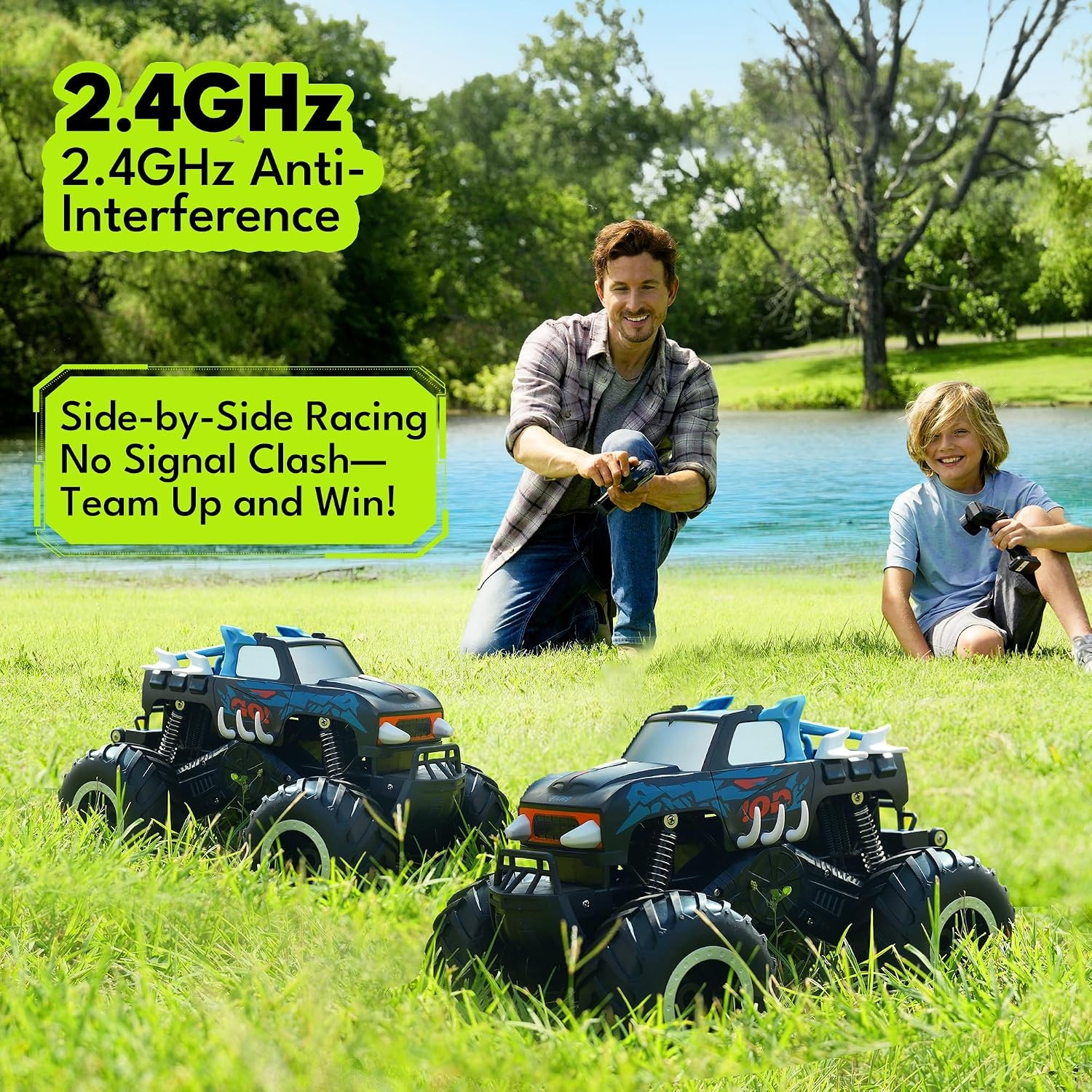
The feature parents underestimate is the multi-truck capability. The controller has good anti-interference performance, which means up to six of these can run in the same space with no signal crossover. One child steering does not twitch another child's truck. If you have siblings, cousins or a birthday party, this turns one toy into a group activity. It is also the thing that makes a pair of them worth considering rather than a single unit.
Who it suits
The recommended age is 6 and up, and the 6 to 12 band is where it fits best. Younger children can drive it with help, but they tend to hold the throttle flat and run straight into things. By six, most kids can modulate the controls and understand that steering is a continuous job rather than a single input.
It suits families who spend time outdoors. If you have a lawn, a gravel path, a nearby park or regular beach trips, this truck earns its keep. If your child mainly plays indoors on carpet, a smaller, lighter vehicle would be a better match, and the water resistance would go unused.
It also suits households where toys get tested hard. The impact beams and sealed body are designed for children who are enthusiastic rather than careful.
Choosing between options
A few questions sort out most buying decisions. Where will it be driven most? Outdoor terrain, especially anything wet or sandy, points straight at a water resistant 4WD model. How old is the driver? Under six and you want something simpler. How many children are in the house? If the answer is more than one, the ability to run multiple trucks together changes how much use the toy gets.
Check what comes in the box too. This one includes the lithium-ion battery, charger, charging cable, remote and a AAA battery for the handset, so it can be charged and driven on the day it arrives. Plenty of RC trucks arrive needing batteries you do not have, which turns gift-opening into a trip to the shops.
Looking after it
Care is straightforward and takes a couple of minutes. Rinse with fresh water after any seawater contact, then dry with a soft cloth. Brush sand and grit out of the tires and suspension before storage, because grit left in the drivetrain wears parts faster than water ever will.
Keep the remote dry at all times. Check the battery seal before each water run and make sure it is clean and firmly closed. Charge only with the supplied charger, let the pack cool before plugging it in again, and store the truck indoors somewhere dry and out of direct sunlight.
If the truck will sit unused for months, pull the AAA battery out of the remote so it cannot leak. That one habit saves a lot of controllers.
The short version
This is a 1:16 scale amphibious RC truck rated IPX6, with four-wheel drive, anti-skid shock-absorbing tires, flashing lights, front and rear anti-collision beams and a handset that reaches around 160ft while allowing six trucks to run together. It weighs 907 g, measures 25.4 x 17.53 x 16.51 cm, and ships with the battery, charger, cable, remote and manual included.
The remote is not waterproof, saltwater needs rinsing off promptly, and the battery seal needs an adult's attention before water runs. Follow those three rules and you have a truck built for the way children actually play, which is outside, fast, and nowhere near as carefully as anyone hoped.