
The complete guide
Choosing Wooden Construction Vehicle Puzzles, A Buyer's Guide
The problem with most kids' puzzles
Buy a puzzle for a young child and one of two things usually happens. Either it is finished in ninety seconds and never touched again, or it is so hard the child gives up and wanders off. Neither outcome is much fun for anyone, and both end with a box shoved to the back of a cupboard.
The second problem is the material. A lot of children's puzzles are printed card. Card is cheap, and it behaves like it. Edges fray. Pieces curl. A knocked cup of juice ends the whole thing. Within a few months you are missing two pieces and the rest have gone soft and furry at the corners.
Wooden puzzles solve the durability side straightforwardly. They cost more up front and they last long enough to make that back. This set takes it a step further by giving you four puzzles instead of one, which also solves the "finished it, bored now" problem for at least the first few weeks.
How this set works
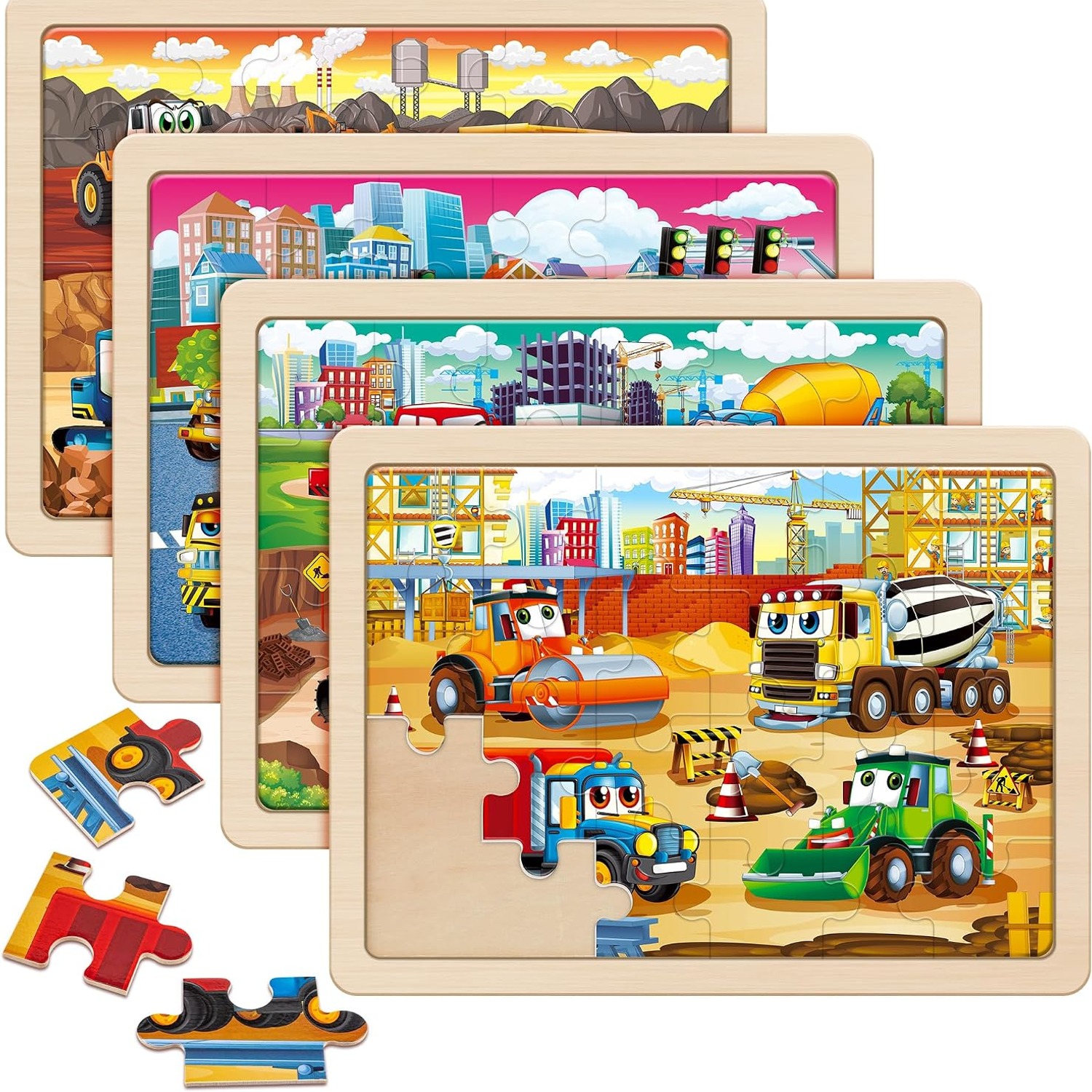
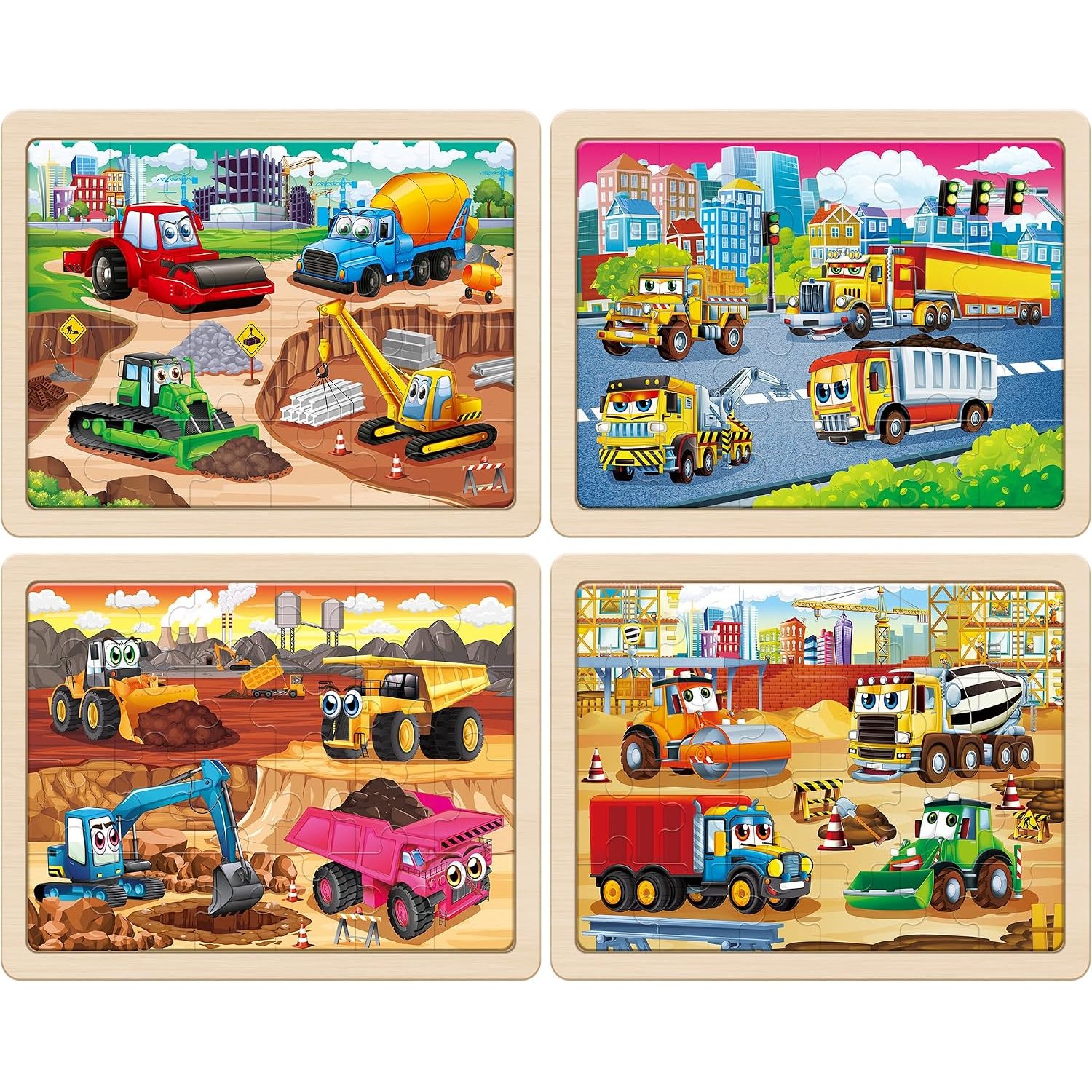
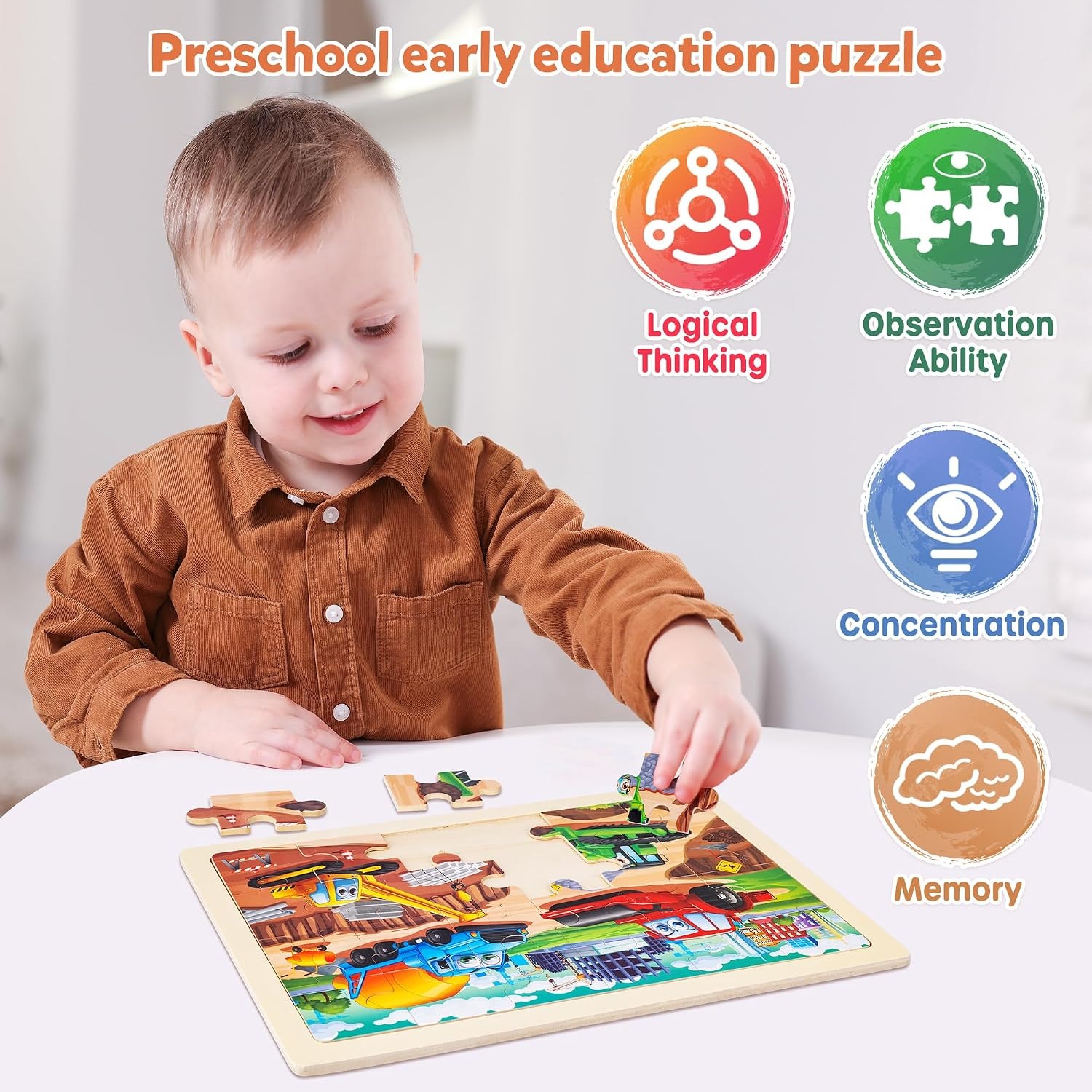
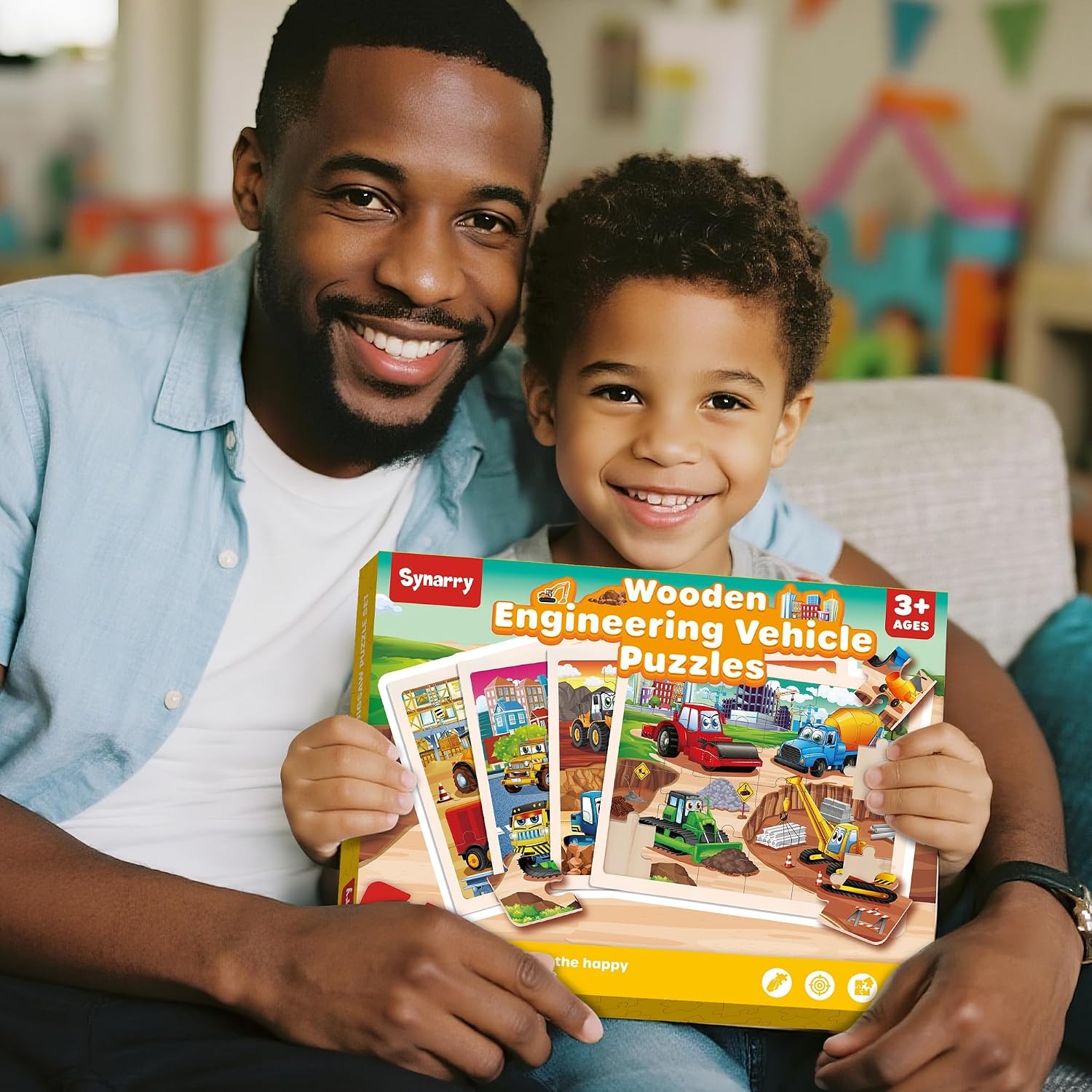
There are four separate wooden boards in the box. Each has 24 pieces, so 96 pieces in total. Every board carries a different scene, all tied to the same construction vehicle theme. One shows a construction site. One shows urban roads. One is a quarry. The last is a house being built.
Each board sits in its own wooden frame. This is a small design detail that makes a surprising difference to how a young child gets on with the puzzle. Without a frame, a loose pile of pieces on a table has no anchor. The child does not know where the edge of the picture is, and finished corners slide around as more pieces go in. With a frame, there is a defined space and a hard boundary. Corner pieces stop being a guessing game.
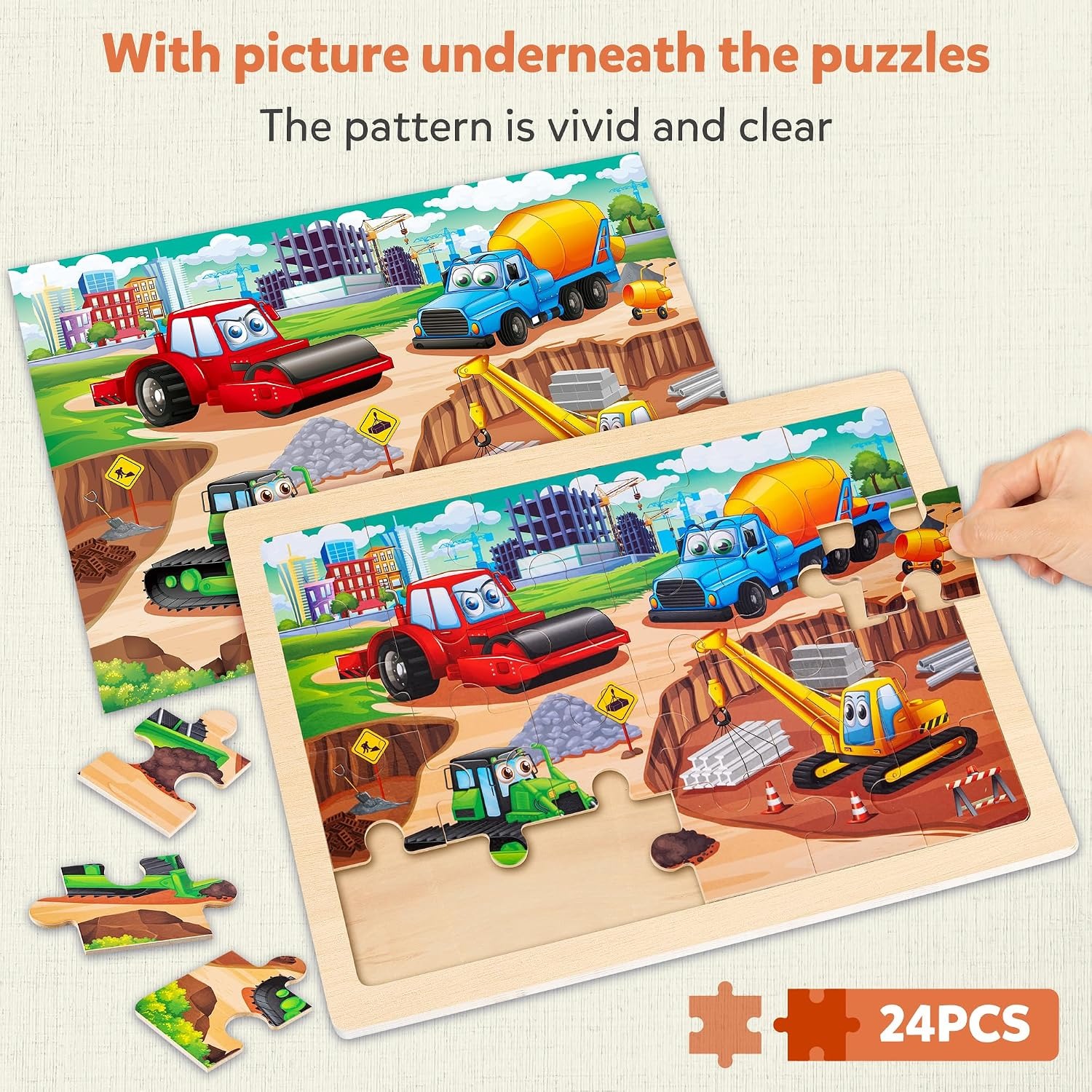
Underneath the pieces there is a removable paper illustration of the completed scene. A stuck child can lift a piece or two and see the picture below as a reference. It is a gentle hint rather than a solution. Once a child knows the scene well, you can pull the paper out entirely and they are working blind, which raises the difficulty without buying anything new.
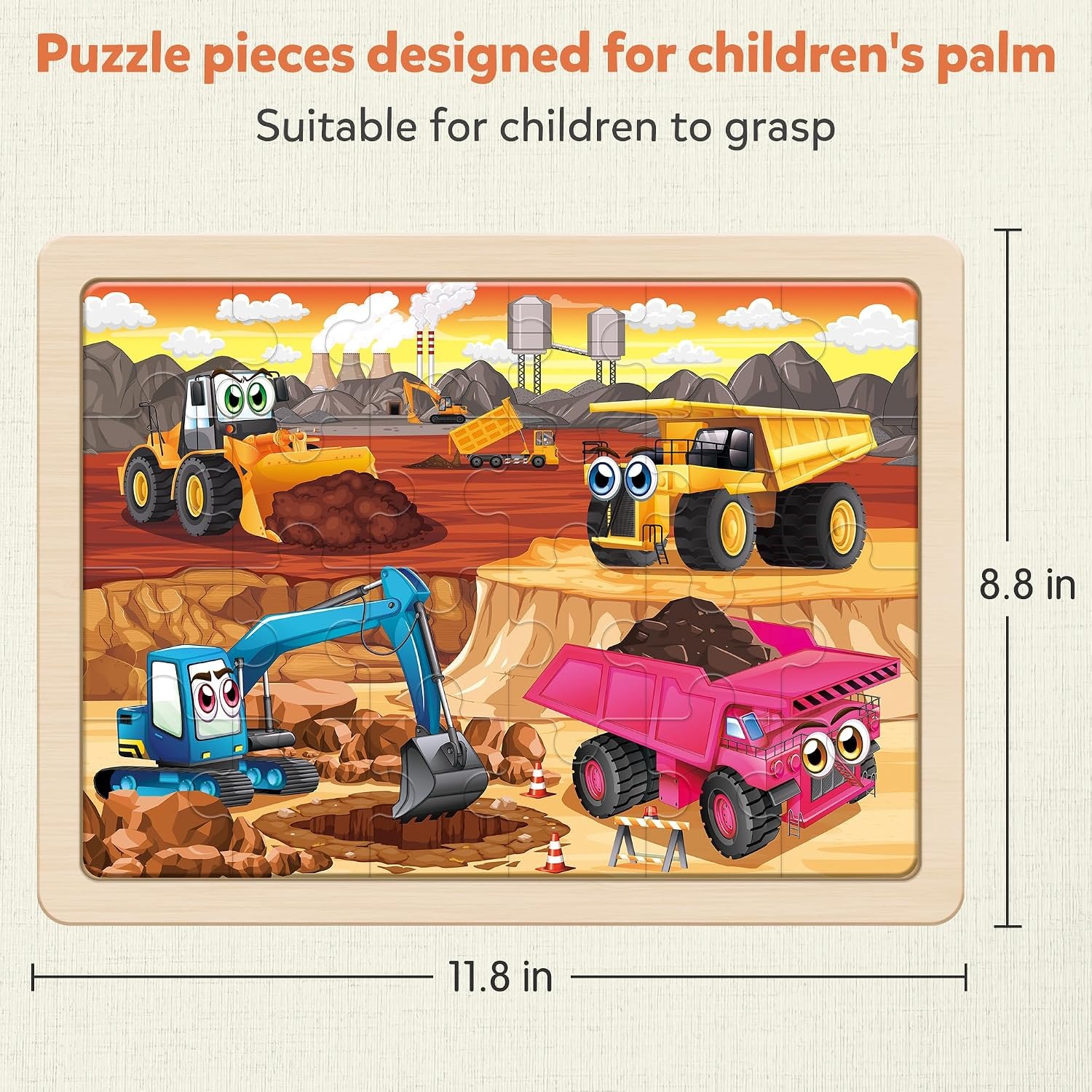
Finished size for each board is 11.8 x 8.8 inches. That is a proper tabletop size, not a miniature. Pieces are correspondingly chunky, which is the right call for hands that are still working out the pincer grip.
Who it actually suits
The manufacturer recommends 36 months to 8 years, and the skill level is listed as beginner. That is a wide band, so it is worth breaking down.
A three year old will need company. Expect to sit with them, turn pieces the right way up, and point at the frame edge. They will finish a board and look very proud of themselves. This is normal and it is the whole point at that age.
A four or five year old is the sweet spot. Twenty-four pieces is enough to require real thought without becoming a slog. They will probably do one board, then immediately want the next. By the third or fourth session they will be doing them unaided.
Six to eight is the top end. At that age the challenge comes from speed, or from dumping all four boards together and sorting 96 mixed pieces back into their scenes. Plenty of families report that older siblings join in exactly because the mixed-pile version is genuinely tricky.
If your child is already putting together 60-piece puzzles solo, this set will be easy for them individually. It still works as a shared activity with a younger brother or sister, and the four-board format suits group play.
Why wood matters here
Wood holds an edge. The pieces keep their precise shape through hundreds of assemblies, which means the satisfying click of a piece seating properly does not degrade over time. That click is a big part of why kids keep coming back.
Wood also handles the realities of family life. A dropped board does not crease. A damp hand does not stain. The maker states the pieces are polished so a child can grasp them safely, and the thickness makes them easier to pick up off a flat table than thin card ever is.
There is a trade-off. Wood is heavier and the full set weighs 0.72 kg. That is not much, but it is more than a cardboard equivalent. For a toy that mostly lives on a kitchen table, it is a non-issue.
Choosing between puzzle sets
A few things to weigh up when you are comparing options.
Piece count against age is the first. As a rough guide, a three year old does well with 12 to 24 pieces, a five year old with 24 to 48, and a seven year old with 48 and up. A 24-piece board aims at the younger part of that span but stays usable longer because of the four-board mixing trick.
Frame or no frame is the second. Framed puzzles are easier for beginners and better for anyone who wants to leave a work in progress on the table. Unframed puzzles are cheaper and travel flatter. For the three-to-five bracket, framed wins most of the time.
Theme is not a trivial detail. A child who is deep into diggers and trucks will sit with a vehicle puzzle twice as long as a generic animal one. If your child is not interested in construction vehicles, buy something they do care about, however good the puzzle is.
Finally, consider how many puzzles you are getting for the money. One wooden puzzle often costs nearly as much as this four-board set. If you are buying a gift and want it to feel substantial out of the wrapping, a multi-board set does that without any extra effort.
Looking after them
Care is simple and mostly about keeping water away. Wipe the surface with a barely damp cloth if it gets sticky, then dry it immediately. Never soak the pieces and never put them anywhere near a dishwasher. The printed layer sits on top of the wood and moisture will lift it.
Store the boards flat, pieces inside the frames where possible, in the original box or a shallow drawer. Avoid windowsills and the top of radiators. Sun fades the print and dry heat can make wood brittle over years.
Give the set a quick look over every so often. If a piece chips or splinters, sand it lightly or take it out of rotation. A 24-piece puzzle missing one piece is still playable, just slightly annoying, so it is worth doing a piece count after big play sessions.
Gifting notes
The set arrives in a printed box, so it is ready to wrap. It works for birthdays, Christmas, and the awkward gift occasions where you do not know the child well but know they like trucks. Because it covers 36 months to 8 years, it is a reasonably safe bet when you are not sure of the exact age.
One practical tip. If you are giving this to a three year old, mention to the parent that the first few goes work best with an adult alongside. It sets the expectation correctly and avoids the toy being written off as too hard on day one.
The short version
Four wooden boards, 24 pieces each, construction vehicles throughout. Framed, so beginners get a boundary to work in. A removable picture guide underneath for when they get stuck, and the option to take it out when they stop needing it.
It suits three to eight year olds, with the strongest fit around four and five. The wood construction means it survives the kind of handling that destroys cardboard, and having four scenes rather than one buys you considerably more play before the novelty fades.
If your child points at every digger they pass on the sidewalk, this is an easy call.