

Toy Warehouse
Company
Shop By Category
T&Cs
Shop Online
  • Box contents listed
  • Free tracked Canada-wide delivery over $125
  • 14-day returns

Science Robotics Kit 6 Projects | STEM kit for kids | Build your own robot kit

STEM Science Robotics Kit, 6 Build-It-Yourself Projects

$98.99 $118.99 Save $20
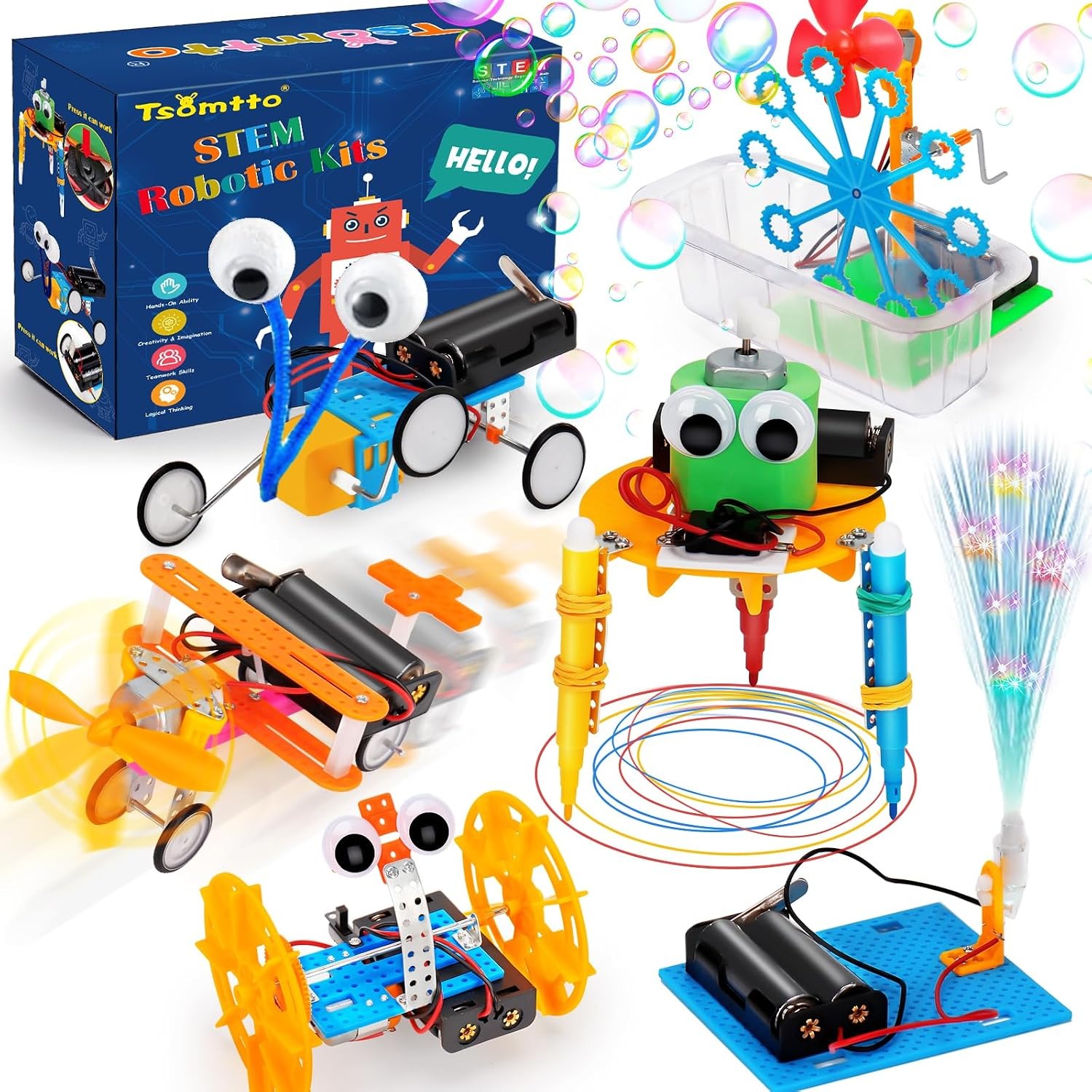
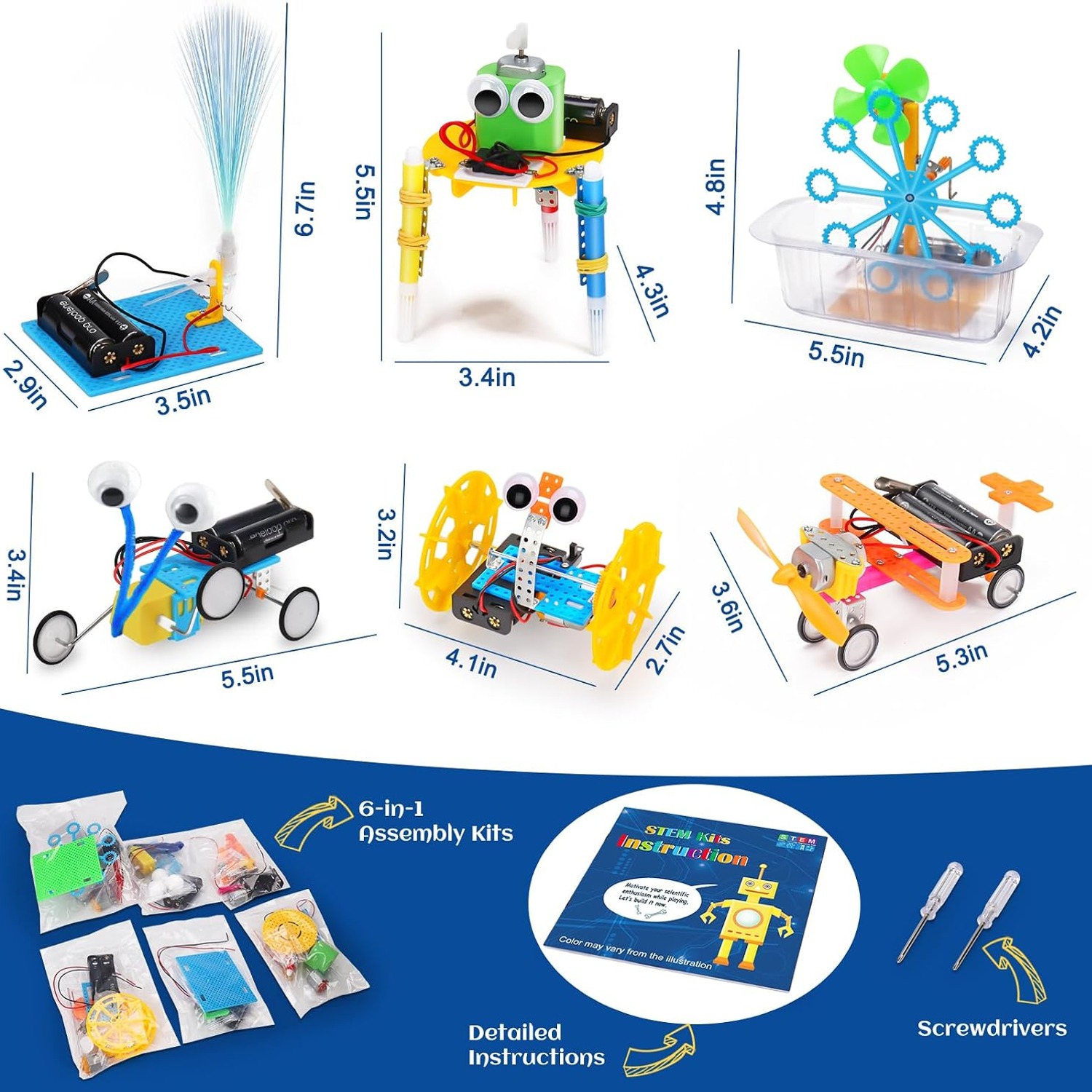
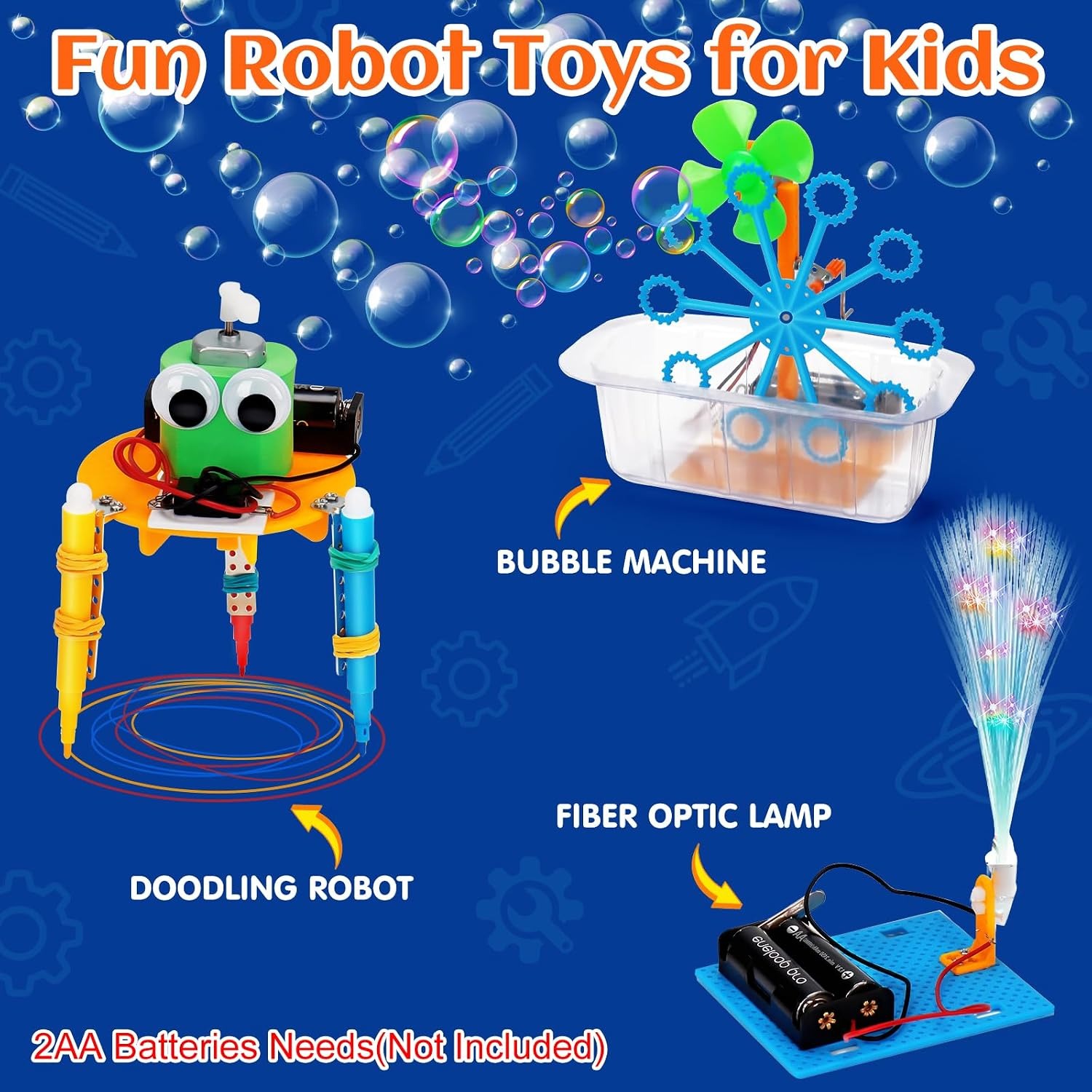
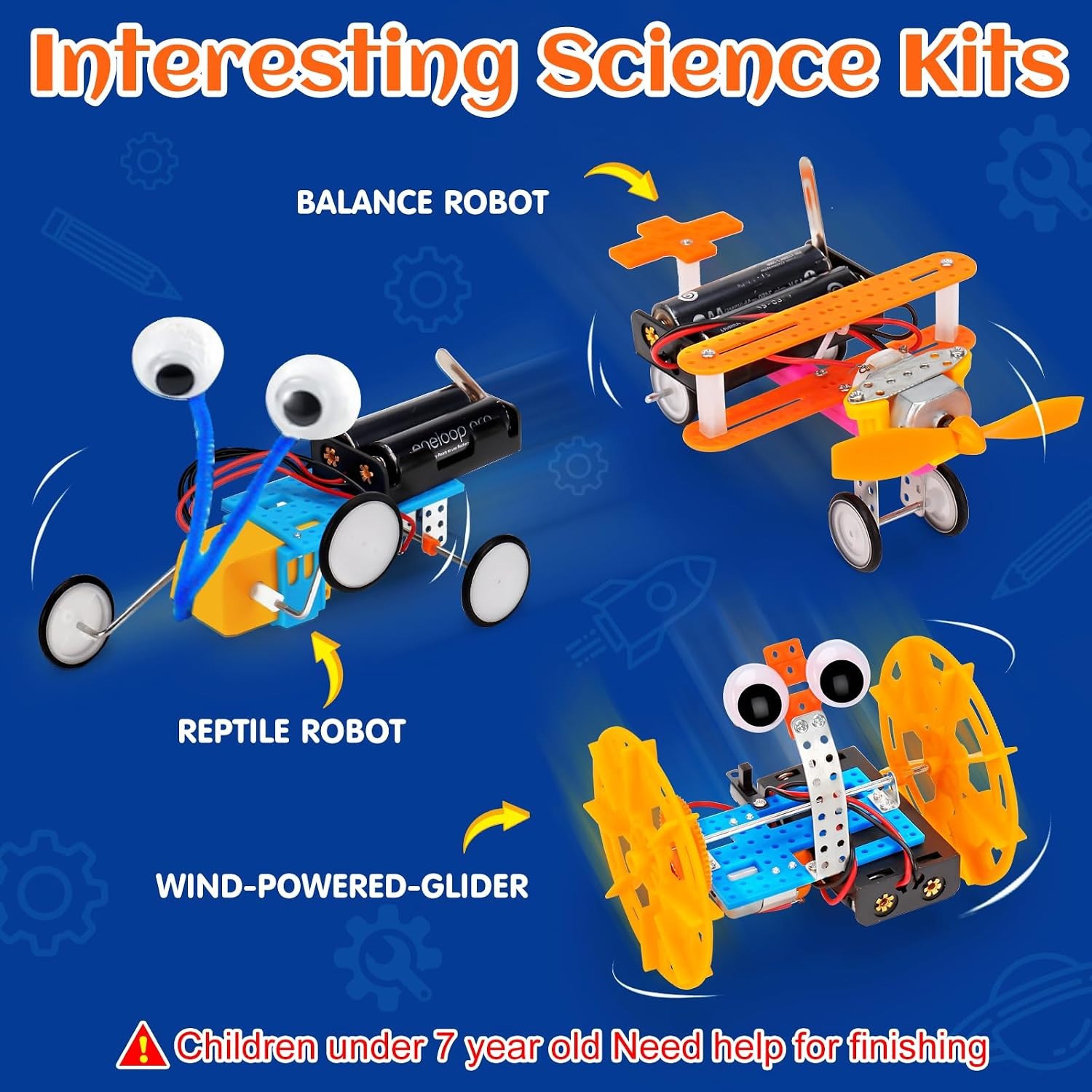
  • Six Separate Projects
  • Real Working Motor
  • Made For Ages 8-12
  • Ready To Gift

Price: $98.99 $118.99

  • Free tracked Canada-wide delivery on orders $125+, otherwise a flat $18
  • Pay by card or PayPal, handled by the payment provider
  • 14 days to change your mind, plus your statutory rights
Product specifications
BrandTsomtto
Set NameSTEM Science Robotics Kit, 6 Set
Number Of Projects6
Recommended Age8 to 12 years
Educational FocusSkill development, following instructions, teamwork and basic scientific exploration
Included ComponentsScience Robotics Kit
Material TypePlastic
Battery DescriptionAlkaline
Manufacturer Part Number6-06
Item Dimensions2.54 x 2.54 x 2.54 cm
Item Weight0.48 kg
Country Of OriginChina
Warranty90 day warranty against manufacturer defects
ConditionNew
Weight0.48 kg
Shipping & returns

Tracked delivery anywhere in Canada. It is free on orders of $125 or more, and a flat $18 below that.

If it is not right for you, send it back within 14 days of delivery in resaleable condition and we refund the price you paid, including standard delivery. That is a voluntary policy we offer on top of your legal rights. You cover the cost of returning it unless the item is faulty.

If it arrives faulty, damaged or not as described, we put it right at no cost to you under the consumer protection law of your province or territory (for example the Ontario Consumer Protection Act, 2002), return postage included.

Shipping details · Refunds and returns

Six Separate ProjectsOne box, six different motorized builds to work through at your own pace.
Real Working MotorKids wire a circuit and see the result move, not just sit on a shelf.
Made For Ages 8-12Instructions pitched at primary and early high school readers.
Ready To GiftA screen free present that keeps going long after the wrapping is off.

Turn a rainy afternoon into six hands-on builds with a science robotics kit that lets kids wire up a working motor and watch it go.

Six motorized projects in one box, sized for ages 8 to 12, with step-by-step instructions that teach circuits, gears and problem solving while the build is still fun.

Six build-it-yourself robotics and science projects come packed in a single kit, so one purchase gives a child weeks of activity rather than a single afternoon.

Each project uses a small motor and a simple circuit, which is the clearest way for a young builder to understand how electricity turns into movement.

The manufacturer recommends it for ages 8 to 12, an age band where kids can follow written steps but still need a satisfying result at the end.

Plastic parts and an alkaline battery setup keep the build light at 0.48 kg and easy to handle on a kitchen table.

It makes a practical gift for a birthday, a holiday break or a classroom activity corner, and it works just as well for boys and girls.

STEM Science Robotics Kit, 6 Build-It-Yourself Projects

Most science toys promise a lot and deliver one quick trick. This science robotics kit takes a different route by giving a child six separate projects in the same box. Each one is a build, not a demonstration, so the child does the work and ends up with something that actually moves. That difference matters more than any feature list, because a kid who builds a thing remembers how it works.

STEM Science Robotics Kit, 6 Build-It-Yourself Projects

The heart of the set is a small motor and a simple circuit. Connect the battery, close the loop, and the motor spins. From there the projects show how that spinning turns into motion through gears, arms, wheels or whatever the particular build calls for. It is the same idea behind every powered machine a child will ever meet, scaled down to a tabletop and a handful of plastic parts. When something does not run, the fault is nearly always a loose connection or a battery in backwards, and finding it is half the lesson.

STEM Science Robotics Kit, 6 Build-It-Yourself Projects

Tsomtto lists the recommended age as 8 to 12 years, and that range feels about right. Younger children can usually manage with a parent reading the steps aloud and handling the fiddlier connections. Older kids in the range will often race ahead, finish a build, pull it apart and try to change something. Both approaches are fine. The kit does not police how it gets used, which is part of why it holds attention longer than a single assembly toy would.

STEM Science Robotics Kit, 6 Build-It-Yourself Projects

The whole set weighs 0.48 kg and the parts are plastic, so it is easy to carry to a grandparent's house, a holiday rental or a classroom. Power comes from alkaline batteries, which the listing does not confirm as included, so it is worth having a fresh pack on hand before the box is opened. Keeping the original packaging is a good idea too, since six projects means a lot of small pieces that are easier to find when they live in one place.

STEM Science Robotics Kit, 6 Build-It-Yourself Projects

As a gift it does a few jobs at once. It is screen free, it has a clear point to it, and it is not a toy that gets finished in ten minutes. Parents who want a present that looks like fun and quietly teaches something tend to land on kits like this one. A 90 day warranty against manufacturer defects covers the usual early faults.

Not sure yet? That is fine.

A toy has to suit the child it is for, and you cannot always judge that from a photograph. If it is not right for you, send it back within 14 days of delivery in resaleable condition and we refund the price you paid, including standard delivery. That is a voluntary policy we offer on top of your legal rights.

If it turns up faulty, damaged or not as described, that is on us. The consumer protection law of your province or territory covers you, and we pay the return postage. Read the full detail on our refunds and returns page, or ask us anything before you order.

Frequently Asked Questions

What exactly is in this kit?

It is a STEM science robotics set containing the parts for six separate motorized projects. The maker lists the included components simply as the science robotics kit, so an exact piece count is not specified by the maker. Everything arrives in one box with instructions.

How many projects can my child build?

Six. They are designed as separate builds rather than one model with six variations, which is what keeps the set interesting across several sittings. Most families work through them one at a time over a few weeks.

What age is this suitable for?

The manufacturer recommends 8 to 12 years. Children at the younger end usually do best with an adult reading the steps, while older kids tend to manage on their own. It is one of the better options among stem toys for 8 year olds who are ready for a real build.

Can a 6 or 7 year old use it?

It is below the recommended age, so a younger child would need an adult doing the fiddly connections and reading the instructions. Some six and seven year olds will enjoy watching and helping. Judge it on your own child's patience with small parts.

Is it suitable for teenagers?

The upper recommended age is 12, and the maker notes a maximum age guideline of 144 months. A 13 or 14 year old who is new to electronics may still get something out of it, but a confident older teen will likely find it quick.

Does it work for both boys and girls?

Yes. Nothing about the builds or the instructions is gendered. It is a sound educational gift for girls and for boys alike, which is one reason it turns up on a lot of birthday lists.

What do the projects actually teach?

The maker lists the educational objective as skill development, following instructions, teamwork and basic scientific exploration. In practice children learn how a circuit is completed, how a motor converts electricity into movement, and how to troubleshoot when something does not run.

Do the models really move?

Yes. Each build uses a small motor powered by batteries, so the finished project is motorized rather than static. That moving result is what makes it a genuine motor robot toy rather than a model kit.

What batteries does it need?

The battery description given by the manufacturer is alkaline. The maker does not confirm whether batteries are included, so we suggest having a fresh set ready before the box is opened.

Are tools required?

Kits of this type are generally built by hand with push fit and simple screw connections. The listing does not specify any required tools. A small screwdriver is handy to have nearby just in case.

How long does one project take?

Expect somewhere between twenty minutes and an hour per build depending on the child's age and how carefully they work. Most families find the first build takes longest while everyone gets used to the parts.

Can the projects be taken apart and rebuilt?

Yes, and that is a good way to use the set. Dismantling a finished build and starting again reinforces what was learned the first time. It also means the kit lasts well beyond six sessions.

Is this a good classroom activity?

It suits small group work, and the manufacturer specifically mentions teamwork as a learning objective. Many teachers run one build per session as a classroom STEM activity with pairs sharing a kit.

What is it made from?

The material type listed is plastic. The maker does not specify the plastic grade or whether any metal components are used in the motor assembly beyond the standard motor and wiring.

How heavy is the kit?

The item weight is 0.48 kg, listed on the packaging as roughly 481 g. That makes it light enough to pack for travel or carry to school without any trouble.

What are the dimensions?

The maker lists item dimensions of 2.54 x 2.54 x 2.54 cm, which clearly refers to a single component rather than the full box. Full packaging dimensions are not specified by the maker.

Where is it made?

Country of origin is China. The brand is Tsomtto, and the manufacturer part number is 6-06.

Is there a warranty?

Yes, the manufacturer offers a 90 day warranty against manufacturer defects. That covers faults present from the start rather than damage from normal play or misuse.

What if a part goes missing?

Keep all pieces together in the original box between builds, since that is the simplest prevention. If a part is missing on arrival, contact us within 14 days of delivery and we will sort it out.

Is it suitable for young children?

It contains small parts and is rated from 8 years, so it is not appropriate for preschoolers or anyone who still mouths objects. Supervise younger siblings around the build area.

Does it need a computer or app?

No. The builds are mechanical and electrical, with no coding or app pairing involved. That is exactly why it works as a screen free activity for kids.

Can two children share one kit?

Yes, and sharing works well given six projects. Taking turns on the wiring and the assembly is closer to how real engineering teams work, and the manufacturer flags teamwork as part of the point.

How should I store it between builds?

Put every piece back in the original box or a lidded container with the instruction sheet. Remove batteries if the kit will sit unused for a while, since leaking cells can damage a motor or battery holder.

How do I clean the parts?

Wipe plastic components with a slightly damp cloth and dry them before packing away. Do not soak anything, do not put parts in a dishwasher, and keep moisture away from the motor and wiring.

What if a build does not work first time?

That is normal and useful. Check the battery direction, make sure every connection is pushed fully home, and re-read the step before the one where things stopped. Nearly all faults come down to one of those three.

Is it a good birthday present?

It is one of the more reliable picks for a birthday gift for a 10 year old, because it is immediately interesting and does not run out after one session. The six projects give it staying power.

Does it suit school holidays?

Very well. Spacing one build per day gives you nearly a week of activity, which is why it works as a school holiday project kit for families who want something other than a tablet.

How does delivery work?

Most orders arrive within 5 to 10 working days of the order date. Rural, remote and northern addresses can take a little longer. Delivery is free on orders of $125 or more and a flat $18 under that, and you get tracking by email once the parcel is on its way.

Can I return it if the child already owns one?

Change of mind returns are accepted within 14 days of delivery for unused items in their original packaging, with the buyer paying return postage. Get in touch before sending anything back so we can give you the return details. A faulty or damaged item is put right at our cost.

What if it is not right for us?

Contact our team and explain the problem. If the kit arrives faulty, the 90 day manufacturer defect warranty applies, and if it is simply not the right fit for your child we will walk you through a return or exchange. We would rather sort it out than have a kit sit in a cupboard unused.

How To Choose A Robotics And Science Kit Your Child Will Actually Finish

6 min read Toy Warehouse

The problem with most science kits

Walk down any toy aisle and you will find a shelf of boxes with lightning bolts on the front. Plenty of them end up half finished in a cupboard. The usual reason is not that the child lost interest in science. It is that the kit asked for too much, or gave too little, or was really just one activity dressed up as twelve.

The useful question when choosing is not "does this look educational" but "will my child get to a working result today." A kit that produces something that moves in under an hour is worth more than an elaborate one that stalls on step four.

That is the gap this science robotics kit aims at. Six projects, each built around a small motor and a basic circuit. The child wires it, checks it, and watches it run. If it does not run, they go back and find the loose connection. Both outcomes teach something, which is more than you can say for a pack of coloured crystals.

How a motorized build kit works

Everything in this set comes back to one idea. Electricity flows in a loop. Break the loop and nothing happens. Close it and the motor spins.

The alkaline batteries supply the push. The wires carry it. The motor turns that flow into a spinning shaft. From there each project does something different with that spin, through gears, arms, wheels or linkages depending on the build. A child who assembles six variations on that theme ends up with a real feel for how powered machines work, without anyone having to explain voltage.

The troubleshooting is the hidden lesson. When a build sits there doing nothing, there are only a few possible causes. A battery in the wrong way round. A wire not pushed fully into its connector. A gear not seated properly. Working through that short list, in order, is genuine engineering practice. Kids who learn it here apply it to everything else they build later.

Tsomtto describes the learning aims as skill development, following written instructions, teamwork and basic scientific exploration. That is a fair summary. The instruction following part is underrated. A lot of children can read perfectly well and still find it hard to carry out a numbered sequence without skipping ahead. A build that only works when the steps are done in order teaches that quickly and without a lecture.

Who this suits

The manufacturer's recommended age is 8 to 12 years, with a stated maximum guideline of 144 months. Here is what that means in practice.

At eight, most children can do the assembly but will want an adult nearby to read steps and double check connections. That shared time is often the best part for both of you. At ten, a lot of kids will work independently and come find you only when something refuses to move. At twelve, expect them to finish a project and then immediately start changing it, which is exactly what you want to see.

It is a good fit for a child who already likes taking things apart, and an even better fit for one who has never tried and might discover they enjoy it. There is nothing in the set that assumes prior knowledge, so it works as a starter electronics set.

It is also sensible for classrooms and after school clubs. Six projects divide neatly into six sessions, and the teamwork angle means two children can share one kit without one of them getting bored. Pairs tend to argue productively about which wire goes where, which is more valuable than it sounds.

Who it does not suit: children under the recommended age who still put small pieces in their mouths, and older teenagers who have already built something more advanced. Be honest about where your child sits.

What to look for when comparing kits

A few things separate a kit that gets used from one that does not.

Does it move? Static models have their place, but a motorized result holds attention far better. A build your own robot kit with a working motor gives immediate feedback, and feedback is what keeps a child going.

How many distinct builds? One project is an afternoon. Six is a holiday. Multiple projects also mean a child can pick a build that appeals rather than being stuck with one option.

Is the age range realistic? Ignore the lowest number on the box and look at the manufacturer's own recommendation. Here that is 8 to 12, which matches what the builds require.

Can it be rebuilt? Kits that glue together are finished once. These parts come apart, so a child can dismantle a project and try a change. That is the difference between a toy and a tool.

How big are the parts? Small enough to be fiddly is fine for this age group. Small enough to lose on a carpet is a storage problem, which is solvable with a lidded box.

Does it need a screen? This one does not. No app, no pairing, no account. For families already managing too much screen time, that is a real advantage.

Getting set up properly

Clear a table before you open the box. Not a lap, not a bed, a flat surface with edges. Small parts roll.

Have fresh alkaline batteries on hand. The maker does not confirm whether batteries are included, so assume they are not and you will never be disappointed. Keep a spare set in the box.

Read through the instructions for the first build before starting. Five minutes of reading saves twenty minutes of backtracking. Lay out the parts for that project and leave the rest in the box so nothing gets mixed up.

Let the child do the work. The temptation to take over when a connection will not seat is strong, and it is worth resisting. Offer a hint instead. The point is the problem solving, not the finished object.

Looking after the kit

Storage is most of the care. Put every piece back in the original box between builds, along with the instruction sheet. A kit with a missing gear is a kit nobody rebuilds.

Remove batteries if the set is going into a cupboard for a few months. Alkaline cells can leak over time and the damage usually lands on the motor or the battery holder, which are the hardest parts to replace.

Clean plastic components with a slightly damp cloth and dry them before packing away. Nothing goes in water and nothing goes in a dishwasher. Keep the set away from radiators and direct sun, since heat can warp thin plastic over time.

Check wires and connectors before each build. A bent pin or a frayed wire end is easier to spot before assembly than halfway through.

As a gift

This lands well as a present because it looks like fun on the outside and does something useful on the inside. Parents appreciate the second part, kids only notice the first, and that is the right balance.

It works for birthdays, holiday gifts and the standard problem of what to send a nephew you see twice a year. At 0.48 kg it posts easily. The box is self contained, so there is nothing else to buy beyond batteries.

If you are gifting to a classroom or a club, one kit per pair of children works better than one each. The shared build is part of the experience.

The short version

Six motorized projects, a real circuit, and an age range of 8 to 12 that the builds genuinely match. Plastic parts, alkaline power, 0.48 kg in total, made in China by Tsomtto under part number 6-06, with a 90 day warranty against manufacturer defects.

It is not a coding platform and it is not a lab in a box. It is a hands on learning toy that shows a child how electricity becomes movement, six different ways, and lets them get it wrong a few times along the way. For most kids in that age bracket, that is exactly the right amount of challenge.

Browse the shop

Not sure if it suits your child?

Tell us their age and how much building they have done before, and we will give you an honest answer.

Ask us a question

Page summary

The Tsomtto STEM Science Robotics Kit is a six project build set for children aged 8 to 12, listed under part number 6-06. Each project uses a small motor and a simple alkaline battery powered circuit, so children assemble working, moving models rather than static displays. The manufacturer describes the educational focus as skill development, following instructions, teamwork and basic scientific exploration. Parts are plastic. The kit weighs 0.48 kg and the listed item dimensions are 2.54 x 2.54 x 2.54 cm. Country of origin is China. Tsomtto offers a 90 day warranty against manufacturer defects. Colour and exact parts count are not specified by the maker, and the maker does not confirm whether batteries are included. Suitable for home use, gifts and classroom activity sessions.