
The complete guide
Choosing a Giant Panda Plush, A Practical Buyer's Guide
The problem with most soft toys
A child gets a soft toy. It is cute. It goes in the pile with the other nine cute soft toys, and within a month nobody can tell you which one is which. The toys are all roughly the same size, they all do roughly the same job, and the only one that actually gets used is the one that happened to be nearest at bedtime.
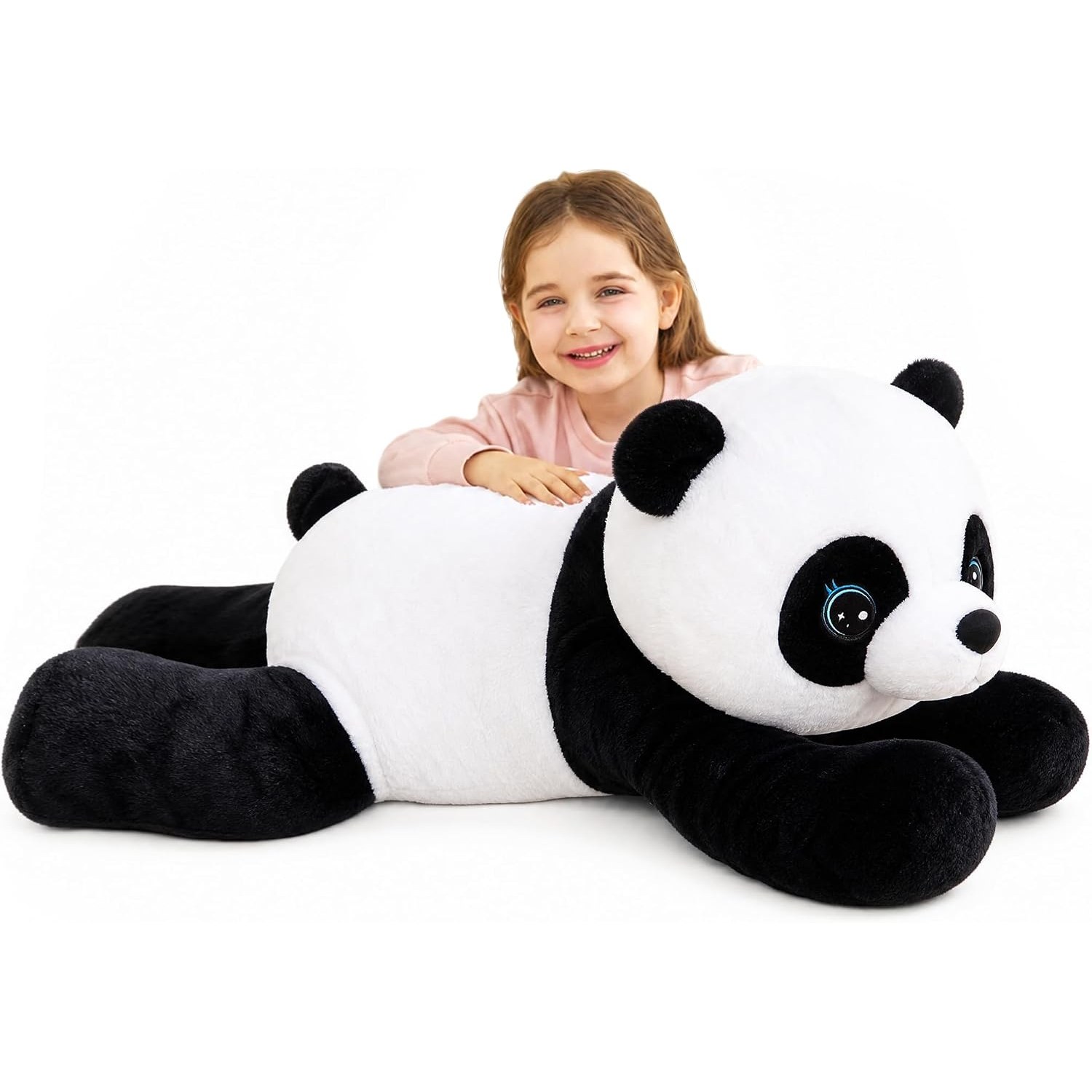
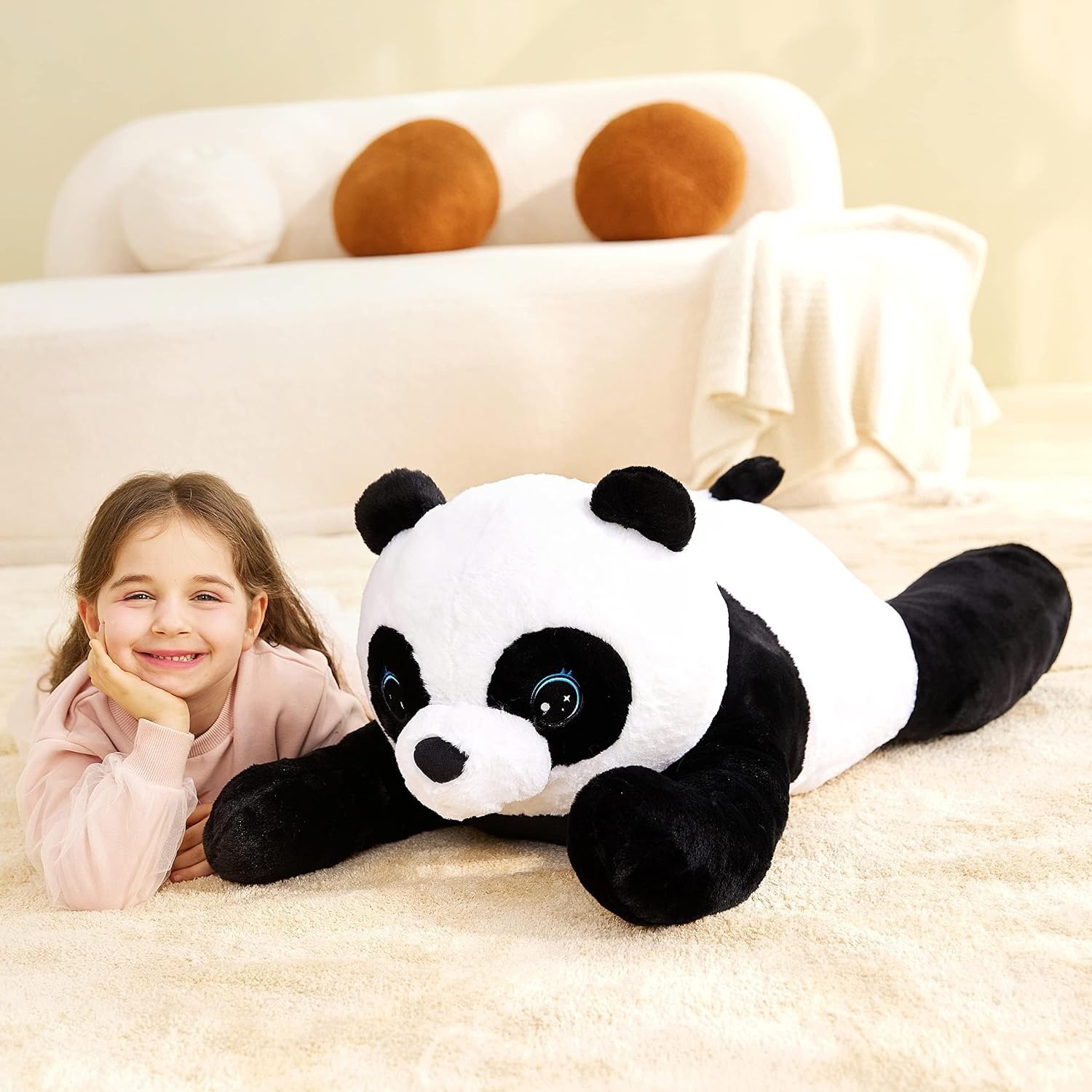
Size changes that. A giant panda plush 78cm long is not something you lose track of. It does not go in the toy box because it does not fit in the toy box. It lives somewhere, usually the bed or a corner of the floor, and because it lives somewhere it gets used every day. That is the real difference between a big plush and a small one. The small one is a toy. The big one is a place.
This guide covers what to look for in an oversized panda plush toy, who it actually suits, and the practical stuff, cleaning, storage, and how to not get caught out by the measurements.
What 78 cm really looks like
Numbers on a page are easy to skim past. The listed dimensions here are 77.98 cm long, 33.78 cm wide and 29.97 cm high, with a stated size of 30 inches and a product weight of 1.95 kg.
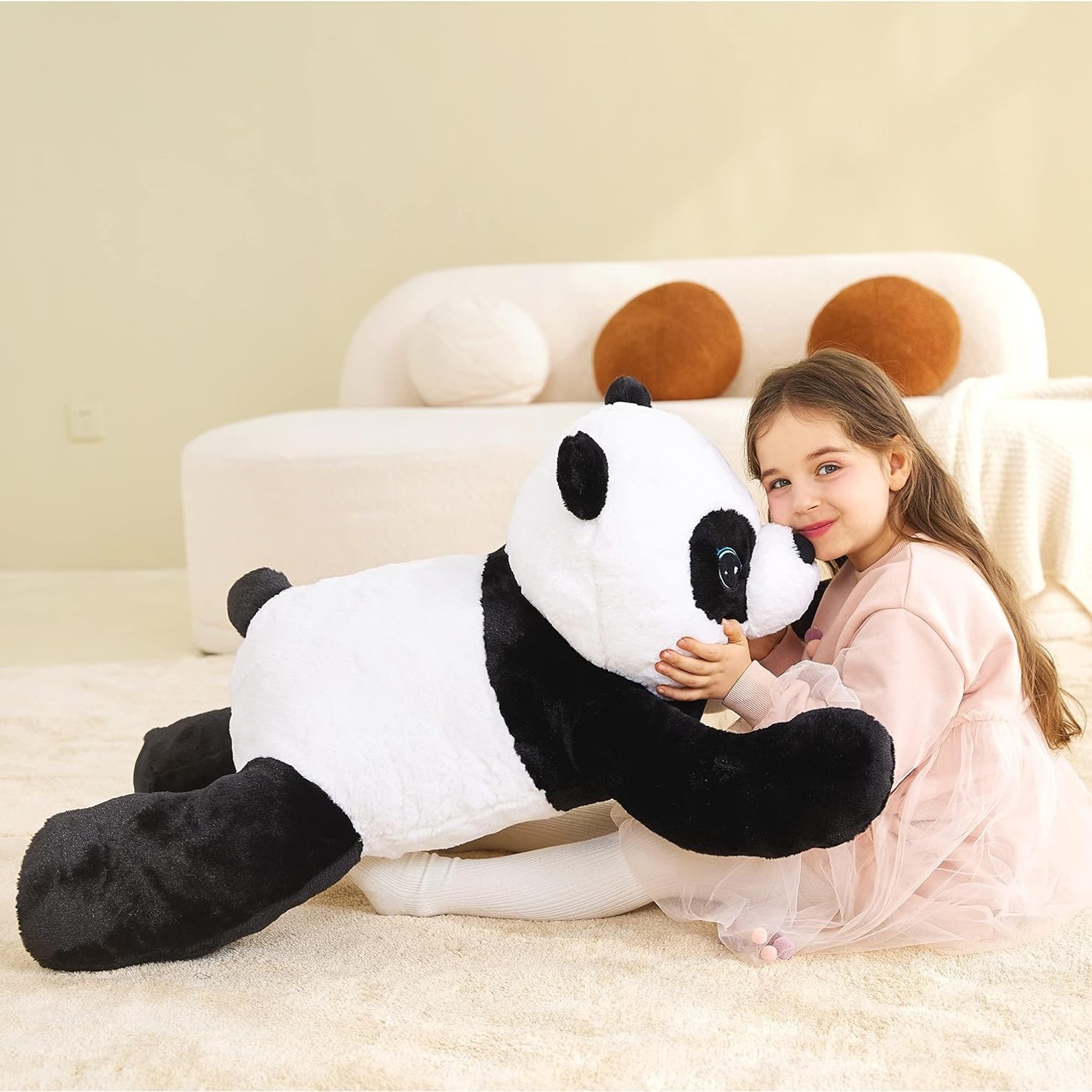
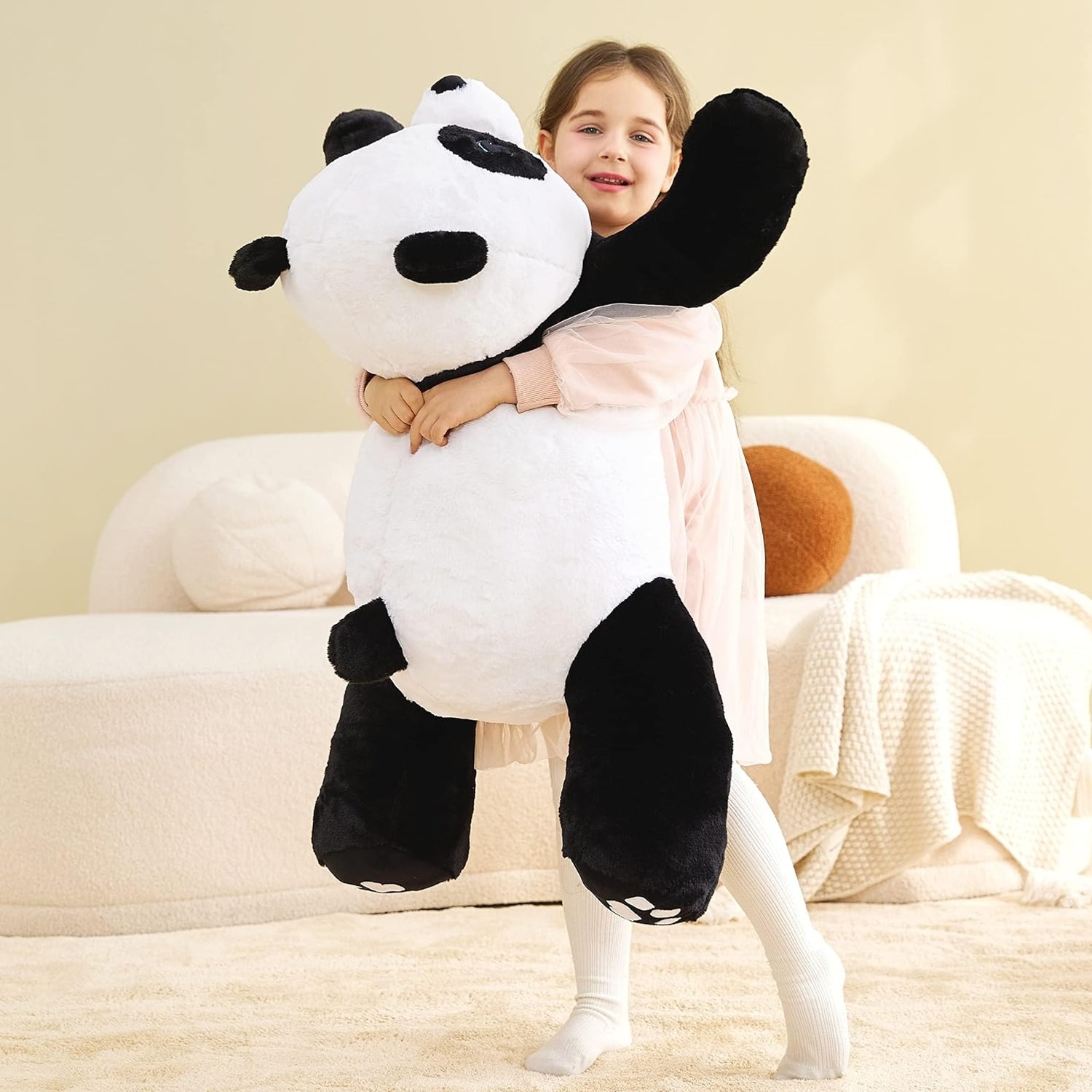
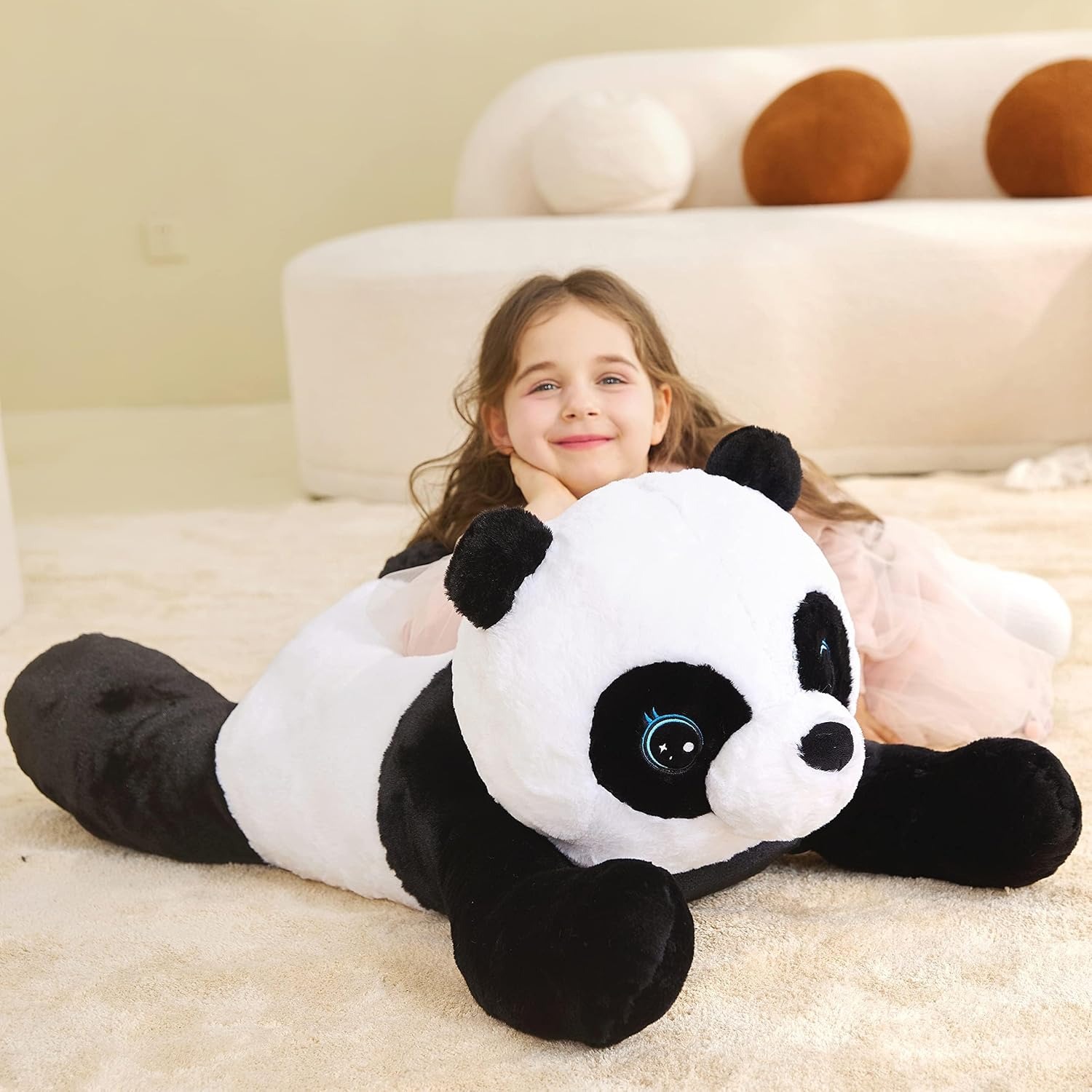
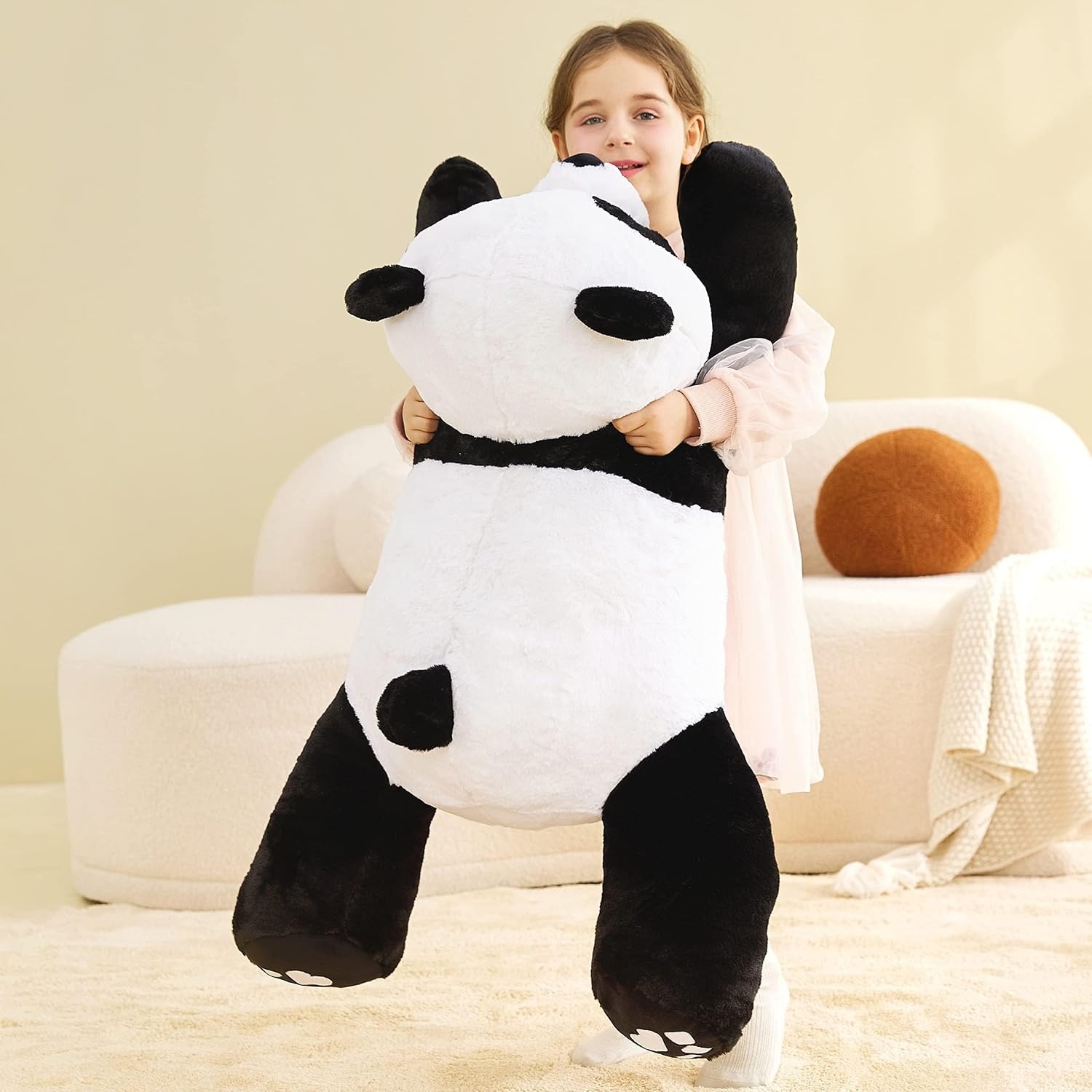
In a room, that means the panda laid across a single bed covers most of the width. Propped against a headboard it reaches roughly to a seated child's shoulder. On the floor beside a bookshelf, it reads as a piece of furniture rather than a toy on the carpet. A five year old can drag it around with both hands. Lifting it over their head is another matter.
The honest advice before buying any large plush is to measure. Take a tape, mark 78 cm along the bed or the floor, and look at that space. Most people picture something smaller than the number suggests. A minute with a tape measure saves a return.
How the thing is actually built
The construction here is straightforward, which is a good sign in a big plush. Outer fur is polyester, the filling is polyester, and the body is sewn as a single piece. There are no clip-on bows, no plastic eyes rattling on a stalk, no felt accessories waiting to be pulled off and dropped behind a radiator.
A one-piece build matters more at this size than people realize. The bigger a plush toy, the more force it takes when a child drags it across a floor by one arm, and the more stress lands on whatever joins a limb to the body. Fewer separate parts means fewer places to fail.
The filling is described as extra plump full body, and that holds up to the squeeze test in a practical way. A sparsely filled plush of this size would collapse into a flat sheet the moment anyone sat on it. A well filled one holds its shape, presses back a bit, and recovers when you let go. That resilience is what makes a large panda soft toy usable as a backrest or a floor cushion rather than just something to look at.
The markings are the standard panda pattern, black and white, with dark ears, eye patches, arms and legs against a pale torso and face. It is a familiar shape and that familiarity is half the appeal. Children recognize a panda instantly.
Who it suits
The stated age guidance is 3 and up, with a manufacturer recommended range of 36 months to 12 years. That lower limit matters. Large plush toys are not intended for cots or for children under three, and the sensible approach with any big soft toy is to keep it out of a sleeping space where it could shift and block airflow. Floor, chair, or the foot of the bed is the right home for it.
Above that age, the range is wider than the recommendation suggests. Primary-age children treat it as a cuddle toy and a reading companion. Older children and teenagers use oversized plush as a backrest for gaming, a floor cushion, or just something to flop onto. Adults buy them for bedrooms, window seats and nurseries, and a reasonable number buy them for themselves without making excuses about it.
It also works well as a gift for situations where you want impact. A milestone birthday, a child moving into their own room for the first time, a long hospital stay, a new sibling arriving and an older child needing something of their own. The scale communicates effort in a way a small gift cannot.
Choosing between sizes
If you are comparing this against smaller panda plush toys, the question is really about what the toy is for.
A 20 to 40 cm panda is portable. It goes in a bag, travels to a grandparent's house, gets taken to school on a show-and-tell day, and sleeps under an arm. That portability is its value.
A 78 cm panda is stationary. It stays in one room, it becomes part of the furniture, and it gets used for leaning, lying and hugging rather than carrying. Trying to make a jumbo stuffed panda portable will only frustrate everyone.
Plenty of households end up with one of each, and there is logic to that. If a child already has a shelf of small soft toys, adding another small one changes nothing. Adding a big one gives them something genuinely different.
Looking after it
Care here is surface washing only, and that instruction is worth taking seriously rather than treating as a suggestion.
The reason is physics. Polyester filling at this volume soaks up a surprising amount of water. A plush that weighs under two kilos dry can weigh several times that wet, and all of that load swings against the seams inside a spinning drum. That is how large plush toys get torn apart in washing machines. The toy comes out as a sad, lumpy, split-seamed version of itself, and no amount of restuffing fixes it.
Spot cleaning is simple. Soft brush, a little mild cleanser, a damp cloth. Work the marked patch in small circles, blot it dry with a clean cloth, and leave the toy to air dry fully away from radiators and direct heat. Once dry, run a brush or your hand through the pile in one direction so the fur lies flat and even again.
For general freshening between cleans, a shake outdoors and a brush does a lot. A light pass with a lint roller picks up pet hair and loose fibre. If you want to use a fabric freshener, go sparingly and test a hidden patch at the back first.
Storage is worth a thought if space is tight. Polyester loft flattens under long-term compression, so avoid stuffing it under heavy boxes for months on end. On top of a wardrobe or in a big fabric bag is fine. Somewhere dry matters more than somewhere out of sight.
What to expect on arrival
The toy will be compressed inside, which is normal and not a defect. Take it out, shake it, pat the body and limbs from the middle outwards, and leave it alone for a day. The filling recovers its shape by itself.
If something genuinely is wrong, damaged fur, a split seam, the wrong item, a photo of the toy and the box is usually all we need to sort it out.
The short version
This is a 78 cm black and white panda plush, polyester inside and out, built as one piece, rated for ages 3 and up, and designed to be surface cleaned rather than machine washed. Listed weight is 1.95 kg and the dimensions are 77.98 x 33.78 x 29.97 cm.
Measure the space before you buy, because the size is larger than most people imagine. Keep it off the washing machine's to-do list. Give it a room to live in rather than a box to hide in, and it will get used daily for years.