
The complete guide
Bristle Building Blocks, A Buyer's Guide For Parents And Teachers
The moment a building toy goes wrong
Most parents have watched it happen. A child picks up two plastic bricks, tries to push them together, misses the alignment by a few millimetres, tries again, fails again, and then the whole handful goes flying. The toy was not too hard to understand. It was too hard to connect.
That gap between wanting to build and being able to build is where a lot of good construction toys lose young children. Fine motor control at three and four years old is still developing. Lining up studs and sockets takes a level of precision that a small hand does not reliably have yet, and a toy that demands precision ends up teaching frustration instead of engineering.
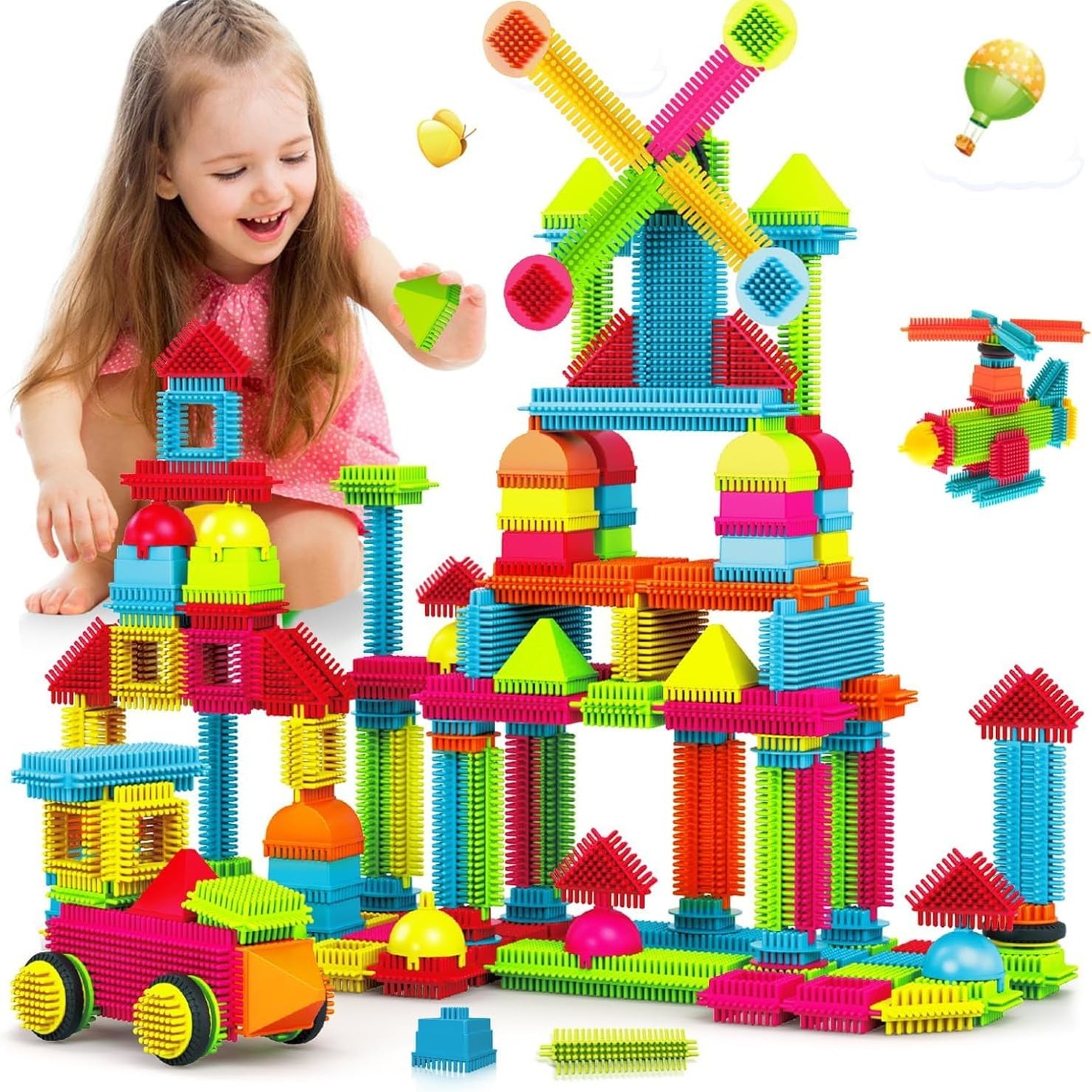
Bristle blocks were designed around that problem. Instead of a lock that only works one way, they use soft bristles on every face. Push two pieces together at any angle and the bristles interlace. There is nothing to line up and almost nothing to get wrong.
How bristle blocks actually connect
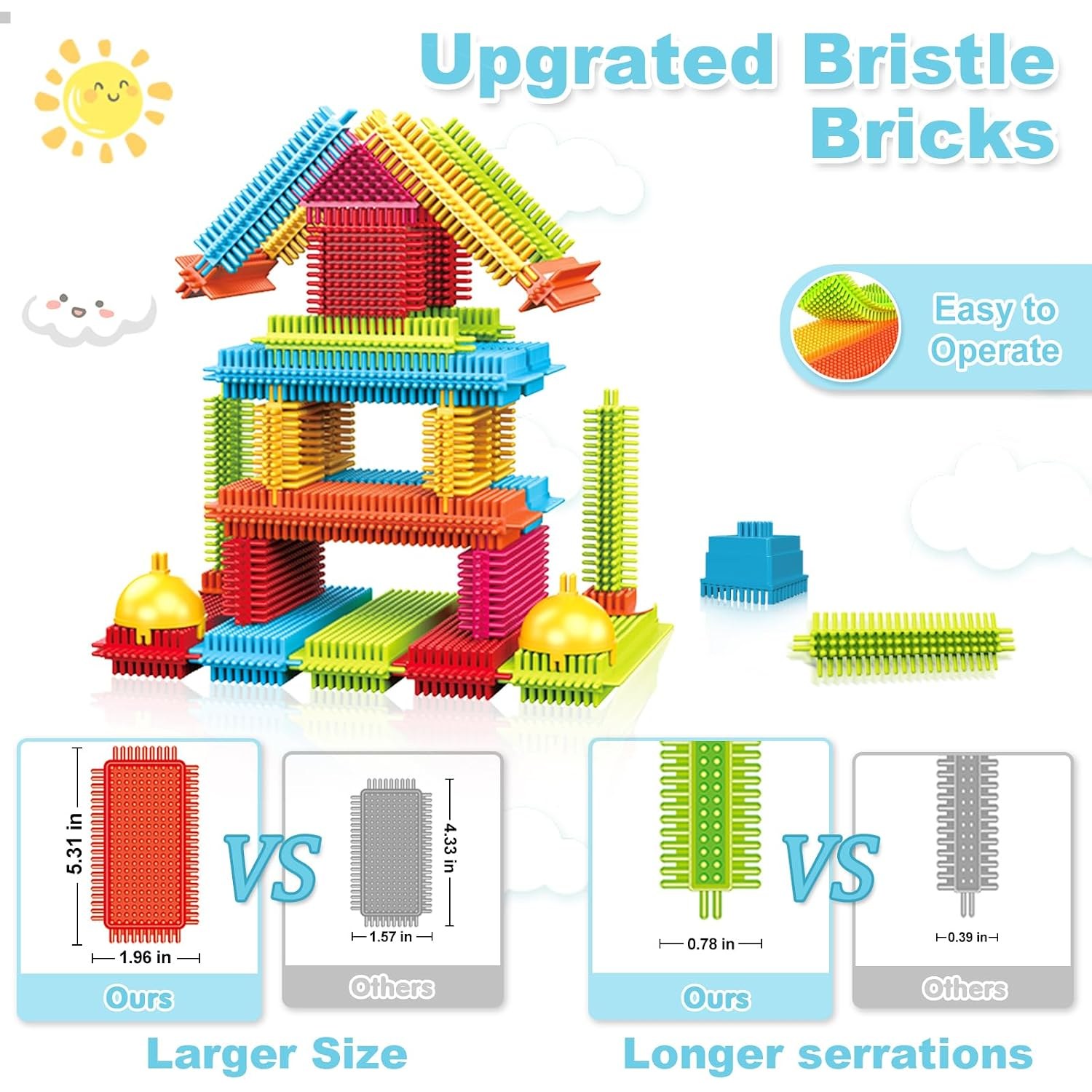
The mechanism is simple enough that a child works it out in seconds. Each face of the block is covered with short flexible bristles. When you press two faces together, the bristles slide past one another and tangle, and friction holds them in place. Pull with a little force and they release cleanly.
This gives you two useful properties at once. The hold is firm enough that a tower survives being carried across the room, but the release is easy enough that a four-year-old can take a build apart without asking for help. Many stiffer brick systems get one of those right and sacrifice the other.
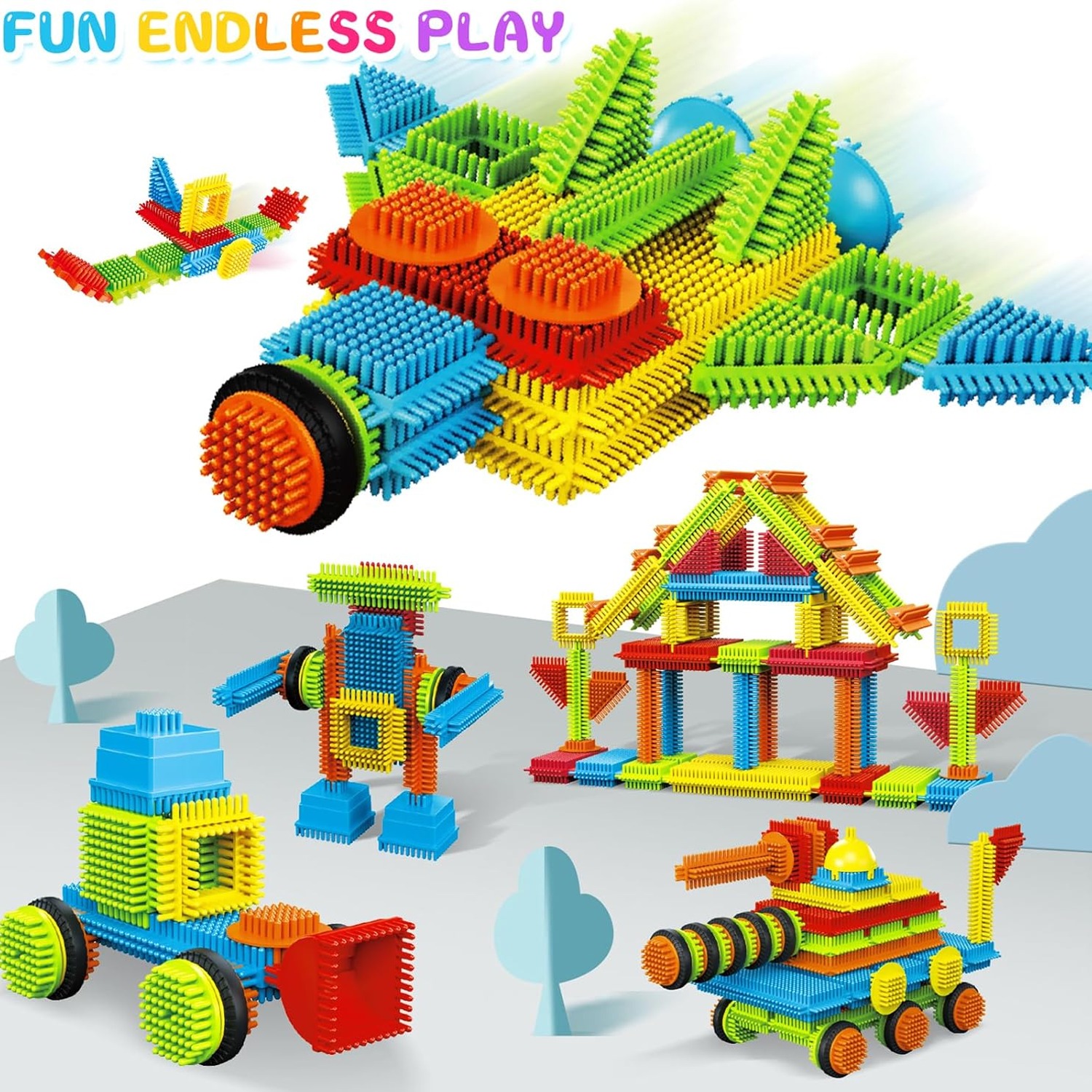
The other advantage is angle. With studded bricks, every piece must sit square. With bristle faces, a piece can jut out sideways, lean at forty-five degrees, or stick to the underside of something else. That freedom is why bristle builds tend to look like creatures, trees and strange machines rather than neat rectangular walls.
Who this set suits
The manufacturer puts the age range at 36 months to 8 years, and in practice the toy earns that range rather than just claiming it.
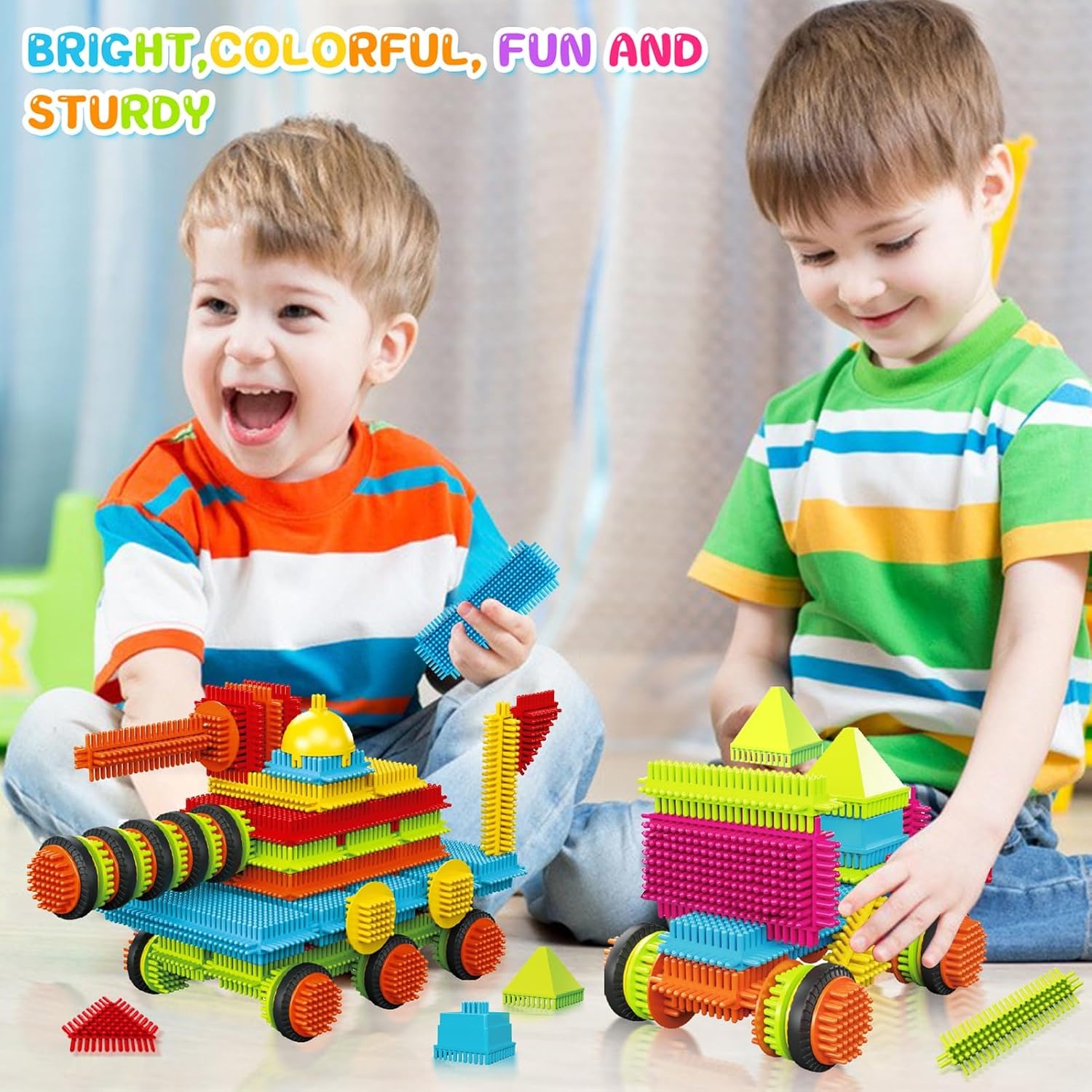
At three, play is mostly about the connection itself. Children press pieces together, pull them apart, press them together again, and build short stubby shapes they then knock down. It looks repetitive from the outside, but each repetition is pincer grip practice and cause-and-effect learning. This is also the age where the ease of connection matters most.
At four and five, something shifts. Children start naming what they build before they build it. A tower becomes a lighthouse. A flat panel becomes a door. They begin sorting by colour without being asked, and they start noticing that a wide base holds a tall stack better than a narrow one.
At six, seven and eight, the play becomes goal-driven. Children set challenges for themselves, build to a theme, or race a sibling. Teachers use the same pieces for counting groups, pattern sequences and symmetry work. The set stops being a preschooler toy and becomes a tool.
What 108 pieces actually gives you
Piece count is the spec people skim past, and it is the one that most changes the experience. A set of thirty blocks produces small builds that finish quickly. Children run out of material right as an idea gets interesting.
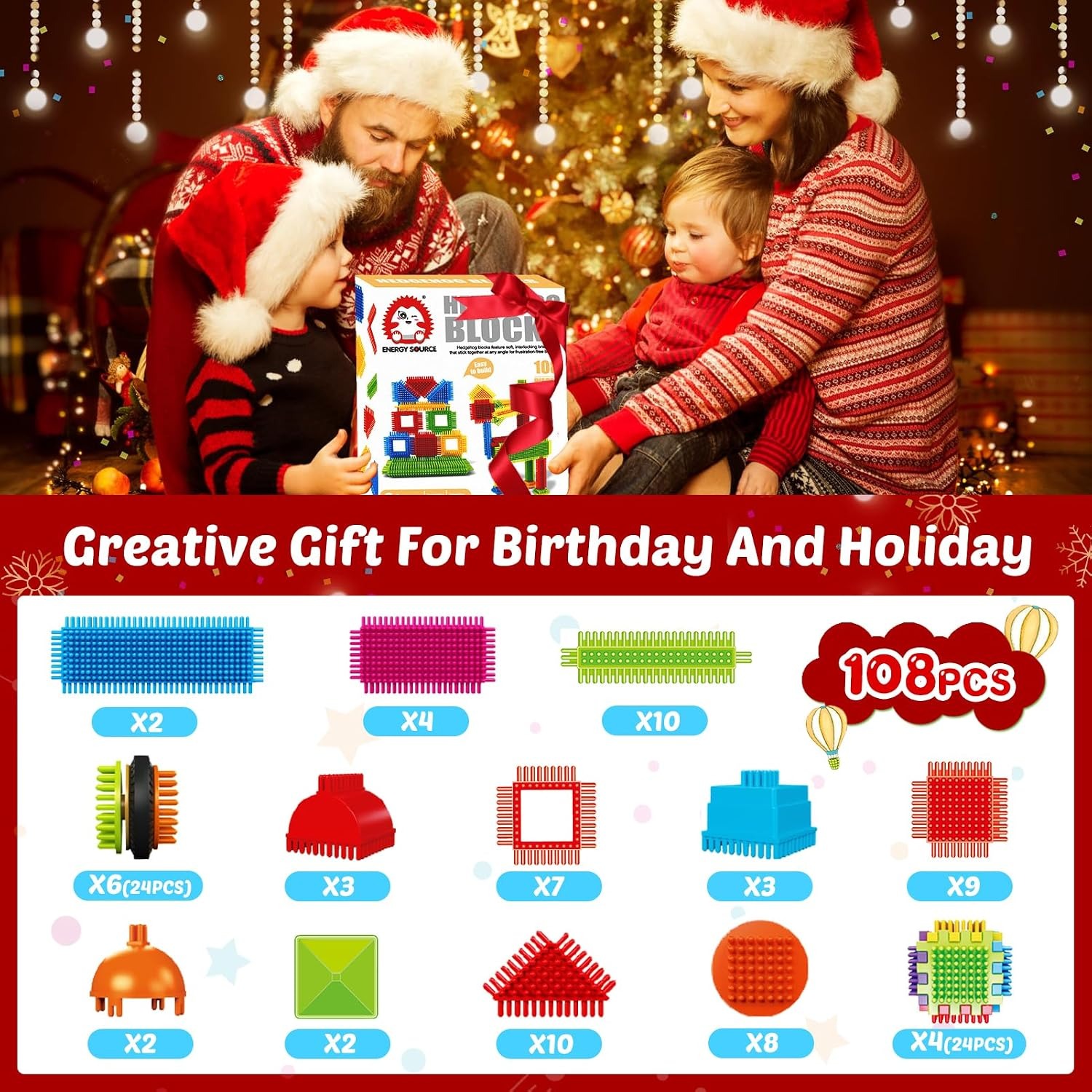
A hundred and eight pieces changes the scale of what is possible. A single child can build something taller than they are sitting. Two children can each take a pile and still have enough for a joint project in the middle. A teacher can split the set across a table of four without anyone running short.
It also absorbs loss. Toys lose pieces. They go under couches, into vacuum cleaners and out to the car. With a set this size, losing a handful over a year does not break the toy.
Materials, safety and comfort
The blocks are made from plastic with flexible bristle faces. We list only what the maker states, so we are not claiming specific certifications or resin grades here. What we can say about the design is that the bristles bend easily, so pressing them against a palm or a fingertip does not hurt even after a long build session.
As with any toy with pieces this size, supervise children who still mouth objects, and stick to the stated minimum age of 36 months. If a piece cracks, retire it rather than gluing it.
Care and storage, kept simple
Cleaning takes about as long as you would expect. Wipe pieces with a damp cloth and a little mild soap, then let them dry fully in the air before storing. Skip the dishwasher and skip boiling water, because heat is what warps plastic and deforms bristle tips.
The one maintenance job specific to bristle blocks is fibre. Those bristle faces are excellent at collecting hair, carpet fluff and crumbs. A dry toothbrush clears most of it in a minute, and doing it before packing the set away keeps the next session cleaner.
For storage, a lidded tub or a drawstring bag beats any fancy organizer. The pieces do not stack or nest, so trying to sort them into compartments wastes time. One container, lid on, done.
Where they earn their keep
Living room floor play is the obvious use, but bristle blocks tend to travel further than that.
They work in cars and on planes because they need no power, no screen and no flat baseplate. They work in waiting rooms because they are quiet. They work at grandparents' houses because an adult who has never seen them can still join in without reading anything.
In classrooms and preschools, they hold up as table manipulatives. A teacher can set a counting task, a colour pattern or an open build time with the same tub, and the lack of instructions means no setup period before the activity starts. Anyone hunting for the best classroom building toys for mixed-age groups usually ends up looking at bristle sets for exactly this flexibility.
How to choose between building sets
If you are weighing bristle blocks against studded bricks or magnetic tiles, think about the child rather than the spec sheet.
Choose bristle blocks when the child is young, when fine motor control is still developing, or when previous building toys have ended in frustration. Choose them when you want a toy that works on carpet, in a car and on a lap tray. Choose them when more than one child will be playing and you want a system where everyone can succeed.
Studded bricks come into their own later, when a child has the precision and the patience for exact models. Magnetic tiles suit flat, geometric building and tend to make different shapes. None of these replaces the others, and plenty of households keep two of them side by side.
If this is a first construction set, bristle blocks are a sensible starting point because the floor for success is so low.
The short version
Bristle blocks connect from any angle, which removes the main thing that makes young children give up on building toys. This set gives you 108 pieces, each listed at 25 millimetres, made from plastic, with no batteries and no instructions needed.
The recommended range of 36 months to 8 years is wide, and the play changes as the child does, from simple connecting to sorting and counting to planned builds and self-set challenges. Cleaning is a damp cloth and air drying. Storage is a tub.
If you want a construction toy that a three-year-old can use on day one and a seven-year-old still reaches for, this is a straightforward choice.