

The complete guide
Choosing a Pirate Treasure Dig Kit, A Buyer's Guide
The problem with most "educational" toys
A lot of toys promise learning and deliver about ninety seconds of attention. The box is bright, the activity is thin, and by the weekend it has joined the pile under the bed. Parents know this pattern well. You pay for something that claims to teach, and what you actually buy is clutter.
The reason is usually the same. The toy gives up everything immediately. There is nothing to work towards, nothing withheld, so there is no reason to stay with it.
A dig kit flips that. The treasure is real and it is right there, but it is sealed inside a block of gypsum and the only way through is slow, careful work. That one design choice changes the whole experience. The reward is not the coin. The reward is the moment the coin appears after twenty minutes of chipping.
How a gypsum dig block works
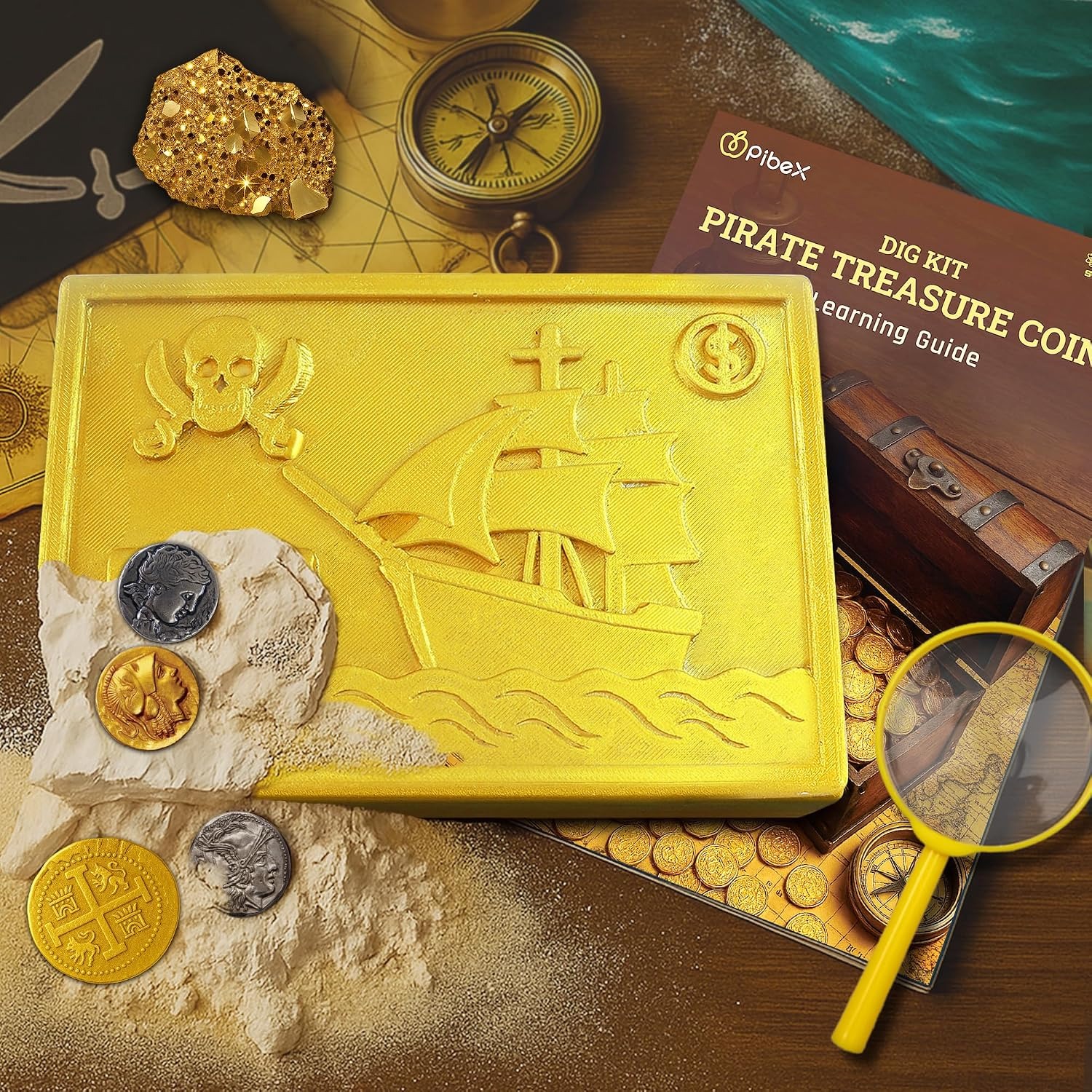
The block in this kit is a golden gypsum casting with a Caribbean design pressed into the surface. Gypsum is the same mineral family used in plaster, and that matters for the way the toy behaves.
It is firm enough to resist a careless swing but soft enough to break down under steady, patient pressure. A child taps, a flake comes loose, dust falls away, and a little more of the surface is revealed. Brushing is just as important as chipping, because dust hides what you are about to find. Kids figure that out quickly, usually after they nearly miss something.
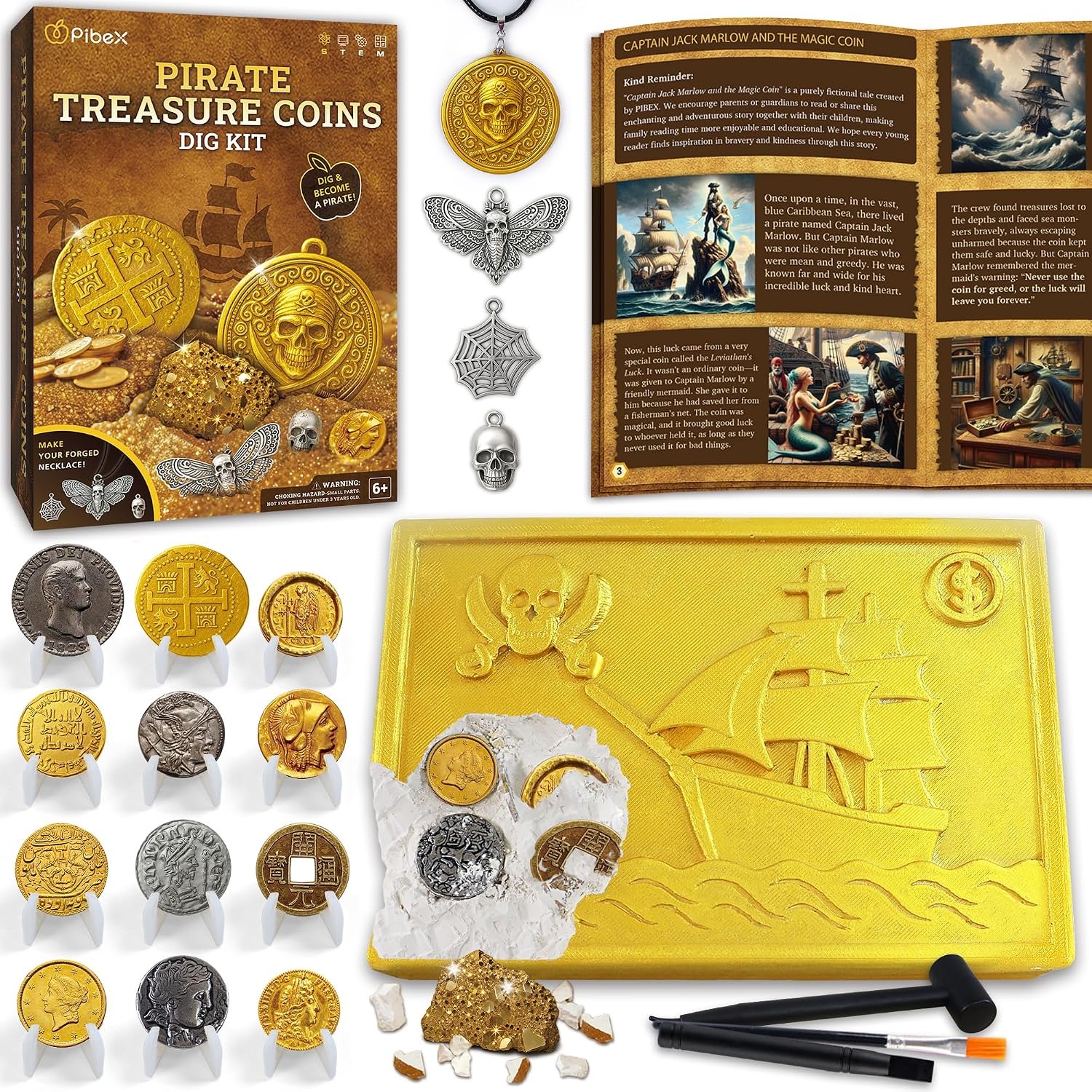
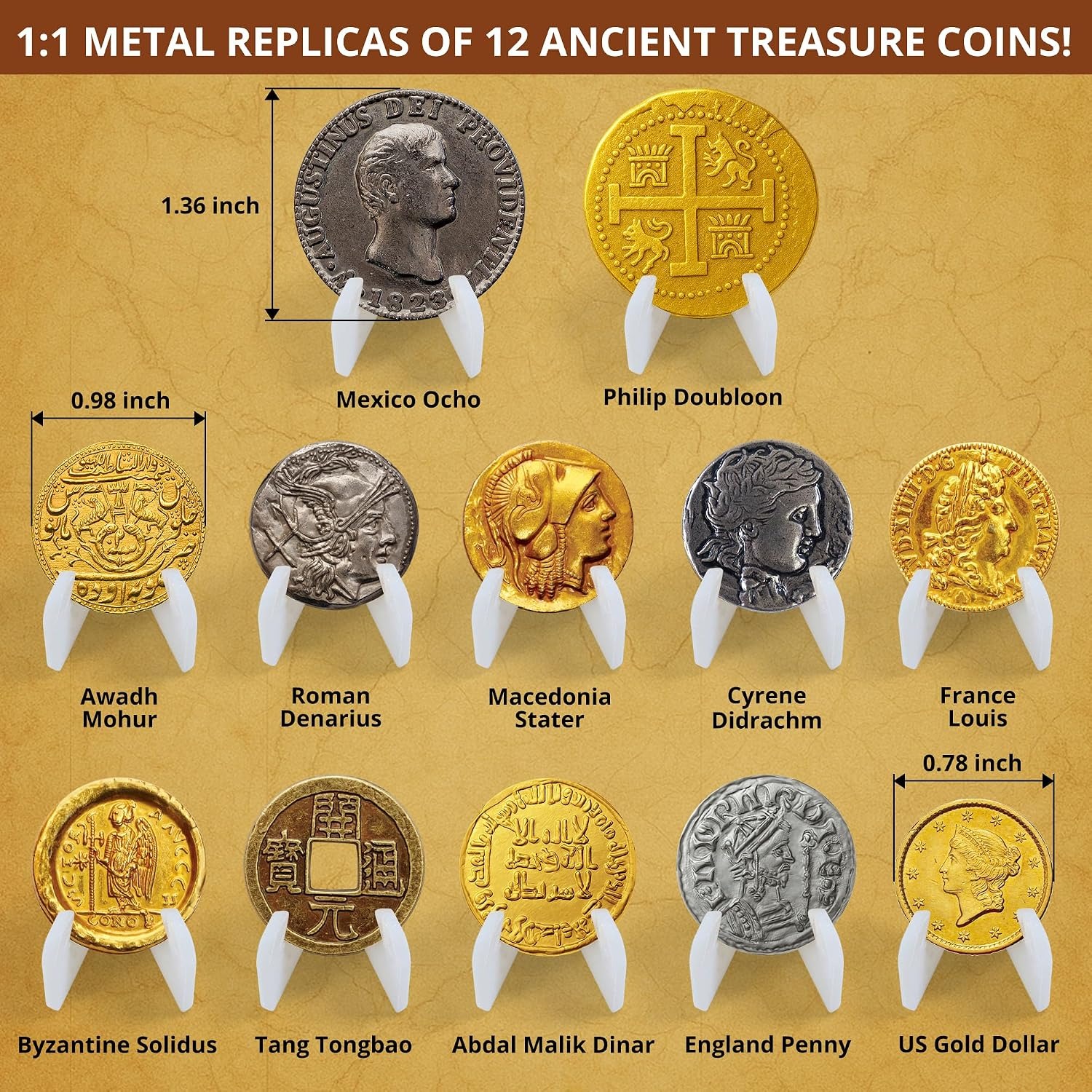
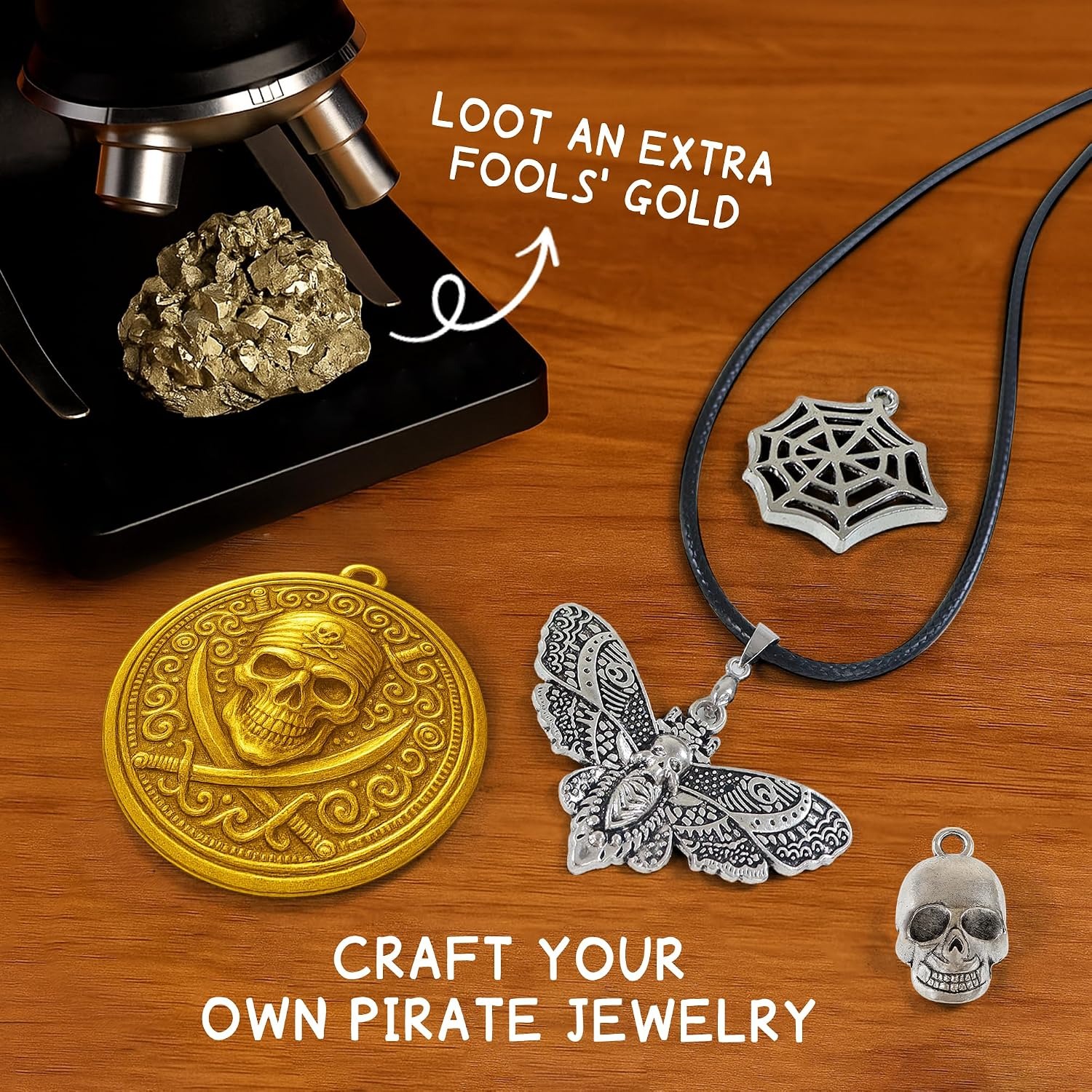
Buried inside are 12 metal coin replicas in gold, silver and bronze styles, Captain Jack Marlow's Magic Coin which PIBEX makes only for this set, three silver-tone charms shaped like a skull, a spider and a butterfly, and a piece of fool's gold. Because the pieces are scattered through the block rather than sitting in one pocket, there is no single "done" moment. There are thirteen or more of them, spread out.
Why metal coins make a difference
This is a small detail that turns out to be a big one. The coins are metal, not plastic.
Pick up a plastic replica and your hand immediately tells you it is a prop. Pick up a metal one and the weight reads as real, even when a child knows perfectly well it came out of a toy box. That weight is why these coins get kept. Plastic treasure ends up in the bin within a month. Metal treasure ends up in a drawer, then on a shelf, then in a proper little collection.
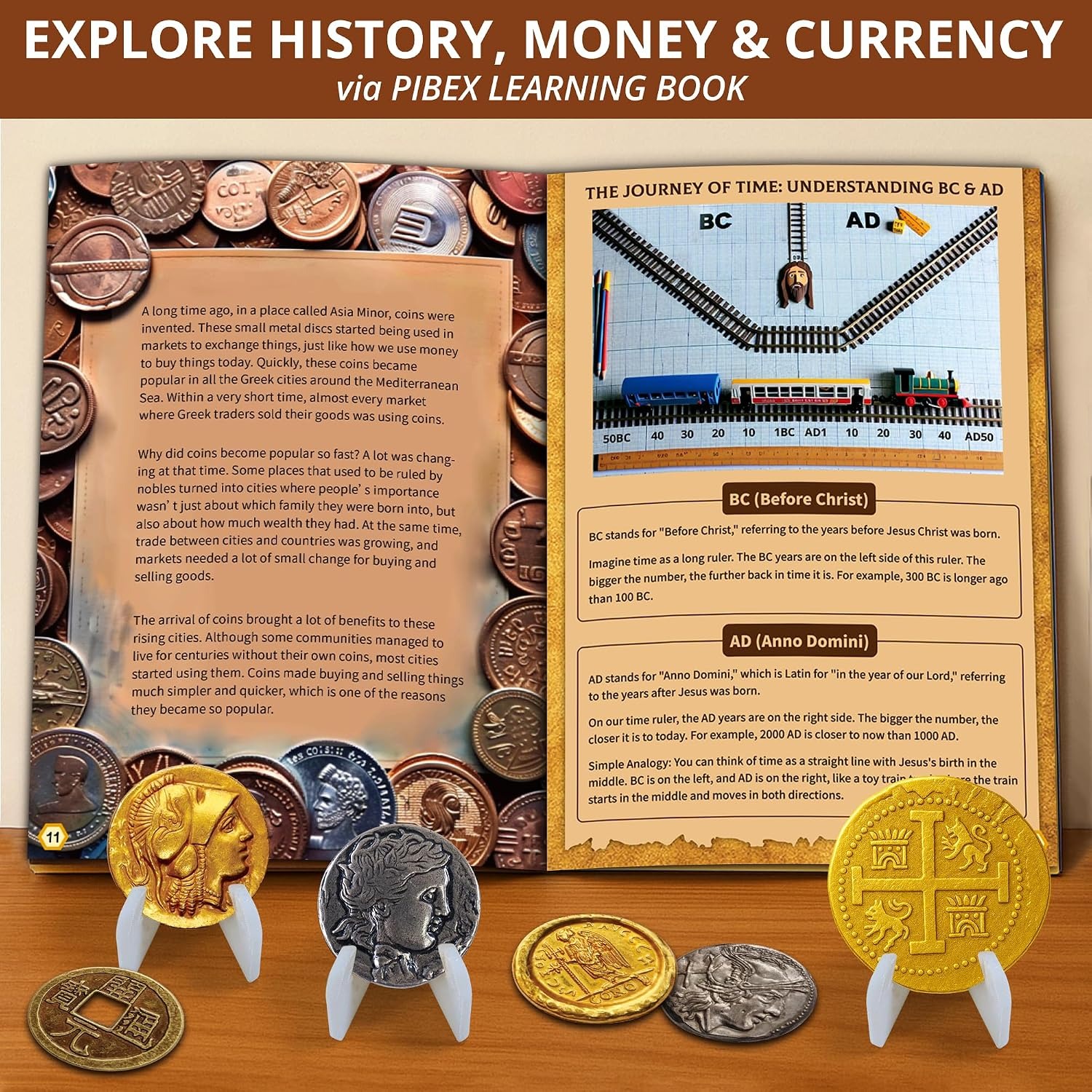
The kit comes with 12 coin stands, which is the piece most people overlook when comparing options. Stands are what turn a handful of finds into a display. A child who can stand their coins up on a windowsill will look at them again next week. A child with coins loose in a pocket will not.
Who this suits
The manufacturer recommends ages 6 and up, and that feels about right. The chipping stage needs enough hand control to work on a small area without hammering, and enough patience to accept that the first five minutes mostly produce dust.
Beyond age, think about temperament. This is a quiet, focused toy. A child who likes puzzles, who sorts things, who asks what things are made of, will take to it straight away. A child who wants fast action and noise may need a parent sitting alongside for the first stretch, which is honestly not a bad outcome either.
It also fits a few specific situations well. Homeschool parents get a ready-made hands-on history session with the booklet doing the explaining. Teachers running a small-group activity get something that keeps hands busy and talk on topic. And on a wet weekend when the screen time argument is already lost, it is a solid reset.
How to choose between dig kits
If you are comparing a few options, these are the things worth checking.
What comes out of the block. Some kits hide a single item. This one has 12 coins plus charms plus a mineral specimen, so there is no anticlimax halfway through. More finds means a longer, better-paced session.
What the finds are made of. Metal, stone and real mineral specimens hold up. Painted plastic usually does not. This is the clearest dividing line between a best archaeology excavation kit and a throwaway.
Whether there is anything to do afterwards. A dig that ends with a pile of items on a table is only half a toy. Coin stands and a necklace chain give the finds somewhere to go. The craft stage here is a genuine second activity, not a token extra.
Whether anything explains what you found. The full-colour booklet with historical coin facts is what separates this from a novelty. It answers the "what is this one?" question that always comes up, and gives a parent something to talk about.
Size and shipping. This kit is 20.09 x 7.29 x 27.38 cm and 780 g, which is easy to wrap, easy to post and easy to store before a birthday.
Setting up for the dig
Five minutes of setup saves half an hour of cleanup.
Work on a tray, an old towel, a sheet of newspaper or outside on a step. Gypsum dust is fine and travels, so containing it from the start is the single best thing you can do. Have a bin bag or a container nearby for the debris.
Supervise the chipping stage, especially at the beginning. Show a child how to work at an angle away from their face and how to tap rather than swing. Once the rhythm is established most kids settle into it on their own.
Encourage breaks. There is no prize for finishing in one sitting, and a dig that stretches across two afternoons tends to be the one a child remembers.
Looking after the coins
Once everything is out, brush the dust off the coins and charms with a soft brush or a dry cloth. Avoid scrubbing. If you want to use a little water, keep it brief and dry each piece completely before storing it.
Put the coins in their stands or keep them together in a small box so they do not scratch each other. Store the charms with the necklace chain so you do not lose a small piece to the back of a drawer.
For the leftover plaster, sweep it up or vacuum it. Do not rinse it down a sink, since plaster can settle and set in pipes.
Gifting it
This travels well as a gift because it works for a wide range of kids and does not need to be explained. The pirate theme does the selling on the outside of the box, and the actual contents are more substantial than the theme suggests.
It suits birthdays, holidays, school holiday boredom, and pirate-themed parties where you want an activity rather than another bag of plastic favours. If you are buying for a party, one kit per child works best, since the digging is the main event and nobody wants to just watch.
The short version
A dig kit is only as good as what is hidden inside it and what you can do once it is out. This one hides 12 metal coin replicas, an exclusive Magic Coin, three silver-tone charms and a piece of fool's gold in a Caribbean-themed gypsum block, then gives you 12 stands, a necklace chain and a full-colour history booklet to make something of the finds.
It is recommended for ages 6 and up, weighs 780 g, and arrives in a box roughly 20 x 7 x 27 cm. Set it up on a tray, give it an afternoon, and you get a genuinely absorbing session plus a small collection that stays on display long after the dust is swept up.