
The complete guide
How to Choose a Construction Race Track Set for Ages 3 to 6
The problem with most toy tracks
Buy a track set for a three year old and there is a decent chance it ends up under the bed by the second week. The usual reason is not quality. It is that the track only makes one shape. Four curves, two straights, snap them together, and there is exactly one thing to build. The child builds it, watches the car go round, and then has nowhere left to go. The toy has no second move.
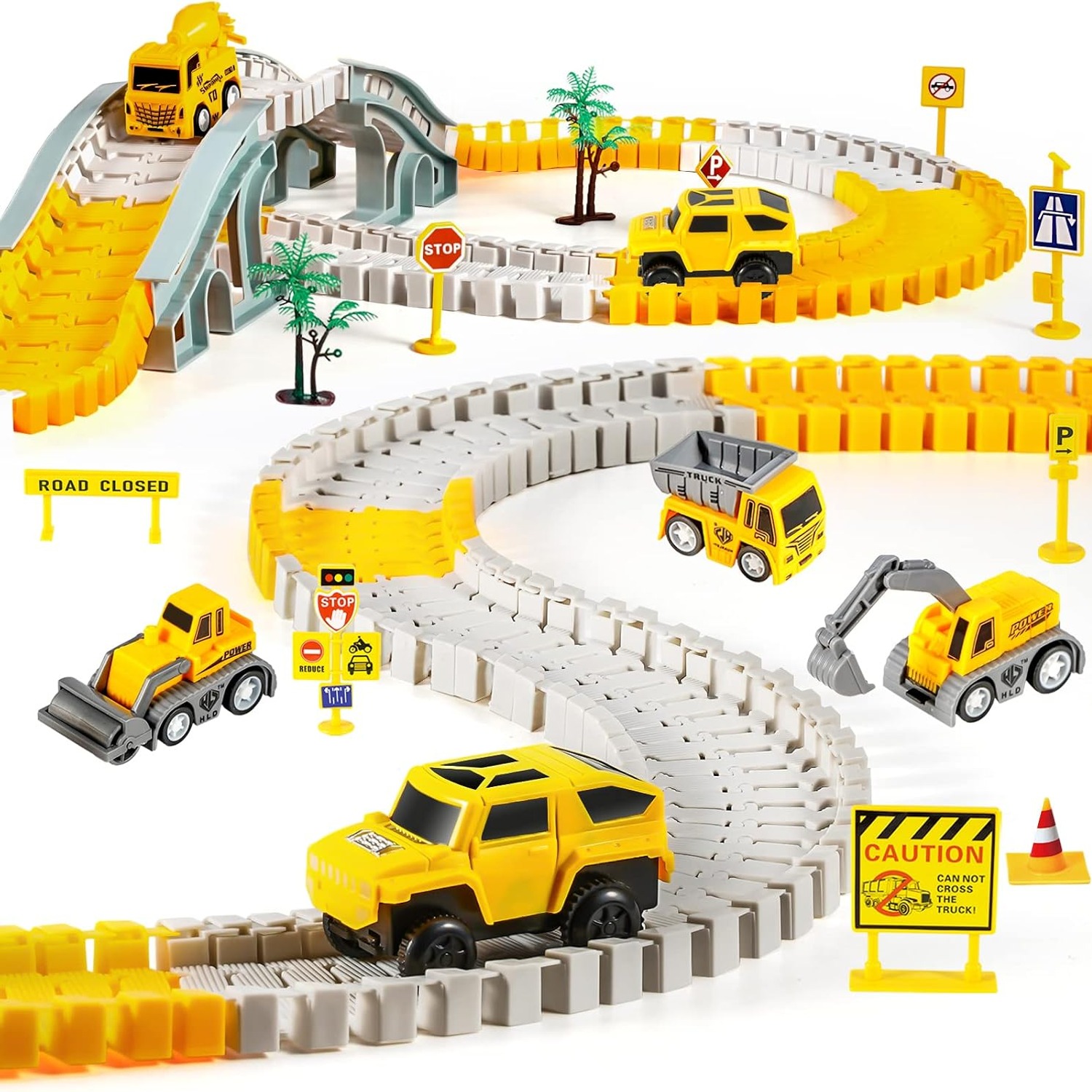
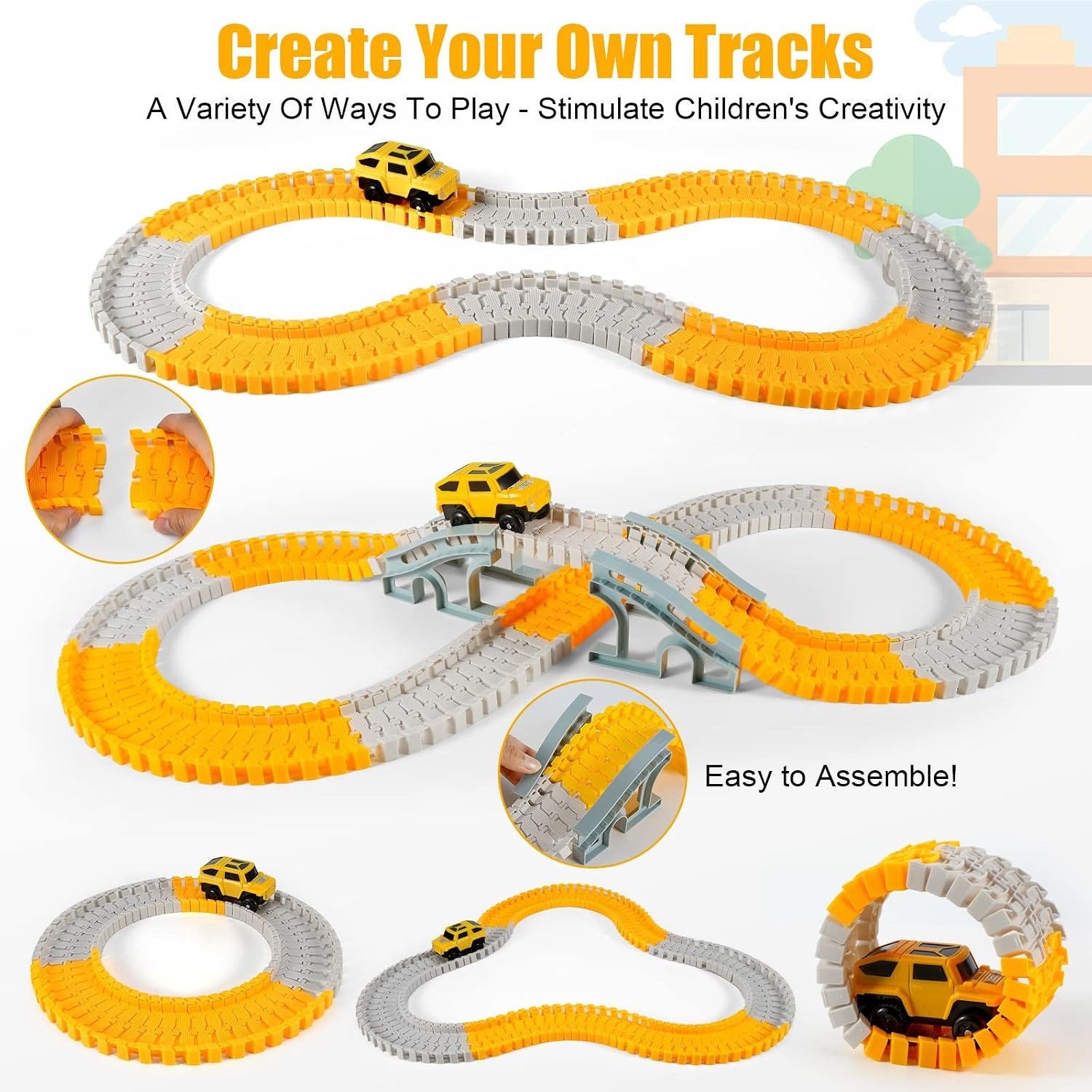
A construction race track with a large pile of generic track pieces solves that in a blunt way. Instead of a kit with a fixed answer, you get a heap of road and a child who has to decide what to do with it. 234 track components is a lot of road. Laid end to end it stretches well beyond what most people picture when they hear the words track set. Laid in a loop with branches and bridges it becomes a small world that can be rearranged every single day.
That is the real difference between a toy that lasts two weeks and one that lasts a couple of years. Not more features. More decisions left to the child.
How this set actually works
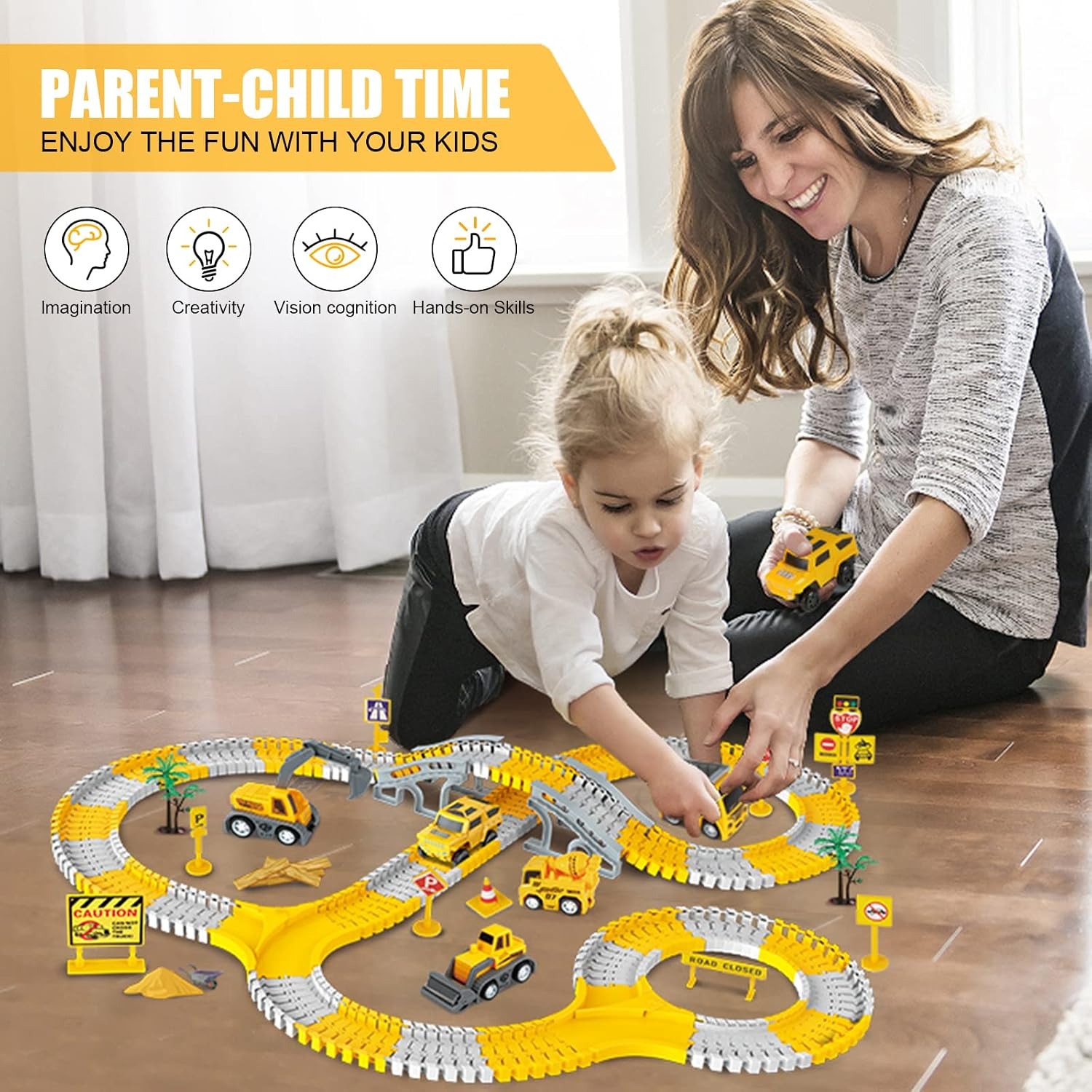
Everything clicks together by hand. Push two sections until they seat, pull them apart when you want to change the route. There are no screws, no tool, and no multi-page instruction booklet. For a preschooler that matters enormously, because the moment a build needs an adult, the child stops being the builder and starts being the assistant.
Beyond plain track there are a few pieces that change what is possible. The two Y-shape tracks split a road in two, so a car can go left or right depending on how the junction is set. The four bridges lift a section above the floor, letting one road cross over another. The roadblock closes a route off. Each of these is small on its own, but together they are the difference between a circle and a map.
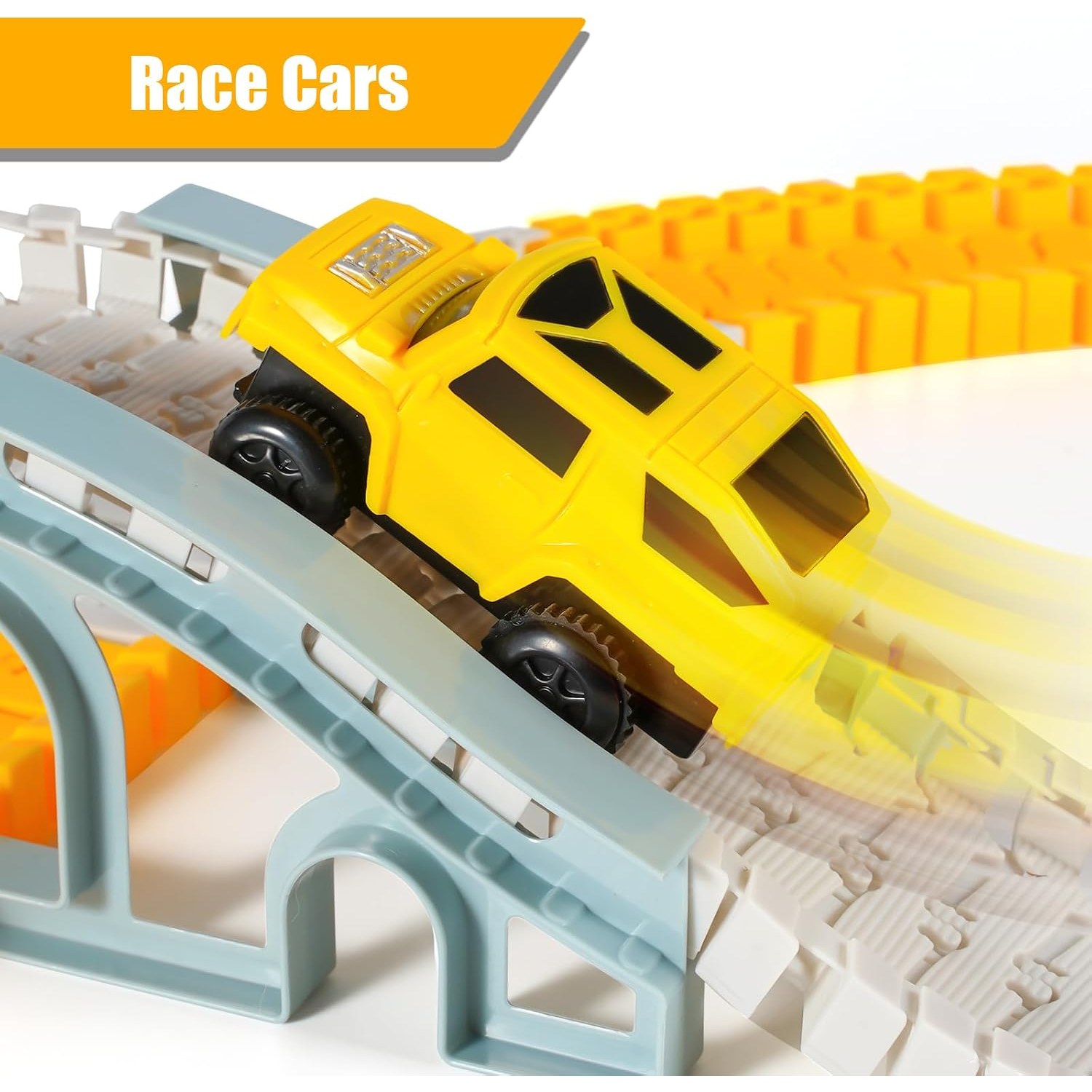
The vehicles split into two groups. Two racing cars run on C batteries, which are not supplied, so pick some up before the big day if this is a gift. Four mini construction trucks are pushed by hand, and each has a movable working arm. Those arms do more work than you would expect. A road roller that rolls and an excavator that digs give a child something to do with the track other than race on it, which is why the set holds the attention of children who are not especially interested in speed.
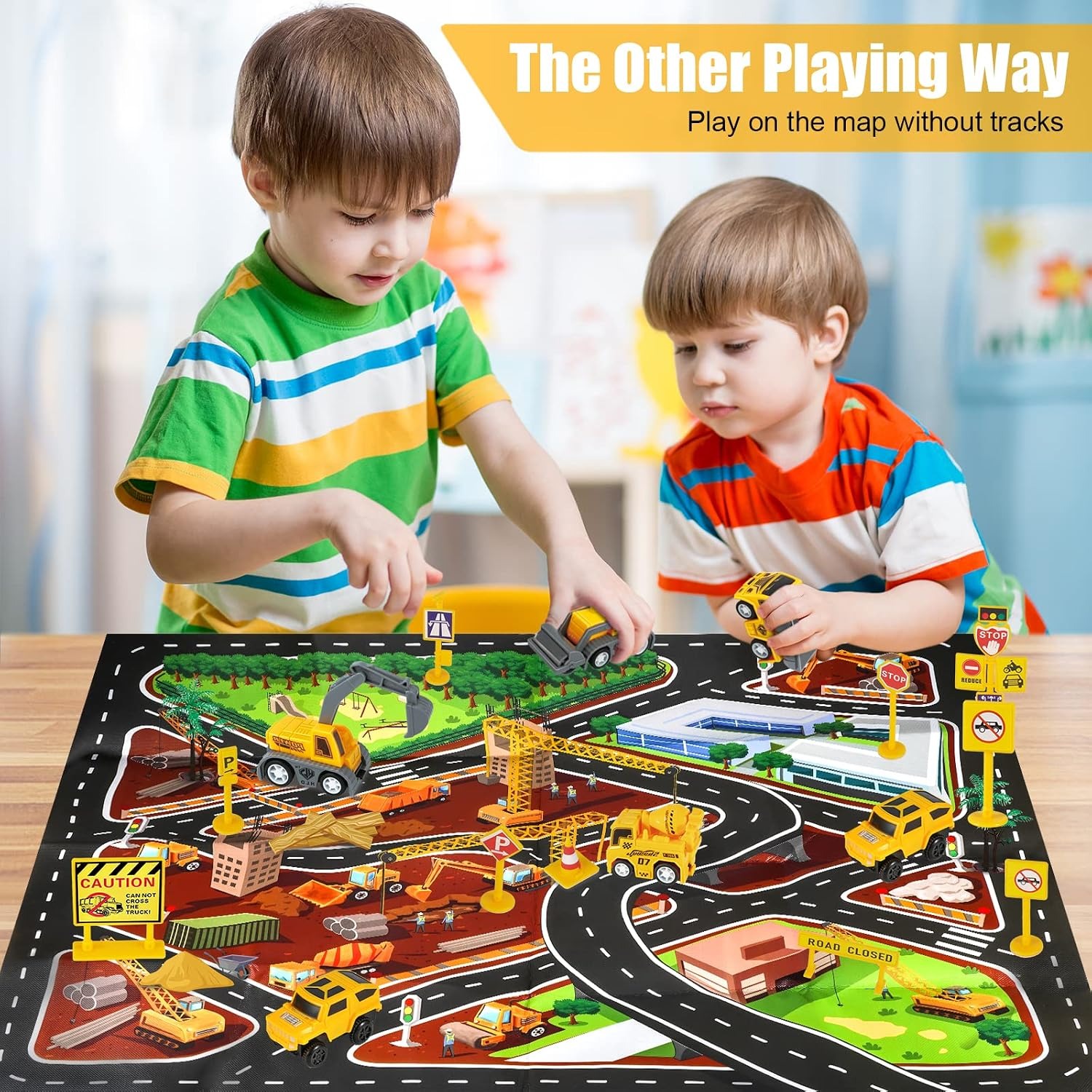
Then there is the scenery. Eight traffic signs, two trees and one oversized map. These are the bits adults skip over in a product list and children use constantly, because they turn a stretch of plastic road into somewhere. A sign at a junction invents a rule. A tree invents a park. The map invents a town. Play shifts from mechanical to narrative, and narrative play is the kind that keeps going.
Who it suits
The recommended age is 36 months to 5 years, and that range is about right. A newly three year old will need a hand with the first layout and will mostly enjoy pushing trucks along whatever you build. By four, most children are building sections themselves and arguing about where the bridge should go. At five and six, the building becomes the main event, with the racing almost an afterthought.
It is a strong fit for a child who already likes diggers, trucks or building sites. It also works for the child who tips out every box they own and combines everything, because loose track pieces slot happily into whatever else is on the floor. If you are hunting for the best construction toys for 3 year olds, the thing to look for is exactly this, parts that can be recombined rather than a single assembled model.
It is not right for a child under three. The set carries a choking hazard warning for small parts, and that warning is there for a reason. If there is a baby or young preschooler in the house, plan on floor play happening when they are not around and on everything going back in a lidded box afterwards.
Choosing between track sets
A few things are worth checking before you buy any track playset, this one included.
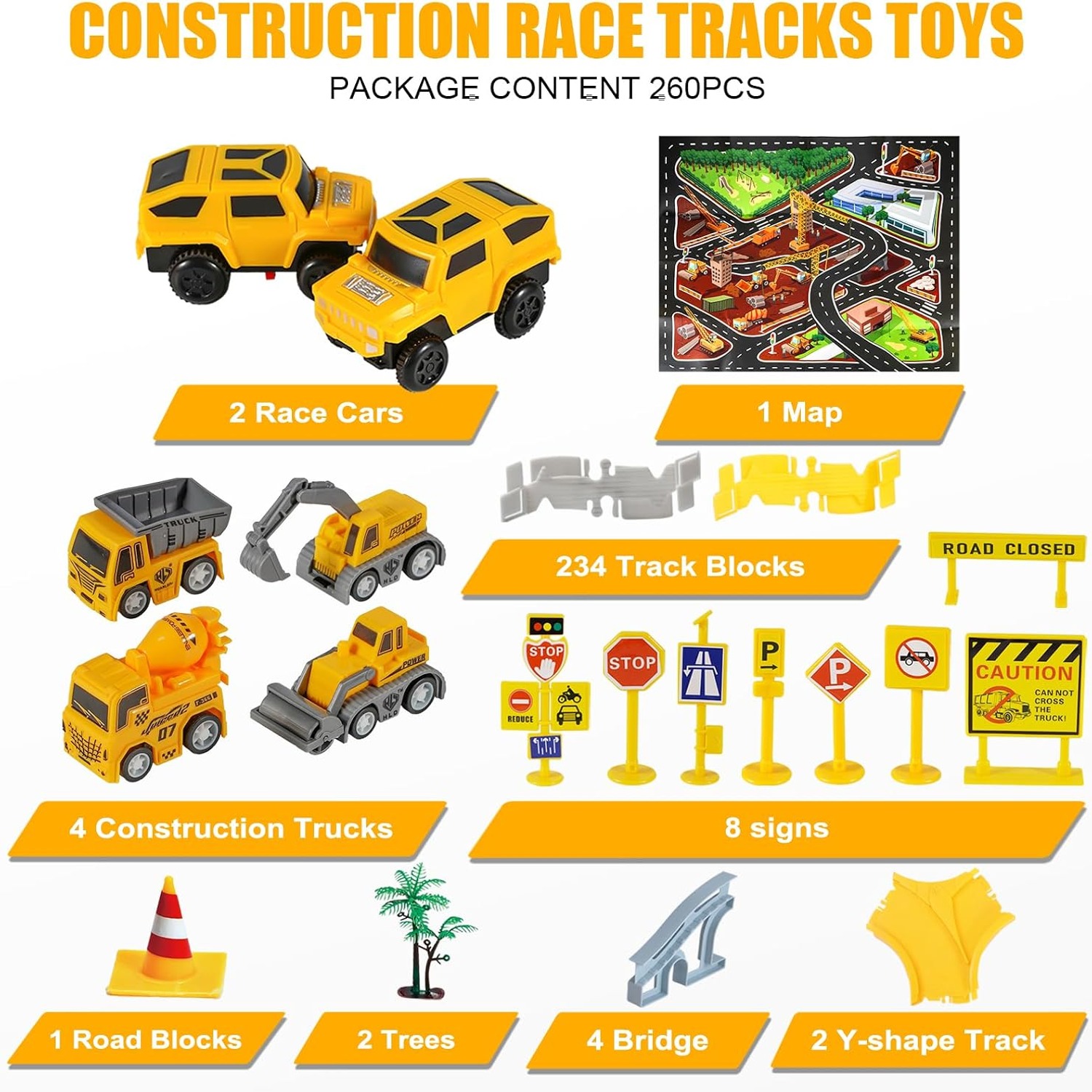
Count the actual track pieces, not the headline number. Plenty of sets advertise a big piece count that turns out to be mostly signs, figures and stickers. Here, 234 of the 260 pieces are track, which is the ratio you want.
Check whether batteries are included and what size. C batteries are less common in the kitchen drawer than AA, so a birthday morning without them is a flat start. Two minutes of planning avoids that.
Think about floor space honestly. A set this size wants a cleared rug, a hallway or a large table. If your living room is tight, the layout will be smaller and that is fine, but the best flexible track playset for a small flat is one that can be built in sections and packed away quickly. This one can.
Consider whether the set does more than one thing. Racing alone gets old. Racing plus digging plus signs plus a map gives a child several ways in, and on a given day they will pick whichever one suits their mood.
Finally, look at how it stores. 260 small plastic pieces loose in a toy box is a recipe for a vacuum cleaner incident. A lidded tub or a zip bag solves it for the price of nothing.
Getting the most out of it
The first build sets the tone. Rather than constructing the whole thing yourself while the child watches, lay two or three sections and then hand over. Ask where the bridge should go. Let a wobbly junction stay wobbly until they notice and fix it. The learning in a set like this is in the fixing.
Try giving the layout a job. A delivery that has to get from one end to the other. A road closure the trucks need to clear. A race where one car takes the bridge and the other takes the long way round. Small prompts like these stretch a twenty minute session into an hour, and after a while children start inventing their own without any help.
Rotate it. If interest dips, pack the set away for a few weeks and bring it back out. Toys that come back feel new, and a track set that can be built differently every time benefits from that more than most.
Care and keeping it going
Wipe the pieces with a slightly damp cloth when they get grubby, then dry them properly. Keep water away from the battery-powered cars, and never put any part in the dishwasher, since hot water warps thin plastic and the connectors stop seating properly.
If the set is going into storage for a season, take the batteries out of the racing cars. Leaving them in is how you discover a leak six months later. Check the track pieces now and then for cracks or split connectors, and retire anything with a sharp edge rather than taping it.
Keep a parts list handy. Knowing there should be 234 track components, 2 racing cars, 4 mini construction trucks, 8 traffic signs, 2 Y-shape tracks, 2 trees, 4 bridges, 1 roadblock and 1 map makes it far easier to notice early when something has gone missing under the sofa.
The short version
This is 260 pieces, mostly track, built around a construction site theme for children aged roughly three to six. Six vehicles, two of them battery powered racing cars needing C cells you supply yourself, four of them hand-pushed trucks with arms that move. Bridges, junctions, signs, trees and a map fill in the world around the road.
It is plastic, it weighs 0.82 kg, it ships in a 10 x 6 x 30 cm box, it is made in China, and the maker lists no warranty. What it offers in return is a toy with no single correct answer, which is usually what separates the sets that stay in use from the ones that quietly disappear.