

The complete guide
Take Apart Trucks, A Buyer's Guide For Parents And Gift Givers
The toy that gets ignored after a week
Every house with young children has a graveyard of toy vehicles. They were exciting for a few days, then they rolled under furniture and stayed there. The problem is not the child's attention span. It is that a toy with one function runs out of things to show you.
A take apart truck solves this in a simple way. The vehicle is not the finished thing, it is the puzzle. A child undoes it, looks at the parts, and puts it back. Then does it again. The toy resets itself every single time, which is why these sets tend to survive long after the push-along trucks have gone quiet.
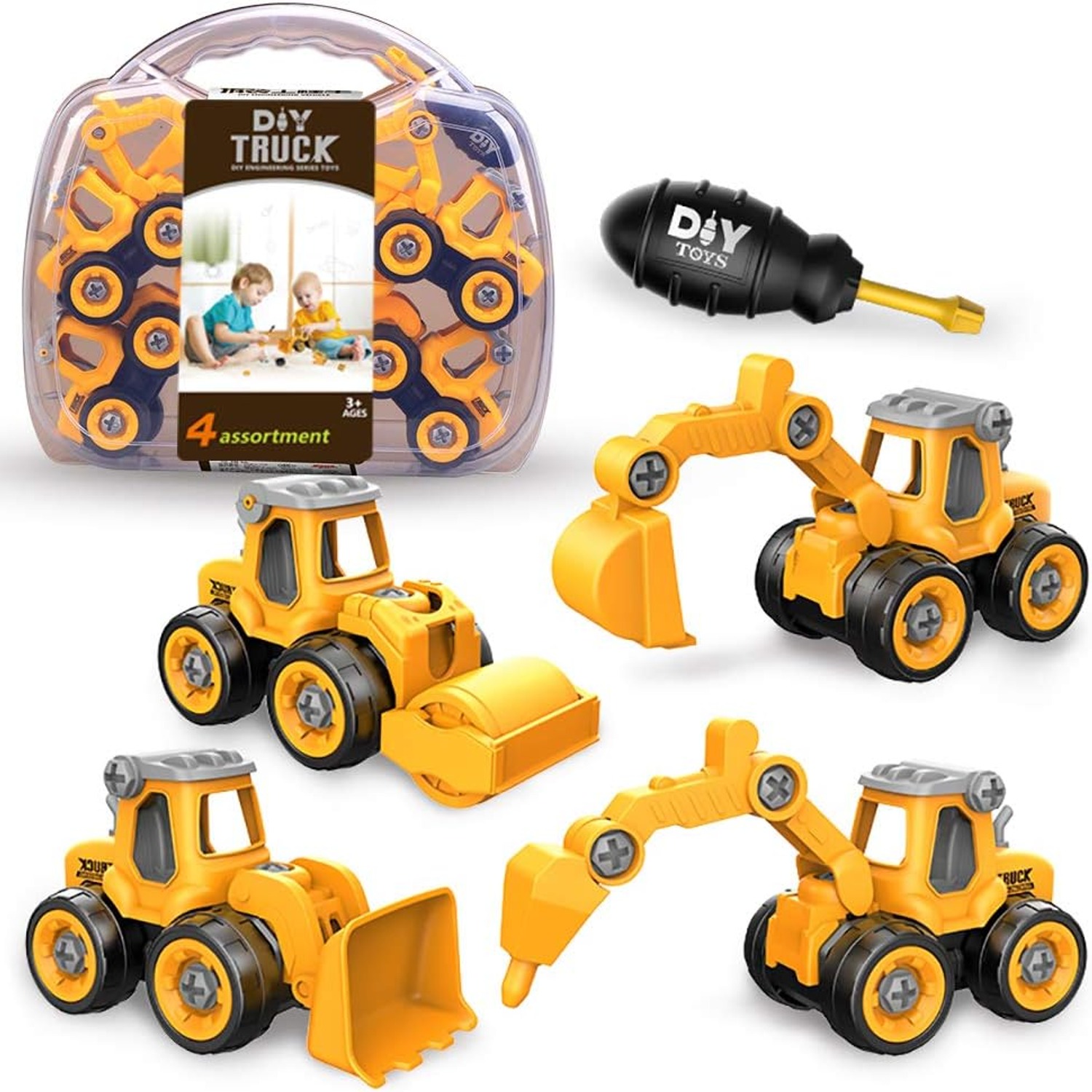
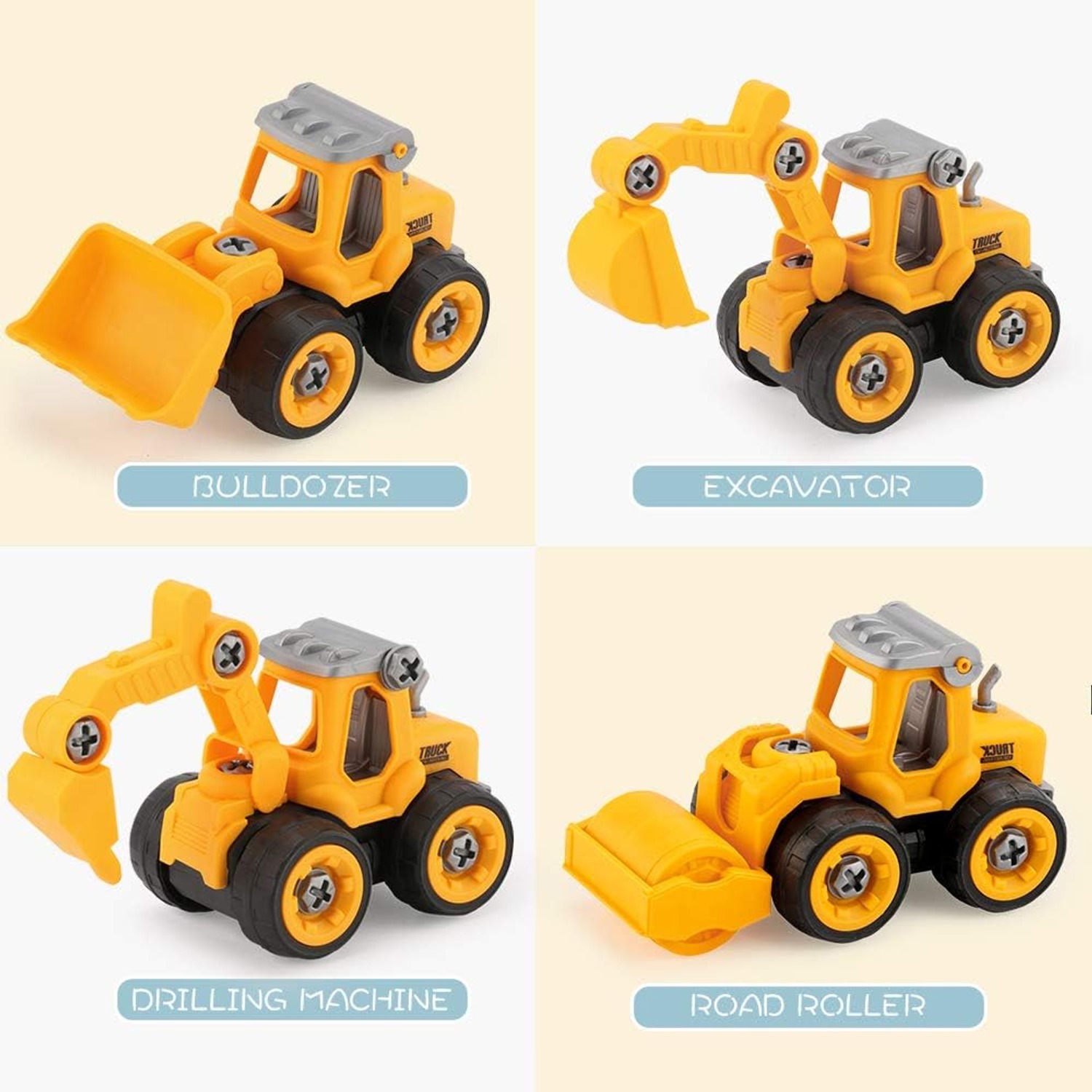
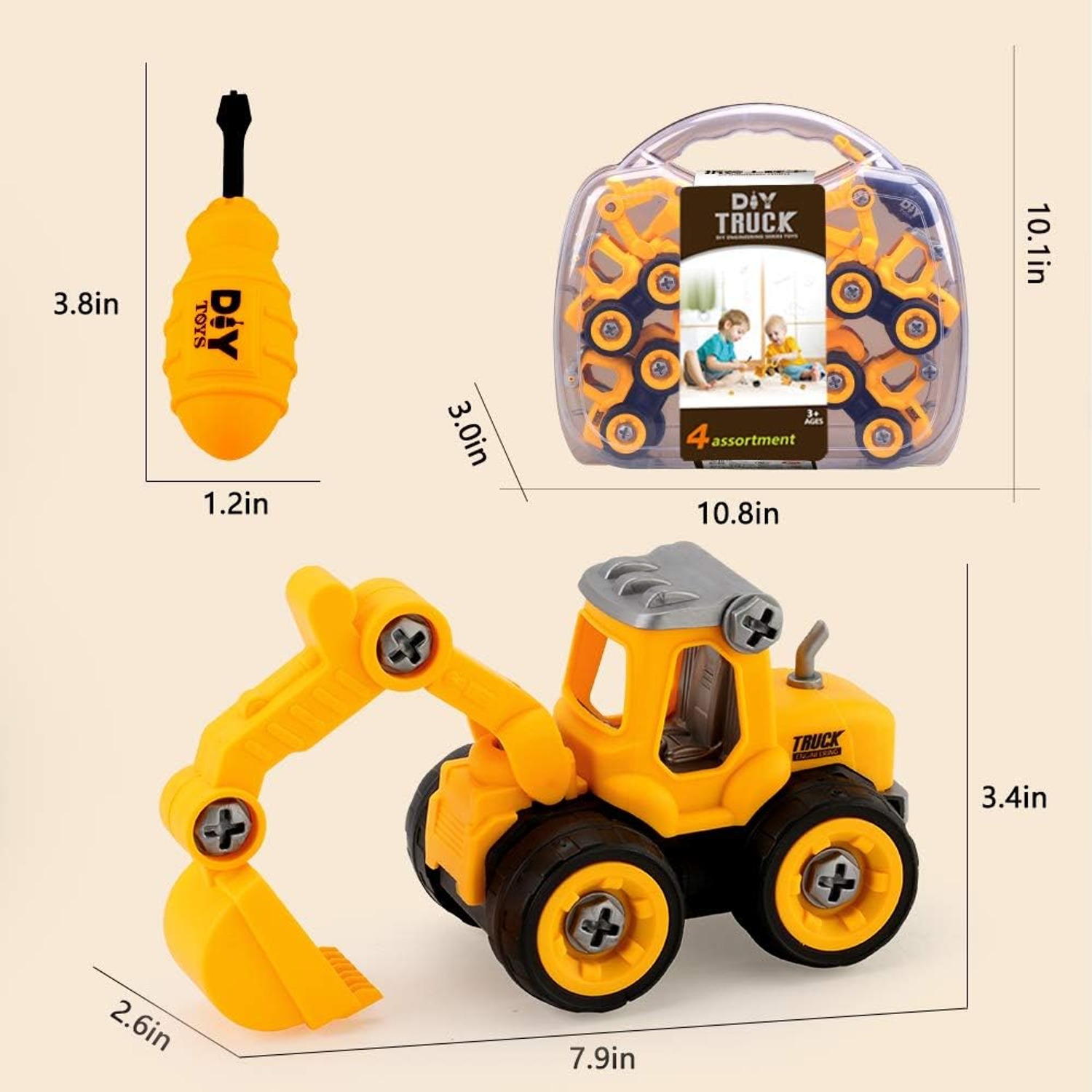
This particular set includes four vehicles, a bulldozer, an excavator, a drilling machine and a road roller. Four different shapes means four different problems to work out, not the same one repeated.
How take apart trucks actually work
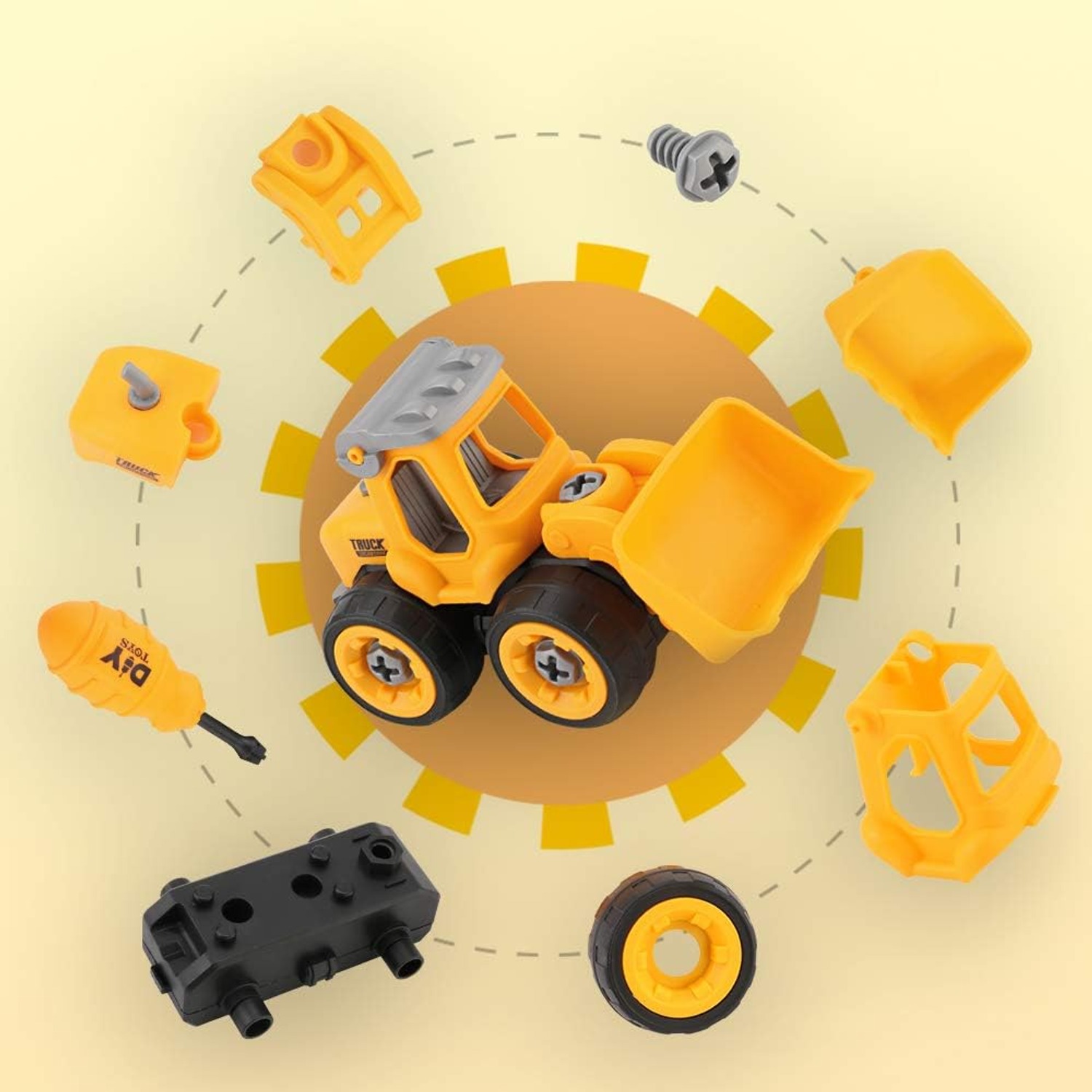
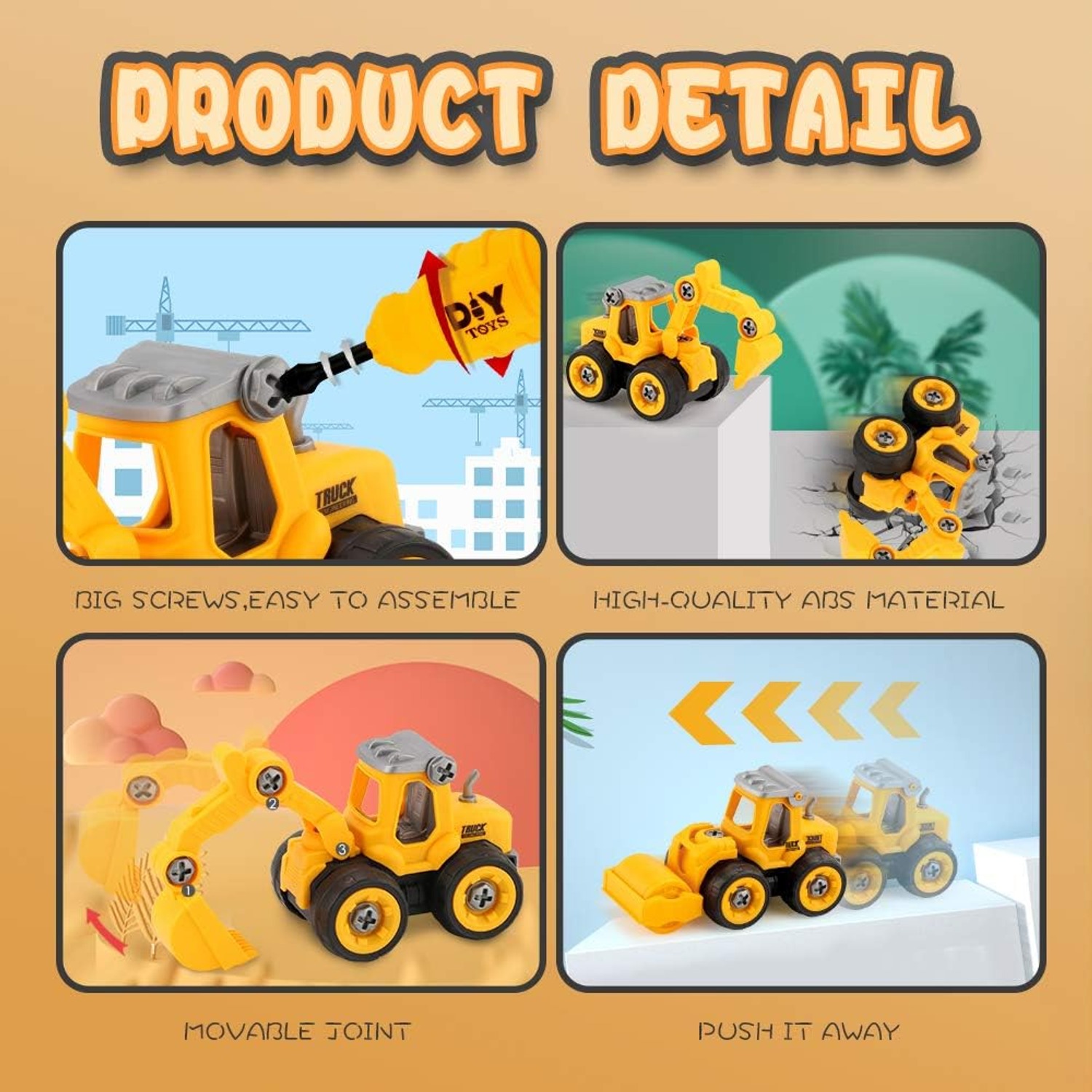
The principle is straightforward. Panels, wheels and body sections are held on with screws rather than glued or moulded shut. A child uses a small screwdriver to loosen them, lifts the pieces off, and the truck becomes a pile of parts. Reversing the process rebuilds it.
What a child learns along the way is less obvious but more useful. They have to notice which piece goes where, which means looking carefully at shape and fit. They have to hold the vehicle steady with one hand while turning with the other, which is a genuine coordination challenge for a three year old. And when a part refuses to sit flat, they have to work out why rather than force it.
That last bit is the real value. A child who gets something wrong, notices, and fixes it is doing the same thinking an engineer does, just at a smaller scale. The listed educational objectives for this set are logical thinking, STEM and team building skills, and those are earned fairly.
Operation is manual. Nothing happens unless the child makes it happen, which keeps them in charge of the pace.
Who it suits
The manufacturer recommends 3 years and up. In practice the set works across a wide span, and children get different things from it depending on where they are.
A three year old will mostly need company. They will manage some screws, lose patience with others, and be delighted when the wheels go back on. The win at that age is the handling practice and the time sat beside an adult doing something together.
A four or five year old usually starts working independently. They remember the sequence from last time, they recognize which panel belongs to the excavator, and they start timing themselves. This is the sweet spot, and it is why the set is so often chosen as the best birthday gift for a 4 year old with a digger obsession.
Six and above tends to go one of two ways. Either the child starts mixing parts between vehicles to invent new machines, or they move on. Both are fine outcomes for a toy that has already been rebuilt fifty times.
It suits any child, regardless of gender. Unscrewing things and solving a shape puzzle has nothing to do with who the toy is marketed at.
What to look at when choosing a set
If you are comparing take apart toy vehicles, a few things actually matter and a lot of the marketing does not.
Number of vehicles. One truck is a short-lived toy. Four gives rotation, and it means two children can play side by side without a fight. This set includes four.
Material. The plastic here is Acrylonitrile Butadiene Styrene, commonly called ABS. It is rigid, it holds screw threads reasonably well, and it is the standard choice in this category. The product description also notes rounded edge shaping on the parts.
Whether it rebuilds cleanly. Some cheap sets come apart beautifully and then never quite go back together. Look for sets where the screw points are moulded in rather than added as an afterthought.
Storage. This is underrated. A set with twenty loose pieces and no box lasts about three weeks before half the screws vanish. This set comes with a carry box, which keeps everything together and makes the whole thing portable.
Noise and power. Manual operation means no battery replacement every month and no electronic jingle on loop. If you share a small space, that matters more than you expect.
Making it last
A few habits extend the life of any take apart toy set considerably.
Teach the child to stop turning once a screw feels snug. Overtightening is the main cause of worn plastic threads, and children naturally assume tighter is better. One clear explanation early on saves a lot of wobbly panels later.
Pack the box at the end of every session. Treat it as the last step of the build rather than tidying up, and children usually go along with it. A small bag inside the box for loose screws helps even more.
Clean with a damp cloth and dry it off. Do not soak the vehicles, because water trapped inside hollow sections takes ages to leave and can loosen things. Keep the set out of direct sun and away from radiators so the yellow plastic keeps its colour.
If a screw does go missing, a hardware shop will usually have something close. One lost screw does not have to end a truck's life.
Getting the most out of it
Resist the urge to build it for them. Hold the vehicle steady, let the child turn the tool, and ask questions instead of giving answers. "Where do you think that one goes?" gets a lot further than pointing.
Try setting small challenges once they are confident. Rebuild the bulldozer without looking at the picture. Take apart two vehicles, mix the pieces, and sort them back. Time a rebuild and try to beat it. These cost nothing and add weeks of interest.
Pairing children works well too. One holds, one turns, then they swap. That is where the team building side comes in, and it tends to produce more talking and negotiating than solo play does.
If your child already enjoys blocks, this is a natural companion. Blocks are open-ended with no right answer. A take apart truck has a target to reach, so it teaches following a plan and checking your work. Children benefit from both kinds of play.
The short version
This is a four vehicle take apart set from JoyGrow, covering a bulldozer, an excavator, a drilling machine and a road roller. It is made from ABS plastic, finished in yellow with a construction theme, and recommended for ages 3 and up. Operation is manual and everything packs into a carry box for travel and storage.
It suits children who like taking things apart, families who want a toy without a screen or a soundtrack, and gift givers who want something that still gets used in March. If your child has ever tried to get the back off a remote control, this is the toy they have been waiting for.