
The complete guide
Choosing a Drill and Build Block Set, A Parent's Guide
The problem with most building toys
Plenty of block sets sit unused after two weeks. The reason is usually the same. The child builds the one thing on the box, admires it for a minute, and then has nowhere left to go. Once the novelty of the pictured model wears off, the pieces end up loose in a drawer.
There is a second problem that parents notice earlier than they admit. Children are fascinated by tools. They watch an adult tighten a hinge or assemble a flat-pack shelf and want to be part of it. Handing a real screwdriver to a four year old is not an option, so the interest gets redirected into whatever is at hand, which is often a piece of furniture that was not meant to come apart.
A drill and build block set addresses both problems at once. It is open-ended, so there is no single finished state. And it gives children a tool that works, in a form made for them to hold.
How this set actually works
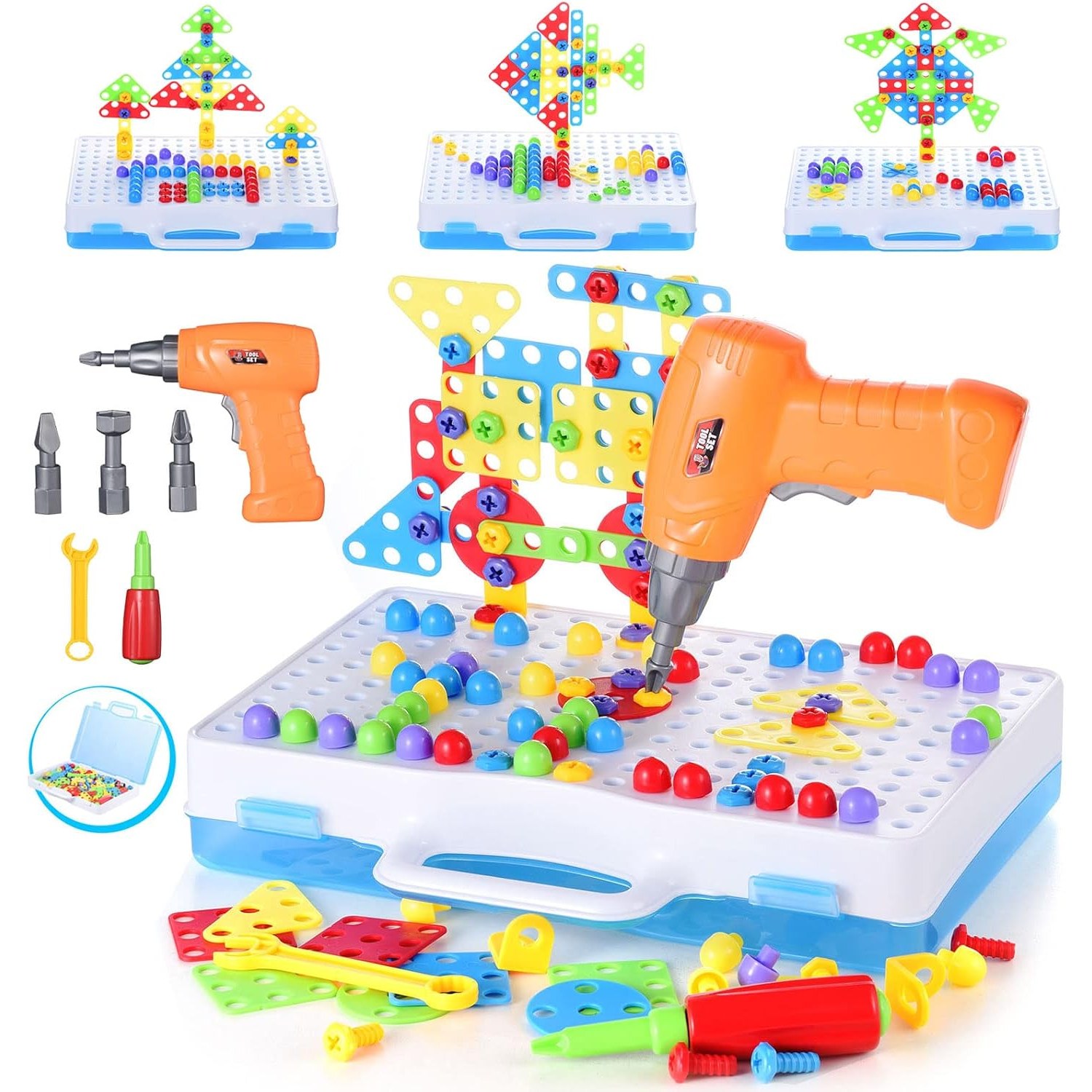
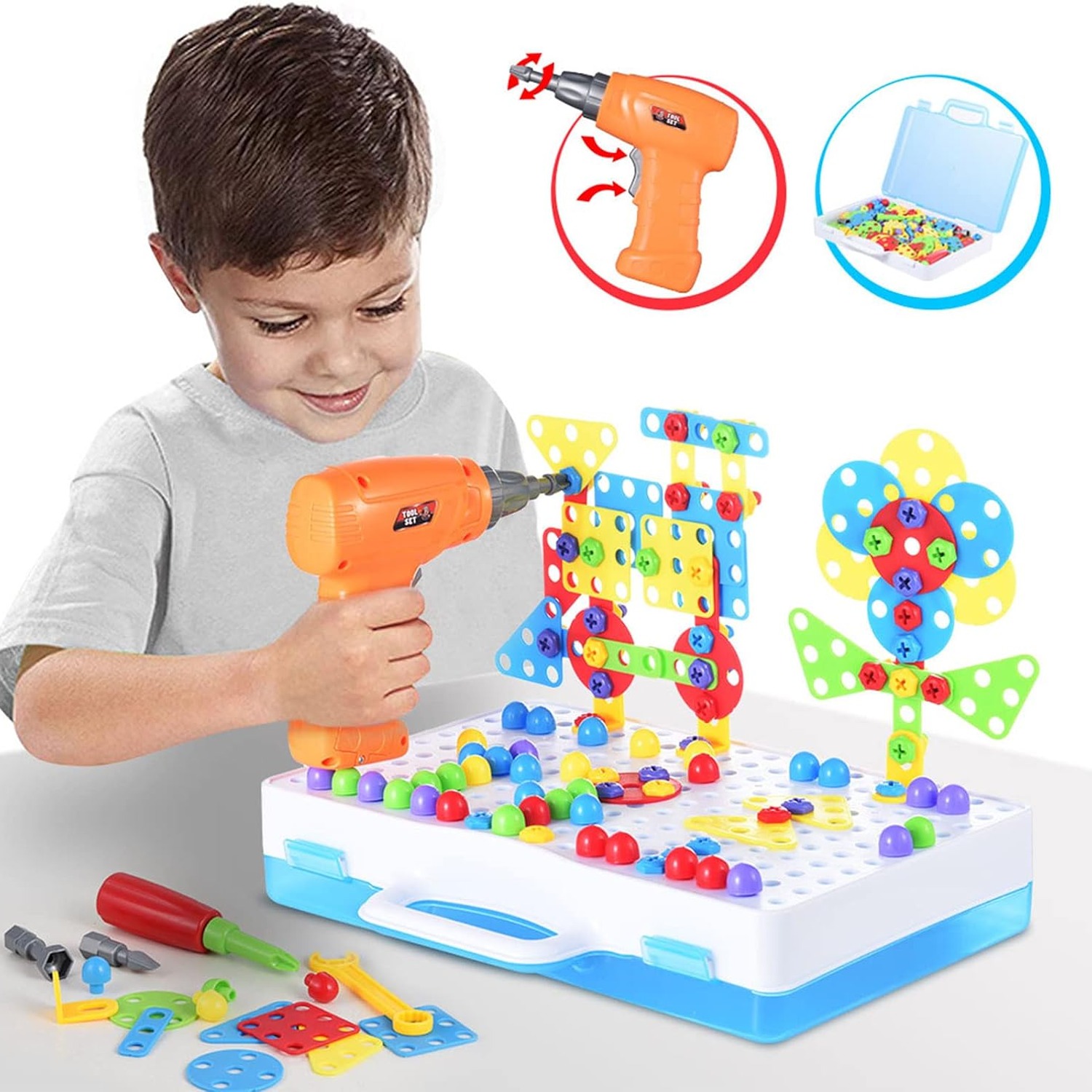
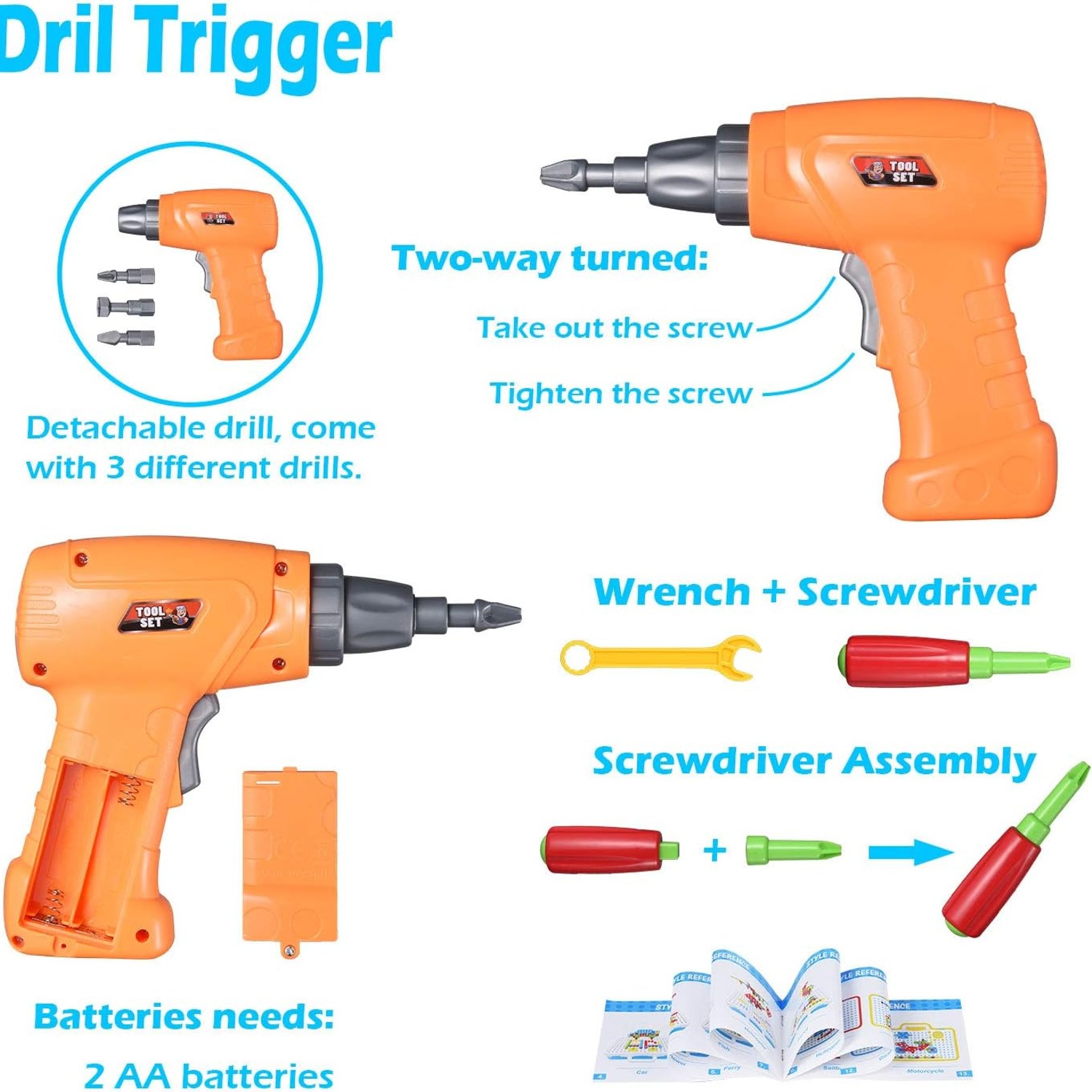
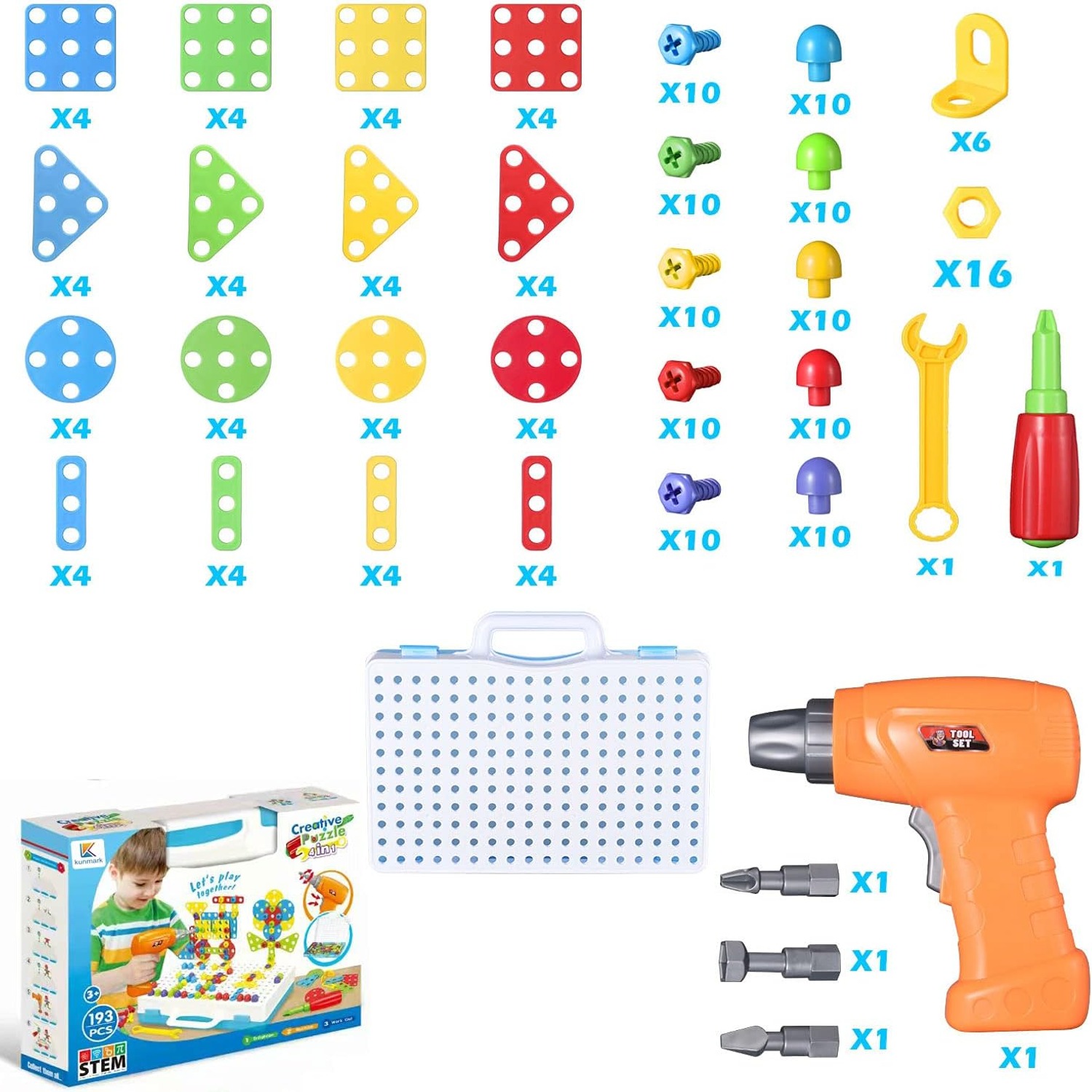
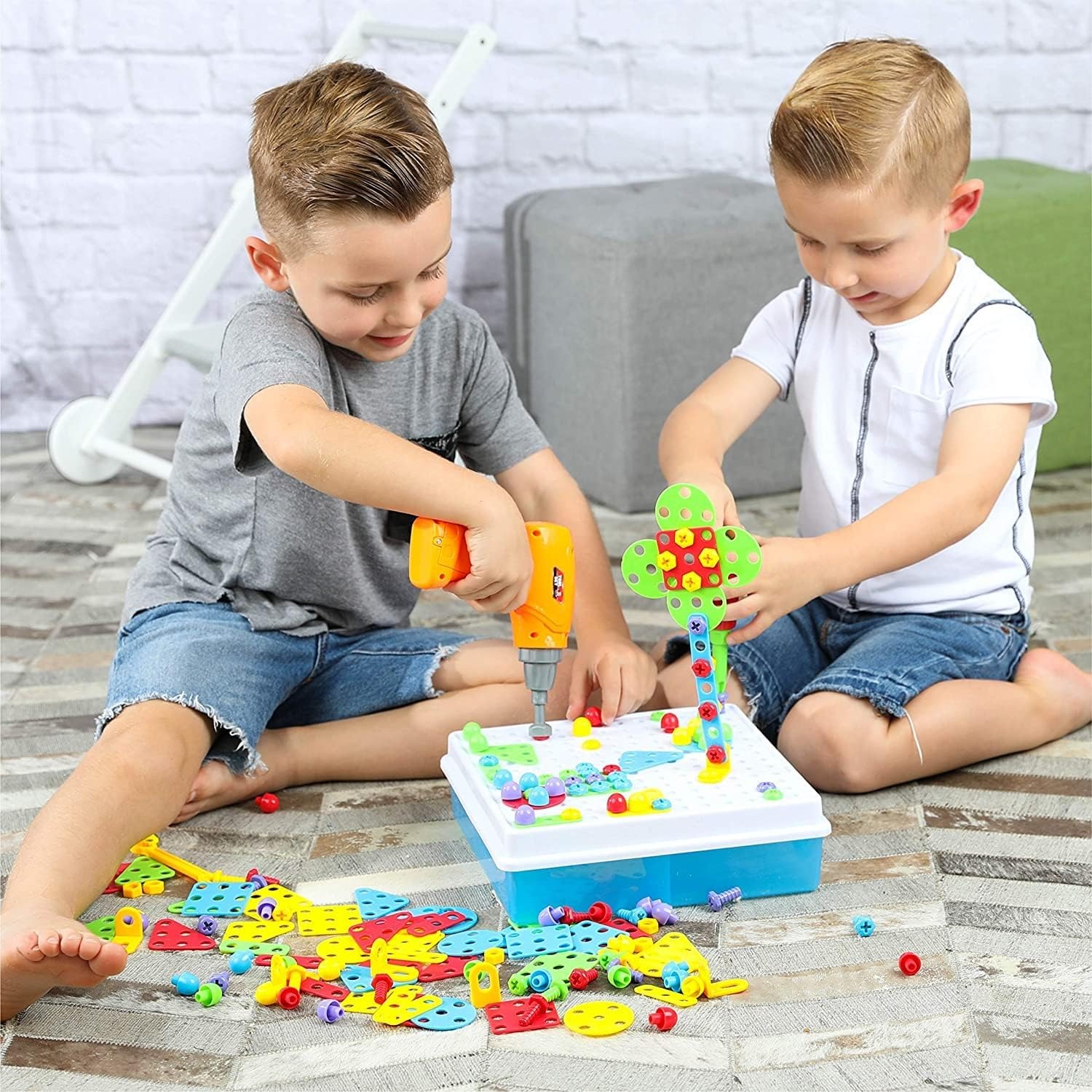
The kit contains plastic blocks in a range of colours and shapes, three screw shapes, a hand screwdriver and a battery-powered toy drill. The blocks have holes that line up. The child slots two pieces together, picks a screw, and drives it home with either tool. The joint holds. When they want to change the design, they reverse the drill and the screw backs out.
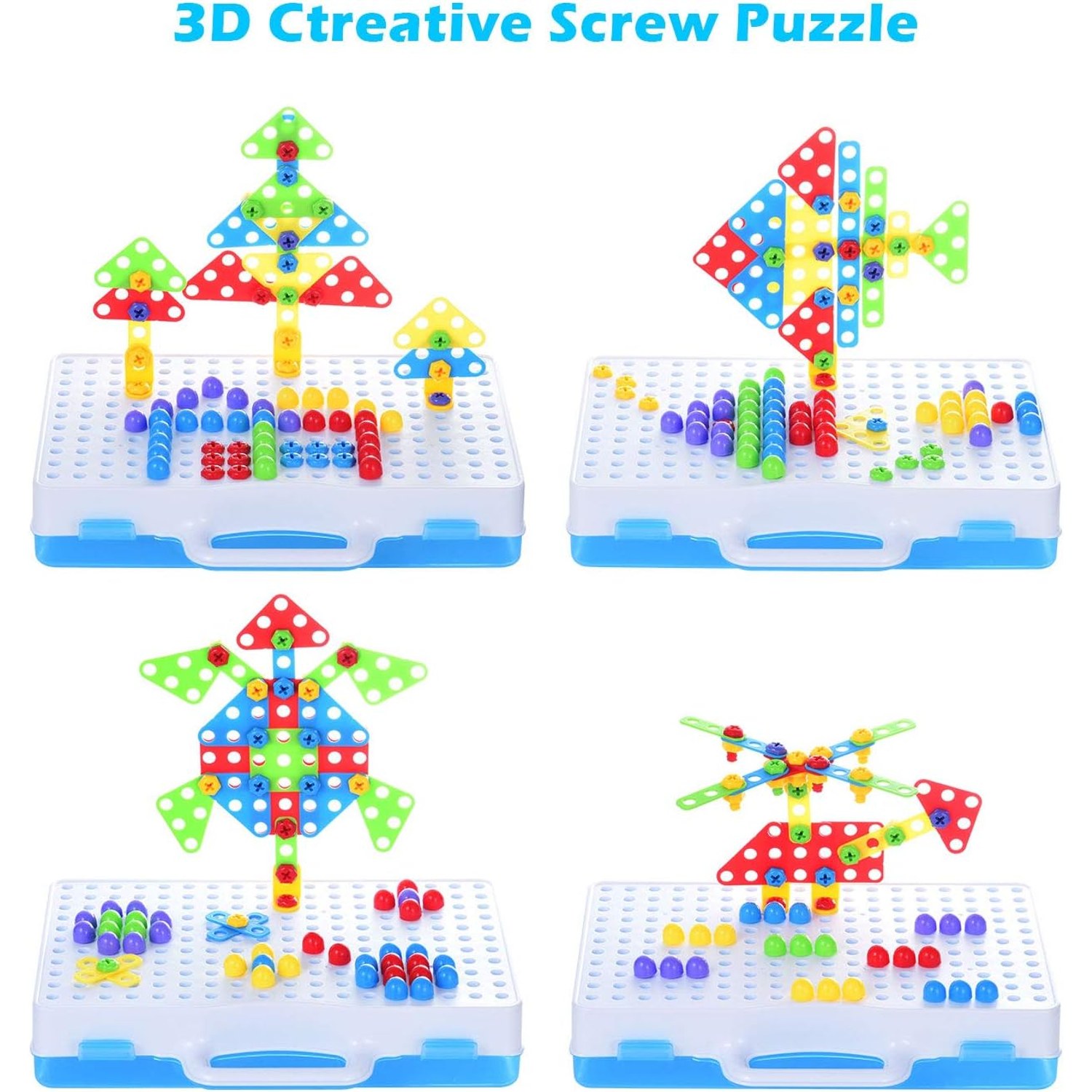
That cycle of build, test, undo and rebuild is the whole point. It is also what separates this from a stacking toy. Stacking rewards balance. Screwing things together rewards planning, because a child has to think about where a joint needs to go before committing to it.
The drill runs on 2 x AA alkaline batteries. The screwdriver needs nothing, which turns out to be useful more often than you would guess. Batteries die at inconvenient moments, and a set that collapses into uselessness when that happens is a frustrating set. Here the building simply continues by hand.
Kunmark lists the educational aims as creative thinking, logical thinking, motor skills, problem solving and STEM. Those labels appear on a lot of toys. What makes them credible here is that the activity genuinely demands them. A wobbly joint is a problem to solve. Choosing which screw shape fits a given hole is a small logic task. Holding a block steady with one hand while guiding a screw with the other is fine motor work, repeated dozens of times in a sitting.
Who it suits
The recommended range is 36 months to 8 years, and that is a wide band for a reason. The experience changes as a child grows.
At three, most children need an adult nearby. They can press the drill trigger and watch the screw turn, but lining up the hole is fiddly. The win at this age is the feeling of operating a real tool, not the finished model.
By four or five, independence arrives. Children start making deliberate shapes rather than random assemblies, and they begin to plan two or three steps ahead. This is where the best building sets for 4 year olds earn their keep, because the child no longer needs a grown-up to make progress.
From six to eight, the interest shifts towards complexity. Builds get bigger, children start copying things they have seen in the real world, and they take pride in a model that holds together when lifted. Some kids at the top of the range will outgrow it. Others keep going because the set never tells them they are finished.
It also suits a particular kind of child regardless of age. If you have one who dismantles the remote control, one of the best take apart construction toys is a far better outlet than a lecture.
What to look for when you compare sets
A few things matter more than the piece count when you are comparing a building set with toy drill against the alternatives.
Screw size is the first. Screws that are too small are a genuine frustration for young hands and a choking risk besides. Larger screws with distinct shapes, as in this set, are easier to grip and easier to match to the right hole.
The second thing is whether a manual option exists. A powered drill alone makes the whole kit dependent on batteries. Having a screwdriver in the box means the toy still functions on a Sunday night when the shops are shut.
Third, look at storage. Loose construction pieces are the number one cause of a set disappearing. A lidded plastic container that holds everything, like the one included here, buys you years of use that a cardboard box will not.
Fourth, consider whether the set pushes a single model or invites free building. Fixed-model kits can be satisfying, but they have a shorter life. Open-ended sets get rebuilt.
Setting it up for the first session
Fit the batteries before you hand the drill over. An excited child waiting while you hunt for a screwdriver to open the battery compartment is a bad start.
Then count what is in the tub. Knowing roughly how many screws you began with makes it much easier to tell whether anything has gone under the sofa at the end of the day.
For the first build, keep it simple. Two blocks and one screw. Let them do the driving and only hold the base steady. The temptation to build something impressive yourself is strong, and it is also the fastest way to make a child lose interest. Their lopsided three-piece creation matters more to them than your neat one.
Set a rule about where the set lives. Indoors, on a hard floor or a table, is best. Carpet swallows screws and outdoor play loses them completely. The maker lists this as an indoor toy, and that is sensible advice rather than a technicality.
Care and keeping it usable
Plastic blocks are forgiving. A damp cloth handles most of it, and a dry towel afterwards stops water sitting in the screw holes. Nothing from this set belongs in a dishwasher, a washing machine or a microwave.
The drill needs a little more care. Keep it away from water entirely. If the set is going into storage for a season, take the batteries out first. Leaking cells ruin a battery compartment and that is usually the end of the drill.
Make putting pieces back in the container part of the game rather than a chore that follows it. Some families make a quick count into a race. Whatever works, the goal is that the set arrives at next weekend complete.
The short version
This is a construction kit built around tools rather than around a picture on a box. Plastic take-apart blocks, three screw shapes, a hand screwdriver and a battery-powered toy drill, all in a storage tub, aimed at ages three to eight.
It works because it does not run out. There is no finished model to reach and then abandon. A child builds, takes it apart, and builds something else, and along the way gets real practice in hand control, planning and patience.
If you have a child who wants to help whenever you pick up a tool, this gives them a version of that job they can actually do. Some details, including colour and country of origin, are not specified by the maker, so ask us if those matter to you before you order.