
The complete guide
Choosing a Kids Tool Set, A Practical Buyer's Guide
The problem with most toy tool sets
A lot of children's tool sets look great in a photograph and then fall flat in a living room. The usual reasons are simple. There are three or four pieces, so the play runs out fast. The drill does not do anything, so the child loses interest in about ninety seconds. Or there is no box, and within a week the hammer is behind the sofa, the screws are in the vacuum cleaner and the whole thing has quietly stopped existing.
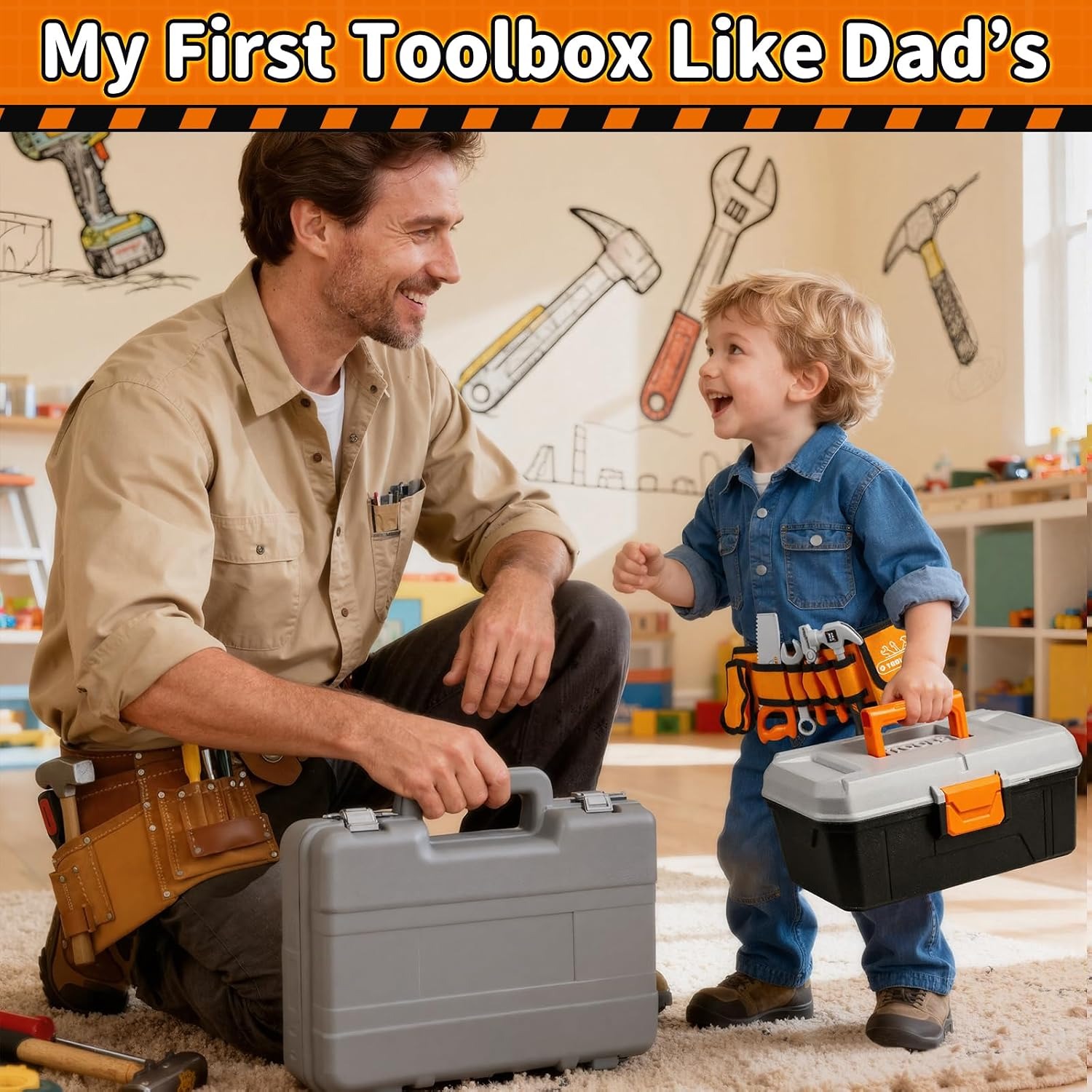
That matters because the urge behind this kind of toy is a good one. Children want to copy what adults do with their hands. When a parent puts up a shelf or tightens a chair leg, a small person is usually standing there watching closely. Giving them a believable version of the job is one of the easier parenting wins. It just has to hold up past the first afternoon.
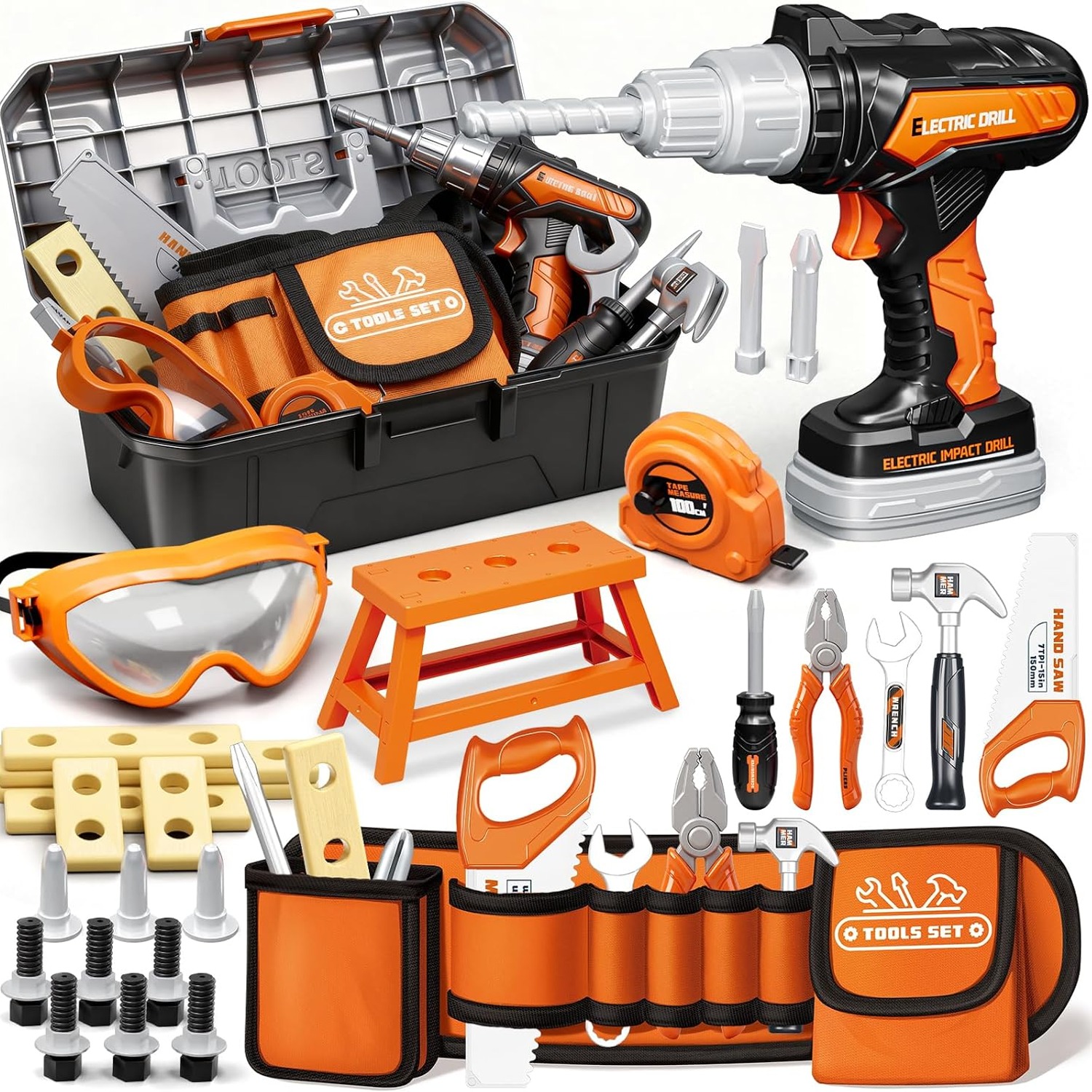
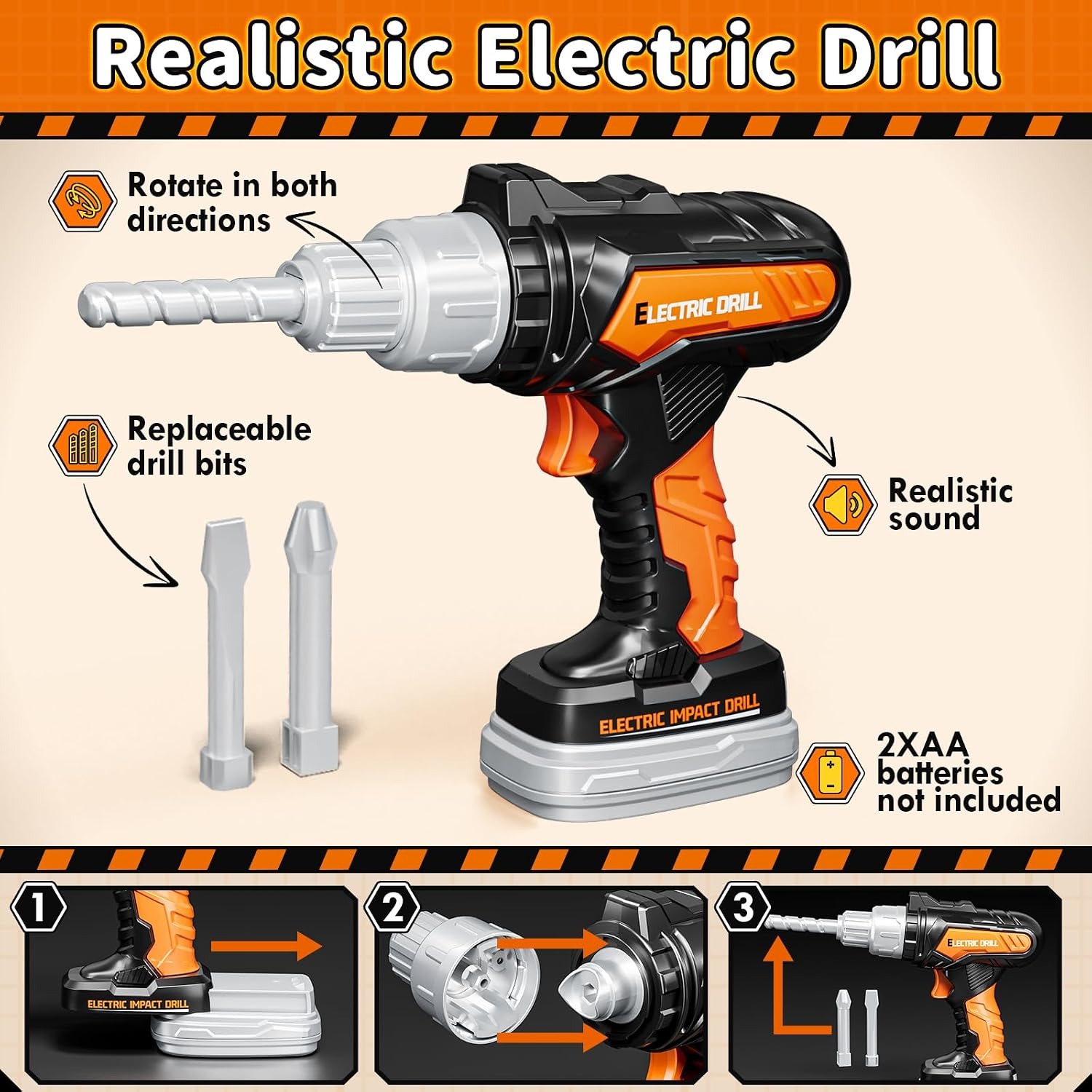
This 50-piece set from KidBloom is built around the bits that normally go missing from cheaper kits. There is a drill that actually turns. There is a belt so the tools stay with the child. And there is a box that everything goes back into.
How the set works in practice
Open it up and you get the familiar line-up, a hand saw, hammer, wrench, screwdriver, pliers, a tape measure and a pair of protective goggles. Then there is the electric toy drill, which runs on two AA batteries that are not included in the box. Worth buying a pair in advance if this is a birthday present, because that is the piece most children want to try first.
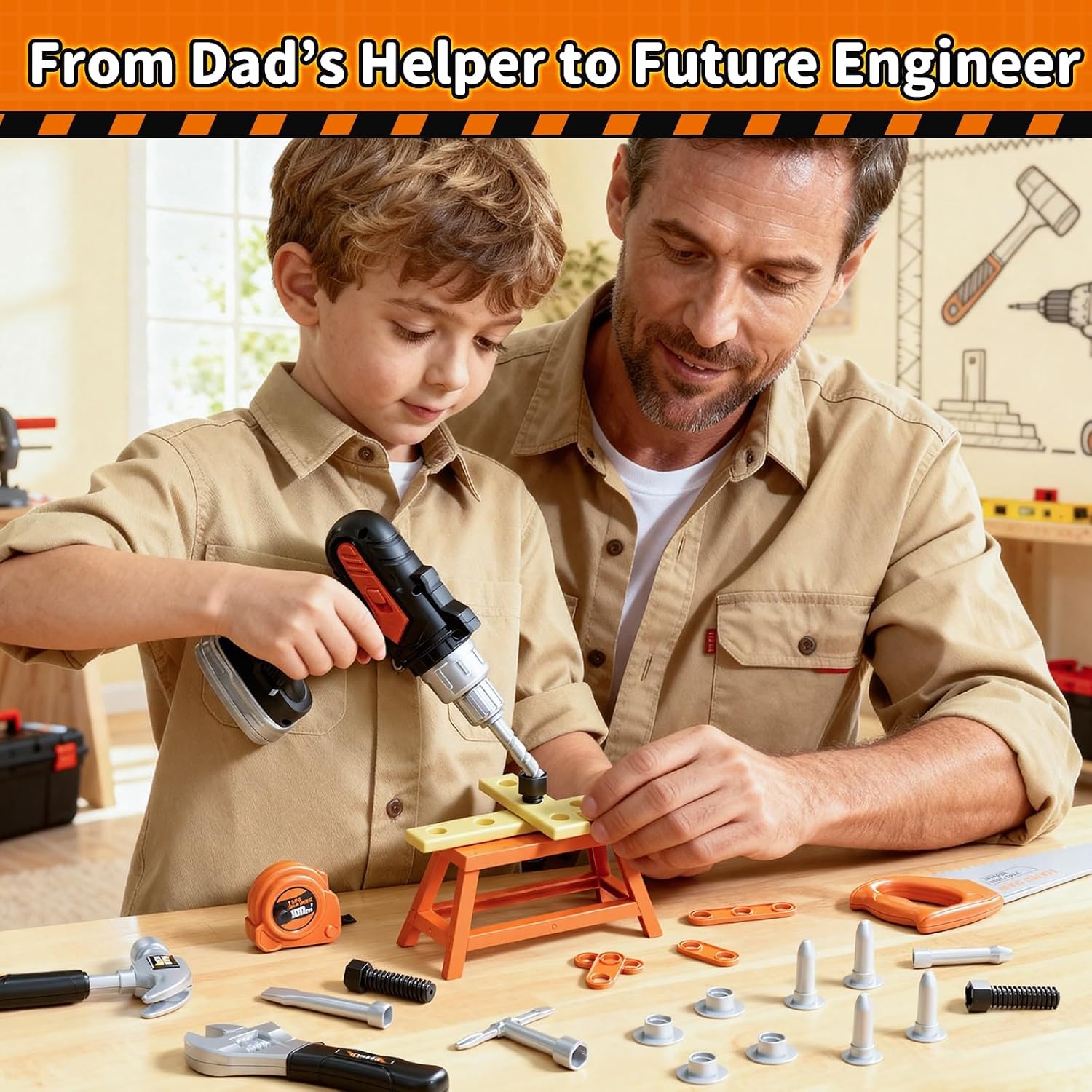
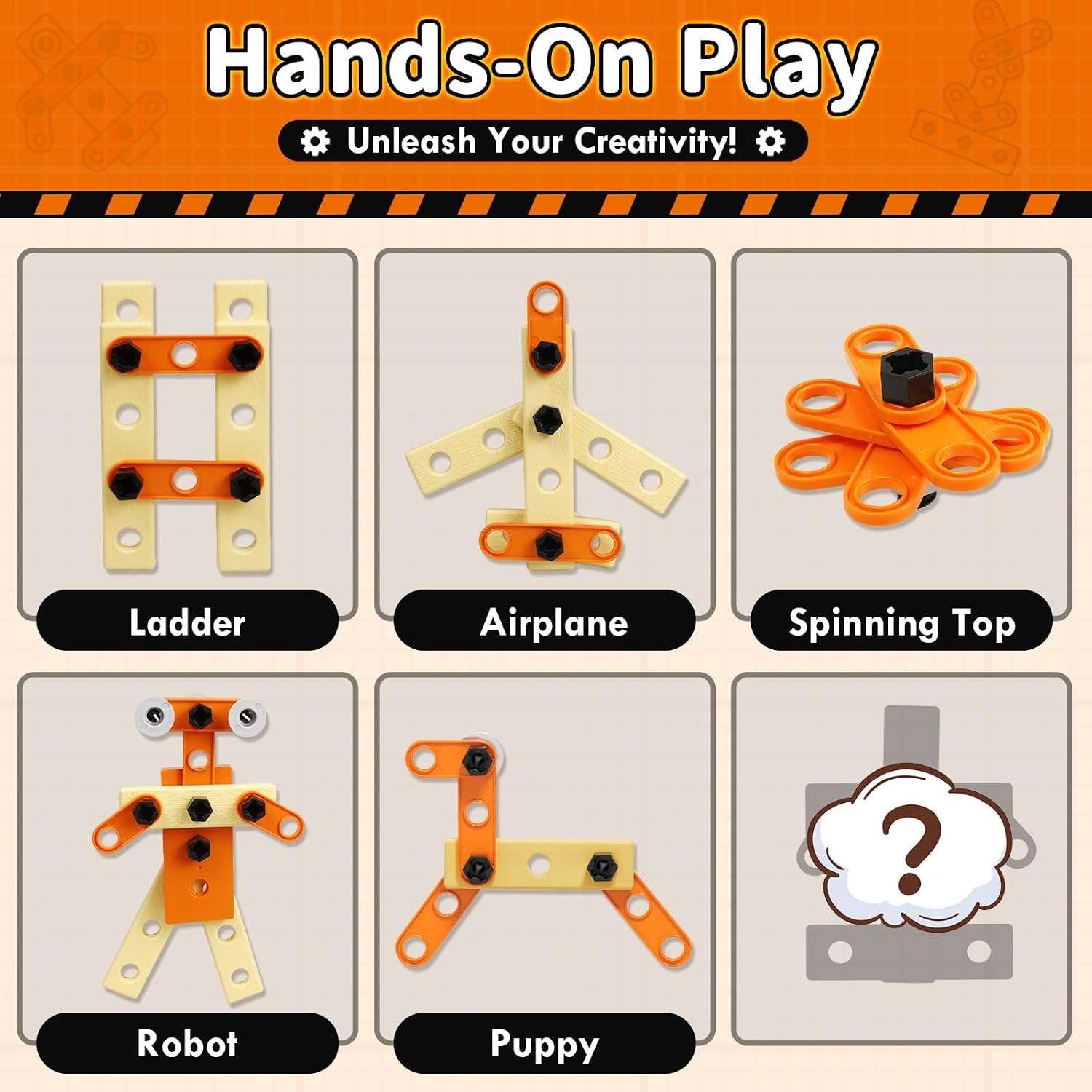
Beyond the tools sit the things to work on. Six plastic wooden strips, six accessory strips with holes in them, six screws, six nuts and three iron nails. There is a chair to assemble and a manual that walks through the projects. So a child who wants a task has one, and a child who just wants to walk around drilling things can do that too.
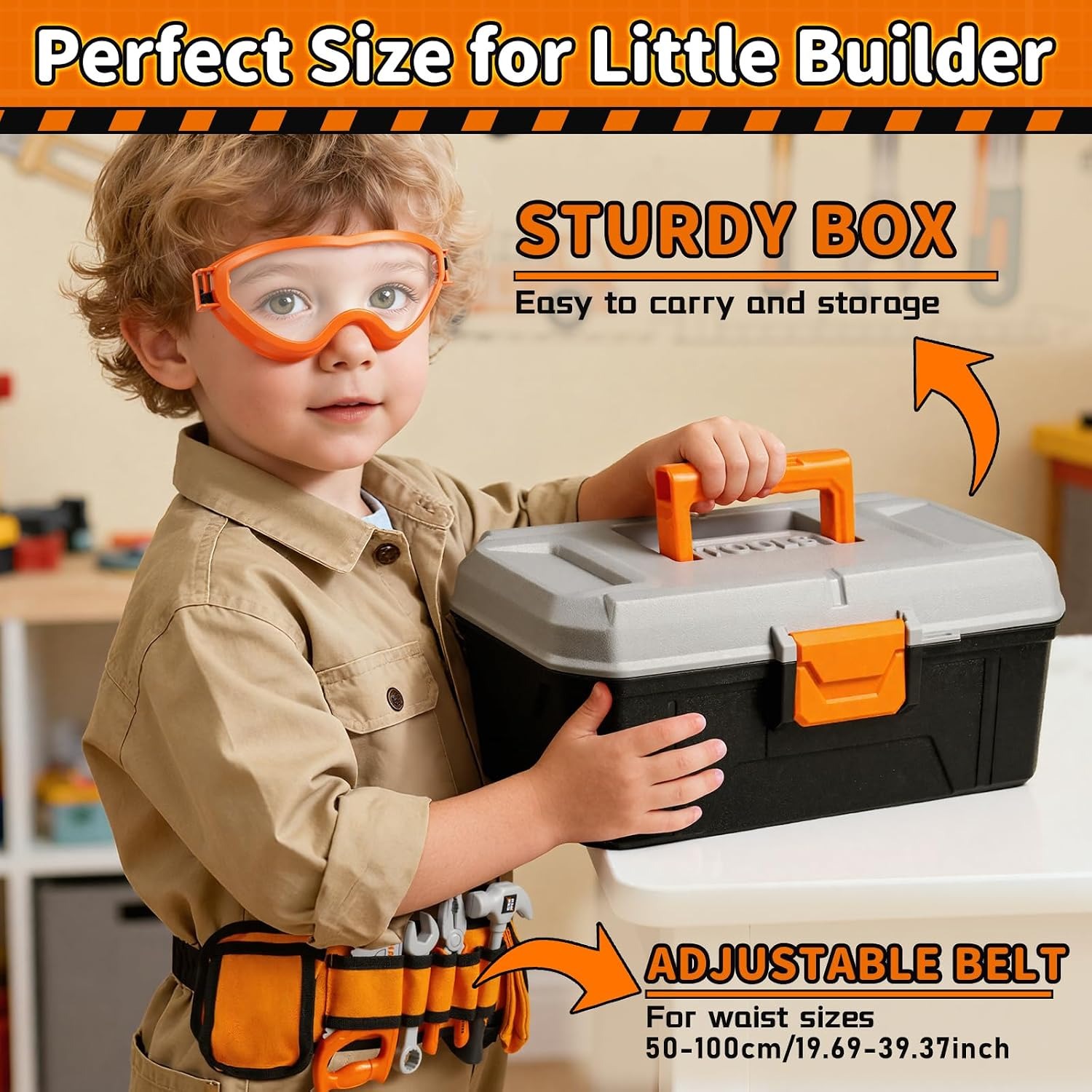
The belt is the quiet hero here. It adjusts for waists of roughly 50 to 100 cm, which is about 19.7 to 39.4 inches, so it suits a three-year-old and still fits a much older child. Once it is buckled on, tools stop being scattered and start travelling. In our experience that single detail is what turns a short burst of play into something that runs for half an hour, because nobody has to stop and hunt for the screwdriver.
The whole thing packs into the tool box, which is shaped like the kind of case a grown-up would carry. Packed, it is 30 x 15 x 12 cm and weighs 0.9 kg. A five-year-old can carry it to the car.
Who it suits
The recommended age runs from 36 months to 12 years, which is a wide span, and children use it differently across that range.
At three, most of the interest is in the drill, the goggles and the belt. The point is being a worker, not finishing a project. Expect plenty of pretend repairs to the furniture. Supervision matters at this age because of the screws and nails.
At four and five, the building side starts to click. This is where the manual earns its place. A child can follow the steps, assemble the chair and feel the satisfaction of something they made standing up on its own. Lining up a hole and turning a screw is harder than it looks when the fingers are still learning, and that is exactly the work being done.
From six upwards the play usually gets more inventive. Children start ignoring the instructions and making their own things, often combining the set with blocks or other construction toys they already own. Some of the best building toys for preschoolers work this way, as a base that other play gets built on top of.
It also works well as a shared set between siblings, partly because the belt adjusts so widely. The limit is that there is one drill and one pair of goggles, so a pair of determined children may need to take turns.
What to look for when you compare tool sets
A few things separate a set that survives from one that does not.
Piece count is not everything, but it is not nothing either. Fifty pieces means there is enough to build with, not just hold. Sets with eight or ten pieces give a child two minutes of novelty and then nothing to do.
A working drill changes the whole feel of the toy. The spinning bit is the thing that makes a three-year-old believe they are doing a real job. Check whether it takes batteries and whether they are included, since most are not.
Storage is the one people skip and later regret. If there is no case, the small parts go everywhere and the set effectively ends. A box that holds the whole kit is worth more than a few extra accessories.
Sizing on the belt is worth checking too. Some belts only fit a narrow range and become useless within a year. A span from 50 to 100 cm covers several years of growth.
Finally, look at the material and the edges. This set is plastic and child-sized, which is the point. Nothing here has an edge that can cut.
Looking after it
Care is not complicated. Wipe the tools, belt and box with a damp cloth and a little mild soap, then dry everything before it goes away. Keep all of it out of the dishwasher and the washing machine, and keep water away from the drill's battery compartment.
If the set is going to sit unused for a few months, take the batteries out of the drill. Leaking batteries are the most common way a toy like this dies. Store the box somewhere out of direct sun and away from radiators, because long heat exposure makes plastic brittle over time.
Every so often, tip the box out and check the pieces. Anything cracked should be retired rather than repaired. It only takes a minute and it keeps the set in good order for the youngest child using it.
A quick note on batteries in general. Use two fresh AAs of the same type rather than mixing an old one with a new one, which is the usual reason a toy drill slows down or stops.
Gifting it
This is an easy gift to get right because it reads clearly the moment the lid comes off. A child sees a belt, goggles and a drill and knows immediately what the game is. That beats a toy that needs explaining.
Two practical tips. Buy the batteries separately so the drill works on the day. And if you are giving it to a three-year-old, plan to sit down with them for the first session, both for safety with the small parts and because the first build goes better with company.
The short version
If you want a kids tool belt set 50 piece kit that keeps working after the first week, the things that matter are a drill that spins, enough parts to actually build with, a belt that adjusts as the child grows and a box that holds the lot. This set has all four.
It is plastic, child-sized and recommended for ages three to twelve, with a stated focus on fine motor skills, coordination and creative thinking. Packed it is 30 x 15 x 12 cm and 0.9 kg, so storage is not a problem. Add two AA batteries and you are set.
If anything is missing or damaged when it arrives, contact us with a photo and we will sort out a replacement or refund.