
The complete guide
Flexible Race Track Buying Guide: How to Pick a Track Kids Keep Playing With
The problem with most car tracks
Plenty of car track sets look brilliant in the box and get abandoned within two weeks. The reason is usually the same. The set has a fixed number of pieces that fit together one way, so after the second or third build there is nothing left to discover. The child has solved it. What remains is a pile of stiff plastic that takes up a shelf and never quite goes back in the box properly.
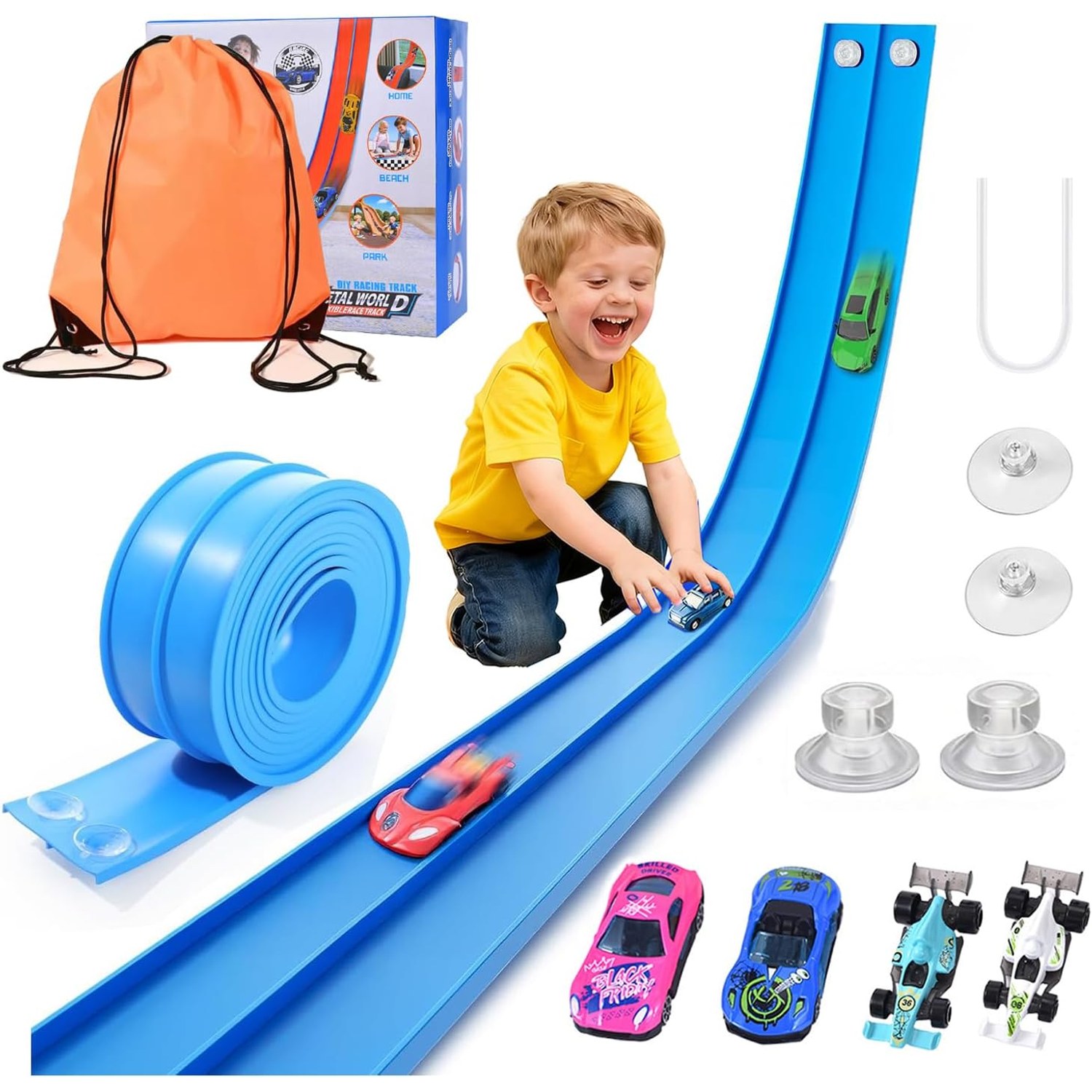
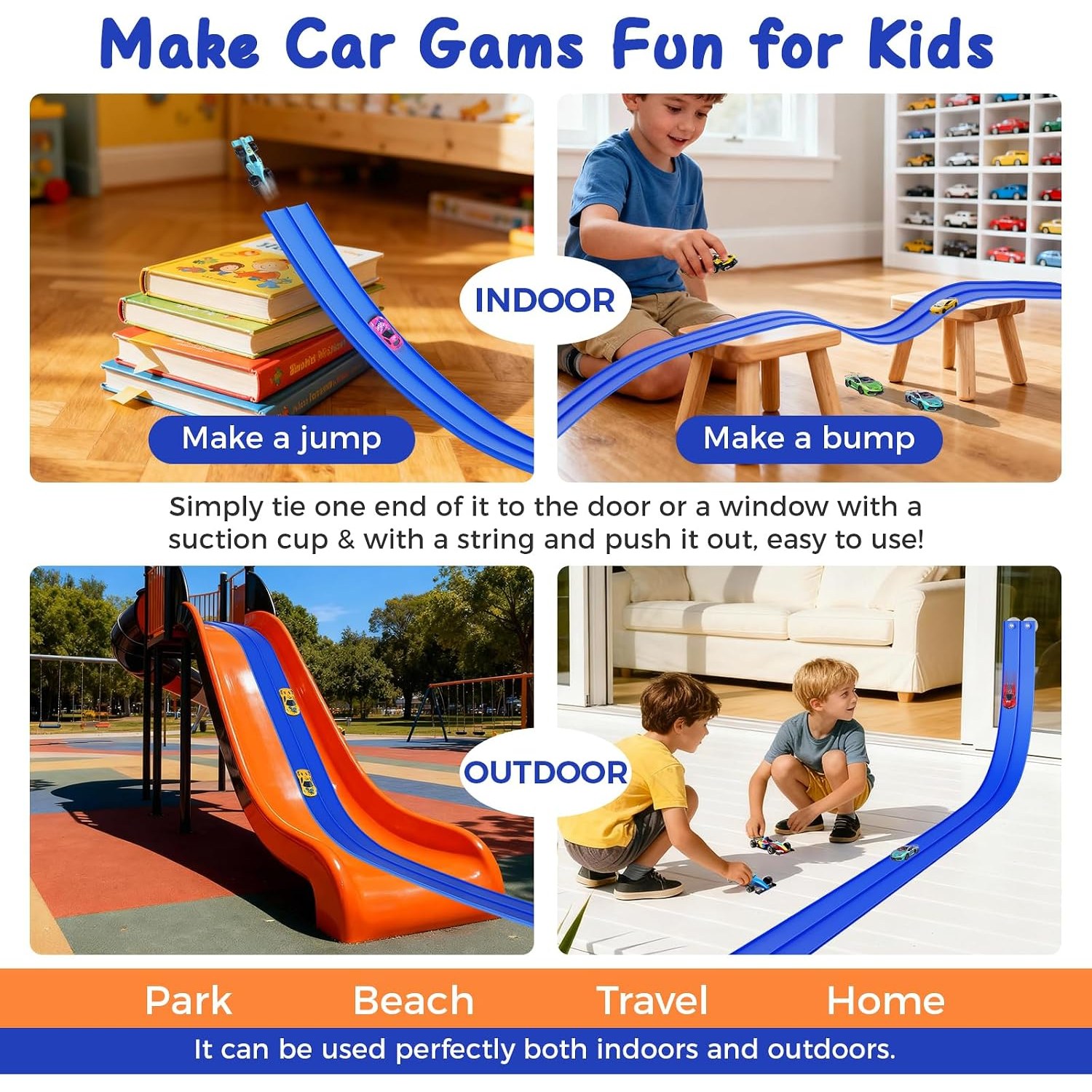
A flexible race track with 4 cars works on a different idea. Instead of handing a child a puzzle with one answer, it hands them a bendable strip and lets them decide what happens. A curve round the table leg. A slope off the couch. A loop that probably will not work, tried anyway, then adjusted until it does. That trial and error is the actual play, and it does not run out.
How a flexible track actually works
The track itself bends along its length. You can roll it flat on the floor and run a long straight, or you can lift one end and create a drop. There are no connectors to line up and no clips to snap, which removes the usual source of frustration for small hands.
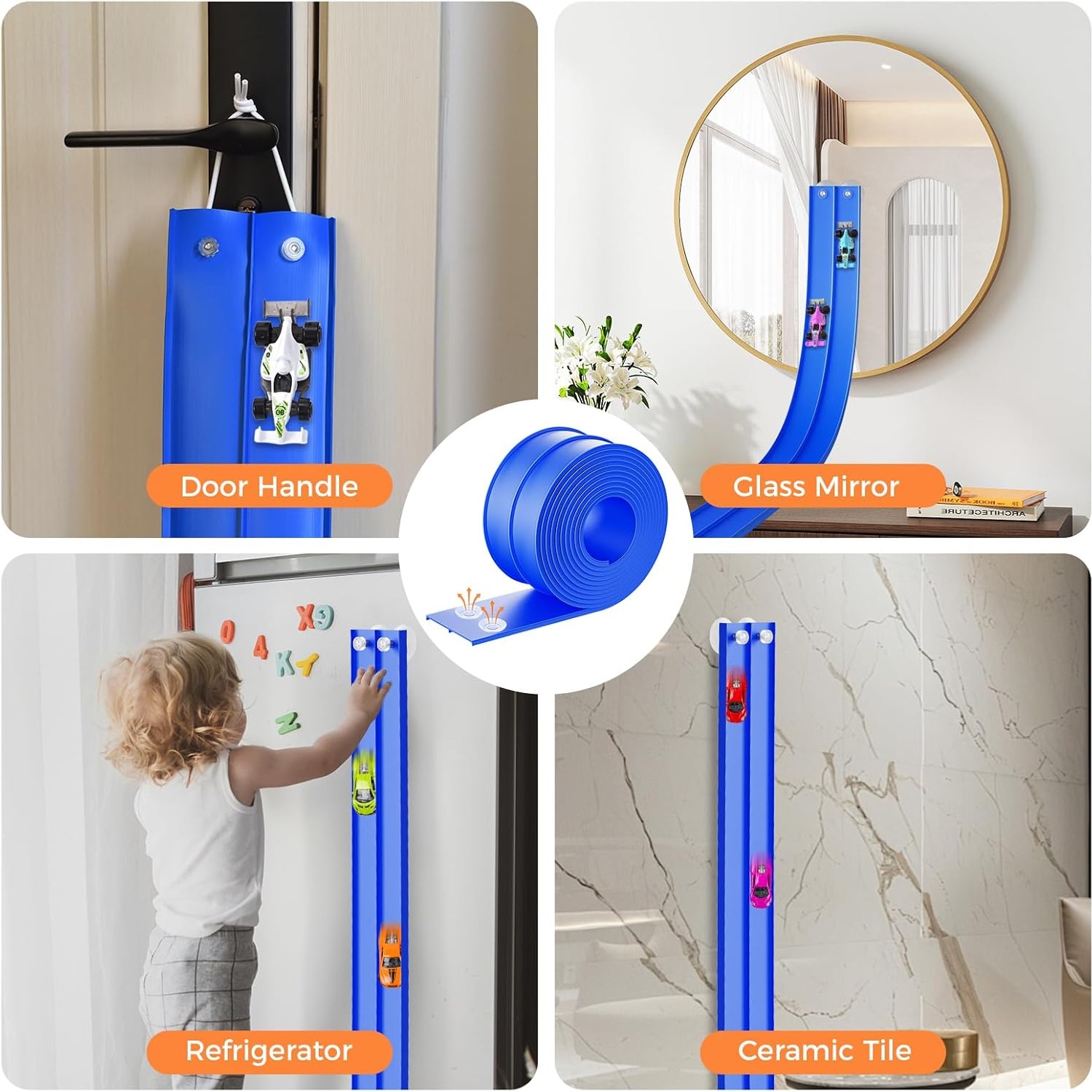
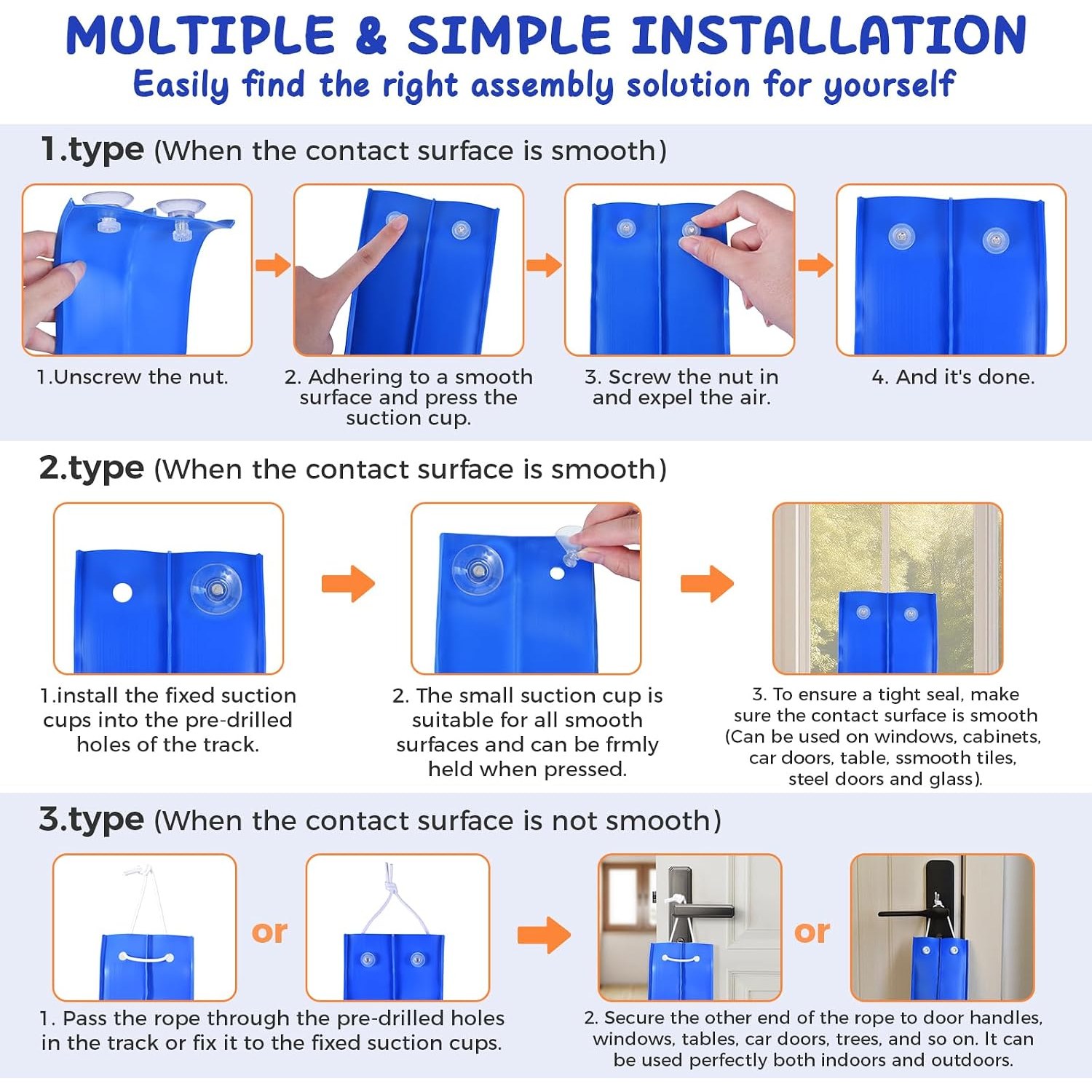
The four suction cups are what open up the rest of the house. Press one onto a clean glass door, a fridge panel, a window or a smooth tabletop, and it holds. Attach the track and suddenly the course runs vertically. A car released from the top of a fridge builds real speed before it hits the floor, and children find that endlessly satisfying.
Gravity does the work. There is no motor, no batteries and nothing to charge. The steeper the drop, the faster the car, and children work that out within a couple of minutes without anyone explaining it. They also work out the opposite: if the slope is too shallow, the car stalls halfway. Adjusting the angle until the run is just right is the kind of quiet problem-solving that looks like nothing but is doing plenty.
Who it suits
The recommended age is 3 years and up, with the skill level listed as beginner. That is a fair description. A three year old can place cars, release them and watch what happens, though an adult will usually need to position the suction cups and steep sections.
From about four or five, children start designing their own courses properly. They test which car is fastest, build a ramp that jumps a gap, and argue about the rules of the race. That is the sweet spot for this kind of toy.
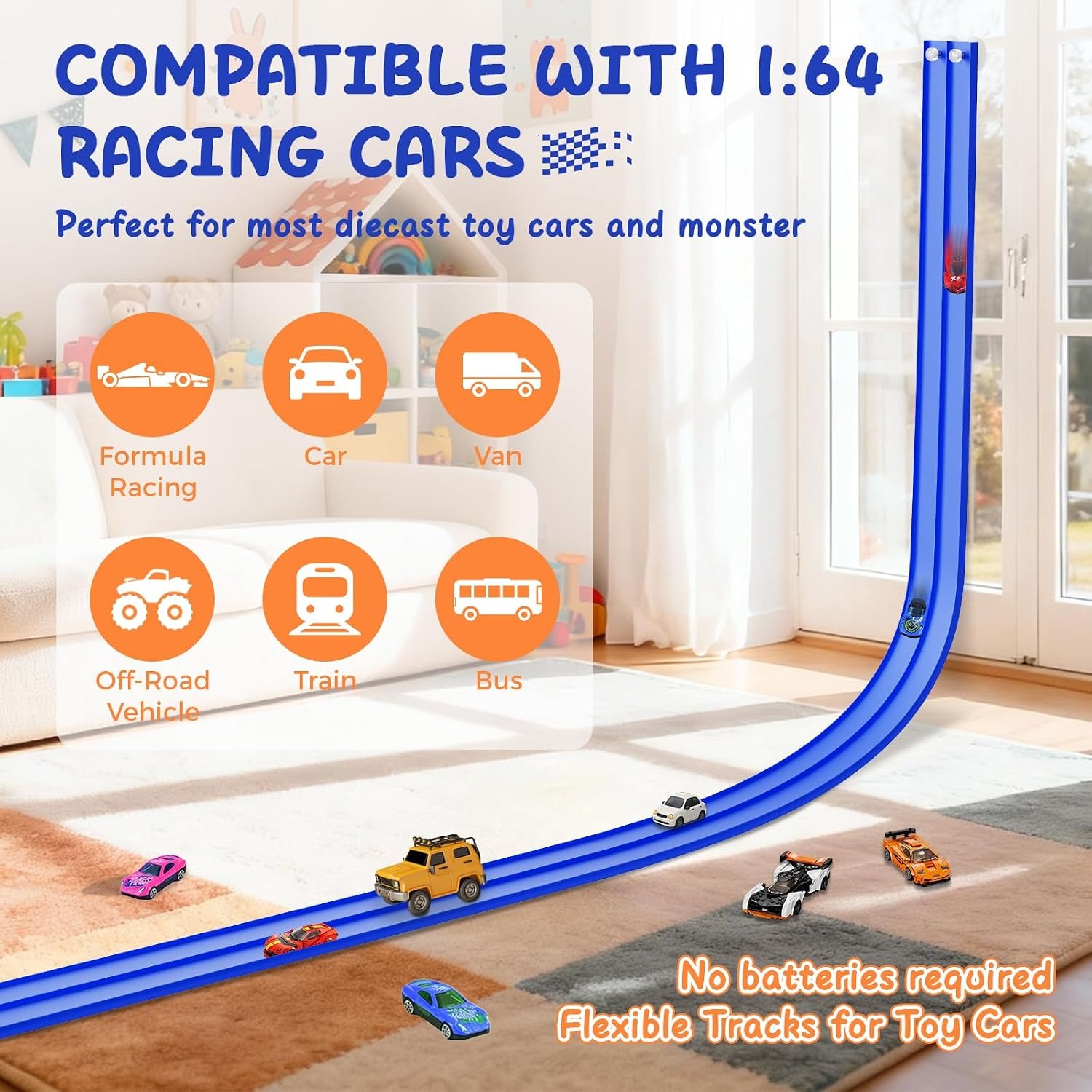
Older children with a diecast car collection often get more out of it than you would expect. Because the track takes 1:64 scale vehicles, which is the standard size for most small collectible cars, they can bring everything they own and run proper head to heads. A heavy metal car behaves differently from a light one on the same slope, and that comparison keeps them busy.
There is one group it does not suit: children under three. The set carries a choking hazard warning for small parts, so if you have a child under 3 in the house, this needs to be a supervised toy that gets put away between sessions.
Choosing the right track for your home
A few practical things decide whether a track like this gets used daily or gathers dust.
Surfaces. Suction cups need smooth, clean, non-porous surfaces. Glass doors, windows, fridges, tiles and sealed tabletops all work. Textured paint, raw timber, brick and fabric do not. Have a quick look around the room where the toy will live. If there is at least one glass door or a fridge with a clear side panel, you are set. If there is not, the track still works perfectly well laid out on the floor, you just lose the vertical option.
Floor space. A flexible track needs room to stretch out, though far less than a rigid set with a fixed footprint. A hallway is ideal. So is a stretch of hard floor beside the couch. Carpet works but slows the cars, so hard flooring is better if you have it.
Storage. This is where a roll-up design earns its place. The track rolls into the included colourful bag, so there is no sorting of pieces and no half-assembled loop left in the hallway. If you have limited storage, a bagged roll-up set beats a boxed modular one every time.
Existing cars. Check what your child already has. If the toy box is full of small diecast cars, this track multiplies the value of all of them. If they have nothing yet, the included cars get things started and you can add more later.
Travel. If you want something to take to a grandparent's place, a holiday house or a long car trip, portability matters more than scale. This one is described as easy to carry and packs into a bag, which makes it a reasonable pick when you want the best travel toy car track rather than the biggest set available.
Getting the most out of it
A couple of small habits make the difference between a toy that works and one that is written off as faulty.
Clean the surface before you press the cups on. Kitchen glass picks up a film you cannot see, and a cup on a greasy surface will slide within a minute. A quick wipe with a damp cloth is enough. A trace of moisture left on the rim of the cup actually helps it seal.
Start with a gentle slope. The instinct is to build the steepest possible drop straight away, which tends to send cars flying off the track and into furniture. Build a mild run first, get it working, then raise it. Children learn more from adjusting a working course than from a spectacular failure.
Keep the cars together. Small 1:64 cars vanish under furniture faster than anything else in a toy box. A habit of putting them back in the bag with the track at the end of play saves a lot of searching later.
Looking after it
Care is simple. Wipe the track and the cars with a damp cloth and let everything dry before you roll it up, because rolling a damp track traps moisture inside the coil. Keep the suction cups free of dust, since that is the single most common reason they stop gripping. Avoid storing the set near a heater or in a hot car for long periods, and keep it away from sharp objects that could nick the plastic.
Check the parts now and then. If a suction cup is cracked or has lost its shape, stop using it, and if a car has a broken wheel, take it out of circulation rather than letting it jam the track.
The short version
If you want a car track that keeps changing shape instead of repeating the same layout, this does the job. The track bends into curves, loops and slopes, the four suction cups let it climb a glass door or a fridge, and it takes standard 1:64 scale cars, so an existing collection comes along for the ride. Cars are included, so it works on the day it arrives.
It is best for children aged 3 and up, with supervision for the younger end because of the small parts. It is not for children under 3. And when playtime is over, the whole thing rolls into a bag, which is the part most parents end up appreciating most.