
The complete guide
How to Choose a Fairy Potion Craft Kit That Actually Gets Used
The problem with most craft kits
Anyone who has bought a craft kit for a child knows the pattern. The box looks full, the picture on the front promises an afternoon of fun, and then the whole thing is finished in twelve minutes. What is left is a half-made object with nowhere to live and a drawer of leftover bits that nobody wants to throw away.
The reason is usually structure. A lot of kits are built around one finished item. You make the thing, the thing is made, done. There is no second round and nothing to come back to.
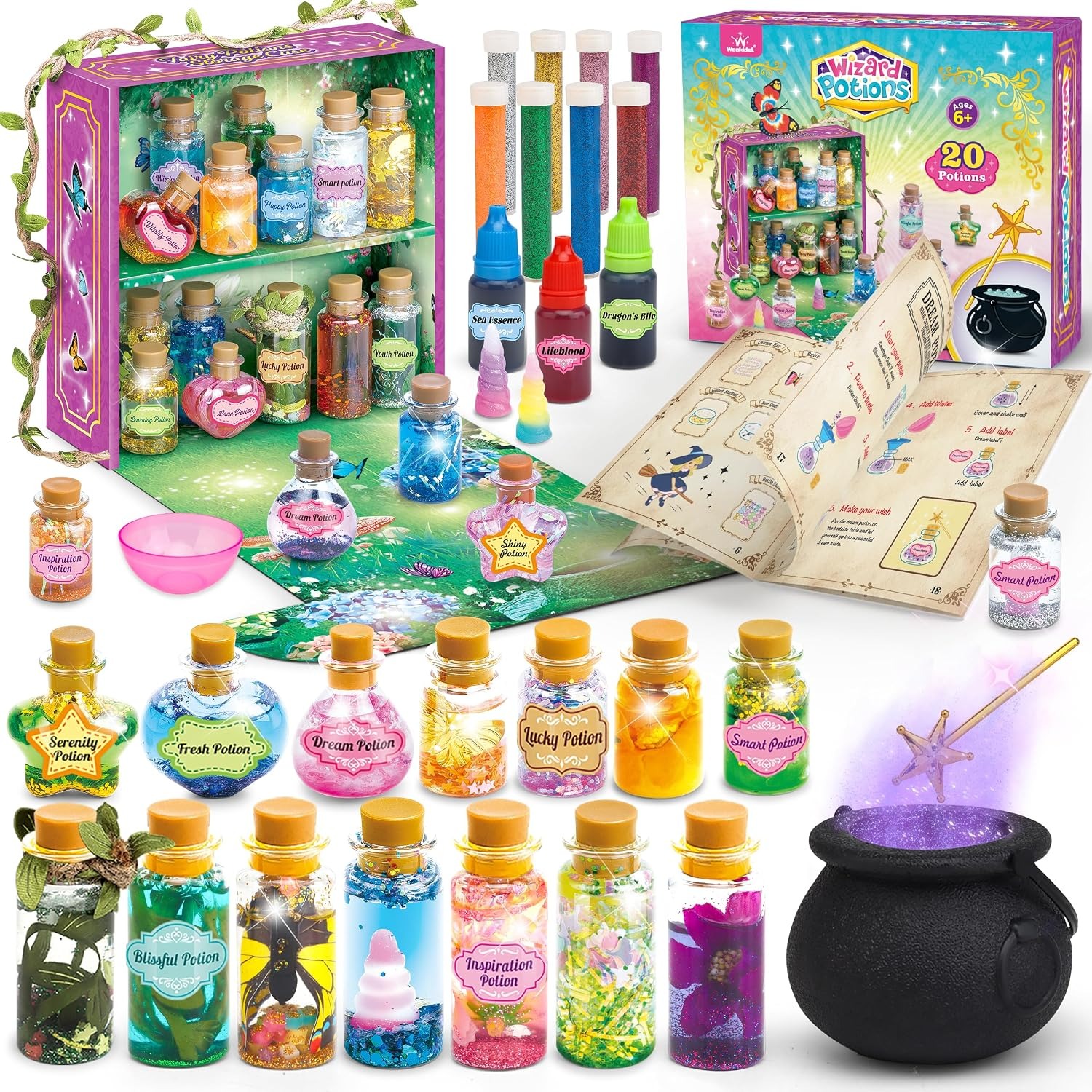
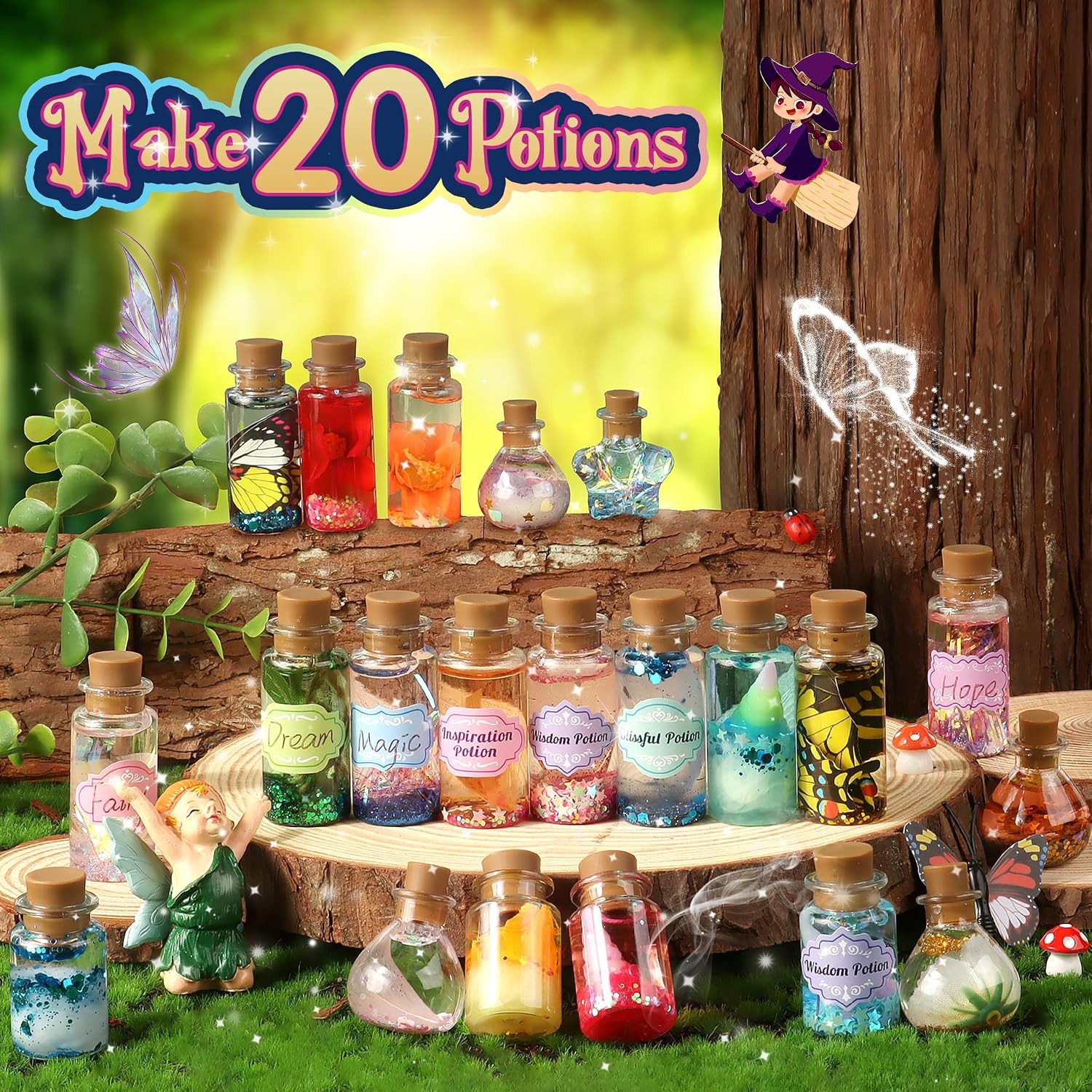
A potion kit works differently because it is built around repetition with variation. There are 20 bottles here, not one. Each bottle is a small, complete project that takes a few minutes, and each one can be different from the last. That means a child can do three, stop for dinner, and pick it up again the next day without having lost their place. It also means the kit can survive a single enthusiastic afternoon without being used up.
How this kit actually works
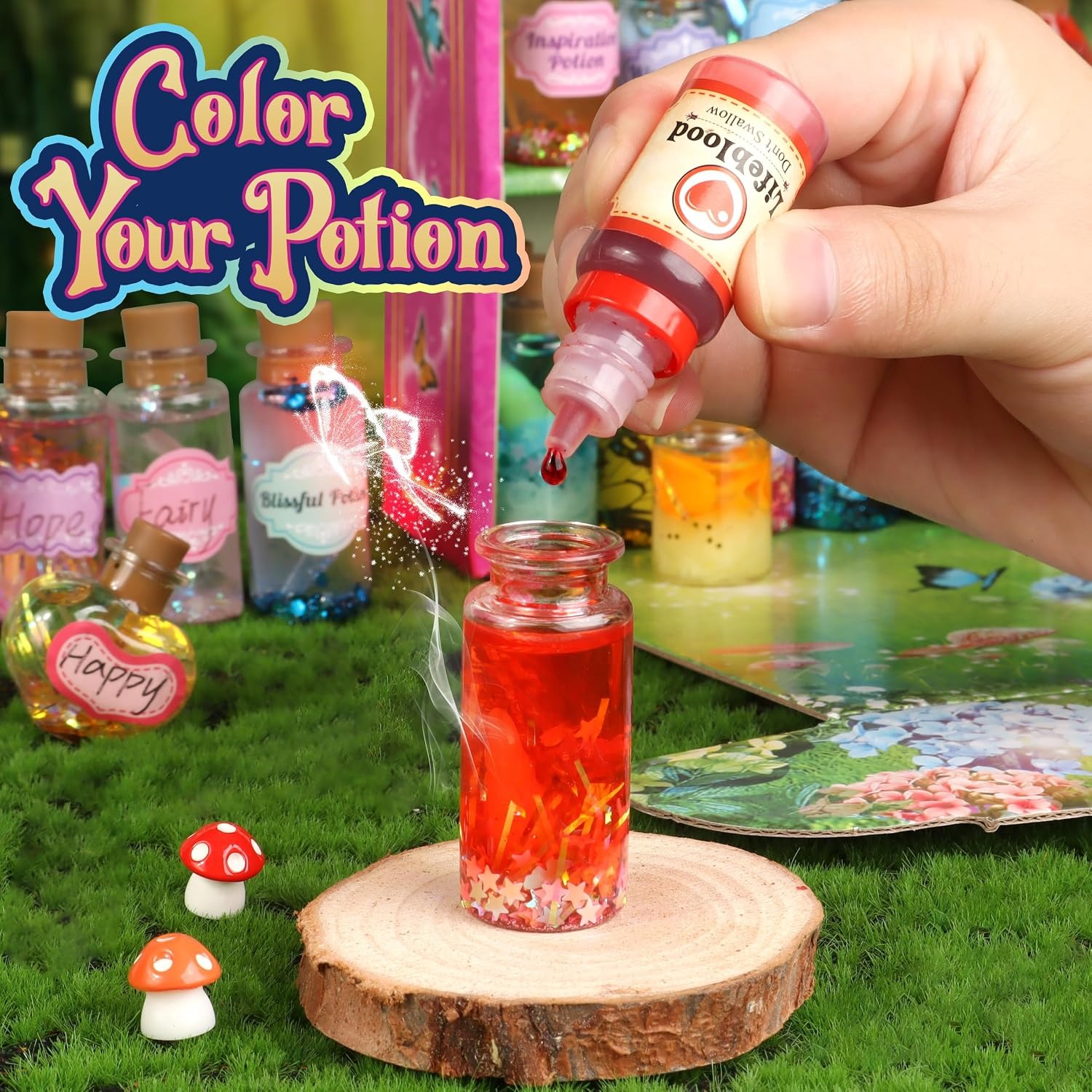
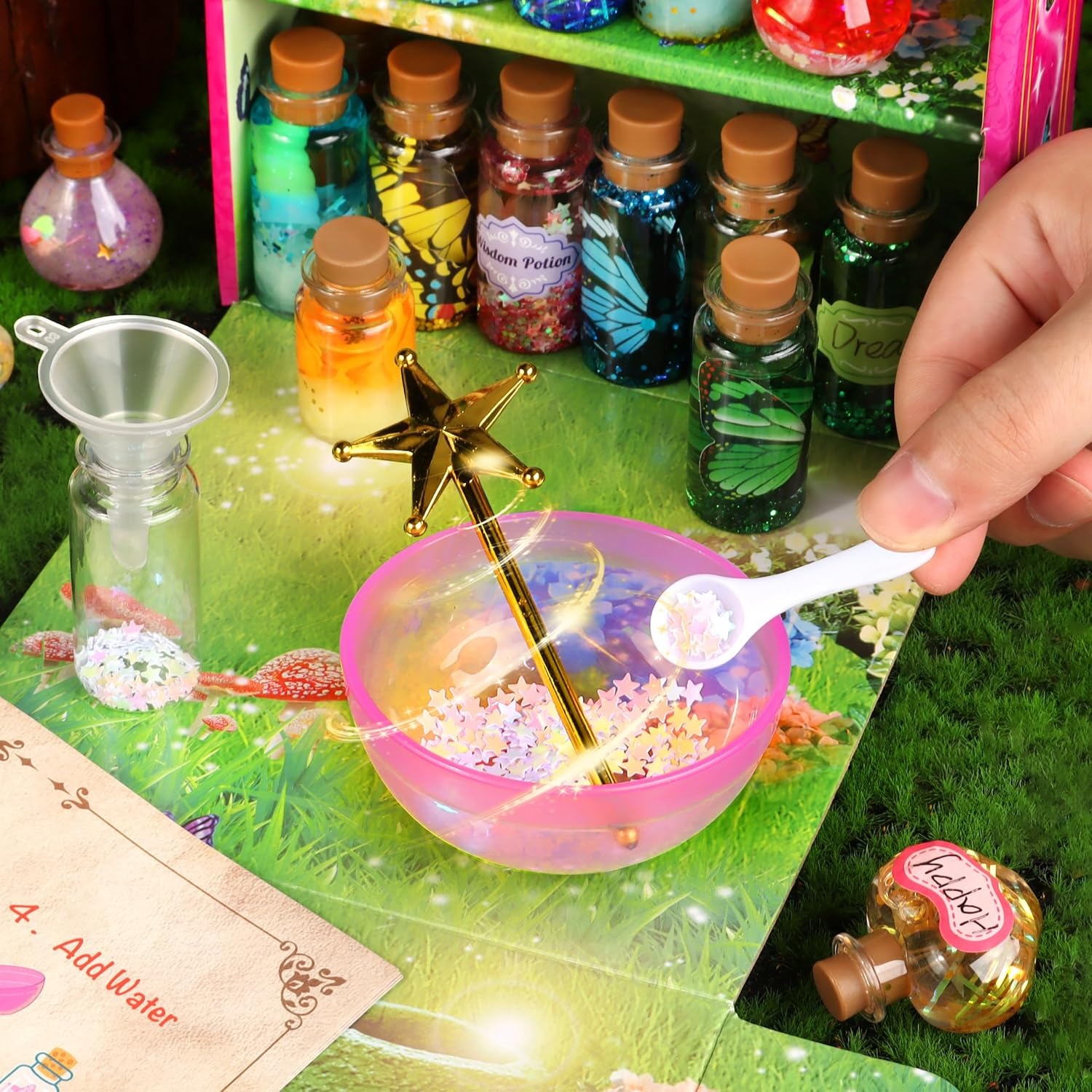
The recipe book is the starting point. It contains seven formulas, each one telling the child what to combine and how to finish the bottle. Those first few potions are deliberately guided, which matters more than people expect. A child staring at a pile of sparkles and an empty bottle with no instructions often freezes. A child following a recipe gets a win in five minutes and then wants another.
After the seventh recipe, something usually shifts. The child starts combining things the book did not suggest. This is the point of the kit, and it is why there are more bottles than recipes. Twenty bottles and seven formulas is a deliberate ratio: enough structure to begin, enough freedom to keep going.
Blank stickers come with the set so each potion can be named. This small detail does a lot of work. A bottle of coloured sparkles is a bottle of coloured sparkles. A bottle labelled "Dragon Sleep Draught" in a child's handwriting is a story. Naming is where the imaginative play really takes hold, and it is almost always the part children show off first.
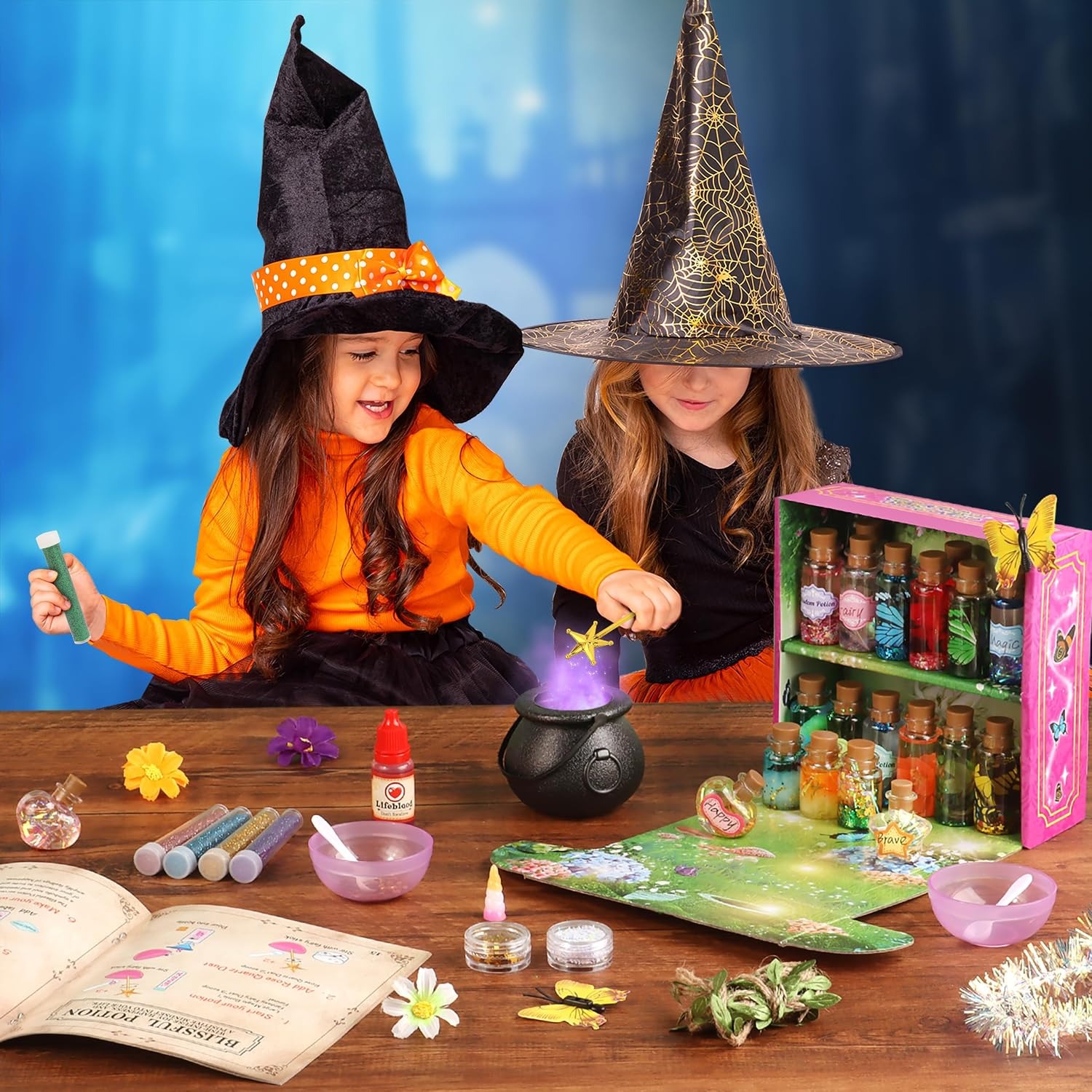
The extras, the cauldron, the fairy wand, the vine, the fantasy flower, the butterflies and the unicorn horn, are the props. They exist so the play does not stop at the end of the mixing. A child with a full set of named potions and a wand will keep playing long after the crafting part is over.
Who it suits
This is a kit for children who already lean fantasy. If fairies, unicorns and anything with glitter are already on the list of favourite things, it will land. If a child is more into building, engineering or sport, it probably will not, and no amount of good design in the box will change that.
It also suits households looking for a screen free activity for kids that does not need setting up. There is no app, no charging, no batteries. The box opens and the activity starts, which is the whole appeal on a wet Saturday.
For parents, this is the type of kit that pulls you in. Filling small bottles is oddly satisfying and the recipe book gives you something to do together without either of you needing to be creative on the spot. A fair few parents report doing more of the mixing than they planned to.
Age-wise, the maker describes it as for kids. In practice the fine motor tasks, filling bottles, placing stickers, arranging a display, suit primary school age upward. Younger children can take part happily if an adult handles the fiddly steps. Because of the small parts, keep it away from children under three.
How to choose between potion kits
A few things separate a kit that gets used from one that gets shelved.
Count the bottles. The number of bottles is the single best predictor of how long a kit lasts. A set with four or five bottles is a one-afternoon product. Twenty gives you repeat sessions.
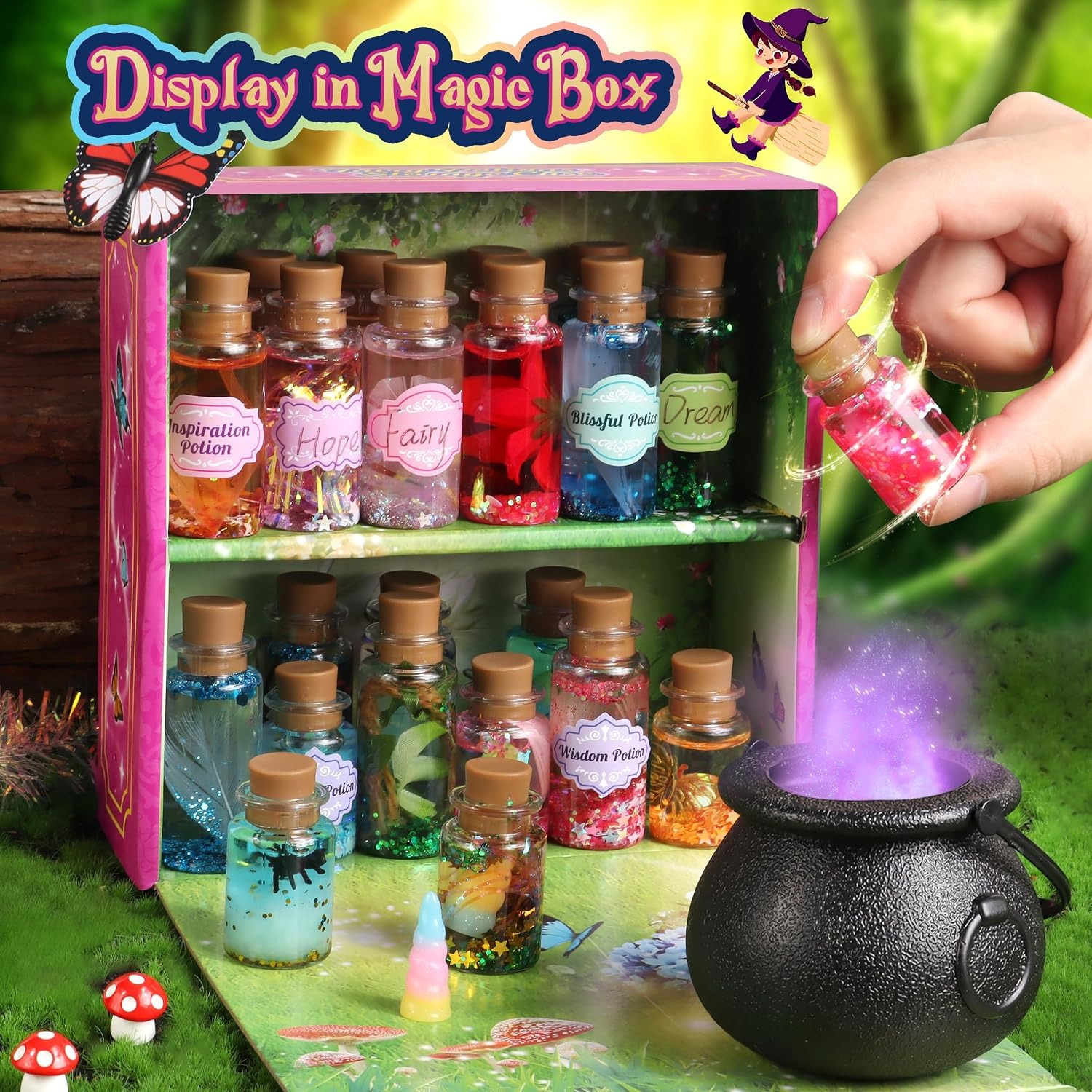
Check whether there is somewhere to put the finished work. This is the one people overlook. A finished potion with nowhere to go ends up on a bookshelf, gets knocked over, and is in the bin by the end of the month. The display case included here is the reason the collection survives. It keeps the bottles upright, holds the loose pieces when the kit is packed away, and turns the finished set into something a child can show a visiting grandparent.
Look at whether instructions are included. Kits with no guidance sound more creative but often stall. Seven recipes is a sensible number: enough to teach the method, not so many that the child never invents anything.
Finally, check the piece count against the price. Fifty-eight pieces is a reasonable density for a kit at this level, and the variety matters as much as the number. A cauldron, a wand, a horn and butterflies give a child more to work with than fifty-eight identical beads would.
Setting up and keeping the mess sensible
Give it a surface. A kitchen table, a tray or a large placemat all work. The sparkles are the main culprit, and containing them to one area turns clean-up from a chore into a quick sweep.
Have a small bowl or lid to hand for decanting. It makes filling bottles far easier than trying to pour from the original packaging, especially for smaller hands.
Do it in sessions rather than all at once. Three or four bottles at a sitting keeps the novelty alive. If a child tries to do all twenty in one go, the last few get rushed and the whole thing feels finished too soon.
Looking after the kit
The listed material is paper, so water is the enemy. Keep the box and the case away from damp and out of direct sunlight, which fades printed parts over time.
Wipe the display case with a dry or barely damp cloth if it needs it. Do not soak it or run it under a tap.
Close the bottles properly after each session and store the whole thing upright. This is what stops loose sparkles redistributing themselves around the house. Store it somewhere the child can reach if you want it used again, because a kit in a high cupboard is a kit that gets forgotten.
The set carries a 60 day warranty, so hang on to your order details.
When the materials run out
This is worth knowing before you buy, because it changes how you think about value. The consumable parts, the sparkles and the recipe materials, will eventually be used up. What stays is the case, the 20 bottles, the cauldron, the wand and the props.
Most families find the kit gets a second life at this point. Children refill the bottles with whatever they can find: beads, sand, small shells, dried petals, scraps of coloured paper. They write new names on fresh labels. The display case keeps doing its job. In some ways this phase lasts longer than the original, because the child is now driving it entirely themselves.
The short version
If your child likes fairies and unicorns and you want something that lasts longer than a single afternoon, this is a sound pick. The 20 bottles give it length, the seven recipes give it a starting point, and the display case is the piece that stops the whole thing ending up in a drawer.
It is paper-based, it has small parts, and it suits primary school age upward with an adult nearby. The box is small and light at 399 g, which makes it easy to wrap and easy to post.
What it is not is a chemistry set or a learning toy with a syllabus. It is a well-stocked imaginative play kit with enough structure to get started and enough freedom to keep going, which for most children is exactly the right balance.