
The complete guide
Choosing a Safari Animal Playset That Actually Gets Played With
The toy box problem
Most homes with young children have the same issue. There are plenty of toys, but very few of them hold attention for more than a few minutes. Half a set is missing. The batteries died in March. The thing that lit up and made noise is now a plastic brick with a dead face.
Animal figures sit in a different category. They do nothing by themselves, which is exactly the point. A lion only becomes interesting when a child decides it is hunting, sleeping, lost, or best friends with a zebra. The toy is the prop, and the child supplies the story. That is why simple figure sets stay in rotation for years while flashier toys get retired by the end of the season.
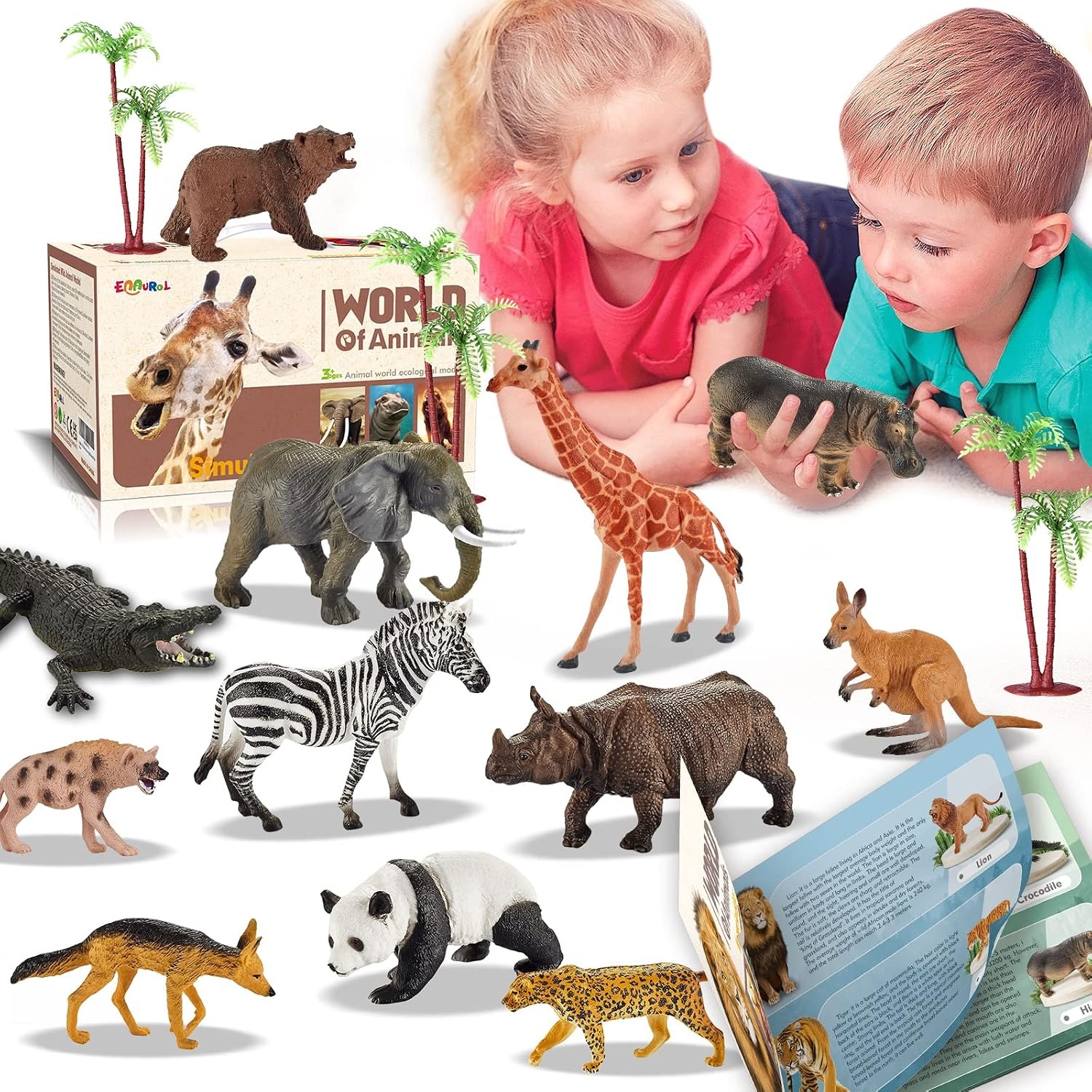
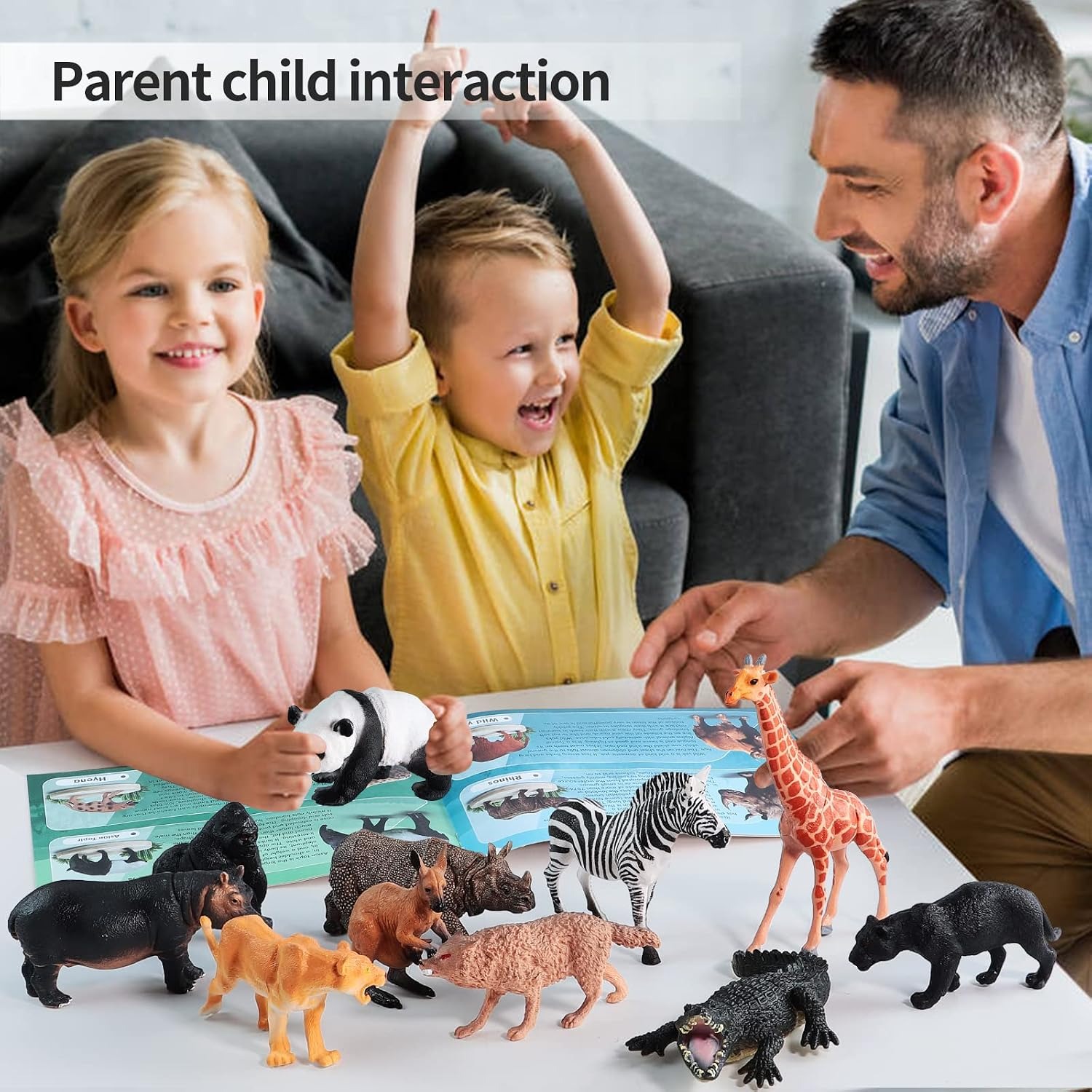
This 31 piece safari animal playset is built on that logic. Animals, six trees, a booklet of information and a box to keep it all in. Nothing to charge, nothing to assemble, nothing to break on day two.
What you are actually getting
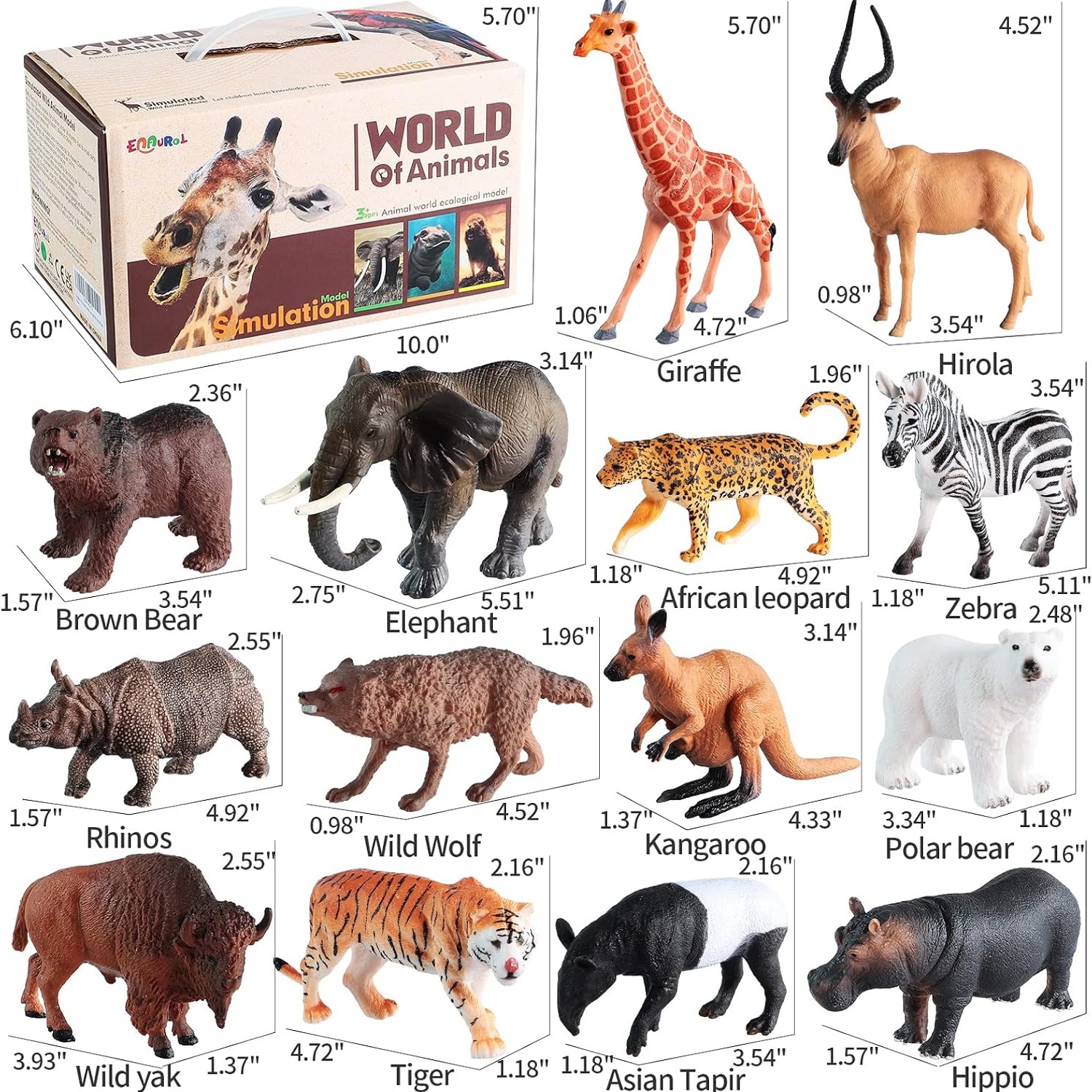
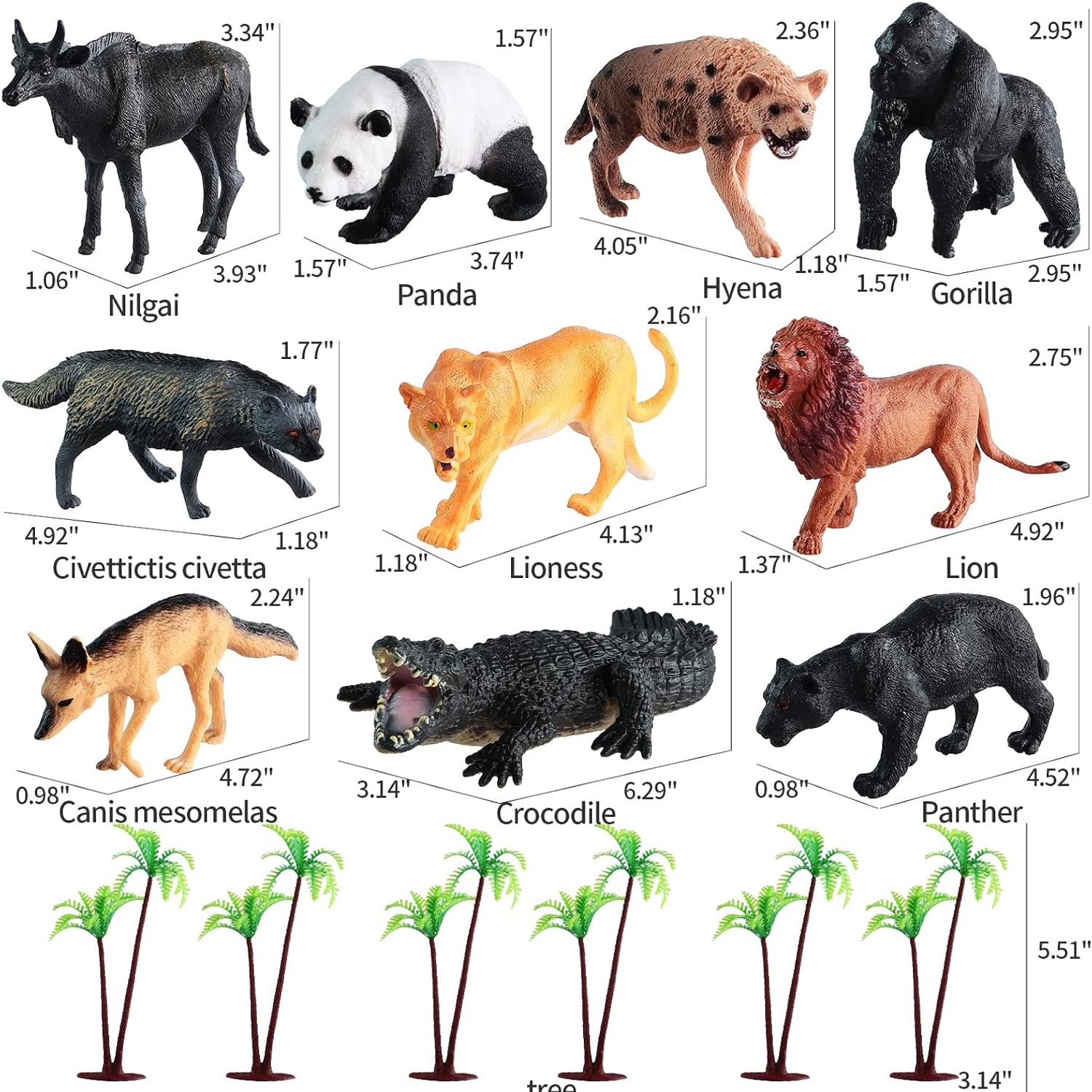
The set totals 31 pieces. Six of those are trees, included so children can build something that resembles real habitat rather than animals standing on bare carpet. The rest are safari animal figures moulded in mixed natural colours, which means a tiger reads as a tiger and an elephant reads as an elephant.
Everything is plastic. The complete boxed set measures 25.4 by 15.24 by 14.22 cm and weighs 1.05 kg, so it is genuinely portable. A child can carry it to the next room. A parent can slide it into a bag for a weekend away.
The knowledge manual is the piece people often overlook. It is not a long book, but it gives you something to say when a four year old points at a figure and asks what it eats. If you have ever been caught out by that question, you will appreciate having a reference in the box rather than reaching for your phone.
Why natural colours matter
There is a real difference between animal toys in realistic colours and ones in bright primary plastic. Realistic colouring helps children build an accurate mental picture of the animal. They learn that giraffes have patches, zebras have stripes, and rhinos are grey and heavy-looking.
That small detail does quiet work. When a child later sees the same animal in a book, a documentary or at an actual zoo, the connection lands straight away. Some of the best toy zoo animals earn that title just by looking like the real thing.
It also makes sorting games possible. Group the spotted ones. Find all the animals with horns. Line up the ones that eat plants. Those activities come naturally once the figures are visually distinct.
Who this set suits
The manufacturer recommends 36 months and up, and that guidance is worth following. The pieces are small enough to pose a choking risk for children under 3 who still mouth their toys. Three years is the floor, not a suggestion.
From three upward, though, the set covers a wide span. A three year old will mostly name and carry the animals around. A five year old starts inventing scenarios, giving animals names and personalities, building enclosures out of blocks. A seven or eight year old gets interested in facts and habitats, and that is where the knowledge manual starts to pull its weight.
It also suits children who are not necessarily toy-obsessed but are animal-obsessed. If your child already has a favourite documentary, asks to go to the zoo every weekend, or draws the same four animals over and over, this lands well. For many families it is the best wild animal toy set to give a child in that phase.
How to choose between animal sets
Piece count gets a lot of attention, and it matters less than people think. A set of 100 tiny animals sounds generous until you are retrieving them from under the fridge. Thirty-one pieces is a practical number. Enough variety to build a scene, few enough that a child can actually keep track of the collection.
Scale is the second thing to check. Miniature figures like these are a common size band, which means they usually play nicely alongside other collections. If you already own animal toys, pull one out and consider whether a similar-sized newcomer would fit in. Children are forgiving about slight mismatches, but a wildly oversized elephant next to a tiny lion breaks the illusion.
Storage is the third and most underrated factor. Sets without a box end up scattered within weeks. The carry box here is the difference between a collection that survives a year and one that quietly disappears. Make packing up part of the routine from day one and the set stays whole.
Finally, consider what the set encourages. Figures that do nothing require the child to do the imagining, which is the whole value. Sets that light up or talk take that job away. If you want one of the best educational animal toys for a preschooler, pick the quiet one.
Setting up good play
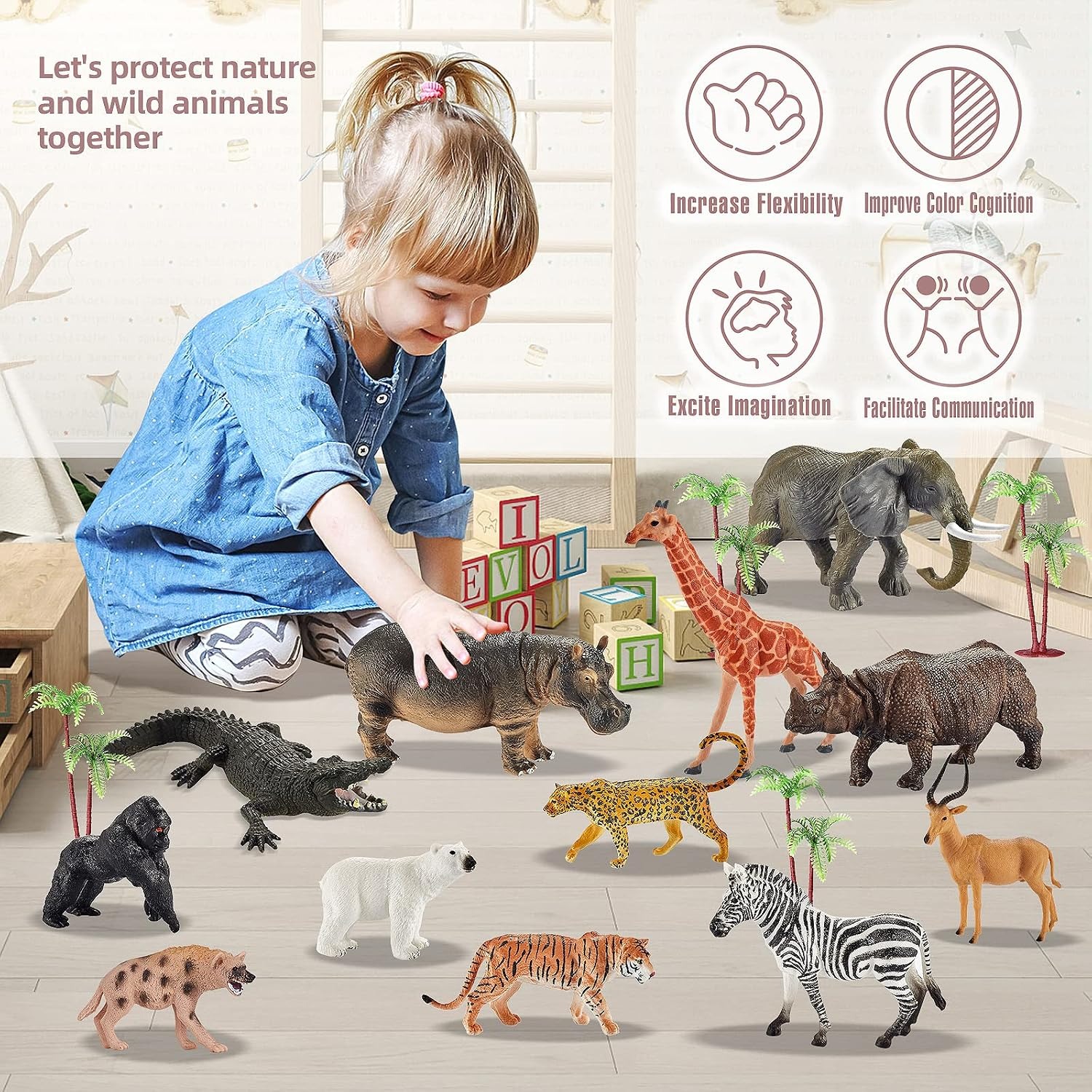
You do not need an elaborate setup. A rug works. So does a coffee table, a sandpit, a tray of rice, or a patch of garden. Put the six trees down first and the space immediately reads as somewhere, which gives the animals a reason to be there.
Sensory bins are a particularly good use. Dry rice, kinetic sand or plain water in a shallow tub, add the figures, and you have thirty minutes of concentrated play. Rinse and dry everything afterwards so no grit stays on the surfaces.
If you want to add a learning angle without making it feel like school, try one animal a day from the manual. Read two facts, find the figure, let the child decide where it lives on the floor. Low effort, and it sticks.
Looking after them
Plastic figures are forgiving, but a few habits extend their life. Wipe them with a damp cloth and a little mild soap when they get grubby, and dry them fully before putting them away. Skip the dishwasher entirely, since heat warps plastic and can dull the colouring.
Keep the set out of long stretches of direct sunlight. Months on a sunny windowsill will fade natural colours faster than you would expect. A cupboard, shelf or under-bed spot is better.
Occasionally pieces arrive slightly out of shape after being packed tight in transit. Careful reshaping with warm, not boiling, water usually resolves it. Anything that cracks or chips should be retired rather than repaired.
The short version
This is a straightforward, well-sized collection of safari animal figures with the practical extras that make a set last. Thirty-one pieces, six trees for scene-building, a knowledge manual for the questions that follow, and a carry box so the whole thing survives past the first month.
It suits children from three years up, works for solo play and group play, and needs nothing but a flat surface and a bit of imagination. If you are buying for a child in an animal phase, or for a family that values toys which do not need charging, it is an easy choice.