
The complete guide
Choosing a Play Food Set That Actually Gets Used
The toy that solves the "I'm bored" problem
Every house with young children has a toy graveyard. It is usually full of things that do one trick. Press the button, hear the sound, move on. Pretend food is different, and the reason is simple. It does not do anything by itself, so the child has to do the doing.
Give a four year old a pile of plastic carrots, a toy knife and a plate, and within a minute they are running a cafe. You will be handed a menu. You will be asked, with total seriousness, whether you want chips with that. Nobody had to teach them this. It comes from watching adults cook and shop, and from wanting a turn at being the one in charge.
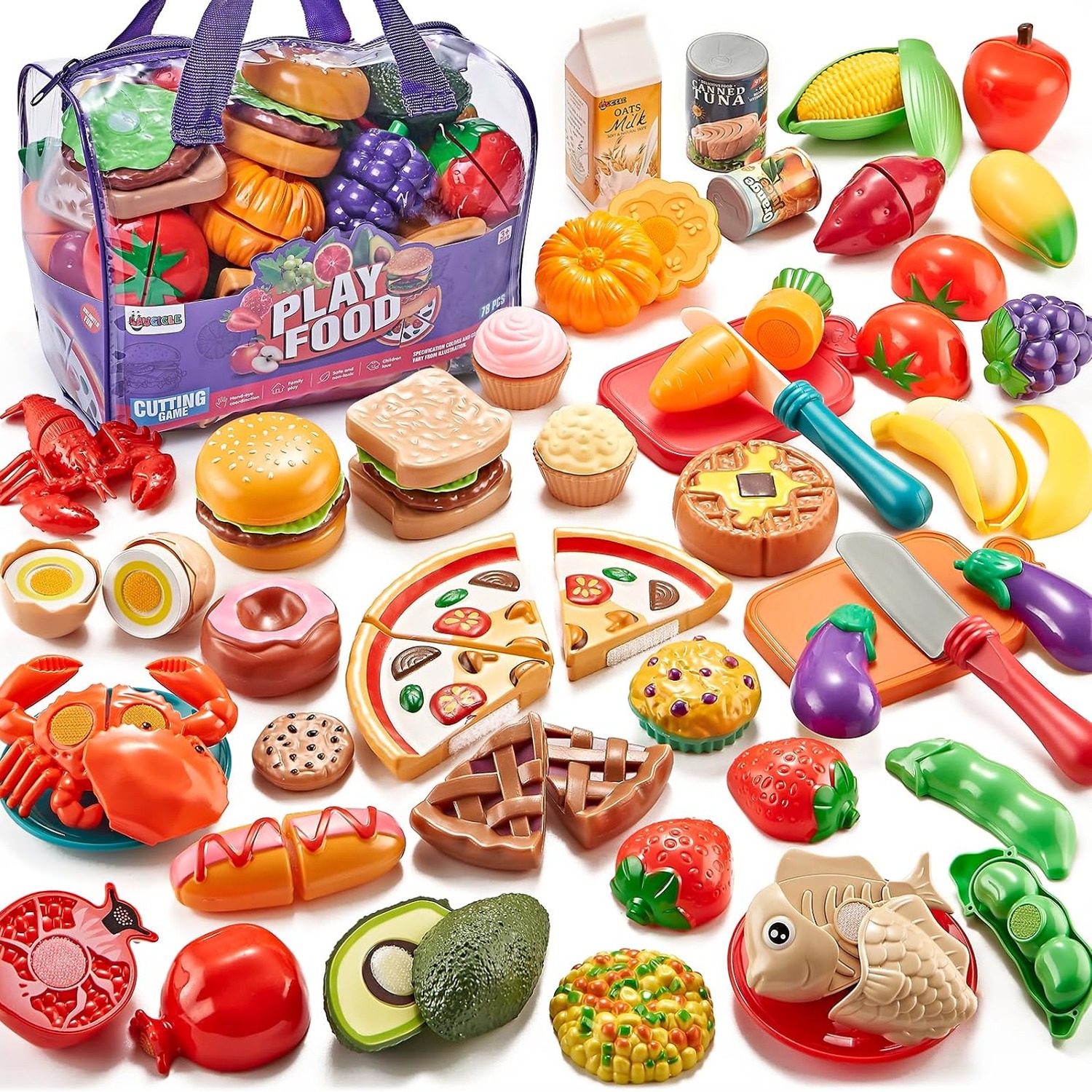
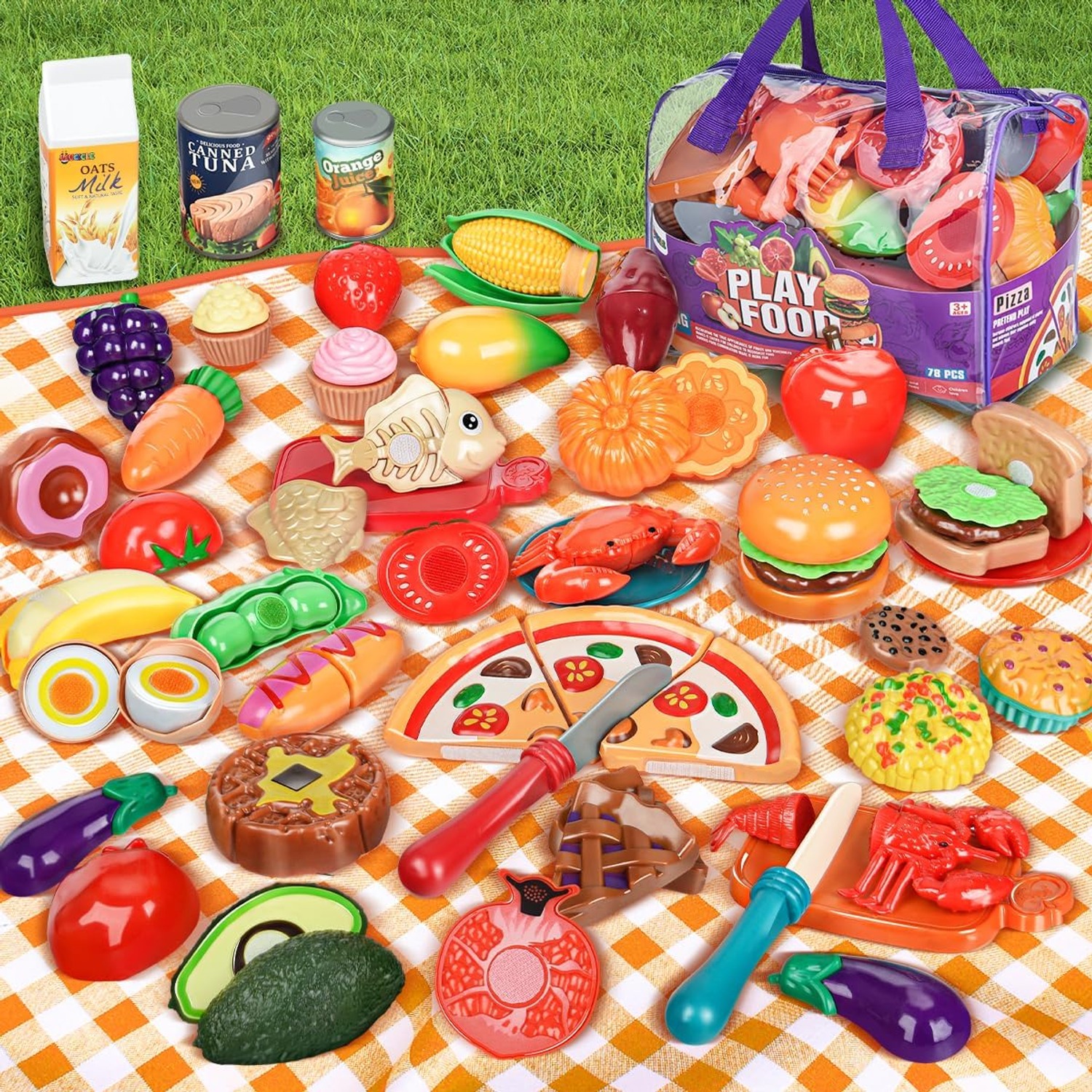
A 78 piece play food set gives that instinct enough raw material to run with. Small sets run out fast. Ten pieces is one plate of food, and once it has been served, the game ends. With 78 pieces, there is a kitchen, a shop, a picnic and a birthday party all in the same bag.
How cutting toy food works
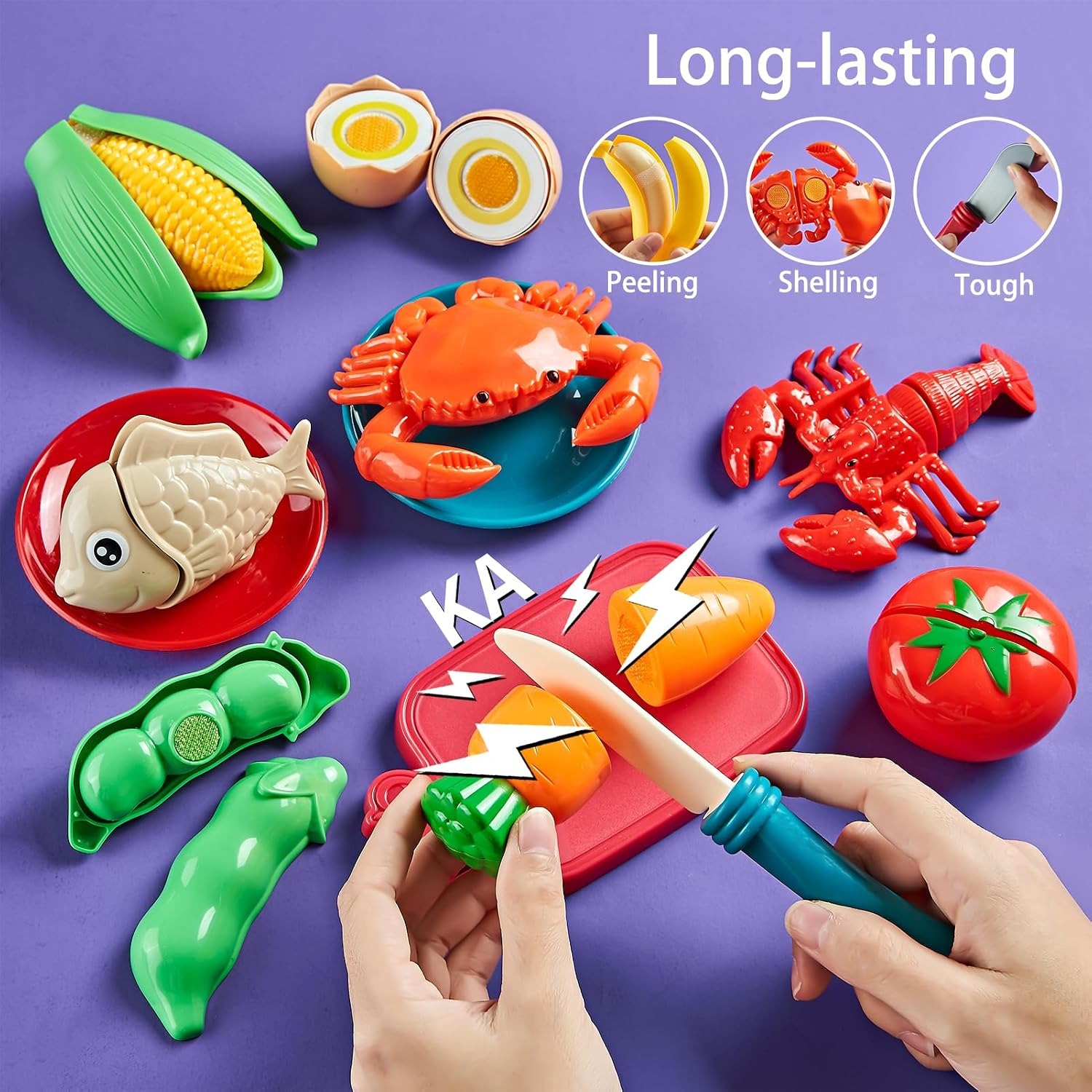
The cutting part is the hook that draws most children in first. Food pieces are made in halves and joined by hook-and-loop splits. The child lines up the plastic knife, presses, and the two halves come apart with a short tearing sound. Then they press back together, and the whole thing starts again.
There is no blade. The knife is plastic and the cutting is entirely about the fastening. That means a three year old can do it alone without you hovering, which is a genuine relief when you are trying to cook something real at the same time.
The repetition is doing more than keeping them busy. Lining up two halves takes visual judgement. Pressing them together takes grip strength. Holding one piece steady while cutting with the other hand teaches both hands to work on different jobs at once, which is the same skill that later shows up in doing up buttons and holding paper while drawing. None of it feels like practice to the child, and that is exactly why it works.
What is in a 78 piece set
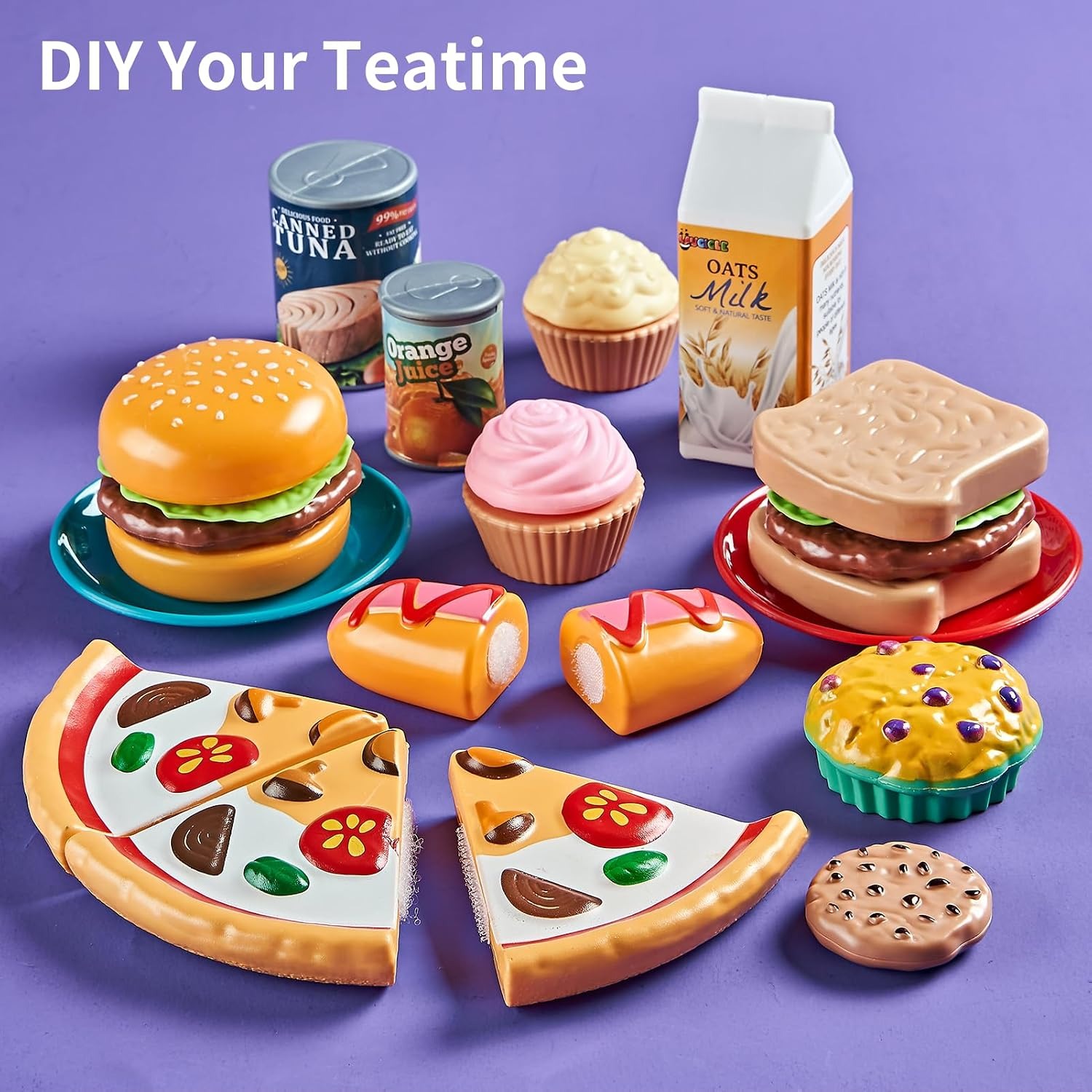
The range matters more than the headline number. This set covers fruit and vegetables, a pizza toy, fast food and burgers, desserts and cakes, canned foods, seafood, and the knives and utensils needed to serve it all. The pieces come with a storage bag.
That breadth is what keeps the play going across different days. Vegetables and fruit lead to market stalls and soup making. Burgers and pizza lead to drive-through and delivery games. Cakes and desserts lead to birthday parties for every stuffed animal in the house. A set that is all fruit gets repetitive by the third day.
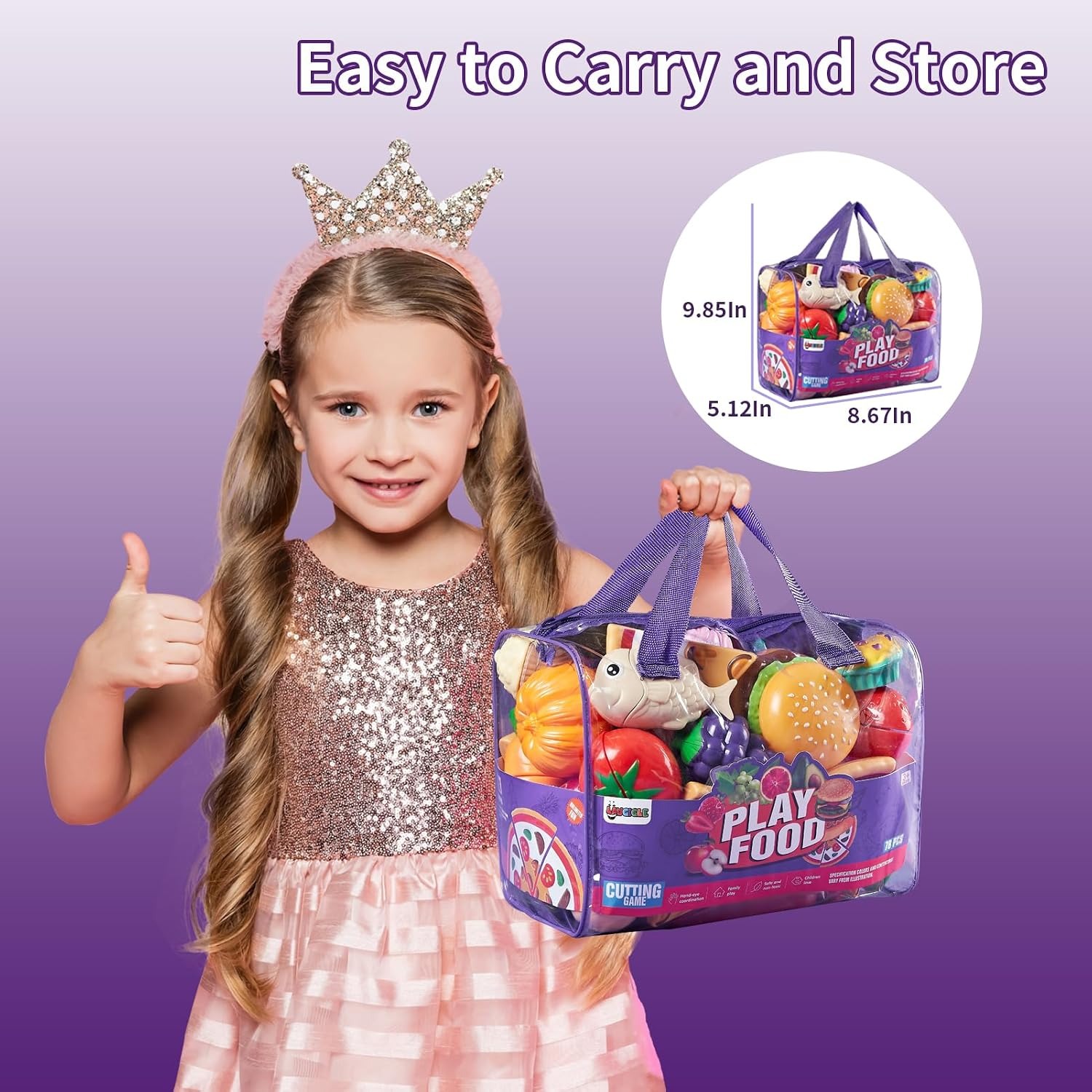
The specifics on the box are straightforward. Material type is plastic with smooth edges, described by the maker as BPA free. Recommended age is 36 months to 8 years. The packed size is around 23.5 x 15 x 16.5 cm and the weight is about 703 g. Colour is listed as purple, country of origin China.
Who it suits
The sweet spot is three to six. At three, children mostly sort, name and cut. They will line up every piece of fruit by colour and then cut it all in half, twice. At four and five, stories arrive. There is a restaurant with rules, a customer who has to wait, a chef who is cross about something. By six and seven, the food becomes a prop in bigger games rather than the main event, which is still perfectly good value from a toy.
It also works well where more than one child plays. Two children with ten pieces of food will argue. Two children with 78 pieces will negotiate, swap and open competing shops. That is why sets this size turn up so often in preschool home corners and family daycare rooms.
It is not right for babies or children who still mouth everything. The 36 month minimum is there because of small parts. If you have a crawler in the house, plan where the set lives before it arrives, not after.
How to choose between sets
A few things separate a set that gets played with from one that gathers dust.
Piece count is the obvious one, but check what the count includes. Some listings inflate the number by counting both halves of every cuttable item, and some count the plates and cutlery. Either way, 78 is a large set by any counting method, and the listed components here cover real variety rather than twenty identical strawberries.
The second thing is whether it cuts. Static plastic food is fine for a shop game but misses the hands-on part entirely, and hook-and-loop splits are the most durable of the common cutting mechanisms because there are no hinges or pegs to snap.
Third, look for storage. This is the single most underrated feature in pretend play. Loose food scatters into every corner of a house and under every piece of furniture. A dedicated bag turns tidying into a job a four year old can complete in two minutes, and it means you can take the whole lot to a grandparent's house without leaving half of it behind.
Finally, think about what you already own. If there is a toy kitchen or shopping cart in the house, a food set fills it out and brings it back to life. If there is not, that is fine. A tray and two bowls from your own kitchen do the job.
Looking after it
Care is simple because there is nothing electronic involved. Wipe the pieces with a damp cloth and a little mild dish soap, then dry them before putting them away. Keep them out of the dishwasher, the microwave and the oven, since heat will warp plastic.
The hook-and-loop splits need one extra bit of attention. Over time, hair, carpet fluff and crumbs get caught in the hooks and the grip weakens. Picking the loops clean every few months brings most of the hold back. Leaving a windowsill full of play food in direct sunlight for a summer is the other thing to avoid, as strong sun fades the colours.
Get into the habit of using the bag at the end of every session. It takes a minute, it stops pieces vanishing, and it gives the child a clear ending to the game, which helps with the transition to dinner or bed.
The short version
A 78 piece play food set earns its place because it does not run out. There is enough variety for several different games, enough pieces for more than one child, and a cutting action that children repeat for months without getting bored. It needs no batteries, no screen and no specific kitchen furniture.
If your child is between three and eight and shows any interest in copying what happens in the kitchen, this is a safe bet. The storage bag means it will still be a complete set in a year, which is more than most toys manage.