



Toy Warehouse
Company
Shop By Category
T&Cs
Shop Online
  • Box contents listed
  • Free tracked Canada-wide delivery over $125
  • 14-day returns

Kids Doctor Case with Coat | Doctor play set | Wooden medical kit toy

Kids Doctor Case with Coat and Wooden Medical Tools

$69.99 $83.99 Save $14
  • Everything Packs Away
  • Wood And ABS Plastic
  • Eases Clinic Nerves
  • Organ Learning Cards

Price: $69.99 $83.99

  • Free tracked Canada-wide delivery on orders $125+, otherwise a flat $18
  • Pay by card or PayPal, handled by the payment provider
  • 14 days to change your mind, plus your statutory rights
Product specifications
BrandLehoo Castle
Model NumberLC-8008
Set NameLehoo Castle Kids Doctor Kit Toy
Recommended Age36 months to 8 years
ThemeDoctor
ColourTurquoise
MaterialWood and ABS plastic
SizeChild-size
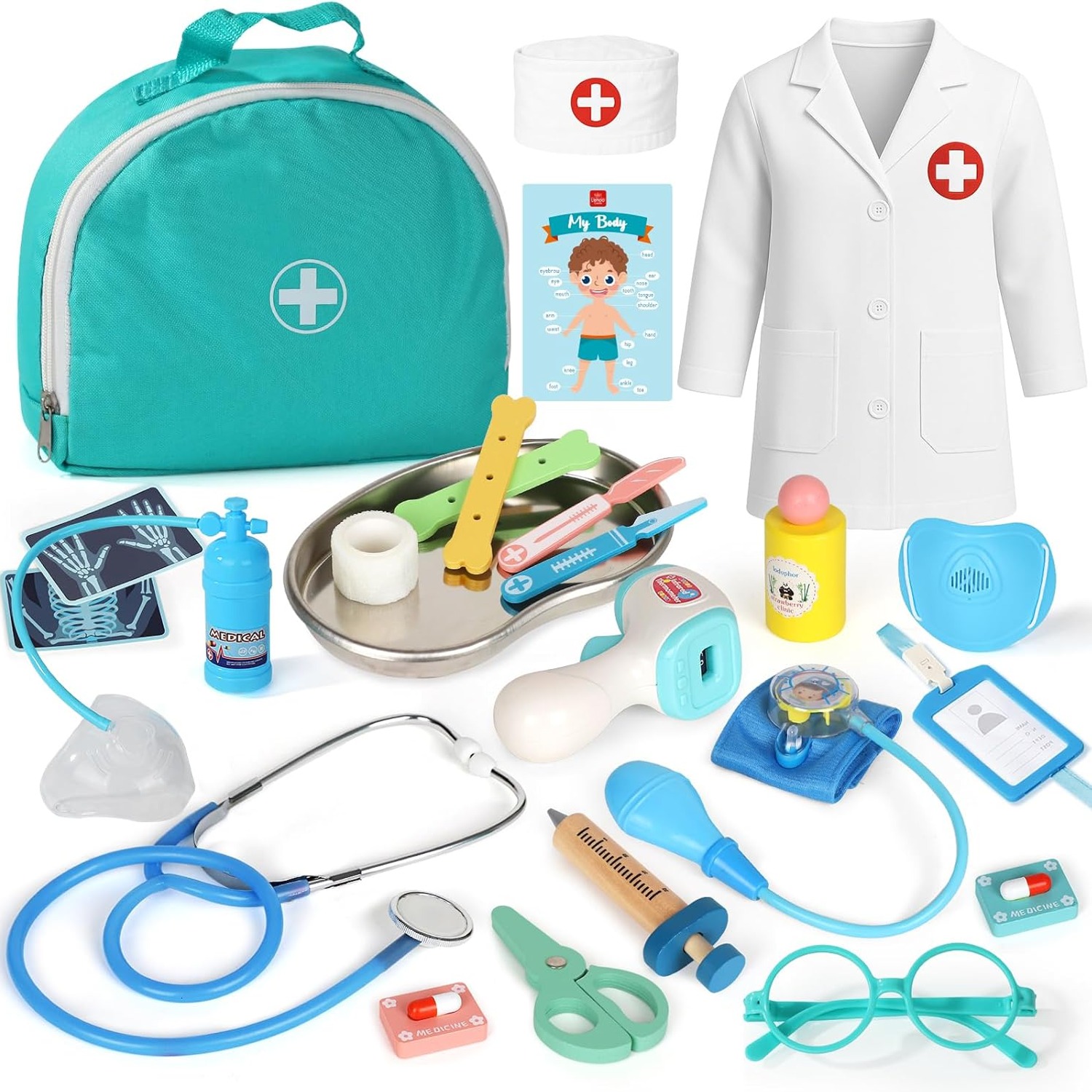
Included ComponentsStethoscope, blood pressure monitor, doctor mask and cap, wooden syringe, scalpel and capsule, removable human organs, organ knowledge cards, washable medical bag
Item Dimensions23.11 x 16 x 12.95 cm
Item Weight699 g
Country of OriginChina
Shipping & returns

Tracked delivery anywhere in Canada. It is free on orders of $125 or more, and a flat $18 below that.

If it is not right for you, send it back within 14 days of delivery in resaleable condition and we refund the price you paid, including standard delivery. That is a voluntary policy we offer on top of your legal rights. You cover the cost of returning it unless the item is faulty.

If it arrives faulty, damaged or not as described, we put it right at no cost to you under the consumer protection law of your province or territory (for example the Ontario Consumer Protection Act, 2002), return postage included.

Shipping details · Refunds and returns

Everything Packs AwayThe washable carry bag holds the whole kit with a handle built for small hands.
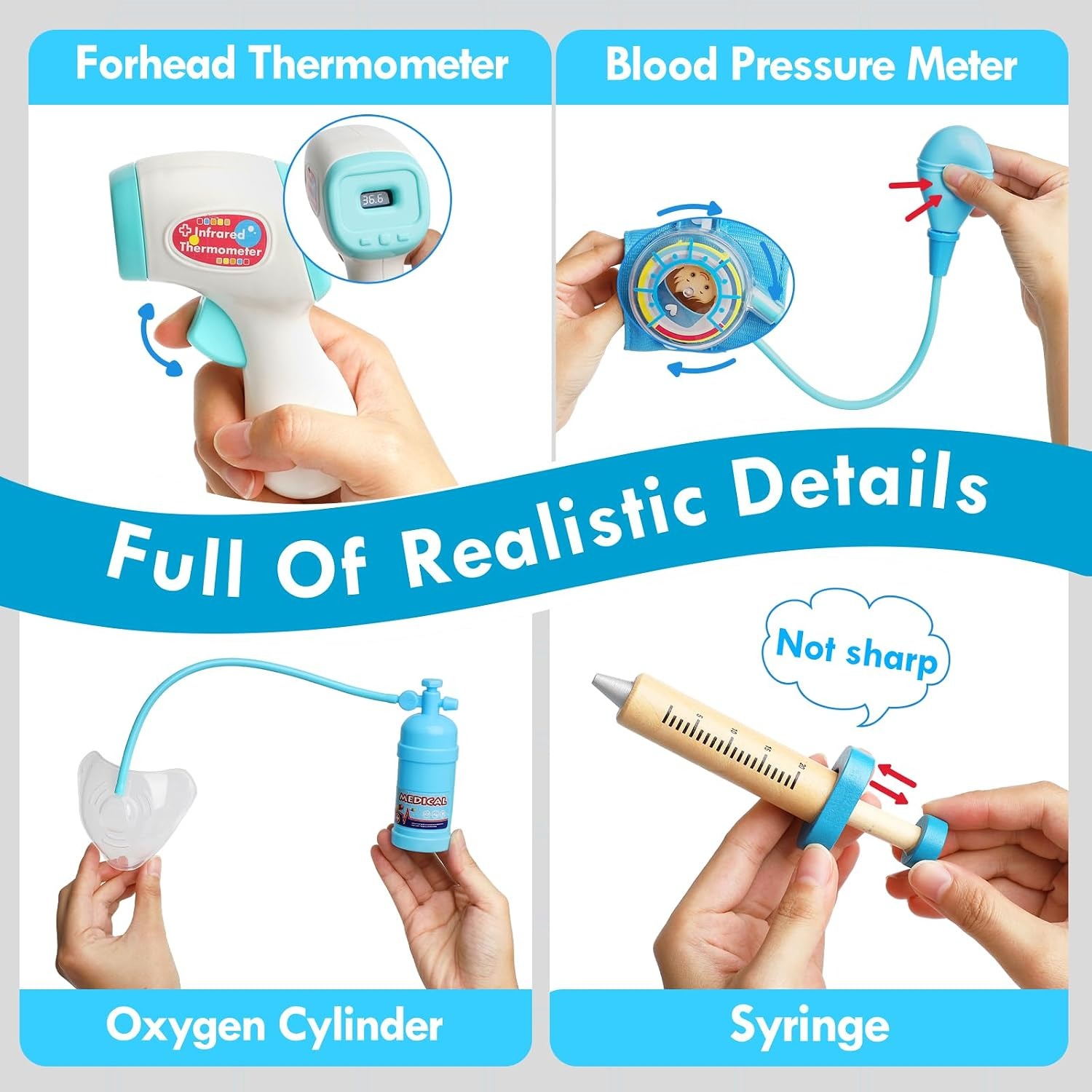
Wood And ABS PlasticTools are made from wood and ABS plastic, and the maker states there are no sharp edges.
Eases Clinic NervesFamiliar tools at home make the real check-up feel much less scary.
Organ Learning CardsIdentification cards introduce body parts without tiny loose model pieces.

Turn the living room into a clinic with a kids doctor case with coat that makes check-ups feel like fun instead of something to dread.

A carry-along medical bag packed with a stethoscope, blood pressure monitor, wooden syringe, scalpel and capsule, doctor mask and cap, plus human organ identification cards for curious hands aged three and up.

A complete kids doctor case with coat so children can run their own clinic from the first minute they open the bag.

The set includes a stethoscope, blood pressure monitor, doctor mask and cap, wooden syringe, scalpel and capsule, plus removable human organ pieces and organ knowledge cards.

Tools are made from wood and ABS plastic with smooth edges.

The washable medical bag stores every piece and has a handle, which makes tidy-up quick and travel easy.

Recommended for ages 36 months to 8 years, making it a practical birthday, dress-up or Christmas gift.

Kids Doctor Case with Coat and Wooden Medical Tools

Most children meet a stethoscope for the first time in a cold room with a stranger holding it. This kids doctor case with coat flips that around. The tools arrive at home, in a bag your child carries themselves, and the first patient is usually a teddy bear or a very patient grandparent. By the time a real appointment comes around, the equipment is familiar instead of strange.

Kids Doctor Case with Coat and Wooden Medical Tools

Inside the washable medical bag you get a stethoscope, a blood pressure monitor, a doctor mask and cap, and wooden pieces including a syringe, a scalpel and a capsule. There are also removable human organs and a set of organ knowledge cards, so the play can move from checking a pulse to naming what sits behind the ribs. The cards keep that lesson simple and avoid a pile of tiny model parts.

Kids Doctor Case with Coat and Wooden Medical Tools

The build mixes wood with ABS plastic. Edges are smoothed, which matters when a three year old is waving a toy scalpel around with real enthusiasm. The whole set weighs about 699 g and the bag measures roughly 23.11 x 16 x 12.95 cm, so it fits in a backpack, a car door pocket or under a bed without taking over the room.

Kids Doctor Case with Coat and Wooden Medical Tools

Doctor play is one of the easiest ways to get a child talking. They explain what is wrong with the patient, they decide on a treatment, and they practise being calm and in charge. That is vocabulary, sequencing and empathy all wrapped up in a game. A good doctor play set gives children a script they already half know from real life, which is why this kind of toy tends to get played with again and again rather than once.

Kids Doctor Case with Coat and Wooden Medical Tools

The carry bag earns its keep. Every tool has a home, the handle is sized for small hands, and tidy-up becomes part of the game rather than a fight. It also makes the set travel well, which is handy for holidays, waiting rooms, sleepovers at a grandparent's house, or the back seat on a long drive.

Not sure yet? That is fine.

A toy has to suit the child it is for, and you cannot always judge that from a photograph. If it is not right for you, send it back within 14 days of delivery in resaleable condition and we refund the price you paid, including standard delivery. That is a voluntary policy we offer on top of your legal rights.

If it turns up faulty, damaged or not as described, that is on us. The consumer protection law of your province or territory covers you, and we pay the return postage. Read the full detail on our refunds and returns page, or ask us anything before you order.

Frequently Asked Questions

What exactly comes in this kids doctor case?

The set includes a stethoscope, a blood pressure monitor, a doctor mask and cap, wooden syringe, scalpel and capsule pieces, removable human organs and organ knowledge cards. All of it packs into a washable medical bag with a carry handle. The bag is part of the set, not an extra.

What age is this doctor play set made for?

The manufacturer recommends ages 36 months to 8 years. Younger children in that range usually focus on the stethoscope and the dress-up pieces, while older ones get more out of the organ cards. It is one of the better role play toys for 3 year olds because the pieces are chunky and simple.

Is the set made from wood or plastic?

Both. The maker lists wood and what it describes as non-toxic ABS plastic, with the syringe, scalpel and capsule being the wooden pieces. The combination keeps the kit light enough for a child to carry while still feeling solid.

Does the stethoscope actually work?

It is a toy stethoscope designed so children can hear a heartbeat-style sound during play. It is not a medical instrument and should never be used for any real health check. Treat it as part of the pretend play experience.

Are there small parts I should worry about?

The maker replaced an earlier human body model with organ identification cards specifically to reduce small loose parts for the 3+ age group. Even so, supervise preschoolers and check pieces regularly for wear. Follow the stated 36 month minimum age.

How big is the medical bag?

The product dimensions are listed as 23.11 x 16 x 12.95 cm. That is roughly the size of a small lunch bag, so it slips into a backpack easily. The whole set weighs about 699 g.

What colour is it?

The colour is listed as turquoise. The exact shade can vary slightly between batches and under different lighting in photos. No alternative colourways are listed for this model.

Does the coat come in a specific size?

The size is listed simply as child-size, and no measurements for the coat are specified in the maker's details. Most dress-up pieces in sets like this are cut generously so they fit across the recommended age band. If you need exact garment measurements, ask before ordering.

Is this a good first doctor kit for a nervous child?

Yes, and that is one of the main reasons parents buy it. Handling a stethoscope and a blood pressure cuff at home takes the mystery out of them. By the time a real appointment arrives, the gear looks familiar rather than threatening.

Can two children play with it together?

Easily. One plays doctor and the other plays patient, then they swap. With a larger group you can add soft toys as extra patients so nobody is waiting around.

How do I clean the toys?

Wipe the plastic and wooden tools with a damp cloth and a little mild soap, then dry them properly. Do not soak the wooden parts or put anything through a dishwasher. The bag is described as washable, so follow any care label on it.

Will the wooden pieces splinter?

The tools are described as having no sharp edges, and the wooden items are finished smooth. As with any wooden toy, check them now and then for chips or rough spots, especially after heavy use. Retire any piece that has cracked.

What do the organ knowledge cards teach?

They introduce the names and rough positions of human organs in a simple, picture-led way. Children can match a card to the removable organ pieces or just look at them during play. It is a gentle first step into body science rather than a formal lesson.

Is this a Montessori style toy?

It leans that way because it uses real-world objects and open-ended play rather than lights and sounds. Children direct the story themselves and learn by doing. If you are looking for the best montessori pretend play set for a preschooler, this fits the general approach.

Is it suitable for both boys and girls?

Completely. Doctor play has no gender and the turquoise colour is neutral. Parents searching for the best doctor kit for girls or the best doctor kit for boys land on the same product here.

Does it help with speech and language?

Role play like this is a strong driver of talking. Children explain symptoms, give instructions and invent stories, which builds vocabulary and sentence structure without feeling like practice. Join in as the patient and you can prompt even more conversation.

Can it be used in a classroom or daycare?

Yes, it works well as a dramatic play corner set. The carry bag makes it easy to pack away between sessions and keeps pieces together. Count the pieces at the end of each day so nothing wanders off.

How many pieces are in the set?

An exact piece count is not specified by the maker. The listed components are the stethoscope, blood pressure monitor, mask and cap, wooden syringe, scalpel and capsule, removable organs, organ cards and the bag. Check the pieces against that list when the parcel arrives.

Does it need batteries?

No batteries are listed as required or included. The set relies on mechanical and imaginative play rather than electronics. That also means nothing stops working when a battery dies mid-game.

Is it a good birthday gift?

It is one of the easier gift picks for a three to seven year old because it arrives complete and ready to play. The bag gives it some presentation value without extra wrapping. Many shoppers rate it among the best birthday gift options for a 4 year old.

Will it suit an eight year old?

Eight is the top of the recommended range, so it depends on the child. Older kids often enjoy running a more detailed clinic with charts and rules, or teaching a younger sibling. If the child has outgrown pretend play, look at a science kit instead.

Where is it made?

The country of origin is listed as China. The manufacturer is YunheLechangToysCo.,Ltd and the model number is LC-8008. Those details are printed on the packaging.

Can the organs be removed and put back?

Yes, the human organs are described as removable, which lets children take them out, name them and place them back. That repetition is what makes the learning stick. The organ cards back it up with pictures.

How does it compare to a plastic-only doctor kit?

Plastic-only kits are usually lighter and cheaper, but they can feel flimsy. Mixing wood with ABS plastic gives the tools more weight in the hand, which children notice. If you want the best wooden medical kit toy feel without going fully wooden, this sits in the middle.

Is the bag sturdy enough for daily use?

It is a fabric medical bag with a handle, designed to be washed and carried. Treat it as you would a lunch bag rather than a suitcase. Avoid overloading it with toys that did not come with the set.

What if a piece goes missing?

Most families keep playing with the rest of the set, since the game does not rely on any one item. If something important disappears early, contact us and we will look at options. Packing everything back in the bag after play is the best prevention.

How is it delivered?

Most orders arrive within 5 to 10 working days of the order date. Rural, remote and northern addresses can take a little longer. Delivery is free on orders of $125 or more and a flat $18 under that, and you get tracking by email once the parcel is on its way.

Can I have it sent straight to the birthday child?

Yes, just enter their address as the delivery address at checkout. Keep in mind the parcel may arrive in standard retail packaging rather than gift wrap. Add a note if you would like the invoice left out.

What is the returns policy?

Change of mind returns are accepted within 14 days of delivery for unused items in their original packaging, with the buyer paying return postage. Get in touch before sending anything back so we can give you the return details. A faulty or damaged item is put right at our cost.

What if it is not right for my child?

If the set does not suit them, get in touch and we will help you return it or swap to something better matched, within our returns window. Tell us the child's age and what they actually enjoy playing, and we can point you to a closer fit. Nobody wants a toy sitting unused in a cupboard.

Choosing a Kids Doctor Kit That Actually Gets Played With

6 min read Toy Warehouse

The real problem a doctor kit solves

Children do not like surprises in medical settings. A room they have never seen, a person they do not know, and a cold metal disc pressed to their chest without warning. No wonder appointments go badly. Most parents have had the car park negotiation at least once.

Pretend play fixes a surprising amount of this. When a child has already held a stethoscope, listened to a heartbeat and wrapped a cuff around a teddy bear's arm, the real version loses its edge. It is still not their favourite outing, but it stops being frightening. That is a big gain for a toy that lives in a small bag.

There is a second thing going on too. Playing doctor puts the child in charge. In a real clinic, things happen to them. In play, they decide what is wrong, what the treatment is and when the patient can go home. That reversal is genuinely useful for anxious kids, and it is why a doctor play set tends to outlast most toys bought in the same month.

What is in this set and why it matters

This kit arrives in a washable medical bag with a handle sized for small hands. Inside you get a stethoscope, a blood pressure monitor, a doctor mask and cap, and wooden pieces including a syringe, a scalpel and a capsule. There are also removable human organs and a set of organ knowledge cards.

The organ cards deserve a mention. An earlier version of this kit used a human body model, which meant more small parts. Swapping to identification cards suits the 3+ age group while keeping the learning. Children can match a card to an organ piece, name it, and build a basic map of what sits where inside a body. For a lot of kids, that is their first real body science lesson and it happens while they think they are playing.

Materials are wood plus ABS plastic, with edges finished smooth. The whole set weighs roughly 699 g and the bag measures about 23.11 x 16 x 12.95 cm. Light enough to carry, solid enough to feel like proper equipment rather than a party favour.

Who it suits

The recommended age is 36 months to 8 years, which is a wide band, and children use it differently across that range.

Three and four year olds mostly do the physical actions. Listen to the heart, pump the cuff, give an injection to a dinosaur. The dress-up pieces matter a lot at this age because putting on the mask and cap is how they step into the role.

Five and six year olds start building stories. The patient has a name, a history and a problem that takes several steps to fix. This is where you hear the best talking, and where vocabulary grows fastest.

Seven and eight year olds often turn it into a system. Waiting rooms, appointment times, charts, rules about who goes first. Some will also start asking real questions about the organ cards, which is a nice opening if you want to lean into it.

It works just as well for a single child with a shelf of soft toys as it does for siblings taking turns. In a daycare or classroom corner, it holds up because the bag keeps everything together between sessions.

How to choose between doctor kits

If you are comparing options, a few things separate the sets that get played with from the ones that end up at the back of a cupboard.

Storage is the first. A kit without a bag or case spreads across the floor in about four minutes and then quietly disappears, piece by piece, under the sofa. A carry bag with a handle keeps the set together and makes packing up part of the game instead of a chore.

Material is the second. All-plastic kits are cheap and light, and some are fine. But children notice weight in the hand. Wooden tools feel more like the real thing, which supports the pretend better. A mix of wood and plastic, like this set uses, is usually the practical middle ground since purely wooden stethoscopes are not a thing.

Completeness is the third. A kit with four pieces runs out of story quickly. You want enough variety that the child can invent several different complaints and treatments. The combination of listening tools, measuring tools, treatment tools and dress-up gear covers most of what a child's imagination reaches for.

Costume matters more than people expect. Putting on a coat, mask or cap is a clear signal to a child that they are now someone else. Sets without any dress-up element lose some of that switch.

Finally, check the age guidance honestly against your child rather than hoping. If a preschooler still puts things in their mouth, a kit with small pieces is not the one, regardless of the stated minimum.

Getting more out of it at home

A few simple habits make a doctor kit go further.

Be the patient. Lie down, describe a silly symptom and let your child take over completely. Resist the urge to correct the medicine. The point is their story, not accuracy.

Use it before a real appointment. A day or two beforehand, play out the visit. Weigh the teddy, listen to its chest, explain what each tool does. Children handle the real thing far better when the sequence is already familiar.

Bring the organ cards in slowly. Start with heart and lungs because those connect directly to the stethoscope. Add more over time rather than trying to cover the full set in one afternoon.

Give the patients names and come back to them. A recurring patient with an ongoing problem gives a child a reason to open the bag again next week.

Pack up together every time. It takes two minutes and it is the single biggest reason a set like this still has all its pieces a year later.

Looking after the set

Care is straightforward. Wipe the tools with a damp cloth and a little mild soap, then dry them properly before they go back in the bag. Do not soak the wooden items and keep everything out of the dishwasher. Wood and prolonged water do not get along.

The medical bag is described as washable, so follow any care label on it and let it dry fully before refilling. Store the whole thing somewhere dry rather than a damp garage or shed, and keep it out of long periods of direct sun so colours stay even.

Check the wooden pieces now and then for chips or rough patches, especially after a particularly energetic week. Retire anything that has cracked. Everything else should keep going for years.

The short version

This is a complete, carry-anywhere doctor kit for children roughly three to eight. You get a stethoscope, a blood pressure monitor, a mask and cap, wooden syringe, scalpel and capsule, removable organs and organ cards, all inside a washable bag with a handle. The build mixes wood with plastic and the edges are smoothed.

It is light at about 699 g, small at roughly 23.11 x 16 x 12.95 cm, and it packs away in under two minutes. For most families the real value shows up twice: in the hours of pretend play at home, and in the much calmer child at the next real check-up.

Browse the shop

Ready to open the clinic?

Order the kids doctor case with coat today and let the first patient be a very brave teddy bear.

Ask us a question

Page summary

The Lehoo Castle Kids Doctor Case with Coat (model LC-8008) is a pretend play medical kit for children aged 36 months to 8 years. It includes a stethoscope, a blood pressure monitor, a doctor mask and cap, wooden syringe, scalpel and capsule, removable human organs, organ knowledge identification cards, and a washable medical carry bag with a handle. Tools are made from wood and ABS plastic, and the maker states there are no sharp edges. The item is turquoise, measures 23.11 x 16 x 12.95 cm and weighs about 699 g. Country of origin is China. It supports imagination development, role play, and understanding of medical tools and body parts. Exact coat sizing and fabric composition are not specified by the maker.