
The complete guide
Choosing a Construction Truck Carrier Set for a Preschooler
The problem with most toy trucks
A single toy truck has a short shelf life. A child pushes it across the floor, makes an engine noise, and then looks around for something to do with it. Without anything to carry, dig, or deliver, the story runs out fast and the truck ends up under the sofa by Thursday.
Carrier sets solve that. When a big truck arrives holding six smaller vehicles, the play has a built-in plot. Something has to be loaded. Something has to be driven somewhere. Something has to be unloaded and put to work. That is a loop a three or four year old can repeat for an hour, and then come back to the next day with a slightly different version of the same job.
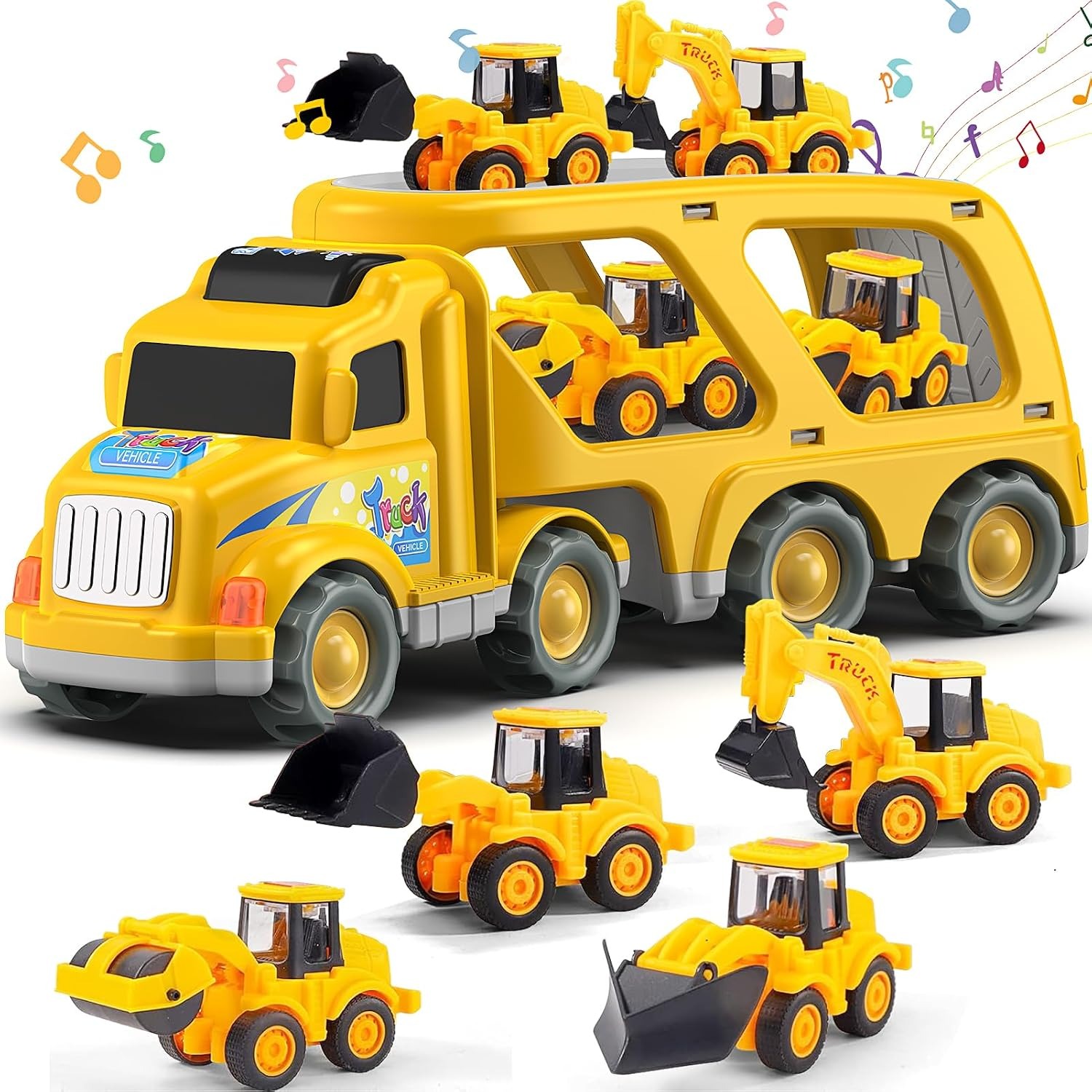
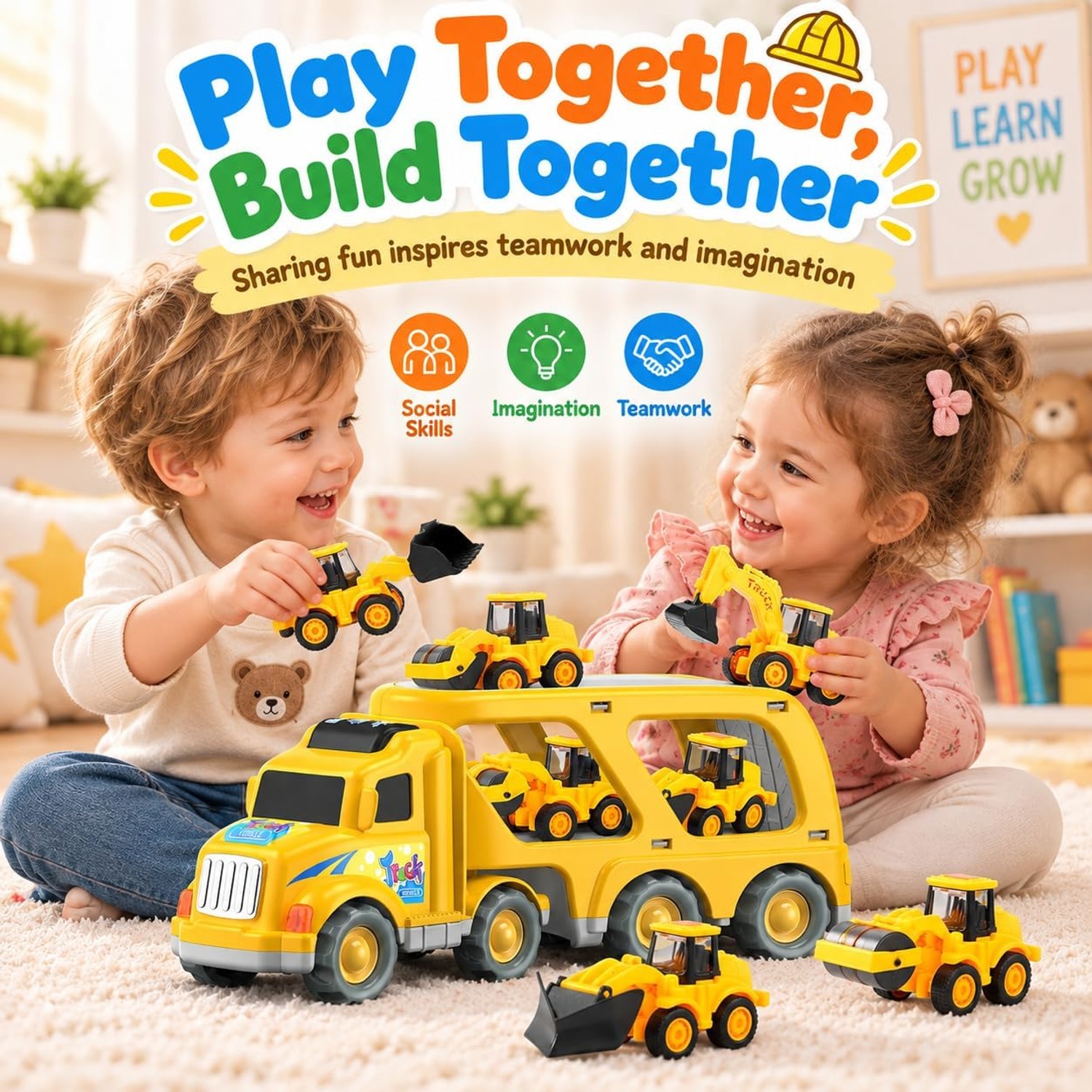
This set works that way. One large transport truck, six mini construction vehicles, a tailgate that drops, and a cab that rotates and separates from the trailer. Nothing complicated, but enough moving parts to keep a small person busy.
How friction power actually works
The phrase on the specification sheet is "inertial power", which sounds more technical than it is. There is a small flywheel inside the vehicle connected to the wheels. When a child pushes the toy forward against the floor, the flywheel spins up. Let go, and the stored spin keeps feeding the wheels for a few metres.
Two things follow from that. First, there is nothing to charge and nothing to run flat. A friction toy on Christmas morning works the same at four in the afternoon as it did at seven. If you have ever hunted for AA batteries in a drawer while a child waits, you know why that matters.
Second, the child is in control of the energy. The harder the push, the further it goes. That connection between effort and result is more interesting to a preschooler than a vehicle that drives itself, and it keeps them physically involved instead of watching.
One practical note. Friction vehicles need a reasonably smooth surface to show off. Timber, tile, laminate, and vinyl are ideal. On deep carpet the wheels sink in and the toy stops almost immediately, which can be disappointing the first time. A hallway, a kitchen floor, or a flattened piece of cardboard solves it.
The lights and sound on this set sit apart from the rolling action. A button on the top of the big truck triggers a whistle and flashing lights when pressed. It is a bonus feature rather than the main event, which is how it should be at this age.
Who this set suits
Veslier gives the recommended age as 36 months to 5 years. That is the window to pay attention to. Below three, small parts are a real risk and the loading and unloading action is beyond most children's hand control. Above five or six, many kids are moving on to building sets with more steps and more pieces.
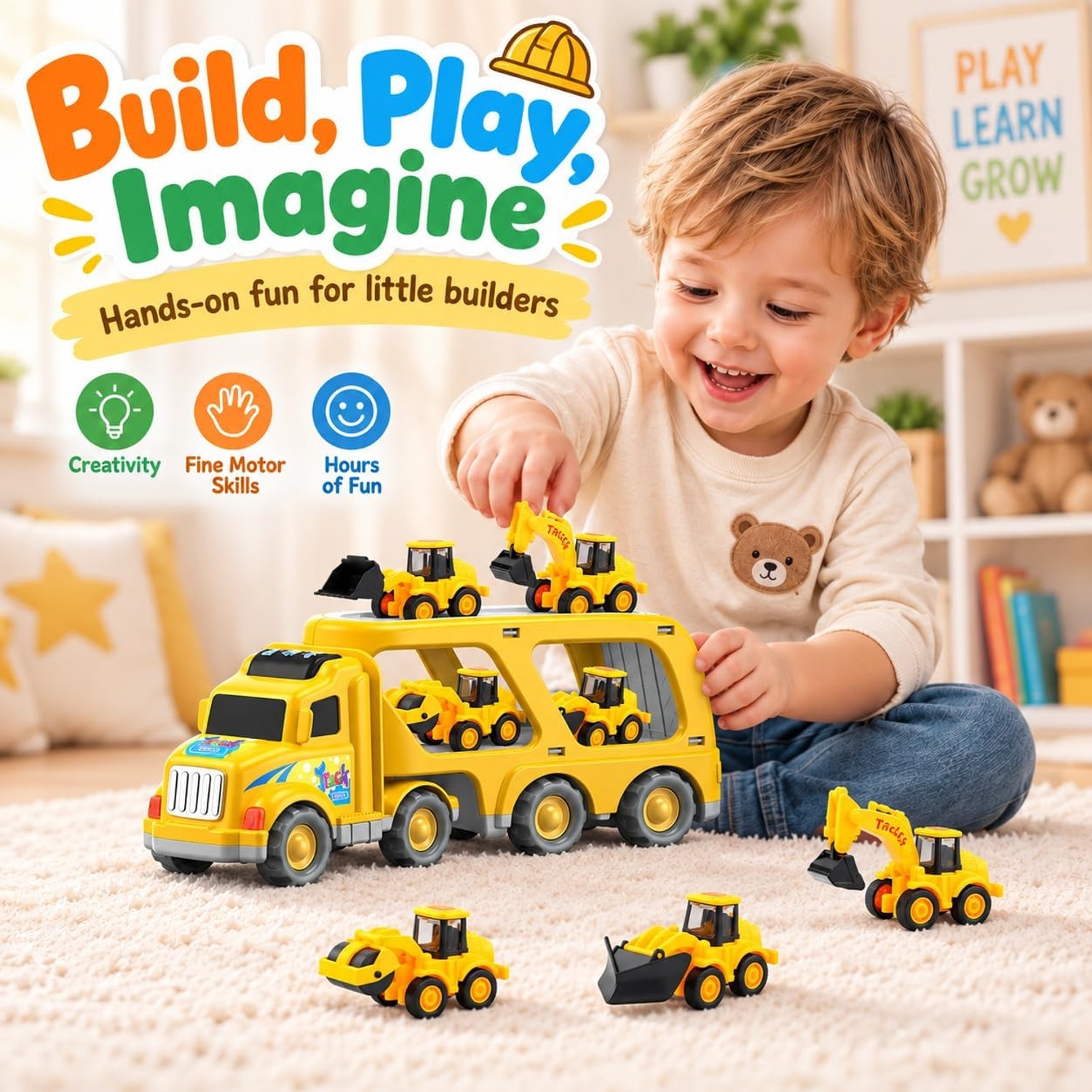
Inside that range it lands well. Three year olds mostly enjoy the loading, the tailgate, and the pushing. Four and five year olds start building actual scenarios, a road here, a hole there, a delivery that has to arrive before the bulldozer can start. The stated educational objective is creativity, imagination, and early childhood development, and that is a fair description of what carrier play encourages.
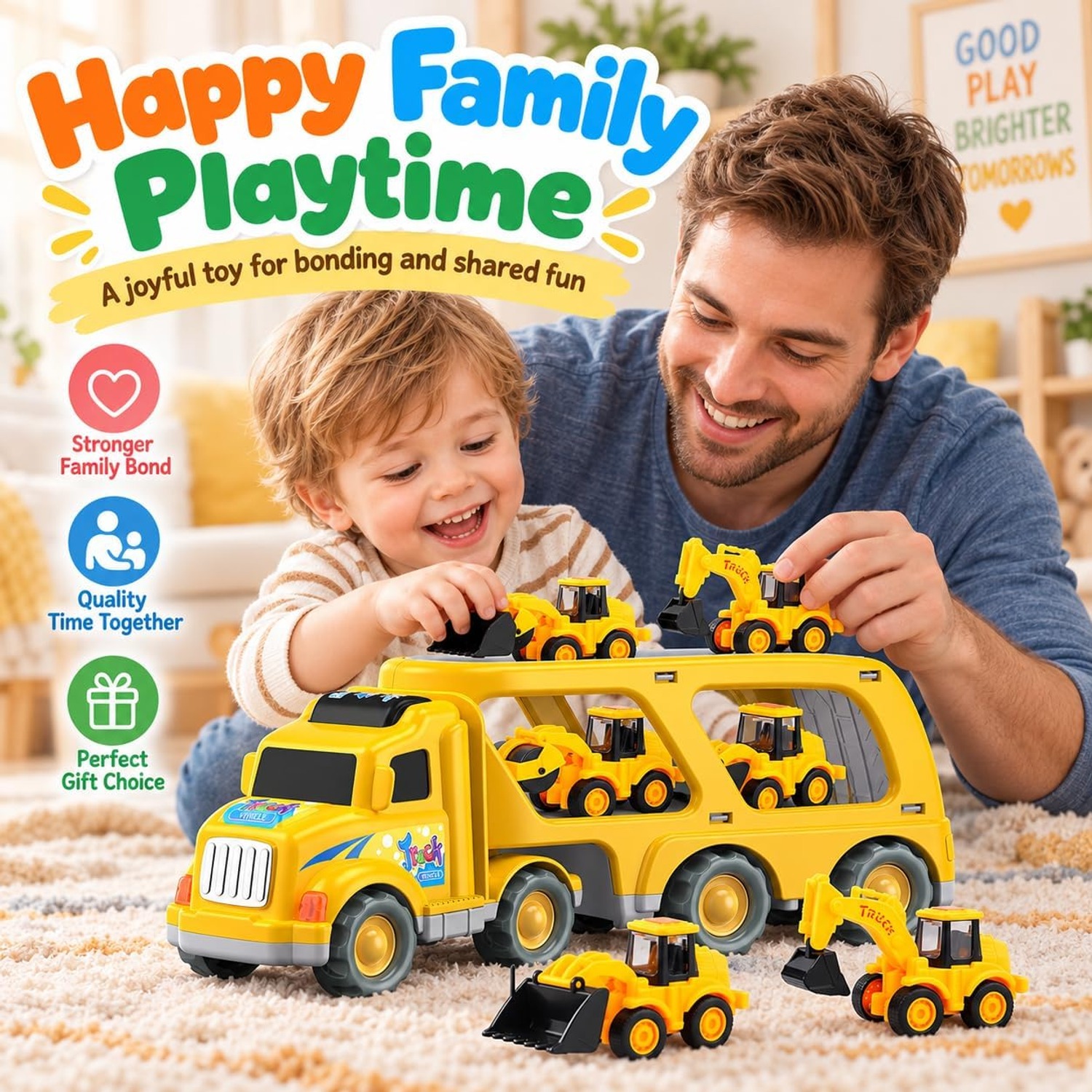
The maker gives the number of players as 1, so it is designed as a solo toy. In a house with siblings it usually becomes a shared one anyway, with one child on the carrier and another on the mini vehicles. There are enough pieces for that to work without constant negotiation.
What to check before you buy any carrier set
A few things separate a toy truck that lasts from one that does not.
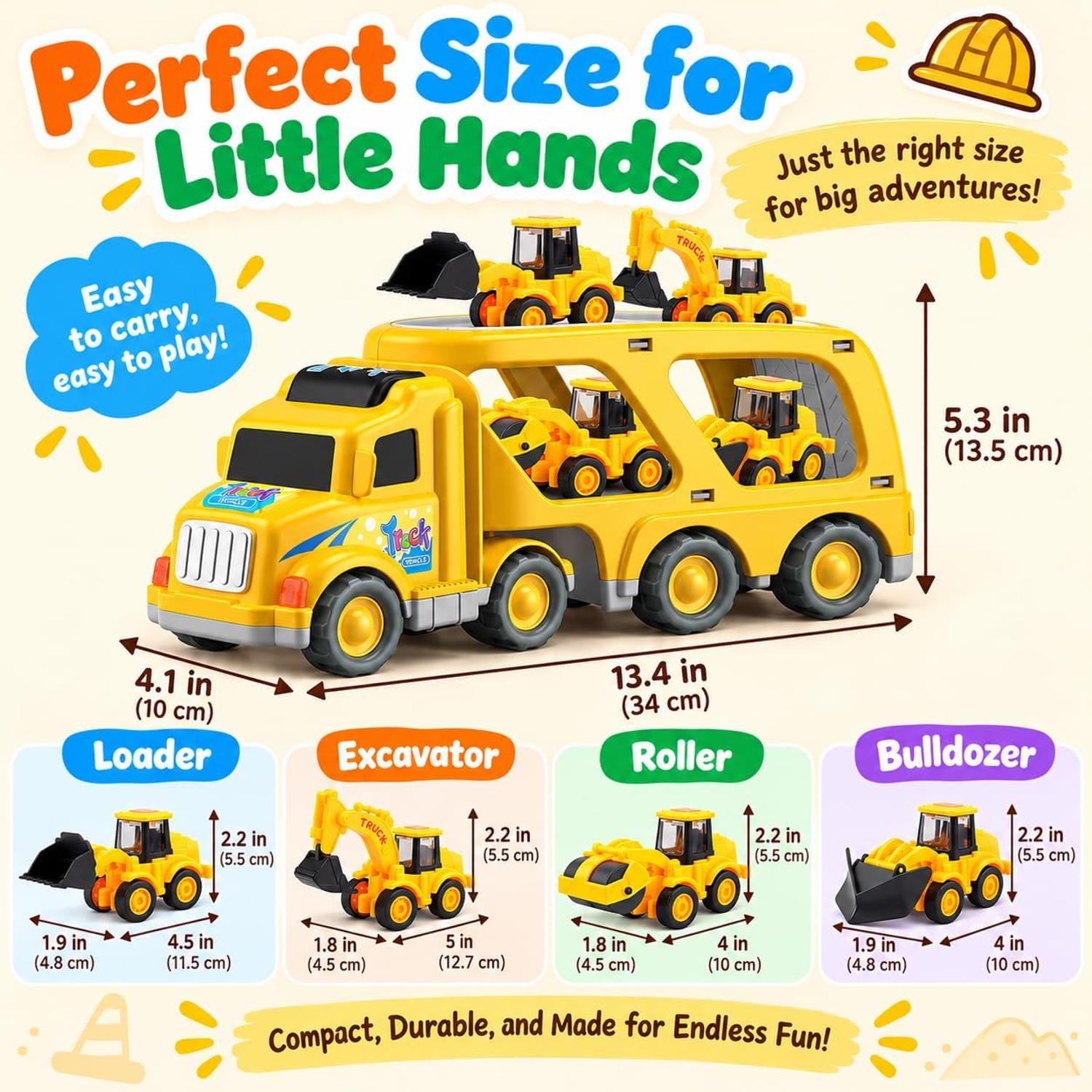
Size is the first. This one measures 35 x 14.5 x 11 cm and weighs 730 g. That is big enough to feel like a real carrier in a child's hands and light enough to be carried to the garden without help. Much smaller and the mini vehicles get lost in the sofa. Much bigger and the child needs an adult to move it.
The second is how the parts move. A fixed, sealed truck is just a shape on wheels. This one has a rotating cab, a cab that separates from the traction cabin, and a tailgate that opens. Each of those gives a child something to do with their hands, and hand actions are what keep a toy in rotation.
Third, think about power. Battery toys are louder and flashier, and they are also the ones that end up silent in a cupboard when nobody replaces the cells. A friction drive sidesteps that entirely. If you are weighing up the best friction powered truck against a motorized one, the honest answer for this age group is that friction usually gets more hours of play.
Fourth, consider where it will be used. Plastic construction toys live hard lives. Sandpits, gardens, driveways, the back of the car. A set like this is the kind you expect to come back dusty, which is fine as long as you can wipe it down.
Living with it day to day
Cleaning is simple. A damp cloth over the truck and the mini vehicles, then dry them off before they go away. Keep them out of the dishwasher and the washing machine. Heat and plastic are a poor match.
The most common problem with friction vehicles is not a broken mechanism, it is debris. Hair, carpet fibre, and sand wind around the axles and the wheels stop turning freely. Flip the vehicle over, pick the fibres out, and it is usually back to normal in under a minute. Doing that every few weeks keeps everything rolling.
Storage sorts itself out if you use the trailer. Load the six mini vehicles back inside, close the tailgate, and the whole set stays together instead of scattering across three rooms. Keep it indoors when it is not in use and away from long stretches of direct sun, which can warp plastic over time.
As a gift
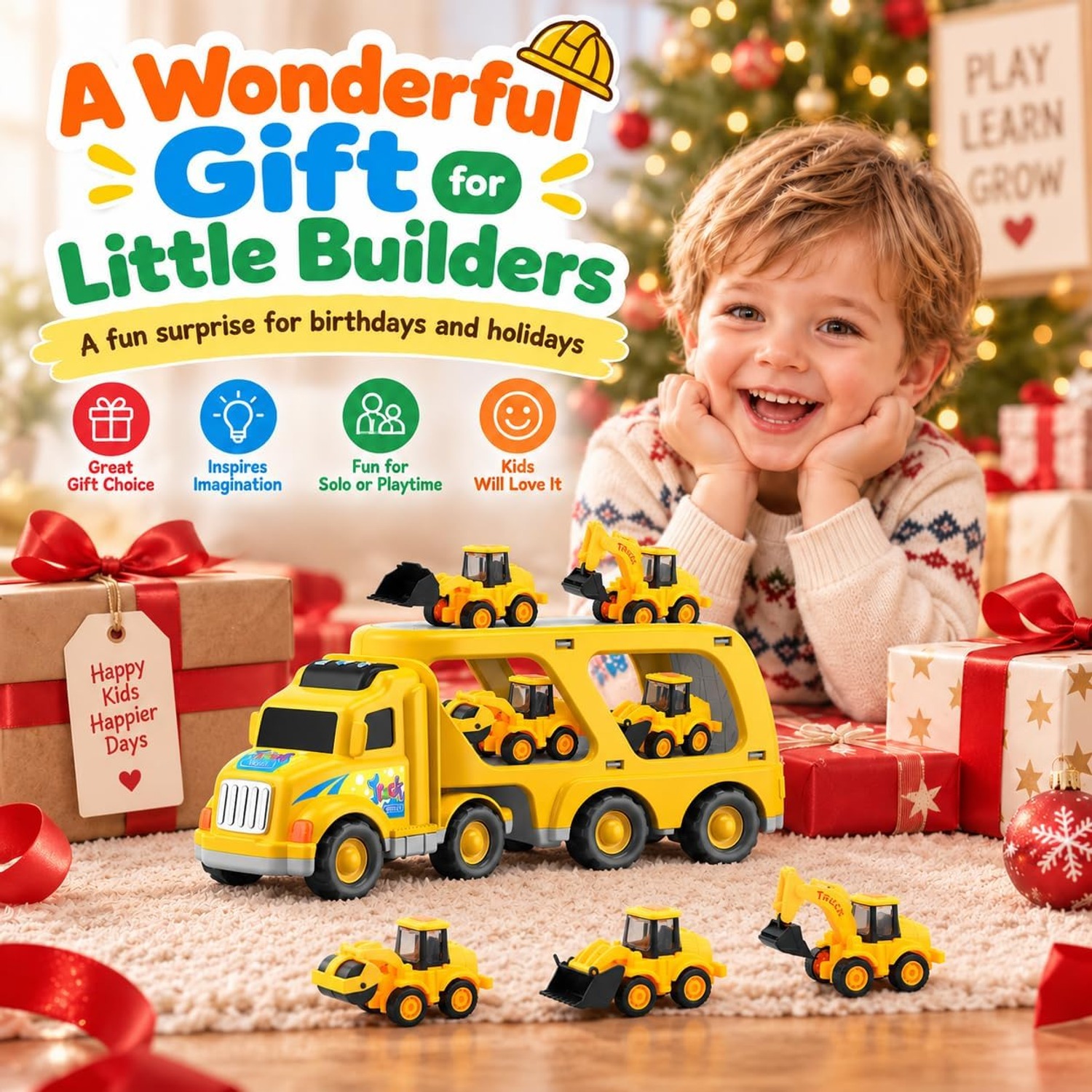
This is an easy present to give. There is no assembly, no charging, and no sitting on the floor with a screwdriver while the birthday child waits. Unwrap, open the tailgate, start playing.
It also has a nice reveal. The child unwraps one big truck, then discovers six more vehicles inside it. That second surprise is worth more than it sounds, and it is a large part of why carrier sets do well as birthday and holiday gifts for the three to five age group.
Construction play suits all children, not just boys, despite how these toys are often marketed. Digging, hauling, and building are universal interests at this age. Go by the recommended age rather than anything on the packaging.
The short version
If you want one toy that gives a preschooler a complete play scenario out of the box, a carrier set beats a single vehicle every time. This one holds six mini construction vehicles, runs on friction rather than batteries, and has a rotating cab, a separating trailer, and a tailgate that opens. It measures 35 x 14.5 x 11 cm, weighs 730 g, and is recommended by the manufacturer for ages 36 months to 5 years.
Use it on hard floors for the best rolling, keep sand out of the axles, and load everything back into the trailer at the end of the day. Do that and it should see out plenty of construction projects.