
The complete guide
How to Choose and Get the Most From a Carnival Games Set
The problem with party games
Anyone who has run a kids' party knows the awkward gap. Food is finished, the cake is not ready, and twelve children are circling the lounge looking for something to break. You need an activity that starts fast, needs no explanation, and does not require every child to be the same age or height.
Most games fail one of those tests. Board games take too long to set up and only suit four players. Sports need a flat field and a referee. Craft activities make a mess that outlasts the party. A toss game sits in a useful middle ground. It takes seconds to put out, the rules fit in one sentence, and a five year old and a forty year old can play the same round without anyone feeling patronised.
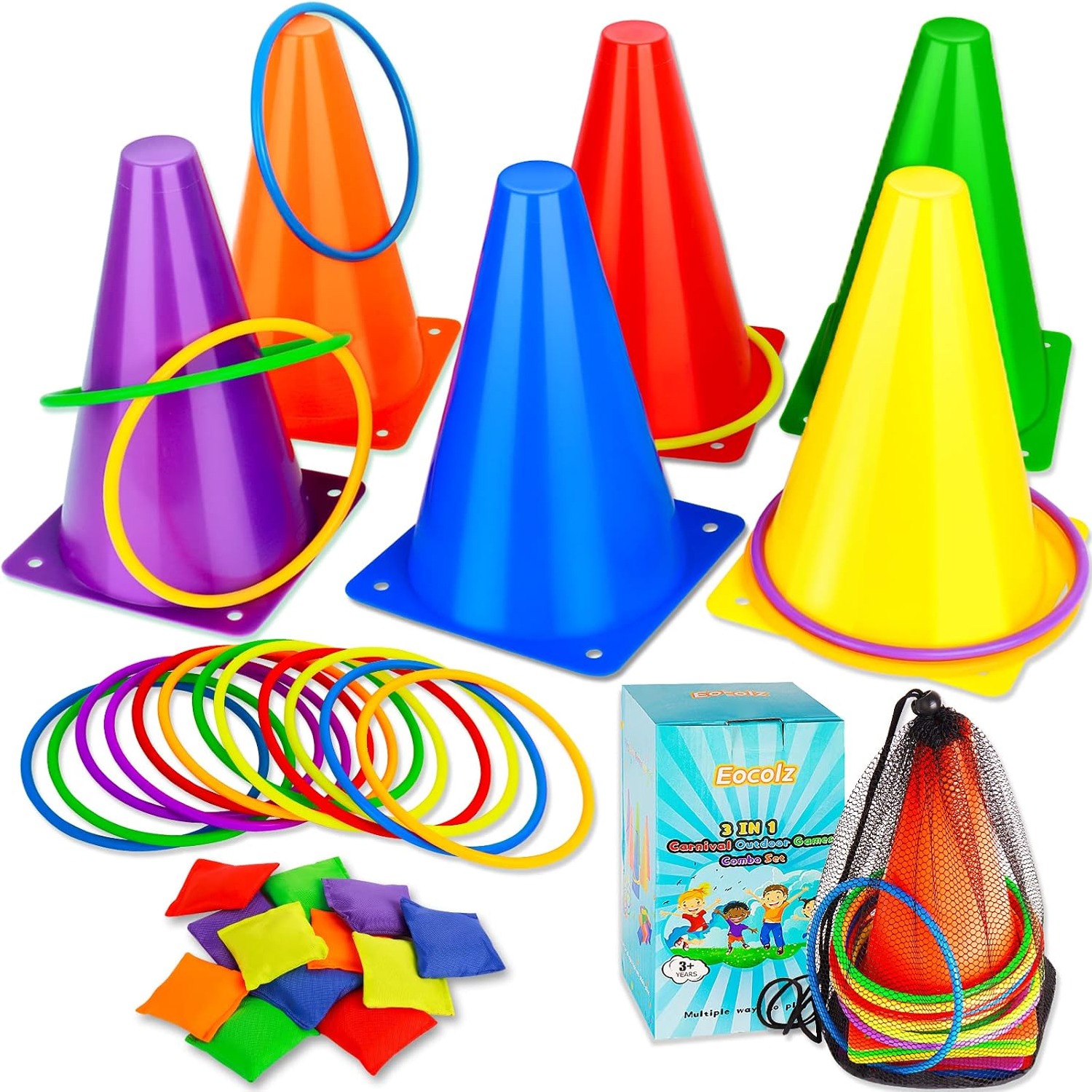
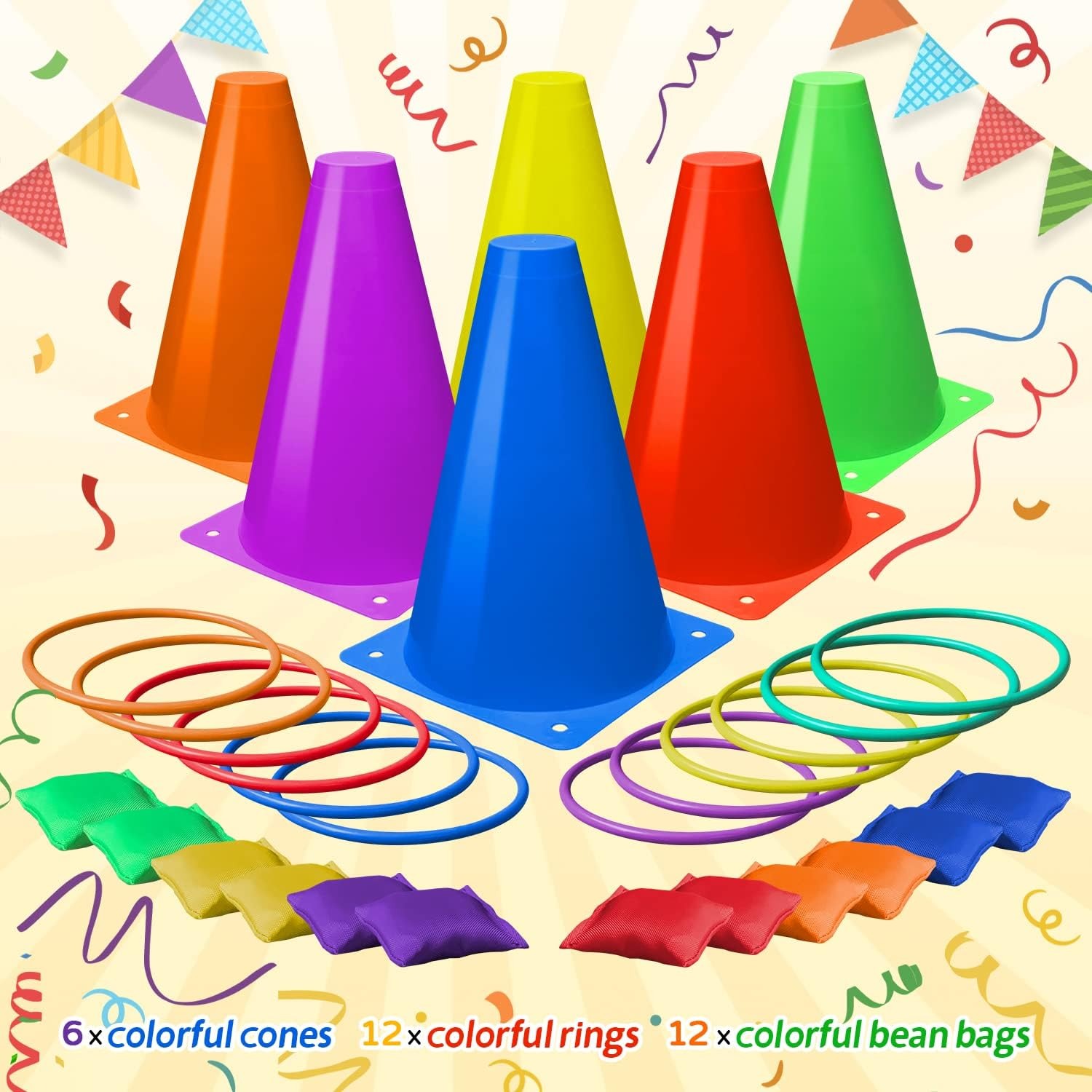
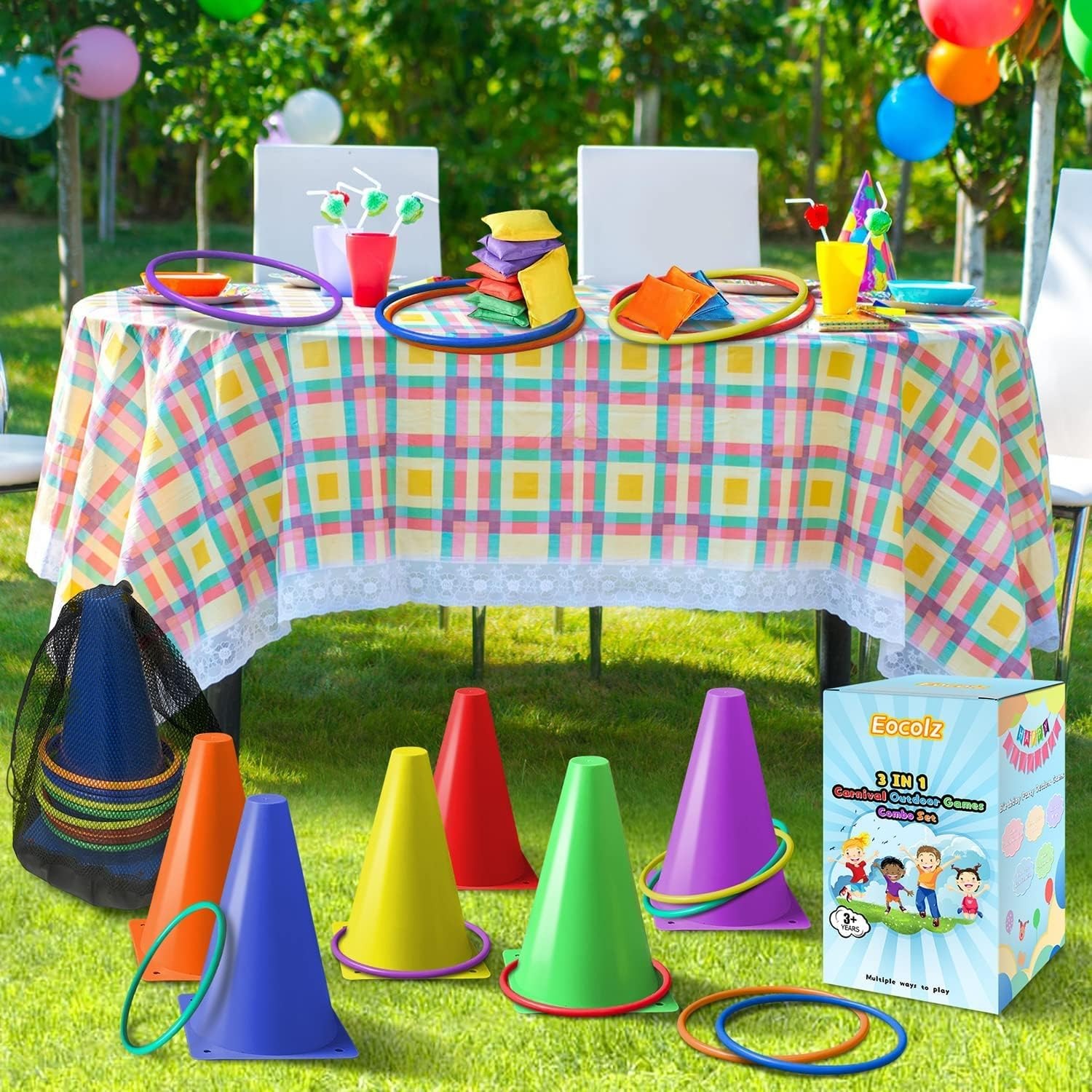
That is the job this carnival games set 3 in 1 is built for. Six cones, twelve rings, twelve bean bags, one bag to carry it all. Thirty one pieces total, and no instructions needed beyond "throw this at that".
How the three games work
The clever part is that the cones do double duty. They are the target for both the ring toss game and the bean bag toss game, which is why one box covers three ways to play rather than selling you three separate products.
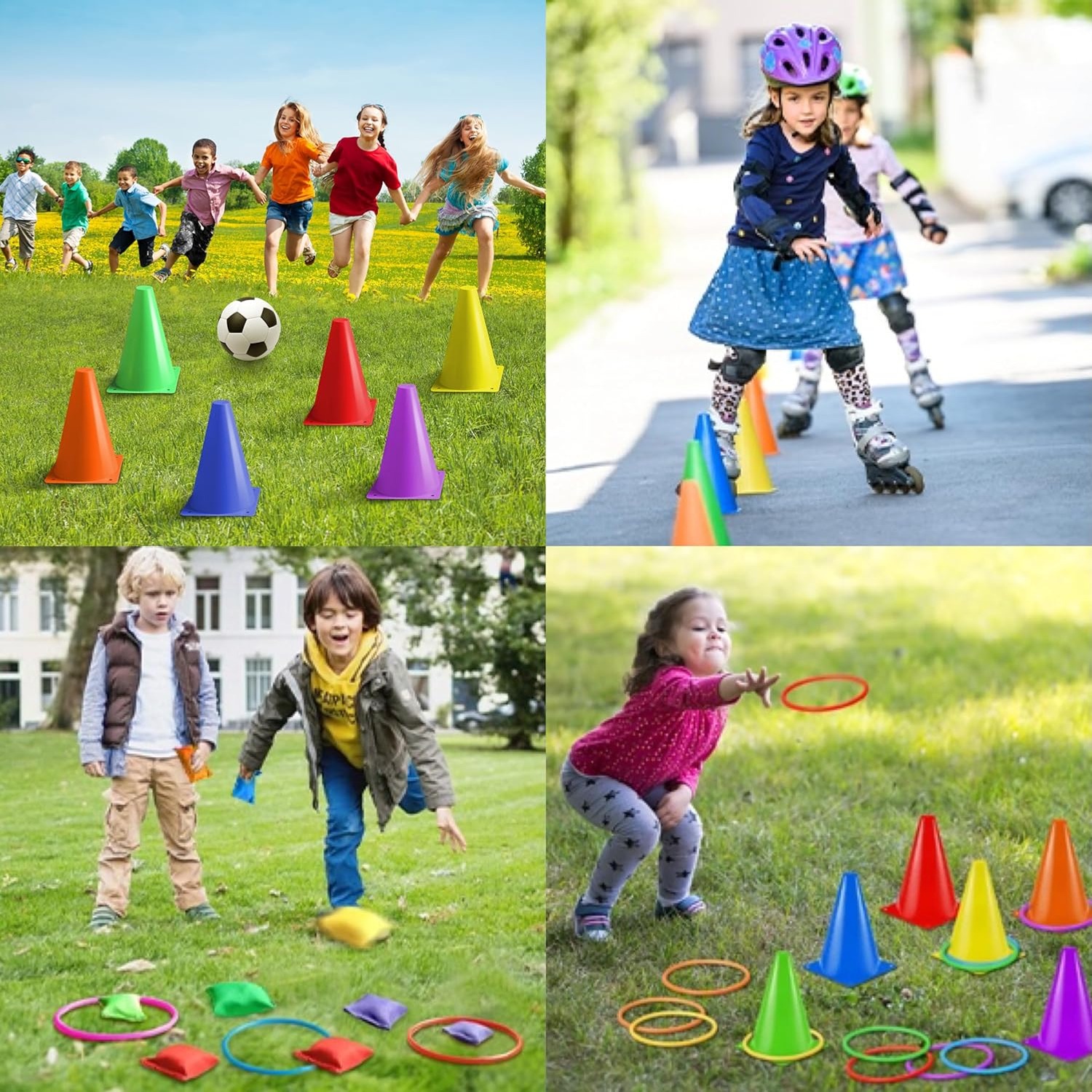
The first game is straightforward ring toss. Stand the cones up in a line, a triangle or a scattered pattern, then throw rings and try to land them over a cone. The further back you stand, the harder it gets. Assign different point values to different cones and the scoring gets interesting fast.
The second game uses the bean bags. Because bean bags do not bounce or roll, they land where they hit. That makes them better for distance and accuracy challenges. You can knock cones over, land bags inside a cone circle, or mark a landing zone on the grass with the cones and score by proximity.
The third game is whatever your group invents. This is where most families land after twenty minutes. Someone suggests a relay. Someone else adds a rule where a ring is worth double if you throw left-handed. The simplicity of the pieces is the point, because it leaves room for house rules. Groups looking for the best backyard party games usually end up here rather than with anything that comes with a thick rulebook.
Who this suits
Families with mixed-age kids get the most out of it. The handicap system is built in and invisible. Younger children stand closer, older children and adults stand further back, and nobody has to be told they are getting an easier version. That keeps competitive siblings from arguing about fairness.
Teachers and activity leaders are the second big group. A set like this works in a school hall, a church basement, a scout meeting or a holiday club. The pieces are light, so a child can carry them, and nothing needs charging or inflating. Many run it as one of the best indoor toss games for rainy days when outdoor play is off the table.
Party planners use it as a station. Set it up in a corner, write a score target on a card, hand out a small prize for anyone who beats it, and that corner stays busy for an hour. It is a familiar format from fetes and carnivals for a reason, and it scales well for anyone hunting the best carnival theme party supplies without renting equipment.
Campers and day-trippers are the fourth group. At roughly 1.06 kg in its parcel, it slides into a boot alongside the picnic gear without taking real space.
Choosing the right set
If you are comparing options, four things matter more than anything else.
Piece count is first. Twelve rings and twelve bean bags means two players can each take six throws without stopping to collect. Smaller sets force a pause after every turn, which kills the rhythm with impatient kids.
Target type is second. Cones work better than flat targets because they stand up on grass, carpet and gravel. They also store flat when stacked, which matters more than people expect.
Portability is third. A set with a bag is a set you will actually take places. A set in a flimsy cardboard box ends up in the garage after one season with half the pieces missing.
Age range is fourth. Something marketed only at preschoolers will bore a ten year old within minutes. A set with adjustable difficulty, which here just means moving the throwing line, covers a much wider age span. That is the quiet strength of a good cone toss game set.
Setting up well
Space is the main thing. A few metres in each direction is enough for a basic game. Outdoors, pick flat ground without a slope, because rings that roll downhill turn into a fetch exercise.
Indoors, clear the throwing line properly. Move lamps, photo frames and anything glass well out of the way. Bean bags are soft but they still carry enough weight to knock something off a shelf.
Mark the throwing line with something visible. A rolled-up towel, a chalk line or a spare cone all work. A fixed line stops the slow creep forward that happens when a child is losing, and it saves arguments later.
Decide on scoring before you start. It can be as simple as one point per ring. If you have a wide age spread, give younger players a closer line rather than extra points, since that feels fairer to everyone involved.
Looking after it
Plastic and fabric both last a long time with basic care. Wipe the cones and rings with a damp cloth and a little mild soap after a session on wet grass, then let them dry fully before they go back in the bag. Damp pieces in a closed bag lead to musty fabric.
Bean bags should be spot cleaned and air dried. Avoid the washing machine unless the fabric label specifically allows it, because the stitching on toss bags is not usually built for a spin cycle.
Store the bag somewhere dry and out of direct sun. UV light makes plastic brittle over time, which is the most common reason cheap outdoor toys crack after a summer. A shelf in a cupboard or a crate in the garage is fine.
Count the pieces at the end of each session. Thirty one pieces is easy to check, and finding a missing ring in daylight is far easier than finding it next week in long grass.
Getting more out of it
Once the basic games get stale, change one variable at a time. Move the line back. Limit throws to the non-dominant hand. Put a time limit on each turn. Stack cones in a pyramid instead of a row. Each change refreshes the game without needing new equipment.
Team play works well with larger groups. Split into two sides, give each side a set number of throws, and total the scores. That removes the pressure from weaker throwers and keeps everyone involved while they wait.
For parties, tournament brackets are popular. Six players, three rounds, a small prize at the end. It gives the afternoon a shape and a natural finish, which helps when you need to move a group on to the next thing.
The short version
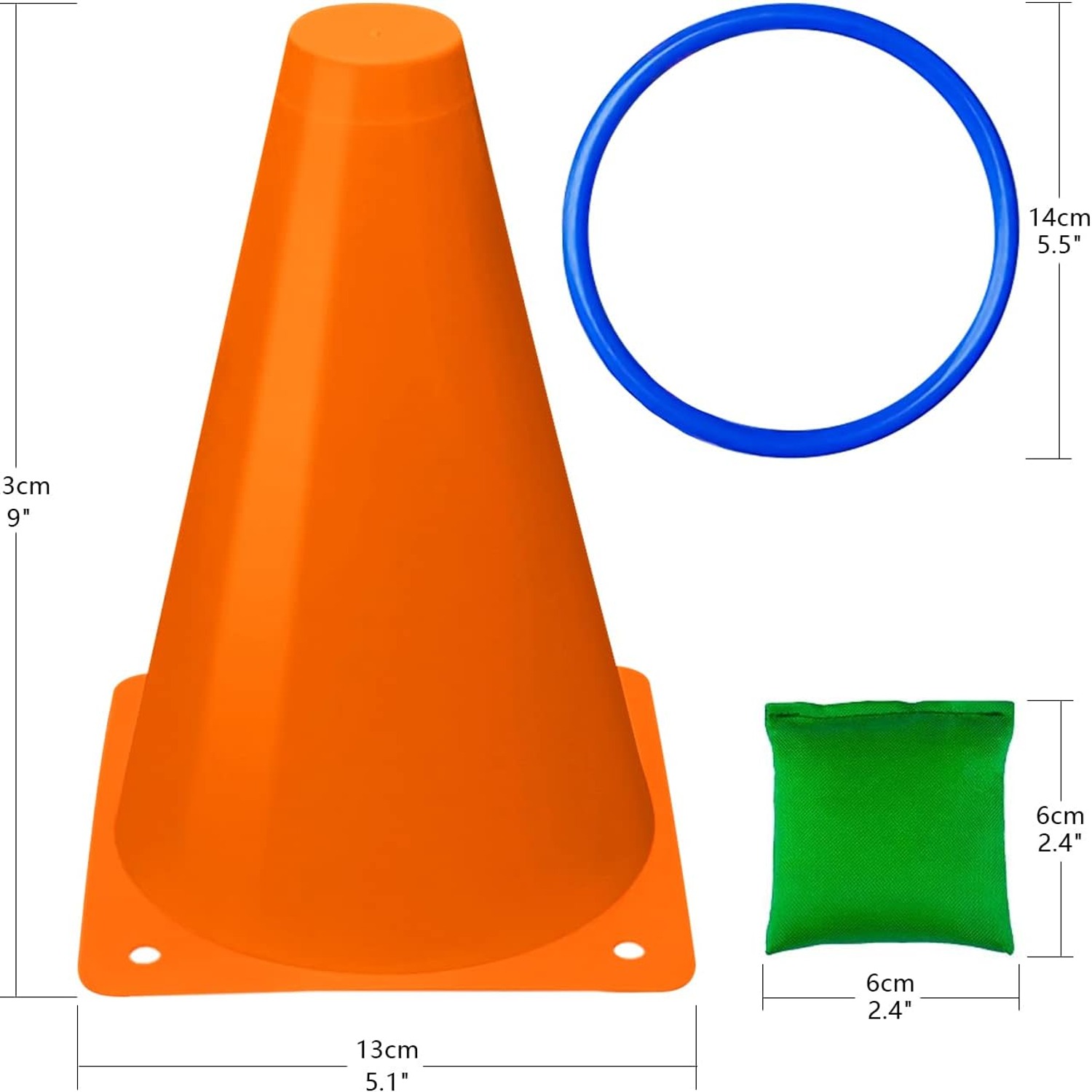
This is a 31 piece toss set built around six cones, twelve rings and twelve bean bags, rated for two to six players and listed under the Eocolz model ZZX-019. The material type is plastic, the style is classic yellow, and the parcel runs about 28.1 x 15.4 x 15.2 cm at roughly 1.06 kg.
It suits families with mixed ages, teachers who need a fast indoor activity, and anyone planning a party who wants something that sets up in under a minute. Care is simple, storage is easy, and the rules bend to whoever is playing. If you want one box that covers a ring toss game, a bean bag toss game and a dozen invented variations, this is a sensible place to start.