
The complete guide
Choosing a Kids Gardening Set with Wheelbarrow, A Parent's Buying Guide
The problem with handing a child your own trowel
Anyone who gardens with a young child around knows the pattern. You kneel down to plant something, and within a minute there is a small person beside you with a handful of dirt and a very clear opinion about where the hole should go. You hand over a spare tool, and either it is too heavy and they lose interest, or it is sharp and you spend the whole time watching their fingers instead of your plants.
Full-size garden tools are built for adult hands and adult strength. A standard trowel handle is too thick for a four-year-old to grip properly, so they end up holding it awkwardly and scraping at the surface. A real wheelbarrow is far too tall to steer. The result is a child who wants to help but keeps failing at the task, which is a fast route to a tantrum and a kid who decides gardening is boring.
A kids gardening set with wheelbarrow solves that by scaling everything down. Not making it fake, scaling it down. The tools still dig. The barrow still carries a real load. The child just happens to be able to use them.
What is actually in this kit
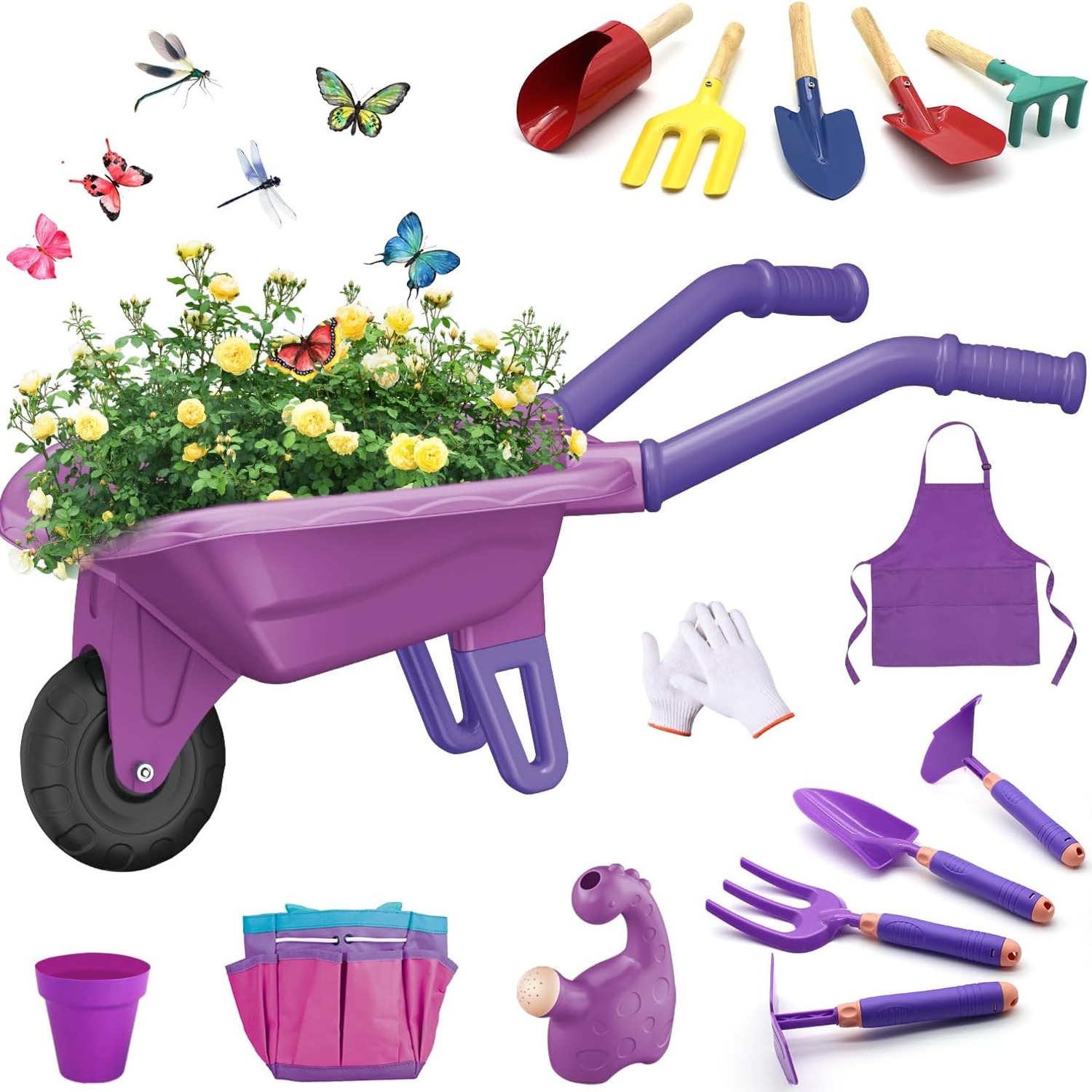
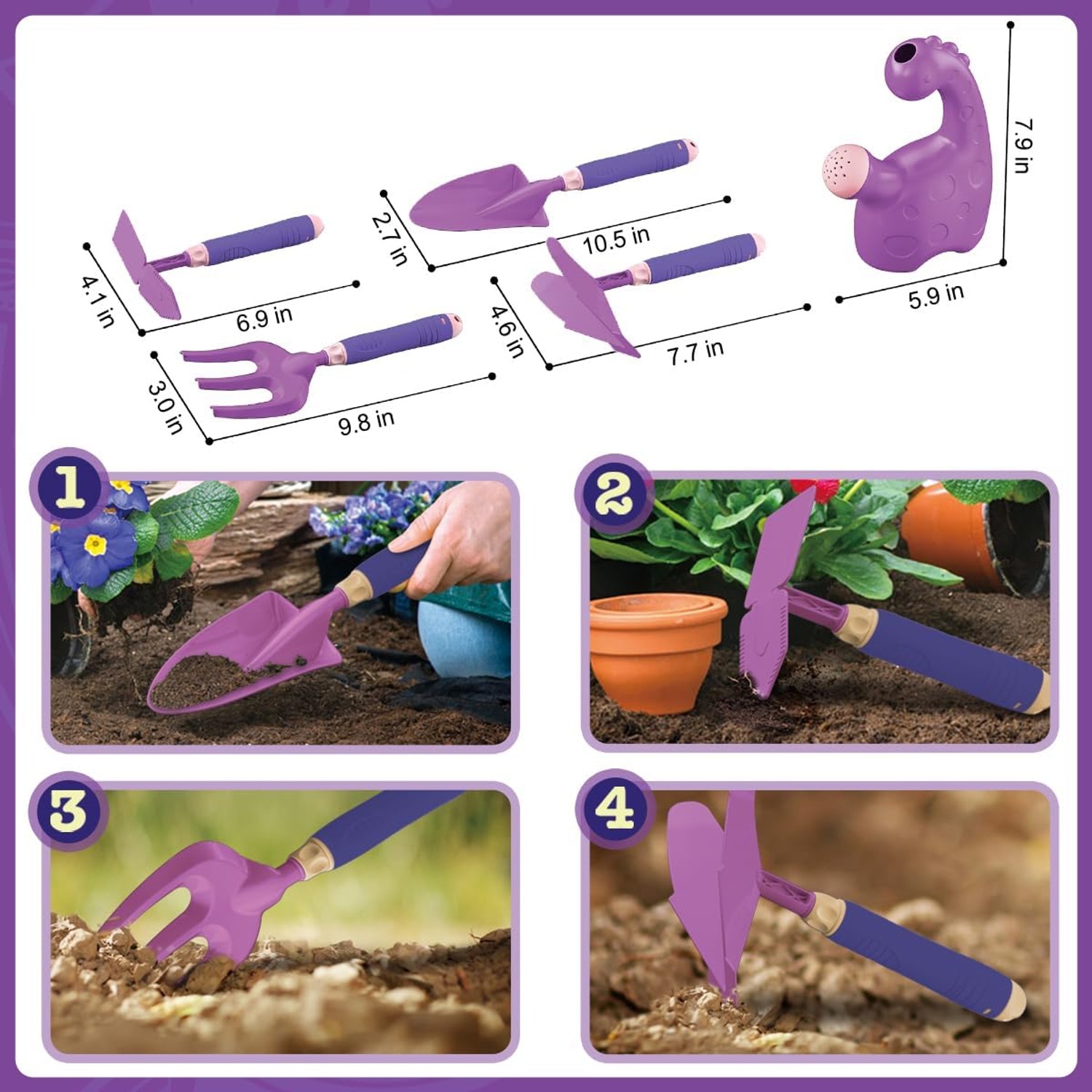
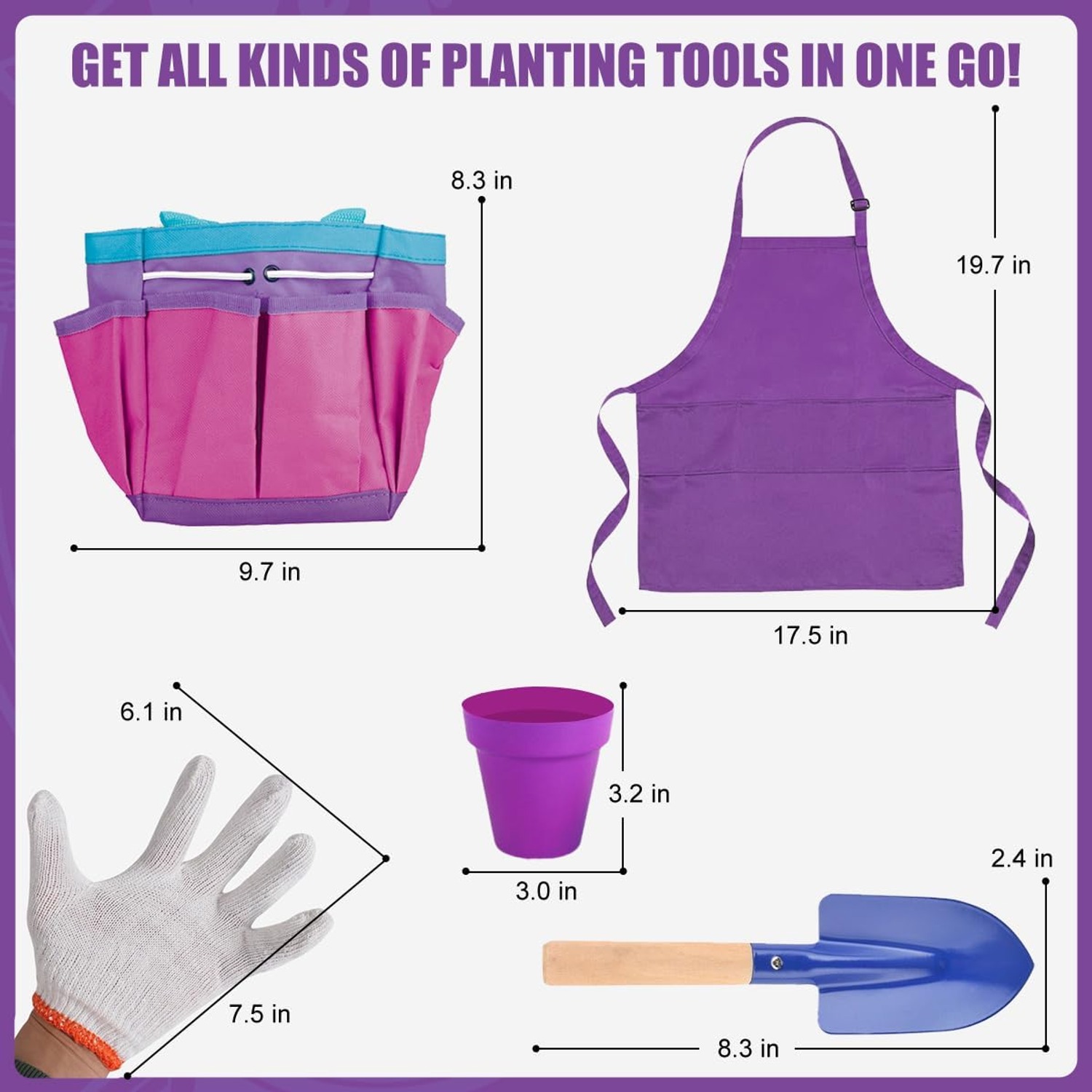
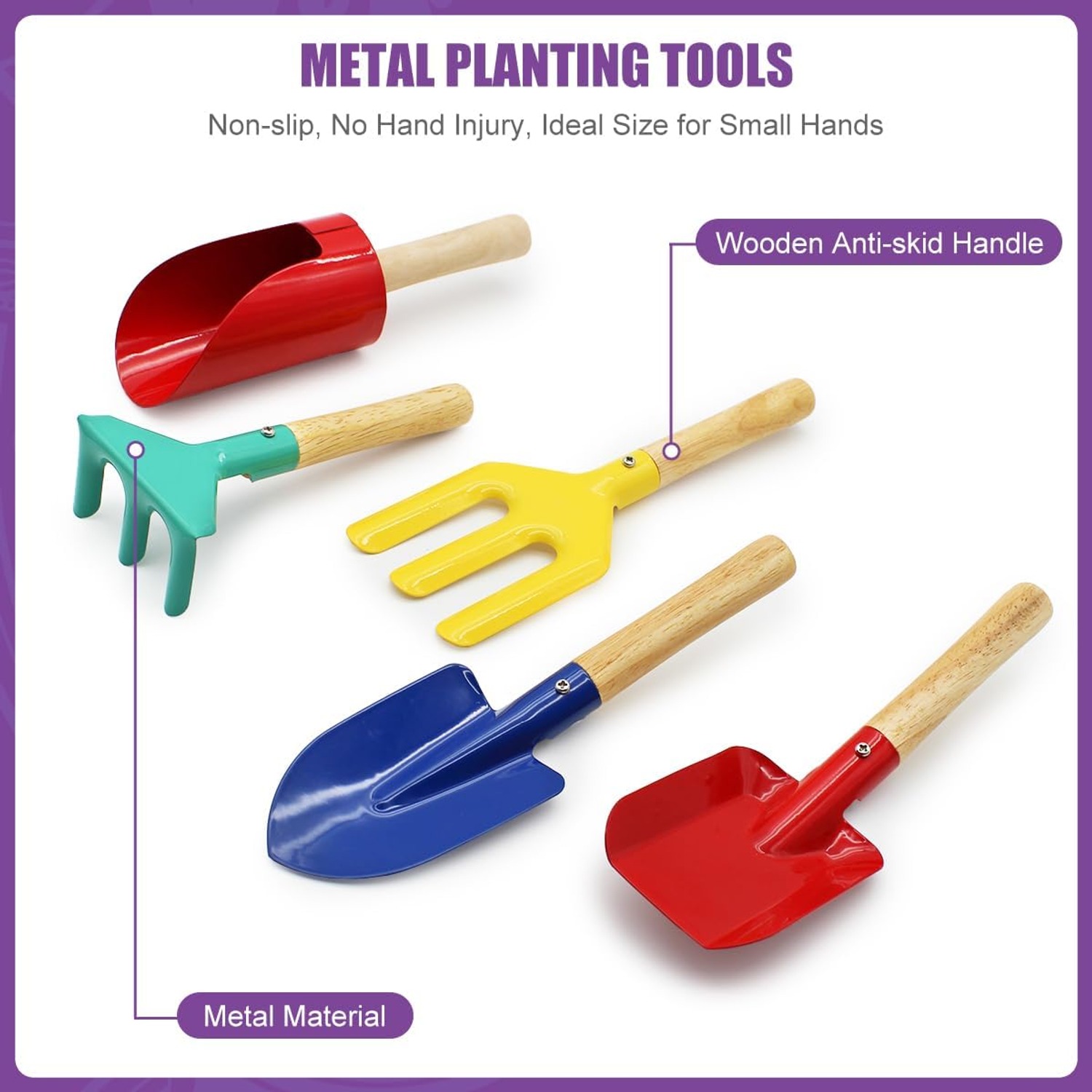
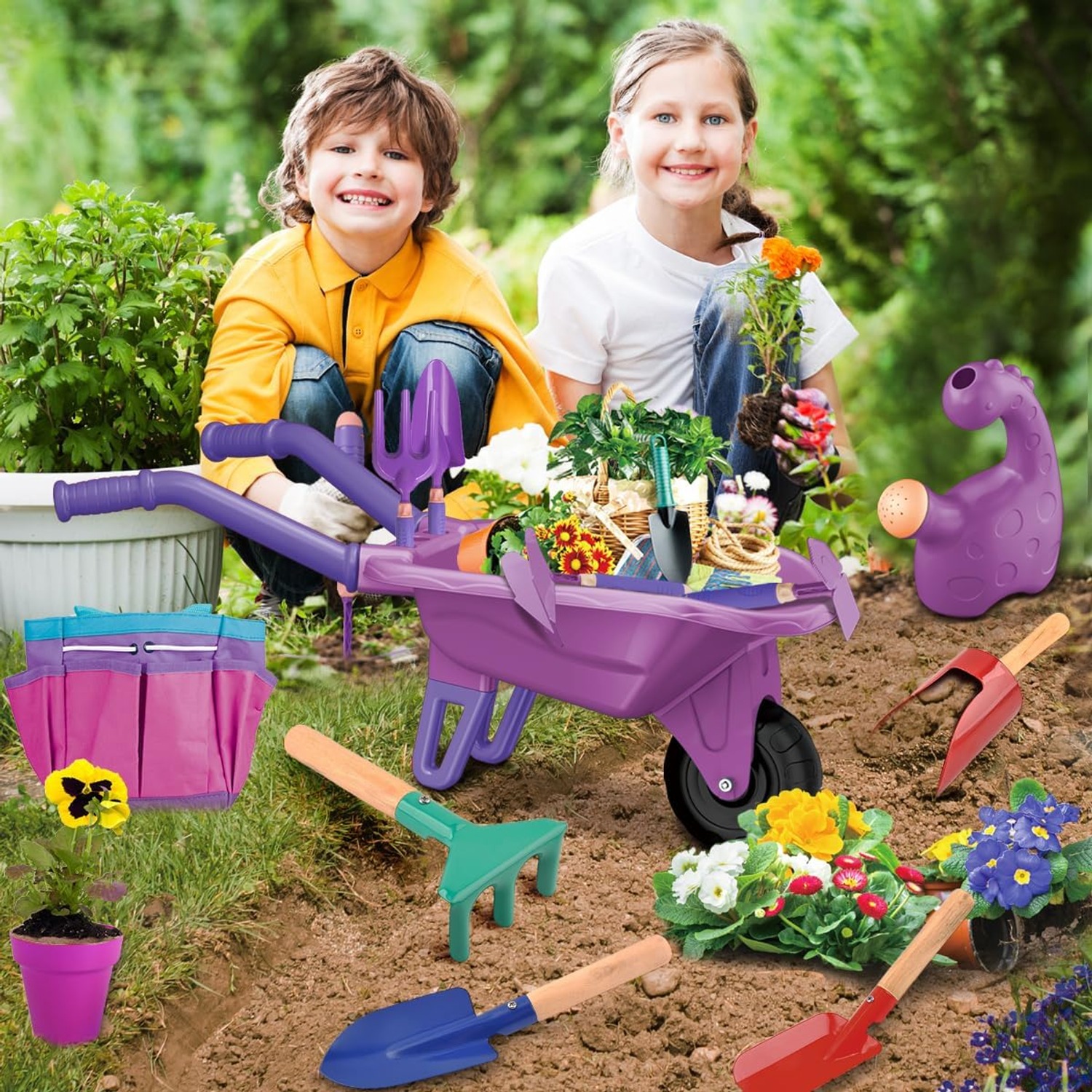
This set has fifteen pieces. There is one wheelbarrow, four plastic planting tools, five metal planting tools, a pair of gloves, an apron, a flower pot, a water bottle and a storage bag. The whole thing weighs 1.32 kg and arrives in a box measuring 71.88 x 25.91 x 16 cm.
The tool count is worth pausing on. Nine tools is generous for a children's set. It means two kids can work at once, and it means you have a choice of implement depending on the job, a fork for loosening, a shovel for moving, a rake for tidying. Plenty of cheaper kits give you three pieces and call it a set.
The handles are wood. That is a small detail with a real effect. Wood has a bit of weight and warmth to it, and children notice the difference against hollow plastic. It also tends to survive being left in the grass overnight better than thin moulded handles do, as long as you bring it in to dry.
How the wheelbarrow earns its place
Ask most parents which part of a kids garden tool kit gets the heaviest use and they will say the barrow. There is something about pushing a load from one place to another that children find genuinely satisfying, and it keeps working long after the novelty of digging has worn off.
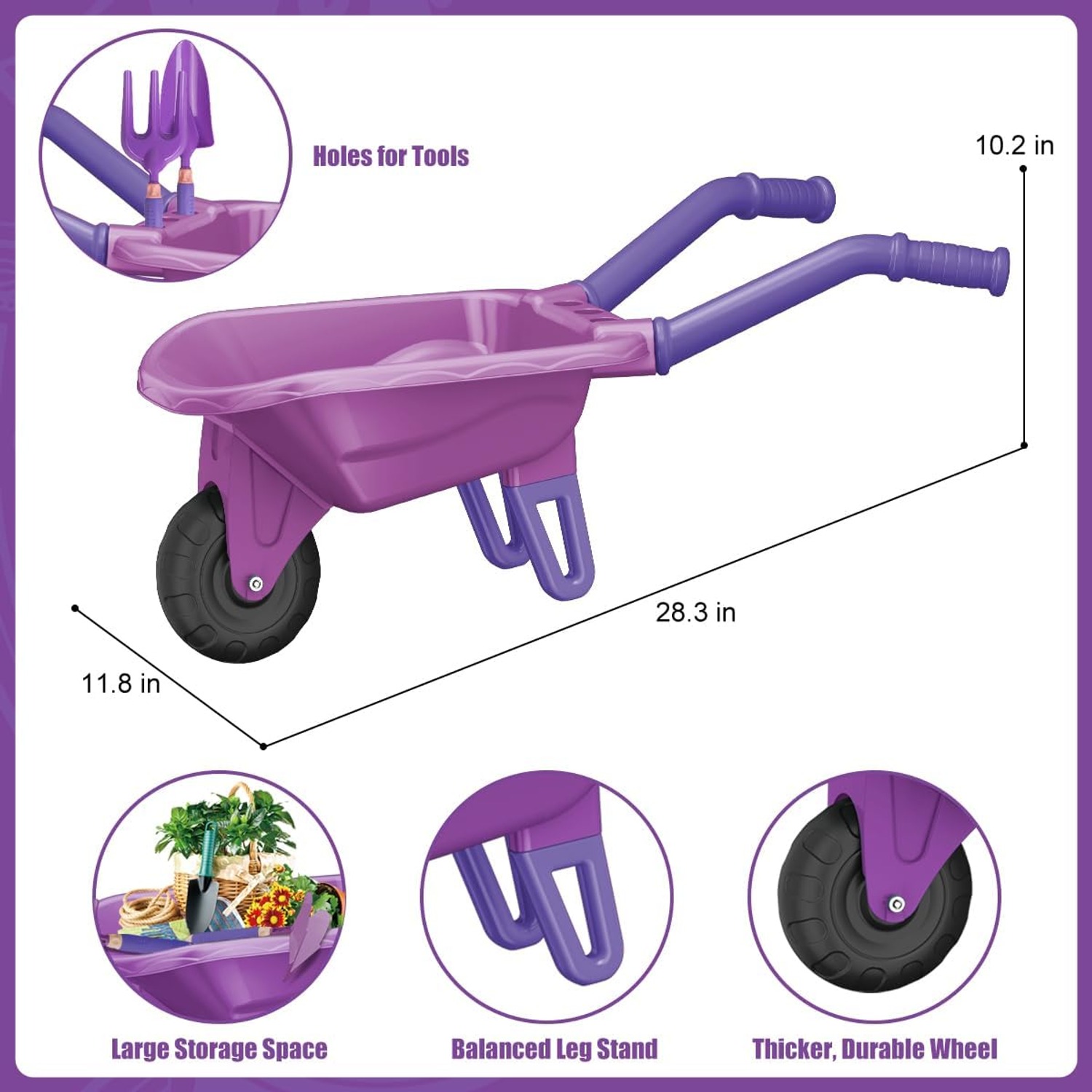
This one rolls on padded tires with non-slip handrails, so a child can lift the handles and steer without the thing wobbling out from under them. It carries soil, sand, pebbles, leaves, pulled weeds, pine cones, whatever the job of the day happens to be. On days when nobody feels like gardening it still gets dragged out for hauling toys across the yard.
It does need a bit of assembly out of the box. An adult should fit the wheel and handles before the first use. It is a ten-minute job, not a flat-pack ordeal.
Matching the set to your child's age
The recommended starting age is three. That is a sensible floor, mostly because of the metal tool heads and the small parts.
A three or four-year-old will mostly fill and empty things. They will load the wheelbarrow with dirt, push it two metres, tip it out and start again. This looks pointless and it is not. It is practice at balance, grip strength and following a task through, and it is exactly the kind of outdoor play set for kids that builds the physical confidence they need later.
From about five, children start wanting a result. This is the age to give them their own pot or a small corner of a bed and let them plant something. The metal tools matter here, because a five-year-old can tell the difference between a tool that cuts into soil and one that just slides over it.
By seven or eight, a child can take on a real job. Weeding a defined patch, transplanting seedlings, mixing compost into a bed. At this point the gardening apron for kids and the gloves stop being dress-up and start being practical.
Choosing between sets
If you are comparing options, a few things separate a kit that lasts from one that ends up in the bin by August.
Look at the materials first. All-plastic sets are cheap and light, which sounds good until the first time a child tries to dig into packed clay. Metal heads with wooden handles cost more and do the actual work. This set gives you both, which covers the younger and older end of the range in one purchase.
Check the piece count against the price. Fifteen pieces including a barrow, a pot, a bottle and a bag is a different proposition from a three-tool blister pack. Buying the pieces separately almost always costs more.
Think about storage before you buy. A set with a bag has a natural home. A set without one ends up scattered across the lawn, and you lose the fork within two weeks. This is a small thing that makes a surprising difference to whether the kit survives a full season.
And consider who else might use it. If you have two children, or you host cousins regularly, having enough children's gardening tools to go around saves a lot of arguing.
Getting the most out of it
The single best thing you can do is pair the set with something fast-growing. Beans, radishes, sunflowers, cress. A child who plants a seed and sees a shoot within a week stays interested. A child who plants something that takes six weeks to appear has usually moved on.
Give them a patch that is genuinely theirs. It can be tiny, a square the size of a tea tray is plenty. The point is that they make the decisions about it and they see the consequences, good and bad.
Resist the urge to redo their work while they are watching. Crooked rows grow fine.
Looking after the kit
Maintenance here is simple, and most of it comes down to one word, dry.
After a session, rinse the soil off the tools and wipe them with a damp cloth. Dry the metal heads properly, because metal left wet will rust and nobody enjoys digging with a rusty fork. Wooden handles also last much longer when they are not stored damp.
The apron and gloves can be hand washed in cool water and air dried. The pot and water bottle just need a rinse.
Pack the small pieces into the storage bag and keep the whole lot indoors or under cover between uses. Leaving a set out through a wet season will shorten its life no matter how well it is made.
As a gift
This kit makes a good present for a child who likes being outside, and it works especially well for grandparents buying for a grandchild they garden with. It has an advantage over most toys in that it gets used again every spring rather than once and then forgotten.
If you are gifting it, add a packet of seeds and a cheap pair of kid-size wellies. The whole thing then reads as an invitation to do something together, which is usually more welcome than another box of plastic.
The short version
Fifteen pieces, a wheelbarrow that actually rolls, nine tools split between plastic and metal, and wooden handles throughout. It is built for children from three up, it packs into a bag, and it weighs 1.32 kg so it travels easily to a community plot or a grandparent's garden.
Kids copy what they see. If you garden, they will want to garden. This gives them the gear to do it properly instead of borrowing yours and getting frustrated.