
The complete guide
How To Choose A World Globe For Study, Teaching And Travel
The problem with learning geography from a screen
Ask most people to point at Chile on a map and they manage it. Ask them where Chile sits in relation to South Africa, or how far it really is from Spain to Senegal, and things get vague. Flat maps are the reason. Every flat world map has to stretch the planet somewhere to lay it out, which is why Greenland looks enormous and why mental distances get warped from an early age.
A globe fixes that quietly. Nothing is stretched, nothing is cut, and a child who spins a sphere a few hundred times over a school year builds a picture of the world that holds up. Phones are fine for looking up one fact. They are useless for building that bigger sense of where things sit, because you only ever see a small rectangle at a time.
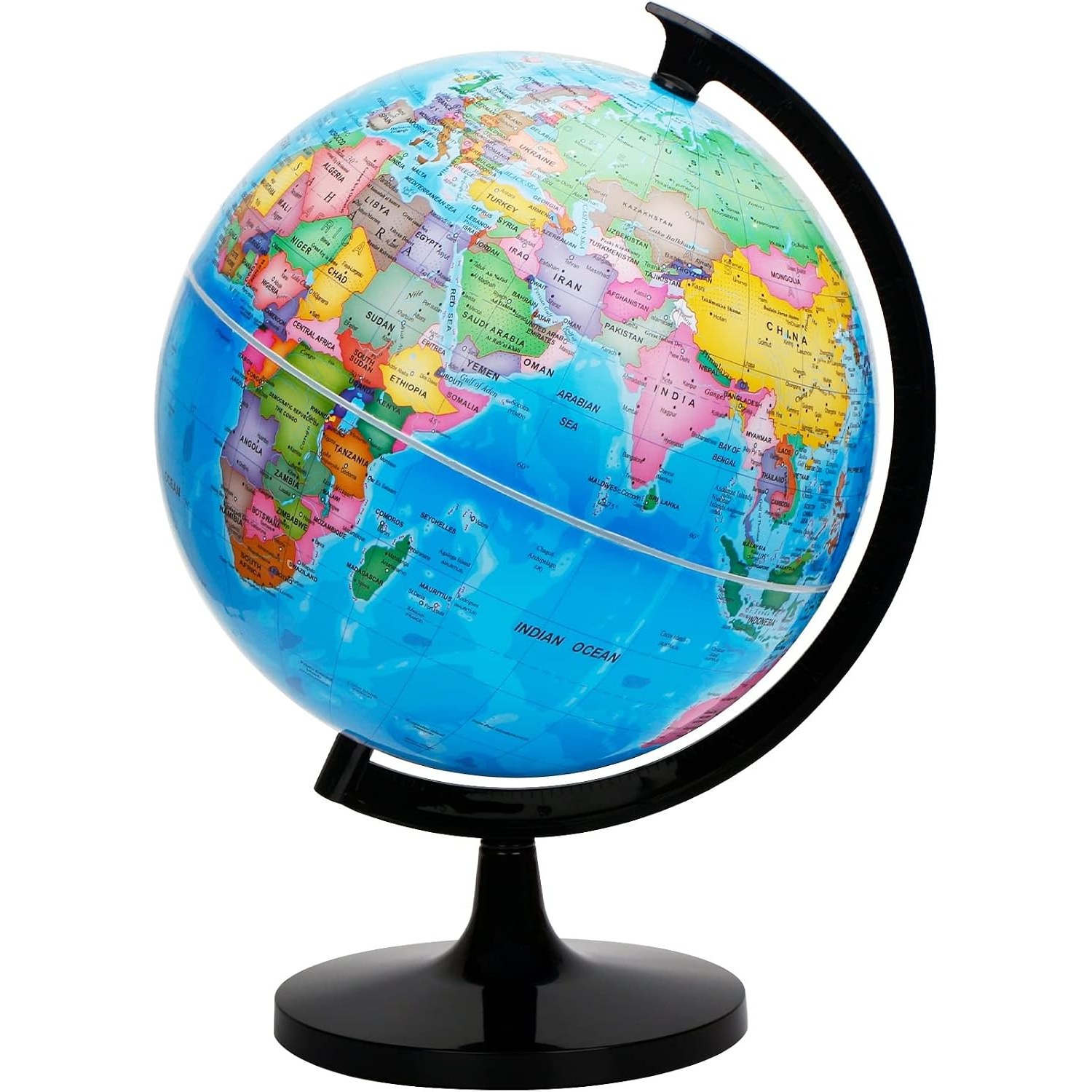
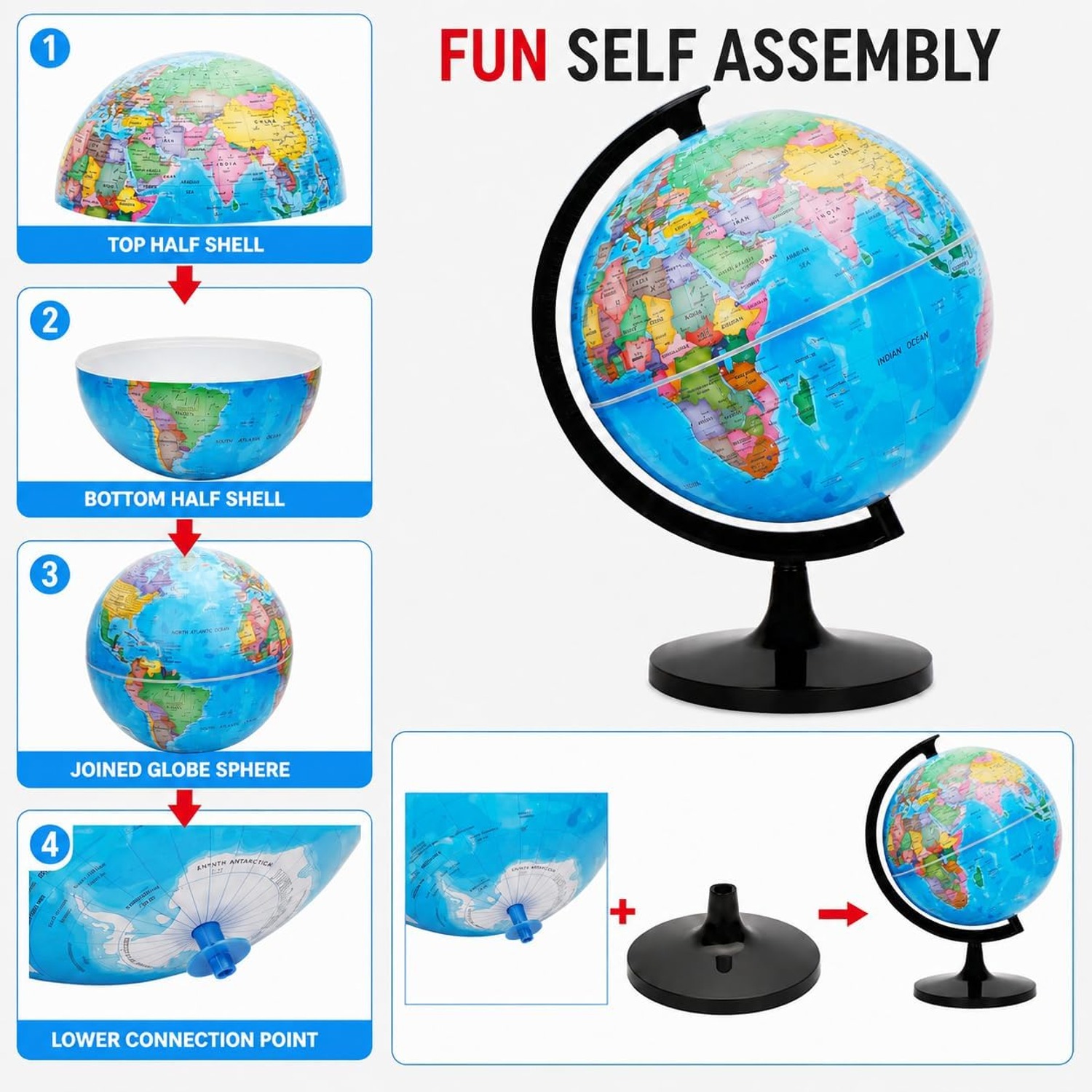
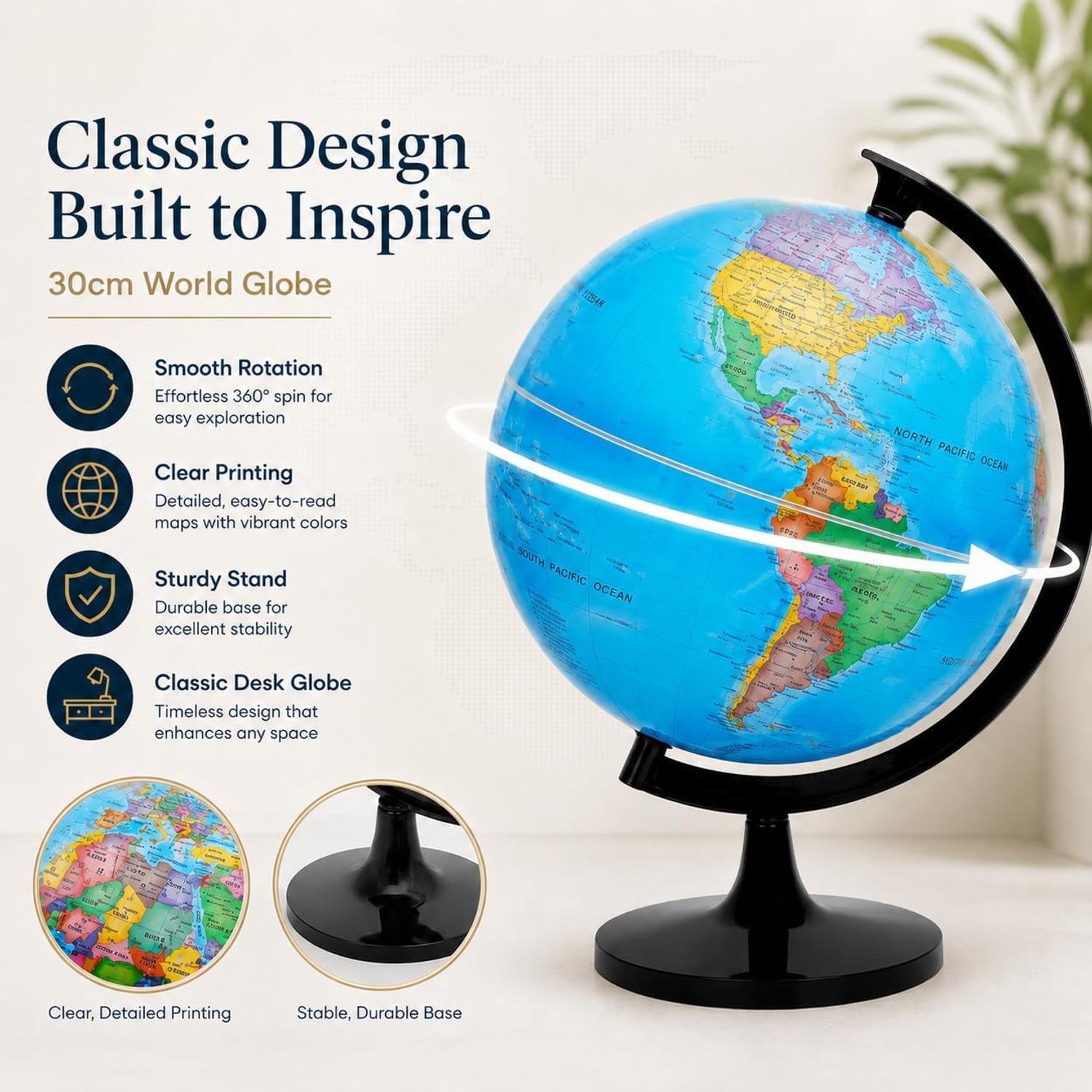
This 30cm world globe takes the idea one step further by arriving as a kit. You build it first, then you use it. That changes the relationship with the object. A globe someone assembled themselves gets noticed, used and looked after in a way a ready-made one often does not.
What a political map actually gives you
Globes come in two broad flavours. Physical maps shade in terrain, so you see deserts, mountain ranges and the shape of the ocean floor. Political maps, like the one on this globe, colour the world by country and name the capitals.
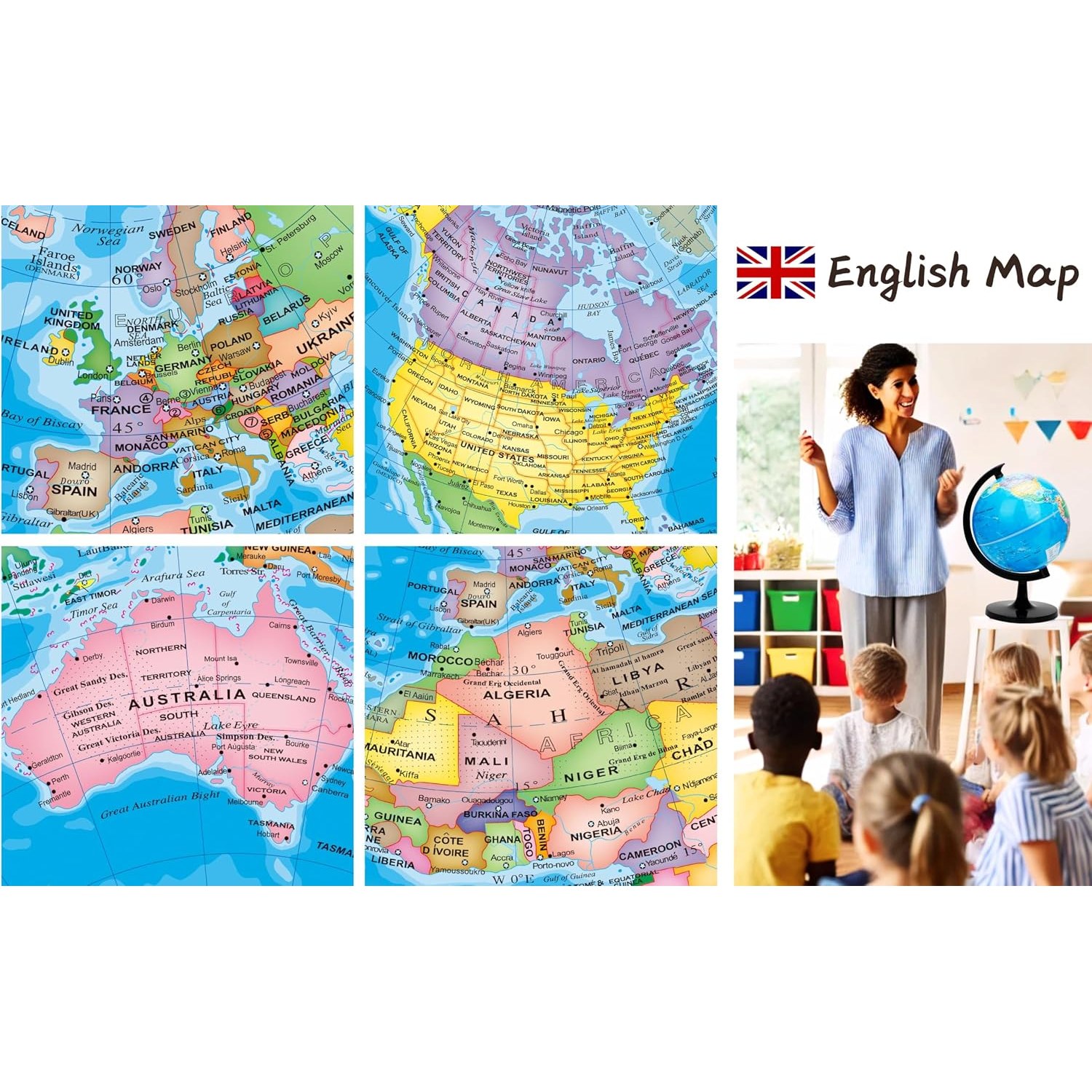
For school work, political usually wins. Homework questions tend to be about countries, capitals, borders and continents, which is exactly what a political map answers in a second. The English map on this globe covers countries, capital cities, continents and oceans, so it handles the everyday questions that come up between ages ten and eighteen without any fuss.
Political maps also age in an obvious way, which is honest. Borders shift and countries occasionally rename themselves. No printed globe stays accurate forever, and that is worth saying plainly rather than pretending otherwise. For teaching map skills, naming countries and understanding where a news story is happening, a political map does the job for years.
Why 30 centimetres is a sensible size
Globe sizing sounds like a minor detail until you own one that is too small. Below about 20 centimetres, smaller countries become slivers and island groups turn into dots without labels. You end up squinting, which defeats the point.
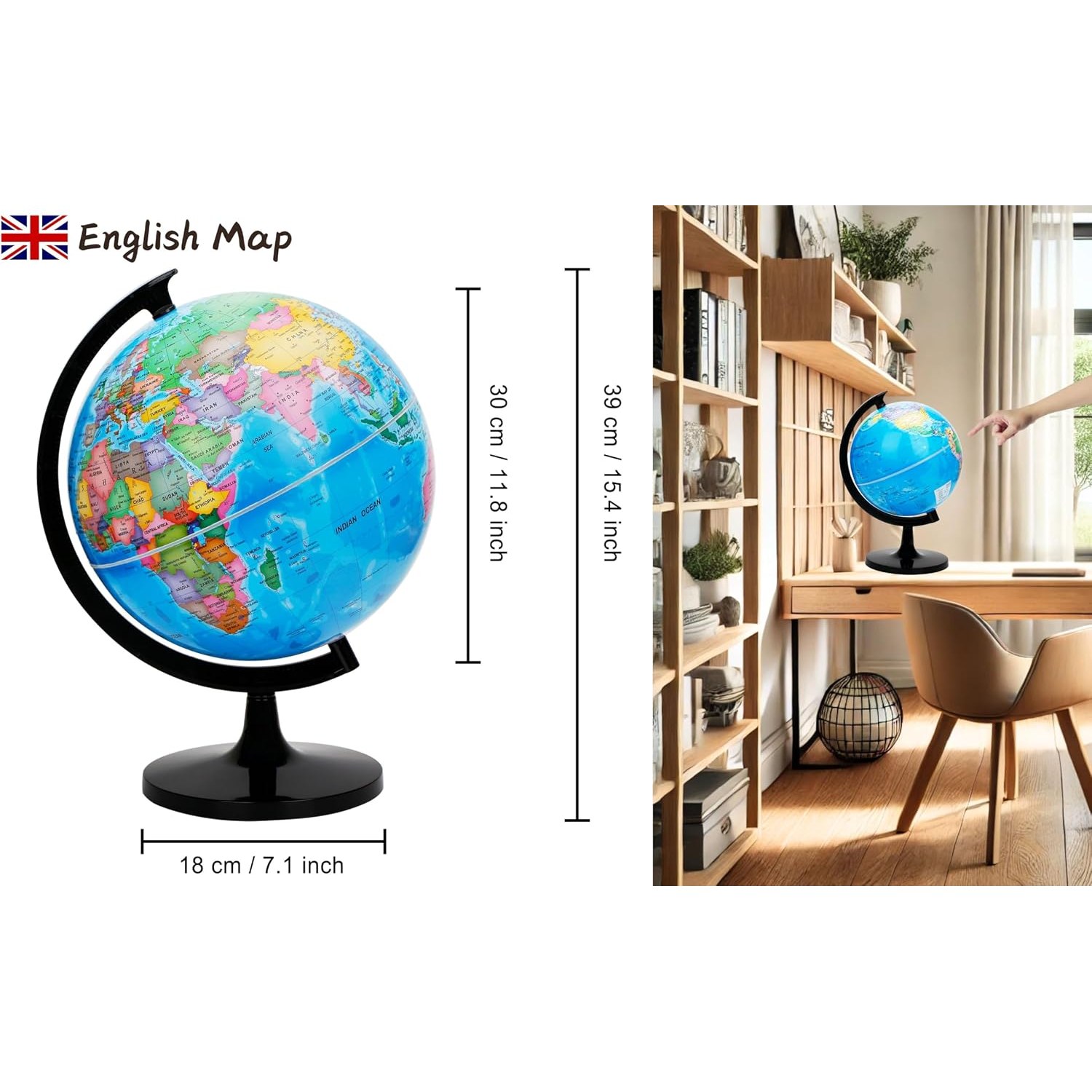
At 30 centimetres across, about 12 inches, this one sits in the sweet spot for a desk. There is enough surface area for smaller nations to carry a readable name, and enough presence that the globe reads as a proper object on a shelf. Go much larger and you start needing dedicated floor space and a serious stand.
Think about the surface it will live on before ordering. You want roughly 30 centimetres of clear width plus a bit of breathing room for the base. A standard study desk handles that in a corner. A narrow floating shelf might not. If the plan is a child's bedroom, check that the spot is not somewhere a swinging schoolbag passes every morning.
The weight helps here too. At 1.1 kg, this globe is light enough for a child to pick up and move to the kitchen table when that is where homework is happening. A heavy cast-base globe stays where you put it, which is less useful in a busy house.
The build is the point
Plenty of parents buy educational gifts that get used for a week. The self-assembly format works against that, because the first hour is already an activity. Instructions are included and the steps are meant to be followed slowly rather than raced through.
A few things make the build go smoothly. Clear a flat table first, ideally one that is not needed for dinner in twenty minutes. Lay the parts out and read through the instructions once before touching anything. Work with good light. If a piece seems to need real force, stop and check the alignment, because parts that line up properly rarely need muscle.
For a teenager, this is a project they can own from start to finish. For a younger child, it works best as a shared build with an adult doing the fiddly bits. Either way, the globe ends up with a small story attached, and that is why these tend to survive house moves.
Who it suits
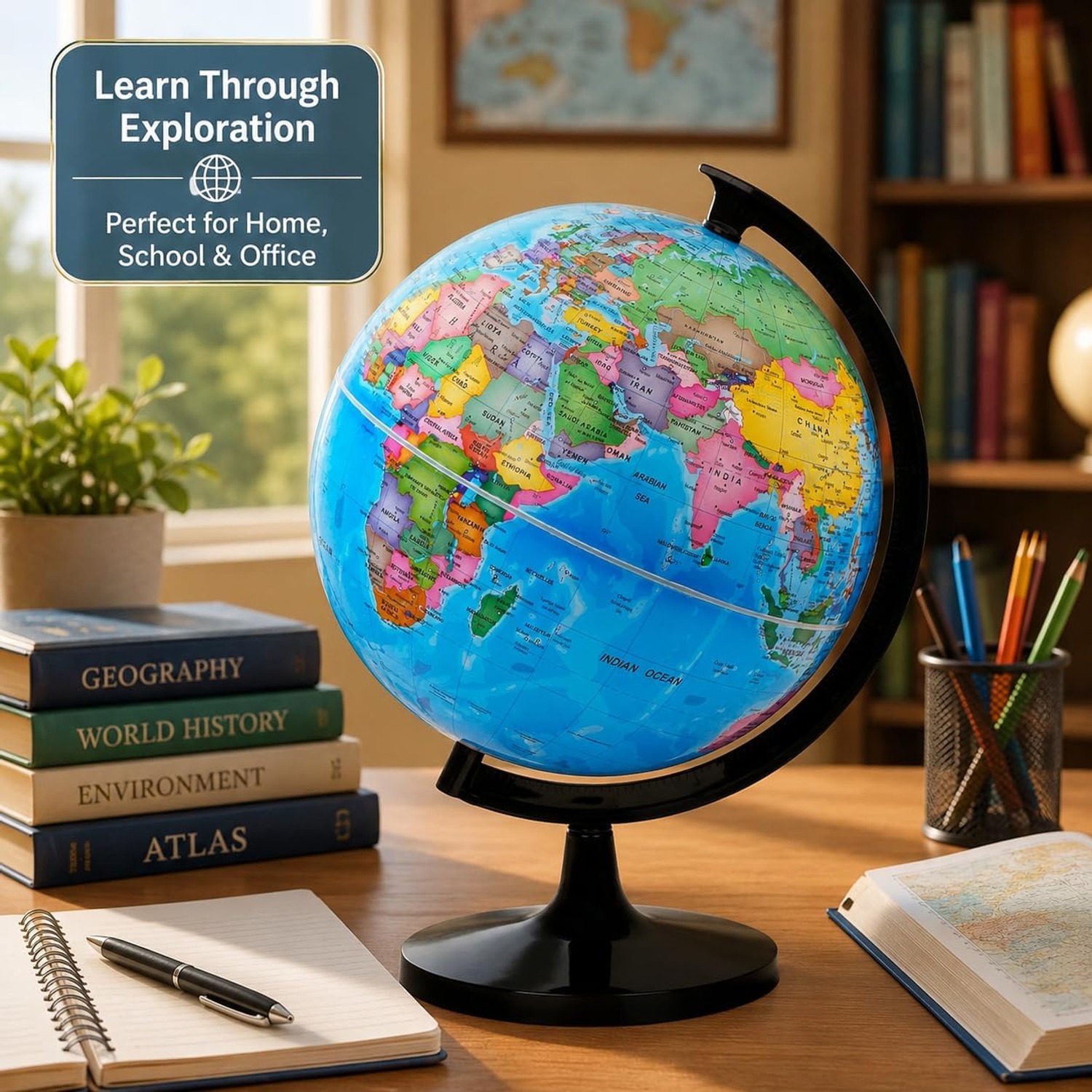
Students are the obvious group. A globe on the desk turns a vague homework question into something you can check in ten seconds, and it does not open a social media feed on the way.
Teachers are the second group. A readable sphere in a classroom corner or library does something a wall map cannot, which is show the world at true proportions and let a student turn it themselves. One of the best educational globes for teens is simply the one that is large enough to read from a seat.
Then there are travellers. People who have been to places or plan to go like seeing the whole route rather than a leg at a time. It is a good tool for planning and a better one for remembering. Home office owners buy them for the same reason an architect keeps a model on the shelf. It signals interest in the wider world and it starts conversations on video calls.
Looking after it
Globes ask for very little. Dust it with a dry soft cloth or a microfibre cloth every few weeks and it stays bright. For a mark, a barely damp cloth works, but dry the spot straight afterwards. Keep solvents, bleach and abrasive pads well away, because printed map surfaces do not forgive scrubbing.
Sunlight is the one real enemy. A globe parked in a south-facing window will fade over a few years. Normal room light does nothing. If you have a choice of spots, pick the one that does not get direct afternoon sun.
Lift it by the base rather than the sphere. That keeps pressure off the mounting and off the printed surface. If the globe gets moved around often, it is worth checking the base fittings are still firm every few months and snugging anything that has worked loose.
Choosing between options
If you are comparing globes, the questions worth asking are short. How big is the sphere, and will that size be readable from where the user actually sits? Is the map political or physical, and which one matches how it will be used? Is it ready-made or a kit, and does the recipient want a build or just the finished object? Does the base suit the surface you have in mind?
For most home and classroom situations, a 30 centimetre political globe on a desk is the answer to all four. It is large enough to read, detailed enough for schoolwork, light enough to move and interesting enough to stay out on display. If you specifically want terrain detail or an illuminated night map, this is not that product, and it is better to know that upfront.
The short version
This is a 30cm world globe you assemble yourself, carrying an English political map of countries, capital cities, continents and oceans, mounted on a plastic base and weighing 1.1 kg. It is made in China by Exerz under model number EX-JQ.
It suits students, teachers, travellers and anyone who likes a hands-on build with something useful at the end. The size is the standout feature, because 30 centimetres is where country names stop being a squint and start being readable from a chair. Build it on a clear table, keep it out of direct sun, dust it now and then, and it will sit on a desk or shelf doing quiet work for a long time.