
The complete guide
Remote Control Walking Dinosaur Buyer's Guide
The problem with most dinosaur toys
Walk into any child's bedroom and you will find dinosaurs. Plastic ones in a bucket, soft ones on the bed, a few posed on a windowsill gathering dust. Kids love dinosaurs, which is exactly why so many dinosaur toys end up ignored. They all do the same thing, which is nothing.
The moment a dinosaur moves on its own, that changes. A remote control walking dinosaur stops being a figure and starts being a character. It responds. It goes where the child points it. It roars at the cat. That shift from object to participant is the whole reason these toys hold attention longer than a bag of plastic figures ever will.
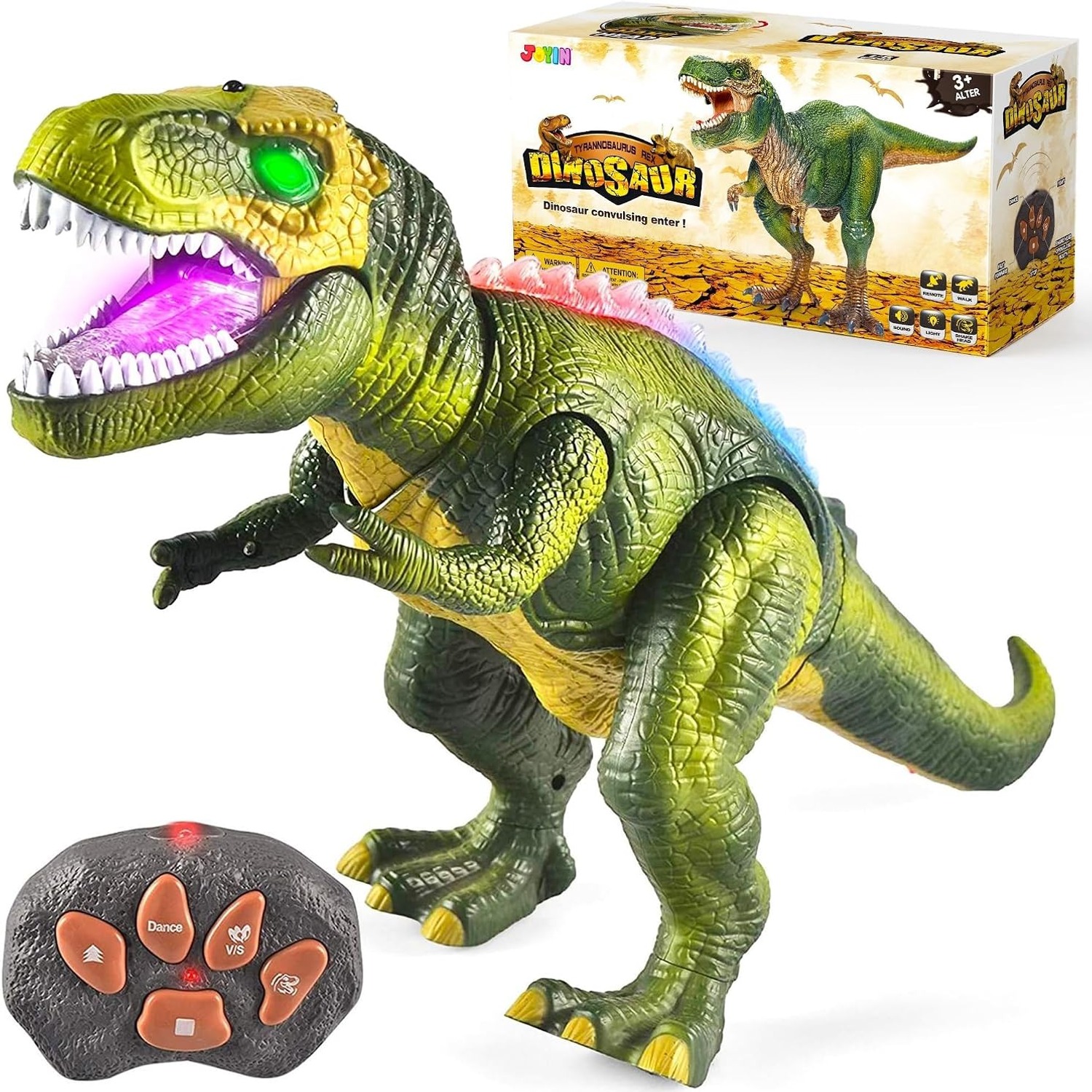
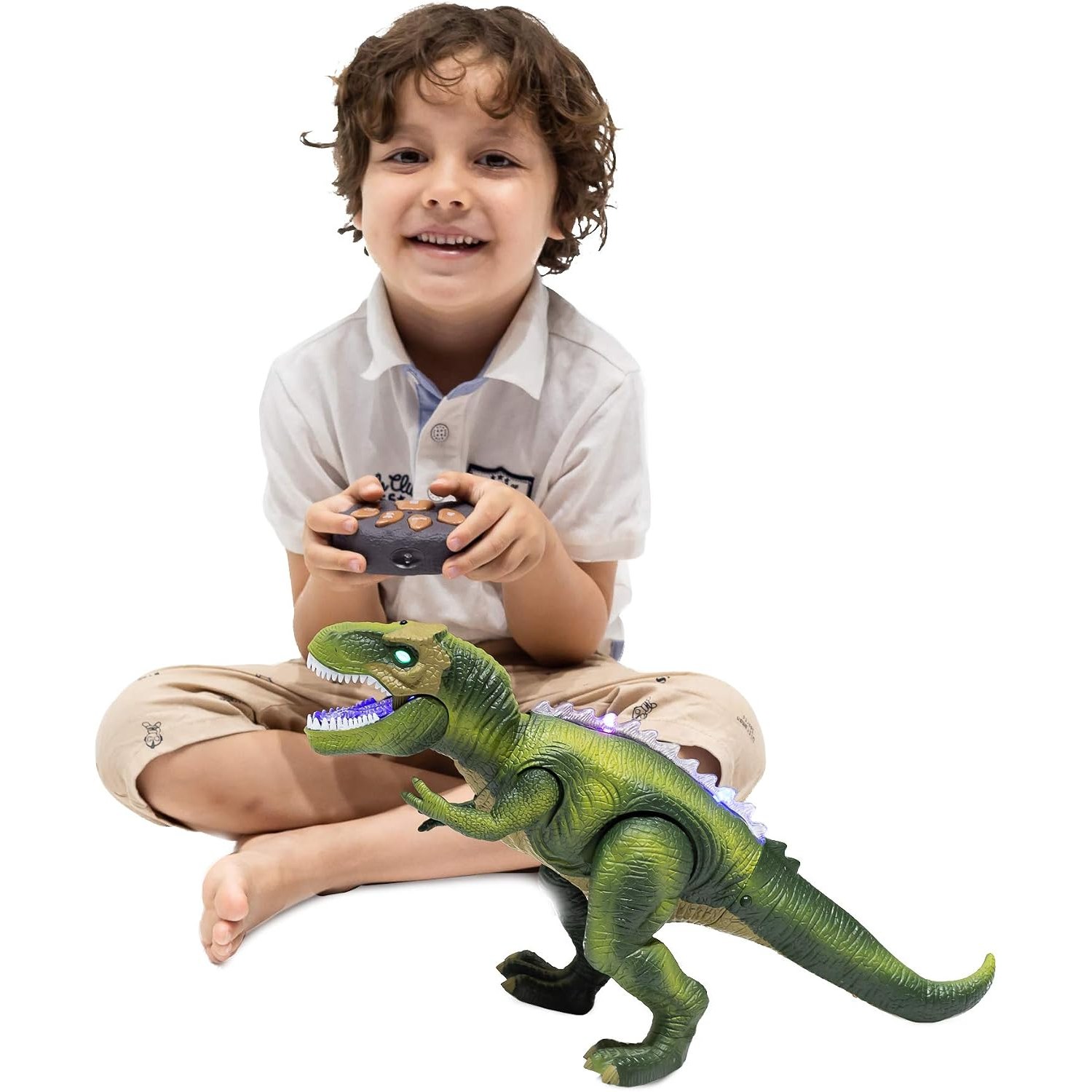
This one is a Tyrannosaurus from JOYIN, built to walk across indoor floors while LED lights glow through the clear spikes on its back and a roar plays through the speaker. It is not a complicated toy, and that is a feature rather than a shortfall.
How it actually works
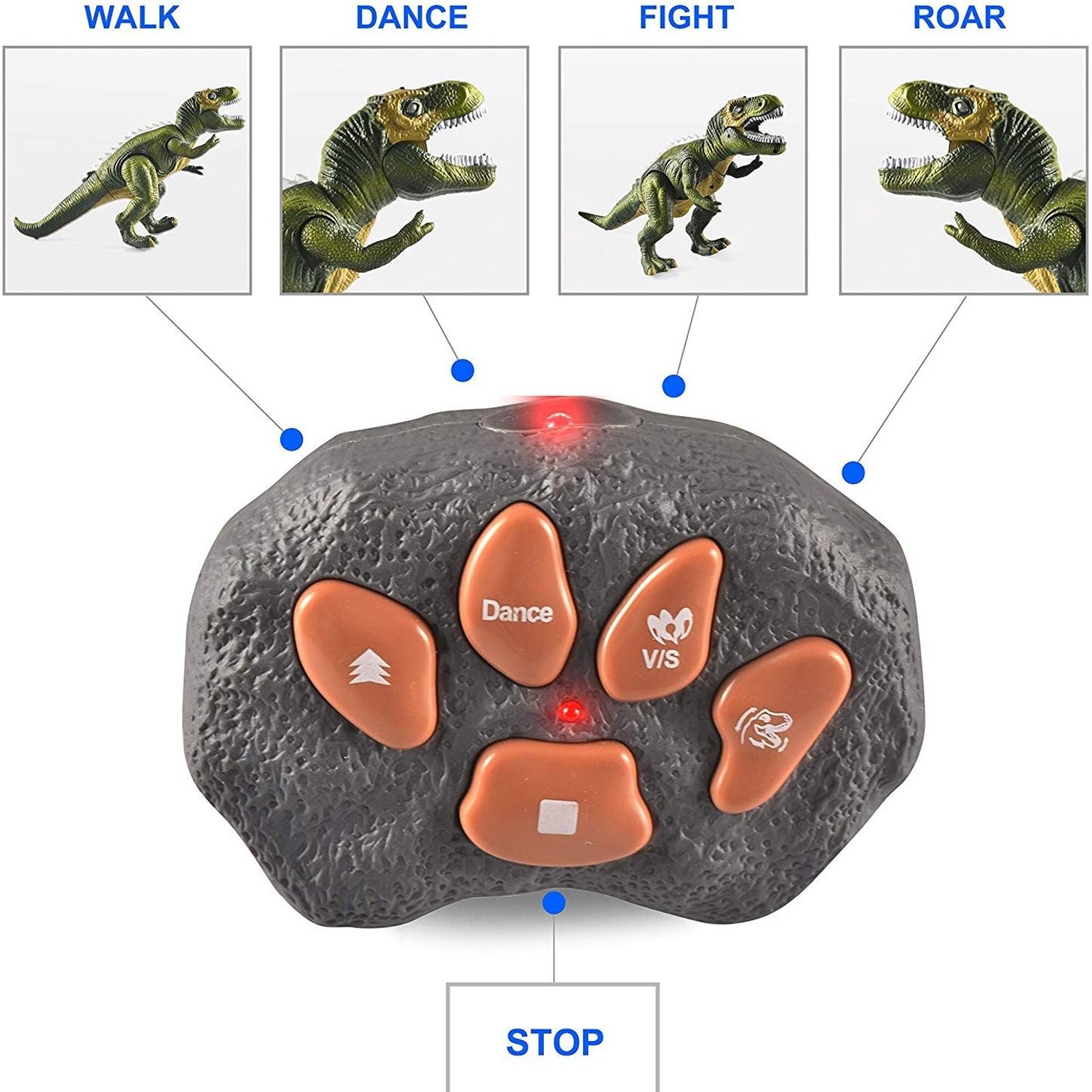
The child holds a small remote and presses buttons to drive the dinosaur forward. As it moves, the head shakes side to side and the roaring sound plays. The maker describes the operation mode as manual, so the dinosaur does what the controller tells it rather than wandering off on a pre-set loop.
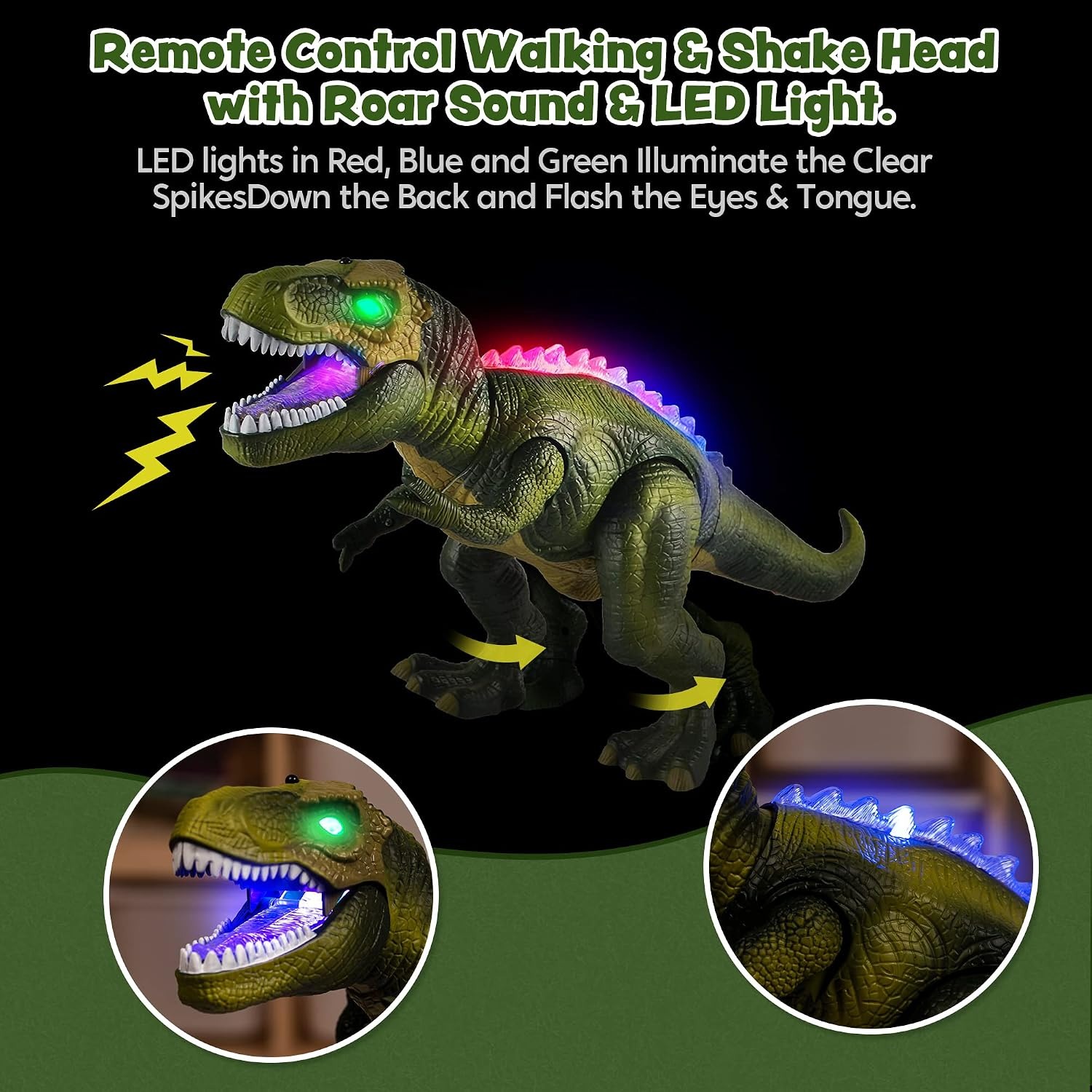
The lights run on a three-colour setup in red, blue and green. They sit inside the body and shine upward through transparent spikes along the spine, with flashes at the eyes and the tongue. In daylight they add a bit of colour. With the lamps off they are the main event, and most kids figure that out within about five minutes of owning it.
Power comes from batteries. The product details note that the remote control requires batteries and that they are not supplied. This is the single most common reason a new toy disappoints on the day, so pick up a pack before the birthday or the morning of Christmas. Nobody wants to be hunting for batteries in a drawer while a four year old stands there holding a silent dinosaur.
Who it suits
JOYIN recommends the toy for ages 36 months to 11 years. That is a wide band, and the toy plays differently at each end of it.
A three or four year old mostly enjoys the spectacle. They will press buttons without much strategy, chase the dinosaur across the kitchen and laugh at the roar. The controls are simple enough that they succeed quickly, which matters a lot at that age. Parents hunting for the best preschooler dinosaur toy often land here because there is nothing to assemble and nothing to learn.
By six or seven, children start driving it with intent. They build courses out of cushions, set up races, and work out which floor surfaces let it move fastest. That is when the toy starts doing quiet work on directional thinking and hand-eye coordination without anyone calling it a lesson.
Older kids in the eight to eleven range tend to use it as a prop. It becomes part of a bigger imaginative setup, or the centrepiece of a dinosaur display. The listed educational objective is education and learning, and the recommended uses include educational activities alongside plain recreation.
It is also listed as a single-player toy, since there is one remote. In a group, that usually means turn-taking, which is fine and occasionally even useful.
Where to play with it
This is an indoor toy. The listing specifies indoor use and floor play, and both of those matter.
Hard floors give the best results. Tiles, laminate, floorboards and short-pile rugs let the legs do their job. Thick carpet fights the walking mechanism and slows everything down. Outdoors is worse again, because grass catches the feet and any moisture is bad news for the electronics.
Clear a decent run of floor before handing over the remote. A hallway is ideal. A lounge rug works. A cluttered bedroom floor leads to a dinosaur stuck behind a toy box within thirty seconds, which nobody enjoys.
Build and materials
Both the inner and outer material are listed as vinyl with a glossy finish. That is a sensible choice for a toy that is going to live on the floor and get handled daily. Vinyl takes knocks, wipes clean and does not absorb spills the way fabric does.
The size is listed at 11.13 inches, with item dimensions of 21.1 by 16.5 by 28.3 centimetres. That is substantial enough to feel like a proper toy on the floor rather than a trinket, while still fitting on a standard shelf when playtime is over.
The maker does not give packaging details beyond the box contents.
One honest note on cover. The manufacturer warranty description is listed as no warranty. Any protection you have comes from the retailer's returns policy rather than the manufacturer, so buy from somewhere with a clear returns process.
How to choose between dinosaur toys
If you are comparing options, a few questions sort things out quickly.
First, does the child want something to pose or something to drive? Collectors and imaginative storytellers often prefer detailed static figures. Children who want action want movement, and that is where the best walking dinosaur toy options earn their keep.
Second, what is the play space like? If the only floor in the house is deep carpet, a walking toy will frustrate everyone. Check your surfaces before you buy.
Third, how much noise can the household handle? The roar is a selling point for the child and sometimes a test of patience for everyone else. The product details do not list a separate sound switch, so plan for the toy to be audible.
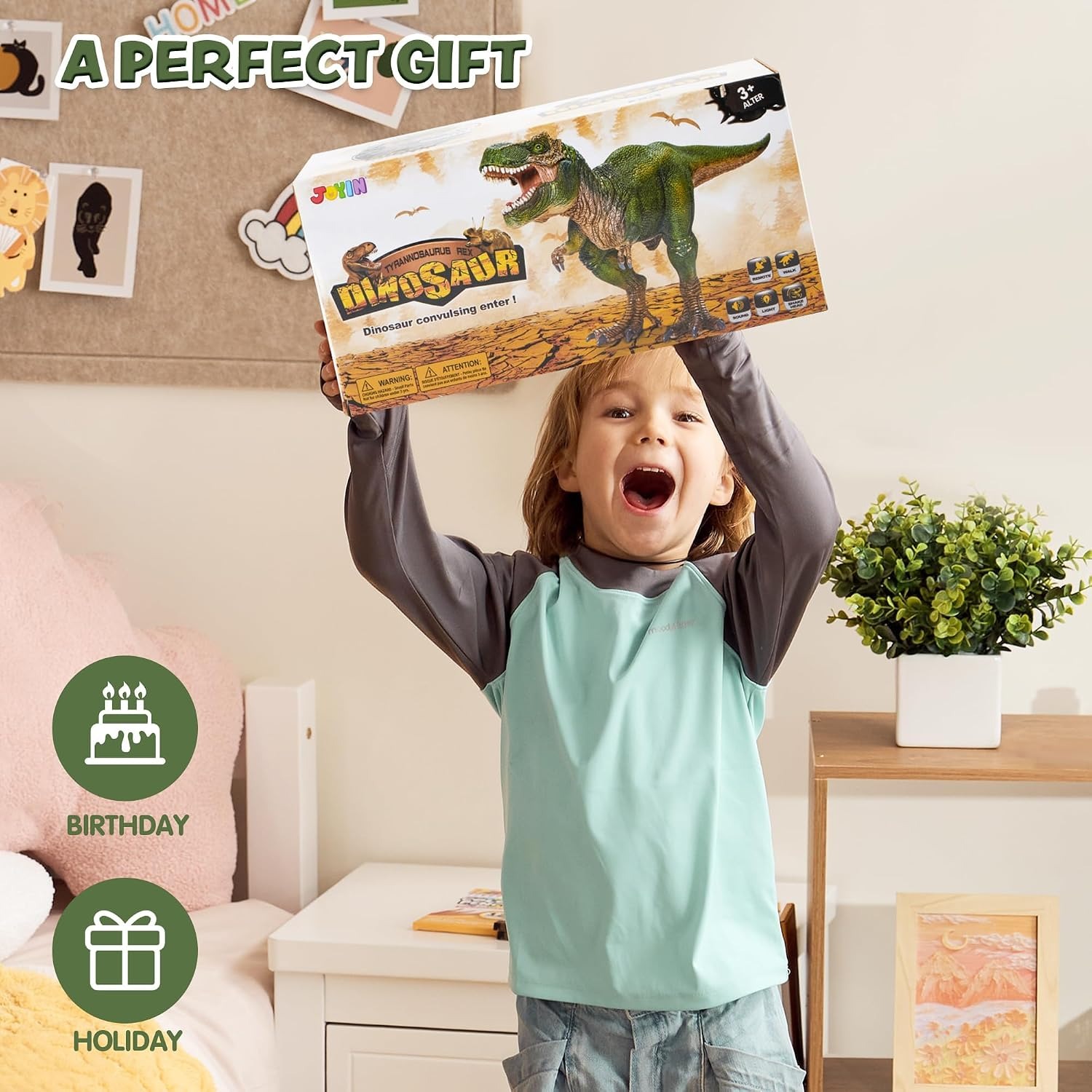
Fourth, what is the occasion? The listing calls out Christmas, party favours and classroom use. If you are shopping for a dinosaur themed party prize or a reward shelf at school, a light up dinosaur toy carries real weight with kids and costs less attention than a craft activity.
Looking after it
Care is simple. Wipe the vinyl with a slightly damp cloth and dry it off. Do not submerge it, and keep water away from the speaker and light openings.
Battery care matters more than people expect. If the toy is going into storage for a few weeks, take the batteries out of the remote. Leaking cells ruin contacts and are the quiet killer of plenty of good electronic toys. Check the compartment occasionally for any white crust or corrosion.
Store it indoors, out of direct sun and away from heaters. Vinyl handles normal room temperatures fine but does not love sitting on a hot windowsill all summer.
If it stops responding, start with the batteries. Fresh cells, correct orientation, close range, hard floor. That solves the problem most of the time.
The short version
This is a straightforward interactive toy that does three things well. It walks when a child drives it, it lights up in red, blue and green through the spikes on its back, and it roars while shaking its head. Vinyl body, 11.13 inches, ages three to eleven, indoor floors, one remote.
You need batteries for the remote and they are not in the box. There is no manufacturer warranty, so buy from a retailer with a returns policy you trust.
For a dinosaur-obsessed child who already has a shelf full of figures that do nothing, a roaring T-rex toy that actually moves is usually the gift that gets used. That is the whole case for it.