
The complete guide
Buyer's Guide to 100 Piece Animal Jigsaw Puzzles for Kids
The problem with most kids' puzzles
Buy a puzzle that is too easy and it gets finished in eight minutes, then sits in a cupboard forever. Buy one that is too hard and you end up doing most of it yourself while a frustrated child wanders off. Both outcomes waste money, and both teach a child that puzzles are either boring or impossible.
The gap between those two failures is narrower than people think. A child who has outgrown chunky 24 piece boards is not automatically ready for 300 pieces. There is a stage in between, usually somewhere around six to nine years old, where 100 pieces is close to perfect. It takes real sorting. It takes a few goes. And it still gets finished, which matters more than anything else for a kid building the habit.
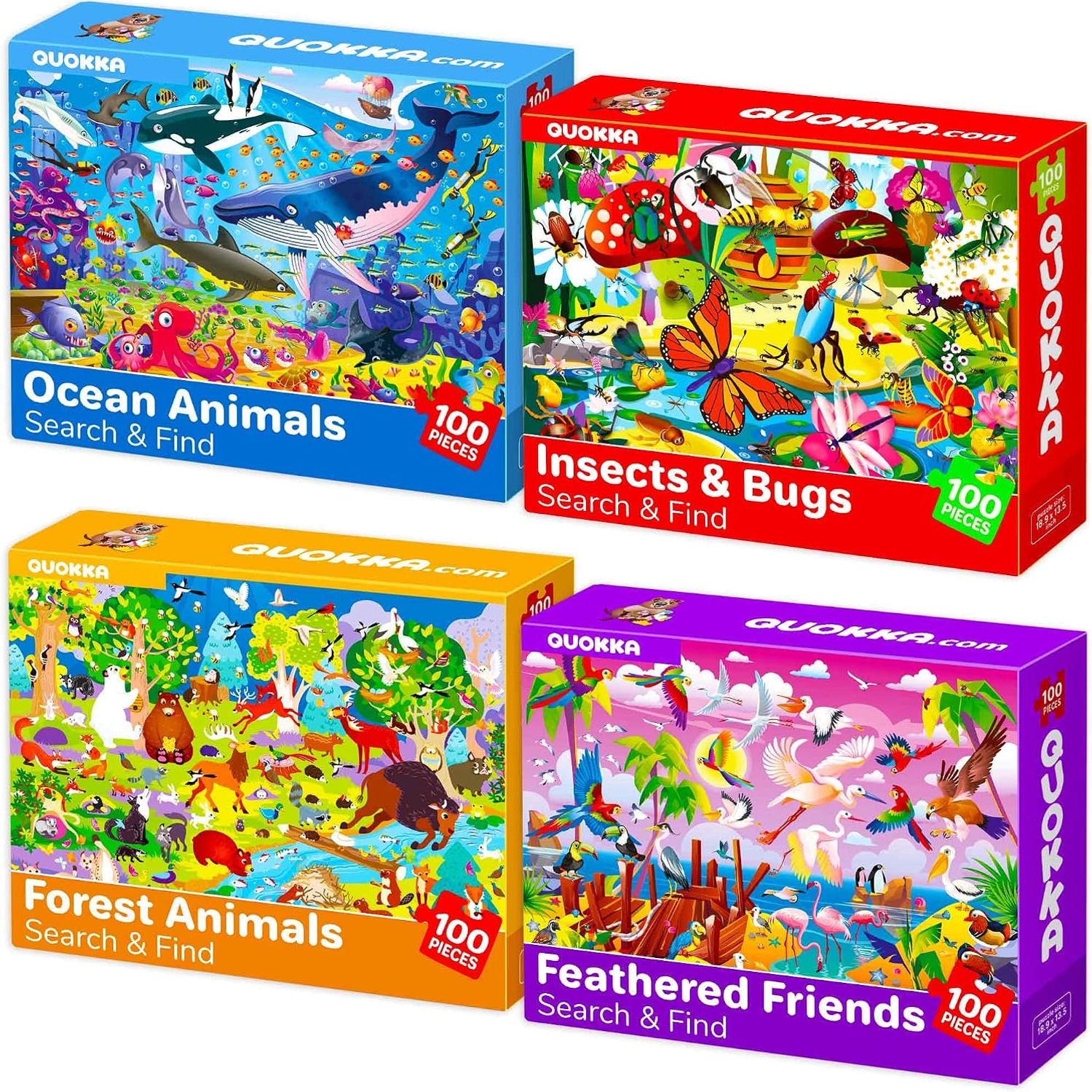
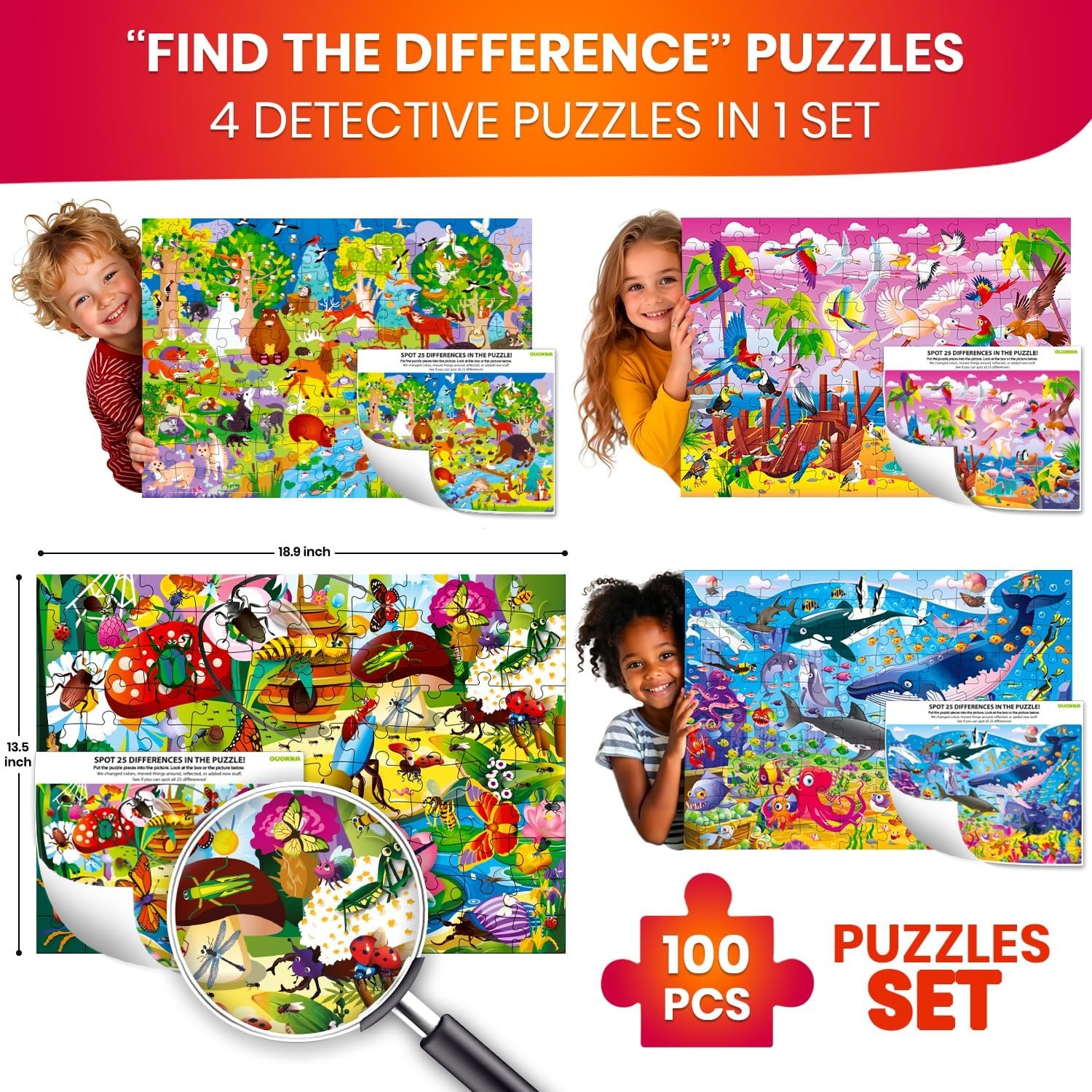
That is the slot this set fills. Four boxes, 100 pieces each, animal artwork across ocean and forest themes, aimed at ages 6 to 12.
How a 100 piece puzzle actually works for a child
A jigsaw is a sorting problem dressed up as a picture. The child has to hold a goal in mind (the image on the lid), break it into smaller goals (the edge, the sky, the bear's face), and keep testing pieces until something clicks. That loop is why puzzles get listed under logical thinking and memory skills rather than just quiet play.
With 100 pieces, the sorting stage is meaningful but not overwhelming. A six year old can spread everything out and still see the whole set. Finding the straight edges takes a few minutes instead of twenty. The frame goes up, and suddenly the task has a shape. From there, colour becomes the main clue, which is exactly why animal artwork works so well. A shark's grey is nothing like a forest floor, and a child can use that difference without being told to.
The QUOKKA set lists animal recognition alongside those thinking skills, and that part is real. Kids ask what an animal is called while they are building it. They ask where it lives. You get a conversation out of a cardboard box, which is more than most toys deliver.
Who this set suits
The manufacturer recommended age is 6 to 12 years, with a minimum age of 72 months. In practice the sweet spot sits in the lower half of that range. A six or seven year old will find a 100 piece board genuinely challenging the first few times. An eight or nine year old will get through it steadily and enjoy beating their own time.
Older children at the top of the range can still use the set, just differently. Four boxes means a group build, a race, or a mixed-pieces challenge where you tip two puzzles together on purpose. Skill level is listed as beginner, so treat it as a confidence-builder rather than a brain-bender for a twelve year old who already does bigger boards.
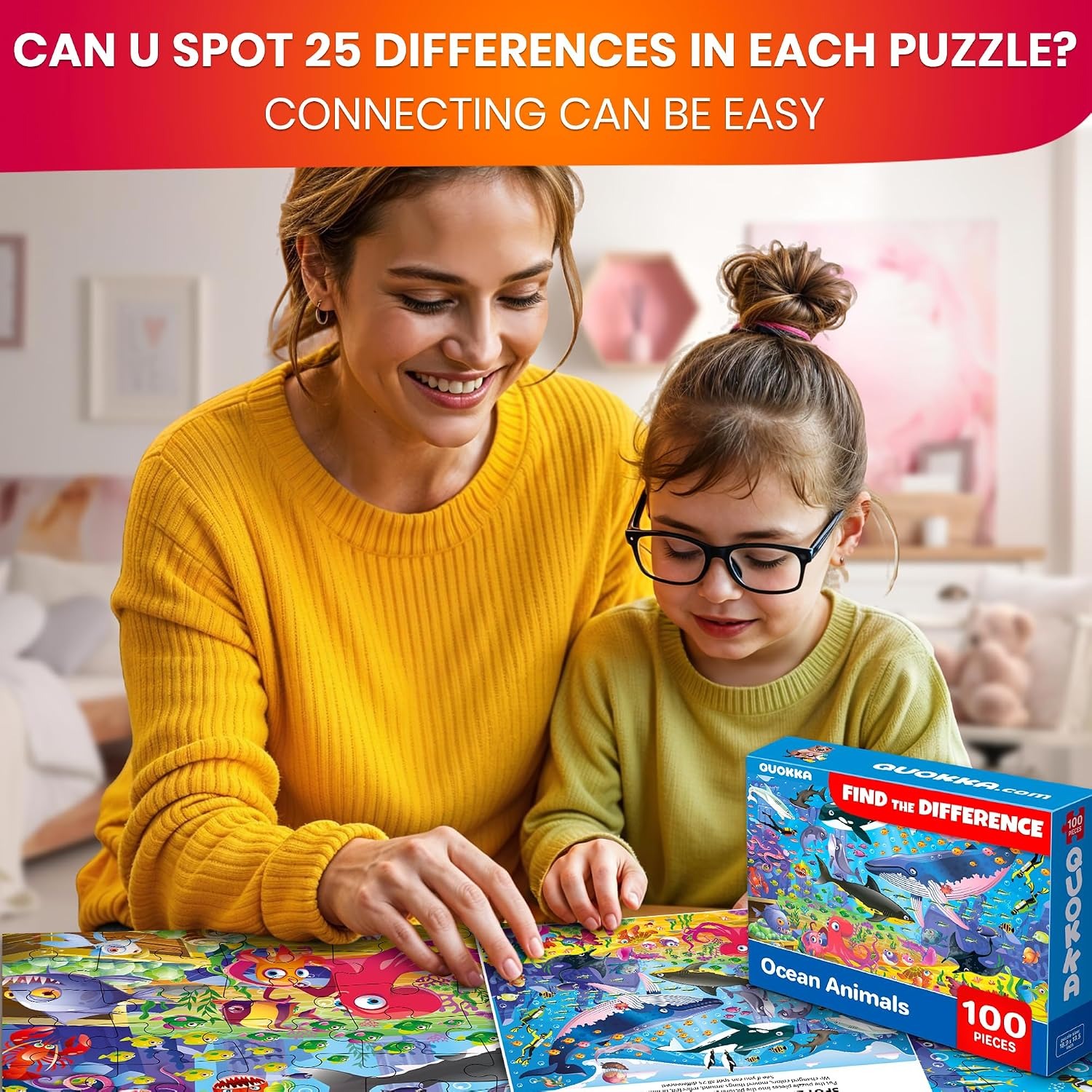
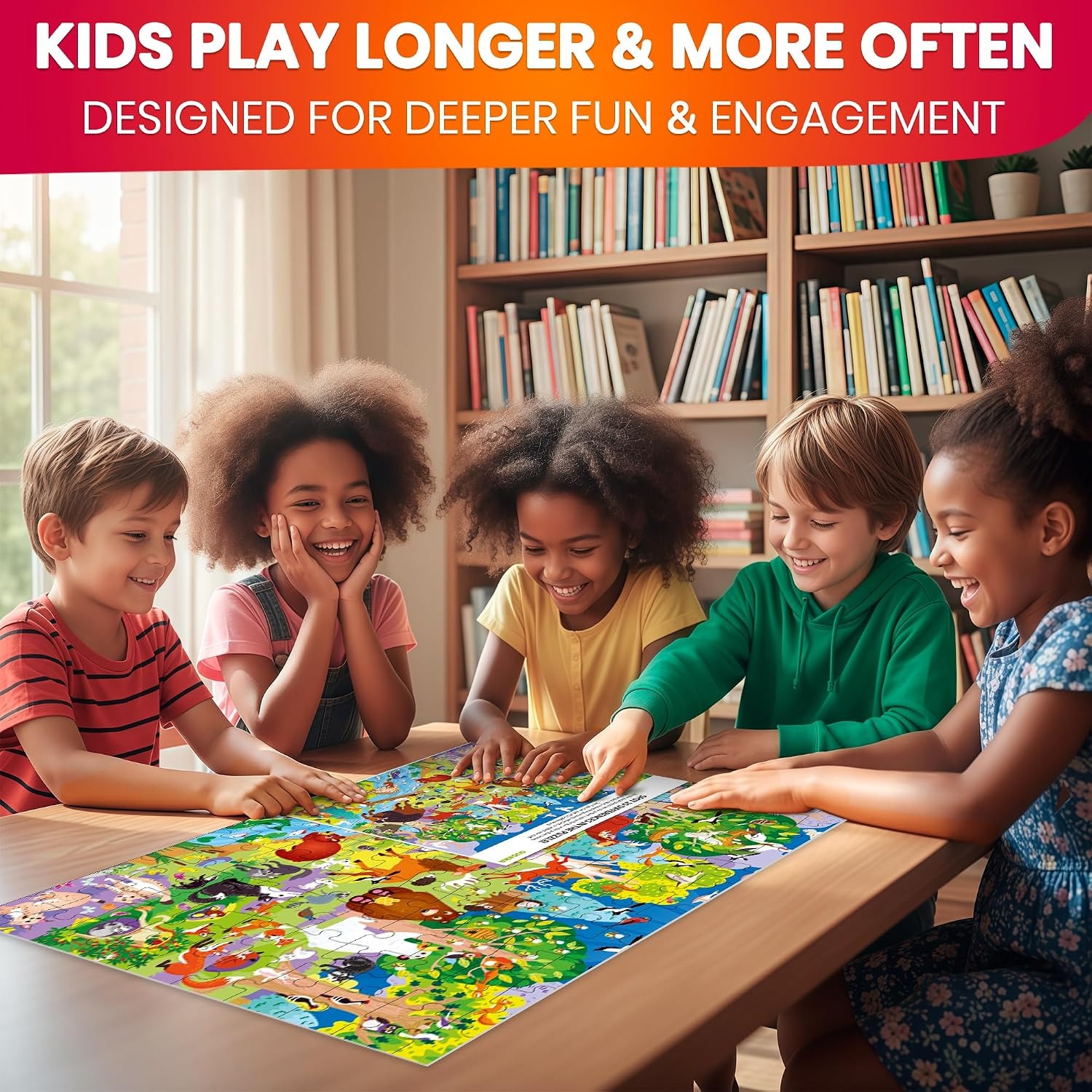
It also suits mixed-age households. One of the best kids puzzle gift choices is anything that two siblings can do side by side without arguing over one board, and four separate puzzles handles that neatly. The player count is listed as 1, 2 and 2 to 4, which covers solo quiet time through to a family session on the floor.
What to look for when choosing a children's puzzle
Piece count first, theme second. Parents often pick the picture and hope the difficulty works out. Reverse that. Get the count right for the child's current level, then choose a theme they care about. A wildlife jigsaw puzzle for children only holds attention if the difficulty is honest.
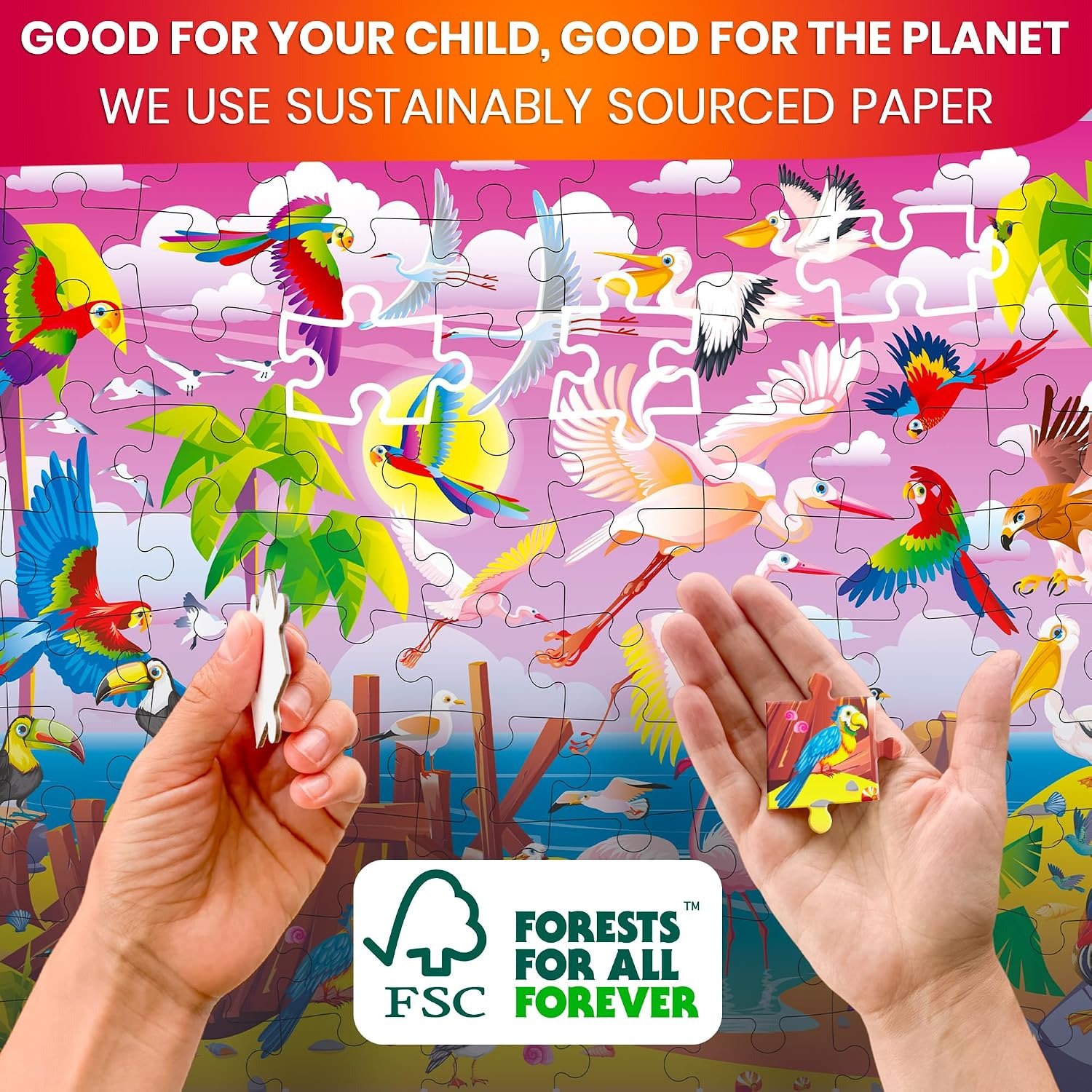
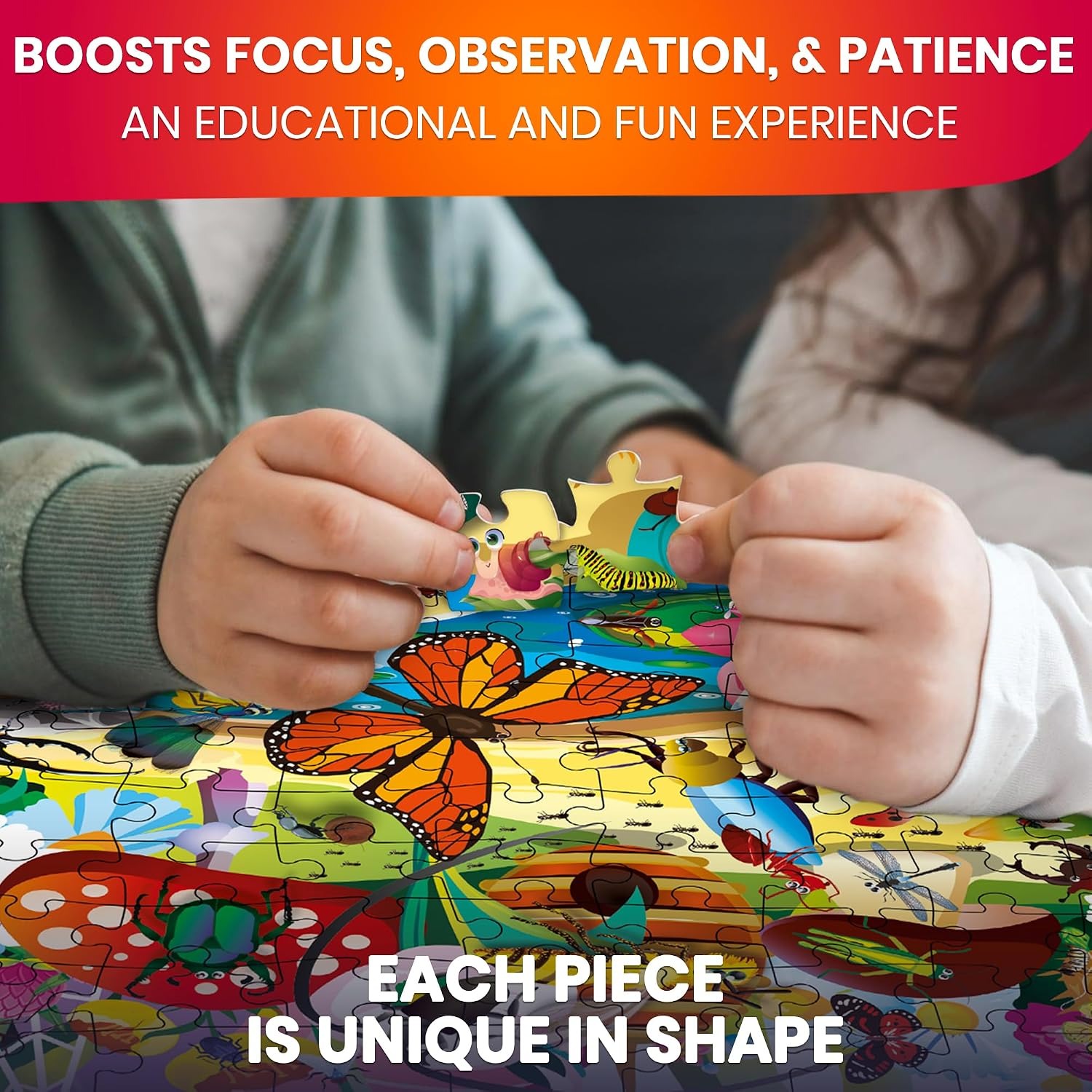
Cardboard thickness. Thin puzzles go soft after a handful of builds. The tabs lose their grip, pieces stop holding together, and lifting a half-finished section pulls it apart. This set uses thick cardboard, which is the difference between a puzzle that survives a year and one that survives a weekend.
Storage that makes sense. Every puzzle here has its own box. That sounds minor until you have four sets of loose pieces in one bag and a child who gives up because the wrong pieces keep turning up. Separate boxes keep the four designs apart and make tidying a thirty second job.
Print quality. Colour matching is most of the strategy at this level. Washed-out or muddy printing removes the main clue a beginner relies on. Bright, clearly separated colour blocks, like an ocean animal puzzle against a forest scene, give a child something to work with.
Portability. The whole set weighs about 1.01 kg. One box slides into a bag for a train trip, a hotel room or a weekend at the grandparents'. A travel puzzle for kids has to be light and self-contained, and individual boxes manage both.
Setting up a build that goes well
Give the puzzle more space than you think it needs. A child working in a cramped corner of a dining table will knock pieces onto the floor and get annoyed. Clear a proper area, or use a large tray so the build can be lifted out of the way at mealtimes.
Stand the box lid upright where the child can see it. The picture is the instruction manual, and glancing at it constantly is good technique, not cheating.
Start with the edges every time. It is a repeatable method that gives a beginner a reliable first win. After that, sort by colour into loose piles. Those two habits turn a confusing heap into a series of small, finishable jobs.
Keep sessions short. Twenty or thirty minutes of real focus beats ninety minutes of fading attention. Leaving a half-built puzzle out and coming back after dinner is completely normal, and often where the best progress happens.
Looking after cardboard puzzles
Cardboard and moisture are enemies. Keep drinks off the table, build on a dry surface, and never attempt to wash pieces. If the printed side picks up dust, a dry cloth wiped gently across it is enough.
Count pieces back into the right box at the end of each session. It takes a minute and saves the misery of discovering a missing piece three months later. If you have a very young helper in the house, pack up properly rather than leaving the build on a low table overnight.
Store boxes flat in a dry cupboard. Stacking them on edge or wedging them into a crowded shelf will bow the board over time. Avoid direct sunlight, which fades print.
The set carries a 30 day warranty against manufacturer defects, which covers production faults rather than everyday wear. If a pack arrives with a fault, flag it early rather than after the first month.
When to move up a level
Watch for two signals. The first is speed: if a 100 piece board is finished in well under half an hour with no help, the challenge has gone. The second is behaviour, specifically whether the child is still sorting methodically or just pattern-matching on autopilot.
When both appear, it is time for a higher piece count. Do not jump too far. Going from 100 straight to 500 usually backfires. A moderate step keeps the sense of progress intact.
In the meantime, this set has a trick up its sleeve. Tip two of the four boxes together and you have a 200 piece build with two pictures to separate. It is a free difficulty upgrade, and it buys a few more months out of the same purchase.
The short version
A hundred pieces is the right size for most children between six and nine, and this set gives you four of them in one go. The themes run across animals, birds, floral detail, insects and ocean scenes under an Ocean & Forest colourway, so there is something for a child who loves sharks and something for a child who loves bears.
The cardboard is thick, each puzzle has its own box, and the whole thing weighs about a kilo, so it travels. It needs no batteries, works for one child or a group of four, and gives you a quiet indoor activity that does not involve a screen.
If your child has outgrown their old puzzles but is not ready for a big board, this is a sensible next step. If they are already racing through 100 pieces, buy the bigger count and come back to this one as a gift for a younger cousin.