
The complete guide
Giant Dinosaur Plush Buying Guide, How To Pick A Big Soft Toy That Lasts
The problem with most big plush toys
Buying a giant soft toy online is a gamble, and most people learn that the hard way. The photo shows a plump, full-bodied animal sitting proudly on a bed. What arrives is a flat, under-stuffed shell that looks fine for a week and then slumps into something closer to a laundry bag with legs.
The reason is usually filling. Making a big toy look big in a photograph is easy. Making it stay big through six months of being hugged, sat on, dragged down a hallway and used as a crash mat is a different job, and it costs more in materials. A giant plush with thin stuffing has nothing to push back against the weight of a child, so the body compresses and never recovers.
The second common problem is parts. Lots of character plush toys come with glued eyes, stitched-on accessories or clip-on features. On a smaller toy that may survive. On a large dinosaur soft toy that gets handled roughly every day, loose parts are the first thing to go.
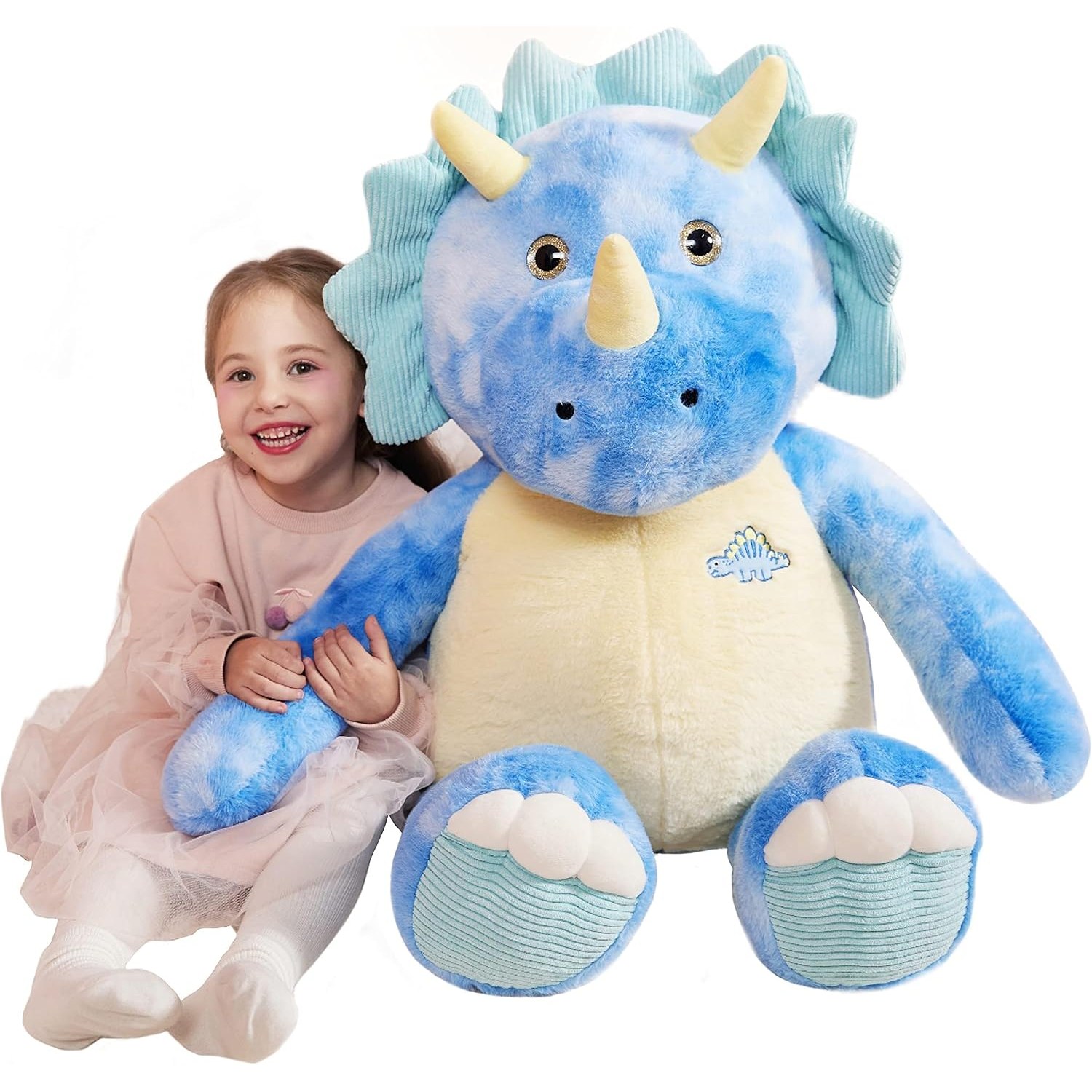
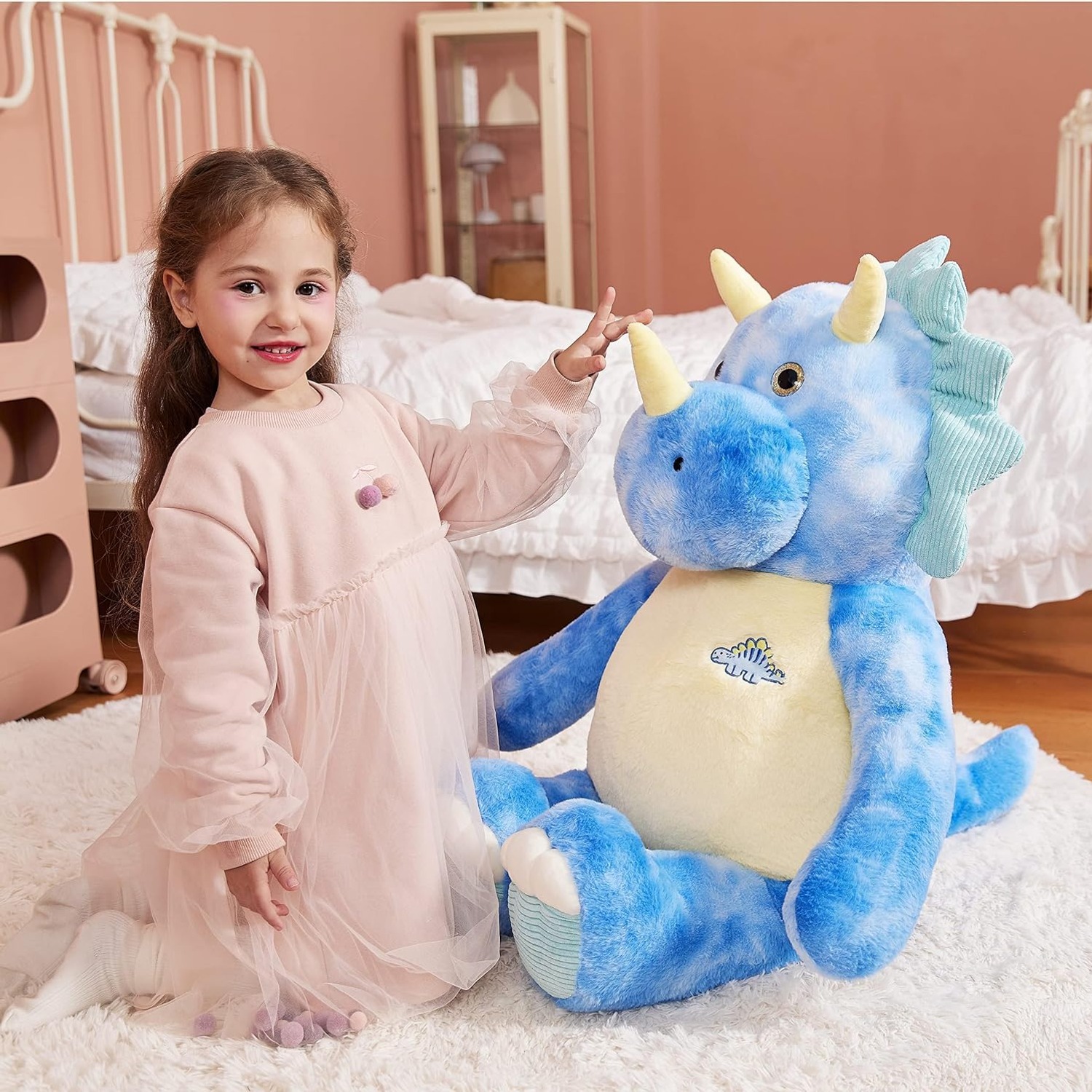
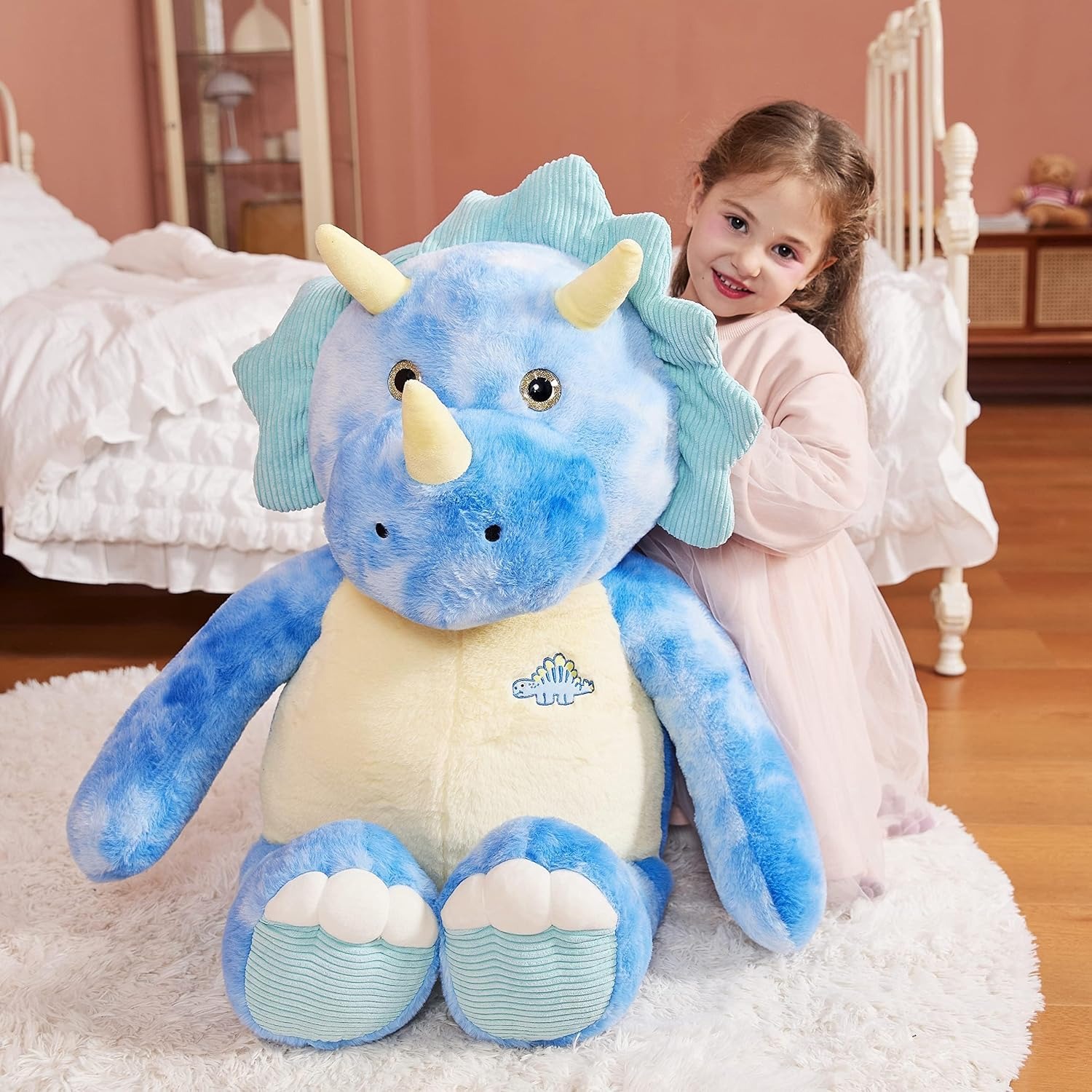
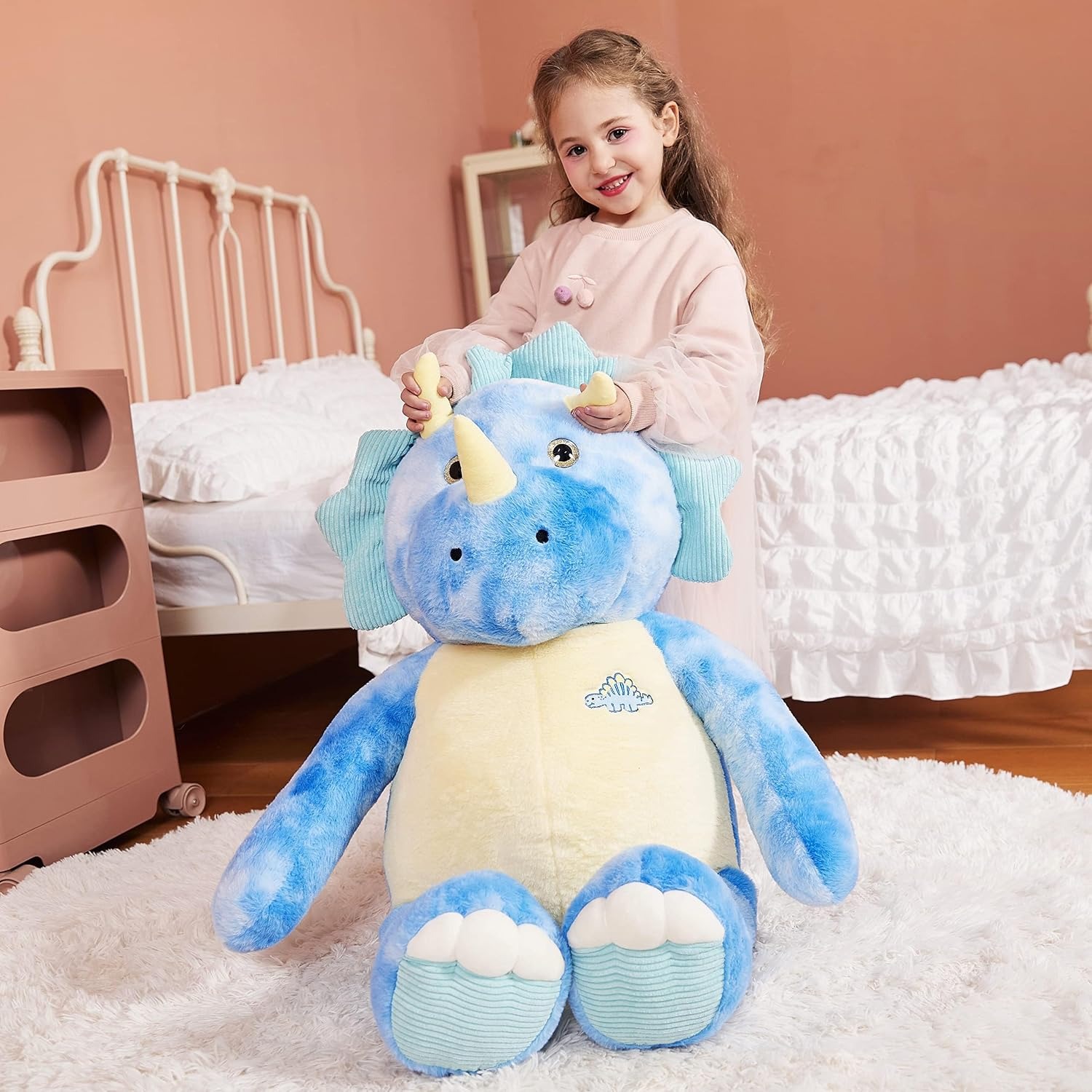
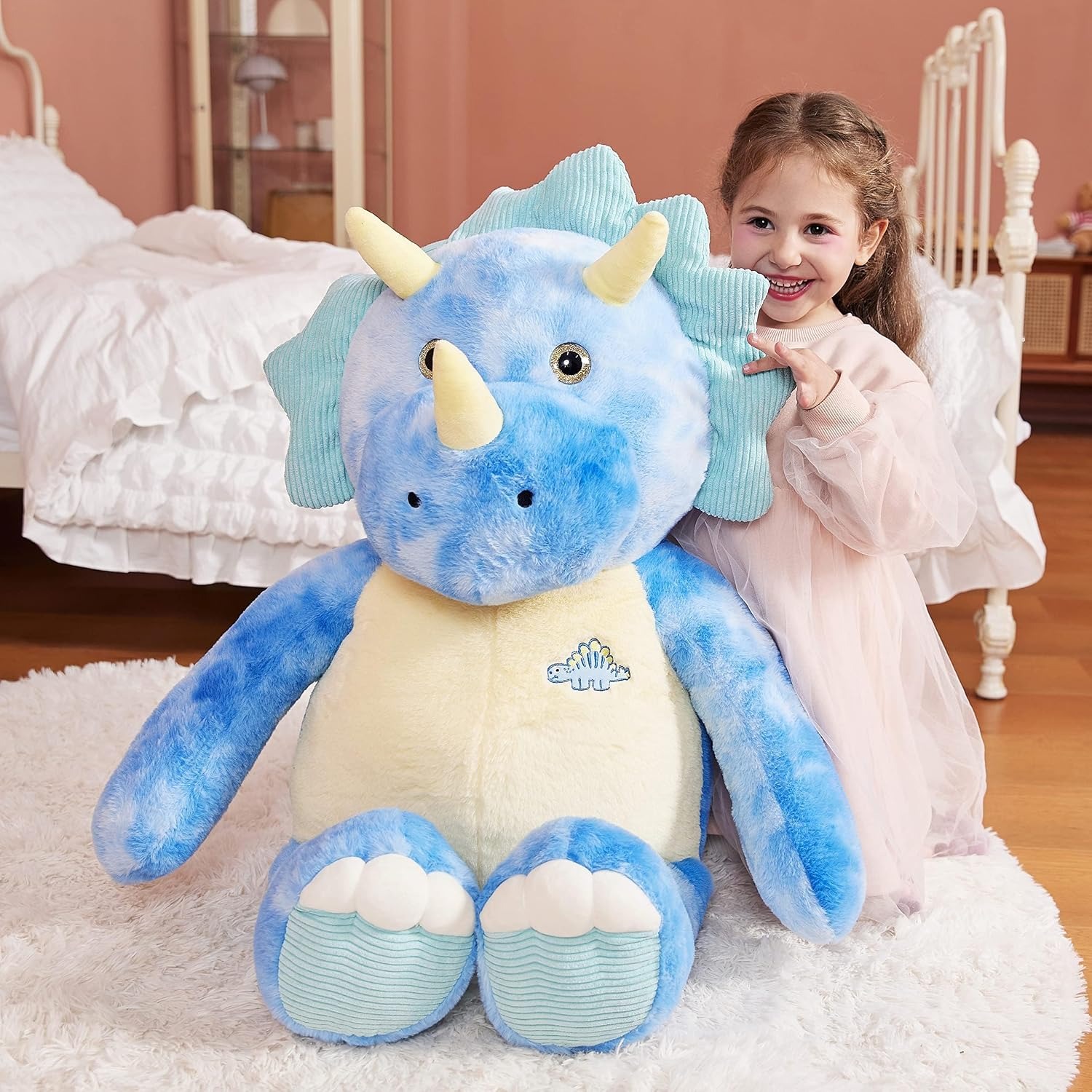
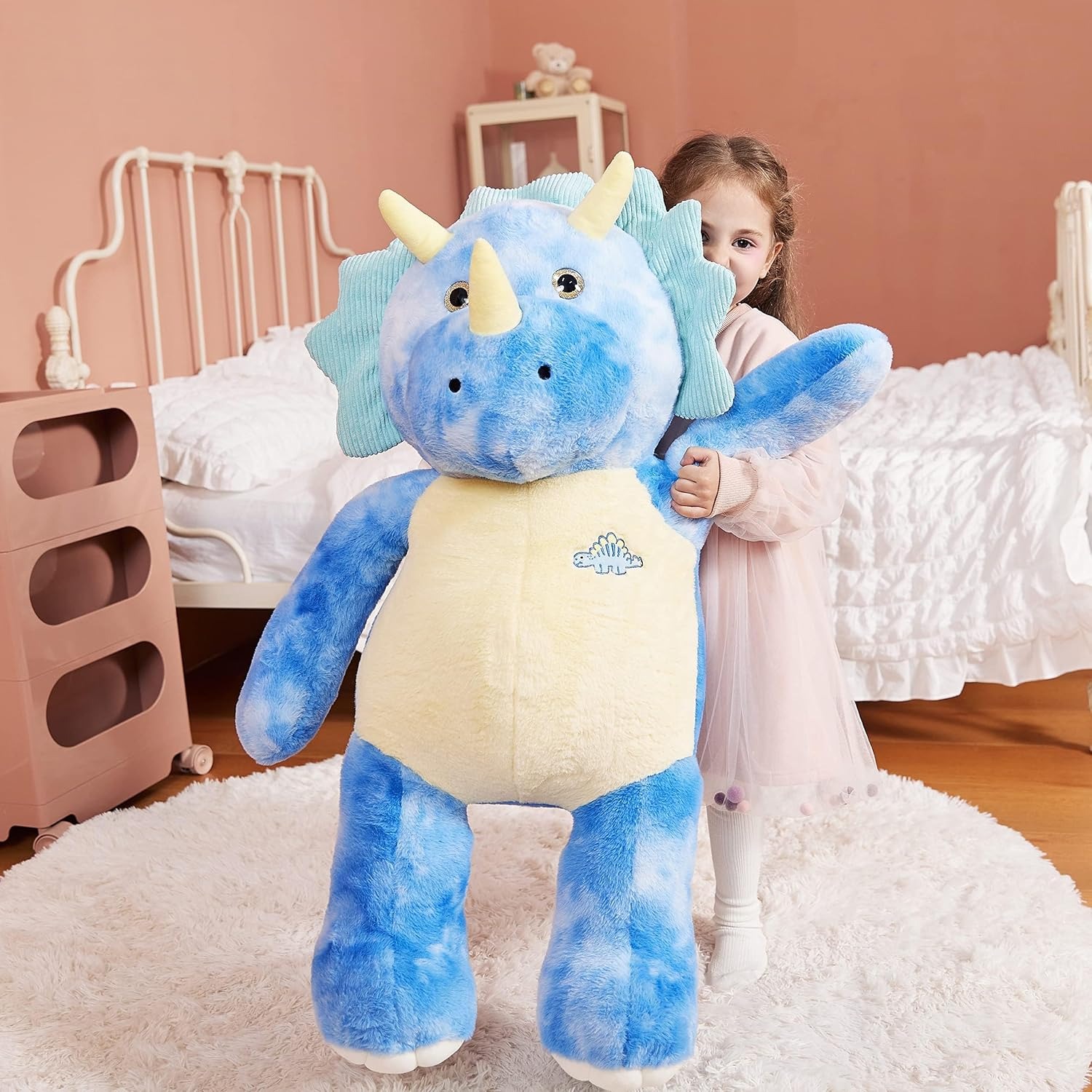
This triceratops is built to avoid both of those traps. It is a single-piece body, 78cm long, with plump filling running right through the barrel, the legs, the neck frill and the tail. There is nothing to detach and nothing to lose.
How a giant stuffed dinosaur actually gets used
Parents often buy a big plush expecting it to be a cuddle toy. It usually becomes more than that within a week.
Children treat large soft toys as places rather than objects. A small plush goes in a pocket. A 78cm dinosaur becomes a seat in front of the TV, a pillow for reading, a passenger in a game, a barrier in a pretend fort, and a soft landing at the bottom of a sofa jump. That range of use is the real value. You are not just buying a toy, you are buying a soft piece of furniture that happens to have horns.
Adults quietly use them too. The body is a reasonable lap cushion, and a lot of people end up using one as back support when sitting on the floor with the kids. In nurseries and playrooms, a big plush is one of the cheapest ways to soften a hard corner and add some colour without buying actual furniture.
There is also the emotional side, which is worth saying plainly without getting sentimental about it. Kids form strong attachments to big animals. The toy becomes the one that stays on the bed when the smaller ones get boxed up. That tends to mean the thing gets used for years, so build quality matters more than the price gap between a cheap one and a good one.
What to look at when choosing
Size against the room. 78 x 30 x 30cm sounds abstract on a screen. Lay a tape measure out on the floor before you buy. In a small bedroom, this may be better living at the end of the bed than taking up floor space. In a playroom, it will vanish into the corner without any trouble.
Filling density. This is the one spec that separates a plush that lasts from one that does not. Look for descriptions of full body filling rather than just overall dimensions, and check how the legs and tail are described. Thin extremities are the giveaway. On this model, the plumpness runs through the whole body, which is why it holds a recognizable triceratops shape instead of flattening into a cushion.
Construction. A one-piece build with no detachable components is the sensible choice for anywhere children under school age are playing. It is also simply more durable. Fewer joins, fewer failure points.
Surface fabric. Polyester with a matte finish feels smoother and looks less synthetic under household lighting than high-shine fabrics. It also hides dust better, which matters for a toy that spends time on the floor.
Age rating. This one is recommended for age 3 and up. That is worth respecting.
Weight. At 1.94 kg, it is substantial without being unmanageable. Heavier than that and a small child cannot move it themselves, which cuts out half the play value.
Care, and the one mistake everyone makes
The mistake is the washing machine. It is understandable. You have a big fabric thing, it is grubby, and there is a machine in the next room. But a one-piece filled toy of this size is not built for a drum cycle. The agitation pulls at the seams, the filling migrates and clumps, and the drying takes so long that you risk a damp, musty core.
Surface cleaning is the method here. Work with a soft brush, a bowl of cool water and a small amount of mild detergent. Dab, do not scrub. Work from the outside of a mark towards the middle so you do not spread the edge. Then go over the area again with a clean damp cloth to lift the soap residue, blot hard with a dry towel, and leave it to air dry somewhere with moving air. Keep it away from radiators and direct sun, both of which can stiffen the fabric.
Between cleans, two habits keep a giant stuffed dinosaur looking new. First, vacuum it occasionally with a soft brush head on low suction, following the direction of the pile. Second, fluff it by hand. Knead the body, squeeze the legs, pull the frill back into shape. Thirty seconds now and then stops the filling from settling into permanent lumps.
If it arrives from flat packing looking thinner than expected, do not panic. That is normal for compressed plush. Unbag it, shake it, work it with your hands and give it a day or two. It fills out.
Who this suits, and who it does not
It suits a dinosaur-mad child aged three or over who wants something they can physically lie on. It suits a gift situation where you want the present to land with some impact, since scale does a lot of work on a birthday morning. It suits a bedroom or playroom that needs a soft focal point. And it suits anyone who wants a quiet toy with no batteries, no speaker and no app.
It does not suit a baby or a cot, given the age 3 and up rating. It does not suit a child who wants a toy to carry to school or on holiday, since this stays home by nature. And it is not the right pick if floor space is genuinely tight, because at 78cm it is not something you can tuck away in a toy box.
The short version
A giant triceratops plush lives or dies on filling and build. This one is 78 x 30 x 30cm, weighs 1.94 kg, uses a polyester outer with soft stuffing, and is made as a single piece with no removable parts. It needs no batteries and is rated for ages 3 and up.
Measure your space, keep it indoors, surface clean it rather than machine washing it, and fluff it by hand now and then. Do that and it will still be holding its shape long after the dinosaur phase has moved on to something else.