
The complete guide
Choosing a Giant Elephant Plush, A Practical Buyer's Guide
The problem with most soft toys
Small plush toys get lost. They slip down the side of the bed, end up in the bottom of a toy box, and get replaced by the next small plush toy. They are fine, but they rarely become the one a child actually looks for at bedtime.
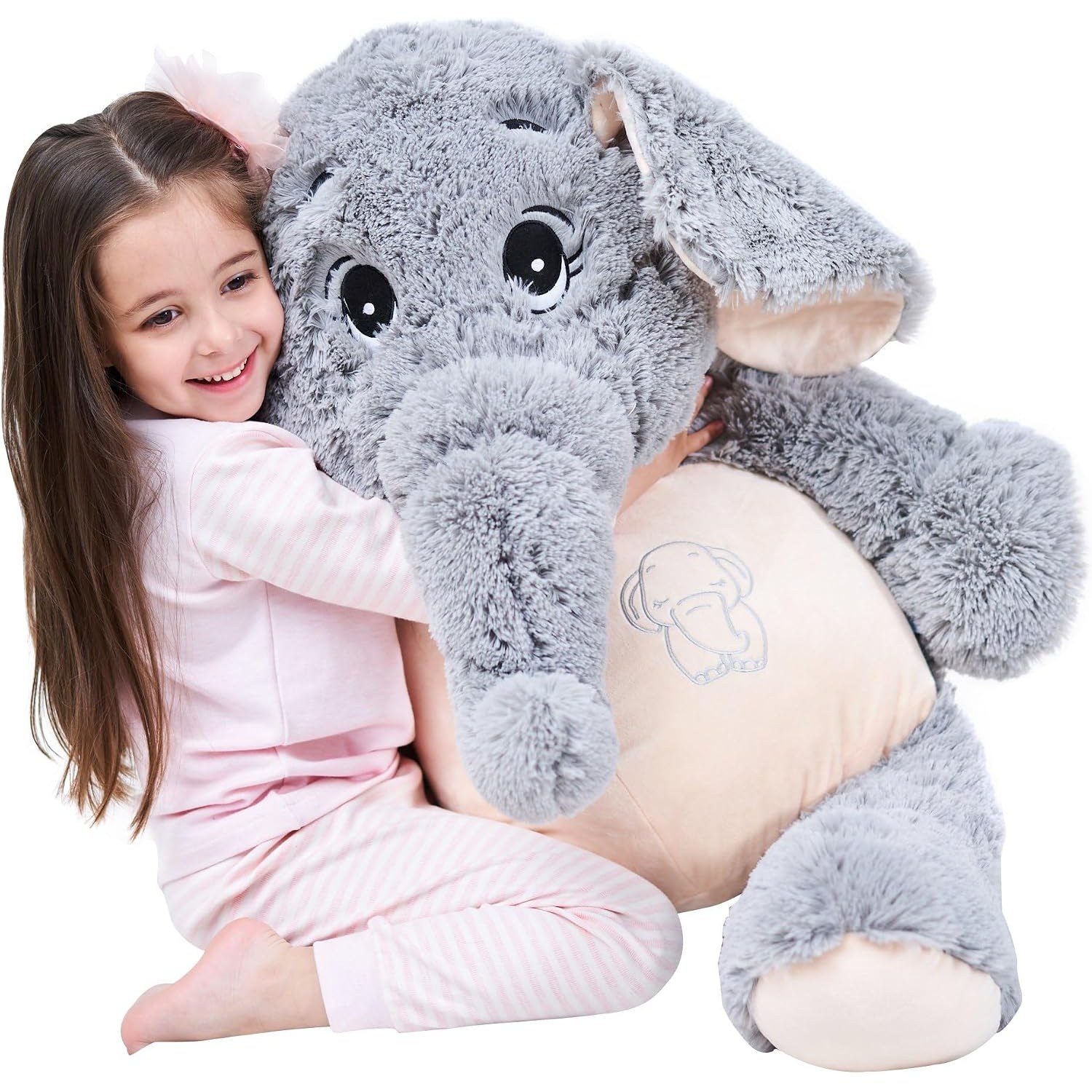
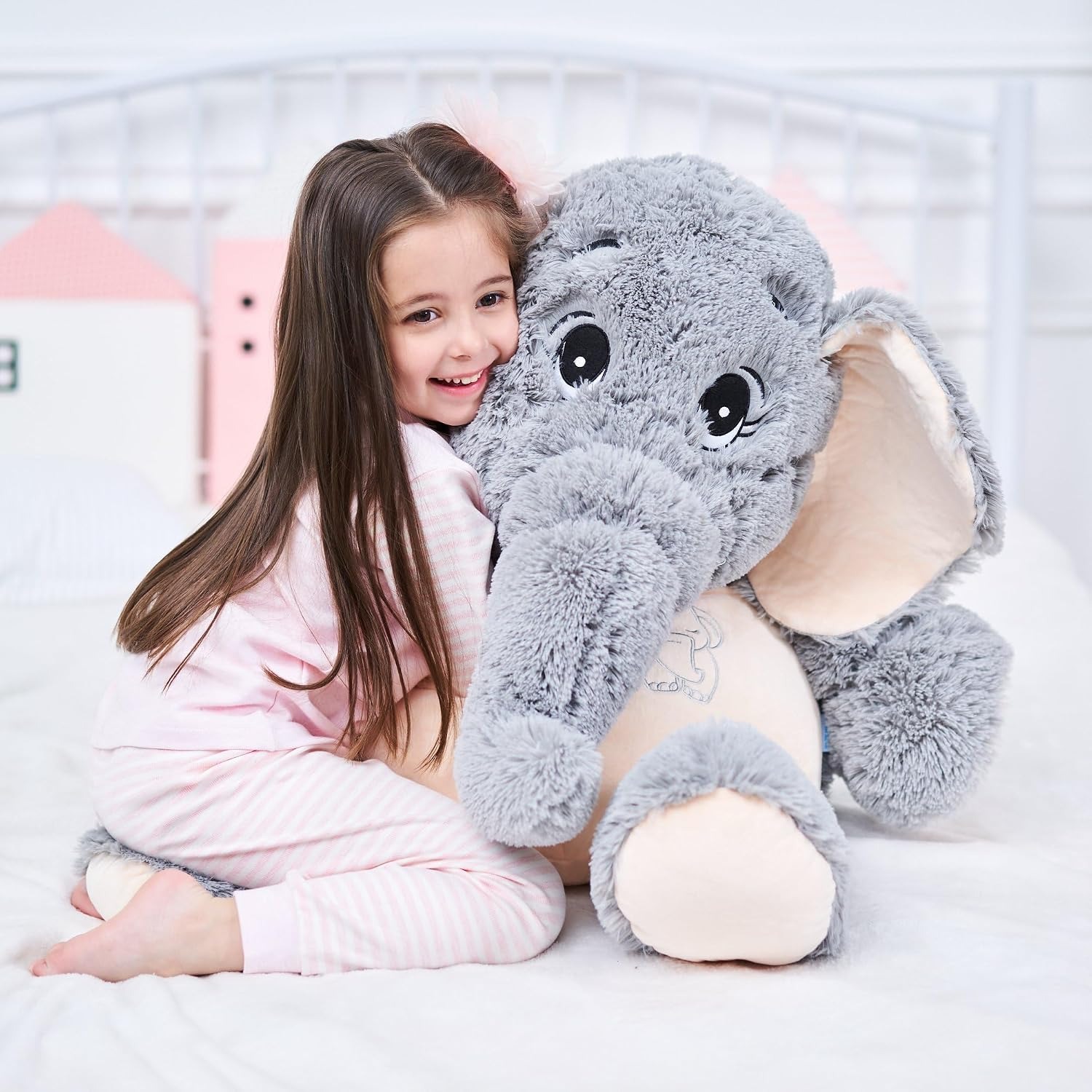
Something changes at scale. A soft toy that is a metre long cannot disappear. It has a place in the room, it gets leaned on, sat on and slept against, and it stops being a toy in the narrow sense. It becomes part of the furniture of a childhood, which is why a giant elephant plush 100cm tends to get used far more than a shelf full of smaller animals.
The trade-off is that big plush toys have to be chosen more carefully. A bad small toy is a minor annoyance. A bad metre-long one is a metre-long annoyance taking up a corner of the room.
What you are actually buying
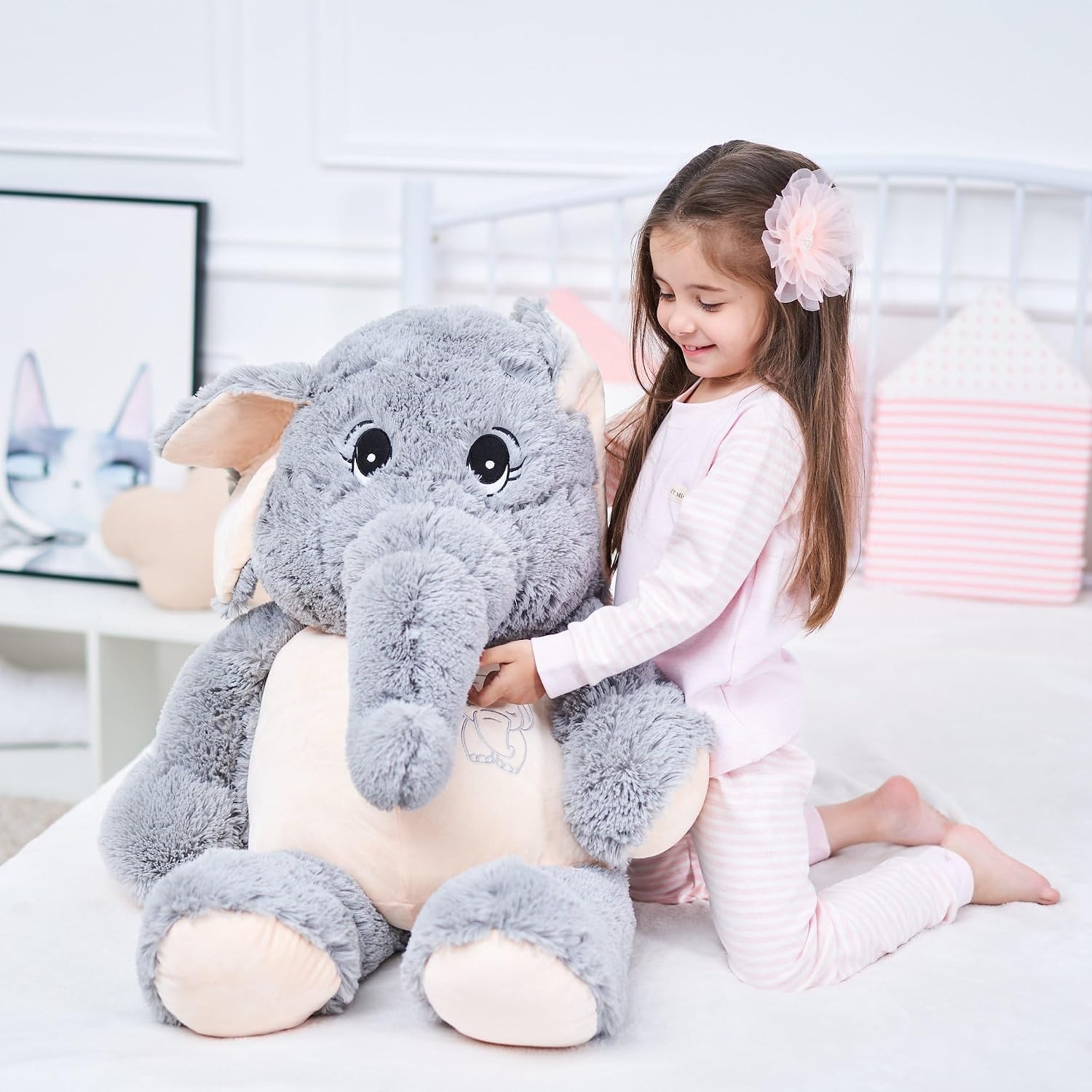
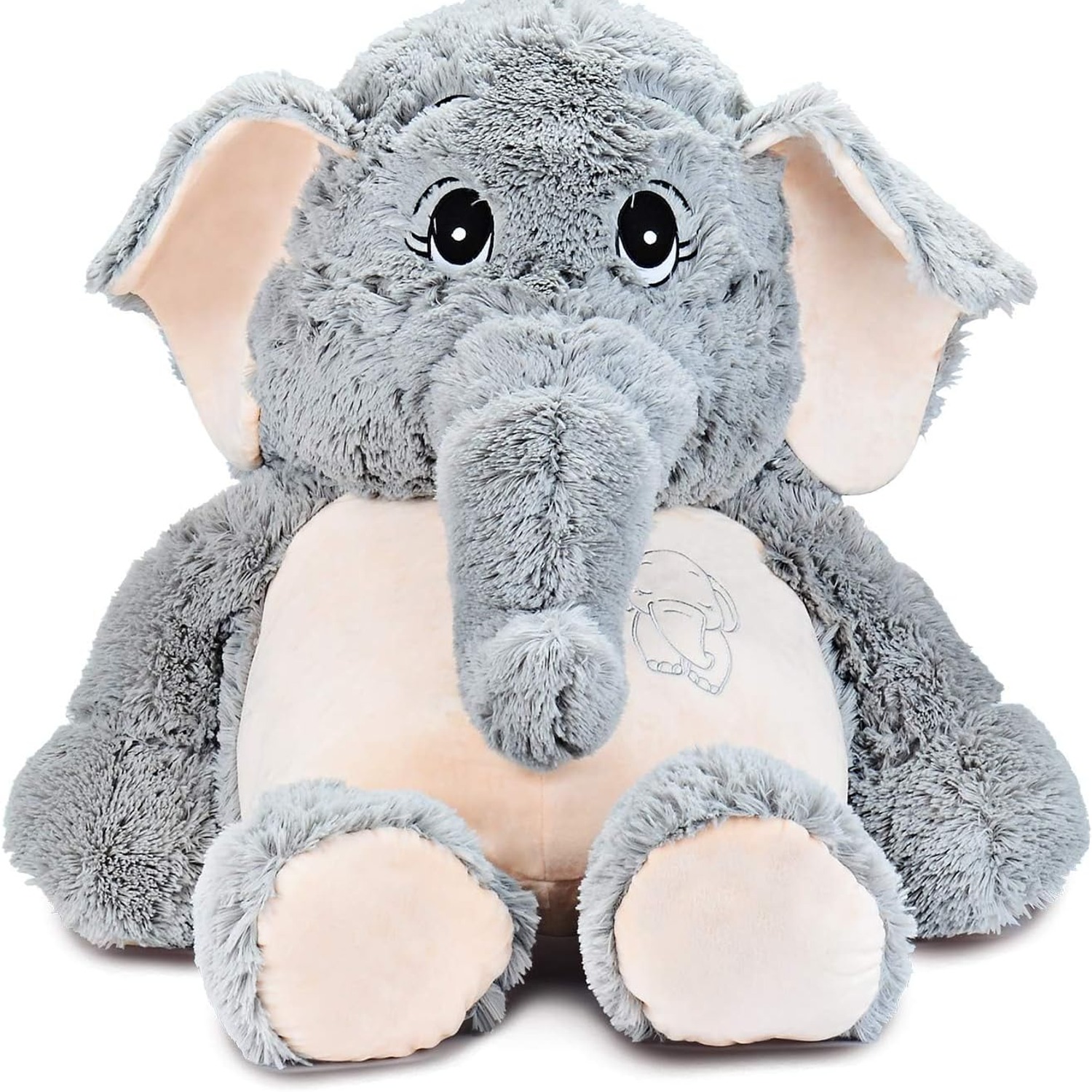
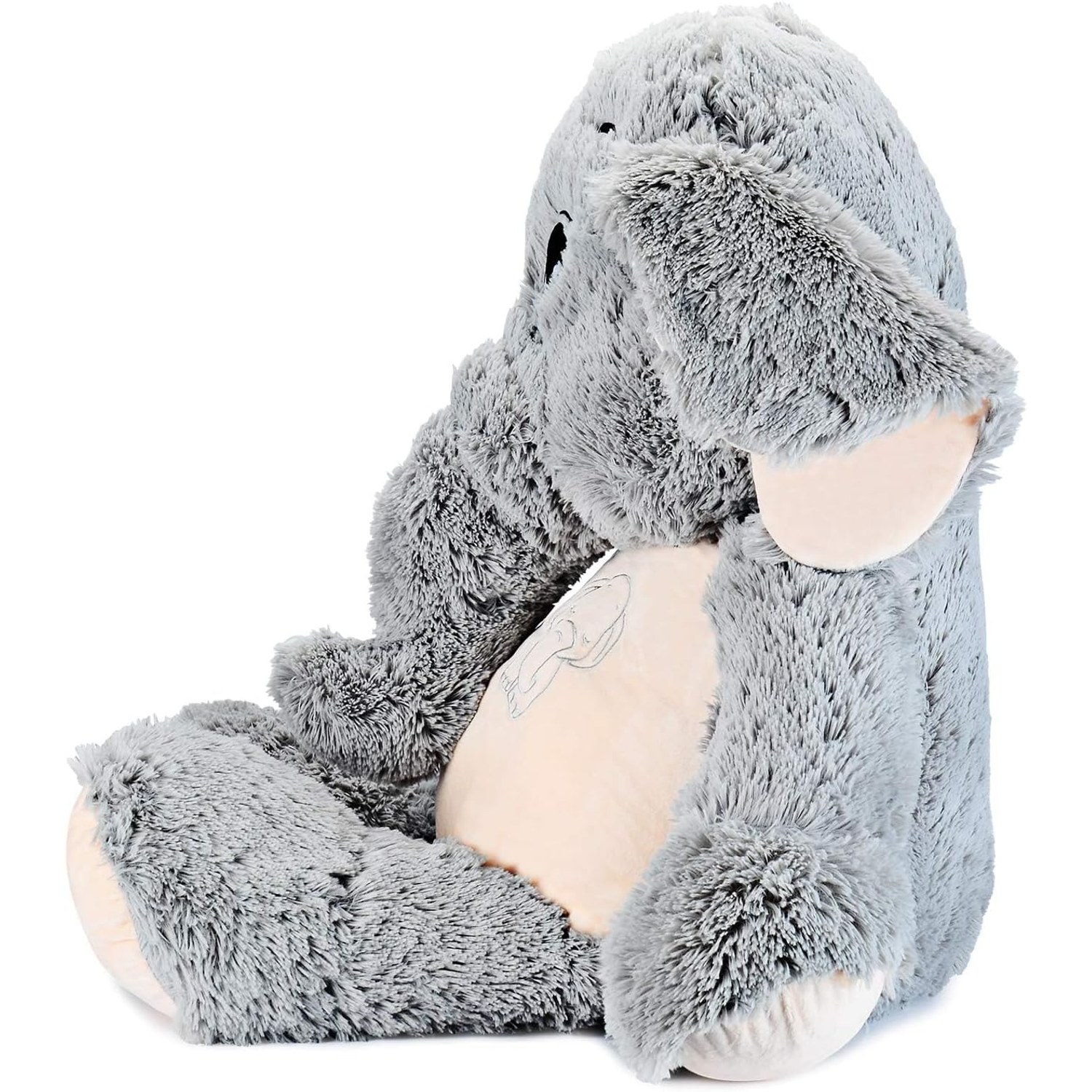
This elephant measures 100 x 60 x 35 cm and weighs 2 kg. Both the outer and inner materials are listed as plush, with extra plump full body filling, and the finish is solid grey. It is one continuous piece. No assembly, no batteries, no sound module, nothing to switch on.
That last point matters more than it sounds. Soft toys with electronics have a predictable lifespan: the batteries die, the sound gets tinny, and the toy quietly stops being interesting. A plain plush body has nothing to fail. It either stays soft and holds its shape, or it does not, and that comes down to the fabric and the fill.
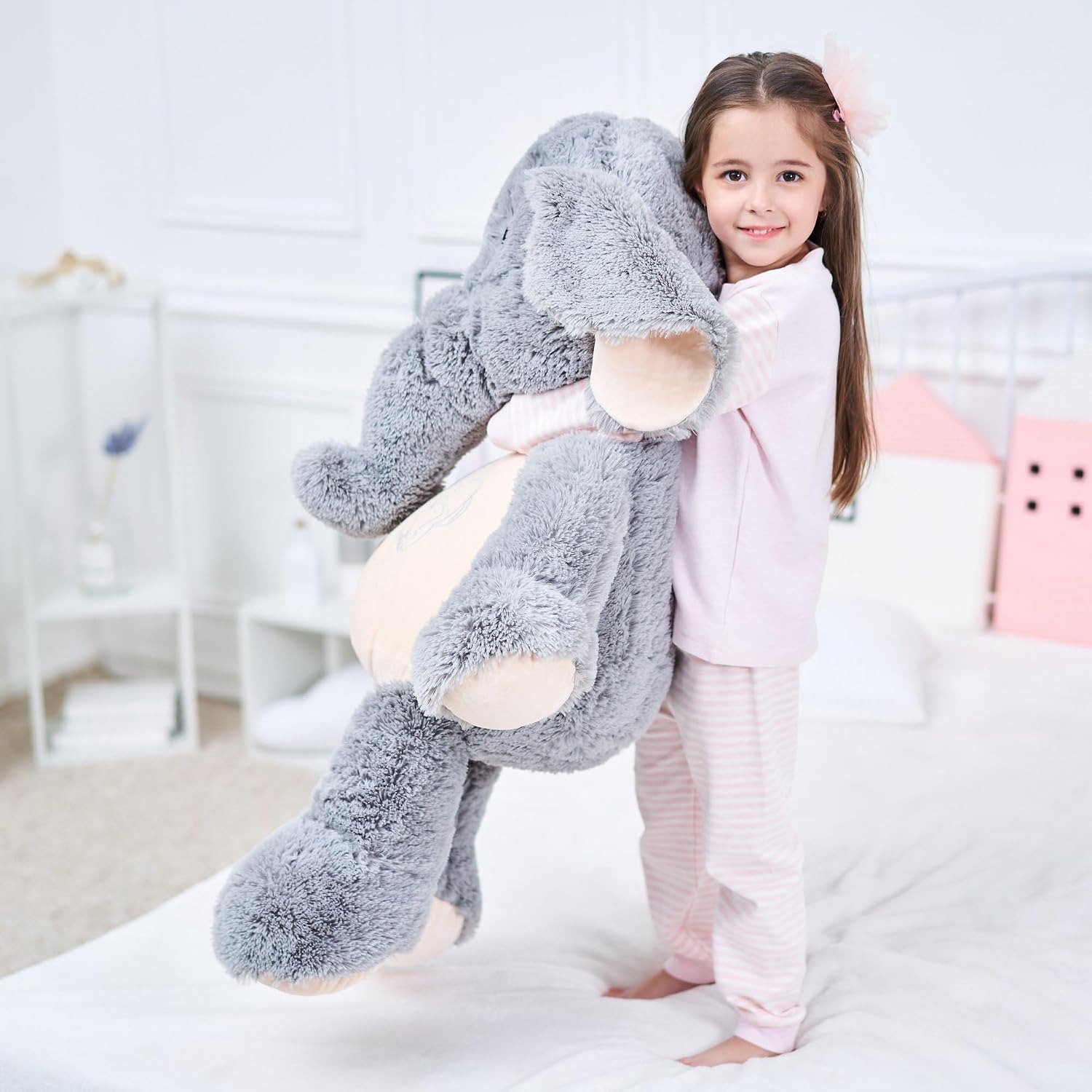
The 2 kg weight is the detail most people overlook. Very light giant plush toys feel hollow and tip over. Very heavy ones are hard for a child to move. Two kilograms over a metre of body sits in a useful middle, substantial enough to lean against and light enough to be dragged into the lounge without help.
Why elephants work so well
There is a reason the elephant is one of the most common shapes in large plush. The body is naturally wide and rounded, which gives you a lot of surface to lean on. The ears are flat and floppy, so they fold comfortably under an arm rather than sticking into you. The trunk gives small hands something to hold and makes the toy instantly recognizable from across a room.
Compare that to a giraffe or a flamingo. Those shapes are mostly neck and leg, which looks striking but is far less comfortable to hug. If the goal is a cuddle toy rather than a sculpture, the elephant shape is hard to beat.
Grey helps too. A big plush gift in a bright colour commits the room to that colour. Grey does not. It works next to white bedding, navy walls, pine furniture or a colourful rug, and it ages better than a pastel that has been handled daily for three years.
Who it suits
Children from about three years up are the obvious audience, which lines up with the manufacturer recommended age of 36 months and up. At that age a child is big enough to handle something this size safely and old enough to appreciate the scale of it.
It also works for older kids and teenagers, who tend to use a jumbo stuffed elephant as a backrest for reading or gaming rather than as a toy. Adults buy them for the same reason, plus the straightforward comfort of something soft and heavy to hold. A lot of these go into dorm rooms and apartments, not just nurseries.
For babies, the honest answer is decoration only. A large soft toy should not be in a cot or anywhere near a sleeping infant. As a piece of nursery decor that the child grows into, it is a lovely thing. As a sleep companion for a baby, it is not appropriate, and no amount of softness changes that.
How to choose between sizes
People usually overestimate how much space they have and underestimate how big a metre is. Before buying, walk into the room and measure out 100 cm on the floor or across the bed. If that length looks comfortable, a 100cm stuffed animal will land well. If it looks tight, go smaller.
Think about where it will live when it is not being used. Giant plush toys do not store neatly. There is no cupboard shelf that takes one. It needs a corner, the foot of a bed, or a designated spot on a chair. If you cannot name that spot now, you will be moving it every day.
Finally, think about who is lifting it. Two kilograms is nothing for an adult, but it is about the weight of a large bag of sugar for a small child carrying it across a room. Most four and five year olds manage fine, often by dragging rather than lifting.
Unpacking and first impressions
Large plush toys are almost always compressed for shipping, because sending a metre of air across the world is expensive. The result is that the toy can look disappointing for the first hour out of the packaging. It will seem thinner and smaller than the photographs.
Do not judge it yet. Shake it firmly, knead the body with both hands to break up any compressed filling, and leave it somewhere warm and airy for a day or two. The filling expands as it recovers, and the shape fills out. A quick brush with a soft brush at the end lifts the pile and finishes the job.
Keeping it clean
The care rule here is simple and non-negotiable: surface clean only. Do not put it in a washing machine. A one-piece stuffed toy of this size does not survive a drum well, the seams take a beating, and the filling can clump and shift in ways you cannot fix afterwards.
For everyday marks, a soft brush with a little mild cleanser and warm water does the job. Work on the affected patch, blot it with a clean damp cloth to lift the detergent, then let it air dry fully away from direct heat. Deal with spills quickly. A fresh mark lifts out easily, while a set one often does not.
Between cleans, a weekly shake and a gentle brush keeps the filling even and the pile standing up. That small habit is the difference between a soft elephant toy that looks good after three years and one that looks tired after six months.
Keep it indoors. The listing specifies indoor use, and that is sound advice for any plush item. Grass, damp and grit all work their way deep into pile and are difficult to remove without soaking, which you cannot do here.
As a gift
Scale is the whole trick. A giant soft toy for a bedroom gets a reaction that a small one simply does not, regardless of quality. For birthdays, new siblings, big milestones or a long-awaited visit, something this size reads as generous without being complicated.
Wrapping is the only awkward part. Standard paper struggles with a metre of lumpy plush. A large fabric bag, a wide ribbon tied around the body, or handing it over unwrapped all work better, and the unwrapped version usually gets the best photo.
The short version
This is a 100 x 60 x 35 cm grey plush elephant, 2 kg, one piece, no batteries, no assembly, recommended for ages three and up. It is soft, plump and designed to be hugged, leaned on and slept against rather than displayed on a shelf.
Buy it if you have a metre of space and want a soft toy that actually gets used every day. Skip it if the room is already crowded or you are shopping for a baby's cot. Clean it by hand, keep it inside, and give it a shake now and then, and it should hold its shape for a long time.