
The complete guide
Choosing a Flower Press Craft Kit, A Practical Buyer's Guide
The problem with most kids' craft kits
You buy the box with the happy child on the front. You clear the table. Twenty minutes later there is glue on a chair, two pieces are missing, and the thing in your child's hand does not look like anything. They lose interest. The box goes in a cupboard and stays there.
The failure point is almost always the same. Too many steps happen before anything looks like the picture. Drying time, cutting, measuring, waiting. Children under about eight have a short window between starting something and needing to see a result. Miss that window and the activity is over, no matter how good the materials are.
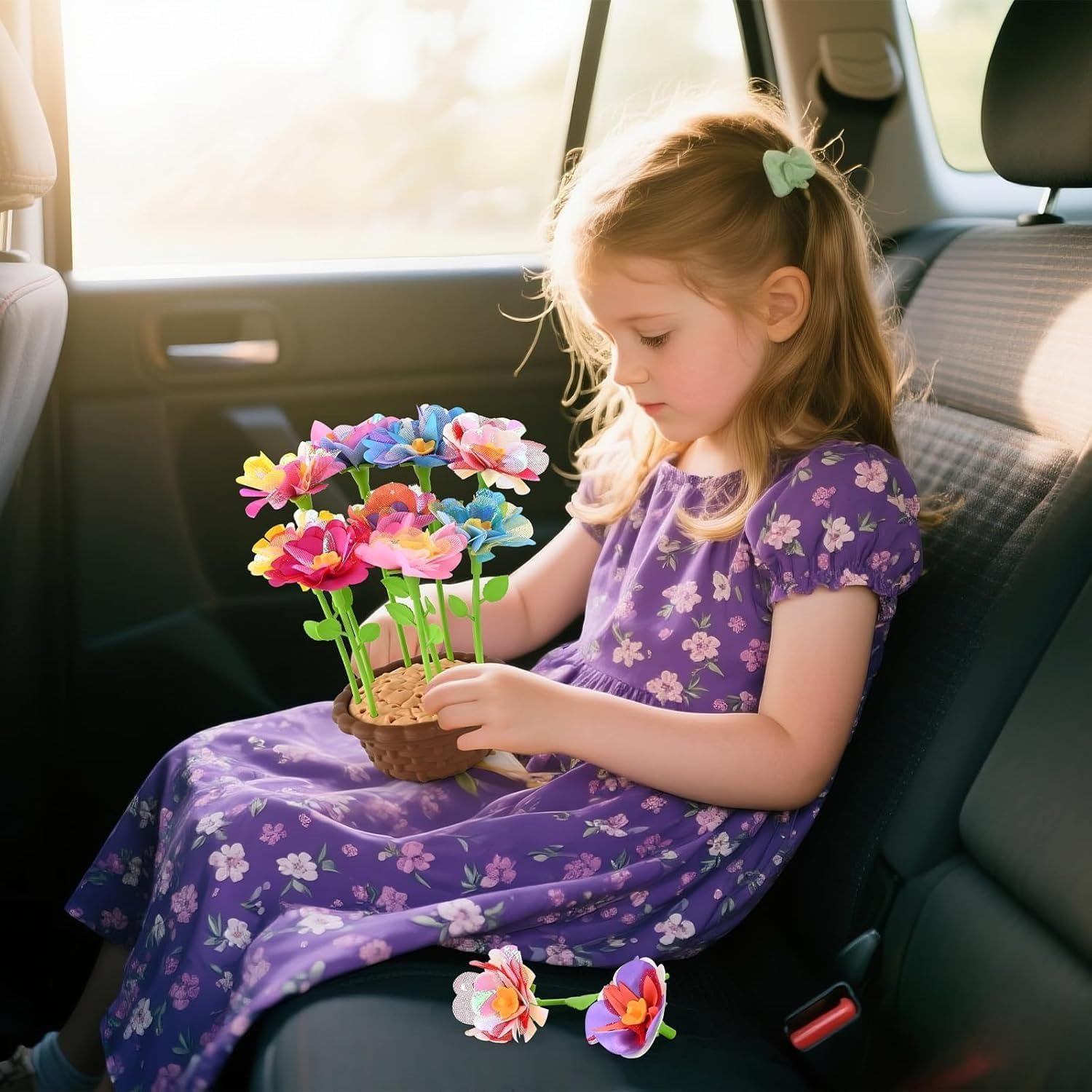
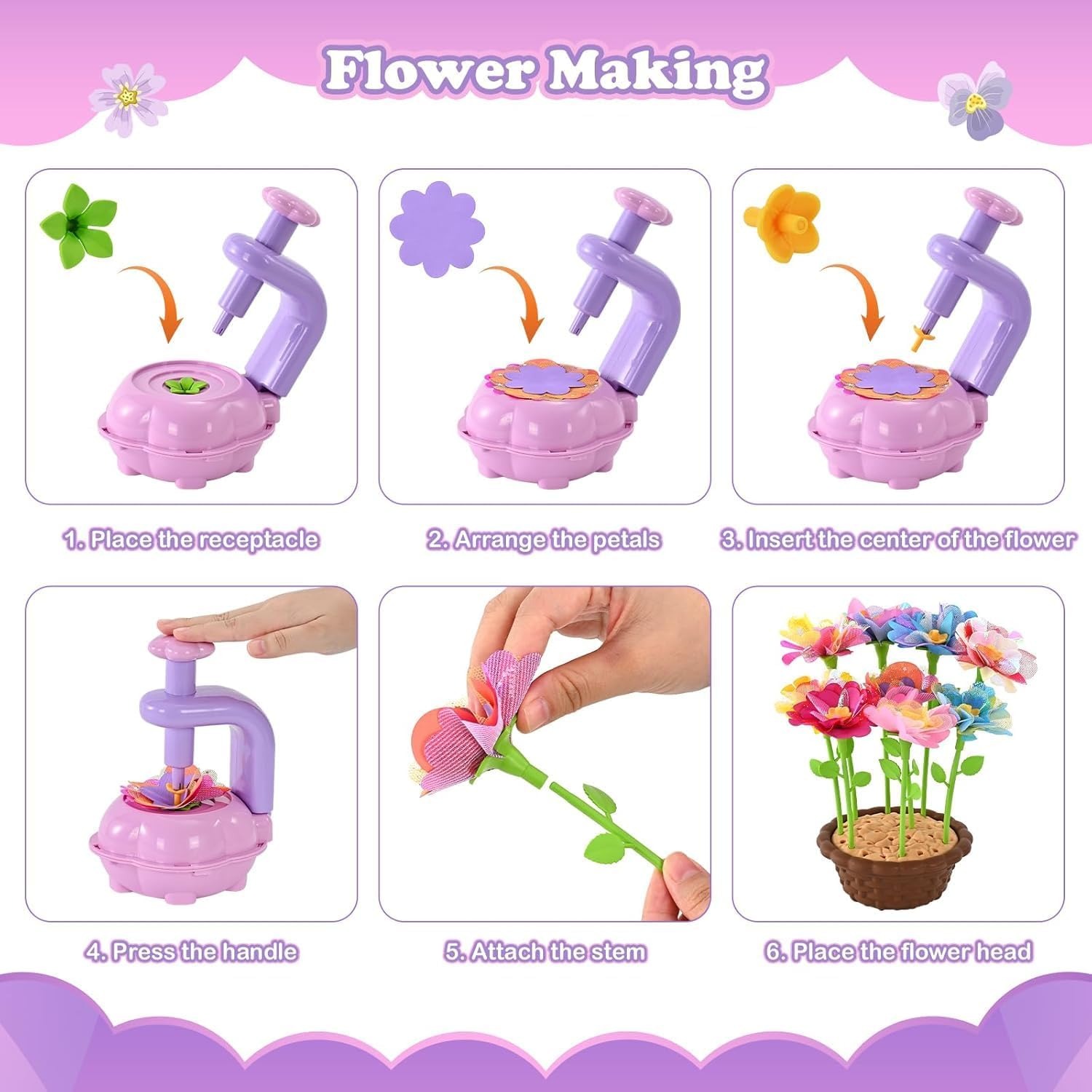
A flower press craft kit avoids that problem by design. You pick a petal set, add a centre, slot in a holder, push a stem on. One flower. Done. The child holds something finished while they are still interested in making it.
How this kit actually works
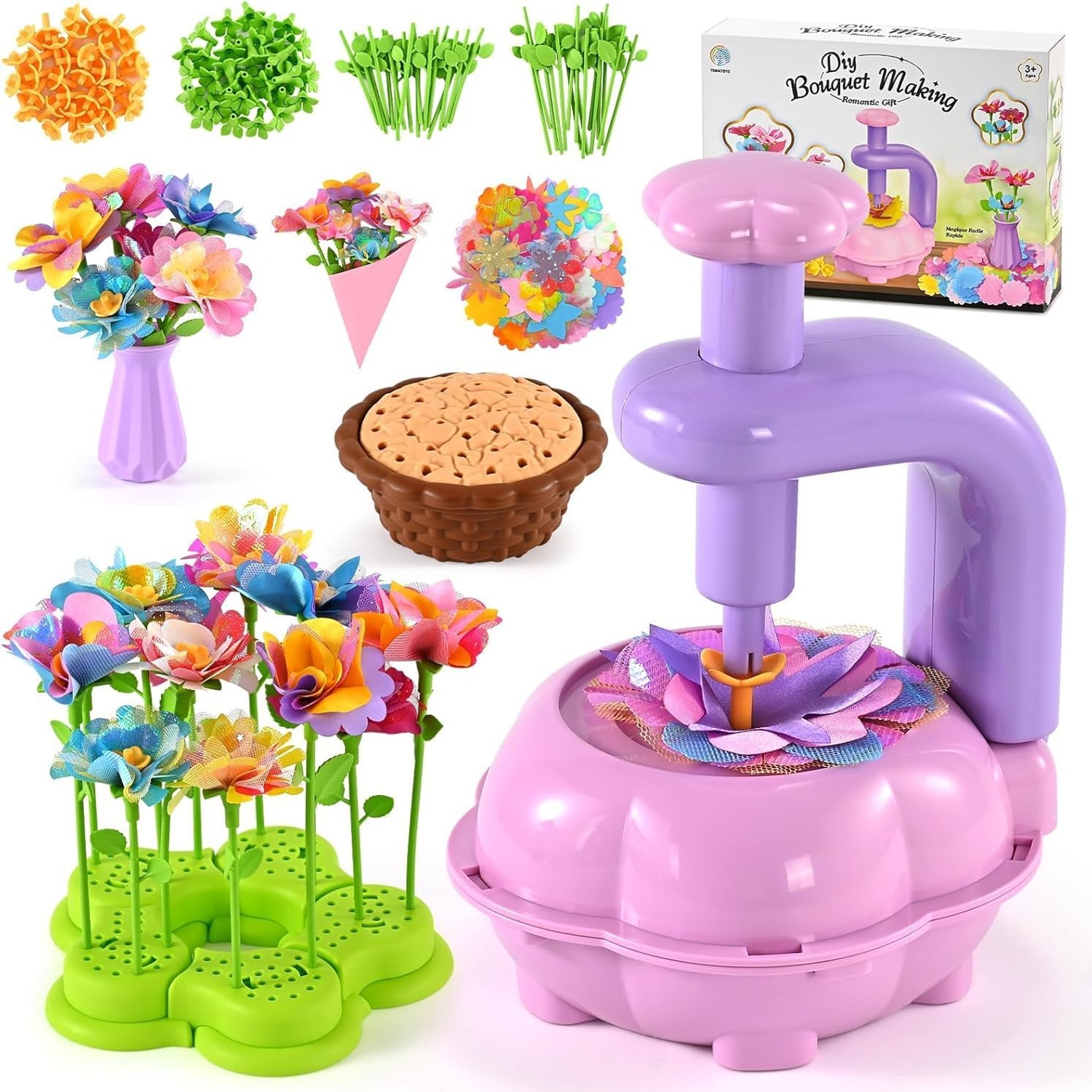
Everything in the box presses together. There is no glue, no tape and no cutting. The petals are fabric, shaped so they stack and hold. A centre sits in the middle and a holder locks the arrangement. A stem pushes in from below, and the result stands upright on its own.
That last part matters more than it sounds. A flat paper flower looks like homework. A flower that stands up in a vase looks like an object. Children treat the two very differently, and so do the adults they give them to.
The set has 221 pieces. That is 108 petals, 36 centres with 36 matching holders, 18 stems in long and short lengths, four sheets of wrapping paper, display bases and one vase. The petals vary in colour and size, which is where the variety comes from. A child who builds six flowers will not accidentally build the same one twice unless they want to.
Who it suits
This is a set for children who like to make things with their hands and want to see a result fast. It also suits children who find drawing frustrating, because nothing here depends on being able to draw a neat line.
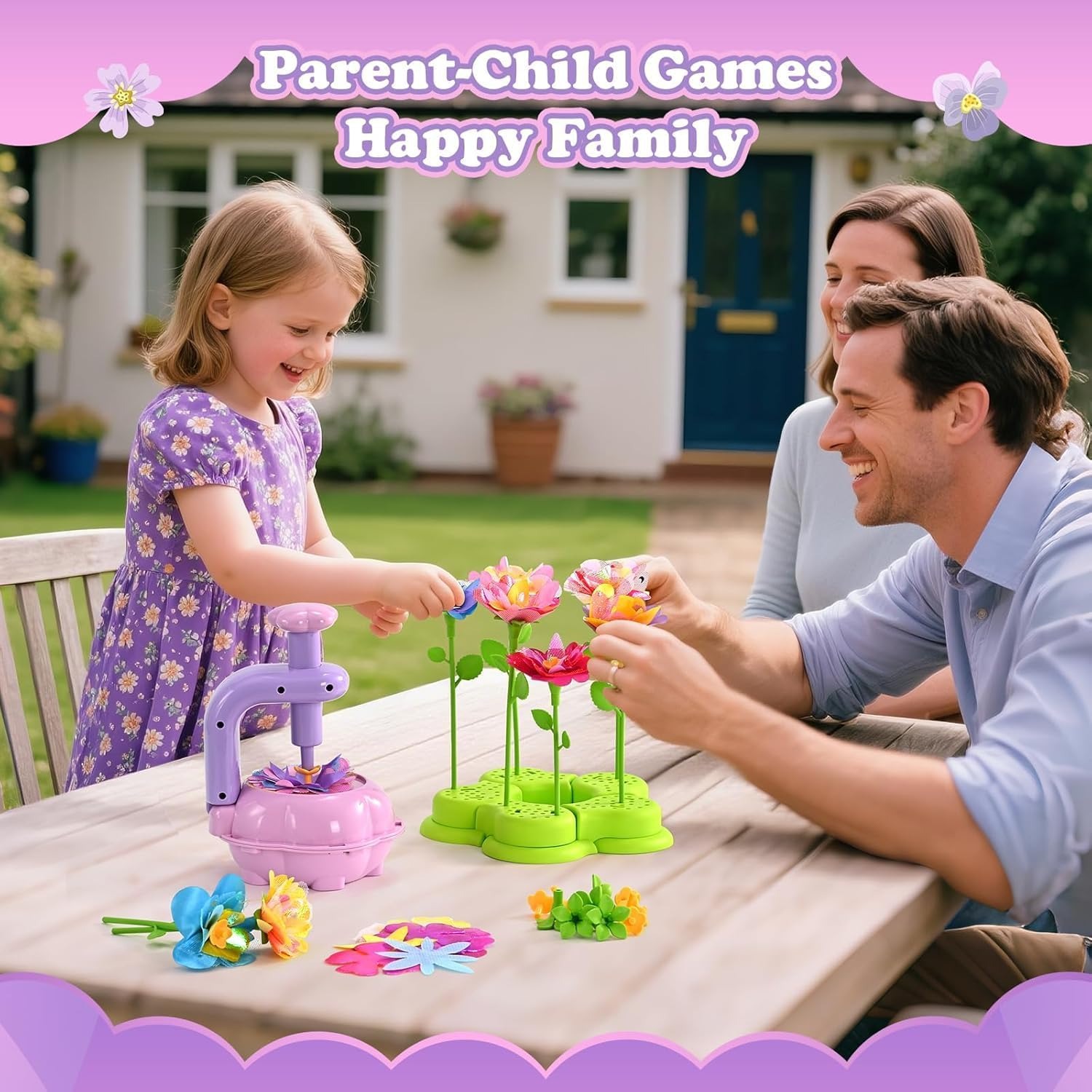
It works well as a shared activity. One person sorts petals, another presses, another wraps the finished bouquet. Families who enjoy sitting down together for half an hour on a wet afternoon will get the most out of it. If you need something that keeps a child busy alone and silent for two hours, be honest with yourself, this is not that. Children at the younger end need someone nearby for the first few flowers.
Older children often drift into design mode. They start planning a bouquet rather than making single flowers, deciding which colours sit next to each other and how tall each stem should be. That is a different kind of engagement and it usually lasts longer.
What to look for in a flower pressing kit
Piece count against variety. A big number on the box means little if the pieces are all identical. What you want is a mix of petal sizes and colours, because that is what lets a child build something that feels like theirs. With 108 petals across different colours and sizes plus 36 centres, there is enough range here to keep combinations interesting.
Whether glue is required. Glue adds mess, drying time and adult supervision. A press-fit system removes all three. It also lets a child undo a mistake, which quietly reduces the number of meltdowns at the table.
Whether the finished item has somewhere to go. A kit that makes things with no destination ends with a pile on the counter. The vase, display bases and wrapping paper in this set give the finished flowers a job. They go in the vase, or they get wrapped and handed to someone.
Whether pieces are reusable. Single-use kits are fine as a one-off party activity but poor value otherwise. Because nothing is glued here, a bouquet can be pulled apart and rebuilt next weekend.
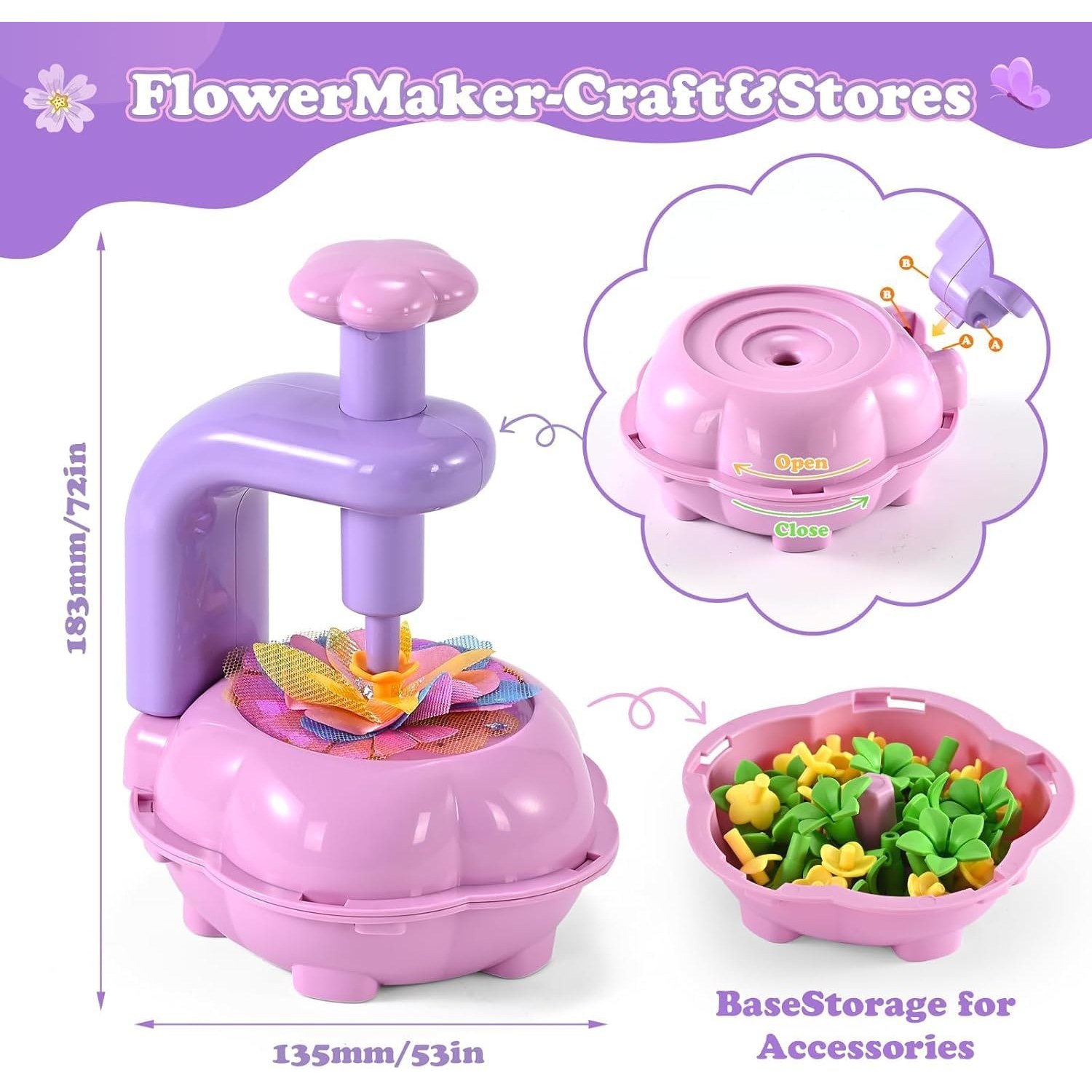
Storage. A 221-piece set needs a home. The box is 31.9 x 24.6 x 8.3 cm, which fits on a shelf. Keep the original box and the set survives. Tip it into a toy bin and you will be finding petals for months.
Setting up for a good first session
Clear a flat surface and put down a tray or a shallow box lid. Loose petals roll, and a lip on the work area saves most of the chasing. Natural light helps, since a lot of the activity is colour matching.
Build one flower yourself while the child watches. Say what you are doing as you go, but keep it short. Then hand the next one over and let them get it slightly wrong. Children learn the press motion through their hands, not through instructions.
Expect the first two or three flowers to be experiments. After that, most children settle into a rhythm and start making deliberate choices. That is the moment the kit earns its keep.
If you have two children at the table, split the petals into separate piles before you start. Shared central piles create arguments. Separate piles create peace.
Making it a gift
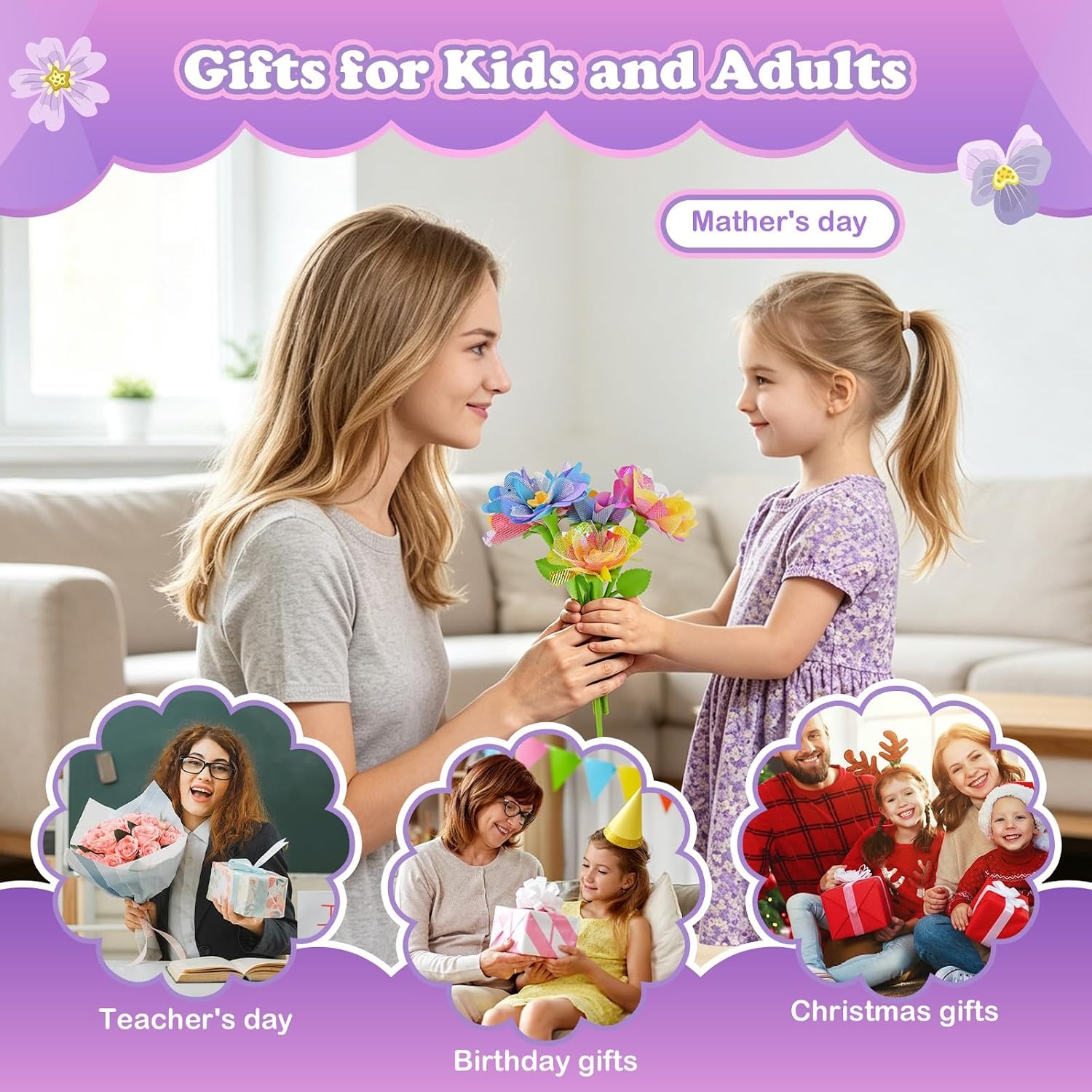
This is where the set does something most craft kits do not. The child does not just make a thing, they make a thing for someone. A wrapped bouquet handed to a grandparent, a teacher or a parent carries real weight because the child built every flower in it.
The four wrapping papers are enough for several bouquets if you are careful, fewer if the child is enthusiastic about wrapping. Use one as a demonstration and keep the rest for occasions.
For Mother's Day, birthdays or the end of a school term, build the bouquet a day ahead and keep it somewhere out of sight. Half the pleasure for a child is the reveal.
Care and keeping it going
The petals are fabric, so keep them dry. Do not put anything in the washing machine. A marked petal can be wiped with a barely damp cloth, then left to air dry completely before it goes back in the box.
Wipe the vase and display bases the same way. Let them dry fully before packing, because damp pieces in a closed box cause problems you will notice three months later.
Keep finished bouquets out of strong direct sun. Fabric fades, and a bouquet on a sunny windowsill will lose its brightness faster than one on a shelf.
Before handing the kit to a younger child, run your eye over the small parts for splits or damage. It takes thirty seconds and it is worth doing.
Storing it so it survives
Sort petals by colour into small bags, pots or a compartment tray. It feels fussy the first time and saves ten minutes every session after that. Keep centres and holders paired. Stems go in one bundle.
Store the box flat rather than on its side. Pieces that migrate to one corner come out in a tangle, and a tangle is enough to put a child off starting.
If the set gets heavy use, consider a small plastic craft box with dividers as a permanent home. The original box is fine, but a divided box makes the next session start faster.
The short version
A flower press craft kit solves the main problem with kids' crafts, which is the gap between starting and seeing something finished. Press-fit petals mean no glue, no drying, and a flower in hand within a couple of minutes.
This set gives you 221 pieces, including 108 petals, 36 centres with holders, 18 stems, four wrapping papers, display bases and a vase. It is fabric, listed in purple, and comes in a box measuring 31.9 x 24.6 x 8.3 cm with a listed weight of 630 g.
It suits children who like making things, works well as a shared activity at the table, and gives a result that can be wrapped and given away. Keep the pieces sorted, keep them dry, and it will come out of the cupboard more than once.