
The complete guide
Choosing a Tin Tea Party Set for Kids - A Buyer's Guide
Why a tea set earns its place in the toy box
Most toys ask a child to follow along. A tea set does the opposite. It hands over a few props and lets the child decide who is invited, what is being served and how the afternoon goes. That is why tea sets have stayed popular for about a century while flashier toys have come and gone.
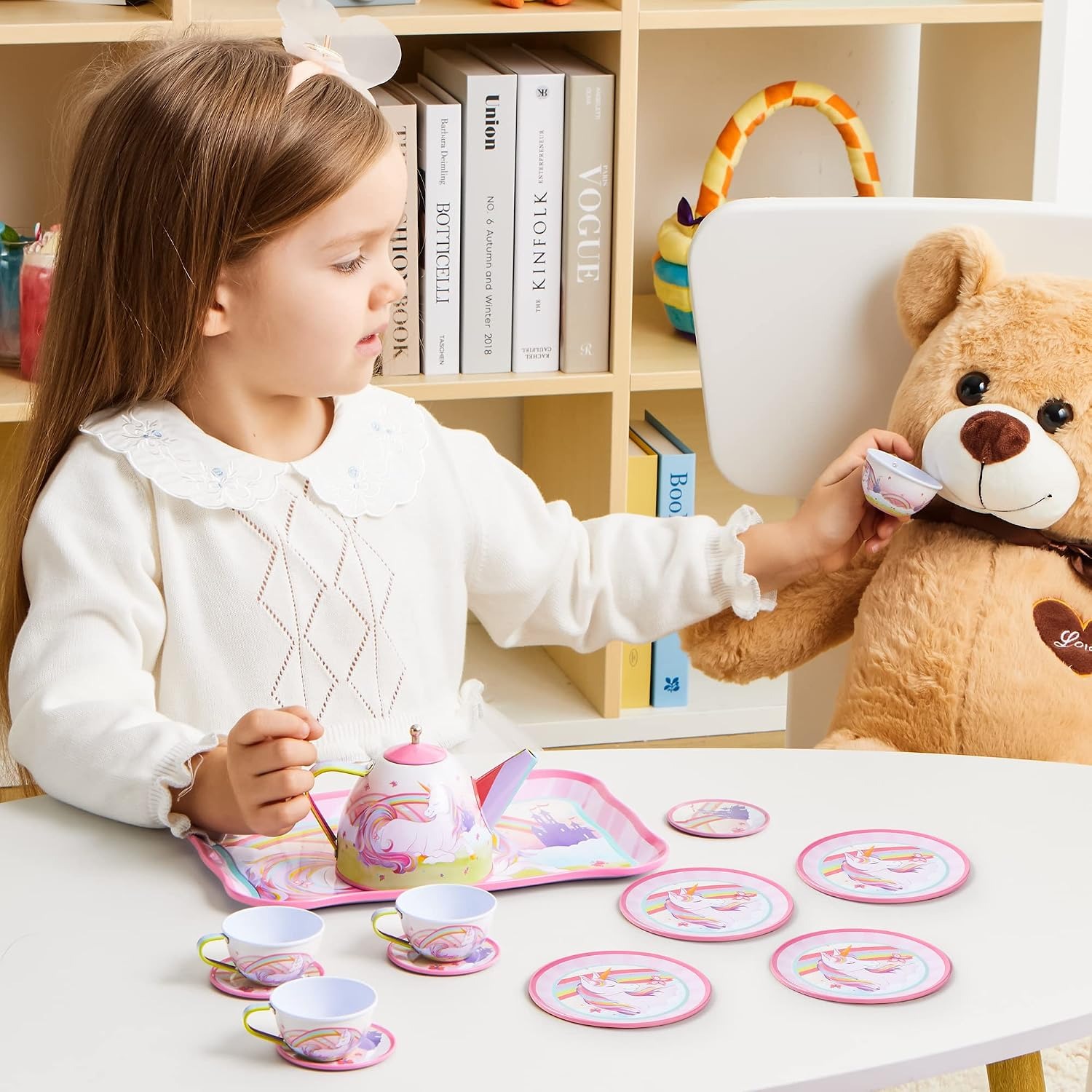
The game is also genuinely useful. A child pouring from a teapot is practising a controlled wrist movement. A child handing out plates is counting without being asked to count. A child telling a teddy that the tea is too hot is rehearsing language and empathy at the same time. None of it looks like learning, which is exactly why it works.
The catch is that most tea sets do not last. Thin plastic cups split along the handle, the teapot lid vanishes under a sofa, and within a few months the set is more of a tidying problem than a toy. The fix is better materials and somewhere for everything to live. This set covers both.
What a tin set does differently
Tin, or more generally thin pressed metal, has been used for toy crockery for a long time for a simple reason. It survives. Drop a metal cup on a wooden floor and it rings and bounces. Drop a thin plastic one and you can hear the crack. Over a few years of use, that difference adds up to a set that still works versus a set that quietly went in the bin.
Metal also feels right in the hand. There is a small weight to it, a bit of cool on the fingers, and the clink when a cup meets a saucer. Children notice. Plenty of parents report that a metal set gets played with more carefully than a plastic one, simply because it feels like real crockery rather than a token.
There are trade-offs worth knowing. Metal can dent if it is stood on, and dents are permanent. Painted metal does not like a dishwasher, so cleaning is a cloth-and-dry job rather than a load. And a metal set is not the right choice for a child who still mouths everything, which is why the recommended age here starts at 36 months.
Who this set suits
The sweet spot is roughly three to seven years old. At three, a child is starting to run their own play stories and enjoys the physical act of pouring. By six or seven, the tea party has usually turned into something more elaborate, a cafe, a hotel, a potion shop, and a good set is still the centrepiece of that.
It also works well for mixed-age households. An older sibling can run the party while a younger one is handed a cup to hold, which keeps both of them involved. Grandparents tend to love it, because it is the kind of toy that invites an adult to sit down and join in rather than hover.
For daycare rooms, playgroups and family day care, the metal build is the main argument. Shared toys take a beating that home toys never see. A set that can handle daily use by a rotating group of children is worth more than two cheap sets bought six months apart.
How to choose between sets
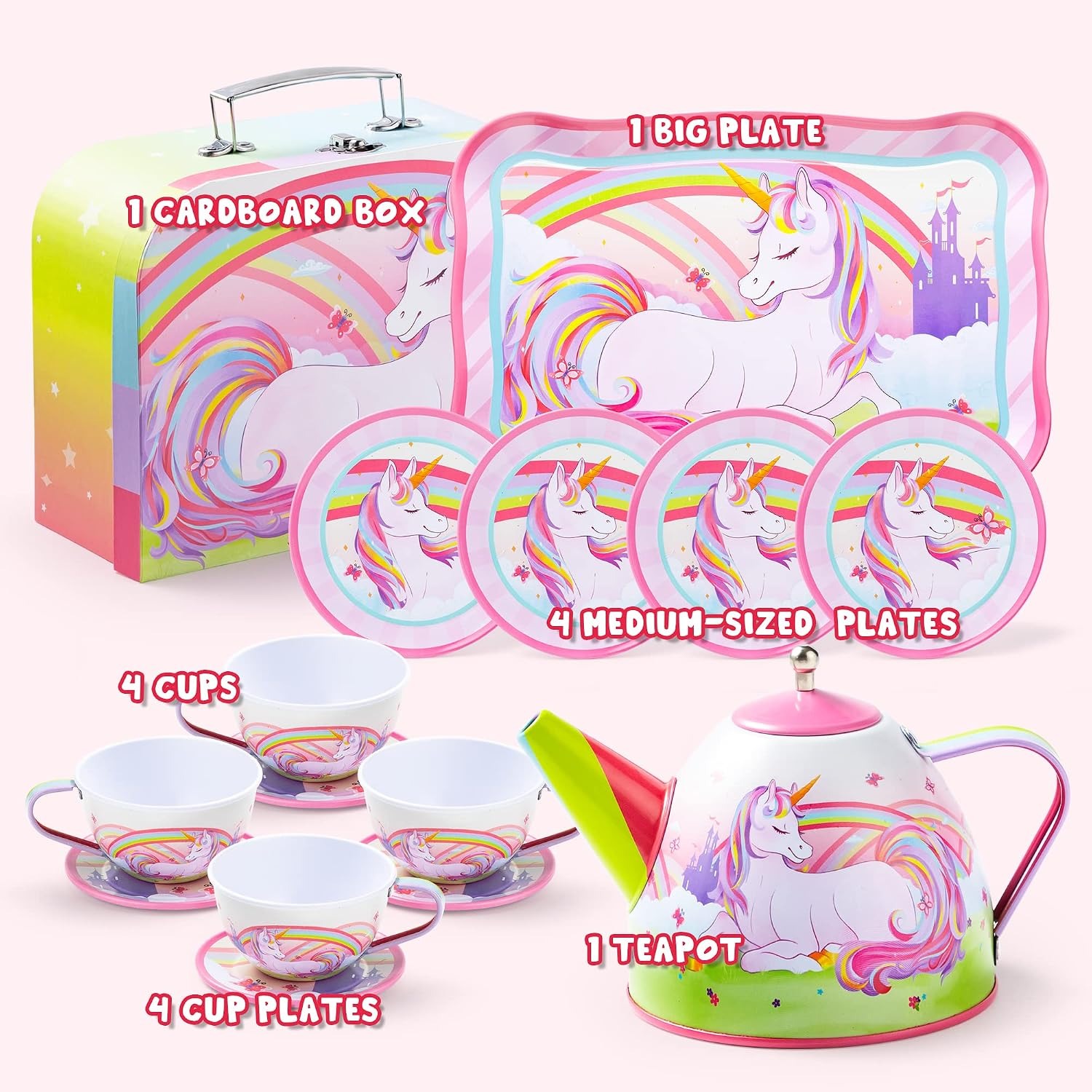
Count the places, not the pieces. A headline piece count can be padded with tiny accessories. What actually matters is how many children can be served at once. Four places is the usual useful number, enough for a child, a friend and two toys.
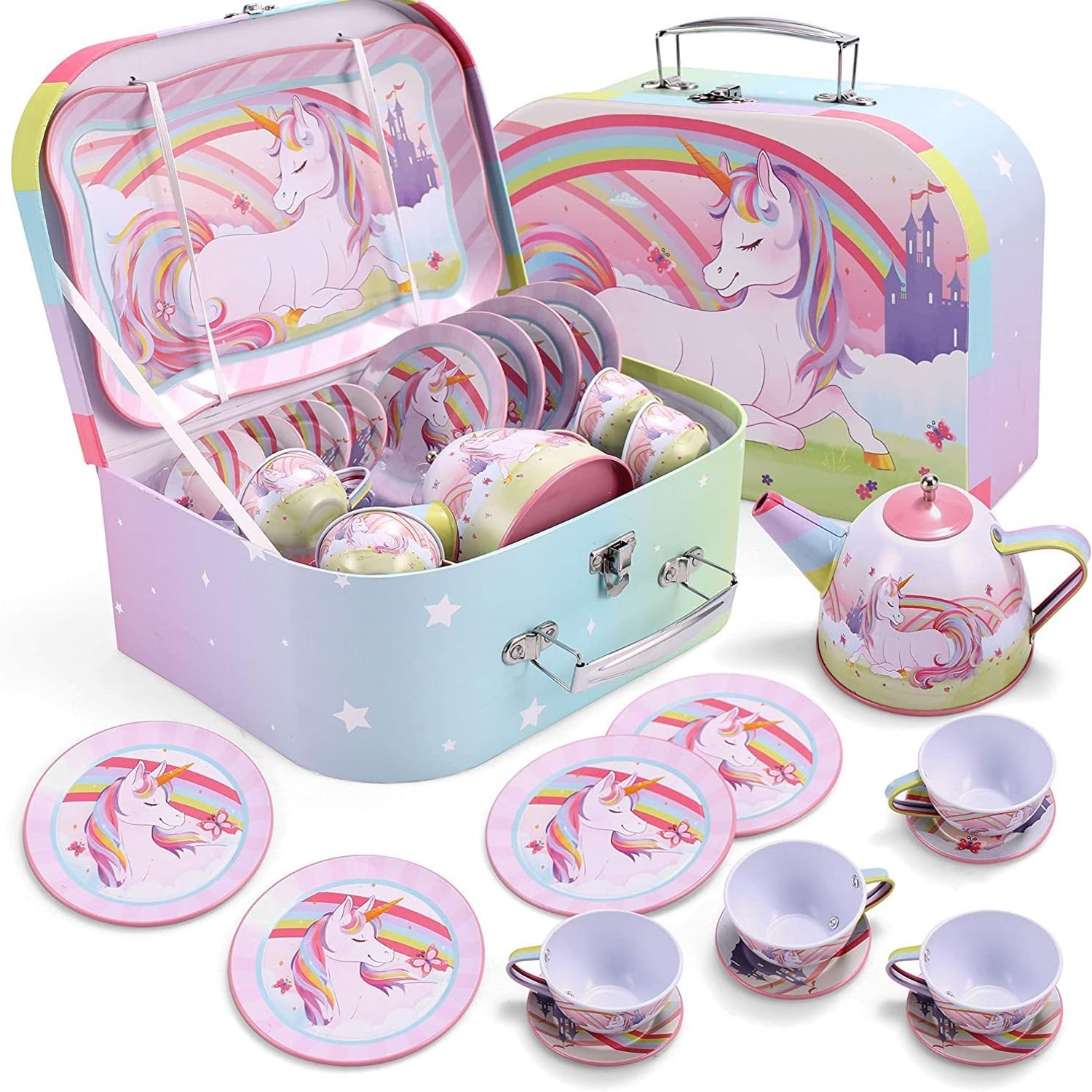
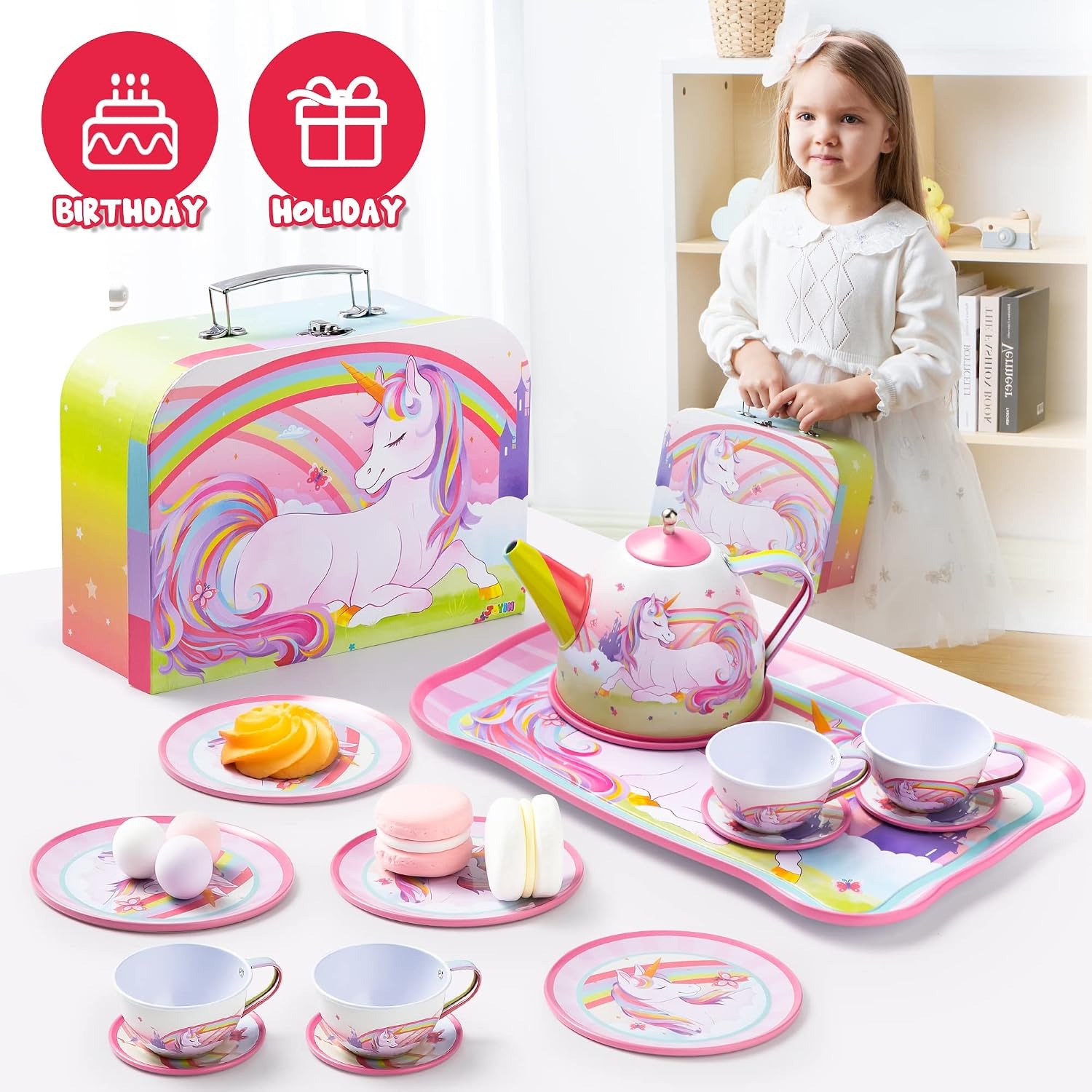
Look for a case. This is the single biggest predictor of whether a tea set is still complete a year later. Loose pieces migrate. A case turns tidying into the last step of the game, and it also means the set can go to a friend's house without a scavenger hunt beforehand.
Check the age guidance. Small cups and lids are a choking hazard for under-threes. If the toy says 36 months and up, that is the reason. There is no benefit in rushing it.
Think about where it will be played with. If the answer includes the garden, the beach rug or the sandpit, metal is the better material. Plastic goes brittle in sun and warps in a hot car.
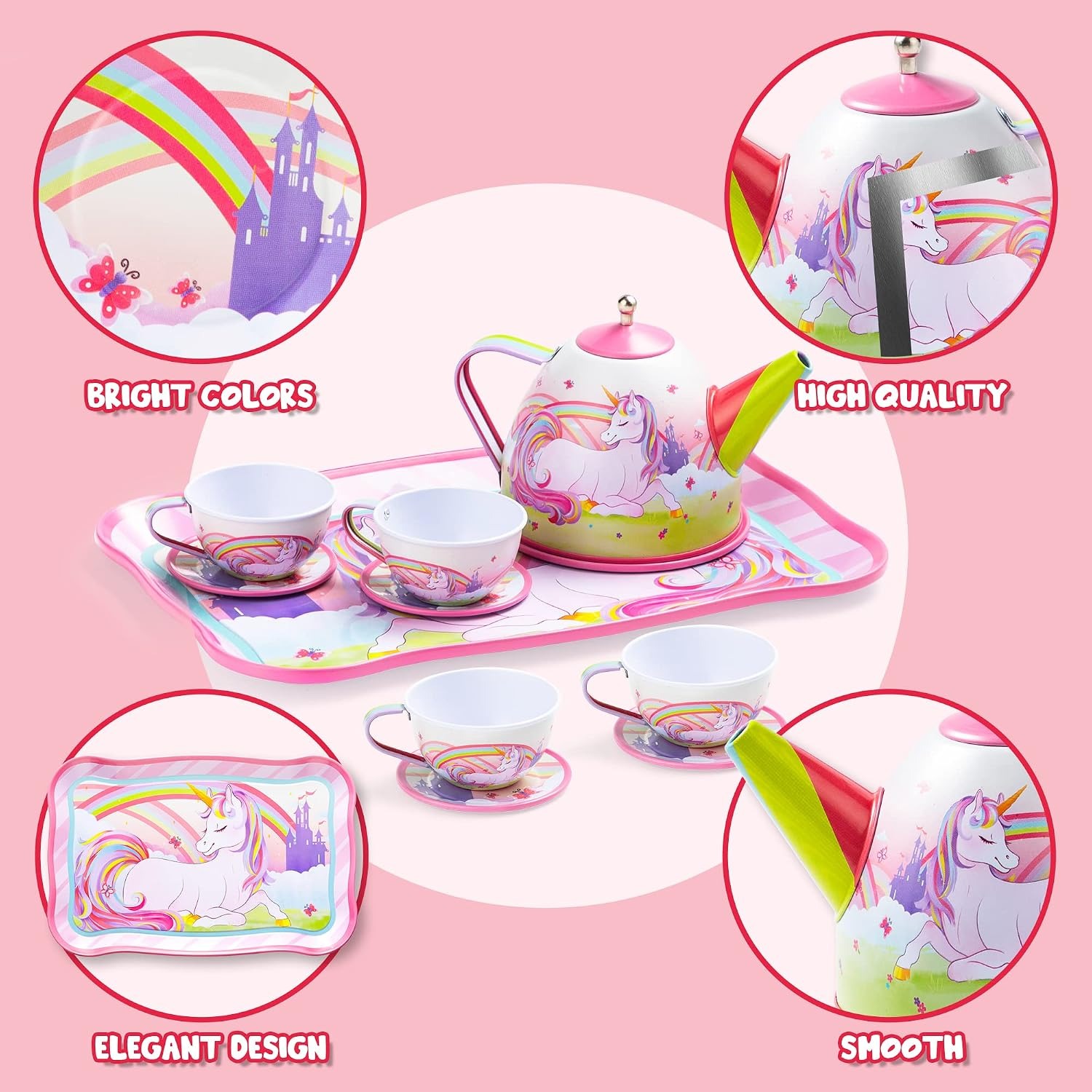
Match the theme to the child, loosely. The unicorn, rainbow and castle artwork on this set reads as magical rather than tied to a single cartoon, which means it will not date the way a licensed character set does. That matters if you want the toy to last a few years.
Setting it up for the first party
Unpack everything onto a tray and count the pieces before the child sees it. That gives you a baseline, so later on you know what is missing. Wipe each piece with a dry cloth to take off any packing dust.
Pick a surface. A low coffee table, a picnic rug or a child-size table all work better than a dining table, because the child needs to reach the teapot without stretching. Put a tea towel underneath if you want to cut the clatter.
Decide early whether real liquid is allowed. Our recommendation is pretend tea or, at most, a small amount of plain water. The set is sold as a pretend play toy, not as tableware, so keep real drinks to real cups. If water is in play, have a cloth ready and dry the pieces afterwards.
Then step back. The temptation is to show the child the correct way to run a tea party. Resist it for the first ten minutes. The best play usually starts when nobody is directing it.
Keeping it in good shape
Care here is simple and takes about a minute. Wipe with a damp cloth, dry straight away, and put the pieces back in the case. The drying is the part people skip, and it is the part that keeps the metal from spotting and the artwork from lifting at the edges.
Avoid the dishwasher, the microwave and the oven. Avoid leaving the set soaking in a sink. Avoid using it with anything hot. None of these are complicated rules, they are just the same rules that apply to any painted metal item.
Every few months, run a quick check over the pieces. Look for dents, rough spots along a rim, or any flaking. Most small dents are harmless. Anything that has become sharp should be taken out of circulation. Toys that live outdoors need this check more often than toys that stay inside.
Storage matters more than most people expect. Flat in the case, lid closed, on a shelf rather than at the bottom of a toy box. Pieces at the bottom of a toy box get stood on, and standing on tin is how dents happen.
Getting more out of it
A tea set stretches a long way if you add a few things around it. Play dough rolled into biscuits, a few scraps of fabric for napkins, a folded bit of card for a menu. None of it costs anything and all of it extends the game by half an hour.
Try handing over a real job occasionally. Letting a four year old carry the case to the table, set out the places and announce when the tea is ready gives them a genuine sense of running something. That is more valuable than any instruction you could give them.
Outdoors, the set turns into a picnic kit. Indoors, on a wet afternoon, it turns into a cafe or a hotel reception. Children find these uses themselves if the set is somewhere they can reach it rather than packed away on a high shelf.
The short version
A tin tea party set is one of those toys that quietly earns its keep. It costs more than a plastic set up front and then lasts several times as long, which usually works out cheaper. The metal handles drops, the garden and daily use. The carry case stops the pieces disappearing, which is the usual way tea sets die.
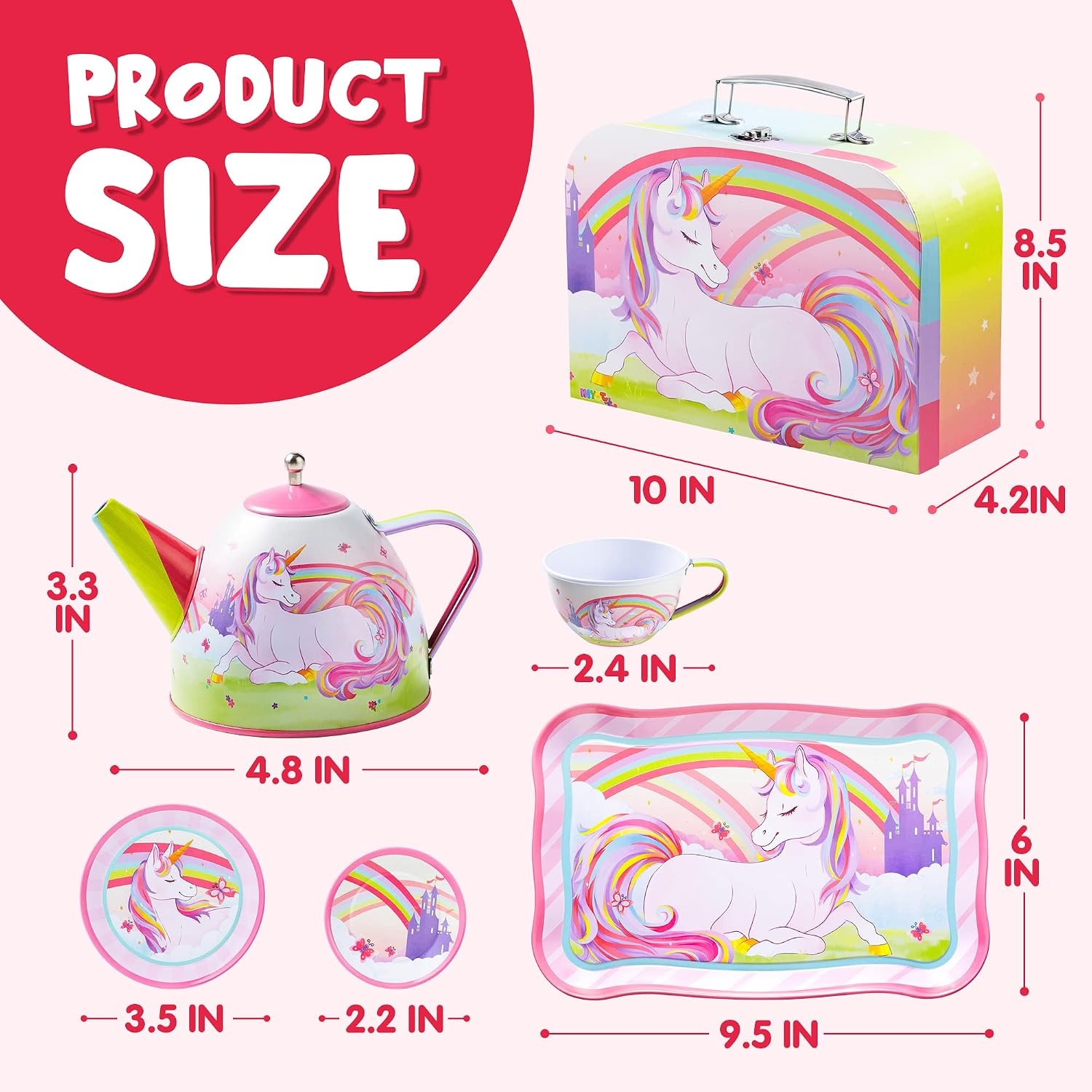
This one is a JOYIN unicorn-themed pretend teapot set, model 11008, recommended for ages 36 months and up, with child-size pieces and a packed size of 25.5 x 19.3 x 10.4 cm. Colour is listed as multicolour and material type as metal. Country of origin is not stated in our maker's details.
If you have a three to seven year old who likes to serve, pour and put on a show for their toys, this is the kind of toy that gets used far more than it gets tidied away. That is a good return on a gift.